Browse by city
Date range
Search help

Search titles, summaries, topics and stored transcripts together. Keywords may match separately; put the whole query in double quotes for a phrase. Matching follows word analysis, so punctuation is not exact. Both dates are included. Documents are not searched.

SHOWING 111–120 ENTRIES
111
MAY 1, 2026 · WASHINGTON, DISTRICT OF COLUMBIA · COUNCIL OF THE DISTRICT OF COLUMBIA
DCPS FY2027 Budget Hearing: May 1, 2026

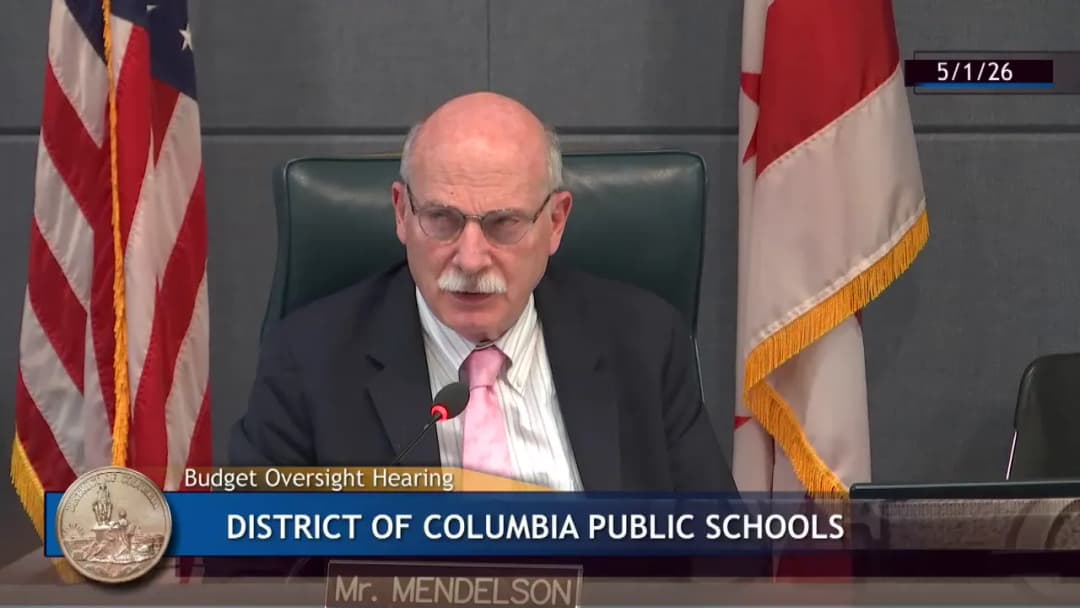
The Committee of the Whole of the Council of the District of Columbia, chaired by Councilmember Phil Mendelson, held a public hearing on Friday, May 1, 2026, at 11:14 AM in Room 412 of the John A. Wilson Building to examine the Mayor's proposed Fiscal Year 2027 budget for DC Public Schools (DCPS). Chancellor Dr. Lewis D. Ferebee testified, joined by Deputy Chancellors Dr. Ashley and Dr. Bay. The hearing followed public testimony heard on April 22, 2026. Consent Calendar - No consent calendar items were discussed. Public Comments & Testimony - No public testimony was taken during this hearing (public testimony occurred on April 22, 2026). However, Chairman Mendelson referenced testimony from that hearing regarding funding equity at John Lewis Elementary School. Discussion Items Budget Overview and Priorities - Chancellor Ferebee reported that DCPS's four-year graduation rate reached its highest level, and students posted their largest gains on the state assessment since 2019. DCPS was ranked first among states in math and literacy recovery between 2022 and 2024. - On average, each school's budget is 6% larger than last year. For 27 schools, the FY27 budget either decreased or grew by less than 3%, primarily due to projected enrollment declines or shifts in special education classroom locations. School Funding Equity (John Lewis Elementary) - Chairman Mendelson presented data showing John Lewis Elementary is budgeted at $14,860 per pupil (excluding special education and ELL), while comparable schools received $16,154 (Tacoma), $18,970 (Dorothy Height), and $20,091 (Truesdale). He asked how this disparity arose. - Chancellor Ferebee explained that John Lewis received a $278,000 sustainability fund investment, but its rapid enrollment growth (38.2% over four years) contributed to the lower per-pupil figure, while Truesdale's enrollment declined 14%, inflating its per-pupil funding under the Schools First in Budgeting stability policy. Chairman Mendelson acknowledged the stability benefit but stressed the need for greater equity. Enrollment Projections and At-Risk Student Funding - The Mayor's budget reduces at-risk student funding for DCPS by $7.2 million, projecting a decline of approximately 2,000 at-risk students in the upcoming school year, while charter school at-risk enrollment is projected to remain flat. - Councilmember Henderson questioned whether the decline reflects actual student loss or changes in federal benefit eligibility (SNAP/TANF work requirements). Chancellor Ferebee noted that enrollment projections were made before those policy changes took effect and that DCPS is monitoring the situation. He also cited fewer school-age children citywide and some shift of adult education programs to charter schools as factors. English Language Learner (ELL) Funding - The budget cuts ELL funding by $4.2 million, attributed to a projected decrease of approximately 600 multilingual learners. Councilmember Henderson expressed concern that community trust may take time to rebuild after recent immigration enforcement actions, and asked about contingencies if enrollment rebounds. Dual Language Programs - Chancellor Ferebee confirmed plans to expand dual language programming into middle school at Jefferson Middle School, with a full strand (similar to McFarland) launching in SY 2027-28. The school currently offers Spanish humanities for grades 6-8. Councilmember Henderson asked how this model compares to charter school programs like DC International; the team had not conducted such a comparison but offered to learn from Dr. Walker Davis. Central Office and School Support - The budget shows a $46 million decrease in central school-wide services. Deputy Chancellor Ashley clarified that most of this ($49 million) is a transfer of utility-related costs to the Department of General Services (DGS), leaving an actual cut of about $17 million. - Central office personnel are projected to decrease by 8% this year, following a 6% decrease last year. Impacts include shifting some software licenses and teacher leadership stipends (TLI—Teacher Leadership Initiative, approximately $2,500 per stipend) to school budgets. Councilmember Henderson argued this reduces school flexibility, while Chancellor Ferebee maintained that schools have adequate resources. Security Contract - The security budget is projected to increase from $30 million to $39 million (30%), driven by higher labor costs, expanded after-school/extracurricular programming, and the rebidding of the contract (current contract expires Sept 30, 2026). Chairman Mendelson expressed concern about the lack of analysis on need or potential cost savings from in-house staffing. Dr. Ashley noted that the contract is a labor-hour model, covering school-day and after-school events, and that the RFP has been issued with an expected council review in June 2026. Food Services - Food service funding increases from $46.7 million (FY26) to $48.6 million (FY27). Chancellor Ferebee attributed the increase to higher meal participation (over 10 million meals served this year) and option-year contract cost escalations. A contract modification with Sodexo was submitted to the council on April 24, 2026, citing increased enrollment in the meal program (not student enrollment). Testing and Technology - Chairman Mendelson read a statement from a fifth-grade student reporting 93 required tests per year (including 9 iReady diagnostics, 20 growth checks, and 10 DC CAPE tests). Chancellor Ferebee argued that many assessments are brief and teacher-driven, but acknowledged the need for balance. He confirmed that DCPS is evaluating its assessment strategy, including potential reductions, and that a class-action lawsuit against iReady's developer was noted but no data compromise has been found. The council requested a copy of the iReady contract. - Councilmember Fruman raised concerns about screen time and reliance on technology. Chancellor Ferebee agreed to a broader fall conversation on technology's role in schools, comparing it to the recent cell phone ban which reduced altercations. Capital Investments - The capital improvement plan includes $2 billion over six years for 24 modernizations and numerous small capital projects, with over $150 million in FY27. FY27 projects include finishing Brent and King Elementary Schools, beginning construction at Bancroft Early Childhood Annex and a new Ward 1 middle school, and modernizations at Burrville, Chisholm, Drew, Ketchum, Seaton, and Whittier Elementary Schools. The PACE Act supplement is pending at the Office of the Attorney General and has not yet been transmitted to the council. Connected Schools - The number of connected schools will drop from 18 to 12 in FY27, as six schools opted out (principals chose to invest resources elsewhere). School-level costs range from $185,000 to $230,000 each (connected schools manager plus non-personnel funds). Four schools losing federal grants received budget assistance to maintain programming (Henley, Kimball, Malcolm X, Turner). New Initiatives - $600,000 for AI literacy and instructional innovation (2 FTEs for policy/guardrails and 4 for literacy). - $8.1 million for expanded after-school programming (about $1.2 million new): $3.9M for athletics, $700K for middle school extracurriculars, $1.5M federal funds for extended learning, $1.3M for extended learning staff, $400K for after-school staffing, $300K for 6th grade academy staff. - $700,000 to strengthen dual enrollment (all high schools offered minimum 6 additional courses, max 15 students per section). Other Items - Athletic Trainers: Chairman Mendelson raised concerns from athletic trainers about lack of dedicated funding for equipment maintenance ($10,000 requested), emergency supply replacement ($5,000), and a medical oversight position. Chancellor Ferebee said the current budget includes $36,000 for equipment and committed to follow up. - New Heights Program: Three positions were eliminated; support for parenting students will be absorbed into the connected schools team due to declining population. - Alternative Breakfast Program: The Mayor's BSA proposes repeal; Chancellor Ferebee did not know participation levels and promised data. - Special Education Extended School Year: Projected decline due to decreased at-risk and ELL enrollment. - iReady Contract: The council requested a copy; Deputy Chancellor Ashley confirmed data protection reviews are standard. Key Outcomes - No votes held during this hearing; it was a discussion-only session. - Chairman Mendelson stated that the committee will focus more on equity in per-pupil funding going forward. - The council requested the following follow-ups from DCPS: 1. A table of budget enhancement requests with attributes (due soon). 2. Small capital project list for FY27. 3. PACE supplemental information (still at OAG). 4. Details on the portion of security costs for after-school/weekend events. 5. A copy of the iReady contract. 6. Data on athletic trainer budget ($36,000) and equipment replacement needs. 7. Data on alternative breakfast program participation. 8. Clarification on a sole-source ELA curriculum contract ($5,281,572.64 multi-year; $846,000 in FY27). - The next education-related budget hearing (OSSE) will be on Thursday, May 7, 2026. First reading on the Local Budget Act for FY27 is scheduled for June 9, 2026.
PUBLIC EDUCATION 41% · EDUCATION FUNDING 12% · SCHOOL FUNDING 11% · STUDENT SCREEN TIME 10%
112
MAY 1, 2026 · WASHINGTON, DISTRICT OF COLUMBIA · COUNCIL OF THE DISTRICT OF COLUMBIA
Budget Oversight Hearing on DOEE and DC SEU – May 1, 2026

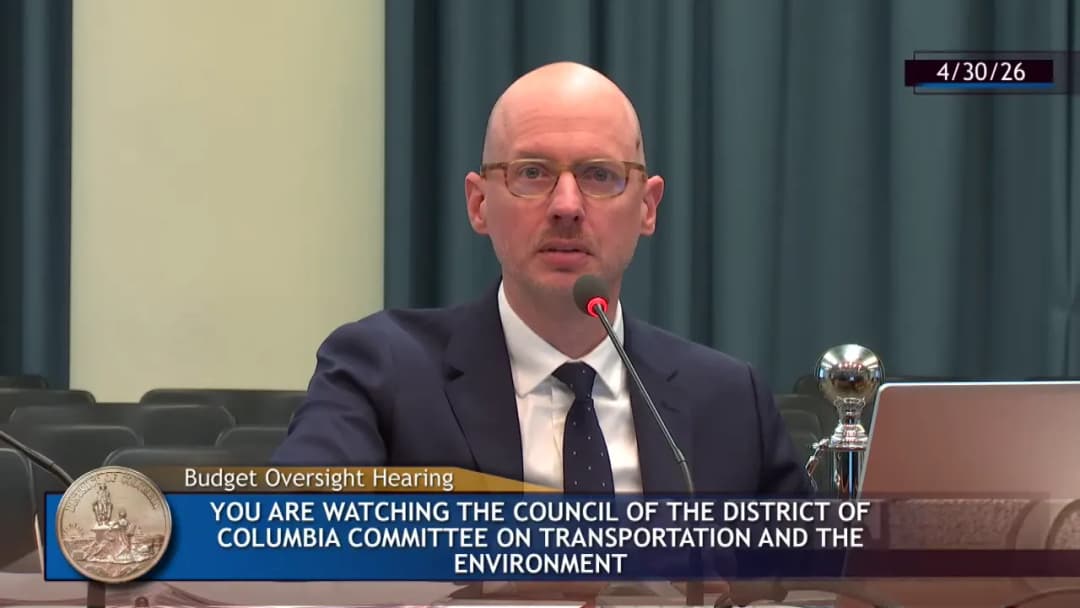
Chairperson Charles Allen (Ward 6, Committee on Transportation and the Environment) convened the fourth budget oversight hearing of the committee at 9:43 a.m. on Monday, May 1, 2026, in Room 500 of the John A. Wilson Building and via Zoom. The hearing focused on the Mayor's proposed FY2027 budget for the Department of Energy and Environment (DOEE) and the DC Sustainable Energy Utility (DC SEU). The Mayor's proposed operating budget for DOEE is $181 million, a 28.6% decrease from the FY2026 approved budget of $254 million. Over two years, cumulative cuts approach 50%. Chair Allen framed the cuts as a deliberate dismantling of environmental programs, noting that the Mayor's budget diverts 80% of the Sustainable Energy Trust Fund (SETF) to pay government utility bills and sweeps funds from the Anacostia River Cleanup and Protection Fund. The committee will accept written testimony until May 15, 2026. Public Comments & Testimony - Mary Che (former Ward 3 Councilmember): Urged restoration of $200,000 for City Wildlife, calling the cut a tiny fraction (0.001%) of the budget and a broken promise. Emphasized that wildlife rehabilitation is a public health and moral imperative. - Chris Weiss (DC Environmental Network): Described the cuts as a 24% cut last year and another 12% this year, totaling a 50% reduction over two years. Highlighted elimination of green infrastructure maintenance, community stormwater solutions, and wildlife rehabilitation grants. Noted that 24 positions in the Natural Resources Administration remain unfilled. - Jamal Lewis (DC SEU Advisory Board): Reported that DC SEU supported over 3,000 kWh of renewable energy, created 93 green jobs, invested nearly $6 million in low-income communities, and achieved 48,000 metric tons of CO2 reductions in FY25. A funding cut from $27 million to $10 million (more than 60%) would jeopardize programs like Solar for All and the Affordable Home Electrification Program. - Maritza Mendoza (Empower DC): Testified that Ward 5 communities (Ivy City, Brentwood) bear disproportionate environmental burdens. Asked for increased air quality inspectors, funding for the Ivy City Climate Resilience Strategy, and passage of the Ivy City Resilience Hub Eminent Domain Act. - Multiple witnesses (City Wildlife supporters, including Ann Lewis, Kate Delusky, Kimberly De Jesus, Kathleen Goff, Lorraine Doherty, Dr. Sarah Sarica, and others): Consistently urged restoration of the $200,000 grant, noting that City Wildlife is the only licensed wildlife rehabilitation center in DC, handling 2,000 animals and 3,000 calls annually. Without funding, the city would lose critical services for injured wildlife, disease monitoring, and public education. - Sierra Club representatives (Lara Levison, Susan Shore, David Whitehead, and others): Opposed the diversion of the SETF and the $10.5 million increase in the Mayor's Energy Surcharge. Called for restoration of the Renewable Energy Development Fund, funding for lead pipe replacement (cut by $43,000, leaving 650 homes at risk), and enforcement of plastic pollution laws. Supported the bottle bill. - Nathan Harrington (Ward 8 Woods): Noted that park maintenance grants were cut to $150,000 and are now zeroed out, eliminating jobs for Ward 8 residents. The cut affects trash removal and invasive species management. - Trey Sherard (Anacostia Riverkeeper): Warned that DOEE is not on track to meet MS4 permit requirements, risking federal fines of $50,000 per day. The $4 million diversion from stormwater funds to street sweeping puts the district at compliance risk. - Marshall Durbalkind (BEPS Task Force): Supported the proposed one-year delay in BEPS cycle 2 as a tactical adjustment, unlike previous wholesale delays. Recommended adding submittal fees for certain applications to fund administrative costs. - Eric Jones and Brian Gordon (AOBA): Supported the BEPS delay and net-zero code delay, citing cost burdens for building owners. Opposed the diversion of SETF funds. - Alex Howard (Washington Gas): Supported the one-year extension of net-zero building code, arguing that grid readiness and cost impacts have not been fully studied. - Patricia Stamper (Ward 7 resident): Urged that budget cuts not fall on low-income residents. Called for transparency in utility assistance programs and better access east of the river. - Barbara Briggs (Friends Meeting of Washington): Noted that the Mayor's budget would leave clean energy programs with only $21.2 million, down from $72 million. Opposed $1.1 billion stadium borrowing while cutting environmental programs. - Multiple additional witnesses (Cody Austin, Dina Rodriguez, Dusty Horwitt, etc.): Echoed calls to restore SETF funding, Healthy Homes Act funding, and City Wildlife funding. Many emphasized the interconnection between environmental health, public health, and economic justice. Discussion Items - SETF Diversion and SEU Funding: Chair Allen explained that 80% of the SETF is now redirected to pay the city's own energy bills, calling it a "hoodwink" on ratepayers. He noted that the SEU contract, if locked in at a low funding level, would cut over 50 jobs and lose $60 million annually in federal matching funds. - City Wildlife Grant: Chair Allen repeatedly stated his commitment to restore the $200,000 grant, as done in previous years: "We will work to make sure we restore it." - Federal Funding Loss: Multiple witnesses noted that DC is leaving $60 million in federal IRA funds on the table due to lack of local matching funds. - Net-Zero Code Delay: The BSA proposes a one-year delay for future BEPS cycles, which the BEPS Task Force and some stakeholders supported as a tactical move. Chair Allen indicated openness to a targeted delay but opposed further kicking of the can. - Lead Pipe Replacement: DOEE's lead pipe replacement program was cut to $0, leaving 650 homes without replacement next year. Witnesses urged restoration. Key Outcomes - Chair Allen committed to restoring $200,000 for City Wildlife, stating: "I fully expect we'll do the exact same thing here." - He pledged to work on restoring SETF funding and reversing the "systematic dismantling" of DOEE. - The committee will accept written testimony until May 15, 2026, and will hold a markup session to craft the FY27 budget. - Chair Allen emphasized that the cumulative cuts are a choice, not a necessity, and that the council must make different choices to protect environmental programs and public health.

ENVIRONMENTAL PROTECTION 56% · ANIMAL WELFARE 19% · FISCAL SUSTAINABILITY 5% · PROCEDURAL 4%
113
MAY 1, 2026 · WASHINGTON, DISTRICT OF COLUMBIA · COUNCIL OF THE DISTRICT OF COLUMBIA
Council Committee of the Whole Holds Budget Hearing on Council and Statehood Commission – May 1, 2026

On Friday, May 1, 2026, at 9:31 a.m., the Committee of the Whole of the Council of the District of Columbia, chaired by Phil Mendelson, held a public hearing on the Mayor's proposed FY27 budget. The hearing covered the Council's own budget and the New Columbia Statehood Commission's budget. The meeting was the fourth of eight hearings on the budget, which includes a revised FY26 budget, the FY27 Local Budget Act, the Budget Support Act, the Federal Portion Budget Request Act, and emergency legislation. The hearing concluded at 10:27 a.m. Public Comments & Testimony - Robert Vincent Branham (President Emeritus, DC Federation of Civic Associations; former ANC commissioner; military veteran) testified on the Council budget, urging the Council to fund a full-time position to defend DC rights against U.S. Attorney Janine Pirro, whom he accused of lying about DC and seeking to take over prosecution of youth. He later testified on the Statehood Commission, criticizing its lack of activity and calling for increased funding and mobilization for DC statehood. He noted that the FY26 approved budget for statehood initiatives was $266,883 and that the proposed FY27 budget shows no change. He recalled an April 11, 2014 march on Capitol Hill where 41 were arrested, including then-Mayor Vincent Gray and Mayor Muriel Bowser. Discussion Items - Council Budget (FY27): Secretary Naasha Howard presented the Council's proposed budget of $39,934,656 with 233 FTEs, unchanged from FY26. She highlighted employee benefits: 3% retirement match (70% uptake, $170,000 spent), $1,000 per employee professional development, student loan repayment, and $100/month WMATA transit subsidy (128 of 200 employees enrolled, $67,000 spent). The fringe benefit assessment rate decreased from 26.3% to 25.8%. The Uniform Law Commission receives $65,000. Chair Mendelson asked about costs for the mayoral transition and council turnover; Howard confirmed the Council covers swearing-in ceremonies and expects substantial costs due to historic turnover. No other questions were asked. - New Columbia Statehood Commission Budget (FY27): Senator Paul Strauss (co-chair) presented the agency's request of $266,883 (identical to FY26), consisting of $162,000 for personnel and $105,000 for non-personnel. He noted the budget supports education, advocacy, and the 51 Star Celebrity Endorsement Program. He emphasized the commission's collaborative efforts with the executive and delegate's office. Senator Anke Chain (also referred to as Senator Jane) then testified, advocating for a $100,000 increase (or reallocation within existing funds) to provide staff raises. She detailed that the full-time staff assistant has not received a raise in four years and that the agency's budget has increased only 18% since FY15 (from $225,800), a 14.9% decrease after inflation. She proposed specific grade/step increases for the acting executive director (to Grade 14 Step 4) and the staff assistant (to Grade 13 Step 1). She also criticized the new bylaws changes on spending procedures as redundant and inefficient, while Senator Strauss defended them as improving efficiency. Chair Mendelson questioned the delegation's outreach to Capitol Hill; Senator Chain described her regular meetings with congressional staff to defeat anti-DC riders and bills, clarifying she does not lobby on appropriations specifics. Senator Strauss noted coordination with the delegate's office and executive. Key Outcomes - No votes were taken during the hearing. Chair Mendelson outlined the budget schedule: first vote on the FY27 Local Budget Act on June 9, second vote on June 23; first vote on the Budget Support Act on June 9, with a second vote later. The next hearing is on Monday, May 4, regarding the DC Auditor, DC Retirement Board, and Office of the Chief Financial Officer. The hearing was adjourned at 10:27 a.m.

COMMUNITY ENGAGEMENT 33% · PERSONNEL MATTERS 24% · PROCEDURAL 22% · MISCELLANEOUS 13%
114
APR 30, 2026 · WASHINGTON, DISTRICT OF COLUMBIA · COUNCIL OF THE DISTRICT OF COLUMBIA
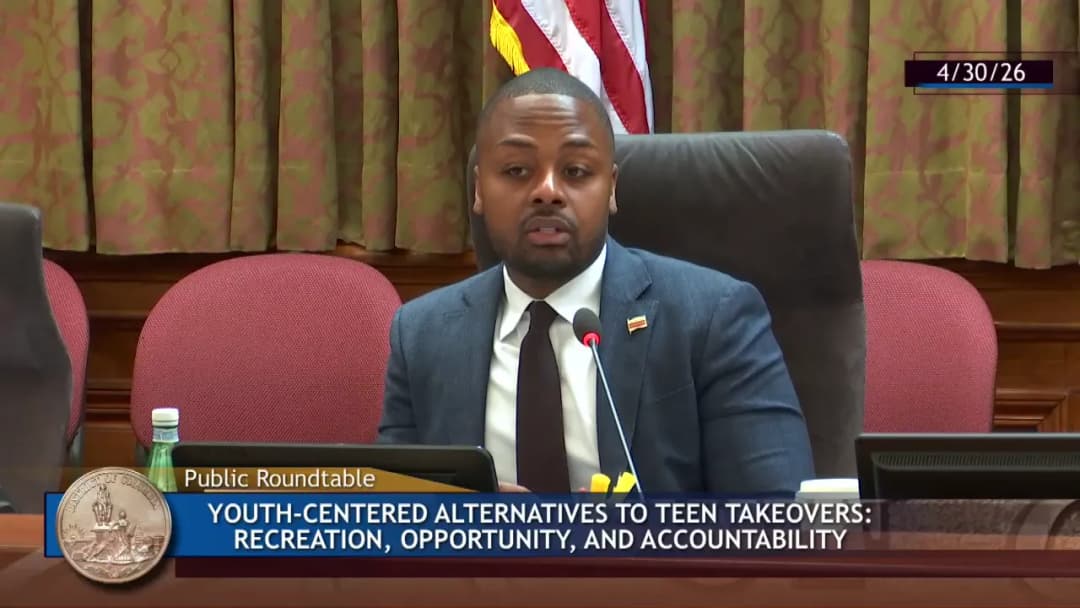
Youth Affairs Committee Roundtable on Teen Takeovers - April 30, 2026

Councilmember Zachary Parker (Ward 5) chaired a roundtable from 3:29 PM to 9:00 PM in Room 500 of the John A. Wilson Building and virtually via Zoom. The hearing focused on youth perspectives regarding teen takeovers, recreation, opportunity, and accountability. The chair emphasized prioritizing youth voices and listening to their ideas for safe spaces, out-of-school activities, mental health resources, and employment. Public Comments & Testimony - Darien Carter (Trigger Project) opposed curfews, called for extended rec hours, year-round jobs, a youth council, and ending police racial profiling. He noted that an 18+ club was at capacity, showing the need for more safe spaces. - Honesty Hill (Trigger Project) stated that curfews do not address root causes like unstable homes. She advocated for extended rec hours, year-round employment, and a parent council for accountability. - Magnolia Shongas (Council of Court Excellence) cited research that curfews increase adverse health outcomes for black youth. She highlighted budget concerns: cuts to TANF, CHAMPS, and increases in detention beds. She recommended investment in mental health, housing, and recreation over incarceration. - Chris Gamble (Children's Law Center) urged restoration of funding for CHAMPS (youth mobile crisis team), school-based behavioral health, and child advocacy centers (Safe Shores). He noted DBH's budget cuts jeopardize youth well-being. - Penelope Spain (Open City Advocates) warned that curfews violate the Juvenile Justice and Delinquency Prevention Act by processing status offenders with delinquent youth, exacerbating harm. - Leslie Redman (former DC educator) shared her success due to DC's investment in youth (summer jobs, mentorship). She called for workforce development, entrepreneurial opportunities, and intergenerational connection. - Carla Portillo (United Leaders for Freedom) opposed curfews and over-policing, advocated for career readiness and safe spaces led by youth. - Multiple youth and advocates (including Zayana Green, Aliyah Moody, McKenzie Whitfield, Navea Williams, Rain Turain, Corey McSwain, Kingston Johnson, and others) testified against curfews, citing police harassment (paintball guns, pepper spray, handcuffing), lack of safe third spaces, need for later rec hours, year-round jobs at living wage, mental health support, and a youth council. Discussion Items - Councilmember Parker opened by framing the hearing as an opportunity to hear from youth about solutions, emphasizing that curfews alone are not the answer. - Councilmember Robert White criticized the proposed budget: +$90M to MPD, +$6.5M to DYRS, but -$6.8M to DPR. He argued for a prevention-first approach, noting DPR's large events cost $148,000 each, and warned that enforcement without stable homes is ineffective. - Councilmember Trayon White highlighted that over 80 adults were testifying but stressed the importance of youth voices. He noted DC's budget grew from $9B to $22B while youth programs declined, and called for equitable funding. - Councilmember Christina Henderson joined later and questioned youth about how to handle incidents like fights and the influx of youth from Maryland/Virginia. Youth suggested holding only the instigators accountable and better communication with surrounding counties. - Councilmember Wendell Felder (Ward 7) joined and asked about the impact of curfews on daily life and trust in adults. - Youth testimonies repeatedly stressed that takeovers are symptoms of a lack of safe spaces, economic opportunity, and trust in police. They proposed extended DPR hours (e.g., until 10 PM or later), year-round jobs with higher pay, youth-led councils, mental health services in schools, and structured late-night programming. Key Outcomes - Chair Parker committed to following up on suggestions: extending rec hours, creating a youth council, and improving DPR programming based on youth input. - He noted the need to minimize police interactions with youth and leverage trusted community organizations (e.g., Safe Passage, Black Swan Academy, Trigger Project). - Parker acknowledged the budget challenges and said he would work to align funding with prevention rather than enforcement. - Testimony will be considered as the committee reviews the mayor's proposed budget and the permanent curfew legislation. - Parker offered to help a community member (Samaya Lane) navigate DPR to secure approval for youth programming at Diamond Teague Park.

YOUTH PROGRAMS 64% · PUBLIC SAFETY 16% · MENTAL HEALTH AWARENESS 7% · COMMUNITY ENGAGEMENT 3%
115
APR 30, 2026 · WASHINGTON, DISTRICT OF COLUMBIA · COUNCIL OF THE DISTRICT OF COLUMBIA
Budget Oversight Hearing on DDOT FY2027 Budget - April 30, 2026

On Thursday, April 30, 2026, from 12:37 PM to 3:54 PM, Councilmember Charles Allen (Ward 6), Chair of the Committee on Transportation and the Environment, convened the third budget oversight hearing on Mayor Bowser's proposed Fiscal Year 2027 budget for the District Department of Transportation (DDOT). Director Sharon Kirschbaum testified, joined by Paul Revez of the resource allocation division. The hearing focused on the agency's $4.1 billion six-year capital improvement plan, a $500 million increase over the current CIP, and an operating budget that includes difficult trade-offs, including a $25 million reduction achieved primarily through right-sizing contracts and eliminating vacant positions, with no layoffs of filled positions. Discussion Items - Federal and Special Purpose Revenue Reductions: The operating budget reflects a $12 million reduction in federal grants (primarily indirect cost recovery, not project grants) and a $6.1 million reduction in special purpose revenue due to the elimination of a one-time CABI carryover. CABI fares are expected to cover operations; budget authority can be adjusted upward if revenue exceeds projections. - Streetcar Termination: $11.7 million and 12 vacant positions removed from the transit delivery division reflect the end of streetcar service. The remaining $1.5 million and 5-6 FTEs support kids ride free, adult learner transit subsidy, and coordination with WMATA on bus route planning. - Vacancy Reductions and Hiring Freeze: DDOT is cutting 32.8 vacant FTEs across the agency, including 8 TCOs and 1 safety tech, to meet budget targets. A CFO-imposed hiring freeze has prevented backfilling over 170 vacant positions, including 67 safety techs and 27 TCOs. Director Kirschbaum expressed hope that structural fixes (moving energy and overtime costs to local funds) will allow hiring to resume in FY27. - Overtime and Energy Costs: Overtime funding increases from $755,000 to $2.75 million to accurately reflect actual costs (e.g., special events, snow operations). The LED streetlight conversion reduced annual energy costs from $11 million to $3 million; a $3.5 million enhancement covers remaining unique assets. - Public Transit Programs: The FY27 budget proposes flat funding of $15.8 million for kids ride free and adult learner transit subsidy. Councilmember Allen noted that the adult learner benefit ($70/month) may need adjustment; raising it to $100 would cost about $400,000 annually. Director Kirschbaum cited budget constraints. MetroLift (50% fare discount for SNAP-eligible) is underused and cannot be combined with the adult learner card. - E-Bike Incentive Program: No funding in FY27. Councilmember Allen expressed interest in restoring funding. Director Kirschbaum noted the program's success: in FY26, 117 of 149 issued vouchers were redeemed, with high participation in Wards 5, 7, and 8. - Safety and Vision Zero: $48.7 million in safety and mobility capital and $135 million in streetscapes for FY27. Fatalities in 2026 stand at 16 (compared to 25 in all of 2025), with serious injuries down 21% since 2021. Director Kirschbaum highlighted proactive annual safety projects (about 100/year) and post-fatal rapid response. Automated camera network now has 547 cameras; 70 new clear lanes cameras on Metro buses funded by $310,000 enhancement. - Capital Projects: - H Street Bridge: $61 million reduction and $42 million reprogrammed to the Benning Road Bridge/Interchange project to meet federal match timing; the $42 million will be reprogrammed back in future years. Councilmember Allen expressed concern about ensuring the return. - Benning Road/H Street BRT: Phase 1 from Union Station to RFK Stadium; design funded ($2 million), construction funding not yet identified. Councilmember Allen urged extending to Benning Road Metro station. - Suitland Parkway Trail: $38.2 million over CIP, with $34 million concentrated in FY29. - Sidewalk funding: $26.8 million in FY27 (flat with FY26), then dropping to $15.3 million in out-years. - RFK campus: $202 million for roadway improvements (led by DGS), $18.2 million for bridge improvements, and $2.7 million for ecological restoration. - Plaza Act: Report identifying three roadways for up to 24-hour weekly closures due December 31, 2026. Implementation awaits final vehicular terrorism prevention task force recommendations. Director Kirschbaum noted a dedicated staff position for this is frozen. - Public Inconvenience Fee: Proposed changes extend the grace period from 30 to 60 days, then impose significant fines. CFO scored potential revenue at $4.5 million. Councilmember Allen questioned the revenue estimate, noting that if the policy works, fewer fines would be imposed. - Other Topics: Updates on autonomous vehicle report (summer 2026), curbside management pilot, bus shelter contract (plan B after canceled solicitation), and DuPont Deckover construction (disruption acknowledged). Key Outcomes - No votes were taken; the hearing was for oversight and budget review. Councilmember Allen committed to follow up on several items: providing a crosswalk of budget shifts, working with the CFO to lift the hiring freeze, possibly restoring e-bike program funding, and ensuring the H Street Bridge funding is securely restored. - Written testimony on DDOT's budget will be accepted through May 11, 2026. The next committee hearing (on DOEE) is May 1, 2026.

ENGINEERING AND INFRASTRUCTURE 36% · FISCAL SUSTAINABILITY 16% · TRANSPORTATION SAFETY 14% · ACTIVE TRANSPORTATION 8%
116
APR 30, 2026 · WASHINGTON, DISTRICT OF COLUMBIA · COUNCIL OF THE DISTRICT OF COLUMBIA
FY2027 Budget Oversight Hearing for DSLBD - April 30, 2026

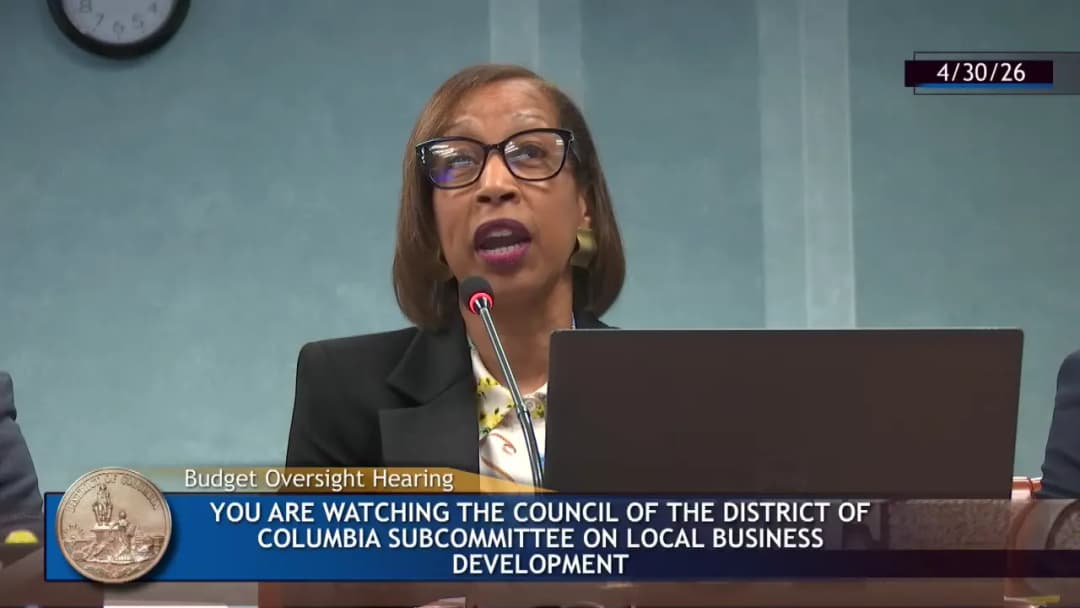
The Subcommittee on Local Business Development held a budget oversight hearing on the proposed Fiscal Year 2027 budget for the Department of Small and Local Business Development (DSLBD). Chairperson Felder presided over the hearing, which began at 12:07 PM in Room 120 of the John A. Wilson Building. The hearing featured testimony from public witnesses, including Main Street directors, ANC commissioners, business owners, and community advocates, followed by testimony from DSLBD Director Rosemary Suggs Evans. Key topics included Main Street funding, clean teams, the Certified Business Enterprise (CBE) program, and the need for equitable resource distribution across wards. Public Comments & Testimony - Alexander Padro, Executive Director of Shaw Main Street, stated that Shaw welcomed nearly 5.3 million unique visitors in 2025, making it the second most visited Main Street in the U.S. and first in D.C. He noted that baseline funding allows operations, but additional resources could expand clean teams and grants. He cited a national average return of $3 for every $1 invested in Main Streets. - Noah Gitz, Executive Director of Tenleytown Main Street, testified about a $5,000 grant that enabled a print shop (PrintSpace) to purchase a specialized cutter, revolutionizing its turnaround time and profitability. He requested continued funding for the council enhancement to provide consistency. - Cassandra Heatherington, representing Cleveland Park Main Street, described how growth fund grants funded awnings, benches, and gardening beds. She stated that a business owner noted the awning made the promenade look appealing and inviting, and that a freezer replacement grant provided huge relief during a slow period. - Kelsey Adams, U Street Main Street Manager, emphasized that events like Juneteenth and Art All Night are economic engines. She noted confusion around the FY26 budget and called for maintaining an enhancement of approximately $18,000 per Main Street (system-wide $522,000). She also flagged that Art All Night funding was slashed by about a third in the prior year. - Heather Gustafson, Palisades Main Street, recounted how the Main Street intervened when the Palisades Plaza owner abandoned the building in July 2024, leaving 15 tenants without services. She said the Main Street prevented closure and, through a growth fund grant, supported a local grocer’s expansion to address a food desert. - Rachel Shank, Georgetown Main Street Executive Director, reported that in FY25 the program supported over 200 businesses, hosted 33,000 event attendees, and logged 1,225 volunteer hours. She highlighted the "Stick Around Georgetown" program, which helped five businesses successfully renew or rework leases using 50 hours of consultation. - Ann Blackwell, Historic Dupont Circle Main Streets Executive Director, urged the council to view Main Streets as "placekeepers" preserving cultural history. She highlighted DuPont Circle’s over 50 legacy businesses and the importance of subgrants for outdoor seating design. - Jeremy Sherman, ANC 1A04 Commissioner and ANC1A Chair, stated that Columbia Heights has over 15 vacant storefronts and the Main Street program (covering three corridors) is under-resourced with one staff person and one budget. He renewed a call for a dedicated, independent Main Street for Columbia Heights, separate from Mount Pleasant. - Anthony Thomas Davis, ANC 1A06 Commissioner, called for better accountability from Main Streets, noting that no public reports are available on the DSLBD website. He argued that the Columbia Heights/Mount Pleasant Main Street has failed small businesses by taking on too many non-economic development activities. He also urged more resources for clean teams. - Patrick Powell, Chief of Staff of the Golden Triangle BID, expressed strong support for the Golden Triangle Business Improvement District Amendment Act of 2026, which would clarify that the BID has authority to increase its tax rate by 3% annually. He said rising costs for labor and supplies make this modest adjustment necessary. - Chinati Hubbard, President and CEO of the DC Chamber of Commerce, urged preservation of DSLBD funding, describing small businesses as a powerful driver of overall economic growth. He highlighted the Chamber’s partnership with DSLBD on awards, summits, and the State of the Business report. - Margaret Marsh, owner of Healing Hands Physical Therapy Services (a Ward 8 CBE), described how DSLBD helped stabilize her tenancy after a cancer diagnosis and staff loss. She requested continued funding for DSLBD and sister development corporations to prevent businesses like hers from disappearing. - Maggie Winters, co-founder of a creative agency, suggested a vacant storefront activation pilot with small grants, a short-term lease template, and permitting help to turn empty spaces into community assets. - Kay Larios, board member of SECOSOL and DC Community Wealth Builders, requested a technical assistance grant for cooperative development, emphasizing that immigrant women lack resources in their languages and budgets. - Amani Morrison, Ward 4 resident and DC Community Wealth Builders volunteer, asked the council to create a cooperative conversions grant and tax incentive to help businesses sell to employees instead of closing, citing shuttered local businesses. - Jim Schulman, Executive Director of the Alliance for Regional Cooperation, stated that 60–80 cents of every dollar spent at a local independent business is retained locally versus 40 cents at a chain. He noted that 56% of profitable Montgomery County businesses are at risk of closure or sale to absentee owners, supporting cooperative conversion. - Vinny (last name not provided), Ward 1 resident and DC Community Wealth Builders member, asked the council to create a public or land bank to use DC’s cash reserves (hundreds of millions) and vacant properties (billions) to provide low-interest loans to reduce rent, leasing, and energy costs for small businesses. - Ram Sridharan, public interest attorney with DC Community Wealth Builders, urged funding for a technical assistance grant for worker cooperative conversions. He noted that 6 in 10 small business owners plan to retire within 10 years, but only 15% of businesses are passed down, and without planning they will close. - Elijah Moses, co-founder of Urban Equity Consulting Group, a CBE in Ward 6, praised the CBE program and DSLBD’s staff. He requested more financial literacy support (e.g., accounting) for small businesses. - Bill McLeod, Executive Director of the Dupont Circle BID, requested $2 million in grant money to assist small businesses on Connecticut Avenue surviving a 22-month streetscape construction project that has driven sales down. Discussion Items - Chairperson Felder and DSLBD Director Rosemary Suggs Evans discussed the agency’s budget priorities. Director Evans stated the budget supports continued operations for Main Streets, clean teams, CBE certification, and programs like Dream and Aspire. She noted that all divisions work together to support the district's 75,000 small and local businesses. - Director Evans acknowledged the budget is level-funded and does not include reductions to core programs, though some grant lines (H Street Market Grant, sports wagering) were reduced due to evolving circumstances. She said the agency can continue timely processing of CBE applications due to automation improvements in the District Enterprise System (DES). - On Main Streets, Director Evans said the current $5.5 million funding level is sufficient and grows DC. She explained that Main Street funding allocations are determined by council members, not DSLBD. When asked about equitable distribution, she stated funding is appropriate and reasonable, but she is open to conversation about fairness. - On clean teams, Director Evans said funding is determined by council members based on their assessment of need. She stated she has not called a council member to suggest reallocation. Chairperson Felder pressed for more need-based distribution. Director Evans noted the agency tracks trash pickup, graffiti removal, and business owner feedback to measure return on investment. - The conversation also covered the Des system, which recently launched a solicitations portal that sent 150 solicitations to 1,400 CBEs. Director Evans described capital and technical assistance for CBEs preparing for major developments like RFK, including training on bonding and compliance. Key Outcomes - No formal votes were taken during the hearing; it was a budget oversight hearing to gather testimony. - Chairperson Felder indicated he would take into account the strong demand for Main Street services and look more closely at how DSLBD distributes resources equitably, particularly to underserved communities. - Director Evans stated the agency has the funding it needs to deliver core functions (rating 11 on a scale of 1–10), but she committed to maximizing existing funds and continuing to support all small business programs.

ECONOMIC DEVELOPMENT 90% · COMMUNITY ENGAGEMENT 3% · ARTS AND CULTURE 2% · RODENT CONTROL 1%
117
APR 30, 2026 · WASHINGTON, DISTRICT OF COLUMBIA · COUNCIL OF THE DISTRICT OF COLUMBIA
DHS FY27 Budget Oversight Hearing - April 30, 2026

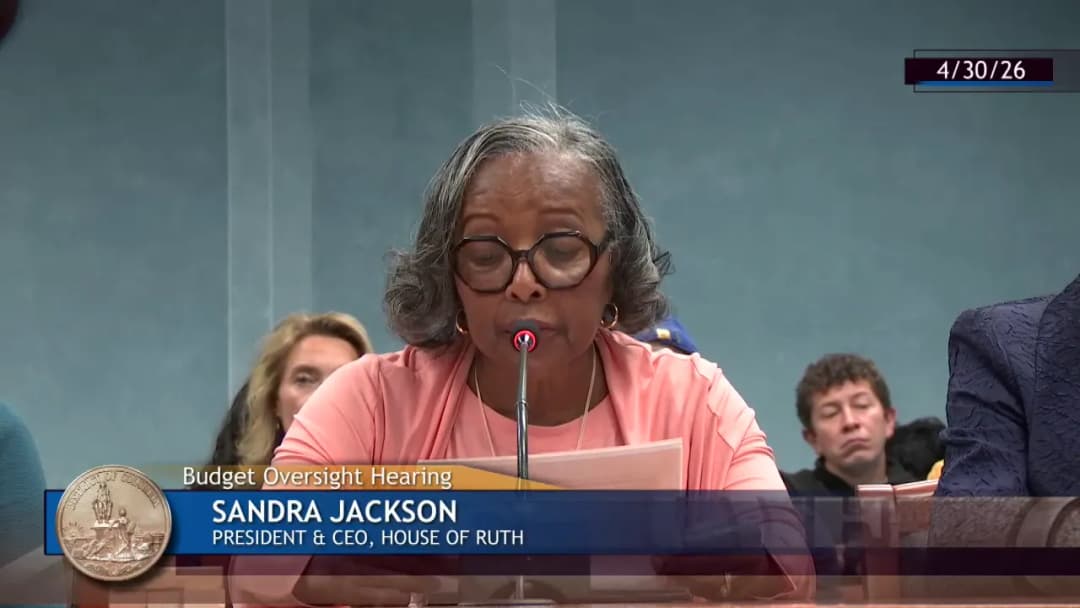
On April 30, 2026, the Committee on Human Services, chaired by Ward 3 Councilmember Matt Freuman, held a budget oversight hearing on the Department of Human Services (DHS) proposed FY27 budget. The hearing began at 9:05 AM in Room 123 of the John A. Wilson Building and via Zoom, lasting through the afternoon with a recess from 2:38 PM to 3:17 PM. Chair Freuman noted that the mayor's proposed budget decreases DHS funding by $102 million compared to FY26, representing a 25% reduction since FY24 and over $250 million across three budget cycles. Public witnesses testified in panels, raising concerns about cuts to domestic violence services, TANF, permanent supportive housing, youth homelessness, emergency rental assistance, and other safety net programs. Public Comments & Testimony - Domestic Violence Survivors and Advocates: Multiple speakers from the DC Coalition Against Domestic Violence (DCCADV) and survivor advisory board urged restoration of $6.3 million for domestic violence and victim services in DHS and OVSJG, and an additional $4.4 million over FY26 levels. They highlighted that domestic violence is a leading cause of homelessness, with 48% of homeless adults in families and 41% of homeless single women reporting domestic violence (2025 PIT count). Witnesses criticized the proposed 21% cut to DHS domestic violence services line (31.6% cut to local funding). - TANF Recipients and Advocates: TANF participants and organizations (e.g., DC Fiscal Policy Institute, Legal Aid DC, Fair Budget Coalition) opposed cuts including elimination of COLA, increased sanctions, and reinstatement of time limits. They noted that 16,000 families would be affected, with a family of three currently receiving $803/month facing a freeze. Witnesses argued that work sanctions fail to address structural barriers and that the proposed FY28 policy reducing benefits to zero after 60 months is harmful. - Homeless Services Providers: Representatives from Friendship Place, Everyone Home DC, Miriam's Kitchen, Catholic Charities, N Street Village, and others called for restoration of $34.6 million in cuts, funding for new PSH vouchers (1,260 for singles, 782 for families), and reversing cuts to case management. They highlighted that 88 people died while homeless last year, and that the proposed budget includes no new PSH vouchers for individuals for the second year in a row. - Youth Homelessness Advocates: DC Action, Sasha Bruce Youthwork, SMILE, and others opposed a $2.5 million reduction (12%) to youth homelessness programs, including cuts to extended transitional housing (35% reduction) and transitional housing. They noted that 40% of homeless youth identify as LGBTQ+, and that 96% of youth served by Sasha Bruce report satisfaction with services. - Emergency Rental Assistance (ERAP): Multiple witnesses urged increased funding for ERAP, currently at $7 million (a 20% cut from FY26), with demand estimated at $76–108 million. They noted that evictions are rising, with completed evictions at record highs in 2025. - ID and Proof of Residency: Witnesses from Foundry United Methodist Church and others requested DHS re-expand the list of agencies authorized to provide social service proof of residency forms, as the current limited access creates barriers for unhoused residents. - CLEAR Grant: Legal aid organizations and immigrant services (e.g., Ayuda, Amica Center, DC Affordable Law Firm) urged full funding of the CLEAR grant at $3.5 million, noting that the mayor's proposed budget omitted it (expected to be corrected via errata). They highlighted that CLEAR supports legal representation for immigrant residents, with 500 intakes in 2025 and a 39% increase in demand. - Other Testimony: ANC Commissioner Tripthy Patel requested DHS provide performance metrics for the Aston bridge housing facility and a plan to increase capacity from 100 to 190 beds. A witness raised concerns about staff training and treatment of LGBTQ+ clients in shelters. Discussion Items - Chair Freuman acknowledged the specific suggestions from DCCADV regarding the POWE program and a draft subtitle for TANF benefits. He noted the council briefing on crime where domestic violence was up despite overall crime declines. - He expressed concern about the lack of new housing vouchers and the potential loss of 1,000–2,000 vouchers due to attrition and paused matching. - Freuman committed to following up on the ID proof of residency issue and the reassignment of domestic violence PSH vouchers. - He thanked witnesses for their personal stories and emphasized the interconnectedness of programs (e.g., child care subsidies, housing, employment). Key Outcomes - No formal votes were taken. The hearing was for public testimony; a government witness hearing is scheduled for May 6, 2026. - Chair Freuman indicated that the committee will prioritize restoring funding for domestic violence services, reversing TANF cuts, funding new PSH vouchers, and addressing barriers to ID and ERAP. - He urged all witnesses to submit written testimony to complete the record.

HOMELESSNESS 36% · PUBLIC BENEFITS 15% · DOMESTIC VIOLENCE SERVICES 12% · PROCEDURAL 10%
118
APR 29, 2026 · WASHINGTON, DISTRICT OF COLUMBIA · COUNCIL OF THE DISTRICT OF COLUMBIA
DC Judiciary Committee Hearing on FY27 OUC and MPD Budgets – April 29, 2026

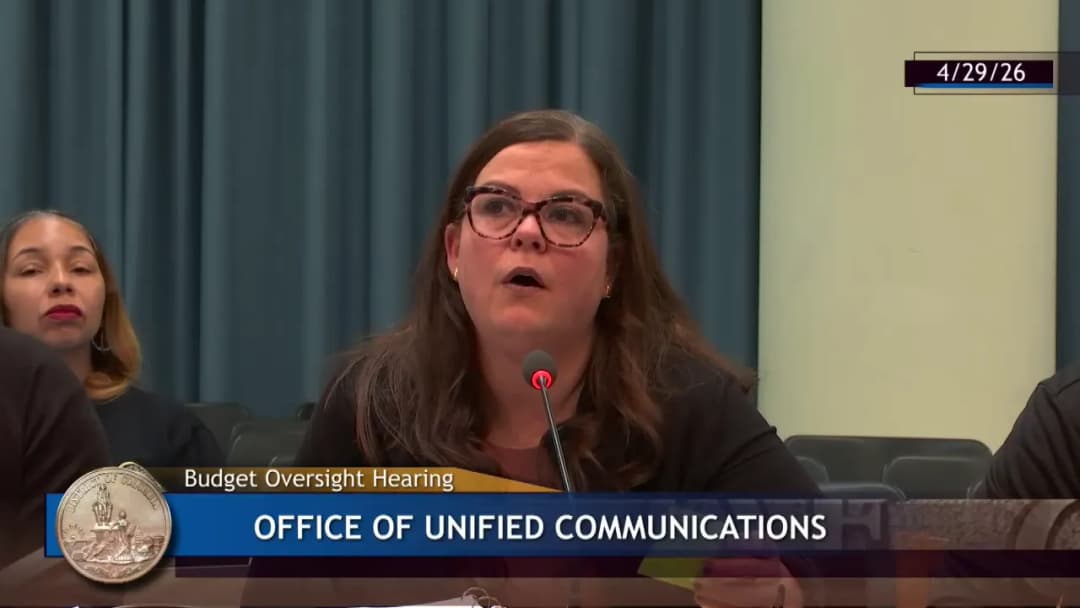
Councilmember Brooke Pinto (Ward 2) chaired a public hearing of the Judiciary Committee on the Judiciary and Public Safety to review Mayor Bowser's proposed Fiscal Year 2027 budgets for the Office of Unified Communications (OUC) and the Metropolitan Police Department (MPD). The hearing took place on Wednesday, April 29, 2026, from 9:54 AM to 3:19 PM in Room 412 of the John A. Wilson Building. The proposed OUC budget is $60.2 million (a 7% decrease from FY26), while MPD's proposed budget is $688.5 million (a 14% increase, largely due to overtime and collective bargaining agreement costs). Councilmembers heard from 25 public witnesses and then questioned OUC Director Heather McGaffin and MPD Interim Chief Jeffrey Carroll. Public Comments & Testimony - Lisa Abrams (Hotel Association of Washington, D.C.) opposed the proposed 80-cent per night hotel occupancy fee to fund 911 technology, arguing hotels already contribute heavily and the fund has been diverted to non-technology purposes. She noted this is the fifth time the fee has been proposed. - Veronica Mosqueta (Decrim Poverty Coalition) urged investment in a non-police crisis response system, citing that only 870 of 1.54 million 911 calls were diverted to 988 last year and highlighting the death of Clifford Brooks during a mental health crisis. - Trupti Patel (ANC 2A03) called for independent verification of MPD crime data, accountability for misconduct, and transparency in discipline, urging reallocation of MPD funds to the Office of Attorney General's worker rights and consumer protection divisions. - Michaela Deming (DC Coalition Against Domestic Violence) urged restoration of $6.3 million in cuts to domestic violence and victim services, noting a spike in domestic violence homicides despite overall crime drops. She argued MPD's $89 million increase could fund critical social services. - Gregory Pemberton (DC Police Union) detailed MPD's staffing crisis (3,150 officers, down from 3,800 in six years), abusive mandatory overtime, and deplorable facility conditions. He supported the mayor's budget but stressed the need for wage increases in the upcoming collective bargaining agreement. - Joey Ferguson (DFLOC DC) opposed the $7 million increase for contractual services, including expansion of Flock license plate readers, calling them warrantless surveillance that shares data with ICE. He noted MPD's former CIO now works for Flock Safety. - Gregory Sakas (public witness) called the budget an "act of violence," citing cuts to school-based behavioral health and victim services while funding MPD overtime and surveillance. He urged reallocation to ERAP and other social programs. - Ashley Anderson (DC Justice Lab) opposed the $81 million overtime budget (up from $39 million) and $7 million for surveillance technology, arguing these investments contradict evidence-based public safety. She called for expanding non-police crisis response and harm reduction centers. - Rebecca Strauss (Federal City Council) generally supported the mayor's budget but noted no new funding for police facilities, which is a key recruitment and retention challenge. - Bill Mefford (Festival Center) opposed MPD's 15% budget increase, citing collaboration with ICE and the need to fund domestic violence services, paid family leave, and rental assistance instead. - Sequenley Gray (DC JOSP Justice) criticized MPD's overpolicing of communities of color, lack of transparency, and the youth curfew, calling for investment in access to justice and workers' rights programs. - Frankie Seabron (Free DC) argued that MPD's budget increase is a reward for poor performance, while cuts to social safety nets harm communities. She called for progressive taxes to address the deficit. - James Stroud (public witness) highlighted MPD's $41 million in surveillance spending since 2016, including $6.6 million on ShotSpotter, which he said is ineffective (86% of dispatches in Chicago resulted in no crime). He also criticized excessive stops and the addition of a PR staffer. - Tanya Golash-Boza (professor) urged against increasing MPD's budget, citing racial profiling and nuisance policing. She said research shows no link between police spending and reduced firearm violence. - Mr. Ringler (public witness) called for cutting ShotSpotter, Flock cameras, and Cellbrite Pathfinder, and reducing MPD's communications staff. He argued funds should go to ERAP, health care, and legal services. - Fanny Gandhi (law student) criticized the juvenile curfew as a poor use of resources, noting it leads to stops and arrests without addressing root causes. She urged investment in third spaces for youth. - Jataya Foster (law student) urged redirecting the proposed $21.5 million increase in patrol services to the Youth and Family Engagement Division for prevention programs. - Jonah Goodman (public witness) detailed OUC dispatch errors, including a cardiac arrest call with 26 minutes of lost time, and criticized OUC's failure to investigate or comply with FOIA requests. - Dave Stadter (Saturn 911 Communications) recounted a December 2025 cardiac arrest call where dispatchers failed to answer the radio seven times in four minutes, and OUC Director McGaffin's response falsely blamed FEMS. He urged passage of the bill giving FEMS medical director authority over EMS protocols. - Paula Edwards (ANC 4A01) opposed cuts to OUC's budget, noting that 311 service requests are often closed without action by agencies like DPW and DDOT. - Ty Hobson Powell (ACLU DC) urged rejection of the permanent youth curfew, citing racial profiling and trauma. He called for investment in mental health services, recreation, and employment for youth. - Caroline Pryor (Empowered) criticized MPD's collaboration with federal agencies and the juvenile curfew, urging the committee to probe the Juvenile Investigative Response Unit and redirect funding to social services. - Scott Goldstein (Power Ed) advocated for redirecting MPD signing bonuses and overtime funds to youth programming, safe passage, and conflict resolution. He argued that the curfew does not address root causes of youth gatherings. - Devon Montgomery (Empowered) proposed redirecting $86 million in local overtime funds to social safety net programs, including youth mentorship, school-based behavioral health, and ERAP. - John Payne (public witness) called for cutting surveillance technology (ShotSpotter, Flock, Cellbrite) and funding non-police crisis response and ERAP, citing MPD's collaboration with federal agencies. - Janae Wilson (DC Safe) noted the long-standing partnership with MPD on domestic violence response but raised concerns about the $92 million increase in MPD's budget while victim services are cut. She called for a balanced approach and improvements in data collection and transparency. - Abel Amin (Fair Budget Coalition) called for reallocating $100 million from MPD to DHS for ERAP, noting that MPD's overtime budget alone increased by $42 million. - Talib Karim Mohammed (STEM for us) (after a dispute over political background) recommended reallocating funds from MPD to victim services and prevention programs, and criticized invasive surveillance technology. - Christine Corey (public witness) detailed MPD's $6.6 million on ShotSpotter (ineffective in Chicago), $4 million on ALPRs, and $1.7 million on Cellbrite Pathfinder, arguing these funds should go to ERAP and other social programs. Discussion Items - Office of Unified Communications (OUC): Director Heather McGaffin presented the proposed $60.2 million budget, highlighting a 7% decrease from FY26. She noted that 97% of 911 calls are answered within 20 seconds, and that the agency is using AI for quality assurance and 311 overnight automation. Councilmembers questioned her on staffing (18 vacancies, 7 positions cut from 311), overtime usage (projected 3.1 million in FY26, budgeted 3.6 million for FY27), absenteeism (30% of shifts below minimum staffing per OIG report), and the hotel occupancy fee. McGaffin defended the fee as necessary to close a $7 million funding gap for next-generation 911 technology. She also discussed the agency's use of AI for quality assurance, which has analyzed 90,761 calls in 2026 compared to 35,000 in all of 2025. - Metropolitan Police Department (MPD): Interim Chief Jeffrey Carroll presented the proposed $688 million budget, emphasizing a 14% increase primarily due to overtime and collective bargaining agreement costs. He highlighted the staffing crisis (3,157 sworn officers, a 50-year low) and proposed BSA changes to allow hiring recruits without college credits (60 credits earned during academy), expand the cadet program to include up to 25 slots from the Metro area, and modify the senior police officer eligibility to rehire retirees with past misconduct (if no suspension of 10+ days in the last five years). Councilmembers questioned him on overtime spending (75.5 million spent in FY26 to date, 81 million budgeted for FY27), the juvenile curfew enforcement (113,000 spent on overtime for curfew zones), collaboration with federal task forces, and facility conditions. Carroll noted that the 7th District station is the worst and will be renovated starting FY27, and that the 2nd District station needs a cell block renovation in FY28. He also discussed the use of drones (14 new drones), license plate readers, and the need for a new helicopter. Key Outcomes - No votes were taken; the hearing was for testimony and discussion. The committee will consider the budget and BSA proposals in the coming weeks. - Proposed BSA provisions include: 1) allowing MPD recruits to enter without college credits and earn 60 credits during the academy; 2) expanding the cadet program to 25 non-DC residents; 3) modifying the senior police officer program to allow rehire of retirees with past misconduct not within the last five years; 4) authorizing MPD to contract with a FBI-approved channeler for background checks; 5) imposing an 80-cent per night hotel occupancy fee to fund 911 technology. - Councilmember Pinto expressed concern about MPD's overtime budget accuracy and the need for improved facilities, and noted that without the juvenile curfew, MPD would need to deploy more officers and incur more overtime. She also highlighted the need to support victim services and other social safety net programs. - Councilmember White raised concerns about MPD's collaboration with federal immigration authorities and youth interactions, calling for funding of the Youth Mentorship Through Community Engagement Act. - Councilmember Henderson questioned OUC's 311 staffing reductions and the hotel fee, and noted the need for realistic overtime budgeting. - Councilmember Fruman pressed for improvements to police stations, especially the 2nd District, and discussed the role of federal officers and the need to rebuild trust with immigrant communities. - Councilmember Felder asked about the long-term strategy for hiring and the impact of the budget on Ward 7, noting that the 7th District station is in the worst condition. - Councilmember Nadeau questioned the juvenile curfew enforcement, including use of handcuffs and transport, and suggested expanding the cadet program by raising the age limit and pay. - The committee will continue to deliberate on the FY27 budget and BSA, with the goal of finalizing the budget by the end of May 2026.

PUBLIC SAFETY 51% · TECHNOLOGY AND INNOVATION 13% · PERSONNEL MATTERS 12% · FISCAL SUSTAINABILITY 7%
119
APR 28, 2026 · WASHINGTON, DISTRICT OF COLUMBIA · COUNCIL OF THE DISTRICT OF COLUMBIA
Budget Oversight Hearing on OCTFME, April 28, 2026

Councilmember Matt Fruman, Chair of the Committee on Human Services, conducted a budget oversight hearing on the Office of Cable Television, Film, Music, and Entertainment (OCTFME) on April 28, 2026, at 12:14 PM in Room 500 of the John A. Wilson Building. The hearing examined OCTFME's Fiscal Year 2027 proposed budget of $12.9 million, including $6.9 million in local funds and $6 million in special purpose revenue from PEG fees. The agency's work spans cable regulation, public access channels (DCN, DCC, DKN), streaming (DCE), radio (DC Radio 96.3 HD4), film production rebates, and creative workforce development. Public Comments & Testimony - Lori (Meridian Hill Pictures) – A local independent filmmaker testified in strong support of the Film Rebate Fund, describing its critical role in sustaining his business for 16 years. He reported hiring more than 660 district residents across three films (City of Trees, The First Step, Holding Lyot) and spending over $1.5 million in qualified expenses. He urged lowering the qualifying threshold for rebates to include lower-budget projects ($50,000–$150,000) and emphasized the need for more screening spaces in the district. He also highlighted challenges from lost theaters and reduced media coverage of films. Discussion Items - Franchise Fee Decline – Director Foster and CFO Cassandra Fields confirmed a consistent year-over-year decline in franchise fees due to cord-cutting, now averaging about 7% annually. Projections show continued decline through 2031. The reduction impacts the agency's entire operations, not just programming. - PEG Channels and Efficiency – Councilmember Fruman questioned whether three PEG channels (DCN, DCC, DKN) could be consolidated. Director Foster and General Counsel Lawrence Cooper defended the need for all three, citing the volume of original programming, council hearings, and educational content. Cooper noted that six PEG channels exist in the district; OCTFME operates three, with the others run by DC TV (Public Access) and UDC. - Original Programming and Content Ownership – OCTFME typically owns content produced in its studios. Talent like Carol Joynt (Q&A Cafe) receives a nominal fee and retains some rights; Donnie Simpson owns his content but grants broadcast rights. Councilmember Fruman pressed for clarity on compensation and rights arrangements. - DCE Streaming Network – DCE is a free streaming channel launched during the pandemic, separate from PEG-funded channels. It aims to showcase content not fitting the other channels and to eventually generate revenue (subscription or sponsorship). Analytics capability has recently been added, but data is not yet robust. - Equipment Upgrades – Director Foster acknowledged a need for equipment upgrades but said funding is limited. The agency operates on aging equipment and relies on praying it keeps working. No immediate risk of violating franchise agreements, but reliability for emergency broadcasts is a concern. - Closed Captioning – OCTFME spends $120,000 annually on contractor-provided captioning. An automated system requiring $300,000 upfront would save $120,000 per year, but the transition has been delayed due to budget constraints. - Creative Economy Career Access Program (CCAP) – This program, which places residents in creative industry jobs (about 8–10 participants per cohort at $200,000), has not been relaunched due to budget cuts. Director Foster expressed commitment but cited lack of funding from DOES. - 202 Creates Program – The program has saved residents $4.3 million since inception, but no dedicated budget line exists; it is funded from the operating budget. Councilmember Fruman requested better tracking of spending and outcomes. - Film Rebate Fund – The FY27 budget allocates $841,000 for the rebate fund, a significant reduction from FY25 when it received an additional $1 million from DEMPS. All current funds are already spoken for, and demand is high, including interest from Netflix, Paramount, and UFC for America's 250th celebrations. Councilmember Fruman expressed concern about the fund being effectively cut in half. - GoGo Activations – OCTFME is supporting GoGo music through activations (e.g., Cherry Blossom Festival, Barbecue Battle) and via DC Radio, where artists can earn royalties from streams/downloads. The 50th anniversary of GoGo and America's 250th are driving demand. A contract to measure economic impact has not been expanded due to budget constraints. - Summer Entertainment Business Program – A partnership with Howard University's Music Business Center and DCPS is expanding from 10 to 15 students this summer, providing free on-campus experience. - Monetization of DC Radio – The agency is exploring an underwriting model (like public broadcasting) for its radio programming, with potential sponsorships from embassies or businesses. Revenue generated would stay at OCTFME. - 311 Cable Complaint Line – Since adding cable-related requests to the 311 system, OCTFME has received over 500 reports, handled by one FTE (Mabel) and a part-time contractor. Councilmember Fruman suggested bringing the contractor in-house for cost efficiency. Key Outcomes - No votes or formal decisions were taken during the hearing; it was a budget oversight session to inform future committee actions. - Councilmember Fruman directed OCTFME to explore bringing the part-time contractor for 311 cable complaints into a full-time position, and to continue discussions on cost-effectiveness. - He requested data on CCAP participant job placement rates and asked OCTFME to track outcomes more systematically. - On the rebate fund, Councilmember Fruman acknowledged the funding shortfall and pledged to consider supplemental funds or adjustments in the final budget. - The committee will follow up on developing analytics for DCE and YouTube channels, with a report expected next year. - Written testimony for the record must be submitted by May 5, 2026, via the council's electronic hearing management system.

TECHNOLOGY AND INNOVATION 26% · ECONOMIC DEVELOPMENT 25% · ARTS AND CULTURE 19% · PROCEDURAL 7%
120
APR 28, 2026 · WASHINGTON, DISTRICT OF COLUMBIA · COUNCIL OF THE DISTRICT OF COLUMBIA
DC Council Health Committee Holds FY27 Budget Hearing and Board of Nursing Nomination on April 28, 2026

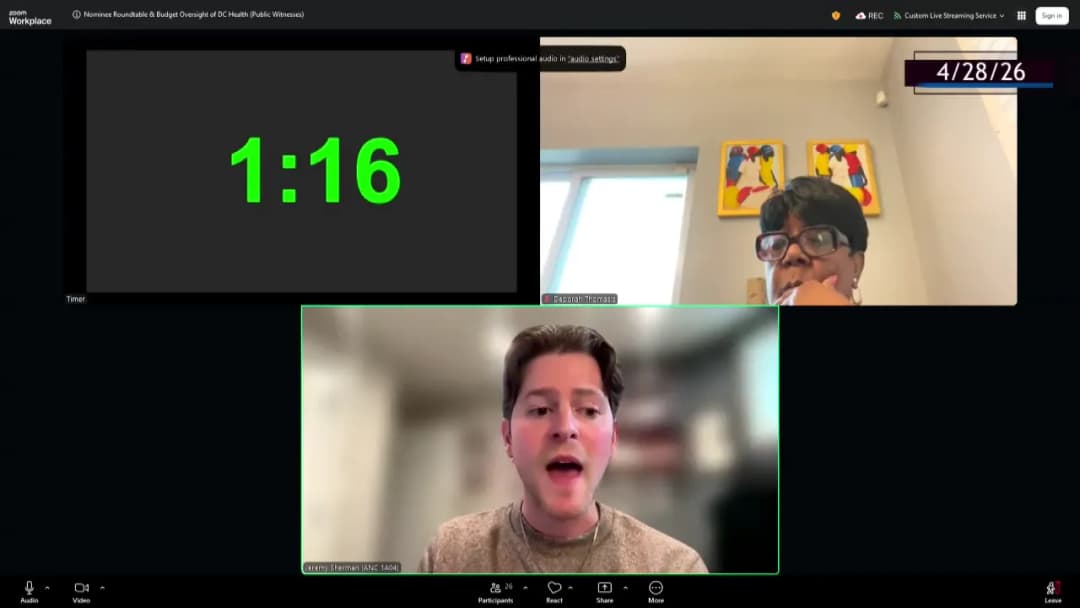
The Committee on Health, chaired by Councilmember Christina Henderson, convened a hybrid hearing on Tuesday, April 28, 2026, at 12:04 PM in Room 412 of the John A. Wilson Building. The hearing first considered the nomination of Brianna Jones to the Board of Nursing, then proceeded to public witness testimony on the FY27 budget for the Department of Health (DC Health). The hearing adjourned at 4:31 PM. Public Comments & Testimony - Board of Nursing Nominee Brianna Jones testified in support of her nomination, highlighting her experience as a nursing home administrator and her commitment to improving long-term care quality and workforce support. - Alex Moore (DC Central Kitchen) urged protection of flat funding for the Healthy Corners Program and restoration of the DC Food Policy Council, warning that its elimination would harm long-term food system progress. - Leah Caslis (Children's Law Center) opposed the complete cut to Healthy Steps funding ($1.3M) and called for restoration, noting sites were not consulted and lack time to transition to alternative funding models. - Joseph Liu (Capital Area Food Bank) emphasized rising food insecurity (40% of DC residents) and requested continued funding for the Food Policy Council as a critical coordinator during federal SNAP changes. - Justin Palmer (DC Hospital Association) supported investments in maternal/infant health and workforce licensing, but expressed concern over a $750,000 reduction in the high-needs health care scholarship program. - Dr. Charlene Otley and Meredith Willette (Potomac River Clinic) described the 80% loss-to-follow-up rate for infant hearing screenings and proposed a mobile audiology unit to achieve 0% loss, citing a successful model in Oklahoma. - Gabby Hedrick (GWU professor) opposed a $100,000 cut to farmers market support grants and the elimination of the Food Policy Council, noting their role in research and community coordination. - Joanne Odom (MedStar Georgetown) testified that Healthy Steps funding cuts would undermine an evidence-based program that integrates behavioral health into pediatric primary care, citing high screening rates and caregiver support. - Lakeisha Terrell (Unity Healthcare) requested sustained funding for school-based health centers, noting that reduced funding has already cut operating days and that contract status for Cardozo and Woodson sites remains unclear. - Rachel Johnston (DC Charter School Alliance) opposed lowering school health suite credentialing requirements from licensed nurses to health techs, and called for a pilot to direct funds to schools to hire their own nurses. - Sam Pennell (Zedek DC) supported passage and funding of the Medical Debt Mitigation Amendment Act, highlighting the need for guardrails as coverage changes increase medical debt risk. - Savon Collie (Pet Food Institute) opposed the proposed per-product pet food registration fee as regressive and likely to reduce product availability and raise costs for consumers. - Nick Stavely and Juanita Blessingame (Fresh Farm) requested a $400,000 increase to Produce Plus (to $2.5M total), noting 9.5% more applications in the first two weeks of 2026 and a waitlist of 2,000 in 2025. - Richard Bibaut (Unity Healthcare) stated that the full $1.3M is needed to sustain Healthy Steps, as no viable billing strategy exists yet. - Makila Deming (DC Coalition Against Domestic Violence) requested $60,000 to train all DC Health staff on domestic violence intervention, noting a proposed 15% cut to community health services. - County Gillam (AFSCME Local 2725) criticized the proposed removal of $127M for future pay increases, arguing the district has $2B in reserves and that frontline workers (e.g., food inspectors, rodent control) are being stretched. - Commissioner Jeremy Sherman and Commissioner Paula Edwards called for increased rodent control staffing and comprehensive strategies, including fertility control and better sanitation coordination. - Victoria Roberts (Community of Hope) and Stacey Adams (parent) testified that Healthy Steps funding is critical for early childhood development and parental mental health, with Adams sharing personal success. - Louise Calderwood (American Feed Industry Association) opposed the pet food fee, advocating for stakeholder input and voluntary funding mechanisms. - Kashara Thomas (Joseph's House) requested $200,000 additional funding to expand medical respite and supportive housing, noting 90% of clients remain housed after discharge. - Dr. Rochelle Logan (DC Primary Care Association) raised concerns about cuts to Healthy Steps, home visiting, and scholarship/loan repayment programs, warning of multiplied losses in federal matching funds. - Max Broad (DC Voters for Animals) supported the Food Policy Council and urged rat control strategies centered on sanitation and contraceptives rather than poisons. Discussion Items - Food Access and Policy: Multiple witnesses urged restoration of funding for the DC Food Policy Council, farmers market support grants, Produce Plus, and medically tailored meals. The chair expressed support for preserving the council, possibly relocating it from the Office of Planning to DC Health. - Healthy Steps: Dozens of witnesses across panels opposed the proposed $1.3M elimination, citing the program's proven impact on developmental screenings, caregiver depression, and adherence to well-child visits. The chair probed the feasibility of billing and collaborative care models, with witnesses confirming no sustainable billing path exists yet. - School Health Services: Witnesses from charter schools, unions, and parents criticized the transition to DC Health-managed health suites, reporting gaps in coverage and reduced credentialing standards. The chair discussed a potential pilot to allow schools to hire their own nurses using redirected funds. - Pet Food Registration Fee: Multiple representatives from pet food and feed associations opposed the fee as regressive and lacking stakeholder input. The chair noted concerns about implementation costs and potential market impacts, encouraging voluntary alternatives. - Rodent Control: Commissioners and advocates requested increased staffing for the rodent and vector control division, better data collection, and coordination across agencies. The chair noted that rat-related bills are under other committees but committed to joint oversight. - Medical Debt: The chair confirmed that the Medical Debt Mitigation Amendment Act is on the consent calendar for May 5, 2026. Key Outcomes - The nomination of Brianna Jones to the Board of Nursing will be considered during the committee's budget markup on May 20, 2026. The record will remain open for public comment until May 18, 2026. - The committee will hold Part 2 of the DC Health budget oversight hearing on Monday, May 4, 2026, at 9:30 AM, with DC Health Director Dr. Ayana Bennett and her team. - The hearing record will remain open for written testimony until 5:00 PM on May 12, 2026. - Chair Henderson committed to exploring restoration of funding for Healthy Steps, school-based health centers, and the Food Policy Council, and to working with colleagues on rodent abatement legislation.

PUBLIC HEALTH 44% · FOOD POLICY 13% · ANIMAL WELFARE 11% · PERSONNEL MATTERS 9%
OPENPUBLICA · PUBLIC MEETING INDEXUPDATED DAILY · openpublica.com