Browse by city
Date range
Search help

Search titles, summaries, topics and stored transcripts together. Keywords may match separately; put the whole query in double quotes for a phrase. Matching follows word analysis, so punctuation is not exact. Both dates are included. Documents are not searched.

SHOWING 41–50 ENTRIES
41
JUL 27, 2026 · ALEXANDRIA, VIRGINIA · PUBLIC MEETINGS
Bi-monthly Virtual Community Meeting Update - July 27, 2026

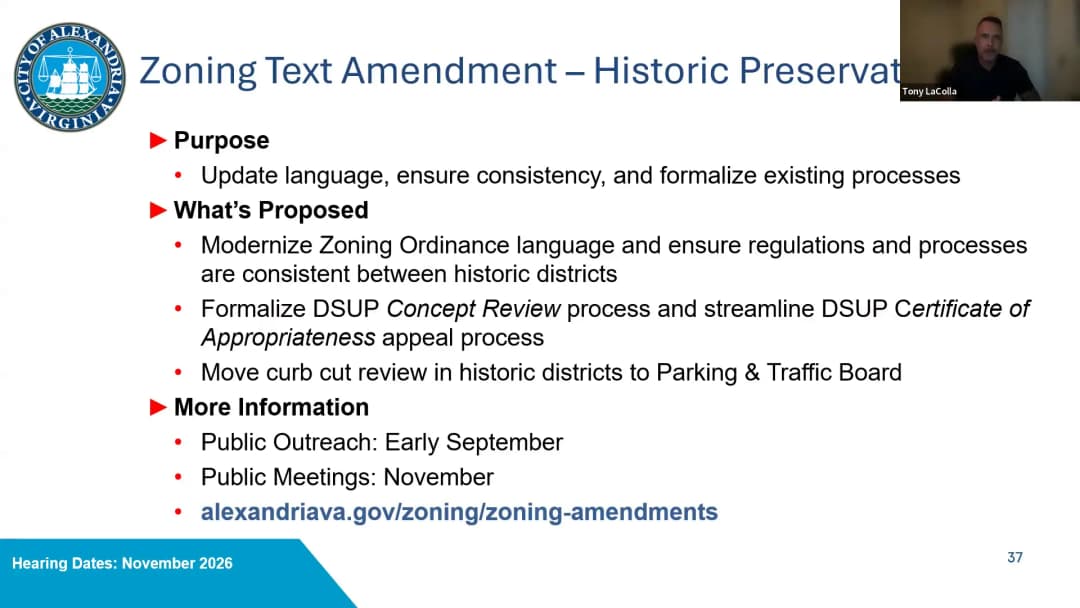
This bi-monthly virtual community meeting, held on July 27, 2026, covered updates on the Duke Street Land Use Plan, a spotlight on transportation engineering review, upcoming development applications, and proposed zoning text amendments. City staff presented updates and answered public questions. Duke Street Land Use Plan Update - Carrie Beach, neighborhood planning division chief, reported that draft recommendations for the Duke Street corridor were released on July 27, 2026, following extensive community engagement since early 2025. The plan aims to address community themes such as traffic and mobility, neighborhood retail, and housing affordability. A 30-day public comment period is open, with a virtual community meeting scheduled for August 5, 2026, at 6:30 PM. A full draft plan is expected in late September 2026, with a public hearing anticipated in December 2026. Transportation Engineering Spotlight - Ryan Knight, transportation engineering division chief, explained the rigorous review process for transportation impacts. Traffic studies are required when a development generates 50 or more new trips in the AM or PM peak hour, based on the ITE Trip Generation Manual. Examples: Duke and Quaker townhomes (9 trips, no study required) and Samuel Madden development (180 trips, study required). Mitigations may include contributions to the Transportation Management Program (TMP), infrastructure improvements, and smart signal technology. Upcoming Development Applications - Rob Kern, development planning division chief, presented the September 2026 docket: 415 North Alfred Street (5 townhouses with accessory dwelling units, planning commission review only) and North Patrick and Madison Streets (5 townhouses with streetscape upgrades). In October 2026, St. Stephen's and St. Agnes Upper School Game Day Plaza project is anticipated (athletic field lighting, concessions, bleachers). Zoning Ordinance Updates - Tony Lakola, division chief for land use and preservation, presented several proposed text amendments: - Yes in God's Backyard (YIGBY): State-mandated administrative review for affordable housing developments on religious or nonprofit property (at least 60% affordable units). Public outreach in September, hearings in November. - Parking Regulations: State-mandated maximum parking spaces near transit facilities (1 space per single-unit, 0.5 spaces per multifamily within 1,000 feet of a transit facility). Staff proposes applying citywide within enhanced transit areas. Hearings in November. - Substandard Lots: Proposed by-right development for lots meeting certain thresholds, retaining SUP review for lots without frontage. Third public outreach in mid-August, hearings in October. - Historic Preservation: Updates to modernize language, formalize concept review, and streamline appeal processes. Public outreach in early September, hearings in November. Public Comments & Testimony - Several questions were submitted via Q&A: - A resident requested monthly updates instead of bi-monthly, stating the current cadence is insufficient for substantive feedback. Staff noted they would review the cadence. - Questions about fees: Application fees are fee-for-service to cover staff review costs. Transportation Management Program (TMP) fees fund projects encouraging alternative transportation modes. - A question about whether Alexandria would expand expedited processes for all affordable housing under YIGBY. Staff indicated they would meet state requirements and explore additional administrative reviews. - Concerns about historic preservation text amendments potentially eroding standards. Staff clarified that the amendments maintain existing standards and formalize the review process, not relax regulations. - A question about substandard lot text amendment timing: October hearings are scheduled, with public meetings to gather feedback before then. - A question about Duke Street redevelopment: Staff explained that property owners would notify businesses, and the plan includes strategies to preserve affordable commercial space. Key Outcomes - No formal votes were taken. Key next steps include: - Duke Street Land Use Plan: Comment period through August 2026, virtual meeting August 5, draft plan in September, public hearing in December. - Development applications: September and October hearings before Planning Commission and City Council. - Zoning text amendments: Public outreach and hearings in October and November 2026. - Staff will consider increasing meeting frequency based on public feedback.
PLANNING AND ZONING 42% · TRANSPORTATION SAFETY 20% · HISTORIC PRESERVATION 12% · PUBLIC ENGAGEMENT 8%
42
JUL 22, 2026 · ALEXANDRIA, VIRGINIA · PUBLIC MEETINGS
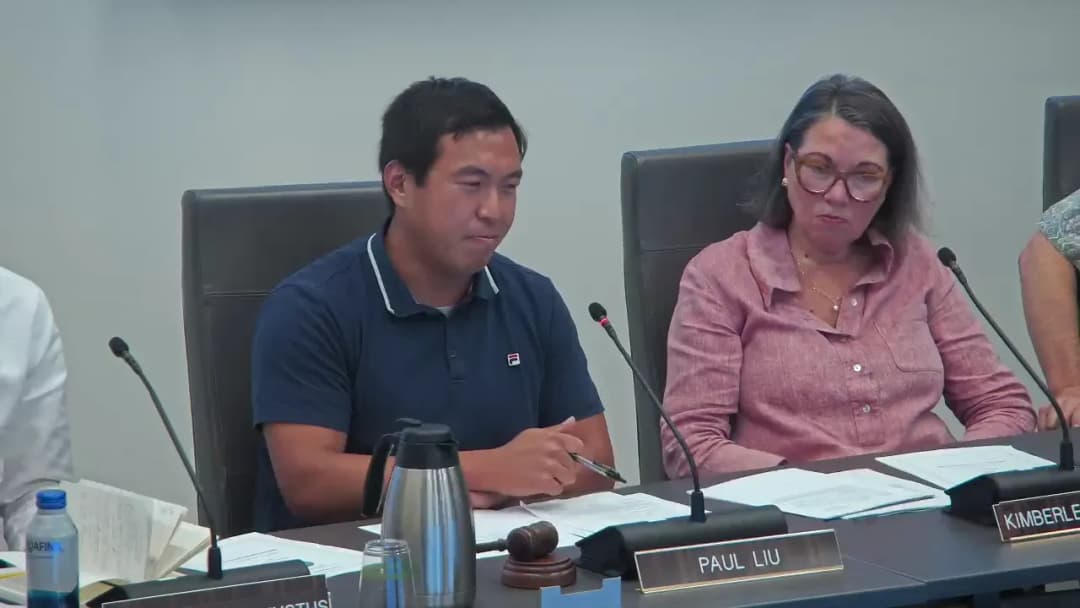
Alexandria Board of Zoning Appeals Public Hearing - July 22, 2026

The Alexandria Board of Zoning Appeals (BZA) held a public hearing on July 22, 2026, at 7:01 p.m. in the City Council Chambers at Del Pepper Community Resource Center. The board addressed two agenda items: a variance request for an after-the-fact pergola at 2500 Dewitt Avenue and a special exception request for a rear-yard addition at 414 Duke Street. The meeting adjourned at 8:33 p.m. Consent Calendar - The board unanimously approved the minutes from the June 8, 2026, BZA public hearing by a vote of 5-0. Public Comments & Testimony - BZA2026-00008 (2500 Dewitt Avenue): One member of the public spoke in support of the applicant's variance request. The speaker, a neighbor, argued that the pergola provides greater aesthetic value to the community than the previous tree, noted that it is a heavily traveled corner for families walking to school and the farmers market, and stated that the two 5.5-inch posts are easily seen through, unlike the previous tree. The speaker also noted that a seven-foot-tall solid fence on the opposite corner is a greater obstruction. - BZA2026-00009 (414 Duke Street): No public comments were offered. Discussion Items - BZA2026-00008 – Variance for Pergola at 2500 Dewitt Avenue: The applicant, Geoff Jacobi, requested a variance to permit an after-the-fact 126.26-square-foot, 9-foot-tall pergola to remain within the required 30-foot vision clearance triangle at the intersection of Dewitt Avenue and Mount Ida Avenue. The relief sought was 6.11 feet (from 23.89 feet provided to the required 30 feet). The city staff recommended denial, finding the variance did not meet all four criteria. During deliberations, board members debated each of the four variance criteria: (1) the unique shape of the lot (acute angle) and the open nature of the pergola; (2) whether strict application would unreasonably restrict property utilization – board members were divided, with some noting the pergola could be relocated at modest cost; (3) whether the hardship was created by the applicant – staff noted the structure was built after the fact, but some board members argued the hardship was not intentionally created; (4) whether the variance would be detrimental to adjacent properties – most board members saw no detriment, despite a comment from the Traffic and Environmental Services division that the structure could create sight-distance challenges. A motion to approve was made by Mr. Foley and seconded by Secretary Eveland. The motion failed 3-2 (Chair Liu and Vice Chair Justus voted against), so the variance was denied. - BZA2026-00009 – Special Exception for Addition at 414 Duke Street: The applicant, John Linam Architect PLLC, requested a special exception to construct a one-story addition to an existing mudroom in the required rear yard (zoned RM/Residential Townhouse). The property line is 2.1 feet from the alley, and under the ordinance, the applicant can apply half the alley width (9 feet) toward the setback, resulting in a requested relief of 4.90 feet (11.10 feet provided vs. 16 feet required). Staff recommended approval, noting the proposal meets all criteria. A motion to approve was made by Mr. Foley, seconded by Mr. Burke, and passed 5-0. Key Outcomes - BZA2026-00008 (2500 Dewitt Avenue): Denied. The motion to approve the variance failed 3-2. The applicant cannot reapply for one year unless a deferral had been granted (no deferral was requested by the applicant). - BZA2026-00009 (414 Duke Street): Approved. The motion carried 5-0. - Meeting Adjourned: The BZA confirmed the next meeting will be September 14, 2026, with no August meeting.

ENGINEERING AND INFRASTRUCTURE 53% · PROCEDURAL 16% · PUBLIC ENGAGEMENT 8% · COMMUNITY ENGAGEMENT 8%
43
JUL 20, 2026 · ALEXANDRIA, VIRGINIA · PUBLIC MEETINGS
Taylor Run Infrastructure Stabilization Project Site Tour - July 20, 2026

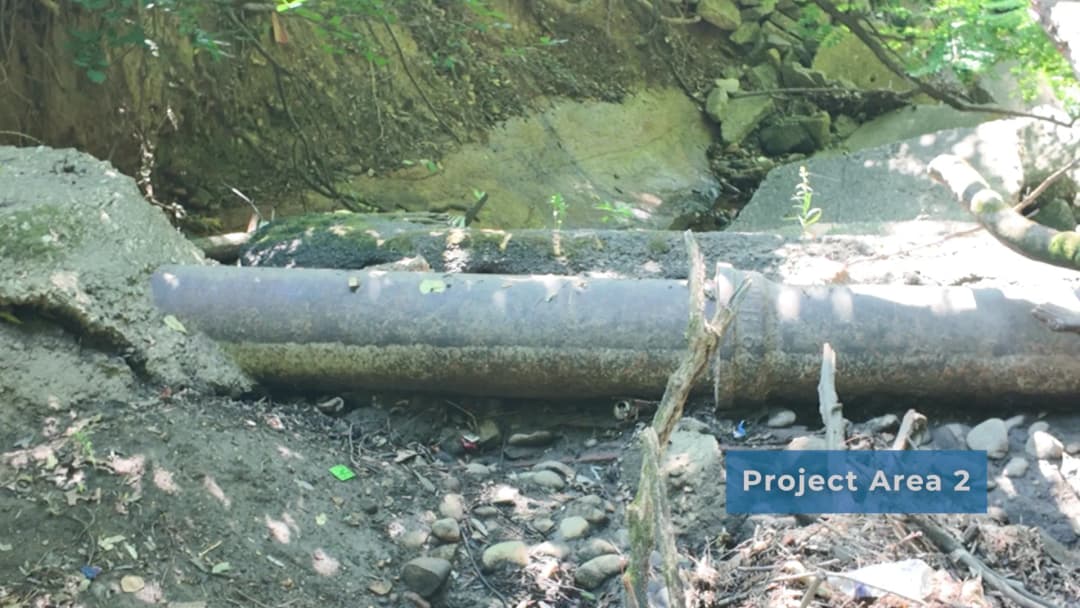
On July 20, 2026, city staff led a site tour of the Taylor Run Infrastructure Stabilization Project in Forest Park, Alexandria, Virginia. The tour highlighted critical sanitary sewer infrastructure at risk from erosion and high‑flow storm events, and presented planned stabilization measures to prevent potential raw sewage releases into the stream. Project Overview The project addresses multiple failing or at‑risk sanitary sewer components along Taylor Run, including two crossing pipes and one floating manhole. The primary goals are to dissipate stream energy, protect pipes from debris impact, and stabilize the manhole to prevent catastrophic failure. Problem Areas and Proposed Solutions - First Outfall (Plunge Pool): A large outfall pipe has an undersized plunge pool (concrete riprap) that cannot adequately dissipate energy. High energy from storm flows erodes the stream and threatens downstream infrastructure. The solution involves placing larger rock or boulder energy dissipation material to absorb and reduce the force of water. - Second Sanitary Sewer Crossing: A pipe crossing the stream is at risk of damage from debris (e.g., fallen trees) pushed against it during high flows. The proposed fix is concrete encasement to protect the pipe from impact. - Floating Manhole: A sanitary sewer manhole has become exposed and destabilized due to missing material underneath. If destabilized further, it could lead to raw sewage discharge into Taylor Run. The plan is to place stabilizing material beneath the manhole and construct a gravity wall around it to shield it from high‑velocity flows and floating debris. - Third Sanitary Sewer Crossing: Another pipe crossing is already impacted by accumulated debris, posing a risk of breakage during extreme storms. Concrete encasement is again proposed to protect the pipe. Key Outcomes The tour provided a firsthand look at the infrastructure vulnerabilities and the proposed engineering solutions. No formal decisions or votes were recorded during this site visit. The project is a proactive effort to prevent sewer spills and protect water quality in Taylor Run.

ENGINEERING AND INFRASTRUCTURE 100%
44
JUL 16, 2026 · ALEXANDRIA, VIRGINIA · PUBLIC MEETINGS
Board of Architectural Review Public Hearing - July 16, 2026

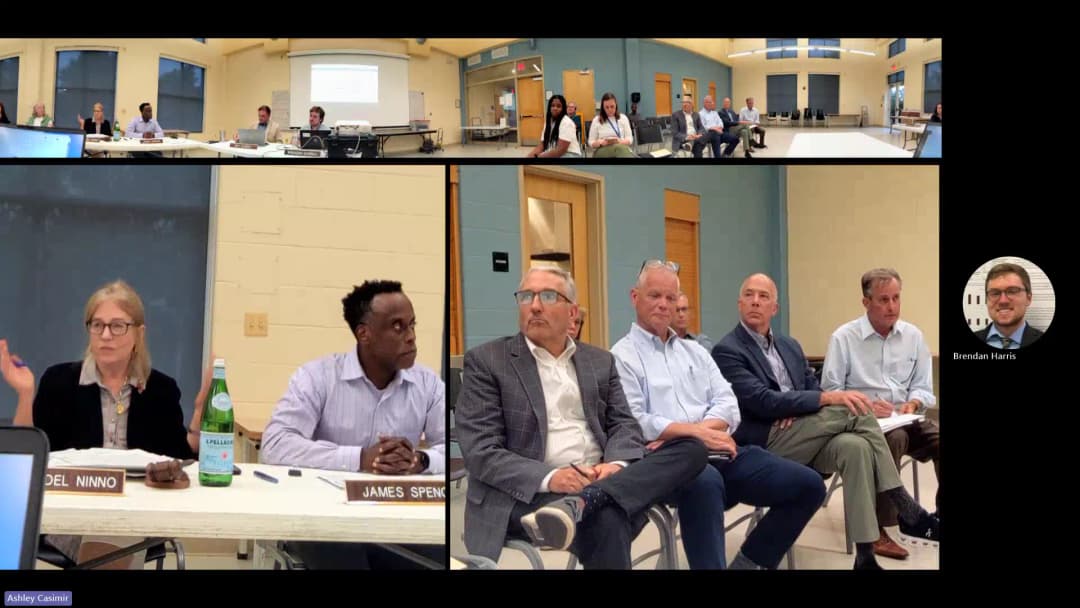
The Alexandria Board of Architectural Review (BAR) held a public hearing on July 16, 2026, at the Charles Houston Recreation Center, 901 Wythe Street. The meeting was called to order at 7:01 p.m. with four members present: Ms. del Ninno (appointed Chair Pro Tem), Ms. Miller, Ms. Robinson, and Mr. Spencer. Chair Scott, Vice Chair Zandian, and Mr. Adams were absent. The board considered several applications for alterations, demolition, and new construction within historic districts, along with a consent calendar and administrative approvals. Consent Calendar - BAR2026-00209 (Parker Gray): Request for alterations and a waiver of vision clearance at 1200 Oronoco Street, applicant Tyler Martin. Approved as submitted (4-0). Public Comments & Testimony - Scott Corizon, representing the Old Town Civic Association (OTCA), spoke in full support of items 5 and 6 (BAR2026-00218 & 00219) for new construction and demolition at 333 North Fairfax Street and 300 North Lee Street. He commended the applicant's collaboration with neighbors and significant architectural adjustments, calling the project a model for neighborhood-appropriate development. Discussion Items - BAR2026-00207 (OHAD) – 1328 Michigan Avenue: Applicant Daniel Fishman presented an after-the-fact application for roof replacement using synthetic slate instead of original slate. Staff recommended denial. Board members noted the work was already completed, the synthetic slate blended reasonably with adjacent original slate, and the building is set far from the street. The board voted 3-1 to approve, with Mr. Spencer voting against. Members emphasized that this approval should not set a precedent for future cases. - BAR2026-00226 & 00228 (Parker Gray) – 310 North Fayette Street: Request for alterations and partial demolition/encapsulation, applicant Patti Rounsevell. The board approved as amended by staff recommendations on a motion that also opened for public comment; the motion carried 4-0. - BAR2026-00218 & 00219 (OHAD) – 333 North Fairfax Street and 300 North Lee Street: This major project for complete demolition and new construction of a 24-home townhouse community was presented by EYA (Jack McLaurin, Jerry Yantis, and team). The design had evolved through three concept hearings. Key discussion points included: - Painted vs. natural brick: Debate over whether new construction should be painted brick (as proposed on some units) or left natural. Staff and several board members expressed concern about painting historic brick, while the applicant argued that painted brick is common in Old Town and provides variety. A mineral paint was recommended for breathability. The board ultimately decided to require the applicant to return to a future meeting with the final brick finish for approval. - Rear extension designs: Some board members felt the rear bay/extension options appeared poorly integrated with window alignments. The applicant noted that different floor plans (2-bedroom vs 3-bedroom) drove the variations and that many rear windows are recessed 5 feet. The board directed the applicant to work with staff on refining these designs. - Building 7 (Queen Street): Several members suggested adding more articulation or a residential character to the flat Italianate facade on this corner building. The applicant preferred the existing flush design as a reference to commercial history and the adjacent Hoffman building. No formal change was required, but the board encouraged further study. - Gutters/downspouts: Clarified that downspouts on street-facing units are exterior copper K-style gutters, while on mews-facing units they are piped into bioretention boxes. - Historic markers: The applicant proposed two markers: one referencing George Washington’s survey map and the maritime history, and a second (to be determined) possibly related to a Green Factory, subject to archaeological findings. - The board also requested coordination of window sill details, consistent use of brick piers, and consideration of reducing the roof overhang on the south elevation. - BAR2026-00223 & 00235 (OHAD) – 414 Duke Street: Applicant requested a deferral. Motion to defer carried 4-0. Key Outcomes - Consent Calendar: Approved BAR2026-00209 (4-0). - BAR2026-00207 (1328 Michigan Ave): Approved 3-1 with the caveat that this case does not set a precedent. Mr. Spencer voted no. - BAR2026-00226 & 00228 (310 N Fayette St): Approved as amended (4-0). - BAR2026-00218 & 00219 (333 N Fairfax / 300 N Lee): Motion carried 4-0 to partially approve and partially defer. The approval includes all aspects except the final brick finish (color and texture/painted vs. natural). The applicant must return to a future board meeting for approval of the brick finish. Additionally, the applicant is directed to work with staff on: refining rear extension designs, coordinating cornice and downspout details, exploring a reduced roof overhang with cantilever over doors on building 7, and ensuring consistent window sill detailing. - BAR2026-00223 & 00235 (414 Duke St): Deferred (4-0) at applicant’s request. - Administrative Approvals: 17 items listed on the docket for various window, door, roof, and stair replacements were noted as approved administratively (no separate vote recorded in the minutes). - Adjournment: The hearing adjourned at 8:44 p.m.

HISTORIC PRESERVATION 48% · ENGINEERING AND INFRASTRUCTURE 38% · PROCEDURAL 7% · COMMUNITY ENGAGEMENT 4%
45
JUL 6, 2026 · ALEXANDRIA, VIRGINIA · PUBLIC MEETINGS
Board of Architectural Review Public Hearing - July 6, 2026

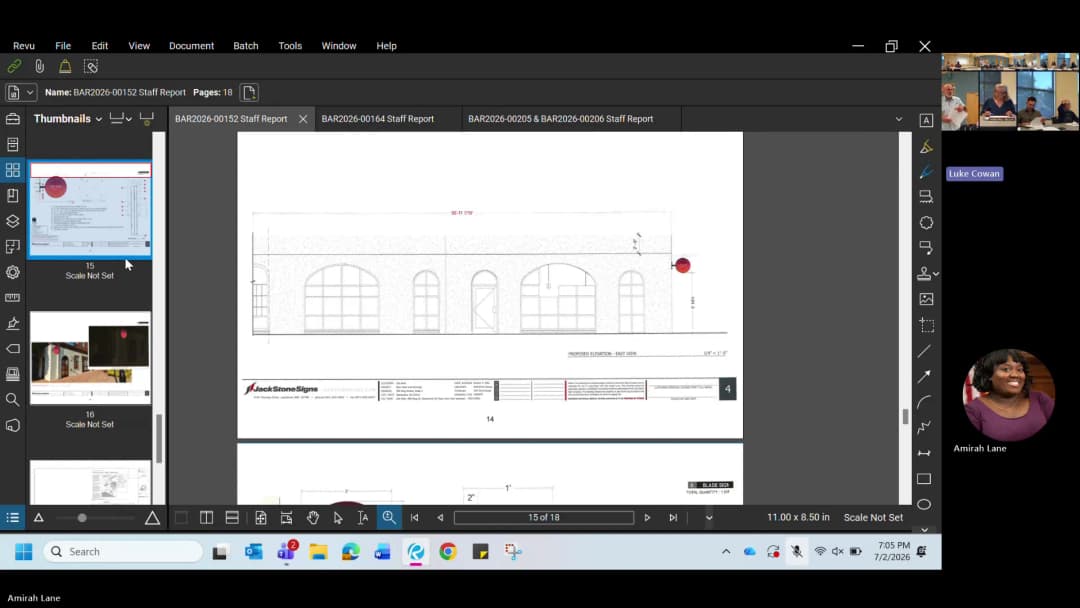
Note: The agenda and minutes for this meeting are dated July 2, 2026, but the provided metadata indicates the meeting took place on July 6, 2026. This summary uses the latter date as instructed. The Board of Architectural Review met on July 6, 2026, at 7:00 PM in the City Council Chambers at Del Pepper Community Resource Center. All seven board members were present. The board approved the minutes of the June 17, 2026 meeting, and considered three application items, all of which were approved unanimously. Consent Calendar - BAR2026-00152 – Request for signage and alterations at 400 King Street, Suite 2 (Parcel Address: 480 King Street) for Life Alive Organic Café, represented by Gary Brent. This item was removed from the consent calendar and heard as the first new business item. Board member Miller questioned the centering of the sign; the applicant explained it was centered over the door. The board approved the application as submitted by a vote of 7-0. Discussion Items - BAR2026-00164 – Request for alterations at 312 North Fairfax Street, applicants Margaret and Robert Pasquerella. The board discussed the use of replacement windows vs. full frame replacement. Staff noted that the modern building and distance from the public right-of-way made insert windows appropriate. The board approved the application as submitted by a vote of 7-0. - BAR2026-00205 & BAR2026-00206 – Request for alterations and an addition (BAR2026-00205) and partial demolition and encapsulation (BAR2026-00206) at 119 Wolfe Street, applicant Anne Altizer represented by Derek Binsted, Architect. The applicant did not make a presentation. There were no public speakers. The board approved both applications as submitted by a roll call vote of 7-0. Key Outcomes - All three applications were approved unanimously. - A board member noted a concern about a new restaurant in Tavern Square that had installed a regular retail storefront instead of the approved large wooden doors, and that the city council was looking into the Equarons windows on Washington Street. The board secretary was asked to send the meeting link to city council. - The next public hearing is scheduled for July 15, 2026.

PROCEDURAL 69% · HISTORIC PRESERVATION 31%
46
JUL 6, 2026 · ALEXANDRIA, VIRGINIA · PUBLIC MEETINGS
Independent Community Policing Review Board Public Hearing on In-Custody Death of Allan F. Tucker II - July 6, 2026

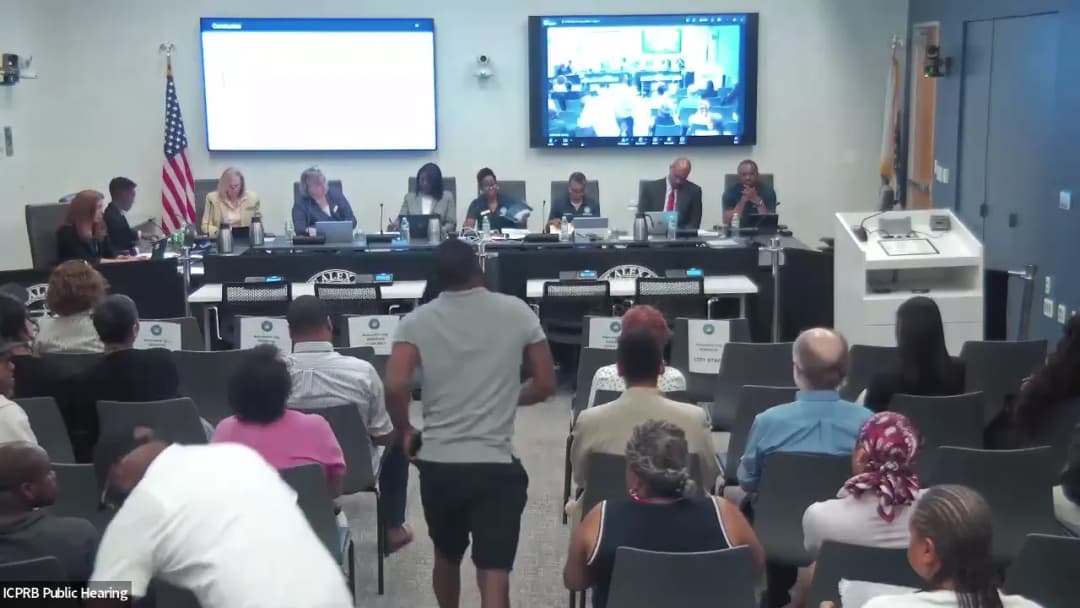
Note on Date Discrepancy: The agenda and transcript indicate the meeting was held on June 29, 2026. However, the instruction for this summary specifies a meeting date of July 6, 2026. This summary follows the instruction while noting the discrepancy. The Independent Community Policing Review Board (ICPRB) held a public hearing to review the administrative investigation into the in-custody death of 27-year-old Allan F. Tucker II, who died on August 15, 2025, while in Alexandria Police Department (APD) custody. The hearing included the auditor's presentation of findings, public testimony from family and community members, board discussion, and a vote to recess and continue deliberations at a later meeting. The meeting lasted from 6:30 PM to approximately 9:00 PM, with the board voting to recess just before 9:00 PM to continue on July 1, 2026. Consent Calendar - Call to Order and Roll Call: All members present except Darrlynn Franklin (excused). Chair Deborah Porter made an opening statement acknowledging the Tucker family. - Approval of Meeting Agenda: Approved with an amendment to change agenda item 9 from "Board decision and vote regarding Auditor’s Investigative Report" to simply "Board action." Motion by Suzanne Berkey, seconded by Alexis Stackhouse, passed unanimously. - Adoption of Public Hearing Procedures and Rules: Motion by Alexis Stackhouse, seconded by Jules Tamegue, passed unanimously. Public Comments & Testimony - Sandra Jones (mother of Allan Tucker): Stated that reading the auditor's findings was one of the most painful experiences of her life. She called the officers' actions a failure of compassion, urgency, and humanity. She urged the city to monitor funding for the Alexandria Sheriff's Office until meaningful accountability and reform are demonstrated. She also criticized Sheriff Sean Casey for deflecting responsibility. - Mac White (bonus father): Expressed deep hurt, noting that Allan's pleas for medical help were ignored. He asked for meaningful change so no other family endures similar pain. - Dante Jones (older brother): Called for criminal charges against Officers Chelsea Henry and William McGuinness, and criticized Chief Tarek McGuire as a failure. He also complained about the return of handcuffs and seatbelt to the family as evidence. - Danielle Tucker (cousin, via phone): Expressed heartbreak and called for full implementation of the auditor's recommendations. - Dana Lawhorn (former APD officer, 27 years): Argued that the auditor's recommendations regarding the Sheriff's Office exceed the legal scope of authority under Virginia Code and the city ordinance. He urged the board to stay within its jurisdiction. - Felicia Tucker (family member): Thanked the auditor for integrity, but insisted the Sheriff's Office must also be held accountable. She stated she forgives but believes officers should be punished. - Fatima Alexander: Criticized lack of communication and transparency from APD leadership throughout the process. She asked what accountability looks like if families feel unheard after nearly a year. - David Parker (Human Rights Commission member): Called for termination of the officers and for the Commonwealth's Attorney to file charges. - Alice Pope: Praised the auditor's thoroughness, but stressed the need for procedural changes and interagency MOUs, including with the Sheriff's Office. - Tyreek Jones (brother): Accused Detective Jamie Trainer of misconduct regarding the return of evidence and insensitive comments. Criticized Chief McGuire's leadership. - April Breslau (Vice Chair, Human Rights Commission): Noted that City Council has budgeted for a comprehensive study of the Sheriff's Office, and urged that the auditor's concerns be considered in that study. - Keith Watson (friend): Stressed that Allan asked for help and was denied; called for justice. - Wesley Pope (friend): Thanked the board for pushing for change despite limitations. - Jaquela Porter (family): Spoke about the need for change, particularly for people with disabilities. - Vic Glassberg (civil rights attorney, 50 years): Defended the auditor's report as legally within scope and commended it. - Miranda Fields: Questioned why officers did not follow CIT procedures and why phones are allowed in the Sally Port. Called for bans on personal phone use when individuals are in custody. - Sierra Norfleet (loved one): Stated that justice delayed is justice denied; demanded equal treatment, not special treatment. - Brittany Tucker (sister): Read excerpts from Chief McGuire's doctoral dissertation about humanity and dignity, then asked where that humanity was for her brother. She called for criminal charges and firing of the officers, and noted that APD vehicles lack interior video. Discussion Items - Auditor's Presentation: Amaratu Kamara, Independent Policing Auditor, presented a 10-month investigation. Key findings: - Sustained findings against Officer One (Chelsea Henry): Violations of medical care, prisoner transport, body-worn camera, and AR-620 (city administrative regulations). - Sustained findings against Officer Two: Violation of body-worn camera policy. - Sustained findings against Officer Three (William McGuinness): Violations of body-worn camera and AR-620 (profane statement toward sheriff's deputies). - Sergeant: No policy violation found, but the auditor left open the possibility of board review. - Organizational recommendations: Refresh training on body-worn cameras, revise medical care and transport policies, implement dash cameras, re-establish a detox center or ensure access to diversion options, and explore partnerships with Fire/EMS for medical screenings. - Systemic/interagency recommendations: Independent review of the Sheriff's Office regarding delayed intake and 45-minute shift change, and creation of an interdepartmental work group to clarify roles during critical incidents. - The auditor stated that disciplinary recommendations were made to the Chief of Police but are confidential under state FOIA. - Board Discussion: Board members expressed condolences and asked detailed questions. - Member O'Toole (retired law enforcement) highlighted a gap in supervision and requested further review of the sergeant's performance. - Secretary Berkey asked about training frequency and compliance checks; the auditor noted that her recommendations include full training on body-worn cameras and transport policies. - Vice Chair Stackhouse raised concerns about the lack of public transparency regarding the auditor's disciplinary recommendations. She also noted discrepancies between the Sheriff's Office press release (claiming no criminal wrongdoing) and the auditor's findings. - Member Lewis discussed the need for transparency around officers' disciplinary histories and asked about oversight of the CERT (Critical Incident Response Team) detective. The auditor clarified that detective Trainer is not part of APD and complaints go to the Commonwealth's Attorney. - Member Tamegue asked about the status of the officers (returned to active duty after OPR and Chief's review) and the need for data to measure success of policy changes. The auditor confirmed APD does not currently collect data on medical requests during transport. - Chair Porter asked about policies for interval checks of individuals in custody; the auditor noted AR-620 covers duty of care but no specific interval recommendation. Key Outcomes - Motion to Recess: At 8:56 PM, with time running short, the board voted to recess the meeting and continue on Wednesday, July 1, 2026, at 6:00 PM virtually. Motion by Vice Chair Stackhouse, seconded by member Tamegue, passed by majority (all in favor, no opposed noted). The recess means the board will reconvene to conclude discussion and take action on the auditor's report. - Pending Actions: The board is expected to decide among four options: (1) concur with the auditor's findings, (2) advise that findings are not supported, (3) request additional investigation, or (4) refer the case to the Commonwealth's Attorney. The board also discussed the possibility of reviewing the MOU and ordinance to address transparency limitations. - Directives: The auditor recommended that the board consider further review of the sergeant's actions. The board noted that interagency coordination with the Sheriff's Office must be addressed, and that City Council funding for a Sheriff's Office study (led by Vice Mayor Bagley) should incorporate the auditor's findings.

PUBLIC SAFETY 60% · PENDING LITIGATION 15% · PROCEDURAL 12% · COMMUNITY ENGAGEMENT 5%
47
JUL 6, 2026 · ALEXANDRIA, VIRGINIA · PUBLIC MEETINGS
Independent Community Policing Review Board Meeting Summary for July 1, 2026

The Independent Community Policing Review Board (ICPRB) convened virtually on July 1, 2026, at 6:02 PM, continuing a public hearing that began on June 29, 2026. The meeting concluded the hearing on a specific case, held closed executive session, discussed future agenda items, and scheduled upcoming meetings. Consent Calendar - The board voted unanimously to approve the meeting agenda for the July 1st meeting. - The board voted unanimously to approve the minutes from the June 3rd, 2026 meeting. Public Comments & Testimony - Sondra Jones (mother of Alan Jones, deceased) expressed deep gratitude to the board and the auditor for their integrity, professionalism, and compassion during the investigation into her son's death. She stated that the board never made her feel that her voice or her son's life did not matter. - Brittany Tucker (sister of Alan Jones) thanked the board for its commitment to a thorough independent review, expressing that the family has been treated with dignity and respect. She also criticized the process involving the CERT team, APD, the chief, and the sheriff's department as “messy” with “a lot of twists and turns and hiding of hands along the way,” recommending that the entire process and system be reviewed and reinforced. Discussion Items - The board debated the findings of the auditor’s report regarding an incident involving a young man in APD custody who repeatedly asked for help before his death. Members raised several concerns, including the lack of disciplinary recommendations from the auditor, the incomplete supervisory role analysis of the sergeant, the need for clarification on why state confidentiality law prohibited public disclosure of disciplinary recommendations, and factual inconsistencies regarding interactions with the sheriff’s office. - Members expressed interest in focusing additional investigation primarily on APD actions, though factual accuracy of sheriff’s office interactions was also noted. - The board voted unanimously (7-0) to recommend that the investigation be deemed incomplete and to recommend additional investigation, specifically into the supervisory role of the sergeant and clarification of facts raised by board members. The motion also included a request from Vice Chair Stackhouse for the legal basis, case cites, and analysis of why state FOIA law prevents public disclosure of disciplinary recommendations. - The city attorney’s office clarified that under Section 2-4-227 of the city code, the board’s decision requires final approval by city council. Since July 1, 2026, was the last council session before summer recess, further action may wait until September. Key Outcomes - The board voted unanimously (7-0) to recommend the investigation as incomplete and to request additional investigation into supervisory roles, legal basis for nondisclosure, and other factual clarifications. - The city attorney’s office confirmed that state code requires city council approval before the additional investigation can proceed, potentially delaying action until September 2026. - The board held a closed executive session (pursuant to Virginia Code 2.2-3711.A.8) to consult with legal counsel on recent state legislation governing police civilian review board meetings and board authority under the city code. The board’s vote to certify that the closed session discussion was limited to the stated purposes passed unanimously. - The board scheduled future meetings: August 5, 2026 (with NACOLE training, meeting at 6 PM), September 2, 2026 (regular monthly meeting), and October 7, 2026 (regular monthly meeting). A training with Dr. Engel on APD use of force is planned for October/November. - The board plans to review APD use of force policy (directive 10.32) at the August meeting, open a closed session under exemption A1 to discuss board and staff performance, and arrange for a presentation from the sheriff’s office on their processes and procedures.

PROCEDURAL 59% · PUBLIC SAFETY 28% · COMMUNITY ENGAGEMENT 6% · BUDGET EQUITY ANALYSIS 4%
48
JUL 2, 2026 · ALEXANDRIA, VIRGINIA · PUBLIC MEETINGS
Duke Street Planning Workshop – Community Meeting on Sustainability and Mobility – July 2, 2026

The City of Alexandria held a community workshop on July 2, 2026, as part of Phase 3 of the Duke Street planning process. The meeting focused on open space, sustainability, and mobility, with presentations from city staff and consultants. Attendees were invited to submit written questions, which were answered during a Q&A session. The workshop aimed to gather public input and share analysis on environmental risks, traffic conditions, and future land use strategies along the Duke Street corridor. Public Comments & Testimony - Tree canopy and shade: A resident asked how the plan would protect existing trees and add shade, noting that trees provide ground shade and improve safety and health. Staff responded that street trees are a high-impact, low-cost sustainability investment and should be built into the plan. - Sustainability vs. affordability: One attendee questioned whether high sustainability goals (e.g., green roofs) would drive up development costs and affect affordability. Staff explained that many sustainability measures, such as reflective roofs, are low-cost and reduce energy costs for building owners, and the plan includes both high- and low-cost interventions. - Greenhouse gas reduction: A question asked if the plan includes specific measures to reduce greenhouse gases. Staff noted that combining urban density, tree planting, stormwater management, and efficient buildings collectively makes a significant impact, though no single measure was highlighted. - Traffic analysis and trip generation: Several questions addressed traffic modeling. One attendee asked why the traffic analysis shows regional traffic on Duke Street despite city goals. The presenter explained that the design of the street influences regional travel; reducing speeds and improving pedestrian infrastructure can discourage regional through-traffic. Another question asked how different development types generate different traffic impacts. Staff explained that a gas station generates short, frequent trips while apartments generate peak-hour trips but fewer trips throughout the day. - Bus stop amenities: A participant asked whether the plan would include closed bus stops with protection from wind, rain, and sun. Staff confirmed that the Street in Motion plan includes bus station designs that consider wind direction, sun exposure, and comfort. - Underground utilities: A question about undergrounding utilities to avoid trip hazards was raised. Staff acknowledged standards and examples exist, and that undergrounding allows for more mature tree planting. - Congestion pricing: One attendee asked about options besides congestion pricing to reduce regional traffic. The presenter replied that street design and speed management are the most effective tools to deter regional traffic. - Traffic calming on residential streets: A question asked if parallel traffic calming on residential streets could offset impacts from Duke Street improvements. Staff responded that such measures can be proactive or implemented as observed needs arise. - Public investment: A question asked for the amount of public investment needed. Staff indicated that much of the investment would be incentivized through private development, though no specific figure was provided. Discussion Items - Sustainability and Green Infrastructure: Kelly and Trevor presented findings on environmental risks, noting high impervious surface areas that contribute to flooding. They recommended increasing tree canopy along roadways (especially east-west streets like Duke Street that receive high solar exposure), using green infrastructure such as stormwater planters, and promoting cool roofs and mixed-use development that maintains connectivity. They also emphasized using native and pollinator plants, though the city already has guidelines on that. - Mobility and Transportation: Dana Martin, senior transportation engineer, summarized community priorities heard throughout the process: safety for pedestrians and cyclists, better connections across Duke Street (which acts as a barrier), and more travel options including transit, biking, and walking. A traffic analysis showed that Duke Street is a regional corridor with high traffic volumes, particularly near Quaker Lane and Telegraph Road. The presenter highlighted that street design (e.g., lane width, signal timing, speed limits) influences regional traffic and safety. Adaptive traffic signals were discussed as a tool to manage congestion. - Land Use Coordination: Staff stressed that the plan coordinates land use and transportation to reduce vehicle trips. Mixed-use development that allows walking and biking to daily needs was presented as a key strategy. The plan also supports bus rapid transit (BRT) along Duke Street, a major future investment. Key Outcomes - The workshop was part of Phase 3 of the Duke Street planning process; public input will be incorporated into final recommendations. - Staff committed to posting all presentation materials and answers to unanswered questions on the city’s website. - The plan is a 20-year vision; implementation will involve public-private partnerships and coordination with ongoing city efforts (e.g., Street in Motion, flood mitigation). - No formal votes or decisions were taken; the meeting was primarily informational and interactive.

TRANSPORTATION SAFETY 36% · ENVIRONMENTAL PROTECTION 18% · PUBLIC ENGAGEMENT 14% · PROCEDURAL 9%
49
JUL 1, 2026 · ALEXANDRIA, VIRGINIA · PUBLIC MEETINGS
Duke Street Corridor Plan Community Meeting – July 1, 2026

This community meeting presented findings and proposals for the Duke Street Corridor Plan, focusing on sustainability, mobility, safety, and land use. City planning, transportation, and environmental consultants shared data on environmental risks, traffic patterns, and development impacts. The meeting included a question-and-answer session with residents. Public Comments & Testimony - Residents raised questions about tree canopy standards and enforcement, the need to consider aging populations and school transportation, managing car traffic for a suburban community, preventing cut-through traffic on side streets, and the appropriateness of reducing road width for bike lanes. - A question expressed concern that high sustainability goals might increase development costs and impact affordability. - A resident asked about ensuring the plan reduces greenhouse gas emissions and protects existing tree canopy during development. - Questions also addressed the lack of bicycle infrastructure, the need for enclosed bus stops, and the potential for reduced speed limits. - A resident inquired about the economic viability of the plan and potential tax increases. Discussion Items - Sustainability and Environmental Analysis: Presenters Kelly and Trevor (Kid Water Associates) identified two environmental risk hotspots: the western landmark area and the southern area near Wheeler Avenue. Risks correlate with high impervious surfaces and low tree canopy. Recommendations include green infrastructure, tree planting along roadways, undergrounding utilities to allow larger tree canopies, cool roofs, and promoting mixed-use development with green building practices. - Mobility and Safety: Hillary Orp (Deputy Director for Transportation) noted Duke Street is one of the city’s highest crash corridors, with 375 crashes in five years, including 13 serious injuries and 3 fatalities. 18 crashes involved pedestrians or bicyclists. Consultant Stephen presented traffic data: 20% of daily traffic on Duke Street has no origin or destination in Alexandria; between Quaker Lane and Telegraph Road, regional traffic during peak hours is significantly higher. He explained that adding capacity attracts more regional traffic, and that the proposed land use plan (mixed-use) produces similar or fewer vehicle trips compared to the 1992 plan, with more walking, biking, and transit use. The Duke Street Transitway improvements (dedicated bus lanes, adaptive signals, protected bike lanes) are expected to improve safety and accessibility but may slightly increase travel times for cars. - Land Use and Development: Jeff Barner (Planning) outlined strategic development opportunity areas (in blue on maps) that would not displace existing residents. He noted market absorption is slow – about 1–2 buildings per year – and the plan is designed as a 20-year vision. New development pays for itself, generating 60% of tax revenue for city services. - Parks and Open Space: The plan includes neighborhood parks within new developments and connections to existing parks. Park uses will be defined through community input at the time of development. Key Outcomes - The plan will not upzone Wheeler Avenue to preserve affordability for over 250 small businesses. - No decision was made to lower the speed limit; it will be revisited during the Vision Zero action plan update. - The city is implementing adaptive traffic signals on Duke Street to improve traffic flow without increasing cut-through traffic. - Next steps: Release of recommendations around July 15, 2026; draft plan release in September; public comment period; adoption hearings before Planning Commission and City Council in December 2026. - The city committed to publishing all survey results and engagement data on the project website. Note: There was no consent calendar or formal votes taken during this meeting.

TRANSPORTATION SAFETY 47% · ENGINEERING AND INFRASTRUCTURE 11% · PUBLIC ENGAGEMENT 9% · PARKS AND RECREATION 8%
50
JUL 1, 2026 · ALEXANDRIA, VIRGINIA · PUBLIC MEETINGS
Alexandria City Council Public Hearing - July 1, 2026

The Alexandria City Council met on July 1, 2026, at the Del Pepper Community Resource Center. The meeting included an executive session from 6:00 PM to 7:13 PM, followed by proclamations, a public discussion period, a consent docket, two special use permit hearings, and a health department update. The meeting adjourned at 10:38 PM after a second closed session. Consent Calendar - Items 7-14, 16-20 were approved in a roll-call vote. These included: rezoning ordinances for 1019 Cameron Street and 4154 Duke Street, adoption of the Housing 2040 Master Plan amendment, amendments to the Firefighters and Police Officers Pension Plan, a resolution supporting a same-day on-demand paratransit pilot (with a $50,000 grant application and a $2.00 supplemental fare), authorization of revenue bonds for the CLI New Elbert Avenue Project, a contract increase of $269,754.16 for the State of Good Repair Program, a license agreement for outdoor dining at 912 King Street, and license agreements with Teleport Communications America, the U.S. Army Corps of Engineers, Cox Virginia Telecom, and Zayo Group. Also approved were extensions of leases at the Torpedo Factory Art Center (artists through March 31, 2027; galleries and founding members through September 30, 2027). - Item 15 (Release of $200,000 in contingent reserves for a Jail Operational Efficiency Study) was pulled for a separate vote and approved unanimously. Public Comments & Testimony - David Brickley (September 11th National Memorial Trail Alliance) spoke in support of signage and recognition of the 9/11 Trail in Alexandria, noting recent state funding of $1 million for the trail and a new visitor center at the Pentagon Memorial. He requested Council consideration. - Rushton Turner (resident, 200 block Fairfax Street) expressed concern about cumulative parking loss due to multiple city decisions (King Street shutdown, City Hall renovation, new bus stops, loading zones), making it difficult for residents, especially with a newborn. She asked for reevaluation. - Nancy McCormick (817 Little Street) opposed the approved Braddock Road bike lanes, arguing that bicycle traffic is minimal (1–3 bicyclers per week) and that the project harms residents by eliminating parking, creating safety issues for school buses, and lacking data support. She accused Council of negligence and urged reversal. - Asphalt Plant (SUP 2026-00018) Public Hearing: 17 speakers testified. - In favor of denial: Sasha Impestado (Cameron Station homeowner) cited non-compliance with sunset provision and urged enforcement; Martin Minnes (Cameron Station) emphasized commitment and leadership; Sunny Pietrafesa (Cameron Station Civic Association President) argued Virginia Paving did not market the property or submit an exit plan; Louisa Ward (civil engineer, former Transportation Commission) stated the use does not conform to the master plan under Section 11-504 of the zoning ordinance; William Blumberg (resident) called the proposed $2.5 million improvements minimal relative to profits; Scott Corzine (300 Queen Street) urged upholding sunset to protect SUP integrity; Linda Bolton (Virginia Paving employee for 41 years) spoke in favor of extension, citing employee livelihoods and community involvement; Christina Williams Matthews (Environmental Manager at Virginia Paving) emphasized the plant's energy efficiency (top 25% nationwide) and community service; Richard Greenberg (Green Hill) stated that offers to purchase the site went unanswered and that Virginia Paving's presence blocks redevelopment; Pamela Opiella (neighbor) noted the plant's incompatibility with Eisenhower West Small Area Plan and proximity to Samuel Tucker Elementary School; Hernando Garzon (economist) urged cost-benefit analysis favoring closure; Michael Hogan (military retiree) said the company did not follow through on relocation promises; Mark Sullivan (Cameron Station) said he purchased his home based on assurances the plant would close by end of 2026; Del Pepper (former Councilwoman, 58-year West End resident) stated the 2019 Council intended no further extensions; Mindy Lyle (Eisenhower West plan chair) asked for no more than a one-year extension and immediate rezoning. - In favor of extension: Elliot Waters (West End resident) described Virginia Paving as a

PROCEDURAL 23% · MISCELLANEOUS 15% · ECONOMIC DEVELOPMENT 11% · ENVIRONMENTAL PROTECTION 10%
OPENPUBLICA · PUBLIC MEETING INDEXUPDATED DAILY · openpublica.com