Browse by city
Date range
Search help

Search titles, summaries, topics and stored transcripts together. Keywords may match separately; put the whole query in double quotes for a phrase. Matching follows word analysis, so punctuation is not exact. Both dates are included. Documents are not searched.

SHOWING 191–200 ENTRIES
191
FEB 18, 2026 · DENVER, COLORADO · COUNCIL COMMITTEES
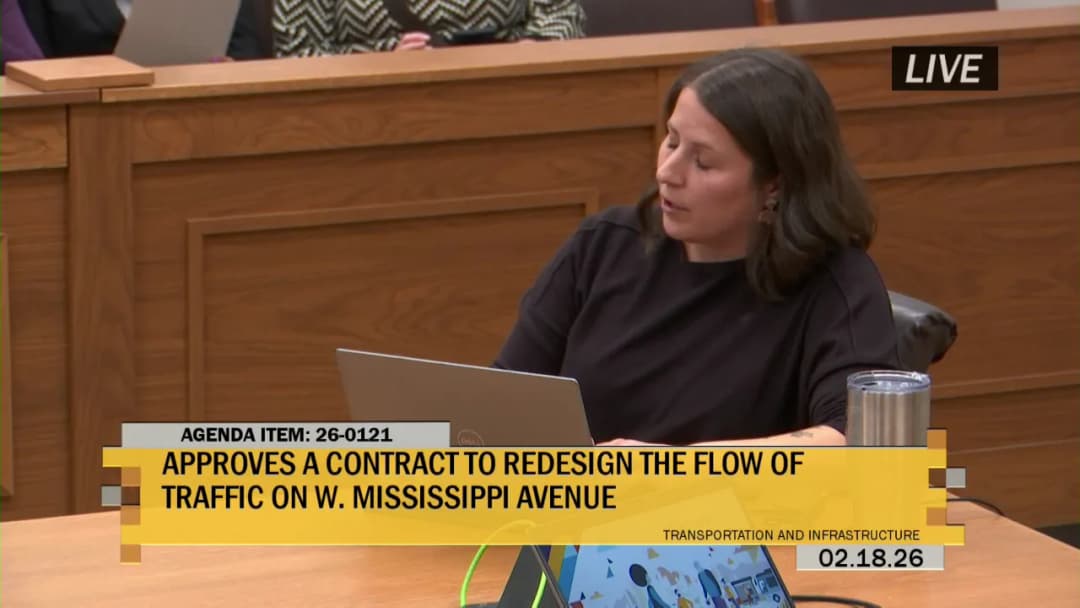
Transportation and Infrastructure Committee Meeting: Mississippi Vision Zero and Alameda Lane Repurposing – Feb 18, 2026

The Transportation and Infrastructure Committee of Denver City Council met on Wednesday, February 18, 2026, chaired by Councilwoman Chantel Luz (District 8). The committee considered an action item approving a $2.9 million contract for the Mississippi Vision Zero Project and received a briefing on the proposed Alameda Lane Repurposing demonstration project. Discussions focused on project delays, safety metrics, community engagement, and representation. Discussion Items Mississippi Vision Zero Project (Resolution 260121) - Presentation: Dotti staff (Elena McCorder, Molly Lanfier, Tigus Holloway) presented the project to improve safety on Mississippi Avenue from Elliott Street to Quivas Street. The project is funded by a CDOT Safer Main Streets grant and aims to reduce vehicle speeds, add raised medians, pedestrian refuge islands, bulb-outs, signal enhancements, and ADA-compliant curb ramps. Crash data from 109 crashes (2016–2020) showed 45% broadside/sideswipe, with five pedestrian crashes near Raritan and Quivas. Traffic volumes: westbound up to 7,800 (daily), eastbound up to 6,800 (daily). The project was delayed due to unsuccessful first bid, procurement hurdles, and grant extension. Construction is expected late April/May 2026 with a 365-day timeline. - Council Concerns: Councilwoman Alvidrez (District 7) expressed frustration over years-long delays and lack of community input continuity. Councilman Cashman requested detailed speed data and comparisons to Alameda corridor. Councilman Flynn questioned traffic data and construction costs. Councilwoman Gilmore asked about other delayed projects and ARPA fund usage. Councilman Hines linked the project to Vision Zero goals and Director Ford's 50% reduction target. Committee members noted the project should align with Vision Zero metrics. The committee moved the resolution to full council for approval. Alameda Lane Repurposing Project Briefing - Presentation: Dotti outlined a follow-up plan including a working group meeting (February 19, 2026) to discuss a demonstration project. The demonstration would reduce travel lanes from four to two (one each way) on a section of Alameda Avenue (Emerson to Franklin) for about nine months, using temporary paint. Permanent safety improvements, such as a rapid flashing beacon at Franklin and improvements at Virginia and Downing, will proceed separately. The working group includes representatives from multiple organizations (e.g., West Wash Park, Maury Hill HOA, local schools). Metrics of success will be developed with community input. - Council Concerns: Councilwoman Alvidrez questioned the representation of Maury Hill HOA (outside project area) and the lack of full corridor testing. Councilman Cashman asked about cost and enforcement. Councilman Hines criticized the departure from the original stakeholder-recommended full lane reduction and noted the working group may not be representative. Councilman Flynn sought data from a previous failed road diet. Councilwoman Gilmore stressed the need for clear working group standards and equity. Committee Chair Luz expressed frustration with lack of specifics on procurement, design, and success metrics. No vote was taken; the briefing was informational. Key Outcomes - Mississippi Vision Zero Project: The committee approved a motion to refer Resolution 260121 to the full City Council for a vote. The resolution authorizes a $2.9 million contract with Goodland Construction (with $2.1 million from CDOT grant and approximately $800,000 city match). Construction is targeted to start in late April/May 2026. - Alameda Lane Repurposing: No formal action was taken. Dotti committed to holding a working group meeting on February 19, 2026, and a subsequent public meeting. The demonstration project is planned for summer 2026 with data collection and community survey. Council members requested additional data, clarified representation, and success metrics. The project will return to committee for further updates.
TRANSPORTATION SAFETY 59% · COMMUNITY ENGAGEMENT 24% · ENGINEERING AND INFRASTRUCTURE 14% · FISCAL SUSTAINABILITY 2%
192
FEB 18, 2026 · DENVER, COLORADO · COUNCIL COMMITTEES
Health and Safety Committee Briefings on Homicide Decline and Sheriff Recruitment – February 18, 2026

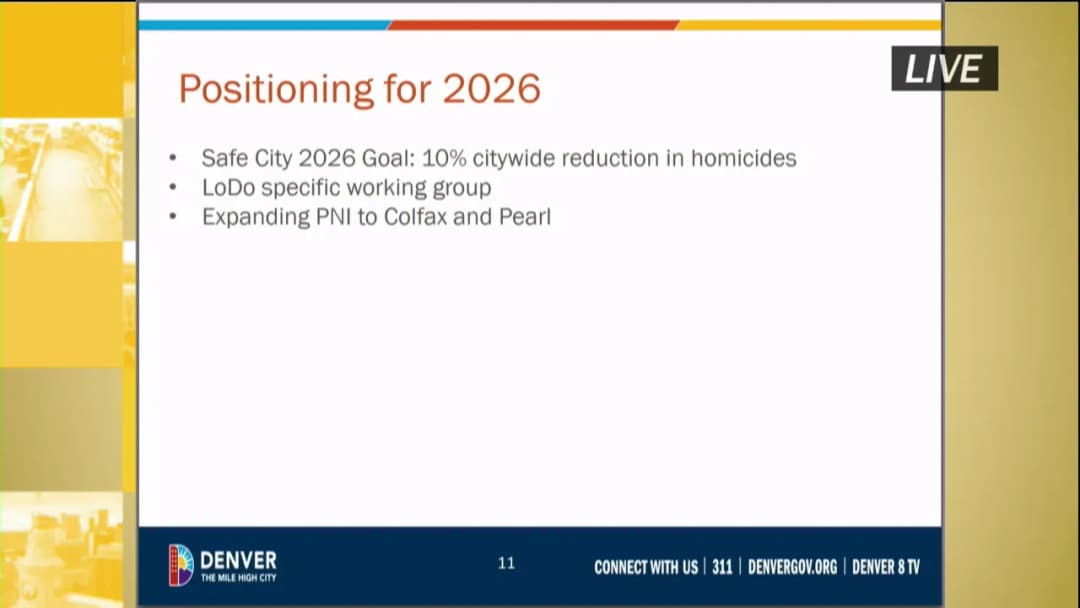
The Health and Safety Committee of the Denver City Council met on Wednesday, February 18, 2026, at 5:30 PM (extended session) to receive two briefings: an update on the city's homicide decline and a presentation on Denver Sheriff Department recruitment and retention strategies. No votes were taken; the sessions were informational. Consent Calendar - The chair noted one item on the consent calendar, but no discussion or action was taken on it during the meeting. Public Comments & Testimony - No public comments were offered. Discussion Items - Briefing 1: Homicide Decline (Denver Police Department) – Chief Ron Thomas, Commander Matt Clark, and Commander Jay Carrera presented. Key highlights: - Denver saw a 60% reduction in homicides from the 2021 peak of 96 to 38 in 2025, a 45% year-over-year drop – the largest among peer cities (populations 250,000–1 million). - Non-fatal shootings declined 28% from 2024 to 2025. - Homicide clearance rate reached 84% (up from 78% in 2024), with 32 of 38 cases cleared (26 by arrest, 6 exceptionally cleared, e.g., murder-suicide or self-defense). Six cases remain open. - Top causal factors: argument/confrontation (21 of 38), domestic violence (down from 12 to 4 homicides), mental health issues, and gang-motivated incidents remained low. - House party-related homicides dropped to zero in 2025 after 12 over the prior three years, attributed to proactive patrol responses. - Place Network Investigations (PNI) sites showed strong results: e.g., Malaan Park homicides fell from 4 (2024) to 1 (2025); Paco Sanchez Park had no homicides. - Hot Streets (short-term interventions) reduced violence by 30–45% at targeted locations. - Technology aided investigations: license plate readers (ALPR) were valuable in 16 of 38 homicides; Halo cameras and ShotSpotter also contributed. - Future plans: a LODO-specific working group and expanding PNI to Colfax and Pearl. - Councilmembers asked about district-level data, the distinction between gun-related and total homicides, the effectiveness of the GAIN program (focused deterrence), and the role of technology. Chief Thomas noted that GAIN was not a primary driver of the decline and that any future iteration would require community input. - Briefing 2: Sheriff Department Recruitment and Retention (Denver Sheriff Department) – Major Janella Roscoe and Division Chief Kelly Bruning presented. Key highlights: - Current operational strength is 64.96% (deployable staff); total on-paper staffing is 68.92% (including recruits). - Female representation is 20%, exceeding the national average of 12–14%; the department aims for 30% by 2030. - Recruitment efforts include national digital marketing (Indeed, Facebook, Street Source campaign generating 3.8 million impressions), 190 community events in 2025, and partnerships with city council for outreach. - Hiring incentives: up to $3,000 bonus (paid in phases), pre-hire program (paid non-uniform duties before academy), and employee referral incentives (20 hours administrative leave). - Training: 18-week academy plus 5-week field training; mentorship program paired recruits with experienced deputies. - Retention strategies: wellness programs (physical therapists, peer support, outreach), leadership development (80+ employees in 2025 programs), and monthly retention committee meetings. - Exit interviews show reasons for departure including shift hours, scheduling, and overtime. The department tracks turnover but did not provide specific numbers; they agreed to share retention data and overtime budget figures with council. - Councilmembers asked about hiring bottlenecks (only two full-time background investigators), the impact of the “rule of 85” retirement change (city-driven), and the need for additional recruiter positions. Major Roscoe stated an additional recruiter would be the most impactful investment. Key Outcomes - No formal votes or decisions were made; the briefings were for information and discussion. - Councilmembers requested follow-up data: district-level crime maps, historical clearance rates, retention statistics, overtime budget details, and a clearer breakdown of recruitment spending. - The Police Department will share updated district-level homicide maps with councilmembers. - The Sheriff Department will provide council with retention rate numbers and data on reasons for departure. - Councilmembers expressed appreciation for the presentations and pledged to amplify recruitment messages through their newsletters and community events.

PUBLIC SAFETY 56% · WORKFORCE DEVELOPMENT 24% · PERSONNEL MATTERS 7% · TECHNOLOGY AND INNOVATION 5%
193
FEB 17, 2026 · DENVER, COLORADO · COUNCIL COMMITTEES
Community Planning and Housing Committee Update on Neighborhood Planning Initiative - February 17, 2026

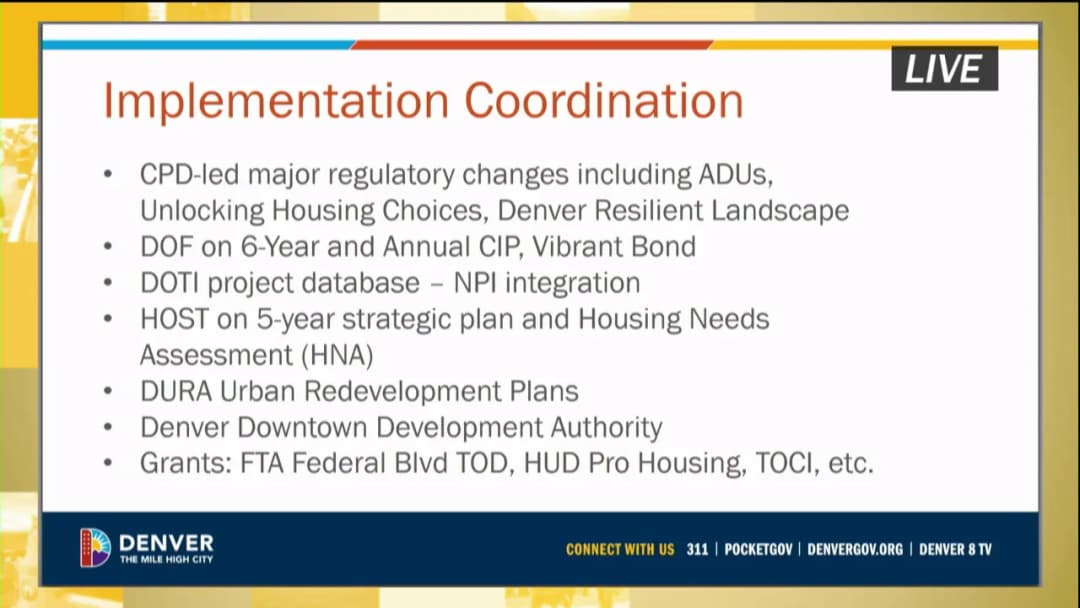
The Community Planning and Housing Committee of Denver City Council met on February 17, 2026, to receive an update from Community Planning and Development (CPD) on the Neighborhood Planning Initiative (NPI). The meeting began with a brief pre-recorded interview with Council President Sandoval, followed by introductions and a presentation from CPD staff. The committee discussed the status of completed and upcoming plans, the impact of budget reductions, and implementation challenges. No public testimony was heard. Consent Calendar - Four items on the consent calendar were approved without discussion or objection. Discussion Items - NPI Program Overview: Scott Robinson (CPD) presented the NPI program, explaining its four-phase process (understanding, feedback, draft, adoption) and goal of 100% city coverage. Eight plans have been completed; the ninth (Southwest Area Plan) is scheduled for City Council public hearing on March 2, 2026. Upon adoption, over 50% of the city will be covered by NPI plans (9 of 19 plan areas). - Upcoming Plans and Budget Impacts: Due to budget reductions, CPD reduced the number of concurrent plans from three to two. The fourth round will launch with Near Northeast (late spring 2026) and Far Northwest (later in 2026), with completion expected in 2027–2028. The South Central plan, originally identified for the fourth round, has been postponed to 2028. A new plan for the Mile High Stadium site (West Area Plan update) is also anticipated in 2028. - Legislative Rezonings: CPD announced that no new proactive legislative rezonings will be conducted for the upcoming Near Northeast and Far Northwest plans due to staffing constraints. Existing rezonings for Southwest and Far Southwest will be completed this spring. Council members expressed concern about this decision, noting that rezonings are critical for implementing plan recommendations. - Implementation and Coordination: CPD highlighted ongoing implementation efforts, including citywide legislative changes (ADUs, Unlocking Housing Choices), coordination with DOTI on project databases, and partnerships with housing and finance departments. The Denver Resilient Landscape project and grants (FTA TOD grant, HUD Pro Housing grant) are supporting plan implementation. - Council Member Concerns and Questions: - Councilmember Romero Campbell expressed frustration about the lack of a plan for Southeast Denver, noting that the Near Southeast Plan only covers half of University Hills. She asked about timelines and was told the earliest completion would be 2030. She offered to seek private funding. - Councilmember Alvitez raised concerns about community navigator training, suggesting more education on zoning and land use. She also noted that older plans (e.g., West Wash Park) had recommendations that were never implemented. - Council President Sandoval emphasized the importance of plans for economic growth and density, citing the success of the Tennyson Street design overlay. She asked about the duration of the pause on legislative rezonings; CPD responded it is temporary but tied to budget and staffing. - Councilmember Cashman stressed the critical need for NPI plans and said he would advocate for more funding, even if it means delaying other city services. - Councilmember Sawyer expressed deep frustration about the timeline, noting that comprehensive plan 2040 will expire before all neighborhoods get plans. She also highlighted a specific implementation gap: the Near Southeast Plan recommends rezoning to duplexes, but no duplex building form exists in the suburban context, and the Unlocking Housing Choices project has not addressed this. She called for a retrospective of CPD's work plan. - Councilmember Watson praised the Near Northeast plan launch and asked about partnerships with CU Denver. CPD confirmed existing partnerships through studios and research projects. Council President Sandoval added that council members can directly engage capstone students. - Councilmember Lewis reminded colleagues of the ability to run budget amendments to fund NPI. - Chair Parity asked about staffing losses (11 planning positions lost in layoffs) and hiring challenges. CPD noted hiring is going well but positions are grant-funded; internal promotions would occur if more positions were created. - Unlocking Housing Choices (UHC): Chair Parity and Councilmember Sawyer discussed the upcoming joint work session with Planning Board on March 17, 2026. CPD clarified that the UHC project is focused on adding density while preserving existing homes and ensuring affordability. Councilmember Sawyer expressed skepticism that the current proposals are market-feasible. CPD acknowledged the need for better communication and noted that financial feasibility analysis is underway. Key Outcomes - The committee received the NPI update and will continue to monitor progress. - No formal votes were taken on the presentation. - CPD will provide a retrospective work plan list to council members. - The next joint work session with Planning Board on Unlocking Housing Choices is scheduled for March 17, 2026. - CPD will launch community engagement for UHC in March 2026, with a goal of adoption by end of year. - Council members were encouraged to reach out to CPD staff (Andrew Webb, Rob Haig) with questions before the work session. - The committee adjourned after approving the consent calendar.

COMMUNITY ENGAGEMENT 50% · AFFORDABLE HOUSING 31% · PROCEDURAL 6% · ENGINEERING AND INFRASTRUCTURE 5%
194
FEB 17, 2026 · DENVER, COLORADO · COUNCIL COMMITTEES
Denver Governance Committee Meeting - February 17, 2026: Permitting Tool Contract and State Legislative Briefing

On Tuesday, February 17, 2026, the Denver City Council Governance and Intergovernmental Relations Committee met to consider an action item on a new permitting technology contract and a briefing on state legislative matters. The committee approved the contract for a guided intake and plan review tool to proceed to full council, and discussed multiple bills including the Home Act (HB 1001), transit investment areas, data privacy, and surveillance legislation. Action Item: Permitting Tool Contract - The committee heard a presentation from Robert Peak (Denver Permitting Office) and Anna Weber (Technology Services) on a proposed contract with Comply AI (d.b.a. SIV Check) for a digital platform that automates pre-checks on permit applications. The total contract is $4.6 million for three modules over five years, but only Module 1 (intake review for all permit types) is currently funded at $1.05 million using a combination of grant and capital funds. Modules 2 and 3 (code compliance for single-family and small commercial) are contingent on success and future funding. - The tool aims to reduce the average 1.6 intake review cycles (currently 38% of applications accepted on first round) to near 80% first-round acceptance, and cut staff review time from 10 minutes per application by at least half. The city averages 1,000 permit applications per month. Other cities using similar tools report up to 70% reduction in reviewer time and 99% alignment with reviewers. - Committee members asked about digital-only submission (paper no longer accepted), user profiles (no profiles stored), and the importance of including Module 2 for single-family projects. The presenters confirmed that Module 1 already covers single-family and duplex projects, and they will prioritize checklist requirements for those. State Legislative Briefing - The committee reviewed multiple bills tracked by the city's lobbying team (Policy Matters) and agency experts. Official city positions require agreement among the mayor's office, agencies, and council. Many bills are in early stages with positions still being formed. - HB 1001 (Home Act): Originally known as YIGBY, this bill requires local governments to allow residential development on properties owned by certain nonprofits, school districts, housing authorities, etc. The city is in an "amend" position, seeking clarifications on definitions, property size, and preemption issues. Concerns about preempting local land use authority were raised. Council members noted the bill is broader than last year, potentially including many 501(c)(3) organizations. - HB 1065 (Transit Investment Area Act): Creates tax increment financing for transit areas. City is in an "amend" position with six specific amendments, including limiting parking funding and requiring transit-supportive zoning. - HB 1037 (Ban Government Purchase of Personal Data): Prohibits law enforcement and other agencies from buying personal data from third parties. The committee is split (5 oppose, 5 amend, 1 other) with concerns that it would cripple investigative tools like LeadsOnline used for catalytic converter and scrap metal enforcement (both city ordinances). DPD reported that these tools were used in nearly 20% of all 2025 arrests and 50% of investigative cases. Council members noted difficulty in amending the bill to preserve critical functions. - SB 70 (PEEPS Act) and SB 71 (SAFE Act): Both regulate surveillance technologies. SB 70 targets license plate readers, requiring warrants and limiting data retention to 4 days (currently 30 days in Denver). SB 71 is broader. Feedback from agencies is still pending; committee will receive requests for input this week. - HB 1005 (Worker Protection Collective Bargaining): 11 council members support this bill (amends Labor Peace Act). The mayor's office is monitoring; council will communicate support separately as a body, not as an official city position. - SB 42 (Revenue Classification TABOR): Under review, no recommendation yet. - SB 72 (Vision Zero Penalties): Supported by DOTI but raises concerns about increased penalties. Council is split, no consensus yet. - Budget Update: The state Joint Budget Committee is through supplemental process; major focus on Medicaid provider rate cuts and county centralization of human services. The city successfully advocated to table HICPUF's regionalization plan in favor of a county-driven approach, and also tabled cost shifts for the guardianship assistance program. Key Outcomes - Action Item Approved: The committee moved to approve the permitting tool contract (motion by Councilmember Cash, second by Council President Sandoval) for full council consideration scheduled for February 23, 2026. No roll call was taken; the item will proceed to the full council. - Legislative Positions: The committee took no final votes on bill positions. Council members are asked to update their preferences in the online tracker, especially on HB 1037 (data privacy) where the committee is split. The next governance committee meeting is March 17, 2026, by which time some bills will have advanced. - Next Steps for HB 1001 and HB 1065: The city will pursue amendments as outlined by Community Planning and Development. For HB 1037, the mayor's office will continue discussions with agencies to see if an amendable path exists, but challenges are significant. - Surveillance Bills (SB 70, SB 71): Agency feedback will be gathered this week and shared with council for formal input.

TECHNOLOGY AND INNOVATION 36% · AFFORDABLE HOUSING 13% · PUBLIC SAFETY 13% · FISCAL SUSTAINABILITY 12%
195
FEB 17, 2026 · DENVER, COLORADO · MAYOR-COUNCIL MEETING
Mayor-Council Joint Meeting and Executive Session - February 17, 2026

This meeting of the Denver Mayor and City Council on February 17, 2026, began with a short general session featuring announcements and an update on the law enforcement masking bill, followed by a motion to enter executive session and closed session for legal advice regarding pending litigation. Announcements - Councilman Alvidres announced the Far East Center's Lunar New Year Festival on February 21-22 (and possibly February 20) and reported that he and Councilwoman Lewis worked over the weekend on edits to the law enforcement masking bill. He outlined key changes: applying to peace officers, removing the penalty provision, clarifying identification and the 25-foot requirement. He confirmed that the public can still complain or press charges against an officer for wearing a mask. - Mayor thanked sponsors and city attorney's office, stated belief that best practices like identifying faces and badges build trust, and expressed support for the bill. - Council President thanked both for their work and for communicating over the weekend. - Councilwoman Gonzalez-Gutierrez wished everyone a happy new year. - Councilman Lewis reported that a missing young man was found safe thanks to DPD and community advocates. - Councilman Torres invited colleagues to the Far East Center's Lunar New Year celebration and mentioned a new mural by Rotha Sok. Key Outcomes - The council moved into executive session pursuant to DRMC 234A sections three and seven for legal advice regarding pending litigation. The motion passed unanimously (no objections noted). - The law enforcement masking bill updates were shared with council members via email and sponsors are available for questions.

PUBLIC SAFETY 51% · PROCEDURAL 27% · PENDING LITIGATION 22%
196
FEB 17, 2026 · DENVER, COLORADO · CITY COUNCIL
Denver City Council Meeting – February 17, 2026: Proclamations, Zoning Amendments, and Rezoning Vote

The Denver City Council held a regular meeting on February 17, 2026, with 12 members present. The agenda included two proclamations, consideration of resolutions for settlement claims, a combined public hearing on zoning text amendments (the "mini bundle"), and a public hearing on a rezoning request. The council also heard general public comments and council announcements. Consent Calendar - Approval of Minutes: Minutes from the February 9, 2026 meeting were approved without corrections. - Proclamations: Two proclamations were adopted unanimously: Proclamation 26-0166 recognizing the 1932 racial justice protest at Washington Park during Black History Month, and Proclamation 26-0156 celebrating Lunar New Year 2026 (Year of the Fire Horse). - Block Vote on Resolutions and Bills: The council voted in a block to adopt resolutions 26-0167 and 26-0168 (settlement claims) and to pass several bills on final consideration (including items from committee). All passed 12-0. Public Comments & Testimony - General Public Comment Session: A half-hour session was held from 5:00 to 5:30 p.m. prior to the evening session. No specific comments were transcribed. - Public Hearing on Mini Bundle (Bills 25-2163 and 25-2164): Renee Martinez Stone, representing the Denver Housing Authority (DHA), spoke in support of the accessory dwelling unit (ADU) clarification. She explained that DHA’s deed-restricted affordable housing and dedicated property management meet the intent of owner-occupancy requirements, and urged the council to support the exemption for DHA-owned properties. - Public Hearing on Rezoning (Bill 25-2138): No members of the public appeared to speak. The applicant, Paul Demption, was present and answered questions from council. Discussion Items - Council Announcements: Multiple council members announced upcoming community events. Councilmember Watson delivered a eulogy for Reverend Jesse Jackson, who passed earlier that day. - Proclamation 26-0166 – Racial Justice at Washington Park: Councilmembers Alvidrez, Cashman, Lewis, and Watson sponsored the proclamation. Councilmembers shared personal stories of segregation and discrimination in Denver’s parks and pools. The proclamation was adopted unanimously. - Proclamation 26-0156 – Lunar New Year: Councilmembers Torres, Alvidrez, and Gonzalez Gutierrez sponsored the proclamation. Remarks highlighted the contributions of Denver’s AAPI community and the recognition of Lunar New Year as a state holiday since 2024. Adopted unanimously. - Resolution 26-0089 – Evergreen Golf Course Concession: Councilmember Flynn requested a one-week postponement under Rule 3.6 to obtain more information. Postponed to February 23, 2026. - Resolutions 26-0167 and 26-0168 – Settlement Claims: Councilmember Lewis called out these resolutions for comment, noting that they involve $25,000 (DOTI claim) and $30,000 (DPD claim), bringing total settlement expenditures for the year to $380,000. Both were adopted as part of the block vote. - Public Hearing on Mini Bundle (Bills 25-2163 and 25-2164): Staff presented a text amendment covering four topics: Prop 123 expedited reviews for affordable housing, wireless telecommunications permitting (state law compliance), ADU clarifications for planned unit developments and DHA, and extension of site development plan approval periods. Councilmembers questioned staff; Councilmember Lewis noted resolved concerns with the Clerk and Recorder’s office. Councilmember Flynn expressed ongoing concerns about telecom impacts on historic districts but acknowledged the state mandate. The bills passed 11-0. - Public Hearing on Rezoning (Bill 25-2138) – 1965 Verbena Street: Staff recommended denial, citing inconsistency with Blueprint Denver and the East Area Plan regarding lot size patterns. The applicant sought to rezone from E-SU-Dx to E-SU-B to split a 9,000 sq. ft. lot and build two homes, including housing for refugees. Planning Board had recommended approval. Council debated: opponents (Sawyer, Flynn, Sandoval) emphasized the need to follow adopted plans; supporters (Hines, Watson, Lewis) argued it met broader housing goals and that the pattern of smaller lots existed. The bill failed 5-6. Key Outcomes - Proclamations 26-0166 and 26-0156: Adopted unanimously. - Resolution 26-0089: Postponed one week to Monday, February 23, 2026. - Resolutions 26-0167 and 26-0168: Adopted (part of block vote). - Mini Bundle (Bills 25-2163 and 25-2164): Passed with 11 ayes. - Rezoning for 1965 Verbena Street (Bill 25-2138): Failed; 5 ayes, 6 nays. - Next Steps: The next public hearing is scheduled for Monday, March 16, 2026, on Council Bill 26-0081 (rezoning at 385 South Zuni in Athmar Park). Protests must be filed by March 9, 2026.

AFFORDABLE HOUSING 50% · PROCEDURAL 17% · RACIAL EQUITY 17% · COMMUNITY ENGAGEMENT 7%
197
FEB 12, 2026 · DENVER, COLORADO · COUNCIL COMMITTEES
Denver Budget & Policy Committee: We Are the Land & Predatory Home Investing – Feb 12, 2026

The Budget and Policy Committee of Denver City Council held a bi-weekly meeting on February 12, 2026, with two briefings: first, an update on the 'We Are the Land' oral history project centered on American Indian voices, and second, a policy proposal to regulate residential property wholesaling to curb predatory home investing. Council members discussed both topics in depth, asking questions and offering suggestions for next steps. Discussion Items We Are the Land Oral History Project - Abby Christman, Principal City Planner with Landmark Preservation and Community Planning and Development (CPD), presented the 'We Are the Land' project, an oral history collaboration with Denver's American Indian community and tribal nations. The project documents living history, traditional knowledge, and contemporary American Indian life. - The budget grew from $77,000 to $320,000 through additional grants and fundraising to support tribal convenings, oral histories, a documentary, a youth art contest, and a National Register nomination for the Denver Indian Center (listed at the national level of significance). - Community engagement included two tribal convenings (October 2023 and October 2024), 17 oral histories, monthly advisory meetings with the American Indian Commission, and presence at Denver March Pow Wow. - The historic context document is organized into eight chapters arranged cyclically around 'four hills' (traditional knowledge, removal, return, reconnection) to reflect indigenous perspectives. Key themes included Denver as ancestral unceded territory, the Sand Creek Massacre as ongoing trauma, and indigenous resilience. - Community recommendations included: maintaining government-to-government relationships with tribes, incorporating Native language signage, reintroducing native plants, expanding education, and creating a permanent tribal liaison. Council members praised the project's careful relationship-building and reciprocal approach. - Councilmember Alvidrez asked about translation (not currently available in Spanish or other languages). Councilmember Gilmore noted the need for a tribal liaison and stable funding for convenings (the 2025 convening budget was cut to $45,000). Council President Sandoval suggested engaging the Native American Commission once reformed to ensure implementation. Predatory Home Investing / Residential Property Wholesaling - Councilmember Lewis and policy aide Jesse Carey presented a proposed ordinance to regulate residential property wholesaling – the practice of investors buying homes with cash offers and quickly reselling for profit, often without a state real estate license. The proposal combines elements from Philadelphia, Atlanta, and Baltimore ordinances. - Key components: a licensing registry overseen by Licensing and Consumer Protection, a no-solicitation list for homeowners, prohibited conduct (misrepresentations, harassment), a three-day cooling-off period, and mandatory disclosure forms for wholesalers. - Data from public records (2003–2004) showed homes bought and flipped for profit with no improvements. A 2023 Drexel University study found homes sold to investors sell for an average of $126,000 less than to individuals, disproportionately affecting distressed neighborhoods. - Council members raised questions about: interaction with state licensing for realtors (exempted), enforcement challenges, focus on vulnerable populations (seniors, probate sales), and potential use of title company data. Councilmember Paridy recommended engaging Colorado Legal Services and Brothers Redevelopment. Councilmember Gonzalez-Gutierres suggested prohibiting solicitation signs. Council President Sandoval emphasized the need to understand other cities' experiences with loopholes. - Next steps: discussions with Mayor's Office, Technology Services, Human Rights and Community Partnerships, District Attorney's Office, and industry stakeholders; further refinement of the draft before committee. Key Outcomes - No formal votes were taken. The committee received the briefings and provided feedback. - Councilmember Lewis committed to sharing the full data set and bill draft with all council members and to continue stakeholder engagement before bringing the wholesaling ordinance to committee. - Council members expressed strong interest in co-sponsoring the wholesaling legislation and in supporting implementation of the 'We Are the Land' recommendations.

AFFORDABLE HOUSING 55% · HISTORIC PRESERVATION 25% · COMMUNITY ENGAGEMENT 17% · RACIAL EQUITY 2%
198
FEB 11, 2026 · DENVER, COLORADO · COUNCIL COMMITTEES
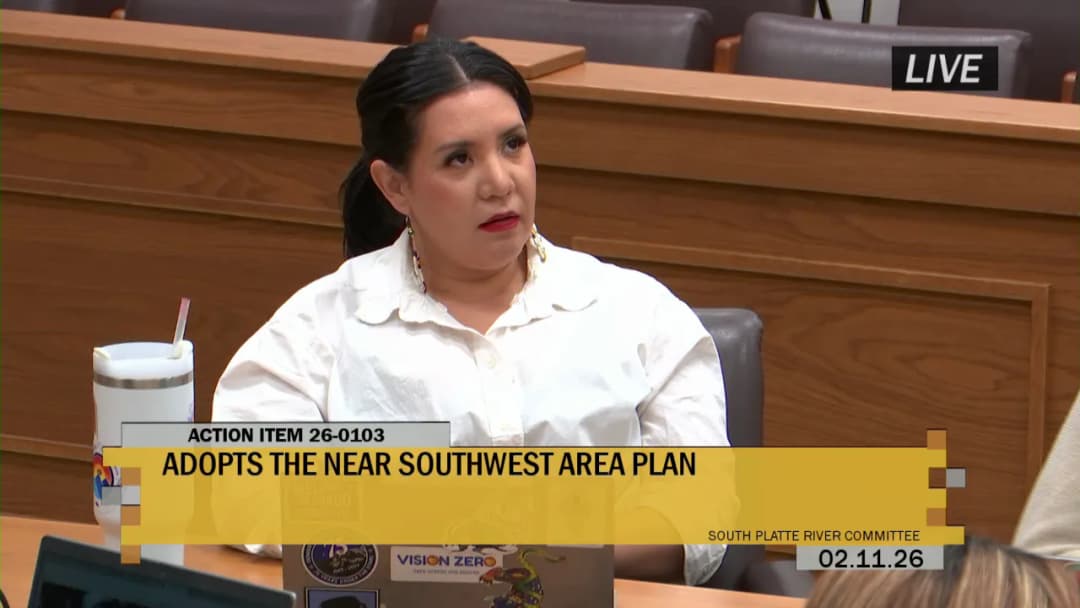
South Platte River Committee Reviews and Approves Southwest Area Plan - February 11, 2026

The South Platte River Committee of Denver City Council met on February 11, 2026, to review and vote on the Southwest Area Plan, a neighborhood plan covering five Southwest Denver neighborhoods. The plan, developed over approximately 20 months, includes recommendations on land use, mobility, and quality of life, shaped by extensive community outreach. The committee voted unanimously to forward the plan to the full City Council for consideration, with a condition that the document be edited for clarity and correctness. Discussion Items - Fernando Abud of Community Planning and Development (CPD) presented the Southwest Area Plan, covering the neighborhoods of Westwood, Marley, Ruby Hill, Admar Park, and Overland. Key statistics: the area includes about 52,000 residents, the majority Hispanic or Latino, with a younger population and larger households. Outreach included 23,000 postcards, a kickoff meeting with over 200 attendees, nearly 40 community events, and an advisory committee of 22 members with nine meetings. - The plan’s six community priorities: diverse cultural hubs, safe communal spaces, housing stability and options, integrated industry, improved infrastructure, and natural resources (including the South Platte River). Focus areas include Morrison Road, Westwood, Marley Shopping Center, Federal Boulevard, Alameda Square, Mississippi Avenue Shopping Center, and Riverside Communities. - Council President Sandoval commended the culturally relevant recommendations and confirmed that the plan includes language that the South Platte River serves as an important ecological and recreational amenity, consistent with other area plans. He noted the rapid timeline and thanked CPD and the community for their work. - Councilwoman Alvidrez reflected on extensive community outreach efforts, including door-knocking and a book club on The Color of Law to educate residents on zoning. She raised concerns about industrial zoning, air quality issues, and lack of guidance on data centers and water usage. She noted the plan documents historic wrongs but does not solve all problems. CPD responded that data centers are a new use not yet in the code, and the plan recommends further study of their impacts. - Councilman Flynn expressed concern about the inclusion of the “missing middle” concept in suburban contexts (e.g., Marley), noting that the concept is still under consideration and not yet adopted by City Council. He requested follow-up on that section. - Committee Chair Torres praised the advisory committee’s engagement and the plan’s benchmarks from the previous Westwood plan. She confirmed that a legislative rezoning package will follow the plan. Key Outcomes - The South Platte River Committee voted unanimously to forward the Southwest Area Plan to the full Denver City Council with the condition that the document be edited for clarity and correctness. This includes a change in the future place designation of a Denver Housing Authority property on Knox Court from low residential to low-medium residential (already corrected in the document). - The Planning Board had previously approved the plan on January 21, 2026, with the same condition and a vote of 7-0 (unanimous, though the transcript’s “720” is unclear). During that hearing, advisory committee members and the Admar Park Neighborhood Association expressed support, while one member of the public spoke in opposition. - The plan is recommended for adoption based on its inclusive community process, consistency with Comprehensive Plan 2040 and Blueprint Denver, and its 20-year long-term view (to 2045).

COMMUNITY ENGAGEMENT 44% · AFFORDABLE HOUSING 18% · PROCEDURAL 12% · ENVIRONMENTAL PROTECTION 11%
199
FEB 11, 2026 · DENVER, COLORADO · COUNCIL COMMITTEES
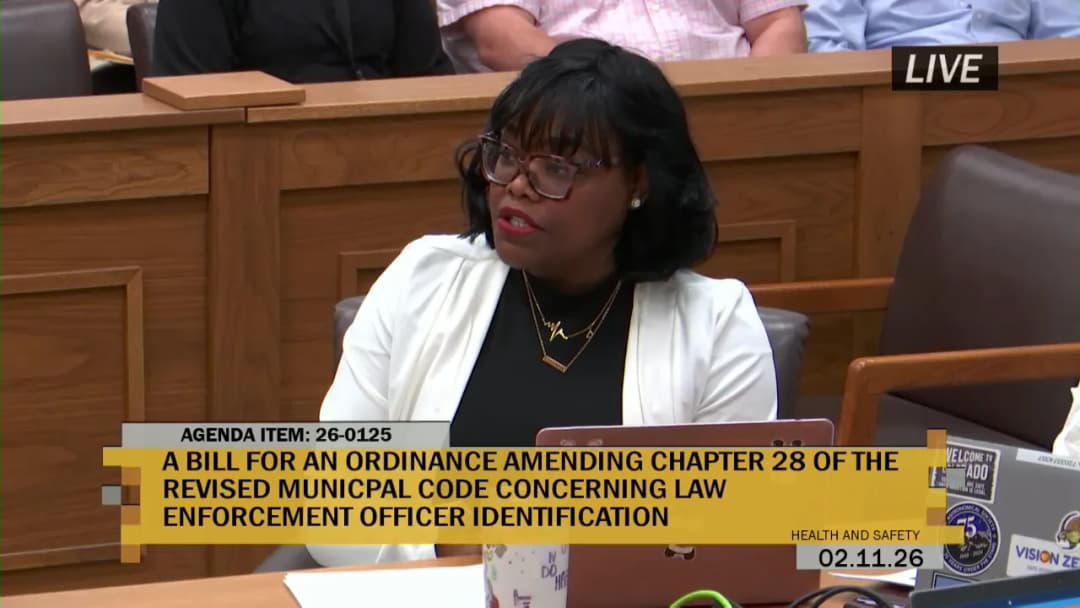
Health and Safety Committee Meeting on Law Enforcement Identification Ordinance – February 11, 2026

The Denver City Council Health and Safety Committee met on February 11, 2026, at 5:30 p.m. (MST) to consider action item 26-0125, the Safety and Transparency and Public Authority Act (also referred to as the Law Enforcement Identification Ordinance). The ordinance aims to prohibit law enforcement personnel from wearing facial coverings during enforcement actions and require visible identification from at least 25 feet. After a presentation by sponsors Councilmembers Lewis and Alvidrez, public testimony, and deliberation, the committee voted to advance the ordinance to the full City Council. Public Comments & Testimony - Mariah Petty (Ward 7 constituent): Expressed support for the ordinance, citing erosion of trust in law enforcement and the need for accountability. Suggested Denver consider banning ICE from staging on city property, following St. Paul and Philadelphia. - Brian Bascalco (President, Denver Police Protective Association): Raised concerns about enforcement mechanics – what happens if DPD officers take action against a federal agent and that agent tries to arrest the officer for impeding operations. Urged clarity on officer protections and potential loss of partnerships with FBI, ATF, DEA. - Uriel Espinosa: Urged adoption, stating that public safety begins with trust and that concealed identity increases fear. Quoted President Kennedy on immigration. - Lidien Sofner: Criticized the 15-minute public comment window as insufficient. Urged council to act, saying “history is not kind to the bystander.” - Veronica Seaburn (mother of Jalen Seaburn): Supported the ordinance, linking police violence and immigration enforcement as intersecting issues of accountability. Said “true public safety is framed in transparency, humanity, and accountability for everyone.” - Kenneth Crowley II (Program Director, Coley Foundation): Supported the ordinance, noting his organization teaches young Black men how to navigate police encounters. Said federal officers operating masked undermines trust. - Keiloni Fennery (Jalen Seaburn’s partner): Supported the ordinance, emphasizing that transparency in enforcement is necessary for community safety. - Dr. Aset Ali: Urged courage and said supporting the bill is about agency and asserting local autonomy. Quoted concerns about withholding federal funds. - Scott Esserman (former DPS board member): Described masked ICE agents menacing students near a Denver high school. Cited biblical commandment to love the stranger. Urged council to act proactively. - Nate Stone (volunteer, Colorado Rapid Response Network): Described ICE abuses in Minnesota (facial recognition, intimidation of community watch volunteers). Said the ordinance is a minimal ask for accountability. - Katie Song (nurse, District 8 constituent): Compared her profession’s requirement for visible identification to law enforcement. Argued anonymity escalates power imbalances and danger. - Dana Miller (co-lead, Denver’s Immigrant Partnership Team): Thanked council for considering the ordinance and said it would support community defense work. - Helen Shreves (District 5 constituent): Recited Pastor Niemöller’s poem to urge passage. Discussion Items - Presentation by Councilmembers Lewis and Alvidrez: - The ordinance has two components: (1) prohibition on face coverings during detention/arrest/search, with exemptions for undercover, SWAT, tactical, medical, religious accommodations; (2) requirement that identification be clearly visible from 25 feet for all law enforcement (local, state, federal). - Enforcement: violations subject to general penalty ($999 fine or 300 days jail). Failure to provide ID creates a presumption of impersonating an officer, which can be rebutted in court by providing ID. - The bill was drafted in consultation with Sheriff Diggins, Chief Thomas, Director Gardner, and the City Attorney’s office. It is intended to apply uniformly to all law enforcement to avoid Supremacy Clause issues. - Litigation update: A California federal judge enjoined that state’s anti-masking law (No Secret Police Act) because it treated federal officers differently, but upheld the identification law (No Vigilantes Act). Denver’s ordinance treats all law enforcement equally. - Councilmember Sawyer’s concerns: - Asked about application to civil enforcement officers (DOTI, Parks and Rec, DDPHE) and whether they are covered. City Attorney Miko Brown said the answer involves privileged legal advice and offered to discuss privately. - Concern about operational feasibility, e.g., park rangers in cold weather needing face coverings. Exemption for occupational health and safety was noted. - Councilmember Torres’s questions: - Questioned the 25-foot visibility requirement as impractical (e.g., requiring tape measures). City Attorney Brown suggested mirroring California’s identification language (e.g., “provide name and badge number upon request”) as more enforceable. - Also questioned the penalty section that presumes impersonation of an officer. Councilmember Flynn echoed concern that this could be a legal vulnerability. - Councilmember Flynn: - Expressed concern that the impersonation penalty (a class 4 felony under state law linked to DRMC 38-33) is disproportionate for a failure to identify. Recommended removing or clarifying to apply only a general penalty. - Council President Sandoval: - Urged sponsors to accept suggested edits (from Torres and Flynn) before the floor vote. Sponsors agreed to work on language, noting they had not received specific proposed text from the administration. - PPA President Brian Bascalco: - Reiterated concern about damaging relationships with federal task force partners. Council President Sandoval shared a personal experience where ATF helped her family and emphasized that trust is already eroded; she asked PPA to help operationalize the bill. - Councilmember Paridy: - Defended the bill as legally sound and criticized the administration for raising issues at the last minute. Stated the 25-foot requirement is measurable via badge specifications and that the impersonation presumption is appropriate. - Councilmember Sawyer (final remarks): - Expressed support but was torn because the impact on other city agencies was not clarified before the meeting. After sponsors and Wendy Shea (Special Counsel) offered to provide language by end of week, Sawyer indicated she would vote to move forward. Key Outcomes - The committee voted to move the ordinance to the full City Council for consideration. Motion by Council President Sandoval, seconded by Councilmember Paridy. The vote was taken by thumbs up; no dissenting votes were noted. - Sponsors committed to working with the City Attorney’s office, Department of Public Safety, and other stakeholders to refine the identification section (e.g., replacing the 25-foot requirement with a more enforceable standard) and clarify the scope of covered personnel (ensuring civil enforcement officers are either exempt or clearly included). - Language revisions are expected to be presented before the ordinance is heard at Mayor-Council on Tuesday, February 18, 2026, with a potential floor vote the following Tuesday.

PUBLIC SAFETY 83% · PROCEDURAL 6% · PENDING LITIGATION 5% · RACIAL EQUITY 4%
200
FEB 10, 2026 · DENVER, COLORADO · COUNCIL COMMITTEES
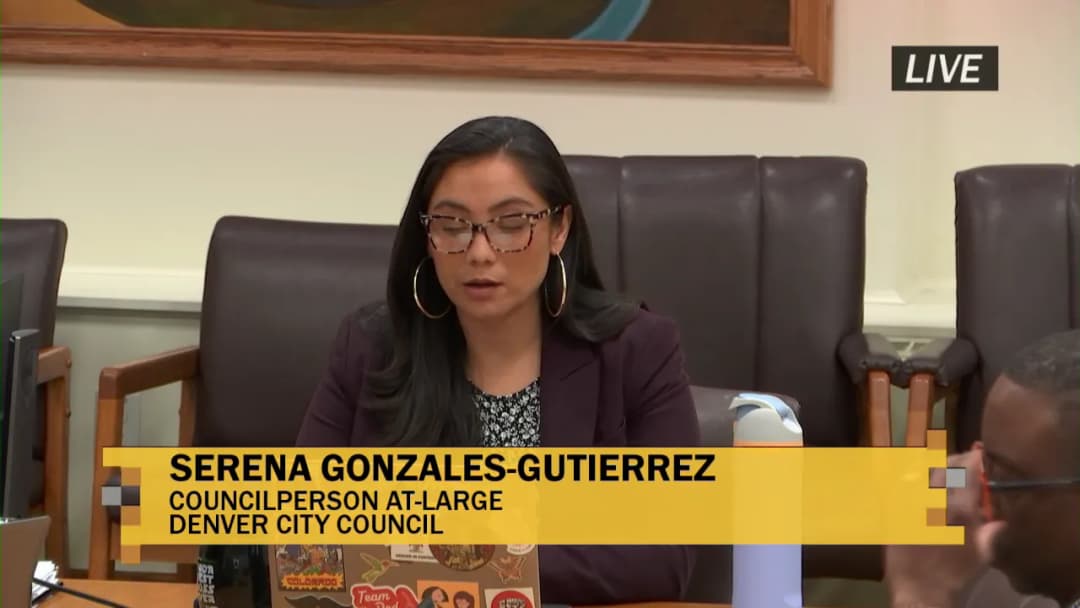
Finance and Business Committee Meeting - February 10, 2026

The Finance and Business Committee of the Denver City Council met on February 10, 2026, at 9:30 AM (approximate) under the chairmanship of Councilmember Serena Gonzalez-Gutierrez. The primary action item was the introduction and approval of a Budget Reporting Ordinance, which would require quarterly financial reports from the Department of Finance to City Council. The committee also advanced four consent calendar items to the full Council. Consent Calendar - Four routine items were approved by consent and will be forwarded to the full City Council for final action. No additional details were provided during the meeting. Public Comments & Testimony - Laura Swartz, Director of Communications for the Department of Finance, expressed appreciation to the ordinance sponsors for their leadership and collaboration in drafting the ordinance. No members of the public provided testimony. Discussion Items - Budget Reporting Ordinance: Council President Amanda Sandoval and Councilwoman Amanda Sawyer presented the ordinance, which aims to improve transparency and governance by codifying quarterly general fund reporting from the Department of Finance to City Council. The ordinance requires: - Quarterly reports read into the City Council agenda under communications, 45 days after the end of each quarter. - Quarterly reporting from agencies on on-call contract utilization and spending. - Clear, accessible reports tied to a Power BI dashboard for council members and the public. - The timeline ensures reports are available before key budget milestones (e.g., council goal retreat in March, budget workshop in May). - Peer cities (Austin, Kansas City, Westminster, Dallas, Washington State) already use similar reporting. - The Department of Finance collaborated on the ordinance and will provide explanatory narrative to contextualize data, especially for Q4 reports, which will be marked as preliminary due to accrual accounting. - Councilmembers raised questions about the accuracy of Q4 data (addressed by DOF Director Justin Sykes, who noted the data will be preliminary and subject to change) and the importance of narrative context. Councilmember Watson emphasized the need for template explanations. Councilmember Romero-Campbell supported the ordinance, noting it solves previous challenges in tracking budget trends. Councilmember Cashman praised the increased oversight capacity and noted future possibilities for a dedicated budget analyst for Council. - Chair Gonzalez-Gutierrez highlighted the committee's role in scheduling these quarterly presentations and expressed excitement about the enhanced transparency. Key Outcomes - Motion to approve the Budget Reporting Ordinance and forward it to the full City Council. The motion was made by Councilmember Darrell Watson and seconded by Council Pro Tem Diana Romero-Campbell. The motion passed unanimously by voice vote without a roll call. - The four consent calendar items were also forwarded to the full Council without objection. - The ordinance is expected to take effect for Q2 2026 reporting, with the first quarterly report due in August 2026 (45 days after Q2 ends on June 30).

FISCAL SUSTAINABILITY 91% · PROCEDURAL 9%
OPENPUBLICA · PUBLIC MEETING INDEXUPDATED DAILY · openpublica.com