Houston, Texas — Public Meeting Index
Search help
Summaries & topics includes titles; words may match separately. Transcripts match a literal word or phrase, with case and whitespace normalized. Punctuation and contractions must match. Documents are not searched. Results have separate pages by source; a meeting may appear in both. Both dates are included.
Summaries & topics
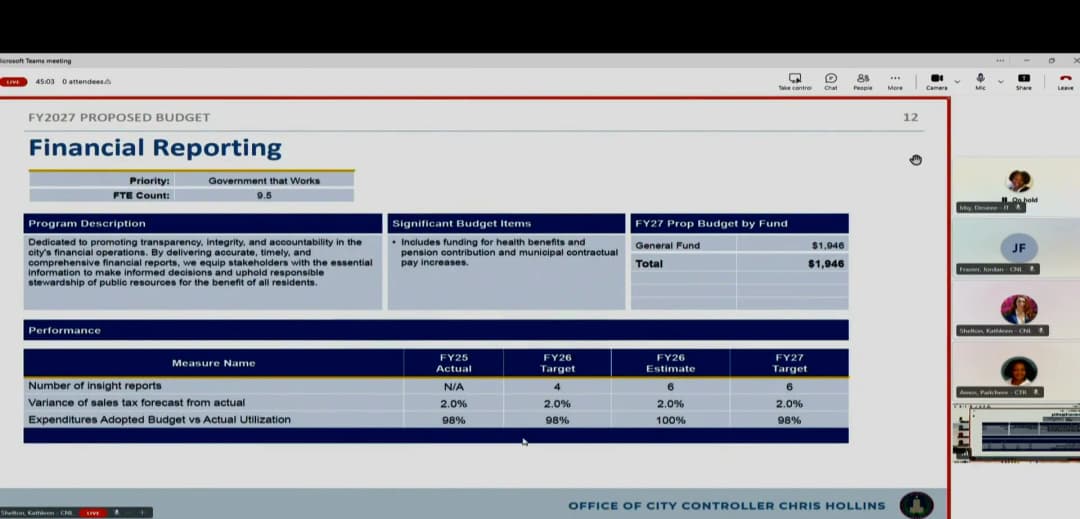
This was the last day of budget workshops for the Budget and Fiscal Affairs Committee, chaired by Council Member Sally Alcorn. The meeting focused on the Controller's Office budget presentation, a request for additional audit staffing, and the Controller's trends report for fiscal year 2027. Key discussions centered on property tax revenue estimates, the financial sustainability of the Combined Utility System (CUS), and the need for a transparency tool. Public Comments & Testimony - Doug Smith raised concerns about airport vendor pricing compliance (15% above street prices) and suggested the audit division review it. He also requested better advertisement of the Controller's Office community events and insight reports, and expressed frustration that department staff often leave during public comments. - Felix Kapoor opposed the proposed trash fee without exemptions for disabled or fixed-income residents, questioned whether the city is auditing tax abatements for oil and gas companies, and urged council to pursue the transparency tool to make the budget more accessible to the public. Discussion Items - Controller's Office Budget (5% increase): Controller Chris Hollins presented a $700,000 request from the audit division for five additional auditors (an Auditor V, two Auditor IVs, and two Auditor IIIs). He noted that 85% of the office's costs are personnel, and the increase is driven by Hope raises, interfund costs, and new audit software ($95,000/year, up from $25,000). - Audit Division Staffing Gap: Jermaine Brooks, Assistant City Auditor, presented a benchmark analysis showing Houston—the 4th largest city—has one of the smallest audit teams among comparable Texas cities. With 16 authorized FTEs (14 currently staffed), Houston's per-auditor responsibility is double the peer average. The division seeks a phased addition of 13 auditors; the immediate request is for 5 to help address a critical gap in forensic auditing, where currently no resources are committed. - Transparency Tool: Controller Hollins renewed his multiyear request for a taxpayer-facing transparency dashboard (estimated startup $350,000, annual maintenance $150,000), noting the administration has not delivered a free alternative despite promises. Council Member Castillo and public speaker Felix Kapoor expressed support. - Property Tax Revenue Gap: Hollins projected that at the current tax rate of 51.919 cents, property tax revenue will be $1.465 billion—$38 million less than the Finance Department's estimate of $1.503 billion. He attributed the difference to Finance using an August midpoint that doesn't account for continued appeals, and warned that the budget's higher figure is unachievable without a tax rate increase or deficit spending. - Sales Tax Estimate: The Controller's conservative estimate is $938 million (2% growth), below Finance's estimate. A base-case model shows $988 million, and an optimistic scenario $1.011 billion. - Overtime and Savings Concerns: Hollins noted the budget includes a $15 million increase in overtime but still significantly underfunds expected overtime; he urged council to adopt realistic numbers. He also pointed out a $2 million in unachieved procurement savings (down from $17 million the prior year) as still problematic. - Firefighter Pay Escalation: The budget assumes a 3% raise for firefighters, but Hollins warned the contract language is vague and may trigger arbitration for a 6% raise, as occurred last year. He recommended clarifying the amount with the union to avoid unplanned deficit spending. - Combined Utility System (CUS) Financial Strain: Hollins presented handouts showing the CUS fund balance of $1.5 billion, with minimum reserve requirements of $1.36 billion (300 days cash). The proposed budget transfers $100 million for right-of-way fees and $99 million to subsidize solid waste, plus an additional $82 million for 1600 Smith Street (per public speaker Doug Smith), totaling $280 million in draws, far exceeding the $140 million surplus. Even if the reserve policy is loosened to 250 days, the fund would be exhausted within two years. Hollins stated that the $5/month garbage fee will never cover the true cost of service, and that the administration's assumption of flat costs over five years is unrealistic. Key Outcomes - No formal votes were taken; the meeting was a workshop. - The Controller's Office submitted a PBJ request for five additional auditors ($700,000) but has not yet received administration approval. - Council members indicated they will submit further questions via the portal. - The committee acknowledged the need to analyze CUS reserve policies and potential water rate increases in light of the budget's financial pressures. - Controller Hollins committed to providing written responses to specific questions on audit implementation rates, early payment discount trends, and the firefighter pay escalator.
The Houston City Council held its final budget workshop for FY2027, focusing on the Houston Police Department's proposed $1.25 billion budget. Key topics included crime reduction, recruitment and retention successes, operational changes (e.g., four 10-hour shifts), the elimination of the retired officer (EPRO) program, and the freezing of 91 civilian positions to close an $8.9 million budget gap. Council members and public speakers raised concerns about community engagement, overtime oversight, immigrant trust, and surveillance technology. Consent Calendar - No consent calendar items were discussed. Public Comments & Testimony - Laura Gallier questioned a KPI showing increased traffic enforcement encounters, advocated for fewer non-safety stops, and argued that more police does not solely create safety. She requested a complete accounting of extra funding paid to HPD (e.g., from District Service Funds). - Terry Chen expressed concern that crime may be underreported due to immigrant fear of HPD collaborating with ICE. She argued a larger police budget does not enhance safety for immigrant communities and called for redirecting funds to language access and victim services. - Suzette Flores stated that an overwhelming police presence on the Harrisburg Trail felt more threatening than safe, and urged increased investment in unarmed medics and park resources instead of HPD. - Doug Smith asked about overtime calculations (daily vs. weekly totals), requested that airport-reimbursed overtime be separated from HPD overtime totals, and questioned why asset forfeiture and police special funds are budgeted high despite lower spending estimates. He also requested breakdowns of civilian vs. classified employees in Administrative Services and Strategic Operations. - Sarah criticized the $1.2 billion HPD budget, stating that police presence does not build community trust and that libraries better serve unhoused populations. She also cited increased surveillance via Flock cameras with insufficient oversight. - Felix called for ending contracts with Flock cameras, citing potential security risks and surveillance of minority communities. He asked whether the responsibilities of the 91 frozen civilian positions would result in increased overtime, and questioned the reduction in youth violence prevention funding while public safety is prioritized. Discussion Items - Budget Overview (Chief Harden & Interim Deputy Director Joanne Trent): HPD's proposed FY2027 general fund allocation is just over $1.2 billion. Crime is down across all NIBERS categories, response times are down, and crashes are down. The department has exceeded 5,400 classified officers for the first time in years. Recruitment and retention have improved due to a new contract (cadet salary increased from $42,000 to $52,000) and a new meet-and-confer agreement providing raises through FY2029. - Budget Reductions: $8.9 million in reductions: $1.5 million by eliminating the EPRO (retired officer) program; $7.4 million by freezing 91 civilian full-time equivalent positions. No classified (sworn) positions were cut. - Operational Changes: Seven patrol stations now operate on four 10-hour shifts, improving officer wellness, reducing overtime by 22% by dollars and 27% by hours, and decreasing call-back overtime. - Operational Support Division: New division includes a Patrol Support Team with drones, cameras, and advanced tactical equipment to assist high-risk calls, minimizing use of force. - Community Engagement Restructuring: The Community Affairs Division was disbanded; most officers were reassigned to stations as community liaisons. A core Community Engagement Unit remains. Council members Martinez and Ramirez expressed concern that this has reduced dedicated community outreach, as shown by decreased participation metrics. - Mental Health Response: Over 4,000 CIT-trained officers exist. COAST teams (officer + clinician) are insufficient for the volume of calls. The Crisis Call Diversion program at 911 (operated separately) may face staffing reductions. - Overtime: FY27 budgets $21 million in general fund classified overtime, a 22% decrease in allocated money. Chief Harden noted that actual spending often exceeds budget due to unpredictable events (holidays, weather, protests). Airport reimbursements cover some overtime. - Rapid Scan DNA: Vice Chair supported exploring a rapid DNA machine at the Joint Processing Center to speed suspect identification. - Flock Cameras: Multiple public speakers called for decommissioning Flock cameras over privacy, security, and lack of audit oversight. Key Outcomes - No votes were taken; this was a workshop meeting. - Next Steps: Virtual budget town hall on May 20, 2026 at 6 p.m. Public hearing on the budget: June 3, 2026 at 9 a.m. Council member amendments due June 3, 2026. Final budget vote: June 10, 2026. - Directives/Follow-Ups: - HPD to provide detailed breakdown of frozen civilian positions and their responsibilities. - HPD to clarify why the traffic safety KPI (reduction in fatalities) was marked N/A, and to supply fatality and clearance rate statistics for the last five years. - HPD to provide written answer regarding FTE counts in Employee Services/Wellness (page 54 discrepancy). - Staff to follow up on questions about airport overtime reimbursement, Flock camera oversight, and other non-CDSF funding to HPD.
Houston Public Library (HPL) Director Sandy Gall presented the proposed FY2027 budget to the City Council, highlighting continued growth in usage, planned reductions to close a budget gap, and alignment with the mayor's priorities. The presentation was followed by public testimony and council member questions. No formal votes were taken. Public Comments & Testimony - Laura Gallier shared personal stories about the cultural importance of HPL, referencing a dance program about the historic Colored Carnegie Library and the Gregory School. She emphasized that libraries are critical to community humanity and civic engagement. - Doug Smith asked for clarification on TechLink and urged council members to ensure equitable access across districts. He also noted that literacy program metrics showed "non-applicable" for next year and sought assurance that those programs would continue. - Terry Chen criticized limited library hours—many branches not opening until noon or 1 PM on weekdays, some closed on Fridays. He called for a minimum 6-day schedule of 10 AM to 6 PM, especially in underserved Latino neighborhoods like Northside and Pleasantville. He asked whether the proposed staffing increases would lead to expanded hours and requested restoration of technology utilization metrics (computer use, Wi-Fi sessions). - Jessica Campos (homeschooling parent) emphasized libraries as a lifeline for immigrant families, elders, and the homeless, noting stark inequities between branches (e.g., Montrose vs. Denver Harbor). She appealed for more funding for high-poverty areas and described community-led efforts like little free libraries. - Sarah (teacher and artist) pointed out the irony of the library budget presentation being followed by the police department's, arguing that libraries better serve community safety. - Mo Cortez (District C resident, formerly District A) highlighted disparities between branches (e.g., Hillendal vs. Montrose) and urged increased investment in full-time equivalents and hours. Discussion Items - Director Gall reported key FY2026 usage trends: 1.75 million in-person visitors (6% increase), 5.1 million e-material checkouts (30% increase), 144,000 program participants (13% increase), 17,585 meeting room bookings (49% increase) with 67,000 attendees (27% increase). - The proposed FY2027 general fund budget totals $50,531,053. Personnel costs account for 75% of the budget. The library employs approximately 460 people, having lost 37 positions the prior year (likely through VERAPE/VEBA early retirement). 600 volunteers contributed 11,000 hours. - To close a $1,174,728 gap while maintaining state accreditation, the library proposes reductions: $70,265 in TechLink, $1,054,463 in library materials purchasing, and $50,000 in furniture repair/cleaning. Accreditation requires at least one item per capita, meeting a 3-year average of operating expenditures, and 40 unique hours per week—these reductions are said not to jeopardize accreditation. - Passport revenue is down to $800,000 so far this year (from over $1 million last year). Six locations offer passports; no expansion planned. - TechLink Vincent will open in fall 2026; no additional TechLink locations are planned for FY2027. - The library has been fine-free since January 2023 (for late books) but still collects fees for lost/damaged items. - The HPL Foundation contributed about $800,000 last year. - Councilmember Flickinger noted increased engagement at previously lower-attended libraries; Councilmember Castex-Tatum asked about charging stations at Shannon Walker (under investigation) and passport trends; Vice Chair Castillo asked about expansion costs for passport services. Key Outcomes - The FY2027 budget proposal and reduction plan were presented; no council action was taken at this workshop. - Councilmembers requested follow-up information: written questions from Councilmember Flickinger, a status report on charging stations, and cost estimates for expanding passport services. - Several public speakers urged increased funding to expand hours (10 AM–6 PM, six days a week), restore staff, and address branch inequities. - The library will continue its summer reading program (registration open), prepare for FIFA World Cup activities, celebrate America's 250th birthday on June 27, open the Vincent TechLink in the fall, and commemorate anniversaries of historic facilities.
On May 18, 2026, the City Council held a budget workshop to review the FY27 proposed budget for the City Council office. Vernita Jones, Finance Assistant Director, presented the budget overview, including staff demographics, expenditure comparisons, the Council District Service Fund, and program details. The proposed total budget is $16,965,724, with each council office receiving $666,510. The presentation highlighted a 93% personnel cost ratio and a 70% reduction in paper and printing across council offices. Council members and public speakers engaged in detailed Q&A about fund allocations, carryovers, and transparency. Public Comments & Testimony - Astrid Lang asked about health insurance cost trends and noted she helps proofread notes from council meetings. She received a response that health benefits are pooled across council and projected to increase by about 3%. - Laura Gallier questioned the transparency of district fund expenditures, particularly HPD overtime and flock cameras. She also asked how residents can apply for project funding. Council members Huffman and Martinez explained that funds are constituent-driven and require department sponsorship. Laura also asked about the $400,000 golf course project in District I; Councilmember Martinez explained it addresses safety issues on Wayside near Gus Wortham Golf Course. Laura confirmed that at-large members do not have district or metro funds. - Rain Eatman inquired about translation services allocation (budget of $438,000 for Office of New Americans), the possibility of council members using multi-service centers for satellite offices without using district funds, and whether HOT team expenses could be shifted back to HPW/Solid Waste to free up district funds. Council members noted that satellite offices require lease costs and that shifting HOT team expenses would require conversation with solid waste. Discussion Items - Budget Presentation (Vernita Jones): Provided detailed breakdown of FY26 adopted ($19,246,137), current ($22,566,698), and proposed FY27 ($16,965,724) budgets. Key components: each council office $666,510; Council District Service Fund $5.5 million (projects up to $300,000 each); metro funds $500,000 per district (mobility-related). SWAT (stormwater action team) funding of $279,000 per office in FY26 was a one-time budget amendment. Carryover from FY26 was $3,323,451; FY27 carryover amount is unknown until end of fiscal year. Personnel is 93% of council budget. - Councilmember Ramirez asked about the organizational chart showing 6.8 FTEs for his office, noting he only has 3 full-time and 1 part-time. Jones explained the average is calculated for budget allocation. He also asked about elected official pay increase of $148,560 (divided by 16 council members, tied to Harris County judges' salary). - Councilmember Martinez responded to Laura's question about the golf course project, stating it was a priority due to increased golf rounds and safety concerns on Wayside, with partnership from the Houston Golf Association. - Councilmember Huffman and Carter added that district funds address specific local issues like illegal dumping or homelessness, and at-large members can contribute excess funds to district projects. - Vice Chair Castillo and others expressed appreciation for the council staff team. Key Outcomes - No formal votes were taken. The budget presentation provided clarity on fund allocations, carryover procedures, and the distinction between district service funds and metro funds. - It was noted that paper and printing costs across council have decreased by 70% (from $107,000 to $31,000) and citywide by 23%. - Councilmembers confirmed that residents can request projects by contacting their district council office; all projects require city department sponsorship and legal review. - The council will continue budget workshops, including a solid waste budget hearing later that day. - Further information on translation services usage and multi-service center office space will be provided to Rain Eatman.
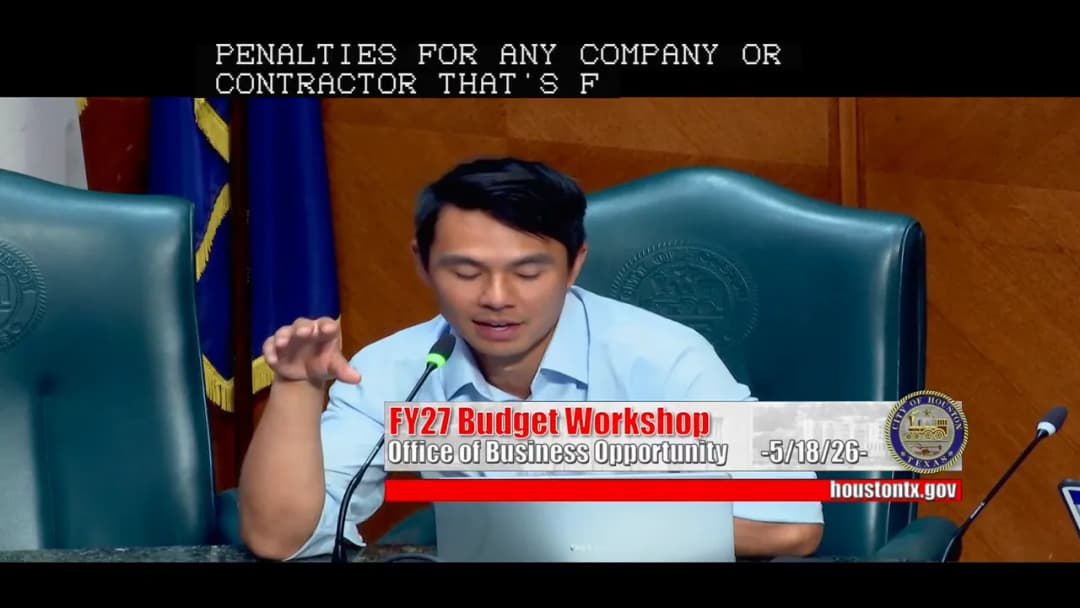
The Economic Development Committee convened on May 18, 2026, to review the proposed Fiscal Year 2027 budget for the Office of Business Opportunity (OBO). Presenters included Director Celynthia Hoard and Patsy Jackson. The proposed total budget is $6.2 million, reflecting a new mission focused on equal representation and advocacy for small businesses. Discussions covered budget reductions, program consolidation, new key performance indicators (KPIs), fee studies, and the pending federal judicial ruling affecting certification programs. Public Comments & Testimony - Astrid Lang: Expressed general support for OBO's work, particularly regarding the federal challenge, but noted difficulty viewing data on slides. No specific questions. - Laura Gallier: Raised concern about the absence of a KPI for the Hire Houston First program. Noted that city checkbook data showed Houston Public Works hiring consultants from Canada and Pennsylvania. Asked about rules for hiring non-local firms. Director clarified Hire Houston First is being tracked under overall new certifications, but agreed to add the measure back. Discussion Items - Budget Overview: Director Hoard presented the FY27 budget, noting a reduction of two vacant positions (saving $171,000) and over $300,000 in non-personnel cuts, totaling a gap reduction of over $201,000. Total proposed budget is $6.2 million (combined General Fund 1000 and Special Revenue Fund 2424). - Strategic Alignment: 90% of OBO's work aligns with the mayor's priority "Government that Works" (certification, contract compliance, administrative services); 10% aligns with "Infrastructure" (external affairs, workforce development). - Program Consolidation: Business support and development and workforce development programs were consolidated into external affairs and contract compliance divisions to eliminate duplication. This resulted in a 100% decrease in those line items and increases in contract compliance (+$633,000) and external affairs (+$522,000) due to filling vacancies. - Certification & Designations: The division has 13.3 FTEs and a $1.4 million budget. Achieved average 14-day processing time (goal ≤30 days). 30% of total contract awards went to certified firms. New certifications: 400 new firms; 200 renewed DBEs/ACDBEs. Lowered certification targets for FY27 due to the ongoing federal pause on certain programs. - Contract Compliance: 17.3 FTEs; $2.0 million budget. New KPIs include average business days to complete closeouts (goal 30 days), percentage of construction contracts receiving satisfactory rating (goal 80%), and percentage of pay-or-play funds collected (goal 90%). Existing measure: 75% of closed construction contracts meeting labor standards (up from previous years). - External Affairs: 4.9 FTEs; $500,000 budget. New KPIs: percentage of businesses engaged that become certified (goal 25%), participants attending workforce events completing on-site interviews (goal 500), percentage of businesses reporting services met needs (95%), and favorable perception of OBO services (95%). - Special Revenue Fund (2424): Zero FTEs; interfund transfers to Houston Police Department (crisis diversion program) and Health Department (client access program). FY27 projections: $400,000 for CAPS, $230,000 for crisis diversion. - Revenue: General fund decrease of 2.37%; special revenue fund increase of 18.13% due to anticipated contracts from HPW, HAS, HCD. Contract compliance revenue up 8%. - Fee Study Update: Director reported that a fee study is complete, but implementation is on hold pending a federal judicial ruling on the MBE program (expected by May but no ruling yet). Fees for directory lookups ($1–$2 per lookup) have been approved for external entities. - Labor Standards Enforcement: New policies allow the city to collect underpayments directly if contractors fail to make employees whole within 30 days. Three unsatisfactory ratings can lead to sanctions (up to five years). Sanctions are rare. - Council Questions: Council Member Martinez praised reduced processing times (14 days from 1,400 backlog) and asked about fee implementation; Director confirmed fees are ready but awaiting ruling. Council Member Ramirez inquired about the judicial ruling's impact, labor standards specifics, and consequences for scope changes after award (joint memos, sanctioning). Council Member Salinas' staff asked about penalties for wage violations; Director explained new collection authority. Key Outcomes - No formal votes were taken. The committee received the OBO FY2027 budget presentation and will consider it for inclusion in the city’s overall budget. - Director agreed to reinstate the Hire Houston First KPI as a separate measure. - The fee implementation timeline remains dependent on the federal court ruling; once clear, Director will present to the Economic Development Committee. - The OBO budget proposal reflects consolidation to reduce duplication, new outcome-based KPIs, and adjustments for the federal pause.
This joint budget workshop for the Houston Public Works (HPW) and Solid Waste Management (SWM) departments, chaired by Vice Chair Mario Castillo, reviewed the proposed FY2027 budget. Key topics included the integration of SWM into HPW, a new $5/month residential solid waste administrative fee, performance metrics, water infrastructure, the Combined Utility System (CUS) fund balance, and illegal dumping. The session featured a presentation by Director Randy Mackay and CFO Samir Salanke, followed by council member questions and public testimony. Public Comments & Testimony - Doug Smith: Questioned the reduction in pay-as-you-go (PAYGO) funding for CUS projects, the allocation of funds for the 1600 Smith building, and the unexplained surplus in DDSRF accounts. Requested clarity on reserve use. - Bill Kelly (Environment Texas): Expressed strong support for the administrative fee, calling it a step toward properly funding SWM. Highlighted the need for investment in recycling education and infrastructure to address the 42% contamination rate and 16% recycling rate. - Jack Belinski: Raised concerns about HPW becoming too large, citing difficulties in getting a Pride-related banner district approved. Also reported receiving a $7,000 credit on his water bill, questioning billing accuracy. - Laura Gallier: Criticized the presentation as vague and lacking accountability on illegal dumping KPIs. Noted a $265,000 payment to "Flock" (surveillance cameras) and asked for clarification on their use. - Rain Eatman: Opposed a flat $5 fee, arguing it is inequitable for low-income residents; suggested a property tax increase instead. Asked for a breakdown of how CUS funds are allocated across services. - Felix Kapoor: Questioned the significant increase in DDSRF debt service payments (from $151M to $227M) and the lack of consideration for worker safety and salaries in the fee structure. Asked about plans to expedite hiring in HPW. - Alice Liu: Raised concerns about the structural imbalance of the CUS budget, noting that $200M from reserves would be drawn down annually, potentially depleting them to $0.5B in five years. Also challenged the claim that ditch reestablishment funding could be cut by $20M without impact, citing field observations of poorly maintained ditches. - Jim Tucker: Advocated for a strategic overhaul of solid waste collection, including pay-as-you-throw, smaller bins, and electrified trucks. Suggested using calcium sources to reduce water main breaks. - Guadalupe Fernandez (Bayou City Waterkeeper): Expressed opposition to diverting CUS reserves for SWM and right-of-way fees, arguing the city still faces a water infrastructure crisis (1,600 annual sewage overflows). Demanded an itemized breakdown of CUS cash balances before the budget vote. - Usman Mahmood: Calculated that if the $5 fee and right-of-way transfers remain flat, the CUS fund balance could hit the 300-day reserve threshold in 3.2 years. Requested a multi-year impact forecast. Discussion Items - SWM Integration & New Administrative Fee: Director Mackay presented plans to move SWM into HPW and fund it via a $5/month residential fee (projected $24–25M in FY27). The fee would be included on water bills. Several council members (Martinez, Thomas) supported the move but stressed the need for operational efficiencies and long-term affordability. - Performance Metrics: Mackay highlighted key KPIs: 3% annual water pipe replacement (currently 0.3%), 1,000 lane miles of road rehabilitation, 500 miles of ditch reestablishment, and new metrics for pavement striping and solid waste. He committed to returning in 60 days with refined, outcome-based KPIs for SWM. - Workforce & Staffing: HPW hired 455 employees in the past year and aims to hire 500 more. Currently 900 vacancies. Director Mackay noted the importance of training and equipment capacity. - CUS Reserves & Right-of-Way Transfer: CFO Samir Salanke explained the $220M negative net operating funds for the CUS, which would be covered by reserves (currently 550 days cash, policy minimum 300 days). A new right-of-way fee of $104M was proposed. Council members (Thomas, Salinas) questioned the sustainability of drawing down reserves. Director Mackay stated the utility is “very comfortable” with the structural changes. - Illegal Dumping: Council members Salinas and Jackson pressed for specific KPIs and dedicated funding. Director Mackay said illegal dumping costs are embedded in operations and that the department would continue to report metrics. He acknowledged a drop in case resolution (from 64% to 42%) and committed to refreshing data. - Water Rates & Commercial Customers: Director Mackay noted that a rate study is underway (by RAFTELIS) to ensure fairness between residential and commercial/industrial customers. He stated the goal is to avoid rate increases for five years. - Water Main Leaks: The backlog dropped from 1,900 active leaks to 100. A study showed 6% of pipes cause 2/3 of leaks. An RFQ for program management to accelerate pipe replacement is expected soon. - Solid Waste Operations: Director Mackay acknowledged severe underfunding (past budget of $100M vs proposed $134M). Plans include fixing AC in trucks, replacing aging fleet, and evaluating routing. Council member Carter asked about FCC accountability; staff said details would be provided. Key Outcomes - No votes were taken; the workshop was informational in preparation for the full council budget vote. - Commitment: HPW will return to the appropriate council committee within 60 days with refined, outcome-based KPIs for Solid Waste Management. - Commitment: HPW will provide a multi-year forecast of CUS fund balance under various scenarios (fee levels, right-of-way transfers) to address concerns about reserve depletion. - Commitment: HPW will provide a breakdown of illegal dumping metrics (cases investigated, resolved, average days to resolve) and continue public reporting. - Directive: Several council members asked for detailed accounting of CUS cash balances and an explanation of the $145M reduction in PAYGO funding (to be replaced with debt). The administration agreed to provide written responses. - Next Steps: The budget workshop continued with the Houston Fire Department after a short break.
On May 18, 2026, the Houston City Council held a budget workshop to review the Houston Fire Department (HFD) proposed Fiscal Year 2027 budget. Fire Chief Tom Munoz and finance director Marchelle McHenry presented the $718 million budget, a 2% decrease ($13.2 million) from the FY26 adopted budget. The presentation covered expenditures, revenue, performance measures, and strategic initiatives to reduce overtime, recruit and retain firefighters, and improve response times. Councilmembers asked detailed questions about overtime projections, arbitration costs, staffing levels, ambulance fees, and the escalator clause. Public speakers offered suggestions on hydrant testing, timekeeping practices, and ambulance supplies. Consent Calendar - No consent calendar items were presented. Public Comments & Testimony - Doug Smith praised HFD's ISO rating and accreditation, suggesting billboards to inform the public about lower insurance rates. He asked about hydrant testing criteria, manual timekeeping practices (later clarified by Chief Munoz that HFD uses a computer system, not handwritten cards), ambulance fee collection vs. billing, differences between executive and administrative services, peak-time ambulance units (clarified as additional units), and a discrepancy in the budget book between overtime funding and FTE counts. - Laura Gallier noted that the city auditor had mentioned manual time cards for both fire and police (Chief Munoz stated HFD does not use handwritten time cards). She asked about ambulance supplies (learning that HFD supplies them, with NARCAN from the health department's opioid abatement program), whether HFD paramedic trainees are on payroll (yes, during 14-month paramedic school at community college), and questioned the expense of firefighters shopping with a fire truck at HEB, suggesting a more efficient method. Discussion Items - Budget Overview: Chief Munoz presented slides showing 90% of HFD's budget dedicated to public safety, with a $13.2 million decrease from FY26 due to reduced classified overtime offset by increases in base pay and benefits. Key initiatives included recruiting/retaining firefighters, delivering life safety programs, and equipping first responders for mental health situations. - Overtime Reduction: The decrease in overtime (140,000 hours less April-to-April compared to prior year) was attributed to higher morale, more cadet graduates, and policy changes (rank-for-rank overtime). Chief Munoz stated that minimum staffing of 849 per shift is critical for firefighter safety. - Recruitment and Retention: Between 2017-2023, about 900 cadets graduated; under the current administration (FY25-26), 600 graduated, with 340 expected in FY27. Attrition turned from negative to positive (net +250). Units out of service dropped 91% (from 983 to 84). Paramedic staffing increased from 25 to 150. A “fast track” program for certified firefighters saw a 91% graduation rate. - Performance Measures: Slides showed response times (e.g., chest pain calls at 13 min 49 sec), total incidents targeting 320,000 (down from 328,000), and community risk reduction programs like the Consumer Needs Team identifying high-utilization addresses. - Arbitration Settlement: Councilmember Alvarado asked about an additional $10-12 million in back pay from arbitration. Chief Munoz believed it was already included in the budget but offered to provide exact numbers. - Base Pay and Escalator: Three percent base pay increase is per contract. The escalator (additional increase tied to revenue) is still being negotiated; Chief Munoz confirmed it is not yet accounted for in the proposed budget and would be self-funded through added revenue. - Ambulance Fees: Fees increase annually by inflation; HFD's fees are lower than other cities. Revenue projections rely on Digitech billing forecasts, though actual collections have exceeded projections by $21 million. Key Outcomes - No formal votes were taken; the workshop was informational. - Councilmembers submitted written questions and requested follow-up answers on staffing projections, overtime savings, hydrant testing, manual time cards (HFD clarified it uses a computer system), ambulance supplies, and the arbitration back pay amount. - The meeting adjourned with the next day's schedule: controller's trends report, libraries at 10 a.m., and HPD at 11 a.m. - Performance measures and recruitment successes were highlighted as evidence of progress toward reducing overtime and improving service.
The Budget and Fiscal Affairs Committee held its fifth day of budget hearings on May 18, 2026, beginning with the Mayor's Office budget presentation. Chief Strategy and Operations Officer Stephen David, accompanied by Will Bryant from the Finance Department, presented expenditure reductions and program adjustments. The session included questions from council members and public testimony from three speakers. Presentation Overview Stephen David reported that the Mayor's Office has reduced overall expenditures by 7% compared to the prior year, following a 10% reduction in the first year and a flat year thereafter. Notable changes include a 33% decrease in cable television (HTV) expenditures, aligning them with declining PEG (franchise fee) revenues from traditional cable subscribers. A 5% decrease in tourism promotion spending was also noted. Marginal increases occurred in executive oversight (due to state law HB 2779 and an additional FTE in the Agenda Office) and economic development (attributed to HOPE contractual increases). The tourism promotion budget totals $24.3 million, supporting 25 FTEs, funded by hotel occupancy tax projections. Debt service and interfund transfers largely support special events, with about $300,000 for HTV capital expenditures. Councilmember Questions - Councilmember Julian Ramirez inquired about performance metrics for HTV's set-top box viewership target of 600,000 viewers and the TURS (Tax Increment Reinvestment Zones) board training programs. David explained efforts to diversify viewership streams (e.g., YouTube) and standardize TURS fiscal policies, noting that no TURS policies had been developed in FY26 due to ongoing analysis of Ernst & Young data and auditor discrepancies. - Councilmember Mary Nan Hafman raised concerns about tracking city positions on Texas legislation, emphasizing the need for real-time updates during sessions. - Chair Alcorn noted the intergovernmental relations (IGR) budget of $767,000 and provided information on the IGR website and contact Andy Mate for legislative tracking. Public Comments & Testimony - Rain Eatman (District C) asked whether the Mayor's Economic Oversight Committee still oversees tax abatements and whether the city faces penalties for denying state-recommended abatements. David confirmed the oversight responsibility and stated no tangible penalties exist, but cautioned that Texas Enterprise Zone nomination slots are limited. - Laura Gallier requested details on the IGR budget and better public access to the city's legislative positions. Chair Alcorn and Council Member Hafman acknowledged the concern and committed to improving transparency. - Astrid Lang (District C) questioned how an additional FTE in the Agenda Office would make workload more sustainable, referencing 90-hour workweeks. David explained the goal of using outcome-based budgeting to tie FTEs to measurable workloads, but noted general fund constraints limit hiring. Key Outcomes - No formal votes or decisions were taken during this session. The committee received the Mayor's Office budget presentation and public comments. - The Mayor's Office proposes a 7% expenditure reduction, right-sizing HTV spending to match declining PEG revenues, and adding one FTE in the Agenda Office. - The committee will continue budget hearings with City Council, the Office of Business Opportunity, and afternoon workshops for Houston Public Works/Solid Waste and the Houston Fire Department.
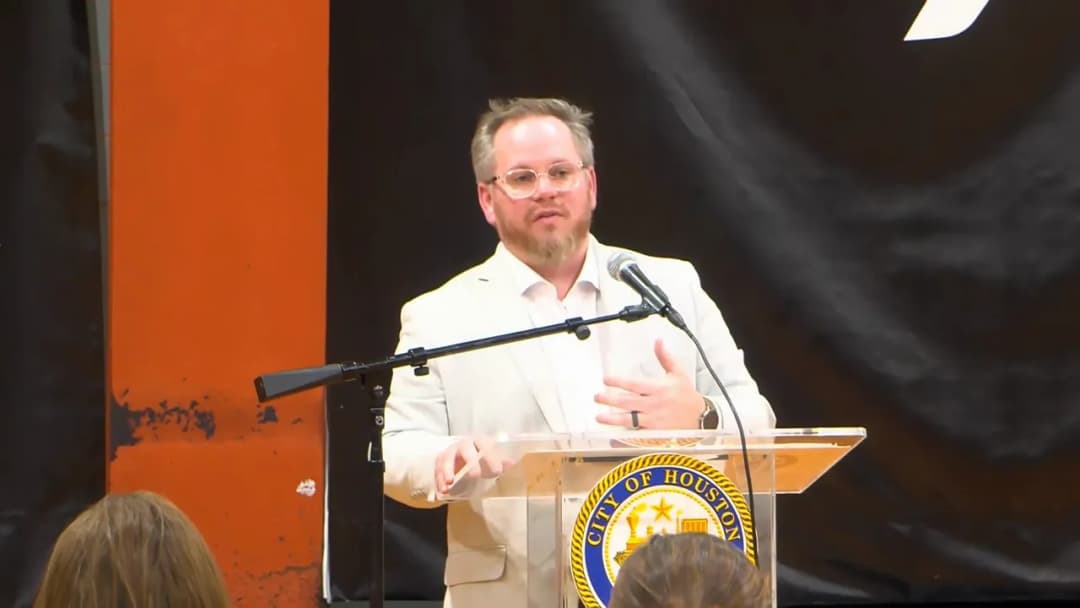
On May 16, 2026, the City of Houston Budget and Fiscal Affairs Committee held its second annual budget town hall at 10 a.m. (with a virtual town hall scheduled for May 20 at 6 p.m.). Chair Sally Alcorn and Vice Chair Mario Castillo led the session. Stephen David, Chief Strategic and Operating Officer for the Mayor's office, presented the FY27 budget outlook and proposed fiscal measures. The town hall included a detailed presentation followed by public questions and comments. Public Comments & Testimony - Russell (former government employee): Asked whether the proposed flat $5 solid waste fee and the right-of-way fee could be scaled by density or usage (e.g., denser neighborhoods paying less). David responded that future rate structures (like pay-as-you-throw) are under consideration but the immediate focus is on a low, flat fee to establish a revenue stream and improve service efficiency. - Bob Fleming (Metropolitan Organization / Coalition of Churches): Summarized his understanding that the right-of-way fee's impact on the Combined Utility System (CUS) would be offset by reducing overfunded reserves (debt service coverage at 215% vs. required 135%; operational reserves at 550 days vs. 300-day policy) and the $5 solid waste fee, with water rate increases as a last resort. David confirmed and added that efficiency gains also help. - Speaker (unidentified): Questioned whether the $200+ million drop in CUS fund balance simply moves the deficit from the general fund to the utility, and whether police costs (adding $100M/year) are being addressed. David acknowledged the temporary subsidy for solid waste and explained that police and fire costs are driven by state law, union contracts, and recruitment challenges; the city is now net positive in officers and firefighters. - Bill (First Ward Civic Club / Environment Texas): Expressed support for a solid waste fee but urged the city to reject chemical recycling (advanced recycling) and the MOU with ExxonMobil and LyondellBasell, citing air quality concerns and fires at facilities. He requested the city not to implement a fee tied to incineration. - Young man (downtown oil & gas worker): Asked about amending or repealing the city's self-imposed property tax revenue cap (Proposition 1/Proposition H) and about commuters not contributing to city taxes. David noted that every mayor has considered reform but backed off, and that suburban tax burdens are actually higher than Houston's. - Karina (Fondren Civic Club): Asked whether landfill space costs are included in the trash fee (David clarified they are not, as third-party operators cover landfill costs). She also requested more transparency on consulting fees in the budget, noting the city's Open Finance portal. She asked about the right-of-way fee comparison: David said Houston's 5% is conservative compared to other cities. - Joe Higgs (Metropolitan Organization): Asked about funding for demolition of dangerous buildings and the ditch reestablishment program. David said $30M was allocated last year for demolition (with $20-25M reverted due to slow process), and $50M is included for local drainage and ditch reestablishment this year. He noted 300 of 2,200 eligible structures are ready for demolition, but only 10 are being demolished currently. Discussion Items - Presentation by Stephen David: Covered the city's three fund buckets (Airport Enterprise Fund $740M, Public Works Enterprise Funds $3.5B, General Fund $3B). Described the property tax revenue caps (state SB2 and local Proposition 1/Proposition H) that restrict revenue growth, causing a structural deficit. Showed a projected general fund deficit of $209M in FY27, growing to $446M by FY30 if no action taken, and a risk of dipping below the required 7.5% fund balance reserve (leading to credit downgrade). - Mayor Whitmire's approach: No property tax increase; no layoffs; no expansion of programs; no reliance on one-time transfers; no deferring infrastructure obligations. Instead, two major proposals: 1. Declare solid waste a municipal utility (removing $117M from general fund) and impose a $5/month administrative fee (cost of service is $25; fee to increase $5 annually starting FY29 until reaching full cost by FY32). The fee funds a revenue bond for new trucks and transfer station repairs. 2. Impose a 5% gross revenue right-of-way rental fee on the city's water and sewer utility ($104M/year), moving money into the general fund. This brings a net $220M improvement, reducing FY27 deficit from $209M to $25M and keeping fund balance above 12%. - Response to public questions: David defended the CUS fee as lawful and supported by operational efficiency gains, overfunded reserves, and new project funding (e.g., Texas Water Development Board loans). He acknowledged the temporary nature of the solid waste subsidy and the need for future council votes on fee increases. He noted that property tax increases would require voter approval due to the local revenue cap, and that the city has limited revenue diversity compared to Dallas, Austin, and San Antonio. Key Outcomes - The budget proposals are still under discussion; budget workshops will continue on May 18 (Solid Waste, Public Works, Fire) and May 19 (Police). A virtual town hall is scheduled for May 20. - Chair Alcorn stated she supports going up to the property tax cap but respects the mayor's stance. She encouraged residents to fill out the budget survey and attend workshops. - No formal votes were taken at the town hall; the committee will continue deliberations before the FY27 budget adoption.
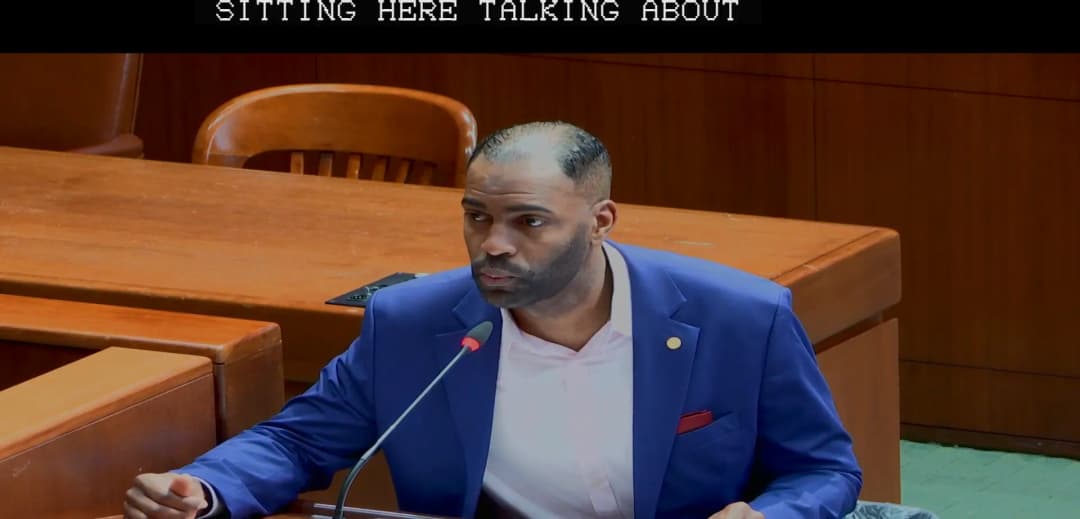
Meeting Overview On May 15, 2026, the Houston City Council received the FY2027 budget presentation from the Department of Neighborhoods (DoN). Director Herbert Sims led the presentation, highlighting the department's partnerships, outreach, and alignment with the mayor's priorities. The proposed budget reflects a 9% increase over the FY26 adopted budget, primarily due to the inclusion of the Office for People with Disabilities and targeted reductions. Council members praised the department's work and engaged in discussion on language access, volunteer programs, and neighborhood initiatives. Two members of the public offered comments. Budget Presentation Overview - Strategic Alignment: Most programs align with the mayor's quality of life priority; human trafficking and gang prevention fall under public safety; administrative services make up 48% of the budget. - Gap Elimination: The department implemented $286,000 in targeted reductions through operational efficiencies, including one vacant position, program expense adjustments, and reductions in community engagement and language access (software costs avoided). The Super Neighborhood Fund was reduced but retains $170,000, sufficient for planned grants and administration. - Proposed Budget: FY27 proposed budget is 9% higher than FY26 adopted, with all funds allocated to the general fund. Personnel expenses account for 79% of the budget, with 12% for services, 8% restricted accounts, and 1% supplies. - Program Expenditures: Major divisions include Community Engagement ($1.365M), Neighborhood Initiatives ($883K), Language Access ($438K), Human Trafficking ($243K), Office for People with Disabilities ($870K), and Office of Education and Youth Engagement ($238K). - Performance Measures: Updated KPIs using the "turn the curve" process include tracking youth participation, volunteer contributions, language access training completion, and ADA outreach. - Revenue: Funding for human trafficking/domestic violence programs comes from a settlement agreement via HPD; office for People with Disabilities expenditures are reimbursed via HPD Fund 2312; admin support revenue from TPIA requests. Council Discussion - Praise & Support: Council members expressed gratitude for the department's work, noting its presence in neighborhoods and responsiveness. Councilmember Romeris highlighted the renewal of the Language Access Coordinator position (Katie Fan) and the grant support from the Houston Endowment, thanking the original council sponsors. - Pilot Program: Councilmember Thomas's office commended the "I Speak" program piloted at apartment inspection ordinance community meetings in District F, a multilingual district, and requested expansion. - Volunteer Program: Director Sims explained the volunteer program coordinated by Roman Aguilar, using the Galaxy database via Volunteer Houston. The City of Houston volunteer page lists opportunities across departments. Councilmembers were encouraged to use the system for recruitment. - Super Neighborhood Revitalization: Mayor Pro Tem's office thanked DoN for revitalizing Central Southwest Super Neighborhood 40 and advocated for dedicated code enforcement officers per district. - General Appreciation: Vice Chair Castillo and others acknowledged the department's support for public safety roundtables, human trafficking efforts, neighborhood forums, and district activities. Public Comments & Testimony - Doug (Super Neighborhood representative): Expressed concern that super neighborhoods receive only $2,000 allocations; requested an additional $2,000 to cover expenses like a new email system. Asked for a breakdown of the 10 staff in the Mayor's Assistance Office. Noted uneven funding between the Office of Veterans Affairs (one staff) and the Office of People with Disabilities (five staff), advocating for more attention to veterans. Questioned the need for two separate departments (Office of Neighborhood Engagement and Mayor's Assistance Office) given similar goals; later noted he had received a written response addressing this. - Laura Gallier: Expressed strong support for the gang prevention/credible messenger program, stating she has observed its positive impact through trainings and graduates. Requested continuation and expansion of the program. Noted she received a response about coordination with the health department and municipal courts. Key Outcomes - No formal votes or decisions were taken during the presentation. The director acknowledged council and public feedback. The proposed budget will move forward for further consideration. Public speakers requested additional funding for super neighborhood alliance and expanded gang prevention programming.
Transcripts
No published pilot transcripts are available for this city. The current pilot covers Sacramento City Council only.
Transcript coverage details
The pilot includes June 9 and two June 23, 2026 sessions. Recording completeness is unknown. Missing, cancelled, incomplete, or changed transcripts can leave gaps. No match does not establish that something was never discussed.