On August 25, 2026, the San Antonio City Council held a meeting to consider options for regulating data center development, following a memo from council members in Districts 5, 6, and 8 requesting a special hearing. The meeting focused on two potential paths: permanent amendments to the Unified Development Code (UDC) to restrict data center locations, and a temporary moratorium of up to 90 days (extendable to 280 days) to allow further study. Staff recommended proceeding with the UDC amendment process. Discussion Items - Staff Presentation: María (city staff) introduced the two paths. The UDC amendment would establish long-term rules limiting data centers to certain commercial and industrial zones (C3, I1, I2) with minimum 500-foot setbacks, landscaping, and proximity to the Edwards Aquifer Recharge Zone. This process began in October 2025 with stakeholder meetings. The moratorium option would require written findings of a threat to public health/safety, as per state law, and could be extended up to 280 days. Fort Worth was cited as a recent example where a moratorium led to litigation. - Councilmember Galván (sponsor): Emphasized the need to protect communities from noise and water impacts. He supported the UDC path but also favored exploring a moratorium (Option 3) to gather more data. He requested that specific use permits require detailed site plans. - Councilmember Mesa González: Acknowledged community concerns about water and electricity use. He supported the UDC amendment, noting that specific use permits (already used for dry cleaners and car washes) are a good tool. He asked about the proposed 500-foot setback and compared it to other Texas cities (250-300 feet) and Tempe, AZ (1,000+ feet). He urged careful analysis. - Councilmember Spears: Supported the UDC path, highlighting economic opportunities (2,000+ state applications, job growth from contractors, AI reliance). He argued San Antonio should lead, not fear, data center development. He mentioned potential for small modular reactors (SMRs) and recycled water. He opposed a moratorium, fearing loss of regulatory control and jobs. - Councilmember Castillo: Supported dialogue and working with IBW (Building Trades). He stressed the need for public engagement and protecting neighborhoods from noise and tree removal. He also emphasized transparency in water and electricity usage data. - Councilmember (District 3): Called for a holistic conversation on energy and water resources. He saw the UDC amendment as a patch and urged deeper policy work. He wanted to involve community activists and ensure protections for property values and schools. - Councilmember Mickey Rodríguez: Strongly supported a moratorium, calling data centers a threat due to millions of gallons of water use per day and harmful decibel levels. He argued the city must act before the state, and requested mechanisms to regulate and mitigate risks. - Councilmember Munguía: Thanked Galván and noted constituent concerns from Districts 4 and 6. He highlighted 23 existing data centers in Bexar County, 12 within city limits, and 2 under construction. He supported UDC changes but wanted a clearer understanding of CPS Energy and SOS (water utility) capacity, as well as data on recycled water requirements. He also asked about federal facilities being exempt from a potential moratorium. - Councilmember (unnamed): Requested detailed analysis of water use, energy, and noise impacts before taking action. He supported the UDC amendment but wanted more time to study the implications. - Staff and Utility Representatives: Keith Martin (corporate counsel for CPS) explained that state law requires providing potable water but not non-potable water; they are exploring recycled water options. SOS representatives confirmed they are reviewing requests. Staff noted that a moratorium would not affect federal facilities or projects already permitted. Key Outcomes - The council directed staff to proceed with the UDC amendment process, which will be reviewed by the Zoning Commission on October 15, 2026. Public hearings will continue. - No formal vote was taken on a moratorium. The council agreed to have staff bring back more detailed information on the feasibility, legal basis, and potential impacts of a temporary moratorium, including options for requiring recycled water, noise limits (e.g., 50 dBA day/45 dBA night), generator enclosures, and public notification requirements. - Staff will also prepare a comprehensive update on existing and pending data center permits, water and electricity consumption data, and comparisons with other Texas cities. - Councilmembers emphasized the need for transparency and community engagement throughout the process.
Public Meetings - San Antonio, Texas
Public Meetings - San Antonio, TexasThe San Antonio City Council convened on August 25, 2026, at 9:03 AM to review the proposed Fiscal Year 2027 budgets for Human Services, Metro Health, Animal Care Services, and Development Services. Directors presented budgets, proposed reductions, revenue enhancements, and program impacts. Council members discussed equity implications, proposed amendments, and expressed intentions to restore certain cuts using alternative funding sources. Human Services Department Presentation - Proposed Budget: $98.8 million (General Fund, delegate agencies, grants), a net increase of $81,000 over FY26. - Reductions: $3.2 million, including elimination of the San Antonio Education Partnership Scholarship ($2.2 million, affecting 3,300 students), closure of three part-time nutrition sites, and elimination of two vacant positions. - New Investments: $3.8 million for senior center extended hours, partial-year bond mandates for Ella Austin Community Center, Kenwood, and West End multi-generational centers. - Delegate Agency Funding: $11.4 million for 72 awards; planned $5.1 million reduction in discretionary funding for FY28, affecting an estimated 9,350 participants (70% from districts 1–5). - Council Discussion: Councilmember Mungia criticized the disproportionate impact on districts 1–5, calling the cuts short-sighted. Councilmember White supported the cuts as necessary discipline. Councilmember Galvan defended the SAEP scholarship and delegate agencies. Councilmember Corp suggested retaining 55% of SAEP funding. Councilmember Castillo highlighted the role of delegate agencies in public safety and social services. Councilmember McKee Rodriguez opposed the cuts, urging investment in people. Metro Health Department Presentation - Proposed Budget: $80 million level-funded from FY26, with 552 authorized positions. - Revenue Enhancements: Mobile food vendor inspection reimbursements projected at $254,000 under new state law (HB 2844). - Reductions: $3.4 million, comprising $700,000 in efficiencies, $800,000 transferred to Medicaid 1115 waiver, and $1.9 million in program/staff cuts. Key impacts include: - Elimination of Center for Policy and Health Improvement staff ($692,000) ending maternal mortality pilot. - Community nutrition consolidation ($400,000) eliminating four positions and sunsetting Por Vida program. - Mayor's Fitness Council reduction ($180,000) removing one position and student ambassador program. - Performance management team cuts ($301,000) reducing reporting frequency. - Four vacant positions eliminated ($356,000). - Council Discussion: Councilmember White commended Metro Health for disciplined cuts. Councilmember Mungia questioned ending the maternal health pilot given disparities. Councilmember Alderete Gavito queried grant opportunities and asked for administrative overhead analysis. Councilmember Corp supported reproductive justice funding. Councilmember McKee Rodriguez criticized cuts to nutrition and women’s health. Mayor expressed concern about immunization and maternal health funding declines, proposing to redirect UTSA public health funding to restore cuts. Animal Care Services Department Presentation - Proposed Budget: $38 million (up $4.2 million from FY26), 254 positions. - Revenue Enhancements: Dangerous dog permit fee increases, new warrant impound fee ($150), and vaccine fee increases (total $52,000). - Reductions: $346,000, including right-sizing line items ($244,000), reducing rescue partner incentive ($42,000), and eliminating one animal care attendant ($59,000) potentially slowing kennel turnover. - New Hospital: 17,000 sq ft veterinary hospital under construction (spring 2027), with 10 new positions and $1.5 million non-personnel funding; East Side Clinic operated by a partner saves $1.12 million. - Performance: Critical call response rose to 93.4%; live release rate 88%; adoptions up 28% to 7,200. - Council Discussion: Councilmember White raised concerns about proactive vs. reactive approach and no-kill goal. Councilmember Mungia advocated for more officers and spay/neuter. Councilmember Galvan asked for non-critical call data and stressed public safety. Councilmember Corp encouraged raising adoption targets. Councilmember Spears urged higher dangerous dog fees and enforcement. Councilmember McKee Rodriguez noted the need for a second campus and fair compensation for new positions. Mayor asked for analysis on spay/neuter capacity and cost-benefit. Development Services Department Presentation - Proposed Budget: $74 million, 507 positions (157 General Fund, 350 enterprise fund). - Revenue Enhancements: 35% permit fee increase phased over three years (15% in FY27) with a 1% surcharge, developed with stakeholder consensus; code enforcement fee increases for proactive apartment inspection ($100 to $200), vacant lot administration ($250 to $300), used auto parts ($1,000 to $5,000), garage sale ($16 to $20). - Reductions: Elimination of two vacant code enforcement officers in the Neighborhood Enhancement Team (NET), reducing proactive sweeps from 20 to 10 per year (2 per district) and increasing case load by 2% reactive. - Performance: Meeting service level agreements in plan review and inspections; code enforcement responses within 2–3 days. - Council Discussion: Councilmember White disapproved of NET reduction, calling for more investment. Councilmember Mungia criticized the lack of proactive approach. Councilmember Galvan asked for vacancy details and senior assistance fund data. Councilmember Alderete Gavito opposed NET cuts and supported higher vacant structure fines. Councilmember Corp requested compliance rate breakdown by category and better communication with SAPD on short-term rentals. Councilmember Castillo suggested increasing garage sale stickers. Councilmember Spears asked about unpaid fees and enforcement. Councilmember McKee Rodriguez opposed street light funding cut. Mayor requested follow-up on debt collection and fee enforcement. Key Outcomes - No formal votes were taken; council directed administration to consider amendments for the budget adoption on September 17, 2026. - Mayor's Proposed Amendments: Use Ready to Work funds to increase funding for San Antonio Education Partnership (to $4.2 million), Next Level (to $500,000), Goodwill Northwest, YWCA Reset, Chrysalis Ministries, and Project Quest (to $4 million). Redirect $1.8 million from UTSA public health contribution to restore Center for Policy and Health Improvement, performance management team, and potentially boost SA Core mental health response targets. - Many council members expressed intent to restore funding for delegate agencies, maternal health programs, street lights, and the Neighborhood Enhancement Team, contingent on revenue adjustments or property tax rate discussions. - The city is projected to end FY28 with a $48 million balance, incorporating the planned $5.1 million delegate agency reduction and other measures.
This meeting of the Audit Committee was called to order at 11:03 AM on August 21, 2026. Members present: Councilmember Mesa Gonzalez, Councilmember White, Citizen Member Dino, Citizen Member Pacheco, and Chair Via Gran. Quorum was established. The committee approved the minutes of the previous meeting and accepted four audits on the consent agenda (items 2–5) without discussion. Consent Calendar - Approval of minutes from prior meeting (motion carried unanimously). - Acceptance of audits numbered 2, 3, 4, and 5 on the consent agenda (motion carried unanimously). Discussion Items Item 6: Audit of DSD Demolitions of Dangerous Properties (Report AU 25-012) Audit Manager Abigail Stevis presented the audit, which assessed whether demolition of dangerous properties was performed in accordance with regulations and whether contract services were monitored. The overall conclusion was that DSD had effective controls for initial inspections, notices, vacancy confirmation, and appeals verification. However, several recommendations were made: - Insurance coverage: DSD did not monitor the primary demolition contractor’s insurance; the contractor lacked appropriate coverage. Recommended controls to obtain, review, and retain certificates of insurance. - Demolition program oversight: Out of 56 sampled cases, required steps were not consistently executed or documented. Issues included untimely follow-up inspections, missing demolition permits for owner-initiated demolitions, incomplete Building Standards Board packets, and missing debris disposal documentation. Recommended strengthening controls and updating training. - Case progress: Of 25 ongoing cases, five had an average of five months of inactivity. Recommended active monitoring and case note updates. - Accounts receivable: DSD lacked effective controls over recouping demolition costs. Problems included inaccurate/unreported AR, inconsistent lien placement, non-compliance with citywide directive, and no write-off process. Accounts dating back to 1990 were identified. Recommended updating procedures. - User access: Inappropriate access to the agenda builder system was found. Recommended monthly user access reviews. DSD Deputy Director Tomas responded, stating that many issues were already addressed (e.g., insurance process, training, policy updates, monthly access reviews). He noted that accounts receivable recovery is challenging, especially for homestead properties where liens cannot be placed. Outstanding balance is approximately $5 million, with historically 15–20% recovery. DSD’s corrective action plans are expected to be completed by January 2027. Committee members discussed the process timeline (6–18 months for standard demolitions), staffing (13 dangerous premises officers citywide), and the need for better communication with council offices. Chair Via Gran requested a future discussion on whether the timeline can be shortened and whether staffing is adequate. Councilmember Mesa Gonzalez asked about enforcement of demolition permits; DSD confirmed they now verify permits before owner-initiated demolitions. Councilmember White inquired about interim safety measures, delays, and collectibility of outstanding balances. Committee member Dino offered support from the city to help close gaps. The committee voted to accept the audit (motion carried). Item 7: Status Update of Outstanding Management Action Plans City Auditor Buddy Vargas presented a summary of follow-ups on 56 recommendations from prior audits. Most recommendations were verified as implemented (blue status), with some still pending (yellow) for recent audits or partial implementation. The process is working as intended. Committee members discussed the possibility of tracking repeat delays and identifying systemic issues across departments. Chair Via Gran announced a subcommittee (led by the civilian member) to work with the city manager’s office on improving follow-up. Councilmember White asked which overdue recommendations pose the greatest financial/operational risk; the auditor agreed to provide a detailed analysis later. Councilmember Mesa Gonzalez suggested looking for structural issues across audits (e.g., accounts receivable). The item was for briefing only; no vote was taken. Key Outcomes - Approved minutes and consent agenda items. - Accepted the audit of DSD demolition of dangerous properties (Item 6) with recommendations to be implemented by January 2027. - DSD committed to ongoing corrective actions, including insurance monitoring, process documentation, training, and accounts receivable improvements. - The committee will form a subcommittee to review outstanding management action plans and work with the city manager’s office. - The auditor will provide further analysis on overdue recommendations and identify citywide trends. Meeting adjourned at 11:53 AM.
The Audit Committee of the San Antonio City Council met on August 21, 2026, at 11:03 AM with a quorum present (Councilmembers White, Pacheco, and President Villagrán). The committee approved previous minutes, four audits, and then conducted a detailed discussion of an audit on dangerous property demolitions and an update on prior audit recommendations. Consent Calendar Approval of minutes and corrections from previous meetings were approved unanimously via voice vote. Four audits (agenda items 2 through 5) were approved as a single block by unanimous voice vote. Discussion Items Item 6: Audit Report on Demolitions of Dangerous Properties – Abigail, the audit manager, presented findings from the Office of Audit on Development Services. The audit covered demolitions of dangerous properties between Fiscal Year 2024 and 2025, with approximately 156 properties identified as dangerous and 140 demolished. Positive findings included timely initial inspections, proper notifications, and confirmation of vacant properties. However, deficiencies were found in: monitoring contractor insurance coverage, documentation completeness (56 cases reviewed, some missing evidence), follow-up on debris removal, progress monitoring (25 cases with no activity for five months), payment recovery (accounts receivable dating back to 1990, with $5 million currently owed and only 15-20% recovery typical), and access controls for the scheduling system. The Development Services director acknowledged the findings, stated they have already begun corrective actions (e.g., designating a manager to handle insurance, monthly access reviews), and targeted full implementation by January 2027. Councilmembers discussed the demolition timeline (6-18 months), staffing adequacy (13 specialized personnel handle dangerous properties), challenges with out-of-town property owners, and the need for a more holistic approach to payment recovery and budget implications. Councilwoman Mesa González asked about contractors performing demolition without permits; Development Services confirmed that such cases are addressed with fines and follow-up. Councilman White raised questions about public safety and whether the timeline could be shortened; it was noted that state law and local ordinances require due process for property owners. Item 7: Update on Recommendations from the Audit Department – The audit department presented the status of 56 recommendations from prior audits. Recommendations are tracked with completion dates and categorized by implementation status. Many are marked as complete or in progress; a few are pending due to partial completion, process adjustments, or other reasons. Councilwoman Villagrán asked about risk prioritization and suggested bundling similar issues across departments for a citywide action plan. The committee discussed using a subcommittee to work with city management on follow-up. No formal vote was taken on the update; it was accepted as information. Key Outcomes Approved minutes and four audits (voice votes, unanimous). Accepted the audit report on dangerous property demolitions and the associated recommendations (motion by Councilmember, seconded, voice vote in favor; none opposed). The committee requested a follow-up on risk prioritization of pending recommendations and expressed interest in a broader, cross-departmental review of recurring issues (e.g., payment collection, documentation). Meeting adjourned at 11:53 AM.
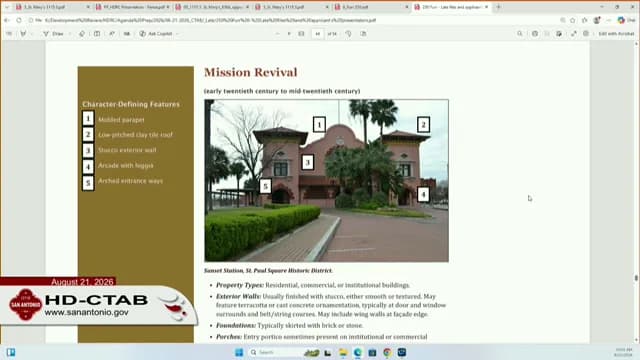
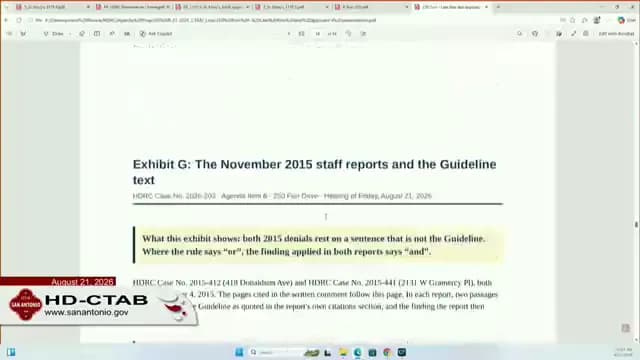
The San Antonio Historic Preservation Commission met on August 21, 2026, at 9:00 AM. Chair Juanita Sepúlveda presided, and Vice Chair Jason Vázquez was present. The commission heard five cases, including one consent item and four contested items, with one case postponed. The meeting ended at approximately 10:20 AM. Announcements - Commissioner Adriana Siga was welcomed as the new commissioner for District 6. - The Office of Historic Preservation announced its annual event at Wonderland of the Americas mall, free and open to the public, connecting historic homeowners with contractors for repair and restoration services. Consent Calendar - The minutes from the previous meeting were approved unanimously. - Case 2026-371 (307 East Wizard Avenue): The applicant requested approval for a cement roof. The commission approved the item unanimously after discussion about prevalence of cement roofs in the neighborhood. Public Comments & Testimony - Case 2026-188 (917 Burnett Street): Applicant Cristian Fernández, a real estate developer, spoke in favor of his proposed fence heights (8 ft rear, 10 ft driveway) and landscaping. He argued that the changes improve privacy and security, and noted similar features in the neighborhood. Commissioners questioned him about his knowledge of historic district requirements. - Case 2026-195 (15 South San Mary's): Cristina Medrano, co-owner of Mustard Seed Academy, requested a 6 ft iron fence for child safety. She emphasized proactive security measures and cited the nearby Beethoven school as a precedent. Public speaker Roberto Medrano spoke in support, referencing school shootings. The commission had 24 letters of support and one in opposition. - Case 2026-219 (18 South Álamo): The applicant did not attend but a letter from the King Williams neighborhood association supported staff recommendations. - Case 250 Ford Drive: Marcus White, owner of Home Improvements, argued for a cement roof, claiming it would be more durable and historically appropriate for the Tudor Revival style. He presented photos and challenged staff's use of guidelines. Bianca Maldonado, president of the Monticello Park Neighborhood Association, spoke in opposition, stating that metal roofs are rare in the district and that the applicant had already prepared materials without a permit. Discussion Items - Case 2026-188 (917 Burnett Street): The applicant requested exceptions to staff recommendations: 8 ft rear fence (instead of 6 ft) and 10 ft driveway gate. Staff recommended approval with conditions: front iron fence at 4 ft, side fence reduced to 6 ft, landscaping plan to meet 50% green area, and driveway gate not wider than 12 ft. The commission discussed the violation nature of the work and the applicant's prior knowledge. The motion to approve staff recommendations passed unanimously. - Case 2026-219 (18 South Álamo): Application for a 600 sq ft deck and 6 ft wood fence. Staff recommended denial of the deck and approval of the fence at no more than 3 ft height, citing the violation and non-compliance. The commission approved staff recommendations unanimously. - Case 2026-195 (15 South San Mary's): Mustard Seed Academy requested a 6 ft iron fence for security. Staff recommended a 4 ft fence to preserve historic character. Commissioners expressed concerns about setting a precedent for future owners. The motion to follow staff recommendations (4 ft) passed 6-3 (Commissioners Spiller, Siga, and Palek voted no). - Case 250 Ford Drive (Monticello Park): Applicant requested a cement roof on a Tudor Revival house. Staff recommended denial, citing guidelines for roof materials. The neighborhood association president argued that metal roofs are inconsistent with the district's character and that the property is poorly maintained. Commissioners noted the lack of permit application and the need to preserve the historic style. The motion to approve staff recommendations passed unanimously. Key Outcomes - All four contested cases were decided in accordance with staff recommendations, with the exception of the school fence case where the commission upheld the 4 ft height limit. - The consent calendar item (307 East Wizard Avenue) was approved. - One case (164 Germán) was postponed at the applicant's request. - Applicants for denied items were instructed to work with staff to bring properties into compliance. - The meeting adjourned at 10:20 AM.
The Historic Compliance and Technical Advisory Board (CTAB) met on Thursday, August 21, 2026, at 9:00 a.m. to consider five cases involving certificates of appropriateness for properties in San Antonio’s historic districts. Chairwoman Juanita Sepulveda presided. Roll call confirmed a quorum with ten members present. After approving minutes from the July 17 meeting (9-0-1, with Commissioner Ziga abstaining), the board heard staff announcements and proceeded to the agenda. Consent Calendar - A single consent item (164 Hermione Boulevard) was postponed at the applicant’s request. The remaining consent item (370 East Weesatch) was pulled for individual discussion by Commissioner Vasquez and voted on separately. Public Comments & Testimony - Case 2026-219 (1008 South Alamo St.): No public testimony; applicant did not attend. The King William Association submitted a letter supporting staff’s recommendations. - Case 2026-188 (917 Burnett St.): No public comment separate from the applicant’s presentation. - Case 2026-195 (1115 South St. Mary’s / Mustard Seed Academy): Two in-person speakers supported the applicant’s request for a taller fence. Roberto Medrano expressed strong support citing security concerns. The board also received 24 letters of support and one opposition letter from the neighborhood association. - Case 2026-203 (250 Fur Drive): Bianca Maldonado, president of the Monticello Park Neighborhood Association, spoke in opposition, stating that metal roofs are not characteristic of the district and that the property had a history of neglect. Discussion Items Item 1 – 370 East Weesatch (Consent pulled) – Applicant Colin Stone requested approval to install a standing seam metal roof on a craftsman-style home. Staff recommended approval. The board approved unanimously (9-0) with staff stipulations (crimp seams, no ridge caps). Item 2 – 2026-188 (917 Burnett Street) – Violation case – Applicant Christian Hernandez sought approval for a four-foot wrought iron front fence, a six-foot privacy fence (stepping to eight feet at rear), artificial turf and gravel in the front yard (already installed), and a ten-foot driveway. Work was completed without prior approvals. Staff recommended approval of the fence and driveway, but required reduction of the privacy fence to six feet and a revised landscape plan with at least 50% natural green space. The applicant asked for exceptions, citing a nearby Airbnb and the durability of turf. After debate, Commissioner Spiller made a motion to approve with staff recommendations; it passed unanimously (9-0). The board urged the applicant to work with staff on a compliant landscape plan. Item 3 – 2026-219 (1008 South Alamo Street) – Violation case – The applicant constructed a large wooden deck (approx. 625 sq ft) and a three-foot fence without approvals. Staff recommended removal of the deck and approval of the fence. No one appeared for the applicant. The board approved staff’s recommendations unanimously (9-0). Item 4 – 2026-195 (1115 South St. Mary’s / Mustard Seed Academy) – The applicant, Christina Medrano, requested a six-foot wrought iron fence for a preschool, citing child safety. Staff recommended a five-foot height. Several commissioners expressed concern about precedent, noting that guidelines call for a four-foot fence on the front property line. After discussion, a motion to approve staff’s original recommendation of a four-foot fence (with two vehicular gates and one pedestrian gate) was made and seconded. The motion carried 7-2 (Davis, Spiller, Ziga, and Pollock voted ‘nay’; Garcia, Fullerton, Speeds, Vasquez, and Sepulveda voted ‘aye’). Item 5 – 2026-203 (250 Fur Drive) – Applicant Marquez White requested a standing seam metal roof on a Tudor Revival home in Monticello Park. Staff recommended replacement in kind with composition shingles. The applicant argued metal is appropriate under the guidelines and cited examples of metal roofs on Tudor homes in the district. The neighborhood association opposed, noting that less than 1% of homes in Monticello Park have metal roofs. Commissioner Vasquez noted that Tudor revivals historically do not have metal roofs and that the home had maintenance issues. A motion to support staff’s recommendation carried unanimously (9-0). Key Outcomes - Minutes approved (9-0-1 abstention). - 370 East Weesatch: Certificate of appropriateness approved for standing seam metal roof (unanimous). - 917 Burnett Street: Certificate approved with stipulations on fence height and landscape (unanimous). Applicant to revise landscape plan with 50% green space. - 1008 South Alamo Street: Certificate approved requiring deck removal and fence compliance (unanimous). - 1115 South St. Mary’s: Certificate approved for a four-foot wrought iron fence, two vehicular gates, one pedestrian gate (7-2). - 250 Fur Drive: Certificate denied for metal roof; applicant must replace in kind with composition shingles (unanimous). The board adjourned after the last case.
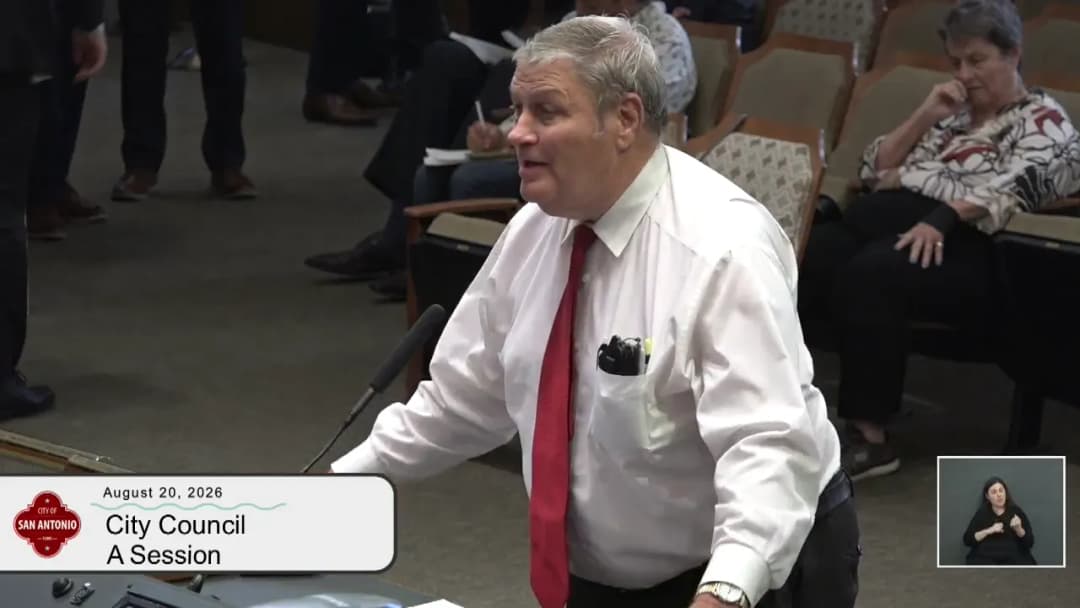
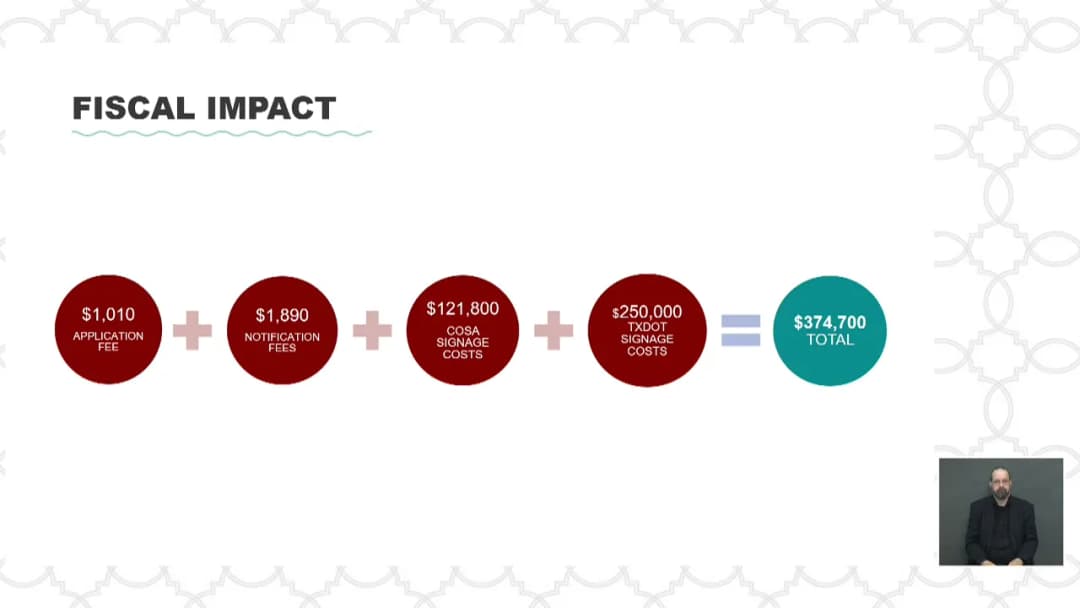
The San Antonio City Council met on August 20, 2026, at 9:11 AM. The meeting included proclamations for Dignity San Antonio's 50th anniversary and National Senior Citizens Day, personal privilege recognitions, a city manager's report, approval of the consent agenda, and a discussion and vote to rename a portion of Caesar E. Chavez Boulevard to Durango Boulevard. Proclamations & Recognitions - Dignity San Antonio 50th Anniversary: The council presented a proclamation honoring the organization for 50 years of service to the LGBTQIA+ Catholic community and allies. Deb Myers (representative) thanked the city for support, noting the group is the oldest LGBTQIA+ organization in San Antonio. - National Senior Citizens Day (August 21, 2026): Councilmember Mungia introduced the proclamation, highlighting the contributions of seniors and advocating for the protection of senior services during the budget season. Several council members spoke, emphasizing the value of senior centers and thanking the Department of Human Services (DHS) and nonprofits like Meals on Wheels and the San Antonio Food Bank. Fernanda Carden (chair of the Joint Commission on Elderly Affairs) accepted the proclamation, pledging to continue fighting for older adults. - Personal Privilege – Overdose Awareness Day: Councilmember Castillo recognized Unity Recovery for International Overdose Awareness Day (August 31). A representative (Cami) spoke about destigmatizing addiction and equipping the community with life-saving tools. - Personal Privilege – San Antonio Shoes 50th Anniversary: Councilmember Mungia recognized San Antonio Shoes (SAS) for 50 years of footwear manufacturing on the south side, employing local residents. Mike Taylor and Rick Knowles attended. City Manager's Report - City Manager Eric Walsh reported that Crystal Jones, Director of the Department of Arts and Culture, received a Women in Leadership award from the San Antonio Business Journal. - U.S. Transportation Secretary Sean Duffy visited the airport and announced $31 million in federal improvements to the air traffic control tower. Since 2019, the airport has received nearly $230 million in federal grants. - Walsh thanked the DHS team for their work managing senior centers. Consent Calendar - Items 6-13 were considered as a group; Item 12 was withdrawn by staff. Council approved without objection. - Councilmember Spears highlighted Item 6: an ordinance approving a $220 million construction manager-at-risk agreement (Manhattan Joris joint venture) for the reconfiguration and rehabilitation of Terminals A and B at the San Antonio International Airport. She noted the contract is backed by airport revenue bonds and will not impact property taxes, calling it an economic driver. - Public Comment on Consent: Jack Finger spoke against two film production agreements (Items 8 and 10), questioning $250,000 for "People Walk Dogs Late at Night in the Suburbs" and $176,000 for "Verona." He expressed concern that backup documents did not describe the films and suggested they could be inappropriate. He urged the council to pull the items for questions. No council members responded to his request. Discussion Items - Item 5 – Renaming Caesar E. Chavez Boulevard to Durango Boulevard: Staff (Amin Tomaz, Director of Development Services) presented the proposal. The street segment runs from Southwest 36th Street to South Hackberry Street, affecting 295 addresses. A survey of abutters showed 79% support for Durango. The Historic Design Review Commission and Planning Commission approved. Total cost for sign replacement is $374,700 from the General Fund. The change will not affect voting in November 2026, confirmed in writing by the county. - Public Comment: - Rose Garcia (speaking for her family and the Westside community) expressed strong support for renaming to Durango, citing the area's Mexican heritage and street names like Monterey and Saltillo. - Jack Finger also supported the change but commented on the controversies around Cesar Chavez, suggesting the name "Jack M. Finger Boulevard" as an attention-grabbing alternative. - Council Discussion: Councilmember Castillo (sponsor) thanked staff and noted that the majority of residents made clear they wanted a name reflecting the community's history. Councilmember Galvan emphasized taking allegations of assault seriously and honoring collective movement politics over an individual. Councilmember Viagran recalled that many residents already refer to the street as Durango. Councilmember Corr noted strong community engagement and creative name suggestions (e.g., "Spurs Way"). All speakers supported the renaming. Key Outcomes - Consent agenda approved (Items 6-11 and 13; Item 12 withdrawn). - Item 5 approved by vote, renaming Caesar E. Chavez Boulevard to Durango Boulevard between Southwest 36th Street and South Hackberry Street. The project will take 6-12 months for sign installation. - Meeting adjourned at 10:05 AM.
The San Antonio City Council met on August 20, 2026, at 9:11 AM. The meeting began with a roll call establishing a quorum, an invocation led by Councilmember Galván, and the pledge of allegiance. The council approved minutes from August 6, presented multiple proclamations, heard a city manager's report, and voted on several key items including a consent agenda and an ordinance to rename a portion of César Chávez Boulevard to Durango Boulevard. Consent Calendar - Minutes from August 6 were approved unanimously without objection (motion passed). - The consent agenda included items 8 through 13 (item 12 was withdrawn). Notable items: - Item 6: Approval of a revenue bond of $220 million for reconstruction of terminals A and B at the San Antonio Airport. Councilmember Spears highlighted that the bond is solely for the airport, has no impact on property taxes, and is essential for economic development and tourism. - Item 8: Authorization of a $250,000 agreement with PWD Feature Film Partners for a film titled "Dog Walk". - A separate film project "Verona" was listed with a cost of $176,000. - Councilmember Spears praised the airport project. The consent agenda was approved except item 12. Public Comments & Testimony - Jack M. Finger (public comment on consent agenda): Expressed strong opposition to the $250,000 film agreement for "Dog Walk" and the $176,000 for "Verona". He questioned the spending, suggesting the film plots were trivial, and implied Verona might involve pornography. He offered to produce similar content for half the cost. - Rose Garcia (public comment on Item 5): Representing her family and West Side residents, she expressed full support for renaming César Chávez Boulevard to Durango Boulevard, emphasizing the historical and cultural connection to Mexican heritage (names like Monterrey, Saltillo, Durango). - Jack M. Finger (public comment on Item 5): Expressed support for the renaming, criticizing César Chávez as a "hispanic hero" who had lost grace, and made a joking suggestion to name the street after himself. Discussion Items - Proclamations: - Recognized the 50th anniversary of Dignity San Antonio, an LGBTQ organization. Ruth Kenkin thanked the city for support. - Proclaimed August 21 as National Senior Citizens Day in San Antonio. Several councilmembers spoke about the importance of senior services, especially during a tight budget season. A representative from Meals on Wheels and the Gonzava Foundation expressed gratitude. - Recognized Overdose Awareness Day (August 31). Councilmember Castillo introduced a recovery team speaker, who emphasized education and tools for substance use recovery. - Honored a South Side business celebrating its 50th anniversary (Mike Taylor's shoe business). - City Manager's Report (Eric): - Announced that Crystal Jones, Director of Arts and Culture, received a Women in Business award from a business journal. - Reported that U.S. Secretary of Transportation John Duffy visited yesterday and announced $31 million in federal funding for upgrades to the airport's FAA control tower technology. Since 2019, the San Antonio airport has received nearly $230 million in capital and operational funds. - Item 5: Ordinance to rename César Chávez Boulevard to Durango Boulevard (between SW 36th Street and Hackberry Street): - Staff from the Development Services Department presented the request from District 5. Community engagement included surveys and meetings from April to June. The Planning Commission and Historic Design Review Commission both recommended approval. The change affects 295 addresses and will cost $374,000 from the FY2022 General Fund (signage $121,800, striping $250,000). Work will take 2 months for signage and 6-12 months for striping. The change will not affect voting in November, as confirmed in writing by Bexar County. - Council discussion: Councilmember Anderete Gavito thanked Councilmember Castillo for bringing the change, noting the importance of believing women who spoke out (alluding to allegations against César Chávez). Councilmember Castillo highlighted community support from residents along the boulevard who prioritized the name change due to deep Mexican roots (Durango is one of several streets with Mexican state names). Councilmember Munguía expressed a preference for memorials over street names and emphasized focusing on local San Antonio history. Key Outcomes - Consent agenda approved (except item 12) with majority vote. - Item 5 (street renaming) approved (motion and second, passed by vote). The ordinance changes the name of a segment of César Chávez Boulevard to Durango Boulevard.
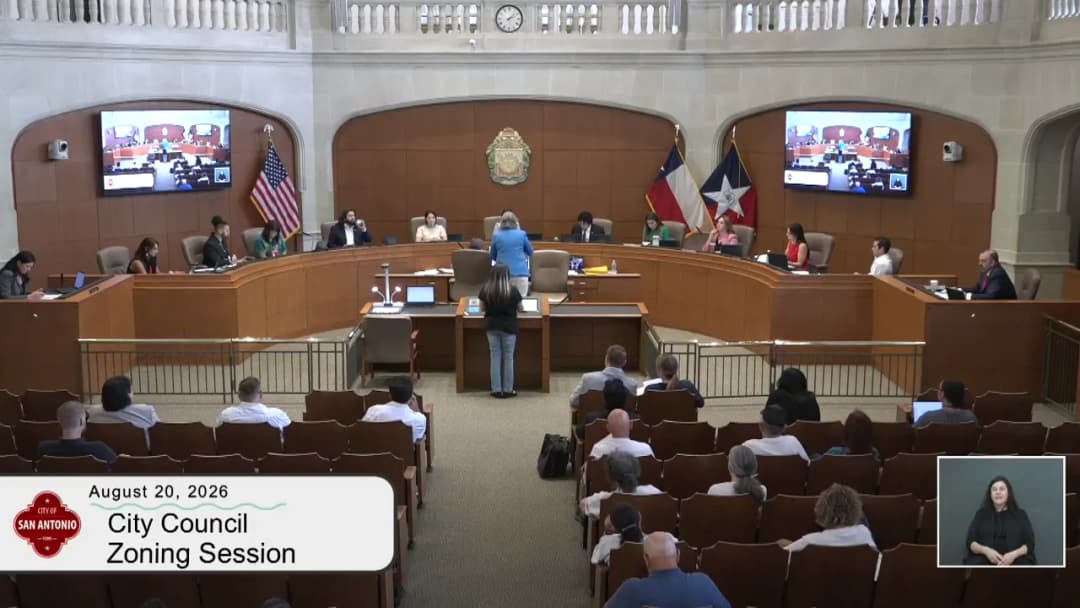
The San Antonio City Council convened a zoning and land use session at 2:03 PM on Thursday, August 20, 2026, with a quorum present. The meeting was adjourned at 2:49 PM. The agenda included continuations, a consent agenda, and individual items for discussion and votes. Consent Calendar - Items Withdrawn: Items 7, 13, 22, and 23 were withdrawn and not considered. - Continuations: - Item 25 (District 5) was continued to September 3, 2026. Public speaker Jack Finger urged denial, citing the applicant as a “bad actor” due to unpermitted construction, threats to West Side Creeks water quality, and opposition from the Prospect Hill Neighborhood Association. Despite his comments, the council voted to continue. - Item 24 (District 5) was continued to September 17, 2026. Speakers Avet Randon and Jack Finger opposed the continuation, noting 30 petition signatures and opposition from the Via Esperanza and Kelly Park Neighborhood Associations. The speaker argued the request—parking and long-term storage with an 8-foot fence—introduces industrial use into a mixed commercial/residential area. Council voted to continue. Public Comments & Testimony - Consent Agenda – Item 2 (alcohol sales): Jack Finger urged the council to pull Item 2 for individual consideration, stating the Tobin Hill Neighborhood Association opposed the zone change from non-alcohol to alcohol sales near downtown. The council did not pull it; the consent agenda was approved as presented. Discussion Items - Item 12 – 1210 Caton Avenue (District 3): Rezoning from R-4 to R-6 with conditional use for three dwelling units. Staff and Zoning Commission recommended approval. Public speakers (Eddie Rohr, Aaron Reed, Denise Martin, Karen George, Rachel Rohr, and others) opposed, citing emergency vehicle access issues on the narrow 27-foot-wide street, a fatal shooting response delay, a stroke victim’s delayed EMS access, misrepresentation by the applicant, and stress on aging infrastructure. Highland Park Neighborhood Association opposed. Councilwoman Viagran noted 10 notices in favor vs. 10 opposed (plus 9 vs. 10 outside 200 ft). She motioned to approve with conditions: no signage, 6-foot solid fence, and on-site tenant parking. Motion carried. - Items 17 & 18 – 3100 Block South Jeevers Street (District 3): Plan amendment and rezoning to C-3NA with conditional use for construction trades contractors. Staff recommended denial; Zoning and Planning Commissions recommended approval with conditions (downward lighting, no temporary signage, restricted hours). 42 notices mailed, 12 in favor, 0 opposed. Highland Park Neighborhood Association supported. Jack Finger spoke against, calling it “commercial encroachment.” Councilwoman Viagran moved to approve with conditions as read; motion carried. - Items 30 & 31 – 12139 Jones Maltzberger Road (District 9): Plan amendment and rezoning to C-3 with specific use authorization for auto paint and body repair with outside storage. Staff, Zoning Commission, and Planning Commission all recommended denial. 19 notices mailed, 7 in favor, 2 in opposition. Jack Finger spoke against, citing hazards from emissions and chemicals too close to residences. Councilwoman Spears moved to continue to September 17, 2026; motion carried. Key Outcomes - Item 12: Approved with conditions (no signage, fence, designated tenant parking). - Items 17 & 18: Approved with conditions (downward lighting, no temporary signage, restricted hours). - Items 30 & 31: Continued to September 17, 2026. - Consent Agenda: Approved as presented (items 1–6, 8–11, 14–16, 19–21, 26–29, 32–34). - Continuations: Item 25 to Sept 3; Item 24 to Sept 17; Items 30 & 31 to Sept 17.
The San Antonio Zoning Board convened on August 20, 2026, at 2:03 PM and adjourned at 2:49 PM. Mayor Jones presided with a quorum. The board withdrew items 7, 13, 22, and 23, postponed items 25 and 24, approved the consent agenda, and considered individual zoning cases 12, 17, 18, 30, and 31. Consent Calendar - The board approved the consent agenda comprising items 1, 3, 4, 5, 6, 8, 10, 11, 14, 15, 16, 19, 20, 21, 26, 27, 28, 29, 32, 33, and 34 in a single motion. No member of the public requested individual consideration of these items. Public Comments & Testimony - Jack Finger spoke against item 25, a development in District 5, alleging construction without required permits and a threat to groundwater protection and public health, and stated the Prospectives association opposed it. - Jack Finger spoke against item 2, an alcohol sales zoning request near downtown, stating that the Tobin Hill association opposed it. - Ivette Rendón submitted a petition with 30 signatures opposing a business proposed at 2007 Road, stating the final plan had not been seen. - Jack Finger also opposed item 24, a proposed parking and storage area with an 8-foot fence, on behalf of the Via Esperanza and Kelly Park associations. - Jack Finger opposed items 17 and 18, calling the commercial intrusion into a residential area "a disease." - Jack Finger opposed items 30 and 31, citing insufficient buffering for an auto painting and body shop near residents. - On item 12, multiple residents and the Highland Park Neighborhood Association opposed the zoning change, citing emergency vehicle access, street width, density, and process concerns. Diego Rodríguez, the applicant, stated he was present to answer questions. Discussion Items - Item 12 (District 3): An ordinance to modify an R-4 district boundary at 1210 Keyton, allowing a third unit on a duplex property. Staff and the Zoning Commission recommended approval. Notification results were mixed: 29 notices sent; within 200 feet, 10 supported and 10 opposed; outside 200 feet, 9 supported and 9 opposed. Speakers opposing cited a 27-foot-wide street, emergency access problems, a past shooting victim who died when first responders couldn't reach her, a stroke victim whose rescue was delayed, high density, and a lack of trust in the applicant. Councilwoman Villagran noted that six parking spaces were provided, exceeding the minimum of five, and that the property provides affordable housing at up to 60% of median income. She made a motion to approve with conditions: no signage, a fence, and individually designated tenant parking. The motion passed. - Items 17 & 18 (District 3): A plan amendment and zoning change at the 3100 block of Southgivers from low-density residential to regional mixed-use with conditional use for construction contractors and storage. Staff recommended denial; the Planning Commission recommended approval. Hours were restricted to Monday–Saturday 7 AM–8 PM and Sunday 9 AM–6 PM. Of 42 notices, 12 were returned in favor and none opposed. The Highland Park Neighborhood Association was in favor. Jack Finger urged denial. Councilwoman Villagran moved to approve with conditions as read; the motion passed. - Items 30 & 31 (District 9): A plan amendment and zoning change at 12139 John Smallsberg Road from regional commercial to commercial for auto repair and painting. Staff and the commission recommended denial. Of 19 notices, 7 were returned in favor and 2 opposed within 200 feet; outside 200 feet, 7 were in favor and 1 opposed. No registered neighborhood association was within 200 feet. Jack Finger spoke against, citing proximity to residents and chemical hazards. Councilwoman Spears moved to postpone the items to September 17; the motion passed. Key Outcomes - Items 25 and 24 were postponed to September 3 and September 17, respectively. - Item 12 was approved with conditions (no signage, fence, designated tenant parking). - Items 17 and 18 were approved with conditions as read. - Items 30 and 31 were postponed to September 17. Note: There is a slight discrepancy in the notification counts for items 30 and 31: the initial staff report said "7 in favor, 2 in opposition," but later the mayor stated "7 in favor, 1 in opposition" for those outside 200 feet. The summary preserves both figures as they appeared.