The Educational Opportunities Committee of the San Antonio City Council met on Tuesday, February 17, 2026, at 10:02 a.m. to discuss the state of K-12 education in Bexar County. The meeting featured presentations from Julia Grizzard of the Bexar County Education Coalition, Dr. Jaime Aquino (Superintendent of San Antonio ISD), and Dr. Kraft (Superintendent of Northside ISD), along with contributions from city staff on public safety radio fees and patrol partnerships. The committee explored school finance, academic accountability, school closures, and opportunities for city support. Consent Calendar - The committee unanimously approved the minutes from the previous meeting without corrections. Discussion Items - School Finance Overview: Julia Grizzard presented a detailed overview of Texas school funding, noting that the Foundation School Program basic allotment will be $6,215 per student in 2026-2027. She explained that Texas ranks 43rd in per-student funding nationwide and has experienced record surpluses ($33 billion in 2023, $24 billion in 2025) yet only increased the basic allotment by $55 in the last session. She highlighted that funding based on attendance disproportionately affects at-risk communities and that enrichment funding is increasingly used to fill gaps in special education, transportation, and school safety. - School Closures and Facilities: Dr. Aquino described SAISD's "right-sizing with heart" process, involving over 40 community meetings and a Facilities Repurposing Panel. He noted the average age of SAISD buildings is 68 years, with some requiring $30-60 million in renovations. The district is now considering selling some properties due to lack of preventive maintenance funds. Dr. Kraft added that Northside ISD is engaging in "optimization" conversations, with seven elementary schools at or below 300 students, and is exploring a three-cent golden penny Voter-Approved Tax Ratification Election (VATRE) in November. - Academic Accountability: Grizzard criticized the state's A-F system, noting that 100% of elementary and middle school ratings are based on a single test day. She explained that in 2023, the state changed cut scores retroactively, using data from students who had already graduated. She presented data from Commit showing significant academic improvement in several Bexar County districts (e.g., East Central improved markedly but remained a C), arguing the rating system does not reflect classroom reality. - City-School District Stressors: City CIO Craig Hopkins clarified that the $22/month per radio fee for the city's radio system covers maintenance of the 27-tower, $85 million system. Assistant Chief Robert Lenton of SAPD described strong partnerships with school district police, including joint training and programs like Handle with Care, but noted that state mandates (HB 3) have forced school districts to shift patrol resources to daytime campus coverage, requiring SAPD to absorb nighttime patrols. - Potential City Support: Grizzard suggested the city could support districts by waiving or subsidizing radio fees, coordinating safe routes to school (e.g., sidewalks, lighting), leveraging data to align investments, and advocating at the state level for increased funding. Councilmembers expressed interest in exploring these ideas, with Councilmember Castillo requesting a breakdown of radio fees paid by each ISD. Key Outcomes - Commitment to Explore Radio Fee Relief: Councilmember Castillo requested that the city provide a detailed cost breakdown of radio fees paid by each ISD. The committee agreed to explore potential fee waivers or subsidies. - Public Safety Partnership Review: Councilmember Galvan committed to examining the ISD police department partnership, including costs and potential for the city to absorb overnight patrols, with a report expected by the March or April meeting. - Data Dashboard and Bond Alignment: The committee discussed integrating school-level data into the city's community metrics dashboard, adding a layer showing city investments around schools. This could inform future bond funding priorities. - Legislative Advocacy: Councilmembers agreed to prioritize education funding in the city's 90th legislative agenda, including advocating for increased basic allotment and opposing unfunded mandates. Councilmember Mungia noted that the state's $18 billion property tax cut did not increase school funding. - Future Meeting: The committee plans a more hands-on April meeting to develop specific recommendations for city actions supporting K-12 education, including potential transportation partnerships (e.g., with VIA) and communication improvements.
Public Meetings - San Antonio, Texas
Public Meetings - San Antonio, TexasThe San Antonio Zoning Commission met at 1:01 PM on February 17, 2026, under Chair John Bustamante. Ten commissioners were present (one absent, later noted). The agenda included withdrawn items (1, 4, 8), a consent item, a continuance, and five individual hearing items. All votes were unanimous unless noted. Consent Calendar - Item 9 (403 Blanco Road): Applicant amended request from RM6 to IDZ1 with uses permitted in RM6 and NC (Neighborhood Commercial). The Beacon Hill Area Neighborhood Association voiced support via a voicemail. The item passed unanimously as amended. Public Comments & Testimony - Item 9: Cynthia Walker (Chair, Beacon Hill Zoning and Urban Design Committee) left a voicemail supporting the amendment, noting resident approval and appreciation for the applicant’s willingness to work with the neighborhood. - Item 7 (731 Probant & 134 King Roger): An anonymous resident left a voicemail opposing the proposed parking lot at 134 King Roger, citing concerns about noise, congestion, safety, and potential negative impacts on the residential character. The resident requested mitigation measures such as tall fencing. Discussion Items - Item 2 (904 Pleasanton Road & 347 West Sayers Avenue): The applicant (Patrick Christensen, representing Gonzaba Medical Group) amended the request to C1S for a non-commercial parking lot to serve adjacent medical offices. Staff recommended denial for the Sayers portion due to residential encroachment. Commissioners approved the amendment after clarifying that the specific use authorization required a demolition component (the house had already been demolished). Motion carried. - Item 3 (206 West Hart Avenue): The applicant amended the request to C1S for a medical clinic, also for Gonzaba. Staff recommended denial but the Planning Commission had supported a neighborhood commercial alternative. Commissioners approved the C1S as amended, citing the protection of a covered ambulance pickup area reducing neighborhood impact. - Item 6 (1403 Watkins Lane): Applicant sought R5CD with a conditional use for a non-commercial parking lot to support a neighboring food truck park. Staff recommended denial due to commercial encroachment, but the nearby Culebra Park Neighborhood Association and seven residents supported the request. The house would not be demolished. Motion to approve carried on a 10–0 vote (one commissioner abstained on the final vote count but all voted aye earlier). - Item 7 (731 Probant & 134 King Roger): The applicant proposed IDZ2 for a convenience store and IDZ1 for an accessory parking lot. After reviewing the public opposition and design concerns (number of spaces, hours, gates), Chair Bustamante moved to continue the item for two weeks to allow further neighborhood outreach. Motion carried unanimously. - Item 10 (1514 Rigsby Avenue): The applicant sought C2CD with a conditional use for motor vehicle sales. Staff recommended denial, noting the property is within a residential block. Commissioner Inojosa moved to approve as C2NACD (C2 with no alcohol sales), which was permissible. The item had been previously recommended but was restarted due to a code error. Motion carried unanimously. Key Outcomes - Item 9 (403 Blanco): Approved as amended (IDZ1 with RM6 and NC uses). - Item 5 (Culebra Road): Continued to March 3, 2026. - Item 2 (Pleasanton & Sayers): Approved as amended (C1S, non-commercial parking lot, demolition specific use authorization). - Item 3 (West Hart): Approved as amended (C1S for medical clinic). - Item 6 (Watkins Lane): Approved (R5CD with conditional use for non-commercial parking lot). - Item 7 (Probant & King Roger): Continued to March 3, 2026 for further design negotiation. - Item 10 (Rigsby Avenue): Approved (C2NACD with conditional use for motor vehicle sales). - Minutes: Approved with an amendment removing the name of the absent commissioner. - Administrative note: Starting April 1, 2026, voicemails will no longer be accepted for zoning commission meetings.
The San Antonio Zoning Commission met on February 17, 2026, from 1:01 PM to 1:50 PM, chaired by President John Bustamante (District 5). Commissioners present included Rob Satz (District 7), John Kelly (District 8), Danny Calon (District 1), John Winset (District 10), Kenhui (District 6), George Hinojosa (District 3), Eripi Rodríguez (District 4), and Mia Lazet (remote). Commissioner Chase attended as the mayor's representative. The meeting addressed several rezoning requests, including consent items, postponements, and individual hearings. Consent Calendar - Article 9 (403 Blanco Rock): Request for a zoning change to IDC-1 with uses permitted in ARM-6 (neighborhood commercial), submitted by the applicant with an amendment. The Bigan Hill neighborhood association voted unanimously on February 9 to support the change. One voicemail from Cynthia Rafford expressed support, though audio was unclear. The commission approved the item as amended unanimously. Public Comments & Testimony - Article 7: A resident, Mr. Flores, who has lived in the area for 65 years, spoke in opposition to rezoning 134 King Roger Street for a parking lot. He expressed concerns about increased traffic, noise, late hours, potential crime, and loss of neighborhood quiet. - Article 9 (Consent Calendar): Cynthia Rafford left a voicemail supporting the rezoning, though the audio was difficult to understand. Discussion Items & Key Outcomes Postponements - Articles 1, 4, and 8 (related to Cincinnati Avenue and Tesla Road) were postponed indefinitely and will be re-noticed for a future meeting. - Article 5 (Culebra Street, District 7): Postponed to March 3, 2026, by motion of Commissioner Satz, seconded by Commissioner Winset. Passed unanimously. Article 2 (904 Placerton and 347 West Ayers Avenue) - Request: Change from existing C-3 (general commercial) and R-4 (residential) to C-2 commercial district. The applicant later amended to C-1 S (non-commercial parking) with demolition of a residence (already demolished). - Position: Applicant Patrick Christensen (representing Gonzaba Group) sought to use 347 West Ayers as a parking lot for employees. Staff recommended approval for 904 Placerton but denial for 347 West Ayers, citing potential commercial invasion of a residential area. The applicant acknowledged the issue and amended the request. - Decision: Motion by Commissioner Hinojosa, seconded by Commissioner Winset, to approve as amended (C-1 S for non-commercial parking with demolition). All commissioners present voted in favor. Article 3 (206 West Hart Avenue) - Request: Change from R-6 (single-family residential) to C-2 commercial. Staff recommended denial due to commercial invasion. The applicant amended to C-1 F for a medical clinic (Gonzaba Group). - Position: Applicant Patrick Christensen stated the property is used for ambulance access and clinic parking. They apologized for a previous demolition without authorization. - Decision: Motion to approve as amended (C-1 F for medical clinic). Approved unanimously. Article 6 (1403 Watkins Lane) - Request: Change from R-5 (single-family residential) to non-commercial parking for a food truck park. - Position: Applicant Humberto Leal explained the client plans to create a food truck park with picnic tables, play areas, and a parking lot. The neighborhood association and surrounding residents supported the project. Staff recommended denial, expressing concern about commercial intrusion into a residential area. - Decision: Motion by Commissioner Sykes (District 7), seconded by Commissioner Winset, to approve. Approved unanimously. Article 7 (731 Pro Band Street and 134 King Roger Street) - Request: Change from industrial general to multifamily (R-6) with IDC-2 medium intensity uses and non-commercial parking for an existing building. Staff recommended approval for 731 Pro Band and denial for 134 King Roger. - Position: Applicant Javier Yu argued the parking would alleviate on-street congestion and not increase traffic. Mr. Flores opposed, citing noise, traffic, and privacy concerns. - Decision: Commissioner Sykes suggested a two-week postponement to allow further discussion on parking lot design, access, and potential gates. Motion to postpone to March 3, 2026, passed unanimously. Article 10 (Rigsby Avenue) - Request: Change from R-4 to C-2 CD (commercial with conditional use for vehicle sales). Staff recommended denial. The applicant was not present. An amendment to C-2 NA CD was noted. - Decision: Motion by Commissioner Hinojosa, seconded by Commissioner Winset, to approve as C-2 NA CD. Approved unanimously. Key Outcomes - Approvals: Articles 2 (as amended), 3 (as amended), 6, 9 (as amended), and 10 (as amended) were approved. - Postponements: Articles 1, 4, 5, 7, and 8 were postponed (Articles 1, 4, 8 indefinitely; Articles 5 and 7 to March 3, 2026). - Minutes: The minutes from the previous meeting were approved with an amendment correcting Commissioner Huey's record (he was absent). Commissioner Huey abstained from the vote. - Procedural Note: Beginning April 1, 2026, voicemail comments will no longer be accepted for zoning commission meetings. - Acknowledgments: President Bustamante and other commissioners thanked Commissioner Chase for her service as the mayor's representative, noting her departure.
The San Antonio Public Safety Committee met on February 17, 2026, at 2:24 PM. The meeting covered performance metrics of Animal Care Services (ACS), a request to enhance adult protective services, an exploration of alternative responses to minor traffic and property incidents, and an update on drug enforcement activities. Public testimony was heard on animal cruelty and elder abuse. The committee approved minutes from January 20, 2022, and directed staff to pursue further analysis on several initiatives. Consent Calendar - Approval of minutes from the Public Safety Committee meeting of January 20, 2022, was moved, seconded, and passed unanimously. Public Comments & Testimony - Vicky (speaker regarding dog Chico): Expressed frustration that Animal Care Services had not penalized the previous owner of a dog that she alleged was abused and neglected. She stated that a year had passed since she adopted the dog and that the city had failed to implement the 2023 ACS strategic plan. She called for a thorough investigation and accountability. - Joan Paez Molina (District 1, Commission on the Status of Elderly): Supported the adult protective services proposal, highlighting the prevalence of self-neglect among seniors and the need for collaborative, multi-agency responses. - Barbara Whithell (AARP representative): Expressed support for enhanced protections for older adults, noting that elder abuse is underreported and increasing. - Fernanda Cárdenas (Gonzaba Foundation): Voiced support for expanding education, awareness, and multi-disciplinary collaboration to protect seniors, including financial fraud prevention and early intervention. - Daryl Greer (AARP): Supported the Council Consideration Request (CCR) from Councilmember Terry Castillo, citing 1,220 cases of elder abuse and neglect in Bexar County in 2024. He urged the city to prioritize digital and physical safety for seniors and to reduce nuisance calls that exploit older adults. Discussion Items - Animal Care Services (ACS) Performance Metrics: Staff presented monthly data showing a 94% response rate. Councilmember Maqui Rodriguez noted that vacancies (two unfilled positions) were impacting enforcement, and that cases had doubled from 300 to 600 calls. The committee discussed dangerous dog investigations and the need to fill positions to support the service. - Adult Protective Services Enhancement (CCR by Councilmember Terry Castillo): Staff presented an update on expanding education, awareness, and multi-agency collaboration to address elder abuse, particularly self-neglect (92% of cases in Bexar County). The presentation included timelines for a March 2026 start of a comprehensive report and a September 2026 review of the “no solicitation” ordinance. Councilmember Castillo expressed support for the initiative and noted the rise in financial exploitation of seniors. Councilmember Maqui Rodriguez suggested renaming the joint commission from “Commission on the Status of Elderly” to “Commission on the Status of Older Adults.” - Alternative Response to Minor Incidents (CCR by Councilmember Core): Staff presented an analysis of calls for minor traffic accidents, loud music, parking violations, and lost property. The city receives about 2.1 million calls annually; 170,000 require police response. The analysis identified 31,000 minor traffic accidents (46% of such calls) that could be handled by alternative means (e.g., retired police officers, civilians, or technology). Current average response time for minor accidents was 32.5 minutes, requiring 17 officers annually. Discussion included concerns about liability, costs, and union agreements. Councilmembers noted that any change involving civilian dispatch would require negotiation with the police union. The committee agreed to take the conversation to the full City Council. - Drug Enforcement Update: Police presented data showing narcotics crimes increased 16.7% in 2025 compared to 2024. In 2025, 1.4 million grams of narcotics were seized (73% methamphetamine, 1% fentanyl by weight but most dangerous). Undercover operations involve 125 personnel (90% detectives). Tips are received via the anonymous TIP 411 system. Councilmember Castillo asked about correlation between gambling and drug arrests. Councilmember Spears praised undercover efforts and asked about training requirements. Councilmember Maqui Rodriguez emphasized the need for better cross-agency communication. Key Outcomes - Unanimously approved the minutes of January 20, 2022. - Directed staff to continue filling vacancies at ACS and to report back on progress. - Supported the adult protective services initiative, with a timeline for a comprehensive report by March 2026 and a review of the “no solicitation” ordinance by September 2026. - Agreed to bring the alternative response discussion to the full City Council, including potential pilot programs and cost-benefit analysis. - Acknowledged the drug enforcement presentation and requested improved communication between undercover units and council offices. Meeting adjourned at 4:00 PM.
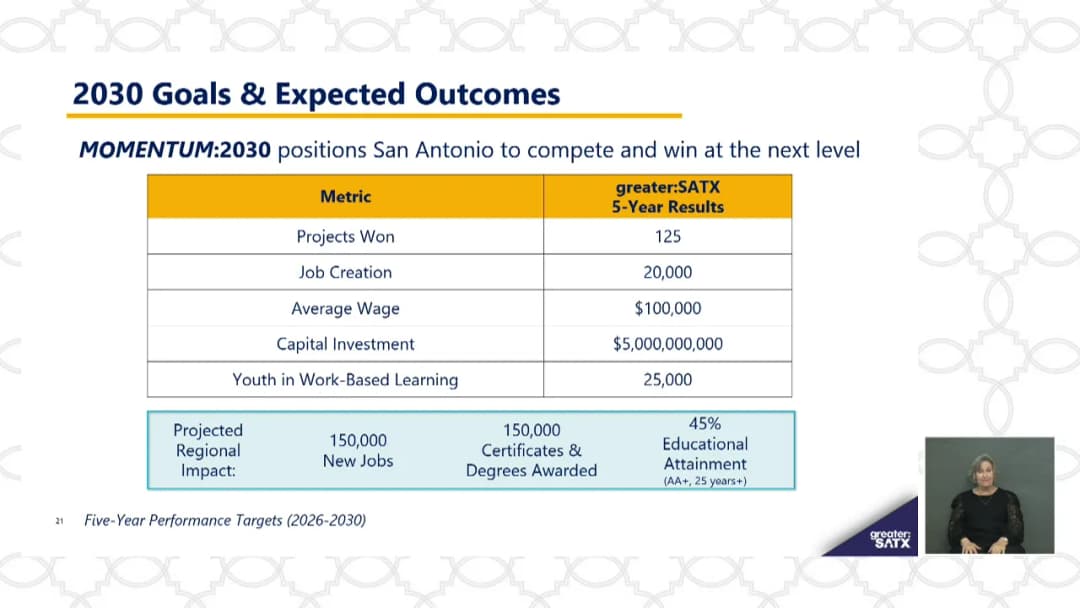
Note: The raw transcript indicates the meeting was called to order at 2:17 p.m. on Wednesday, February 11, 2026, but the provided metadata specifies the meeting date as February 12, 2026. This summary uses the February 12 date as instructed. This special session of the San Antonio City Council was a briefing on the Greater SATX Regional Economic Partnership’s (Greater SATX) five-year Momentum 2030 strategy and the proposed 2026 annual contract between the city and Greater SATX. The meeting included presentations from Brenda Hicksorenson, Economic Development Director, and Sarah Carabius Rush, President and CEO of Greater SATX, followed by council discussion. No votes were taken; the contract is expected to be formally considered in about two weeks. Discussion Items Presentation on Greater SATX Performance and Proposed 2026 Contract - Brenda Hicksorenson reviewed the performance-based contract history. For 2025, Greater SATX met or exceeded targets for items under its direct control (lead pursuits, leads converted to active projects) but fell short on job creation and capital investment due to national economic uncertainty (tariffs, policy changes). The proposed 2026 contract reduces the maximum potential from $635,000 to $110,000 for the general services agreement, with 70% ($357,000) paid in quarterly installments and 30% ($153,000) performance-based at $500 per job created with wages at or above $100,000 annually. The Foreign Direct Investment (FDI) attraction plan increases by $55,000 for Japan lead generation. Total potential investment: $759,250, a possible decrease of $70,000 from 2025. - Sarah Carabius Rush presented the Momentum 2030 strategy, building on the 2020–2025 “All-In” strategy. Key results from the past five years: 118 major projects regionally (99 within San Antonio), $7 billion capital investment ($5 billion in San Antonio), nearly 19,000 jobs created (13,000 in San Antonio), average wage over $80,000, and a $29 billion regional economic impact. The city’s $3 million investment yielded a return of $5,525 per dollar invested. For 2025, Greater SATX expected to announce 7,500 jobs but did not due to national headwinds; however, the pipeline remains strong. Momentum 2030 prioritizes advanced manufacturing, life sciences, aerospace/defense, cybersecurity, and new technology. Goals include 125 projects, 20,000 direct jobs with average wage $100,000, $5 billion capital investment, and increasing educational attainment to 45%. Council Discussion and Questions - Councilmember Alde Gavito emphasized that the city’s investment in economic development signals priorities and supports job creation, nonprofits, and community opportunities. She suggested partnering with the Office of Historic Preservation to use vacant buildings for new employers and offered to help remove barriers to speed deals. She also noted data centers should be placed thoughtfully to support community infrastructure. - Councilmember Viegran (chair of Economic Workforce and Development) stressed the importance of council members proactively engaging with Greater SATX to attract business to their districts. He highlighted the need for infrastructure and cultural amenities to retain workers. He asked how the city can best support recruitment; Sarah responded that being champions and making it easy to do business are critical. - Councilmember Galvan asked about engaging K-12 school districts in workforce development, data on jobs by council district, local hiring vs. relocations, and the impact of city investments like Ready to Work and VIA. He also raised data centers, emphasizing job creation, local hiring, environmental impacts, and the need for thoughtful placement. He requested a breakdown of jobs by district and wage data. - Councilmember Mesa Gonzalez asked about the regional partnership model (Greater SATX serves 14 communities) and how it avoids competition. She also inquired about the $10 million capital investment threshold for projects, whether it excludes mid-size companies, and the site selection process. She suggested Greater SATX produce a peer review of the Philadelphia study on the sports and entertainment district. - Councilmember Spears asked about flexibility in the Momentum 2030 strategy to pivot based on results, support for local small businesses (via BRG visits and grants), and how to better integrate talent development as a primary driver. He also highlighted veterans and military families as a talent pool and requested more focus on airport connectivity. - Councilmember Castillo questioned the definition of “high wage” (currently $100,000 for the performance target) and noted the 2024 target was $50,000. He asked for tracking of contract labor wages and benefits, and requested a report on industry wages across Greater SATX-attracted jobs. He also thanked staff for identifying schools in District 5 for paid partnerships. - Councilmember Mungia noted that immigration restrictions and tariffs are headwinds. He praised the ROI and cited benefits to District 4 (JCB, manufacturing). He cautioned against steering students into specific industries without considering their interests and emphasized long-term career mobility and health impacts. He also stressed the need for continued city investment in education, health care, and homelessness to support business attraction. - Councilmember White (Mayor Pro Tem) requested more granular data on the competitive dashboards (e.g., actual numbers behind rankings). She encouraged Greater SATX to engage council early in the deal process, include corporate citizenship in briefings, and consider adding K-12 CTE and unhoused community representatives to the board or an advisory group. She also suggested creating an official policy linking child care (e.g., Pre-K 4 SA) to company recruitment. City Manager Eric’s Remarks - Eric clarified that the seven deals lost were not all previously shared with council; some were never public. He explained the Condor airline situation was not a mistake: it proved a market of 290 passengers, and the data is now used to pitch other European airlines. He noted that the city’s investments in public safety, infrastructure, quality of life, and neighborhoods are critical to Greater SATX’s ability to sell San Antonio. He also noted that the average travel time to work ranking dropped partly due to road construction, which is a positive sign of growth management. Key Outcomes - No formal votes were taken. The council will consider the annual contract with Greater SATX in approximately two weeks (anticipated late February 2026). - Council members requested additional data: job creation by council district, wage breakdowns, local vs. relocation hiring, and specific job titles. Greater SATX agreed to provide follow-up reports. - A briefing on data centers is scheduled for March 4, 2026, with CPS Energy and SAWS. - The council will refresh its economic development ordinances later in 2026, with close coordination with Greater SATX. - Council members expressed overall support for the partnership and the Momentum 2030 strategy, with several offering to champion economic development efforts.
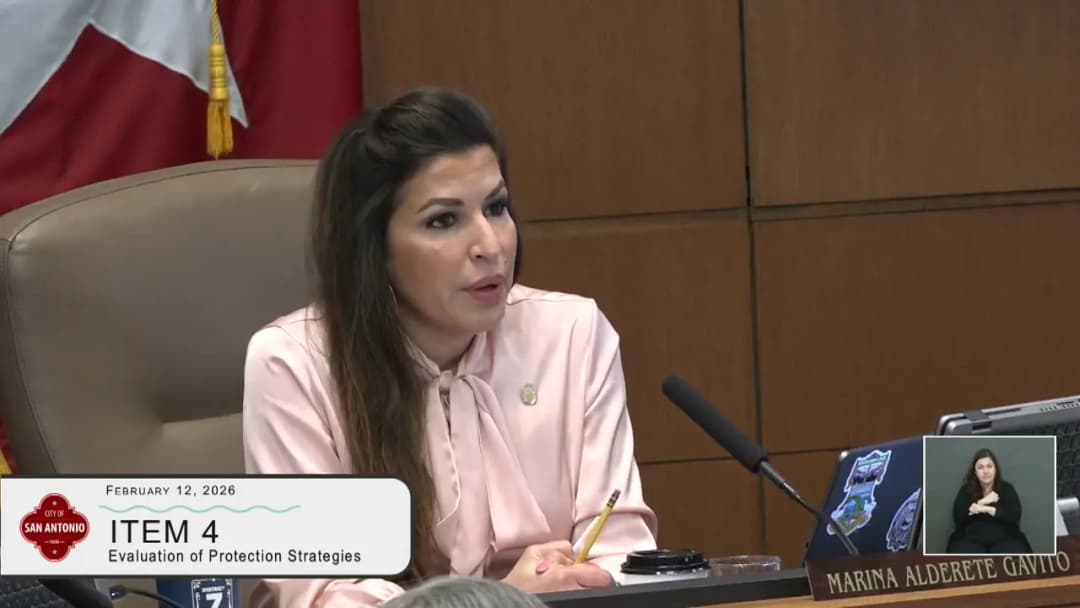
The San Antonio City Council met on Friday, February 12, 2026, at 9:02 AM. Following the invocation and Pledge of Allegiance, the council approved minutes, passed a consent agenda including 17 items (primarily resolutions supporting affordable housing tax credit applications totaling 805 units), and held a lengthy public hearing and discussion on Item 4, a resolution to evaluate strategies to protect all San Antonians in the context of immigration enforcement and a proposed ICE detention center. The council heard from dozens of community members, debated legal and policy options, and ultimately voted to approve the resolution. Consent Calendar - Approved minutes for January 28-29, 2026. - Approved items 5-21 en bloc, including resolutions of support for 10 affordable housing projects (805 units total), reappointments to the West Side Tours board, and other routine items. - Councilmembers highlighted specific housing projects in their districts, with emphasis on senior housing and workforce housing. Public Comments & Testimony - Dozens of community members spoke, many expressing strong opposition to a proposed ICE detention facility on the East Side and calling for the city to take action to protect immigrant rights. - Speakers described the facility as a “concentration camp,” cited constitutional violations, and demanded transparency and accountability regarding local law enforcement cooperation with ICE. - Several speakers urged the council to explore every legal avenue to block the facility, including utility denial, zoning challenges, and environmental assessments. - A few speakers opposed the resolution, arguing it could jeopardize federal funding, impede lawful immigration enforcement, and shield criminals. - One speaker presented an addendum to the resolution calling for recognition of Marian devotion as a symbol of protection and peace. Discussion Items - Item 4 – Resolution Supporting Evaluation of Strategies to Protect All San Antonians - The City Attorney’s Office presented a detailed analysis of proposed actions, categorizing them as: already done/underway, proposed, not recommended (high legal risk), or requiring further evaluation. - Actions already taken: updated website resources, staff training for ICE encounters, “Know Your Rights” resources via third parties, and an economic report on immigrant contributions. - Proposed actions: linking ICE data, creating an intake form for alleged rights violations (with limitations), and evaluating costs of ICE requests to SAPD. - Not recommended: providing legal resources to undocumented individuals, city staff directly providing “Know Your Rights” training, and policies on federal officer masking (due to SB4 constraints and litigation risks). - Items for further evaluation: a justice fund, detention facility land‑use measures, vendor accountability, signage, staff training on harm prevention, and holding federal officers accountable. - Councilmembers debated the legal limits, with many emphasizing the need to push the boundaries within state and federal law while managing public expectations. - Some councilmembers expressed frustration with the pace of action and requested regular updates via the City Manager’s Report. - The City Attorney clarified that the city’s prior SB4 settlement imposes unique restrictions on SAPD policies. Key Outcomes - Vote: The council voted to approve Item 4 (resolution). The vote majority was in favor; Councilmember White voted against. - Directives: - Staff will provide updates on the evaluation of resolution items starting with the March 5, 2026 City Manager’s Report. - The City Manager was asked to include progress reports in regular Council A‑session reports. - Staff will continue to evaluate the proposed detention facility’s impact on city services, explore legal options (e.g., environmental assessments, zoning), and assess partnerships with other cities. - No action was taken on the proposed ICE detention facility itself, as the city has limited authority over federal operations. The council pledged to use all lawful tools to protect residents’ constitutional rights.
The San Antonio City Council met on Thursday, February 12, 2026, at 9:02 AM to consider a consent calendar of affordable housing resolutions and a major discussion on a resolution to evaluate strategies for protecting all persons in San Antonio, particularly in response to federal immigration enforcement and a newly acquired ICE detention facility in the city. The meeting included public testimony from dozens of community members, a staff presentation on legal and operational options, and a council vote on the resolution, followed by an executive session from 11:11 AM to 12:36 PM. Consent Calendar - The council unanimously approved the consent calendar (items 3-31) without objection. This included resolutions for affordable housing projects (items 12-21) totaling 805 units across districts 1, 2, 3, 4, 6, 7, and others. Council members highlighted projects serving seniors, workforce families, and two projects with on-site pre-K. - Public commenter Jack Finger criticized the consent calendar, arguing that taxpayer-funded housing for individuals using other people's money to pay rent is unsustainable and would deplete the budget for other needs. Public Comments & Testimony - Over 30 community members spoke on agenda item 4, the immigration protection resolution. The overwhelming majority expressed fear, anger, and opposition to the new ICE detention facility (described as a "concentration camp" by many) located in District 2 near schools and parks. Speakers demanded the council use all legal means to block or delay the facility, including environmental reviews, zoning enforcement, withholding utilities, and refusing permits. Many cited human rights violations, medical neglect, detention of children, and examples of U.S. citizens being detained. Several speakers drew parallels to Nazi Germany, Jim Crow, and the civil rights movement, urging the council to take courageous action. - A smaller number of speakers supported federal immigration enforcement, arguing that obstructing ICE puts the city at risk of losing federal funding and that the detention center is necessary for public safety. They cited cases of violent crimes committed by undocumented individuals. - One speaker (Cheryl González) challenged council member White's demeanor, alleging he smiled during a disabled speaker's testimony. Council member White later denied any lack of concern for city residents. Discussion Items - Agenda Item 4 – Resolution on Evaluation of Strategies to Protect All Persons in San Antonio: City Attorney Liz Provencio presented a follow-up from the January 22 special session, categorizing 26 requested actions into four groups: 1. Already done or underway – legal resource website, staff training on ICE encounters (started early 2025), immigrant economic impact report (published December 2025), and a list of consular and health services. 2. Proposed – collecting ICE activity data (limited to regional data), creating a civil rights violation reporting form, evaluating a justice fund for legal representation, and assessing detention facility land-use impacts. 3. Not recommended due to legal risks – providing resources based on legal status (per SB4), city staff conducting "know your rights" training (must be done by third parties), and policies on masks. 4. Needing further evaluation – detention facility land-use regulations, procurement policies, public signage, staff training scope, use of city resources, and federal agenda priorities. - Council members debated the scope of permissible action. District 2 council member Maki Rodríguez emphasized that the detention facility is in her district and that the city must examine every stone to protect residents. She requested information on federal property notification rules, utility provision, and impact assessments on emergency services, traffic, and sanitation. - Council member Villagrán asked about coordination with other Texas cities (e.g., Dilley, El Paso) and Minneapolis. He stressed the need to protect constitutional rights and track civil rights violations. - Council member Galván expressed alarm at the possibility of ICE entering homes without warrants and questioned the role of police. She supported evaluating the justice fund and public signage. - Council member Alderete Gavito thanked colleagues for the resolution and noted the importance of tracking violations. She asked about health department coordination for potential outbreaks at the facility and requested details on police involvement (chief confirmed no assistance requested so far). - Council member Munguía highlighted that high-risk legal actions might still be necessary to prevent deaths in custody. He pushed for online posting of ICE activity data and regular updates in city manager reports, bilingually. - Council member Castillo raised concerns about a reported federal entry into a home without a warrant. She emphasized the importance of documenting all concerns, even if no immediate action can be taken. - Council member White opposed efforts to obstruct federal enforcement, stating that the city must comply with federal and state law and that blocking ICE puts federal funding at risk. He cited $30 million in federal debt owed to the city (including $13 million from the former migrant center) and argued the city cannot act as a federal court. - Council member Kore expressed pride in the city's previous compassionate response to migrants and acknowledged the current political climate. She supported the resolution and called for aggressive actions such as environmental studies, cutting utilities, and installing billboards with "know your rights" information. She emphasized the importance of the November elections to change federal policy. - Council member Fiersting (if identified) reiterated the need to avoid unconstitutional actions. Key Outcomes - The council voted to approve Agenda Item 4 (the resolution on evaluation of strategies). The motion passed (specific vote tally not available from the transcript). - Council directed the city manager to provide an update on the evaluation of specified actions at the next regular meeting on March 5, 2026, and to include updates in the city manager's report at regular intervals thereafter (bi-weekly or as substantial progress occurs). - The council held an executive session from 11:11 AM to 12:36 PM to discuss economic development (Section 571.071) and legal matters (Section 551.071). No action was taken during the closed session. - The meeting was briefly recessed for 10 minutes before proceeding to the city manager's report. Note: The transcript is in Spanish; the summary is based on a translation. No agenda or minutes were available to cross-reference.
The Building Standards Board met on February 12, 2026, at 9:13 AM at 1901 South Alamo Street to consider five properties for demolition or repair. The board approved consent calendar items, heard public testimony, and made decisions on each property. The meeting adjourned at 1:40 PM. Consent Calendar - 1314 Fulton Avenue: Staff reported that the structure was demolished as an emergency on February 3, 2026, due to a fire on January 21, 2026. No further board action was required. Public Comments & Testimony - Paul Burgess (District 7, civil rights attorney): Speaking in his individual capacity, Burgess strongly criticized the board's actions, arguing that the board lacks judicial authority to declare a property a public nuisance for demolition under Dallas v. Stewart. He also raised concerns about constitutional violations and compared the board's actions to censorship of an artist. - Rosa Johnston (District 4 resident): Voiced support for Philip Ross, describing the property as a form of art and stating that no safety incidents have occurred. She argued that the board should not interfere with a landowner's rights. - Written comment from a resident of Sweet Briar Avenue (read into record): Requested demolition of 102 Sweet Briar Avenue, citing ongoing problems with drug addicts and prostitutes and a lack of safety. - Owner testimonies: Philip Ross (2781 West Jet) argued his property is safe and art, and that the board lacks jurisdiction; Elizabeth Foster (315 Coyol) requested a reset; Lily Rodriguez (1442 East Chavanal) expressed desire to fix but no funds; Elisa Vasquez (1239 Culebra) supported demolition. Discussion Items 2781 West Jet Road (Main, Accessory 1, Accessory 2) - Staff presented evidence of severe code violations for all three structures. The owner, Philip Ross, stated the structures are art and not dangerous, but did not provide a scope of work, engineer’s report, or financial proof. The fire department and building inspector testified that the structures were unsafe. After a tied initial motion (3-3), the board split the case. - Main structure: Demolition ordered within 30 days, with utilities cut and a vacate notice. Vote: 6-0. - Accessory 2 (utility poles): Demolition ordered within 30 days, with utilities cut. Vote: 6-0. - Accessory 1 (multi-story tower): Motion to reset passed 5-1, requiring the owner to provide a current stamped engineer’s report and repair plan within 30 days, and to cut utilities. 315 Coyol Street - Owner Elizabeth Foster stated she recently inherited the property and lacked information. She requested a reset to gather documentation. The board granted a reset for a future hearing. Vote: 6-0. 1442 East Chavanal Road - Staff recommended demolition of all structures (main, accessory 1, accessory 2). Owner Lily Rodriguez (via interpreter) said she wanted to fix the property but had no financial means. The board ordered demolition of all structures within 30 days, vacate, secure, cut utilities, and clear debris. Vote: 6-0. 1239 Culebra Road - Owner Elisa Vasquez stated he purchased the property but was not on the deed and supported demolition due to homeless issues. The board ordered demolition of the main and accessory structures within 30 days, secure and clear debris. Vote: 6-0. 102 Sweet Briar Avenue - Staff recommended repair for the main structure and demolition for the accessory. The owner was not present. A public comment from a neighbor requesting demolition was read. The board ordered demolition of both the main and accessory structures within 30 days, vacate, secure, and cut utilities. Vote: 6-0. Key Outcomes - Demolition orders: 2781 West Jet (main and accessory 2), 1442 East Chavanal (all structures), 1239 Culebra (main and accessory), 102 Sweet Briar (main and accessory). - Reset: 2781 West Jet (accessory 1) – owner must provide engineer’s report and repair plan within 30 days; 315 Coyol Street – reset for future hearing. - Consent calendar: 1314 Fulton Avenue – emergency demolition noted. - Administrative: Effective April 1, 2026, voicemail public comments will no longer be accepted; written and in-person comments will continue. The chair reminded attendees to remove hats before entering the meeting room.
On February 12, 2026, the San Antonio City Council held a special session to discuss the proposed 2026 service agreement with Greater SATX, the regional economic development organization. The presentation reviewed the organization's performance over the past five years, proposed a new funding model, and outlined strategic goals for the next five years. Council members expressed support for the partnership and provided feedback on priorities such as workforce development, data center infrastructure, and collaboration with educational institutions. Discussion Items - Presentation by Brenda Hicks Horensen (Director of Economic Development) and Sara (Greater SATX): The presentation covered the partnership's history, key metrics, and proposed contract terms for 2026. The proposed contract shifts to a performance-based model: a base payment of $350,000 (70% of the $5,200 potential maximum, down from $6,300) in three quarterly installments, plus a variable portion of $500 per job created with salaries of $100,000 or more per year. The capital investment portion is proposed at $249,200 for 2026, with a focus on long-term results. Greater SATX reported 18 major projects over five years (99 within San Antonio), creating 19,000 jobs (13,000 in San Antonio), with an average salary exceeding $100,000 and a total economic impact of $29 billion regionally ($19 billion for San Antonio). The city's investment of just under $3 billion over five years yielded a 55x return. - Council Member Comments: - Interim Mayor (Alcalde): Emphasized the importance of ROI and aligning incentives with workforce growth, especially wage growth. Noted that the partnership must benefit families and connect to city programs like CPS Energy. - Council Member Villagran: Highlighted the need for council engagement in recruitment and retention, citing the success of previous district-level collaboration. Advocated for making it easy for companies to choose San Antonio, leveraging culture and infrastructure. - Council Member Galván: Focused on education and workforce alignment, asking about collaboration with high school districts. Inquired about data center opportunities and environmental impact. Requested a breakdown of job types and hiring trends from Greater SATX. - Council Member Mesa González: Asked about the definition of "EDF" and how Greater SATX compares to other cities' models. Questioned the $10 million capital investment threshold and sought clarification on how the organization selects site locations. Expressed interest in the Philadelphia study on a sports and entertainment district. - Council Member Spears: Stressed the importance of good jobs and workforce development, noting that the 2030 goals are flexible and require further investment. Key Outcomes - No formal vote was taken; the council discussed the proposed contract and expressed general support for the continued partnership. - The council will consider the final 2026 service agreement with Greater SATX in two weeks (early March 2026). - Council members directed staff to explore opportunities for data center development, including infrastructure and environmental considerations, with a follow-up session on March 4, 2026, involving CPS Energy. - Greater SATX committed to providing detailed data on job types, hiring trends, and collaboration with local school districts, including high school internship programs. - The council emphasized the need for continued investment in workforce development and education, including pre-K and college readiness programs, to support the 2030 goal of 45% educational attainment.
San Antonio Building Standards Board Meeting – February 12, 2026\n\nThe San Antonio Building Standards Board convened at 9:13 AM on February 12, 2026, with Chair Kenda Moranda presiding and a quorum present. The board considered six properties deemed dangerous or unsanitary, heard public testimony, and voted on demolition orders, continuances, and a request for an engineer’s report. Two executive sessions were held (9:36 AM and 11:00 AM) to consult with legal counsel; no legal action was taken in those sessions.\n\n Consent Calendar\n- Minutes from January 22, 2026 – Approved unanimously.\n- 1314 Fulton Avenue – Staff reported that the structure was demolished on February 3, 2026, following a fire; no further board action required.\n\n Public Comments & Testimony\n- Paul Burgess (District 7, civil rights attorney) – Argued the board lacks authority to order demolition under Texas law (citing Dallas v. Stewart), criticized the board for overreach, and expressed concern over due‑process violations. He stated that “the last demolition this board ordered forced an owner to sell within 60 days or face demolition, which crossed a line.”\n- Philip M. Ross (owner of 2781 West Jet Road) – Presented a multi‑hour statement describing his property as an “art project” and a “work in progress.” He claimed the structures are safe, that an engineer (Nick Ferrocos) inspected two years ago and found them “robust,” and that the city has interfered with his right to repair. He did not provide the engineer’s report or financial documentation and threatened to challenge any demolition order in court.\n- Eliseo Vázquez (owner of 1239 Culebra Road) – Explained he purchased the property but the title remains under a previous owner (Juan Garza). He requested city assistance to demolish the structures and noted difficulty with vagrant access.\n- Lili Rodriguez (owner of 1442 East Chavaneo Road) – Stated she does not live at the property but is willing to repair it; however, she admitted she has no funds and no contractor. She requested time to fix the property.\n- Elizabeth Foster (owner of 315 Coyol Street) – Appeared nervous and said she had recently learned about the violations through divorce proceedings. She requested a continuance to obtain an engineer’s report and explore repair options.\n- Rosa Johnston (public supporter of Philip Ross) – Described the West Jet property as “profound art” and argued that the board is not an art panel and should not dictate what an owner can do with his land. She stated, “This is culture, this is creativity – you cannot take his land just because.”\n- Written comment from a Sweet Brier Avenue resident – Read into the record, requesting demolition of 102 Sweet Brier Avenue due to vagrants, prostitution, and safety hazards.\n\n Discussion Items\n\n 2781 West Jet Road (Three structures – principal house, accessory 1/tower, accessory 2/utility poles)\nCode Enforcement Officer Stephanie Sánchez presented a recommendation for demolition, citing extensive code violations: deteriorated roof, missing walls, exposed wiring, mold, structural collapse, active CPS Energy meters, floodplain location, and fire damage. Fire Chief Westbrook and Inspector Rowland testified that the tower (accessory 1) is unsafe, that firefighters cannot safely enter, and that an engineer’s report is needed to confirm stability. The owner, Philip Ross, repeatedly argued that the structures are safe, that an engineer (Nick Ferrocos) inspected two years ago and deemed them “robust,” and that the property is not open to the public. He also claimed that the city has prevented him from obtaining repair permits. No written engineer’s report or financial documentation was provided.\n\nVotes:\n- Initial motion to demolish all three structures (Joel Solís) – Failed 3‑3.\n- Principal structure: Motion to declare a public nuisance and demolish within 30 days – Passed 6‑0.\n- Accessory 2 (utility poles): Motion to demolish within 30 days – Passed 6‑0.\n- Accessory 1 (tower): Motion to require a stamped engineer’s report and a repair plan within 30 days, and to cut utilities – Passed 5‑1 (George Grimes Jr. opposed).\n\n 315 Coyol Street\nOwner Elizabeth Foster appeared and requested time to arrange an engineer’s report and determine her options. The board voted to continue the case to a future date – Passed 6‑0. Staff instructed her to contact the code enforcement officer.\n\n 1442 East Chavaneo Road (Principal, accessory 1, accessory 2)\nCode Enforcement Officer Crystal Town presented evidence of severe hoarding, unpermitted additions, no electricity, cat feces, and unsafe conditions. Owner Lili Rodriguez said she cannot afford repairs and has no licensed contractor. The board voted to declare the property a public nuisance, to demolish all three structures within 30 days, to evict occupants, and to clear debris – Passed 6‑0. (Relocation services had been offered and refused.)\n\n 1239 Culebra Road (Principal and accessory structures)\nCode Enforcement Officer Jaime Jasso reported that the property had been before the board previously but was removed from the agenda. The structures are severely deteriorated, with holes, graffiti, exposed wiring, and evidence of vagrant use. Owner Eliseo Vázquez acknowledged the conditions and asked for city help in demolishing the buildings. The board voted to declare a public nuisance and demolish both structures within 30 days – Passed 6‑0.\n\n 102 Sweet Brier Avenue (Principal and accessory structures)\nCode Enforcement Officer Jaime Jasso described deteriorated conditions, vagrant activity, unsecured entries, and proximity to a school (within 1,000 ft). The owner (Richard Garza) was not present but had been contacted; he claimed he was not the owner despite being listed on the deed. The board voted to declare the structures a public nuisance and to demolish both the principal and accessory structures within 30 days – Passed 6‑0.\n\n Key Outcomes\n| Property | Decision | Vote |\n|----------|----------|------|\n| 2781 West Jet Road – Principal structure | Demolition within 30 days; declared public nuisance | 6‑0 |\n| 2781 West Jet Road – Accessory 2 (utility poles) | Demolition within 30 days | 6‑0 |\n| 2781 West Jet Road – Accessory 1 (tower) | Owner must submit stamped engineer’s report and repair plan within 30 days; utilities cut | 5‑1 |\n| 315 Coyol Street | Case continued to future date | 6‑0 |\n| 1442 East Chavaneo Road – All structures | Demolition within 30 days; eviction and debris removal | 6‑0 |\n| 1239 Culebra Road – All structures | Demolition within 30 days; property secured | 6‑0 |\n| 102 Sweet Brier Avenue – All structures | Demolition within 30 days; property secured | 6‑0 |\n\nPolicy Change: The board announced that, effective April 1, 2026, public comments by voicemail will no longer be accepted. Only written submissions or in‑person testimony at hearings will be allowed.\n\nThe meeting was adjourned at 1:40 PM.