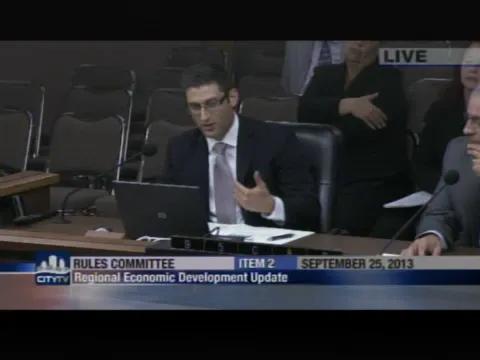
The Committee on Rules and Economic Development met on September 25, 2013, at 9:00 AM in City Council Committee Room. The meeting covered four agenda items: updates on the New Market Tax Credit program from Civic San Diego, an economic development update from the San Diego Regional Economic Development Corporation (SDREDC), proposed charter amendments related to elections and inauguration dates, and a proposed ordinance amending the City Council's permanent rules. Consent Calendar - The Committee unanimously approved the Record of Action Items from the September 11, 2013 meeting. Public Comments & Testimony - Robert McNamara (District 3) spoke against the proposed elimination of Rule 2.7.1 (which allows the public to file communications for council docket inclusion), arguing it reduces public access. He suggested limiting each speaker to one communication as an alternative rather than eliminating the rule entirely. Discussion Items - Item 1: Civic San Diego – New Market Tax Credit Program – Jeff Graham (President) and Daniel Reeves (Associate Project Manager) presented. In April 2013, Civic San Diego received a $35 million allocation from the U.S. Treasury. The first transaction closed in 39 days on September 12, 2013: $23 million in tax credits for the Copley Price YMCA in City Heights, resulting in a net benefit of $5 million to the YMCA (after investor discount of 85 cents per dollar). An additional $12 million in allocation remains. A community benefits agreement requires the YMCA to market jobs to low-income residents, offer sliding-scale memberships, and provide quarterly reports. Civic San Diego has applied for $120 million in the next round, expecting a decision in April 2014. The pipeline includes seven projects (e.g., Bayside Community Center, YWCA Beckys House, Art Place, etc.). Councilmembers expressed strong support and asked about potential infrastructure uses; staff noted tax credits cannot fund sidewalks/streets but can fund community facilities owned by nonprofits. - Item 2: SDREDC Economic Development Committee Update – Julian Parr (Chair) and Ephraim Beiser presented. Key highlights: San Diego startups received $1.1 billion in venture capital in 2012; the innovation economy, military, and tourism are the three traded economies. The EDC worked with 72 companies in the first six months of 2013, with an estimated 1,600 jobs attached. Initiatives include talent retention/attraction (e.g., Launch San Diego in spring 2014), international trade (Brookings metropolitan export plan due early 2014), and a “red flag to red carpet” business services effort. No action was taken; the presentation was informational. - Item 3: City Clerk Report on Elections-Related Charter Cleanup – City Clerk Liz Maland and staff proposed two amendments: (1) change the inauguration date to December 10 (date certain) to avoid conflict with state election certification deadlines (currently 28-30 days after election); (2) extend the maximum time between a special primary and runoff from 49 days to 90 days to accommodate state law requirements. County Registrar Michael Vu presented mail-ballot trends: in 2010, mail ballots exceeded polling-place votes for the first time; as of 2013, 54% of county voters and 52% of city voters are permanent vote-by-mail. Special elections show 73-85% mail ballot usage, with potential cost savings. The Committee voted 4-0 (Alvarez absent) to direct the City Attorney to draft ballot language for these two changes and return in January 2014. - Item 4: Ordinance Amending Permanent Rules of Council – The Committee considered an ordinance to codify previously vetted revisions to council committee structures and communication requests. After public testimony (Robert McNamara opposing the elimination of Rule 2.7.1), Councilmember Kersey moved to forward the ordinance to the full City Council with an amendment adding “or other appropriate standing committee” to Section 6.10.7(c). The Committee also accepted City Attorney suggested revisions concerning elections/ballot measures and budget review committee updating. The motion passed 4-0 (Alvarez absent). Key Outcomes - Item 1: Motion to receive the report (5-0). - Item 2: No action taken; informational only. - Item 3: Motion to direct City Attorney to prepare ballot language on inauguration date (December 10) and special election timing (90 days) for January 2014 committee consideration; vote 4-0. - Item 4: Motion to forward the amended ordinance to the full City Council for adoption, with the noted amendment and acceptance of City Attorney revisions; vote 4-0. - The meeting adjourned to the next regularly scheduled meeting on October 9, 2013, at 9:00 AM.
Public Meetings - San Diego, California
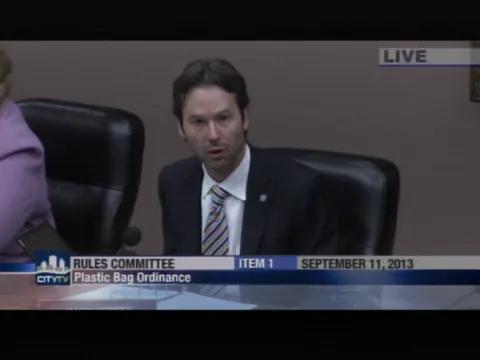
Public Meetings - San Diego, CaliforniaThe Committee on Rules and Economic Development met at 9:00 a.m. on September 11, 2013, to receive a report from the Environmental Services Department (ESD) and provide feedback on crafting a plastic bag reduction ordinance. The meeting included public testimony, staff presentations, and committee deliberation, culminating in a unanimous vote to move forward with drafting an ordinance. Consent Calendar - Approval of Minutes: The Record of Action Items from July 24, 2013, was approved by unanimous consent. No corrections or changes were made. Committee Comment - Chair Lightner noted that the open data policy discussion is tentatively scheduled to return to the R&ED Committee on October 23, 2013, or November 6, 2013. - Regarding the City’s hiring and recruitment process (requested action from July 24, 2013), Chair Lightner stated that the Independent Budget Analyst (IBA) has received suggestions from only nine departments and requested additional input by September 13, 2013. City Attorney, IBA, and Mayoral Staff Comment - Nicole Capretz, Director of Environmental Policy in the Office of Interim Mayor Todd Gloria, introduced herself to the Committee. Public Comments & Testimony - Bill Evans (hotel businessman): Expressed shock that San Diego would be the 81st city to consider such an ordinance, urging leadership. Highlighted marine pollution issues and SeaWorld’s role. - Lonnie Lutar (Equinox Center): Presented research showing that 95% of plastic bags in San Diego end up in landfills, and that bag bans with a 10-cent paper fee lead to significant reductions in plastic use and greenhouse gas emissions, though water consumption may increase. Recommended a 10-cent minimum fee on paper bags and reusable bag standards. - Crystal Carson (Surfrider Foundation): Thanked the committee for bringing the issue forward, noting 500 million bags per year in San Diego. Urged prompt action to reduce litter and protect the ocean. - Haley Hagerston (Surfrider Foundation): Reported that in 2012, Surfrider and Coastkeeper volunteers removed 7,594 pounds of trash from beaches, 32% of which was plastic. Emphasized that plastics do not biodegrade but photodegrade, harming marine life. - Roger Q. (Surfrider Foundation): Urged adoption of the ordinance, citing $14 million per year in litter abatement costs for San Diego. Noted that 80 jurisdictions in California have already passed similar ordinances. Argued that reusable bag hygiene concerns are a scare tactic. - Chris Duggan (California Restaurant Association): Representing 3,300 restaurants in San Diego, expressed concern about the lack of stakeholder consultation early in the process. Supported the exemption for restaurants and requested inclusion in future stakeholder meetings. - Ryan McDowell (Environment California): Declared strong support for a citywide ban, citing that over 80 California local governments have passed bans. Noted that San Jose saw an 89% reduction in plastic bag storm drain litter post-ban. - Kristen Kuhn (San Diego Coastkeeper): Stated strong favor for a ban or restriction, noting that volunteers picked up 7,500 plastic bags from beaches in 2012. - Hugh Moore (San Diego County Green Party): Supported the ban but recommended increasing the paper bag fee to 25 cents after the first year to further discourage paper use. - Brian Pease (Ocean Beach People’s Co-op): Supported the ban, noting his store already does not use plastic bags. Argued that plastic bag companies are not paying for cleanup costs. - Mark Arabo (Neighborhood Market Association): Representing 472 small markets in San Diego, expressed disappointment that they were not informed of the proposal. Requested stakeholder meetings and called for exempting convenience stores and small markets or providing a phase-in period. Noted that 471 of their member stores are in low-income areas. - Patricia Fischstein (taxpayer/consumer): Shared personal experience with river cleanups, noting that plastic disintegrates but does not biodegrade. Supported the ordinance and emphasized education and reusable bag use. - Sarah Sheehy (California Grocers Association): Expressed comfort with the model ordinance (ban plastic, charge 10¢ for paper) and urged consistency across all retailers. Noted that after six months, reusable bag use increases to 94%. - Scott Harrison (Surfrider Foundation, former chairman): Supported the ordinance, noting that no plastic bag manufacturers are based in San Diego and that the three California manufacturers are transitioning to reusable bags. Called for a proactive approach. - Kath Rogers (Animal Protection and Rescue League): Expressed strong support, noting that their email list of 12,000 members supports the ordinance due to wildlife impacts. Discussion Items - Staff Presentation: Stephen Greeley (Deputy Director, ESD) and Ken Prue (Recycling Program Manager) presented the proposed ordinance. Key facts: - Approximately 500 million plastic bags are given out annually in San Diego; only 3% (15 million) are recycled. About 466 million bags are buried in the landfill each year. - ESD spends $160,000 per year on wind-blown plastic bag litter abatement at the Miramar landfill and other city properties. - Over 80 California municipalities have adopted ordinances. The recommended model targets retail stores with annual sales of $2 million+ selling food and non-food goods, stores with at least 10,000 sq. ft. and a pharmacy, and drug stores, convenience stores, and similar outlets. - Proposed: 10-cent charge per paper bag, at least 10-cent charge per reusable bag provided; exemptions for restaurants, nonprofits, WIC recipients, and produce/product bags; complaint-based enforcement with focus on education; stakeholder outreach; and return to committee in 90 days with draft ordinance. - Committee Deliberation: - Councilmember Kersey expressed caution, noting that many people reuse plastic bags and that the state has not passed a ban. He emphasized the need to hear from small businesses and requested a stakeholder group with input from the Grocers Association, Neighborhood Market Association, and Restaurant Association. He moved to form such a group and return with draft ordinance language in 90 days. - Councilmember Emerald countered that the issue has been debated enough, citing clear science and the example of 80 other cities. She supported moving forward quickly and proposed a motion to include all retail stores with one-time use bags (not just those selling food), conduct outreach to groups like the Neighborhood Market Association, present an informational item to the Community Planners Committee and BID Council, begin environmental review, and return to the October 23, 2013, meeting with a status report. - Councilmember Faulconer supported moving forward but emphasized the need for inclusion of all stakeholders and noted the importance of balancing environment and business. He was confident a consensus could be reached. - Councilmember Alvarez cautioned against delaying the process due to lack of consensus and supported bringing the ordinance back on October 23 for amendments. - Chair Lightner clarified the motion: ESD staff work with City Attorney to craft an ordinance reducing plastic bag use, including all retail stores with one-time use bags; include ESD recommendations (10¢ paper/at least 10¢ reusable; exemptions; complaint-based enforcement; education/outreach/reusable bag distribution); begin environmental review; present informational item to Community Planners Committee and BID Council; conduct additional outreach to Neighborhood Market Association and other stakeholders coordinated with Mayor’s Office; return to committee on October 23, 2013, with a status report and recommendations for enforcement. Key Outcomes - Motion: A motion by Councilmember Emerald, seconded by Councilmember Alvarez, was adopted unanimously (5-0). Voting: Lightner-yea, Faulconer-yea, Kersey-yea, Alvarez-yea, Emerald-yea. - Directives: - ESD staff, in coordination with the City Attorney’s Office, will draft an ordinance that reduces plastic bag use. The ordinance will include ESD’s recommended provisions and will cover all retail stores that provide one-time use bags. - Environmental review (CEQA) will be initiated. - ESD will present an informational item to the Community Planners Committee and the BID Council. - Additional outreach to the Neighborhood Market Association and other key stakeholders will be conducted via the Mayor’s Office. - ESD will return to the Rules and Economic Development Committee on October 23, 2013, with a status report, enforcement recommendations, and draft ordinance language for further discussion.
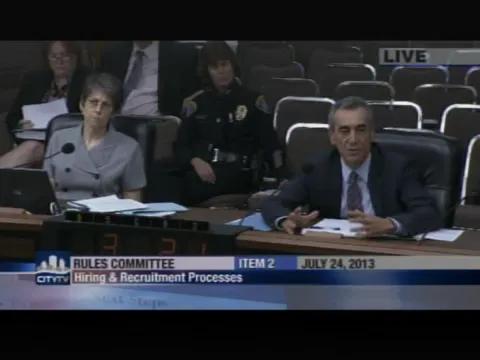
The Committee on Rules and Economic Development met on Wednesday, July 24, 2013, at 9:00 a.m. in Council Committee Room, City Administration Building. Chair Sherri Lightner presided, with Councilmembers Kevin Faulconer, Mark Kersey, and David Alvarez present; Councilmember Marti Emerald was absent. The meeting covered four agenda items: the impact of recent state legislation on the San Diego Enterprise Zone program, the City's hiring and recruitment processes, ministerial amendments to the Ethics Ordinance, and the quarterly performance report on the 2013 Youth Employment Initiative (Connect2Careers). Consent Calendar - Approval of the Record of Action Items from July 10, 2013, was approved by unanimous consent. Public Comments & Testimony - Robert McNamara (District Three) spoke during non-agenda public comment, suggesting that committee agendas should include previews and reporting of past committee actions. - During the hiring item, Robert McNamara expressed support for predictive recruiting, particularly for public safety, and suggested exploring provisional hiring practices used in other jurisdictions. - Jeff Jordan, representing a police officer standpoint, expressed concern about the length of time for police applicant responses, noting that only 3 out of 100 applicants become sworn officers, and that the city loses candidates to other departments due to delays. He also raised concerns about unfilled grant-funded positions, including those for rape kit processing. Discussion Items Item 1: Impact of State Legislation on the San Diego Enterprise Zone Program (Informational) - Sid Voracara, Business Development Specialist from the Governor's Office of Business and Economic Development (GO-Biz), presented on new state bills (SB 90 and AB 93) that redirect approximately $750 million annually from the enterprise zone program to three new incentives: a sales tax exemption on manufacturing equipment (starting July 1, 2014), a hiring credit for high-unemployment/poverty census tracts, and the California Competes Fund. The hiring credit is for 35% of wages above $12/hour and up to $28/hour, with retail excluded unless small businesses (under $2 million gross receipts). The California Competes Fund will allocate $30 million in FY 2013-14, increasing to $200 million in year three. - Lydia Moreno, Community Development Coordinator for the City's Economic Growth Services, reported that the City is winding down the Enterprise Zone program, with outreach to businesses and workshops. Since 2006, the regional zone has hired over 40,000 employees, assisted over 2,000 companies, and resulted in over $6 million in investment and 2,500 jobs impacted. - Councilmember Kersey expressed concern about the loss of local control, noting that San Diego administered the program well, and that new programs should have been additive rather than replacing the existing one. He cited the example of SoyTech, a solar manufacturer that chose San Diego partly due to the Enterprise Zone. - Councilmember Lightner expressed optimism about the new programs benefiting high-tech R&D and improving transparency. She requested that GO-Biz provide dates and locations of public hearings on the Investment Incentive Funds, possible economic impacts, and more information on pilot areas. She also asked the City Attorney to reassess the City's ability to use a sales tax incentive for local businesses. - Councilmember Faulconer noted that the Enterprise Zone was one of the few economic incentives the City had, and asked for an overall economic impact estimate for the new bills. - Action: Informational only; no action taken. Committee requested periodic updates from GO-Biz and the City's Economic Growth Services, and specifically asked for the next update to include public hearing dates, economic impacts, and pilot area outreach details. Item 2: City's Hiring and Recruitment Processes - Lisa Byrne, Fiscal and Policy Analyst with the Office of the Independent Budget Analyst (IBA), presented report 13-30 on civil service hiring. She noted that approximately 95% of City positions are classified. Average timeframes for hiring steps have declined in some areas, e.g., from 84 to 64 days for promotions. Recent improvements include predictive recruiting, electronic application review, and automatic rejection for incomplete applications. The IBA recommended that the committee further review the Personnel Department's needs and consider position increases for mid-year budget adjustments. - Hadi Degani, Personnel Director, presented additional suggestions, including a one-stop shop for background/medical processing, an outstation program to place personnel analysts in departments, and a consultant to optimize the NeoGov system. He noted that the department has 60 employees and hired 969 new employees in FY 2013. - Police Chief Shelley Zimmerman highlighted challenges: the department may lose 900 officers (half the force) over the next four years, and the city lost 51 candidates to other departments last fiscal year. She supported sharing background check information to avoid duplication. - Councilmember Faulconer emphasized the need to hire the best people in the shortest time, and pressed for benchmarks. He noted that the City Auditor's office is conducting an audit expected by November 2013. - Councilmember Alvarez asked about the appeals process impact on hiring timelines. Joan Dawson, Deputy City Attorney, clarified that the current practice of exhausting appeals before promulgating eligible lists is a longstanding policy, and changing it could involve a meet-and-confer issue. - Motion: Councilmember Faulconer moved, seconded by Chair Lightner, to request that the Personnel Director provide additional follow-up and analysis on civil service rules and a consultant for NeoGov; that the IBA work with the committee consultant to request hiring departments submit suggestions for process improvements by August 21, 2013, vet those suggestions, and provide information on how the appeals process impacts hiring timelines. The motion also requested that the fall discussion include whether any position increases should be recommended for mid-year budget adjustments. The committee also requested that the Personnel Director explore provisional hiring and expanding temporary employee pools, and that the IBA interview recent hires and review civilian hiring practices of the military in San Diego. - Vote: 4-0 (Lightner, Faulconer, Kersey, Alvarez aye; Emerald absent). Item 3: Ethics Commission Ministerial Amendments - Stacey Fulhorst, Executive Director of the San Diego Ethics Commission, presented amendments to the Ethics Ordinance and Council Policy 000-04 to update state law references and reflect current training practices. Changes include adopting state laws by reference so updates are automatic, and increasing the initial training deadline from 60 to 90 days, and eliminating the March 31 retraining deadline in favor of a two-year cycle. - Motion: Councilmember Faulconer moved, seconded by Councilmember Alvarez, to forward the staff recommendation to the City Council. - Vote: 4-0 (Lightner, Faulconer, Kersey, Alvarez aye; Emerald absent). Item 4: Quarterly Performance Report on Connect2Careers (C2C) Youth Employment Initiative (Informational) - Peter Calstrom, President and CEO of the San Diego Workforce Partnership, reported that the $200,000 city investment has leveraged an additional $300,000 from the Walmart Foundation and the Aspen Institute, for a total of $500,000. As of the meeting, 177 youth had been hired (approaching the goal of 200), with almost 400 applicants. Over 600 youth received work readiness training, and over 1,000 employers were reached. The May 30 Job Summit resulted in 20+ jobs, including one for a young man named Miguel. - Marlene Taylor, Vice Chair of the Workforce Investment Board and owner of Taylor Trim & Supply, praised the program for making the hiring process effortless and emphasized the value of the intern. - Alexa Forness, C2C intern at Taylor Trim & Supply, described her experience working as a contracts administrative assistant and gaining exposure to multiple departments. - Councilmember Lightner noted that the $200,000 did not pay salaries; private companies cover wages. She expressed excitement about the program's success and sustainability planning. - Councilmember Kersey noted that Council District 5 had the highest participation (18% of interns). - Councilmember Alvarez thanked the employers and suggested recognizing them for their investment. - Action: Informational only; no action taken. Key Outcomes - Item 1: No formal action; committee requested updates and a City Attorney review of local sales tax incentives. - Item 2: Motion passed 4-0 directing the Personnel Director and IBA to conduct further analysis and report back in the fall, with specific requests for changes to hiring processes. - Item 3: Motion passed 4-0 to forward Ethics Commission amendments to the City Council. - Item 4: Informational only; no action taken, but strong support for continuation and expansion of the youth employment program.
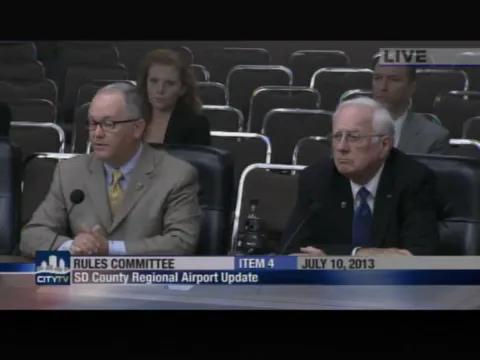
The Committee on Rules and Economic Development of the San Diego City Council met on July 10, 2013, at 9:00 a.m. (17:00 UTC) in Council Committee Room, City Administration Building. Chair Sherri Lightner presided, with Vice Chair Kevin Faulconer, Councilmember Mark Kersey (arrived at 9:15), and Councilmember David Alvarez present. Councilmember Marti Emerald was absent. The committee approved minutes from June 19, 2013, and considered four agenda items, including a report on elections charter cleanup, an open data policy presentation, and an update from the Airport Authority. Consent Calendar - Approval of the Record of Action Items for June 19, 2013, by unanimous consent. Public Comments & Testimony - No non-agenda public comment was received. - No public comment on regulatory relief suggestions. Discussion Items - Item 1: Presentation from GO-Biz (Governor's Office of Business and Economic Development) on AB 93 and SB 90 (Enterprise Zones) – This item was continued to the July 24, 2013, meeting because the GO-Biz office staff were unavailable to provide more concrete details. - Item 2: Report from City Clerk on Elections-Related Charter Clean-Up – City Clerk Liz Maland and Deputy Director Bonnie Stone presented on two issues: (1) term of office/inauguration date and (2) special elections to fill vacancies. For the inauguration date, they outlined alternatives: setting a date certain later in December, tying the inauguration to receipt of certification (e.g., within 10 days), or holding a simple swearing-in at a council meeting with a separate ceremonial event. For special elections, they proposed: (a) interim appointment by the council until the next regular election, (b) aligning the charter with state law, or (c) increasing the 49-day requirement to 90–180 days. Committee members discussed the trade-offs, including costs (a standalone special election costs $200,000–$400,000 vs. contracting with a regular election at $180,000–$335,000) and the need for immediate representation. Councilmember Faulconer favored a date certain for the inauguration; Councilmember Kersey opposed council appointments longer than one year; Chair Lightner proposed a hybrid of interim appointment and a coordinated election. - Item 3: Report from Open San Diego/Code for America Brigade on Open Data Policy – Jeff Johnson and Joe Lakava presented on the benefits of open data for transparency, economic development, and participatory governance. They noted that San Diego is one of the few major U.S. cities without an open data policy, citing examples from Chicago, San Francisco, and New York. Speakers Eric Busboom (San Diego Regional Data Library) and Ben Katz (former founder of Complete Campaigns) urged the city to release data in machine-readable formats, noting obstacles like PDF-only publication and resistance from departments. Councilmember Kersey emphasized the city's lagging position and called for a subcommittee to accelerate progress. Councilmember Alvarez suggested immediate release of non-sensitive data already in PDF form. The mayor's office representative (Mr. Estrada) confirmed commitment but noted resource and legacy system challenges. - Item 4: Update from San Diego County Regional Airport Authority – Chair Robert Gleason and Board Member Bruce Boland presented an overview of airport operations, including the Green Build project (on time and $45 million under budget), the upcoming rental car center (opening early 2016), and the Quieter Home program (2,600 homes completed, 8,000 remaining). They highlighted local business participation (75% local, 30% small business) and new international routes. Councilmember Faulconer raised concerns about traffic impacts on Harbor Drive and potential changes to FAA noise measurement standards. Councilmember Kersey inquired about the possibility of nonstop flights to Asia, noting that the Dreamliner's extended range might enable such routes. Key Outcomes - Item 1: Continued to July 24, 2013, by unanimous consent. - Item 2: Motion by Councilmember Faulconer, second by Chair Lightner, to direct the City Clerk to work with the City Attorney to provide further detail and a formal recommendation on Issues 1 and 2, as follows: - Issue 1 (Term of Office/Inauguration Date): Explore a later date certain (mid-December) and adjusted dates for future efficiencies. - Issue 2 (Special Elections to Fill a Vacancy): Provide detail on a hybrid option – an interim appointment (limited to one year) combined with an election coordinated with the next regular or special election, and align the Municipal Code with state law. - Vote: 4-0 (Lightner, Faulconer, Kersey, Alvarez; Emerald absent). - Item 3: Motion by Councilmember Alvarez, second by Chair Lightner, to request the Office of the Independent Budget Analyst (IBA) to prepare a report on open data, including: - Review of best practices in other cities. - Identification of city departments with the most Public Record Act requests and the types of data requested. - Identification of resources (staff and funding) needed. - Recommendations for a timeline and implementation strategy. - Analysis of legal issues by the City Attorney's Office. - Vote: 4-0. - Item 4: No action taken; informational only.
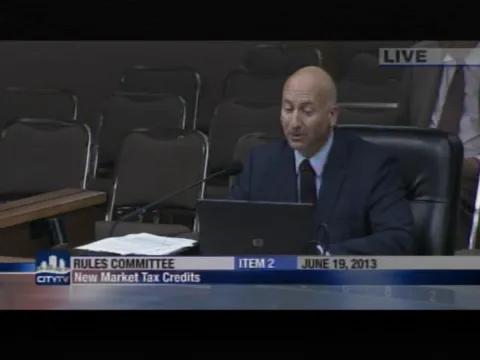
The Committee on Rules and Economic Development met on Wednesday, June 19, 2013, at 9:00 A.M. in the Council Committee Room, City Administration Building, San Diego. The meeting covered three major items: a proposed prevailing wage ordinance for municipal public works projects, an informational update on New Market Tax Credits from Civic San Diego, and a proposal to revise the council committee structure. All committee members were present (Chair Pro Tem Sherri Lightner, Vice Chair Kevin Faulconer, Mark Kersey, David Alvarez, Marti Emerald). Consent Calendar - None. Public Comments & Testimony - On Item 1 (Prevailing Wage): Multiple speakers testified in support, including: - Peter Brownell, Research Director at Center on Policy Initiatives, submitted studies showing prevailing wage does not reduce competition or increase lowest bids relative to engineer’s estimates; he cited Oceanside’s experience with a contractor bankruptcy on a non-prevailing wage project and submitted articles on safety benefits. - Corinne Wilson (Center on Policy Initiatives) argued that prevailing wage allows union and non-union contractors to compete on a level field and ensures access to skilled apprentices. - Richard Barrera (San Diego & Imperial Counties Labor Council) said the city can build middle-class careers and cited the school district’s experience of projects completed under budget and on time with prevailing wage. - Tom Lemon (Building Trades) stated that many qualified contractors currently refuse to bid city work because of the absence of prevailing wage, and that requiring it would increase the contractor pool by 500 to 1,000 bidders. - Ray Rothrock (Heat and Frost Insulators) noted that without prevailing wage, his union faces health insurance funding challenges. - Linda Jennings (Sheet Metal Workers) highlighted 39 years without work stoppage and the provision of healthcare and OSHA training for workers. - Greg McClellan (Iron Workers) cited the underground economy and tax base erosion as reasons to require prevailing wage. - Others: Joe Riley (World War II veteran), Avital Abouti (Greater Logan Heights Community Partnership), Mike Megalonis (Carpenters), Elizabeth Robinson (Interfaith Committee for Worker Justice), Katya Rodriguez (Community Leadership Association), and representatives from ACCE, League of Women Voters, and Women Occupy San Diego. - On Item 3 (Committee Structure): One speaker, Robert McNamara, opposed several recommendations, particularly striking Rule 2.7 (communication requests) and the renaming of the Land Use and Housing Committee to “Smart Growth.” He argued for retaining public access through docketed communications. Discussion Items - Item 1: Prevailing Wage Ordinance – - Nelson Hernandez (Assistant Chief Operating Officer) presented the mayor’s proposal to require prevailing wage on all municipal public works projects over $25,000, modeled after state law. He argued that labor cost impacts are difficult to isolate, that the IBA’s 5% cost estimate is flawed, and that prevailing wage leads to better quality, leveled playing field, and improved wages and training. - Jeff Gward (Independent Budget Analyst) presented IBA Report 1326, estimating a 5–10% increase in total project costs (based on labor being 25% of cost and wage rates increasing 20%). This would translate to $13–$26 million more in FY14 and reduce street overlay by 22–44 miles over five years. He also raised concerns about impacts on SLBE (small local business enterprises) and recommended exemptions, a phased implementation (FY15), and annual reporting. - Deputy City Attorney Tom Zellini explained that a charter amendment would be needed to apply prevailing wage to all projects without project-specific benefit analysis, as done in Los Angeles. He clarified the city can instead adopt an ordinance identifying benefits for grouped projects. He also discussed SB 7 (pending state bill that could condition state funding on prevailing wage) and noted potential issues with maintenance contracts. - Committee members questioned staff about SB 7 status (passed Senate, in Assembly), the six-month phase‑in plan, and potential exemptions. Chair Lightner expressed support and outlined a motion to move the item to full council with specific requests for staff analysis on cost, exemptions, and benefits. - Item 2: New Market Tax Credits (Informational) – - Jeff Graham (President of Civic San Diego) reported that the city received $35 million in New Market Tax Credits (NMTC) in April 2013. He explained the program’s goals (job creation, community development in low‑income census tracts), qualification requirements, and the complex financing structure. Six pipeline projects were listed; the Copley YMCA in City Heights and Family Health Centers were closest to closing. Graham also discussed pending state legislation (SB 1, SB 33, SB 391) that could provide new funding tools. - Committee members expressed strong support and asked about using NMTC for city‑owned infrastructure projects (libraries, etc.) through a nonprofit entity; Graham agreed to explore the legal feasibility. - Item 3: Council Committee Structure Revisions – - Chair Lightner presented a proposal to update committee names, revise areas of responsibility, require annual work plans and year‑end reports, consider a standing special issues committee, conduct regular reviews every three years, and strike Rule 2.7 (communication requests) as duplicative of non‑agenda public comment. The recommendation also included adopting the committee consultant’s suggestions (Attachment 5) and having staff prepare necessary ordinance amendments. - Councilmember Alvarez requested clarifying language to ensure that water/wastewater/stormwater infrastructure matters remain in the Environment Committee rather than Infrastructure, except for individual project oversight. He moved the recommendations with that clarification and a request to prepare implementing ordinances. - Councilmember Kersey supported the proposal, noting the value of work plans and mission statements, and suggested that future reviews need not mandate updates. - The motion passed unanimously, and the item will return to committee for final ordinance language before going to full council. Key Outcomes - Item 1 (Prevailing Wage): A motion by Councilmember Emerald, seconded by Alvarez, carried 3‑2 (Lightner, Alvarez, Emerald in favor; Faulconer, Kersey against). The committee recommended forwarding the staff proposal (with modifications requested by the chair) to the City Council, with a target hearing of July 30, 2013. Staff were directed to: - Provide responses to IBA recommendations 3 and 5. - Include analysis of exemptions, project types/dollar thresholds, and concrete project benefits. - Work with the City Attorney to draft an ordinance conforming to SB 7 language where advisable. - Address grandfathering for existing contracts, completed projects, and contracts under negotiation. - Item 2 (New Market Tax Credits): No formal action was required; the report was informational. The committee encouraged Civic San Diego to close at least one transaction by October 2013 to qualify for future allocations and to explore using NMTC for city infrastructure. - Item 3 (Committee Structure): The committee unanimously voted to recommend the revised structure to the full Council, subject to further ordinance drafting by the City Attorney’s office and committee review. The changes are expected to take effect with the appointment of new committees in December 2013/January 2014.
The Rules and Economic Development Committee held an informational workshop on the City of San Diego's small business programs. Presentations were given by city staff from the Economic Development Division and by Dr. Ruben Garcia, Chair of the Small Business Advisory Board and U.S. SBA District Director, covering existing programs, performance metrics, and proposals for improvement. Public Comments & Testimony - Rory Moore, CEO of ComNexus, spoke in support of the city's partnership with EvoNexus, a tech incubator downtown. He highlighted that with very little public funding ($25,000 initially), the incubator has supported 27 companies, raised over $150 million in venture capital, and created jobs. He urged continued city support and noted that startups are being recruited from the Bay Area. Discussion Items - City staff presented multiple programs: the Storefront Improvement Program (annual budget $220,000, average incentive $5,000, 15 applications so far with 7 receiving funds), Small Business Ambassador (Lisa Gordon Hosh) provides outreach and administers the Small Business Development Program (347 businesses served over 3 years, 73 certified as small local business enterprises, $710,428 in contract awards), Small Business Liaison (Lila Iskandar) helps with permitting and acts as an ombudsperson, the Enterprise Zone (assisted 36 companies, $584 million invested, 1,700 jobs created), Revolving Loan Funds ($8.1 million loaned, leveraging $63.8 million), and Foreign Trade Zone. - Committee members (Alvarez, Faulconer, Kersey) asked about program utilization, marketing needs, and metrics. They noted the Storefront Improvement Program has had a fixed budget for five years and is underutilized; staff cited need for dedicated marketing personnel. The Enterprise Zone was described as the city's top incentive tool, but threatened by state legislation. Councilmember Faulconer requested that staff provide a list of regulatory changes that could improve business climate. Councilmember Kersey asked about the clean tech initiative and electric vehicle parking. - Dr. Ruben Garcia, wearing a second hat as SBA District Director, described SBA programs (loan guarantees, management assistance, government contracting, disaster relief) and raised a specific concern: a disabled veteran small business owner (Alex Galicia) faced high surety bond costs that made a city contract unprofitable. Garcia suggested the city explore partial bonding or adjust bonding requirements. Key Outcomes - The committee requested that Council Policy 900-15 (Small Business Enhancement Program) be reviewed and updated at the R&ED Committee before its expiration on November 13, 2013. - The committee requested that Council Policy 900-17 (Storefront Improvement Program) be reviewed and updated at the R&ED Committee. - The Chair of the Small Business Advisory Board was asked to report back to the R&ED Committee with suggestions for regulatory relief after the Board's annual outreach meeting in October 2013. - The Mayor's Office was asked to review and consider renewal of the Strategic Alliance Memorandum with the U.S. Small Business Administration. - The Mayor's Office was asked to work with the Committee Consultant and appropriate city staff to explore possible adjustments to surety bonding regulations. - The committee also discussed the need for better performance metrics and marketing of small business programs, and indicated that the economic development strategy would be brought back for review.
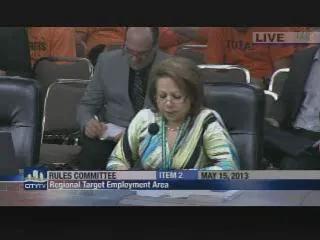
The Committee on Rules and Economic Development met on Wednesday, May 15, 2013, at 9:00 AM in Council Committee Room, City Administration Building, 202 C Street, San Diego. Council President Pro Tem Sherri Lightner chaired the meeting with Vice Chair Kevin Faulconer and Councilmembers Mark Kersey, David Alvarez, and Marti Emerald present. The committee considered three action items: political party campaign contribution limits, a new targeted employment area for the enterprise zone program, and a proposed prevailing wage ordinance for municipal projects. Item 4 (Civic San Diego report) was continued to the next available meeting. Consent Calendar - There were no consent calendar items. Public Comments & Testimony - Item 1 – Political Party Contribution Limits: Several speakers expressed support for the proposed limits. Will Moore, attorney for the San Diego County Democratic Party, supported the $10,000 district / $20,000 citywide limits recommended by experts, arguing that without enforceable attribution rules, large contributions create an appearance of corruption. Simon Mieski of California Common Cause also supported the $10,000/$20,000 limits, calling them balanced and likely constitutional. - Item 3 – Prevailing Wage Ordinance: Numerous individuals and organization representatives spoke in favor of the mayor's proposal to require prevailing wages on all city-funded public works projects. Scott Littlehale (Smart Cities Prevail) cited studies showing no significant cost increases and benefits such as higher local hiring and reduced public assistance costs. James Reed (Center for Contract Compliance) presented economic impact data from San Jose, including $164 million in lost economic activity without prevailing wage. Andy Berg (National Electrical Contractors Association) argued that prevailing wage levels the playing field and encourages local hiring and training. Tom Lemon (San Diego Building and Construction Trades Council) emphasized the need to catch up with neighboring cities and the impending state law (SB 7) that could withhold funds from charter cities not paying prevailing wage. Other speakers included representatives from the NAACP, faith community, local contractors, and union members who shared personal stories of how prevailing wage supports middle-class livelihoods. Discussion Items - Item 1: Political Party Campaign Contribution Limits – The committee heard presentations from Stacy Fulhorst (Executive Director, Ethics Commission) and professors Thad Kousser (UCSD) and Richard Hasen (UC Irvine). Fulhorst explained the difficulty of enforcing attribution rules and the potential for circumvention, citing over $1 million in party contributions during the 2012 mayoral race. Kousser and Hasen provided legal and policy analysis, recommending $10,000 per election for district candidates and $20,000 for citywide candidates as likely constitutional. Councilmember Faulconer moved to adopt the Ethics Commission's initial recommendation of $3,000 district / $12,000 citywide. After debate, that motion failed 2-3 (Lightner, Alvarez, Emerald opposed). Councilmember Emerald then moved to recommend $10,000/$20,000 limits, with direction to use Charter section 295(d) to allow the ordinance to take effect June 2, 2013, to be in place before the next election cycle. The motion passed 3-2 (Lightner, Alvarez, Emerald in favor; Faulconer, Kersey opposed). The committee directed the City Attorney to draft the ordinance accordingly, with legal review on the applicability of Charter section 295. - Item 2: New San Diego Regional Target Employment Area (TEA) – Lydia Moreno (Economic Development Department) presented the update using current census data. The proposed TEA includes 209 qualifying census tracts (up from 189), covering parts of San Diego, Chula Vista, and National City. The boundaries expand the eligible employee pool for the enterprise zone program. Councilmember Alvarez moved to approve staff recommendation and requested staff return within 60 days with a second enterprise zone expansion proposal. The motion passed unanimously (5-0). - Item 3: Prevailing Wage Ordinance – Nelson Hernandez (Mayor's Office) presented the mayor's proposal to require prevailing wages on all city-funded public works projects, not just those over $10 million. He argued it would create a level playing field and improve construction quality. Councilmember Kersey moved to request that: (1) staff work with stakeholders and the City Attorney to prepare a draft ordinance; (2) the Independent Budget Analyst (IBA) review a list of affected projects and provide an annual cost/savings analysis; (3) the City Attorney provide legal analysis of SB 7 and the proposed ordinance; and (4) staff report addressing questions raised by the IBA and councilmembers. The motion was amended to include a deadline to return to the committee on June 19, 2013, and to the full City Council on June 24/25, 2013. The motion passed unanimously (5-0). Key Outcomes - Item 1: The committee recommended that the City Council adopt an ordinance establishing political party contribution limits of $10,000 per election for district candidates and $20,000 per election for citywide candidates. The City Attorney will draft the ordinance and determine the applicability of Charter section 295(d) for an immediate effective date. - Item 2: The committee approved the new boundaries for the 2013 San Diego Regional Targeted Employment Area. Staff will return within 60 days with a proposal for the second expansion of the enterprise zone. - Item 3: The committee directed staff, the IBA, and the City Attorney to prepare analyses and a draft ordinance addressing prevailing wage applicability. The matter is scheduled for the June 19, 2013 committee meeting and the June 24/25, 2013 City Council docket.
The Committee on Rules and Economic Development met on April 24, 2013, at 9:00 a.m. in the Council Committee Room (12th Floor) of the City Administration Building. Council President Pro Tem Sherri Lightner (Chair), Councilmember Kevin Faulconer (Vice Chair), Councilmember Mark Kersey, and Councilmember David Alvarez were present. Councilmember Marti Emerald was absent for the first item but participated later. The meeting covered four agenda items: a mid-year performance update from the San Diego Convention Center Corporation, a report on the CONNECT2Careers summer jobs program, a timeline for elections-related code and charter updates, and a status update from the City Funds Commission. Approval of Record of Action Items - The committee unanimously approved the Record of Action Items from the April 10, 2013 meeting (4-0; Emerald absent). San Diego Convention Center Corporation Mid-Year Performance Update (Item 1) - Presenters: Phil Blair (Board Chair, SDCCC), Carol Wallace (President & CEO, SDCCC), Joe Terzi (President & CEO, San Diego Tourism Authority, SDTA). - Key reports: - Since 1989, the Convention Center has generated over $21 billion in economic impact, hosted nearly 5,000 events, drawn over 18 million attendees, produced nearly 13 million hotel room nights, and generated over $400 million in Transient Occupancy Tax (TOT) revenue. - The Convention Center supports an estimated 12,500 jobs currently; expansion could add 7,000 permanent jobs, bringing the total to nearly 20,000. - The expansion is estimated to generate an additional $17 million in annual city revenues. - Performance metrics: - FY13 goal for hotel room nights increased from 850,000 to 900,000. Through March, the center was at 46% of goal, on pace, but Joe Terzi stated he did not expect to meet the 900,000 goal and projected a shortfall of 75,000–150,000 room nights. - The short-term (18 months and in) sales goal of 40,000 room nights was at 35,000 booked through March. - Challenges: - Two major conventions (HIMS and Society for Human Resource Management) announced they would leave San Diego due to lack of exhibition space, despite the planned expansion. - Comic-Con is booked through 2016 but has indicated it will move if expansion does not occur. - Discussion: - Councilmembers expressed concern about the lack of actionable metrics in the report and the need for tracking performance of the contract with SDTA. - Councilmember Emerald questioned the $1.9 million annual allocation to SDTA and requested analysis of discounting practices, the split between SDCCC and SDTA bookings, and detailed revenue data. - Councilmember Faulconer praised the team's professionalism and emphasized the importance of the expansion. - Decision: The committee unanimously (5-0) voted to request the Office of the Independent Budget Analyst (IBA) review the Sales and Marketing Services Contract and work with SDCCC to identify additional performance measures for a report to City Council in July 2013. The requested measures include occupancy, revenue maximization, General Fund subsidy reduction, reserve fund growth, maintenance needs reduction, parameters for discounting, long-term sales/marketing plans, and status on the Coastal Commission approval. CONNECT2Careers San Diego Program Update (Item 2) - Presenters: Ashley Wildrick, Jared Aker (EDC, co-chair of Workforce Partnership Youth Council), Phil Blair (honorary chair), Erica Quintero and Viviana Cervantes (student applicants). - Key updates: - The program, formerly known as Hire-A-Youth, aims to place 200 young adults in summer internships. - As of the report date, 376 applications had been received (deadline April 15), 19 application/work-readiness workshops had reached 549 young adults, and over 60 employers had expressed interest with 45 committing, translating to over 100 job positions. - A successful first placement was Zachary, a 10th grader, placed with Northrop Grumman. - Discussion: - Councilmember Emerald highlighted the successful job fair in City Heights (around 2,000 jobs offered, 300+ kids applied on-site). - Councilmember Lightner noted the need for more business participation and planned to connect a youth in her office. - Councilmember Faulconer praised the program's professionalism and asked what more the Council could do; presenters requested help recruiting more employers. - Action: Informational only; no formal action taken. The committee requested regular future updates on the program. Elections-Related Municipal Code and Charter Updates (Item 3) - Presenter: City Clerk Liz Maland and Deputy Director Bonnie Stone. - Key issues: - Inauguration Date: Current charter requires inauguration on first Monday after December 1, which conflicts with the 28-day certification period for election results (potentially extended to 31 days by Senate Bill 29). Proposal to change the date. - Special Elections: Charter requires a runoff 49 days after a special primary, but state law mandates 45 days for mailing overseas ballots, making compliance impossible. Proposal to amend the charter. - Redistricting: Review of charter and code sections based on past commission recommendations and a 2012 grand jury report; timeline for a 2016 ballot measure. - Municipal Code Review: Potential updates to nomination deadlines, ballot candidate photos (electronic submission), petition processes, and internal consistency. - Public Comment: Robert McNamara (District 3) suggested a citizen charter review committee, referencing past charter revision efforts and unaddressed recommendations. - Discussion: Councilmember Alvarez expressed interest in referendum process changes; Councilmember Emerald raised the possibility of a 'menu' approach to charter amendments. - Decision: Unanimously (5-0) voted to request the City Clerk and City Attorney to research appropriate changes to address the Inauguration Date and Special Election issues and report back with proposed Charter and Municipal Code revisions at the July 10, 2013 committee meeting. City Funds Commission Status Update (Item 4) - Presenters: David Walter (Chair, City Funds Commission), Michael Glavin (Investment Consultant). - Overview: - The Commission oversees six funds: four library funds (Allied Gardens, North Park, Rancho Bernardo, La Jolla), a Penasquitos Canyon Preserve Fund, and the Mt. Hope Cemetery Perpetuity Fund. - Five funds have a 65% equity/35% fixed income allocation; the Cemetery Fund is 35% equity/65% fixed income due to its income requirement. - Performance: As of March 31, 2013, funds were performing well, with the five library funds ranking in the top decile of a peer group of over 1,000 constituents. The Cemetery Fund yielded about 4% cash-on-cash, below the 5% target. - Discussion: - Councilmember Emerald expressed concerns about the long-term viability of Mt. Hope Cemetery, given that 80% of sale proceeds go to maintenance and the fund's principal cannot be touched. She requested the IBA examine income generation, city contributions, and future land-use projections. - The commission noted that a charter amendment could allow more investment flexibility, but spending principal would be counterproductive. - Action: Informational only; no formal action taken. The committee requested the IBA work with the City Treasurer to study Mt. Hope Cemetery's finances and options for growing the Perpetuity Fund, including potential charter amendments. Key Outcomes - Item 1: Unanimous vote (5-0) to have the IBA review the SDCCC/SDTA contract and produce a performance report with specific metrics for City Council in July 2013. - Item 2: No formal action; committee requested future updates on CONNECT2Careers. - Item 3: Unanimous vote (5-0) to direct the City Clerk and City Attorney to research and propose charter/municipal code changes on inauguration date and special elections by July 10, 2013. - Item 4: No formal action; committee requested the IBA to report on Mt. Hope Cemetery funding and investment options. The meeting adjourned at approximately 11:30 a.m. The next regular meeting was scheduled for May 15, 2013, at 9:00 a.m.