Browse by city
Date range
Search help

Search titles, summaries, topics and stored transcripts together. Keywords may match separately; put the whole query in double quotes for a phrase. Matching follows word analysis, so punctuation is not exact. Both dates are included. Documents are not searched.

SHOWING 801–810 ENTRIES
801
JUL 24, 2019 · SAN DIEGO, CALIFORNIA · ACTIVE TRANSPORTATION & INFRASTRUCTURE COMMITTEE
Active Transportation Infrastructure Committee Meeting – July 24, 2019

The Active Transportation Infrastructure Committee met on July 24, 2019, with a full committee present including Vice Chair Ward, Councilmembers Kate and Moreno, along with city attorney, IBA, and mayor representatives. The meeting covered non-agenda public comments, consent agenda approval, and several discussion items including consultant contracting, parking district management, a lease amendment for a fire repair facility, capital improvement program streamlining, and a sidewalk update. Consent Calendar - The committee approved the meeting minutes from June 19, 2019, unanimously. - Consent agenda items 1 and 2 were approved unanimously and forwarded to the full council with recommendation for approval. An updated staff report corrected item 2 to authorize a single agreement rather than multiple agreements. Public Comments & Testimony - Martha Welch commented on downtown sidewalk conditions, maintenance liability, and expressed support for a compromise on 30th Street that balances parking needs with bike infrastructure, urging consideration of business owners. - Kathleen Higgins, representing the San Diego Municipal Employees Association (MEA), expressed 100% opposition to the proposed five-year consulting contracts for land surveying, arguing that the city has a recruitment and retention crisis with 20 vacancies and that the work should be done by city employees. She proposed moving up a special salary adjustment and called for a solution to the crisis. Discussion Items 1. Six As-Needed Land Surveying Consultant Agreements (Item 3) - Alex Garcia (Public Works) presented a request to authorize six as-needed agreements for surveying, mapping, and digitizing services, with a $1,000 minimum guarantee per firm and up to $5 million per agreement over five years. The prior three contracts (2016) had nearly reached capacity after issuing 93 tasks, with workload increasing 2.5 times since 2015. The city has 20 vacancies among 72 survey positions. - Vice Chair Ward opposed the five-year, $30 million commitment, arguing it funds base workload rather than peak workload, and urged investing in city staff instead. He suggested a six- or twelve-month interim solution. - Councilmember Kate moved to forward the item to city council without recommendation, allowing flexibility to negotiate shorter duration or reduced scope. The motion was seconded by the chair. - The motion passed 2-2, with the chair exercising discretion to forward the item to full council. Councilmember Moreno opposed forwarding without recommendation, wanting to hold the item for further discussion. 2. Downtown Community Parking District FY20 Annual Plan and Budget, and Management Transition (Item 4) - Elizabeth Studebaker and Tanner French (Economic Development) presented the FY20 plan for the downtown parking district, which includes transition of management from Civic San Diego to the city. The plan allocates $10 million to the East Village Green parking structure and supports mobility projects, including the Fred (Circuit) shuttle. Revenue and performance metrics were shown. - Vice Chair Ward noted a revenue discrepancy in the summary and requested follow-up. He also raised concerns about Fred shuttle utilization and suggested considering a fixed route, dynamic pricing, and better geographic distribution of benefits. - The committee unanimously approved forwarding the staff recommendation to full council. 3. Second Amendment to Kearny Mesa Repair Facility Lease (Othello Avenue) (Item 5) - Karen Johnson (Real Estate Assets), Brad Hawthorne (Fleet Operations), and James Nagelboard (Public Works) presented the request to extend the lease term from 10 to 15 years (with an additional five-year renewal option) and authorize $811,000 for design of the fire rescue repair facility. The current Miramar facility has 17 working bays for 60 technicians, causing congestion and inefficiency. The new site will provide 24 working bays, improving the bay-to-technician ratio to industry standard. - IBA representative Jillian Cassie noted the project is unique (city does not own property) and recommended council consider a status update before the proposed budget's release. - Councilmember Kate emphasized the importance of the facility and supported the motion. Vice Chair Ward seconded and asked about future use of buildings B and C on the site. - The committee unanimously approved the staff recommendation to forward to city council. 4. 2019 Capital Improvement Program (CIP) Streamlining Recommendations (Item 6) – Informational - James Nagelboard and Mark Nosser (Public Works) presented a series of streamlining proposals, including increasing mayoral authority for consultant contracts (from $1M to $5M), eliminating the cumulative contract provision, raising change order authority, increasing sheltered competition limits for small businesses, and updating council policies on transparency and prioritization. They also proposed bulk purchasing of materials, raising insurance requirements, and improving project closeout times. - Vice Chair Ward requested monthly CIP updates, push notifications for project changes, and enhanced customer service contractor evaluations. Councilmember Moreno expressed hesitation about reducing council authority and transparency. Councilmember Kate supported streamlining but emphasized balancing small business participation and front-end budget scrutiny. - The item was informational; no vote was taken. Staff will return in October with proposed code and policy changes. 5. Citywide Sidewalk Program Update (Item 7) – Informational - Chris McFadden, Christy Reeser, and Craig Honus (Transportation & Stormwater) provided an update on sidewalk repairs. Since the 2015 condition assessment, the city has repaired 25,000 locations via slicing, 2,000 via replacement, and ramps 2,000 locations annually. The current backlog is 81,000 defects, with estimated cost of $90–$100 million. Four types of repairs exist: asphalt ramping, slicing ($66 per location average), replacement, and the 50-50 cost-share program (average participant cost $4,500). The slicing contract spends $600,000 annually. - Vice Chair Ward requested data on liability payouts vs. repair investment, and suggested reducing permit fees (currently $1,900) and exploring a lien-based program like San Francisco’s. Councilmember Kate asked about average repair costs, the 50-50 program wait times (now up to nine months), and the possibility of using a qualified vendor list or self-certification to streamline private repairs. Chair Kercy urged reducing permit fees for private sidewalk repairs and requested an analysis of the cost to clear the backlog over five- and ten-year timelines, as well as a report on liability recovery from property owners. - The item was informational; no vote was taken. Staff committed to follow up on several requests. Key Outcomes - Consent Agenda: Items 1 and 2 forwarded to full council with recommendation for approval (unanimous). - Land Surveying Consultants: Forwarded to full council without recommendation (2-2 vote, chair discretion). Council opposed the five-year term but supported short-term contracting. - Downtown Parking District: Forwarded to full council with recommendation for approval (unanimous). - Kearny Mesa Lease Amendment: Forwarded to full council with recommendation for approval (unanimous). - CIP Streamlining: Informational; staff to bring proposed code and policy changes to the October committee meeting. - Sidewalk Update: Informational; staff will provide data on liability costs, permit fee adjustments, and backlog analysis for future committee discussion.
PROCUREMENT 18% · SIDEWALK REPAIR 18% · PUBLIC WORKS 11% · CAPITAL IMPROVEMENT PLANNING 9%
802
JUL 18, 2019 · SAN DIEGO, CALIFORNIA · ENVIRONMENT COMMITTEE
San Diego Environment Committee Meeting – July 18, 2019

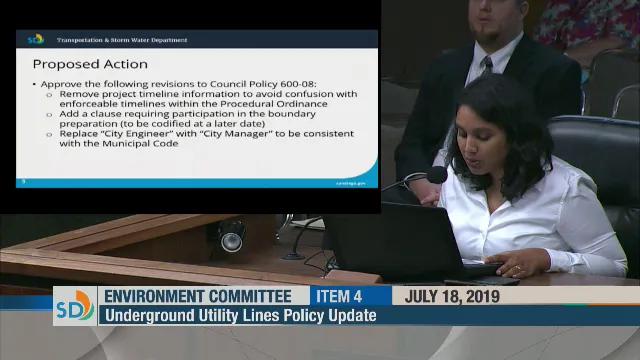
The Environment Committee of the San Diego City Council met on July 18, 2019, with Councilmembers Moreno, Bree, and Sherman present. The committee approved its June 13, 2019 actions, handled a two-item consent calendar, received an informational water quality report, and took action on three discussion items: a library energy grant amendment, an underground utilities policy update, and the creation of an environment advisory board. All votes were unanimous. Consent Calendar - Adoption of Committee Actions (June 13, 2019): Approved unanimously. - Item 1 – Fourth Amendment to 2007 San Diego Regional Stormwater Committee Co-Permittees Memorandum of Understanding: Staff noted the item was changed to require an ordinance rather than a resolution. Approved unanimously. - Item 2 – Agreement with Wood Environment & Infrastructure Inc. for Municipal Stormwater Environmental Monitoring Professional Services (H197056): Approved unanimously. Public Comments & Testimony - Non-Agenda Public Comments: - Martha Welch: Urged the committee to provide updates on the city's Pure Water program every 90 days, expressing concern that storm drains pollute the ocean and that the city relies on an outdated solid waste system. - Chris Ng: A local energy management and finance consultant voiced support for the city's Climate Action Plan but noted 2020 goals may fall short, especially for municipal building energy reduction, and offered his expertise to help the city meet or exceed its goals. - Becky Johnson: Raised concerns about marijuana production facilities, citing explosions, illegal hazardous waste dumping, and a UT article about hash oil labs. She asked the committee to hear from the county environmental health department. - Stacy Plaikatis, Brian Chavez, Doreen Nasser, Liz Jacobelli, Cammy Hoffman, and Audrey Reese: All spoke in support of a San Diego fur ban, citing animal cruelty, environmental pollution, and similar bans in other cities. Several asked the committee to place a fur ban on the September 12, 2019 docket. - Agenda Item 4 – Underground Utilities Policy Update: Jay Powell spoke in opposition, saying the changes were confusing, appeared to give more discretion to the mayor/city manager regarding timelines, and that outreach was only to affected utilities rather than the broader community. - Agenda Item 5 – Environment Advisory Board: Jim Pugh and Andrew Meyer spoke in favor but with concerns about preserving specialized expertise, water quality, habitat conservation, and the need for subcommittees. Julia Brown, chair of the Sustainable Energy Advisory Board (speaking as an individual), supported the reform while noting mixed reactions from her board. Jason Anderson registered support but did not speak. Jay Powell spoke in opposition, requesting the item be continued and referred back to the affected boards for more input. Discussion Items - Item 6 – Public Health Goals Report (Informational): Water system staff presented the 2016–2018 report required by the California Health and Safety Code. While no constituents exceeded state or federal maximum contaminant levels (MCLs), six constituents were above public health goals (PHGs) or MCLGs: coliform bacteria, bromate, chlorite, gross alpha particles, gross beta particles, and uranium. Staff stated reverse osmosis would be the best available technology for several constituents, with estimated annual operation and maintenance costs of $251–580 million at the city's three treatment plants, but concluded no action is proposed because the health protection benefits of further hypothetical reductions are unclear. A councilmember noted only 6 of 92 PHGs were exceeded and praised staff. - Item 3 – Second Amendment to Grant Host Agreement with Center for Sustainable Energy: Staff presented a California Energy Commission-funded demonstration project to make three public libraries as close to zero net energy as possible. The grant provides $2.7 million plus approximately $480,000 in city match funds. The requested second amendment would bring on a different contractor and authorize a tri-party agreement. Approved unanimously. - Item 4 – Update to Council Policy 600-08 (Underground Conversion of Utility Lines): Staff recommended minor updates, including removing project timeline requirements from the policy to avoid confusion with enforceable timelines in the municipal code, adding a boundary preparation participation clause for utility companies, and replacing “city engineer” with “city manager.” The city attorney's office noted legal review was still being completed. Approved unanimously and forwarded to the full City Council. - Item 5 – Creation of an Environment Advisory Board: Staff proposed consolidating the Community Forest Advisory Board, Sustainable Energy Advisory Board, and Wetlands Advisory Board into a 15-member Environment Advisory Board, with six members appointed by the mayor and nine nominated by council members, including expertise in environmental justice, climate resilience, zero waste, and other areas, plus one student seat. Councilmember Moreno requested an additional seat for a Tijuana River Valley representative, which was accepted. Approved unanimously and forwarded to the full City Council, subject to city attorney review. Key Outcomes - Approved the June 13, 2019 committee actions. - Approved consent items 1 and 2. - Received the informational Public Health Goals Report with no action taken. - Approved the library demonstration project grant amendment (item 3). - Approved the Council Policy 600-08 update and forwarded it to full council (item 4). - Approved the Environment Advisory Board creation, with an added Tijuana River Valley representative, and forwarded it to full council subject to legal review (item 5). - The committee will not meet in August 2019; the next scheduled meeting is Thursday, September 12, 2019, at 1 p.m.

ENVIRONMENTAL ADVISORY BOARDS 25% · UTILITIES UNDERGROUNDING 13% · PUBLIC COMMENT 10% · PROCEDURAL 9%
803
JUL 17, 2019 · SAN DIEGO, CALIFORNIA · BUDGET & GOVERNMENT EFFICIENCY COMMITTEE
Budget and Government Efficiency Committee Meeting on Franchise Agreement and 5G Regulations - July 17, 2019

The Budget and Government Efficiency Committee met on July 17, 2019, at 9:00 AM to discuss four agenda items: a software contract for GIS services, the Fiscal Year 2020 Statement of Budgetary Principles, information on the San Diego Gas & Electric (SDG&E) franchise agreement, and information on 5G wireless facility regulations. The meeting included public comments on budget transparency, the franchise agreement, and wireless regulations. Two action items were passed unanimously, and committee members asked for further information on diversity metrics and the Verizon MOU. Non-Agenda Public Comment - Martha Weltz expressed concerns about the city's budget transparency, stating that performance-based budgeting hides department spending and that library funding for books is insufficient. She also criticized overtime use in the police department and park maintenance issues. Discussion Items 1. ESRI Contract for GIS Services (Action Item, Unanimously Approved) The Department of Information Technology presented a request to authorize a three-year, $3.15 million sole-source agreement with Environmental Systems Research Institute (ESRI) for mapping and GIS software. The city was recently recognized as a leader in GIS among 150,000 global customers. The contract covers critical public safety, public utilities, and the Get It Done app. Councilmember Montgomery asked about the sole-source justification (the city has worked with ESRI for 25 years) and the contract length (three years to allow for technology updates). She also requested follow-up on the city's ELC report regarding hiring improvements. The motion passed unanimously. 2. Fiscal Year 2020 Statement of Budgetary Principles (Action Item, Unanimously Approved) Chris Olson from the Independent Budget Analyst (IBA) presented the proposed FY2020 Statement of Budgetary Principles. The principles, first established in FY2008, outline expectations for the budget process and require quarterly reports from the mayor, adherence to structural budget deficit principles, and updates to the five-year financial outlook by November 2019. Councilmember Montgomery requested that performance dashboards include diversity and inclusion metrics, referencing a recent city auditor report showing pay disparities for women and people of color. The motion passed unanimously, with a request that the IBA explore adding such metrics. 3. San Diego Gas & Electric Franchise Agreement (Information Item) Two presentations were made: - Protect Our Communities Foundation: Bill Powers and Tyson Siegel argued that the current 50-year franchise (expiring January 2021) favors SDG&E and recommended a short-term (five-year) agreement with strong enforcement, data transparency, and alignment with the city's climate goals (100% clean energy by 2035). They noted SDG&E's high rates – San Diego residents pay approximately double what Sacramento customers pay – and cited a dispute over the Pure Water project where SDG&E allegedly failed to pay moving costs ($100 million). They urged the city to hire outside legal counsel and form an ad hoc committee. - San Diego Gas & Electric: Warren Reese and Vanessa Mopolo Garcia presented SDG&E's perspective, noting that the franchise fee (3% for both gas and electric) generates $125 million annually for the city, the highest in the region. They emphasized that franchise fees are passed through to customers, that the average residential customer pays about $11/month, and that SDG&E supports the city's climate goals (45% renewable energy, 3,000 charging stations). They also highlighted their diverse supplier expenditure (43%) and $23 million in charitable contributions. - Public testimony (multiple speakers): Speakers expressed concerns about high rates, the utility's profit motive, and the need for accountability. Some urged the city to consider a municipal utility or stronger franchise terms. Others supported hiring outside counsel and forming a committee. - Committee discussion: Councilmember Moreno requested clarification on the council's authority over the franchise; Deputy City Attorney Fritz Ortleb confirmed the city has the power to municipalize under Charter Section 1 and to grant franchises under Section 103. Members emphasized the need for apples-to-apples comparisons with other utilities (e.g., SMUD, LADWP) and expressed interest in a transparent, rigorous process. 4. 5G Wireless Facility Regulations (Information Item) Development Services (Greg Hopkins, Karen Lynch, Simon C) presented proposed amendments to wireless regulations to comply with FCC orders, including shot clocks (60/90 days) for small cell facilities. The city has high design standards and aims to avoid visual clutter. The Planning Commission and Land Use and Housing Committee have recommended approval with additional requirements for historic areas and light glare studies. - Public testimony: Paul O'Boyle (land use attorney representing wireless companies) expressed concerns that the ordinance was developed without sufficient industry input, that it may discriminate against wireless companies, and that the city's processes may not meet FCC shot clocks, leading to deemed-approved applications. Shariar Afshar (Verizon) praised city staff collaboration. Sal Espinosa (CWA) raised concerns about labor standards, transparency, and the recently signed MOU with Verizon, noting that the MOU grants Verizon expedited 10-day review (faster than FCC requirements) and lacks fair labor provisions. He urged the city to include community benefits like free internet and local hiring. - Committee discussion: Councilmember Montgomery raised concerns about the Verizon MOU, noting the city had not completed a cost study before signing it (staff later said a study was completed just last week). She requested the MOU and cost study be shared with the council. Councilmember Bree emphasized the need for free basic internet access for all residents as a condition of 5G deployment. Key Outcomes - Motion to approve the ESRI contract (Item 1) passed unanimously. - Motion to forward the FY2020 Statement of Budgetary Principles to full council passed unanimously, with a request to explore adding diversity metrics. - No action taken on the franchise agreement or 5G information items; both are set for further discussion as the city prepares for upcoming decisions (franchise expiring January 2021; code update scheduled for July 23, 2019). - Committee members requested additional information: a copy of the presentation, the cost study related to the Verizon MOU, and a follow-up on diversity metrics. - The next Budget and Government Efficiency Committee meeting is scheduled for September 11, 2019, at 9:00 AM.

PUBLIC UTILITIES 19% · TECHNOLOGY AND INNOVATION 17% · ENERGY AND SUSTAINABILITY 15% · PUBLIC ENGAGEMENT 11%
804
JUL 17, 2019 · SAN DIEGO, CALIFORNIA · LAND USE & HOUSING COMMITTEE
Land Use and Housing Committee Meeting - July 17, 2019

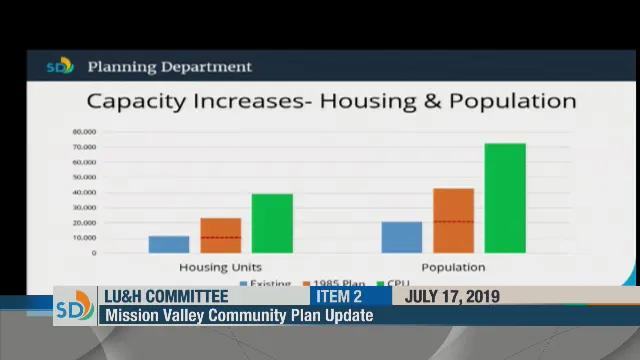
The Land Use and Housing Committee of the San Diego City Council met on July 17, 2019, at 10:00 AM. The meeting included approval of the previous meeting's record, non-agenda public comments, presentations on mental health services and homelessness coordination, a client survey update for the Storage Connect Center, an amendment to push cart regulations, and a comprehensive presentation on the Mission Valley Community Plan Update. Several votes were taken, and all items were moved forward as recommended. Consent Calendar - The record of action for the June 12, 2019 committee meeting was approved unanimously on a motion by Councilmember Sherman and second by Councilmember Campbell. Public Comments & Testimony - Martha Welch expressed strong support for more affordable housing, criticized rules such as time limits on rental assistance, and stated that the county lacks adequate low- and moderate-income housing. She urged building more units with multiple bedrooms for families. - Terry Ann Skelly called attention to a media report about a marijuana extraction lab at 7542 Trade Street that had dumped 28 drums of contaminated ethanol (1,500 pounds) at four locations around the county. She requested that the committee consider revoking the business's permit and ask for a report from the county environmental health department. - Kathleen Lippitt opposed increasing the number of marijuana production facilities (MPFs), arguing that rewarding illegal operators encourages further violations and that the city should not spend more resources on additional MPFs. She also commented later on mental health prevention, stating that commercializing marijuana undermines prevention efforts. - Michael McConnell (supported the mental health presentations) stressed the need for regional coordination, consistent messaging, and a unified strategic plan across city and county entities. Discussion Item: Mental Health Services and Homelessness Coordination - Toby Ewing (Executive Director, MHSOAC) presented on the state's Mental Health Services Act (MHSA). He highlighted that California invests $2 billion annually in MHSA funds, with 20% set aside for prevention and early intervention. He showed that San Diego County had $128 million in unspent MHSA funds at the close of FY 2016-17 (122% of annual revenue), though the county has since spent down significantly. He demonstrated the commission's transparency website and discussed innovation programs, such as Santa Clara's Alcove youth drop-in center and a Trieste-based model in Los Angeles. He noted that San Diego's suicide rate is above the state average and that the state is developing a suicide prevention plan. - Omar Passins (Director, County of San Diego Integrative Services) presented the county's efforts to coordinate housing, health, and homeless services. He stated that the county has 72 PERT officers (Psychiatric Emergency Response Team) countywide, with 56% (approximately 40) working in the City of San Diego and 30 positions filled. The county's Project OneforAll, started in 2016, has housed 899 individuals with serious mental illness out of an estimated 1,250 homeless residents with SMI. The Whole Person Wellness program, funded at $10 million, has permanently housed 31% of enrolled individuals. He also noted that 36 homeless outreach workers are funded by the county, with 15 covering central and south regions. - Committee discussion: Councilmember Ward asked about workforce development and the state's 5-year plan for mental health workforce (proposed $35 million in governor's budget). Councilmember Sherman inquired about SB 1045 conservatorship; Passins said the number of eligible individuals under state definitions was very low. Councilmember Moreno pressed for a commitment to work with city staff on using innovation funds, but Passins deferred to the county's behavioral health department. Moreno also asked about the Tri-City crisis center closure and bed availability; Passins said he would follow up with behavioral health. Discussion Item: Storage Connect Center Client Survey Findings - Lisa Jones and Marley Williams (San Diego Housing Commission) presented the survey results. The center, opened June 2018, has up to 500 bins. As of June 30, 2019, 495 clients were enrolled. Since opening, there were 26,231 return visits. Of 114 clients who formally closed their bins and indicated a destination, 79 exited to permanent or other long-term housing. A survey of 210 clients showed: 73% were chronically homeless, 70% slept in downtown San Diego the night before, 68% were actively looking for housing (75% cited insufficient income as a barrier), 13% were employed full- or part-time, and 30% were seeking employment. Most clients were not working with a case manager. - Committee comments: Councilmember Ward noted that 70% of clients slept within a half-mile radius, dispelling the myth that storage centers attract homelessness. He also observed the high percentage of clients looking for housing. Councilmember Sherman asked about tracking clients through HMIS and the new Clarity system. Discussion Item: Amendment to Push Cart Regulations - Renee Mezzo (Planning Department) presented an amendment to comply with SB 946 (effective Sept. 17, 2018), which allows local regulation of sidewalk vending in public rights-of-way. The amendment removes existing push cart regulations for public rights-of-way while retaining regulations on private property. Future sidewalk vending regulations are being developed for the Land Development Code (Ch. 3) and will be presented to the Economic Development & Intergovernmental Relations Committee on July 25, 2019, with a City Council hearing scheduled for September 2019. - Public comment: Matthew Peterson (attorney representing Chemco Realty) spoke neutrally but expressed concern that SB 946 has led to unlicensed vendors setting up shops on sidewalks, causing congestion and unfair competition for brick-and-mortar businesses. He asked that comprehensive regulations be adopted. - Committee discussion: Councilmember Ward supported the amendment and looked forward to broader regulations. Councilmember Sherman seconded, noting concerns about competition with established businesses but understanding state requirements. Councilmember Moreno emphasized supporting immigrant and low-income entrepreneurs. The committee voted unanimously to move the item to City Council. Discussion Item: Mission Valley Community Plan Update - Nancy Graham (Planning Department) presented the comprehensive update, the first since 1985. Key statistics: The plan adds capacity for 28,000 new homes (approximately 50,000 new residents) and 7 million square feet of commercial space. The current jobs-housing imbalance (40,000 in-commuters daily vs. 600 living and working in MV) will be improved. Mode share projections show daily drive-alone dropping from 54% to 42%, transit doubling from 4.6% to 8.3%, and active transportation rising from 11.7% to 24.3%. Vehicle miles traveled (VMT) per capita for Mission Valley residents is projected to drop from 99% of the regional average to 67%. Bicycle infrastructure will increase significantly: 132% more bike paths, 47% more bike lanes, and 522% more cycle tracks. Two bridge connections are included (Fenton Parkway extension and Riverwalk Street J) to improve north-south connectivity across the river. The plan includes design guidelines, a parks and open space plan (94.15 acres planned, but the PEIR states a minimum of 203 acres needed per city standards). The Planning Commission recommended approval with modifications, including that the impact fee study not include improvements to Mission Bay Park and that the city continue to explore alternative stormwater compliance. - Public comments: Rob Hutzel (San Diego River Park Foundation) opposed due to a parks deficit, arguing the plan overcounts park acreage (10 acres committed to Navajo community). Malika Marsten (Climate Action Campaign) supported the mode share improvements but opposed the bridges, saying they would induce driving demand. Jennifer Hunt (San Diego County Bicycle Coalition) supported bike infrastructure but asked for bike-ped only bridges. Kim Brewer (Westfield) supported the plan, praising flexibility for redevelopment. Bernie Nofeld (Mission Greens HOA) opposed lack of height restrictions on a specific parcel. Elizabeth Leventhal (subcommittee co-chair) supported. John Zebarth supported moving forward but noted 288,000 new daily vehicle trips and major unmitigated traffic impacts. Dan Smith (Grantville) supported but asked for better connectivity between Grantville and Mission Valley. Matt Adams (BIA) supported the plan. Ken Gotthealth (property owner) supported. - Committee discussion: Councilmember Sherman, whose district includes Mission Valley, strongly supported the plan, noting the necessity of the bridges for emergency access and fire truck mobility. He asked about funding for the connectors; staff responded that an impact fee study will be brought to Council by end of 2019, and other funding sources (RTP) will be sought. Councilmember Ward seconded the motion, praising the mode shift, bike infrastructure, and river focus. He asked about monitoring mode share and child care facilities. Councilmember Campbell thanked staff but expressed concern about lack of parkland, hoping developers will include more open space. - The committee voted unanimously to approve staff's recommendations and forward the plan to the full City Council. Key Outcomes - The record of action for June 12, 2019 was approved unanimously. - The amendment to push cart regulations (Item 1) was recommended for City Council approval unanimously. - The Mission Valley Community Plan Update (Item 2) was recommended for City Council approval unanimously, with the understanding that an impact fee study will be brought by end of 2019 and that the city will continue to explore alternative stormwater compliance. - All other items (Items 3, 4, and 5) were informational and required no action. - The next regularly scheduled Land Use and Housing Committee meeting is set for September 11, 2019.

HOMELESSNESS 28% · MENTAL HEALTH AWARENESS 20% · LAND USE AND PLANNING 8% · TRANSPORTATION 8%
805
JUL 10, 2019 · SAN DIEGO, CALIFORNIA · AUDIT COMMITTEE
City of San Diego Audit Committee Meeting – July 10, 2019

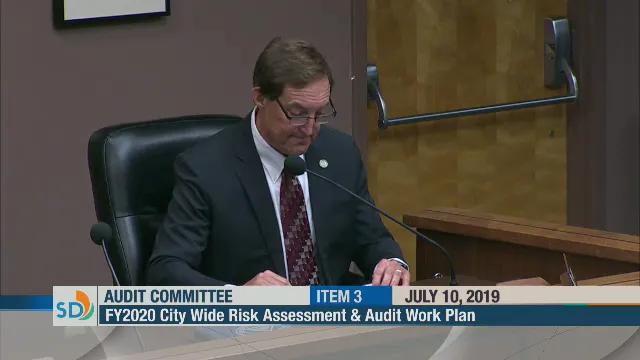
The City of San Diego Audit Committee met on July 10, 2019, with Chair Sherman presiding, Vice Chair Councilmember Jen Campbell, and committee members Alan Spencer, Ricardo Valdivia, and Stuart Halpern present. Interim City Auditor Kyle Elser, Deputy City Auditor Danielle Knighton, Principal IT Auditor Steven Gomez, Department of Finance representative Scott Clark, and City Attorney’s Office representative Joan Dawson participated. The committee took unanimous action on several work plans and continued the new city auditor selection item to a future date. Consent Calendar - The opening routine approval motion, made by Alan Spencer and seconded by Ricardo Valdivia, passed unanimously. Public Comments & Testimony - Martha Welts expressed concern that the audit function is “hiding” information from the public. She stated that the public currently sees only a performance audit, which she called “only half of the potential,” and referenced past votes, spending figures, and water cost increases of 4% annually without a council vote. She argued that residents want to see how the city spends money and that current reporting is not transparent enough. - Clive Richard, a self-identified resident of Council District 9, said he has followed the committee since its creation and urged the committee to protect the independence of the city auditor. He questioned why the mayor plays any role in recommending or selecting the independent auditor and recommended changing the charter if necessary to guarantee independence from the mayor’s office. Continuance of Item No. 4 - Chair Sherman requested, and the committee unanimously agreed, to continue agenda item No. 4 on the selection process for the new city auditor to a future date. No public comment was taken on the item itself. City Auditor’s Monthly Activity Report - Interim City Auditor Kyle Elser reported that four audit products had been issued since the last meeting: a confidential recommendation follow-up report; a confidential IT audit of disaster recovery preparedness (issued confidentially due to security concerns); the FY20 citywide IT risk assessment and audit work plan; and the FY20 citywide performance audit risk assessment and work plan. - Two audits were in report-writing stage: the Public Utilities AMI implementation project audit, completed in late June and awaiting the city management response, and the Neighborhood Services homelessness audit, expected to be issued in August. - Three audits were in fieldwork: the IT audit of network perimeter controls; the FY19 annual Central Stores inventory audit; and the risk management city attorney liabilities payout audit. On the last audit, Elser noted the office was requesting certain records from the City Attorney’s Office and that lack of access could constitute a scope impairment. Alan Spencer asked about timelines for resolving the records request. Joan Dawson explained that the requested documents relate to closed-session materials covered by the Brown Act and that her office was working with the City Auditor’s Office on a legal path forward. Elser clarified they are seeking the city attorney’s case summaries rather than the closed-session minutes themselves. No specific resolution timeline was provided. - Three audits were in planning: strategic human capital management; Development Services charges for deposit accounts; and the IT audit of citywide sensitive data encryption standards and data classification. One FY19 planned audit, the Engineering and Capital Projects Department charges audit, had not yet been started. - Elser summarized FY19 results: 18 audit reports and two hotline investigation reports, containing 85 recommendations to improve city operations. FY2019 Comprehensive Annual Financial Report Milestone Update - Scott Clark of the Department of Finance presented the FY2019 CAFR timeline, as required by municipal code. Key milestones included: Disclosure Practices Working Group reviews in October; first draft CAFR delivered to outside auditors MGO by early October; adjustments and additional DPWG review in November; DPWG sign-off by early December; anticipated audit opinion on December 6; the full CAFR brought to the Audit Committee in January; and forwarding to the City Council in February. Clark said any significant deviations from the schedule would be reported to the committee. Appointment to Disclosure Practices Working Group - In accordance with San Diego Municipal Code Section 26.1709(d)(2), Ricardo Valdivia nominated Stuart Halpern to serve on the city’s Disclosure Practices Working Group. The motion was seconded and passed unanimously. Chair Sherman noted that the newest committee member traditionally receives the assignment. FY20 IT Risk Assessment and Audit Work Plan - Steven Gomez, principal IT auditor, presented the FY20 IT risk assessment and audit work plan. The IT audit universe includes more than 300 applications and supporting systems citywide. The office used COBIT guidance and eight risk factors across three ranking categories: auditor ranking, IT department ranking, and department criticality ranking. - The plan included two carryover audits: the IT audit of network perimeter controls, in fieldwork with a report expected next month, and the IT audit of citywide sensitive data encryption standards and data classification, on hold pending hiring a new IT auditor. - Two new IT audits were planned: an audit of legacy applications, estimated at 600 hours, and a subsequent targeted audit based on the findings, estimated at 885 hours. - In response to committee questions, Gomez said the network perimeter controls audit addresses cyber defense, detection, and recovery; information shared by other cities about ransomware incidents is generally high-level. He also stated that “vulnerability” falls under inherent sensitivity and that “supportability” primarily covers currency, patching, and vendor agreements, with some training considerations. - The committee unanimously approved the FY20 IT audit work plan on a motion by Valdivia, seconded by Halpern. FY20 Citywide Risk Assessment and Audit Work Plan - Kyle Elser and Danielle Knighton presented the FY20 citywide audit work plan, which contained 19 projects. Five were carryover audits: Neighborhood Services homelessness expenditures and organizational structure; Risk Management/City Attorney public liability; Development Services billing for deposit accounts; Human Resources personnel compensation, incentives, and discipline; and Public Works Engineering and Capital Projects design-phase charges and project prioritization. - Eight new audits were proposed: city fiscal sustainability and financial condition over a 10-year period; small and local business enterprise and emerging local business enterprise contract programs; Public Utilities industrial wastewater control program follow-up; street sweeping program efficiency and effectiveness; sustainability/climate action plan audit; San Diego Police Department data completeness, reliability, and reporting methodologies; Real Estate Assets Department lease strategy and holdover agreements; and a second Neighborhood Services homelessness audit focusing on data-driven approaches and evidence-based practices. - Other planned activities included fraud hotline operations, follow-up on prior audit reports, the IT audit plan, the annual Mission Bay Fund audit, a peer review required under government auditing standards, office process improvements for compliance with the revised 2018 government auditing standards, and the annual Central Stores inventory audit required by municipal code. - During discussion, Elser said the office does not conduct a full questionnaire-based citywide risk assessment annually; the last one was about five years ago, and departments are reassessed when significant changes occur. Scott Clark explained the Department of Finance’s internal controls group, its annual report on internal controls over financial reporting, and coordination with the City Auditor’s Office. Elser noted that the Treasurer’s Office handles certain audits, such as leases and TOT, and that no high-ranked audit was set aside for subjective reasons this year. - In response to questions about the fraud hotline, Elser explained that “unsubstantiated” means there is insufficient evidence, that an intake and review committee helps evaluate investigation conclusions, and that cases are generally closed only after a request for additional information. He also said the 30-day closure period runs from the request for additional information, not from the original report. - The committee unanimously approved the FY20 citywide audit work plan on a motion by Valdivia, seconded by Spencer. Key Outcomes - The committee unanimously approved the routine opening motion. - The committee unanimously voted to continue item No. 4, the selection process for the new city auditor, to a future date. - Stuart Halpern was unanimously appointed to the Disclosure Practices Working Group. - The FY20 IT audit work plan was unanimously approved. - The FY20 citywide audit work plan was unanimously approved. - The meeting adjourned to the next Audit Committee meeting scheduled for October 2, 2019, at 9:00 a.m. in the same room.

MISCELLANEOUS 48% · AUDIT FOLLOW-UP 35% · PUBLIC FINANCE 6% · PROCEDURAL 5%
806
JUN 27, 2019 · SAN DIEGO, CALIFORNIA · ECONOMIC DEVELOPMENT & INTERGOVERNMENTAL RELATIONS COMMITTEE
Economic Development and Intergovernmental Relations Committee Meeting, June 27, 2019

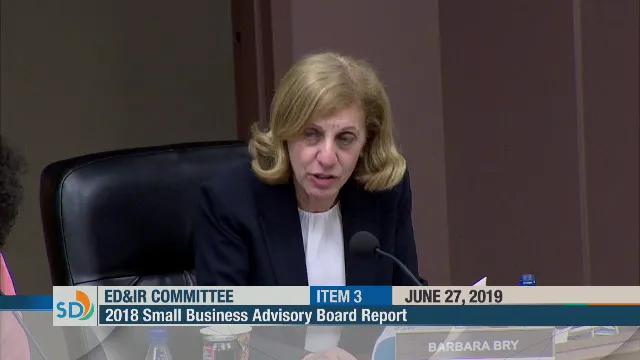
The Economic Development and Intergovernmental Relations Committee of the San Diego City Council met on June 27, 2019, at 10:00 a.m. Present were Vice Chair Montgomery, Councilmember Bree, and Councilmember Kircy (arriving later). Staff included Deputy City Attorney Daphne Scogan, Felipe Monroy from the Mayor's Office, Jordan Moore from the Office of the Independent Budget Analysts, and committee consultant Lucas O'Connor. The meeting began with approval of the June 6, 2019 minutes. Consent Calendar - Approval of Minutes – The committee records of action from June 6, 2019, were approved unanimously on a motion by Councilmember Bree, seconded by Vice Chair Montgomery. Public Comments & Testimony - Kelly McCormick (public comment on non-agenda item) – McCormick raised concerns about the lack of certified marijuana testing facilities in San Diego County. She stated that only a fraction of regulated marijuana is tested, noting that zero testing labs exist in the county and that a recent Associated Press investigation found only 93 of over 1,000 licensed manufacturing companies participate in the state's track-and-trace system. She said nearly 4,000 growers exist but only about 7% use track-and-trace, and only 208 of 1,532 growers have regular annual licenses. She cited investigations by NBC Los Angeles finding banned pesticides, fungicides, heavy metals, and other contaminants in products for sale. She urged greater regulatory oversight. Discussion Items - Fiscal Year 2020 Property and Business Improvement District (PBID) Annual Report – Presenters Elizabeth Studebaker (Neighborhood Investment Manager) and Luis Ojeda (Community and Business Development Manager) from the Economic Development Department presented the annual reports for downtown San Diego and North Park PBIDs. Services include maintenance, sanitation, landscaping, administration, commercial enhancement, and a disorder abatement program (downtown only). The downtown PBID covers 13,906 parcels over 275 blocks with six neighborhood zones and one commercial overlay; it was first formed in 2000, renewed in 2005 and 2015. North Park PBID includes 522 parcels along University Avenue and 30th Street, formed in 2017. The city contracts with downtown San Diego Partnership and North Park Main Street to administer the districts. The committee approved the FY2020 annual reports and authorized the CFO to appropriate and expend operating funds (motion by Councilmember Ward, seconded by Vice Chair Montgomery, passed unanimously). Discussion included questions about other communities exploring PBID formation, renewal schedules (downtown 2025, North Park 2022), the $55,000 general benefit in North Park used for a homeless outreach coordinator, the $2.2 million allocated for contracted security downtown, and the $150,000 city fee for oversight. Councilmember Ward requested a clearer justification of the city fee. - San Diego Convention Center Corporation Mid-Year FY2019 Sales and Marketing Update – Chair of the board Zima Jacobson introduced the presentation, joined by CFO Mardine Maddox and San Diego Tourism Authority President/CEO Joe Terzi. The corporation retained short-term sales (18 months or less); the Tourism Authority handles long-term sales under a contract approved by City Council last year. Terzi reported that FY2019 will achieve a record sixth consecutive year of over one million room nights booked. 21% of new bookings were new accounts, helping fill gaps between large conventions. Priorities include retaining major conventions and attracting new business. The team closed a gap in 2022 bookings from 21% behind to only 4% behind. Competition includes Anaheim (recent expansion), Los Angeles (planning expansion), Seattle (multiple expansions), Orlando, Chicago, Atlanta, and Las Vegas. Short-term sales exceeded goals, projecting $2.7 million in rental revenue. The presentation was informational; no action taken. Councilmember Kircy asked about major competitor cities that have expanded facilities; Terzi noted most have expanded or are planning to. Councilmember Bree asked about best-performing groups; Terzi cited corporate opportunities (e.g., Cisco Live spent $9 million on food and beverage) and medical conventions as high-value. Vice Chair Montgomery asked about loss of business due to preferred dates/space; Terzi said 60–70% of lost business is due to inability to accommodate preferred dates and/or space. - 2018 Small Business Advisory Board Annual Report – Presenters: Shane Beard (Vice Chair, small business owner), Ruben Garcia (SBA district director), and Edward Barbad (attorney). Small businesses represent 94% of all businesses in San Diego (about 98,000 with 12 or fewer employees). The board meets monthly at the downtown library, conducts business walks, and collects surveys (240 in the last year). The board helps evaluate economic development funding applications and advises staff. Challenges include lack of quorum due to vacancies (8 of 11 seats expired or termed out). The board expressed frustration with low attendance at meetings and requested more active engagement from council. Councilmember Bree and Kircy noted difficulties small businesses face with city contracting and permits. Councilmember Bree offered to nominate a member. Councilmember Ward suggested addressing quorum issues by potentially changing the quorum definition. The board hopes for regular communication and collaboration. The report was informational; no action taken. - Federal Legislative Update for 2019 – Presented by Patrick Batcheller (Director of Government Affairs), Denise Garcia (Director of International Affairs), and Pamela Welsh (Squire Patton Boggs, D.C. representative). Highlights: The House passed a $4.6 billion humanitarian aid package for the border, including $30 million for local governments/NGOs; San Diego may receive a portion. The Supreme Court ruled on the census citizenship question, allowing the Commerce Department to add justification; the president suggested delaying the census (likely unconstitutional). Funding for Pure Water, the Tijuana River Valley, and infrastructure: FY19 programs saw slight increases; FY20 House bills show significant increases, but sequestration looms if no budget agreement. Housing: The city supported the Housing Commission’s appeal on fair market rent, resulting in a 14% increase ($20 million annually). They opposed a HUD rule on verification of eligible status. Opportunity zones: Treasury and IRS released guidance; EDA and HUD will prioritize opportunity zones. Infrastructure: Continued support for SANDAG Mid-Coast project (secured $80 million to cover a $75 million gap). The presidential permit for Otay Mesa was renewed. Tijuana River Valley: EPA study identified six projects; the House has $30 million pending; Mexico’s new government committed funds. The new IBWC commissioner is more engaged. Offshore drilling: City opposed opening waters off California. Homelessness: Advocacy to update the HUD formula continues but no movement expected; the city received $9 million for youth homelessness. The update was informational; no action taken. Councilmember Kircy asked about the HUD formula (no change expected) and the Pure Water loan (distribution terms to be determined by Public Works). Councilmember Bree inquired about the census decision timeline (possible further appeals). - Welcoming San Diego Strategic Plan Update – Presented by Denise Garcia (Director of International Affairs) and Joel Day (Director of Boards and Commissions). The plan is a five-year blueprint for integrating immigrants and refugees, based on a year-long process including a kickoff summit, data analysis, seven community forums (600+ attendees), online portal (hundreds of comments), attitudinal surveys (600+ responses), and peer city reviews. Steering committee of 70+ organizations (including Alliance San Diego, Chamber, EDC, RISE San Diego, Business for Good). Four cross-sector recommendations and recommendations in five areas: economic opportunity, education, inclusive access, civic engagement, and safe/connected communities. Key data: immigrants are 24.1% of San Diego County’s population, 22% more likely to start businesses than native-born, pay taxes at higher rates, and are core to the economy. The next step is hiring an Immigrant Affairs Manager (position approved by Civil Service Commission, to be posted next week, aiming to fill by end of summer). That manager will analyze costs and structure for a potential Office of Immigrant Advancement, considering models from Los Angeles, Seattle, and New York. The website New San Diegans currently provides resource links; a consolidated site is planned. The report was informational; no action taken. Councilmembers praised the inclusive process and emphasized ongoing communication. Key Outcomes - Approved: FY2020 PBID Annual Reports for downtown and North Park; authorized CFO to appropriate and expend operating funds (unanimous). - Informational items received: Convention Center Corporation mid-year FY2019 sales and marketing update. Small Business Advisory Board 2018 annual report (with commitment to fill vacancies and improve engagement). Federal legislative update for 2019. Welcoming San Diego Strategic Plan update (with timeline for hiring Immigrant Affairs Manager). - No other votes or formal actions taken.

SMALL BUSINESS ASSISTANCE 27% · IMMIGRATION 14% · PUBLIC COMMENT 9% · PUBLIC ENGAGEMENT 9%
807
JUN 26, 2019 · SAN DIEGO, CALIFORNIA · PUBLIC SAFETY & LIVABLE NEIGHBORHOODS COMMITTEE
Public Safety and Livable Neighborhoods Committee Summary - June 26, 2019

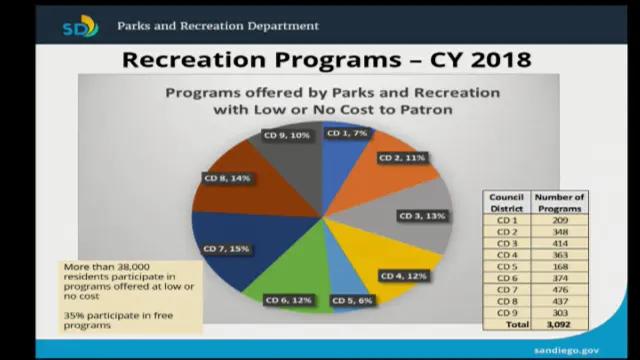
Date: June 26, 2019 The Public Safety and Livable Neighborhoods Committee met on June 26, 2019, to discuss a range of public safety, housing, parks equity, and police oversight issues. The meeting included updates on summer beach enforcement, a housing center for homeless individuals, maintenance assessment districts, a parks equity report, and presentations from two civilian police oversight bodies. Consent Calendar - Committee Actions from June 5, 2019: Approved unanimously. Public Comments & Testimony - Martha Welsh: Criticized police and fire overtime, station conditions, and claimed the city misrepresents officer numbers; urged improved resources. - Peggy Walker: Requested the committee monitor public safety impacts of marijuana retail and manufacturing (DUIs, extraction lab explosions, condemnation); suggested engaging in a hazmat workshop. - Kelly McCormick (public health educator): Highlighted the lack of certified marijuana testing facilities in San Diego County, noting that only a fraction of licensed manufacturers participate in track-and-trace systems. - Judy Strang (coalition of parents): Expressed concerns about marijuana billboards normalizing use for youth and cited mental health issues; shared information from NAMI and a media event. - Kate Yavendetti (Women Occupy San Diego, National Lawyers Guild): Supported the Citizens Advisory Board’s 30 recommendations, urged the committee to adopt proposals the mayor’s office may reject (racial profiling, pretext stops, recruitment, training). - Darwin Fishman: Shared experience from a ride-along with a rookie officer recruited from Arizona; questioned the balance of recruitment and training; requested data on officer washout rates. - Several members of Mid-City CAN Youth Council (Daniela Silva, Marita Rodriguez, Evelyn Cruz, Ricky Rodriguez, Fernando Gonzalez, Evelyn Soto, Yadira Calderon, Laura Besa) testified in favor of an independent community review board with subpoena power and youth representation, emphasizing that youth are over-policed and underrepresented. Discussion Items - Summer Beach Operations Plan Update (SDPD): Lt. Lisa McKean and Capt. Tina Williams presented the plan for Memorial Day, July 4th, and Labor Day. Key statistics: 1.5 million visitors expected across the summer; July 4th draws nearly 1 million people. Enforcement strategies include a dedicated beach team (10 officers plus sergeant) that issued 162 scooter citations and 188 traffic warnings to juveniles in May–June. The department coordinates with multiple agencies and uses mobile command posts. Committee members discussed crowd management, scooter enforcement, outreach to Tijuana (Councilmember Moreno urged Spanish-language social media blitz), and homeless population integration. SDPD confirmed they conduct bilingual press conferences but will enhance cross-border messaging. - Connections Housing Annual Status Update: James Alexander (Civic San Diego) and Jonathan Castillo (PATH) reported on the one-stop service center for homeless individuals (150 transitional beds, 73 permanent units) at 6th and A streets. The conditional use permit (CUP) requires annual administrative reviews (final one presented). Occupancy fluctuates due to prioritization of street homeless. Monthly counts within a quarter-mile radius range from 60 to 85. PATH serves about 900 individuals annually through various programs. Committee members commended the community advisory committee model and requested updated baseline data for the area (current baseline of 245 from 2012). Chair noted the importance of street outreach. - Maintenance Assessment Districts (MADs) – Items 1–3: Paul Saroy (Parks) and Luis Ojeda (EDD) presented annual reports for 64 MADs and five-year nonprofit service agreements for Civita and La Jolla MADs. The presentation explained how assessments are calculated (special vs. general benefits). Councilmember Moreno praised Luis Ojeda’s work and made a motion to approve items 1–3 as recommended by staff. Motion passed unanimously. - Parks and Recreation Equity Report: Herman Parker, Andy Phil, and Shelley Stoll presented data on park funding, programs, and facility condition. The department offers 4,800 programs annually, 35% fully cost-recovered. Key finding: Recreation center funds with less revenue have more free/low-cost programs; high-revenue centers (e.g., Carmel Valley) offer more paid specialty classes (98 classes vs. 24 at one center in District 8). Councilmember Moreno highlighted disparities (Carmel Valley’s programming budget 13 times larger than Robert Eger’s in Nestor) and called for action, not excuses. Councilmember Kate emphasized that general fund programs are consistent citywide, but specialized classes depend on local demand and willingness to pay. The department committed to expanding specialty classes citywide and better tracking outcomes. Vice Chair Bree noted the need for cross-district analysis and a new parks foundation to address equity. - Citizens Advisory Board on Police Community Relations (CAB) Biannual Update: Rev. Gerald Brown (executive director) and Barry Pollard (chair) summarized the board’s work since 2016: completed 30 recommendations organized under six pillars (trust, policy, technology, community policing, training, officer wellness). Key proposals include a pilot moratorium on pretext stops (with District 2 member not supporting), enhanced recruiting independent of military (to avoid “occupier mentality”), improved field training officer selection, and mandated medical review after carotid restraint use. The board requests funding for a full-time recruiter and an independent third party to review implementation. Councilmembers asked about data access difficulties and specifics of pretext stop pilot. Further discussion anticipated at next biannual report. - Community Review Board on Police Practices (CRB) Annual Update: Chair Jill Craver, Brandon Hilbert, and Tara Gentry reported on FY2019 statistics: 55 cases reviewed (up from 43), 191 allegations (93 exonerated, 28 sustained, 64 unfounded). The board now reviews unlawful detention/search allegations and audits category two complaints. Policy recommendations include a de-escalation policy (department drafting) and carotid restraint changes (medical evaluation required after use). The board logged over 4,000 volunteer hours and reduced case review time to 60–90 days. Vacancies exist, especially from District 8. Committee members thanked volunteers and discussed transparency, including potential closed-session agenda descriptions. Key Outcomes - Items 1–3 (MADs annual reports and five-year agreements): Approved unanimously. - Summer Beach Plan, Connections Housing, Parks Equity Report, CAB and CRB updates: Received as information; no formal votes taken. Committee directed departments to continue work on equity, follow up on CAB recommendations with the police chief, and explore improvements to the CRB (e.g., independent oversight, youth representation). - Next regular meeting scheduled for July 24, 2019.

POLICE OVERSIGHT 37% · PUBLIC SAFETY 17% · PARKS AND RECREATION 17% · PUBLIC ENGAGEMENT 5%
808
JUN 19, 2019 · SAN DIEGO, CALIFORNIA · BUDGET & GOVERNMENT EFFICIENCY COMMITTEE
Budget and Government Efficiency Committee Meeting - June 19, 2019

The Budget and Government Efficiency Committee of the San Diego City Council met on June 19, 2019, to discuss and vote on the fiscal year 2020 appropriation ordinance and an extension of a parking meter contract. The meeting was chaired by Councilmember Bree, with Vice Chair Kate and Councilmembers Montgomery and Moreno present. Andrea Tevlin (IBA), Rolanda Charval (CFO), and Brett Bartolotta (Deputy City Attorney) also attended. Public Comments & Testimony - Ms. Welch (member of the public) spoke during non-agenda public comment. She criticized the city for waiving a portion of government funding for libraries each year, claiming libraries receive less money for books. She also expressed concern that Mission Bay funds designated for parks by voter vote were instead going to the general fund, and that Balboa Park suffers because of this. She argued the city does not follow voter-approved rules, making government inefficient. Discussion Items Item 1: Fiscal Year 2020 Appropriation Ordinance - Staff from the Department of Finance (Tracy McCraner, Comptroller; Adam Jones; Trisha Tackey) presented the appropriation ordinance (AO). The AO defines legal spending levels for the FY2020 budget and must be adopted by June 30, 2019. Changes include a new delegated authority for the City Attorney’s prosecutorial function to accept and spend grant funds without prior City Council approval, and technical updates to lists of Mission Bay and Regional Park projects, gas tax fund language, and fiscal year updates. - Councilmember Moreno requested that staff provide a memo before the AO goes to City Council detailing how each authority was used in FY2019 and might be used in FY2020. Staff agreed. - Councilmember Moreno also proposed an amendment to Section 18: adding the sentence “The CFO shall report all actions that are taken using this authority to the city council.” This was modeled after similar reporting language in Section 2C4. Staff and the City Attorney’s office indicated they could provide reports quarterly or annually. - Councilmember Montgomery asked for clarification on the definition of “prosecutorial function” and requested that reports include partnerships with other city departments and charter/municipal code references. The City Attorney’s office gave examples (e.g., SMART program grant for drugged driving prosecution, Violence Against Women Act grants) and noted the city attorney’s independent authority under the charter. Staff agreed to work with the city attorney on reporting and language. - Vice Chair Kate sought clarification on whether reports would be prior to or after accepting grants. The motion maker (Moreno) clarified reports would be after the fact, but Vice Chair Kate expressed interest in prior knowledge; however, no amendment to require prior review was made. Item 2: Extension of IPS Group Incorporated Cooperative Procurement Agreement - Interim City Treasurer Liz Carey and Parking Administration Program Manager Jonathan Carey presented a request to extend the single‑space parking meter contract with IPS Group (a local San Diego company) for an unspecified additional term beyond the current expiration on July 15, 2019. The extension locks in current pricing. The city has spent $3.6 million on the contract since July 2014. IPS provides repair, maintenance, wireless connectivity, back‑office software, and supports smart‑meter features (e.g., TAP, Apple Pay, Android Pay, vehicle detection sensors). A 99%+ meter uptime has been maintained. - Councilmember Moreno asked what services IPS provides beyond the city’s own parking meter operations. Staff explained that IPS handles repairs beyond technician capabilities (e.g., board/chip failures) and provides software and per‑transaction costs. Key Outcomes - Item 1 (Appropriation Ordinance): The committee approved staff’s recommendation with the amendment to Section 18 requiring the CFO to report all actions taken under that delegated authority to the City Council. The vote was unanimous (4-0). Staff will also provide a memo on authorities used in FY2019 and how they may be used in FY2020. - Item 2 (IPS Contract Extension): The committee approved the extension unanimously on a motion by Councilmember Moreno, seconded by Vice Chair Kate. - The next meeting of the Budget and Government Efficiency Committee will be on July 17, 2019 at 9:00 a.m.

BUDGET 54% · PUBLIC SAFETY 17% · PARKING MANAGEMENT 13% · PROCEDURAL 10%
809
JUN 19, 2019 · SAN DIEGO, CALIFORNIA · ACTIVE TRANSPORTATION & INFRASTRUCTURE COMMITTEE
San Diego Infrastructure Committee Meeting – June 19, 2019

The Infrastructure Committee of the San Diego City Council convened on June 19, 2019, at 10:15 AM. Committee members present included Vice Chair Ward, Councilmember Kate Moreno, Councilmember (unidentified), City Attorney Representative Tina Ray, IBA Representative Jillian Cassie, Mayoral Representative Lee Friedman, and ATI Committee Consultant Justin Garber. The meeting covered non‑agenda public comment, adoption of minutes, consent items, a TransNet funding amendment, an emergency storm drain change order, and informational updates on downtown mobility and regional bike planning. Consent Calendar - Minutes from May 22, 2019 were adopted unanimously. - Consent Items 1 & 2 were pulled by Councilmember Moreno for questions. Items involved five‑year as‑needed consultant contracts with Dudek and ICF Jones & Stokes for specialized studies (biological, historical, traffic, air quality, etc.). - Councilmember Moreno asked about performing the work in‑house and requested a cost analysis by the IBA. She also noted both contractors fell short of equal‑opportunity contracting goals and asked for action plans prior to full Council docketing. - Christian Silva (Program Manager for EcoTech Contracting) stated that Dudek has an EEO plan on file expiring November 2019 and that ICF would be monitored similarly. - Councilmember Moreno made a motion to approve the items, which was seconded and passed unanimously (two separate votes). Public Comments & Testimony - Martha Welch spoke on non‑agenda items: she criticized the city’s water system as outdated and lacking maintenance, urged gray‑water use, complained about scooter compliance with parking zones, and said road resurfacing with slurry alone is insufficient. She called for better oversight and more frequent updates. - Jennifer Hunt (San Diego County Bicycle Coalition) spoke on the downtown mobility plan. She expressed full support for building out the plan quickly, noted that funding for Phase 3 is unidentified, and highlighted that only 8% of the $80 million resurfacing budget (430 miles) includes improved bike/pedestrian paths, compared to over 50% in 2013. She cautioned against complacency due to safety rankings. Discussion Items - Item 3: TransNet Local Street and Roads Program – 2018 RTIP Amendment - Presentation by Gene Matter (Assistant Director, Transportation/Stormwater) and Ben Bitalia. The amendment would align the RTIP with the adopted FY2020 TransNet budget of $35.3 million (30% maintenance, 70% congestion relief). The city’s TransNet fund balance at SANDAG has been reduced 50% since FY2016, to an estimated $27.5 million by year‑end. A clean FY2018 audit was noted. - Councilmember Moreno proposed an amendment to dedicate 5% of TransNet funding ($1.5 million) to the street‑light backlog ($41.9 million). She argued the city should exercise more authority over allocations and cited a missed state‑grant opportunity for SR‑163/Friars Road. - Councilmember Kate questioned the 5% figure, noting capacity issues and potential impacts on other projects. Vice Chair Ward expressed concern about disrupting schedules but agreed priorities should shift in future budgets. No second to Moreno’s motion was given. - Vice Chair Ward made a motion to approve staff recommendation as submitted. Seconded by Councilmember Kate. Passed unanimously. - Item 4: Construction Change Order No. 1 – Cardinal Storm Drain Emergency Replacement - Presentation by Elief Chetin and Jiang Choi (Public Works). The original contract with Flat Iron West was for an emergency storm drain replacement after a sinkhole formed in December 2018 adjacent to a three‑story apartment building. The scope increased due to design‑as‑you‑build: a jacking pit, temporary access road, and soil remediation to protect the building foundation. The change order requested up to $1.7 million from the commercial paper/general fund. Construction is 30% complete, with completion expected September 2019. - Motion to approve made by Councilmember Kate, seconded by Vice Chair Ward. Passed unanimously. - Item 5: Downtown Mobility Plan and Bike Program Update (Informational) - Presentation by Everett Houser (T&SD). Phase 1 cycle tracks (J Street, 6th Avenue, Beech Street) are completed or near completion. Phase 2 (design complete, advertised in 30 days, 10‑month construction) is fully funded. Phase 3 lacks construction funding; staff is pursuing grants. The bike program reported San Diego was ranked 1 large safe city by PeopleForBikes and earned bronze‑level Bicycle Friendly Community status. - Discussion: Vice Chair Ward emphasized complete‑street opportunities during resurfacing, better community outreach timing, and bike‑lane enforcement. He asked about coordination with SANDAG’s regional bikeways. No motion required. - Item 6: SANDAG Regional Bike Plan Early Action Program Update (Informational) - Presentation by Linda Culp (SANDAG). The $200 million TransNet program aims to build 77 miles of regional bikeways; 70 miles are in development. Key city projects include: two‑mile Rose Creek coastal rail trail (open summer 2020), 7.5‑mile North Park/Mid‑City bikeways (bid opening soon, construction fall 2019), 4.5‑mile Uptown bikeways (4th/5th Avenue, construction 2021), Eastern Hillcrest bikeway (partnered with Normal Street promenade), and Barrio Logan Bayshore Bikeway segment (plan check submitted). - Committee members thanked SANDAG for leveraging state/federal grants and asked for continued coordination with city resurfacing schedules. No motion required. Key Outcomes - Unanimous votes: Adoption of May 22 minutes; approval of consent items 1 and 2; approval of staff recommendation on TransNet RTIP amendment (Item 3); authorization of change order for Cardinal Storm Drain (Item 4). - Directives: Staff to work with IBA on a cost analysis for in‑house expertise (from consent item); action plans from contractors on equal‑opportunity goals to be provided to Council before docketing; a strong message to staff to better incorporate street‑light funding in future budget cycles. - Next steps: The committee’s next regular meeting is scheduled for July 24, 2019, at 2:00 PM.

TRANSPORTATION 29% · PUBLIC WORKS 22% · PUBLIC TRANSPORTATION 14% · PUBLIC SAFETY 12%
810
JUN 13, 2019 · SAN DIEGO, CALIFORNIA · ENVIRONMENT COMMITTEE
San Diego Environmental Committee Meeting – June 13, 2019

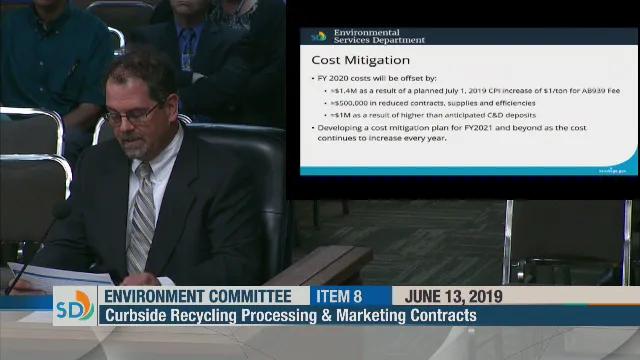
The Environmental Committee of the San Diego City Council met on June 13, 2019 at 9:00 AM. The meeting covered a range of environmental issues, including a renewed state of emergency for the Tijuana River Valley, new curbside recycling contracts reflecting market shifts, and funding for long-term kelp forest monitoring. Public comments highlighted concerns about Campland lease extensions, a proposed fur ban, and the need for timely analysis of wetland restoration alternatives. Consent Calendar - Item 1: Award task order number 5 to Ramona Paving and Construction for utility underground project Block DBB Job 1 in Crown Point. - Item 2: Award task order number 6 to Ramona Paving and Construction for utility underground project Block 2 BB Job 2 in Crown Point. - Item 3: Water supply assessment for the Park and Broadway project. - Item 4: Approval of cost-sharing agreement between the City of San Diego and County of San Diego for the San Pascual Valley Groundwater Basin groundwater sustainability plan. - Item 5: Agreement with Woodward & Curran for development of a groundwater sustainability plan for the San Pascual Valley Groundwater Basin. - Item 6: As-needed consultant services agreement with SCS Engineers for compliance with greenhouse gas regulations for landfills. All items were approved unanimously without discussion. Public Comments & Testimony - Martha Welsh (Pure Water/community member): Expressed concerns about the city’s sewage and stormwater systems, alleging that the county failed to build treatment plants with federal funds from the Clinton era, causing pollution to Mission Bay and the ocean. - Peggy Walker (Sorrento Valley resident): Raised safety concerns about cannabis extraction labs being permitted by the city, noting that 27 of 40 MFP applications are for extraction labs and citing recent explosions at unpermitted labs. Requested a staff report on resources needed to protect businesses and residents. - Karen Zirk (Friends of Rose Creek): Opposed Camp Land receiving $8 million in rent credits for De Anza Cove cleanup, arguing that $2 million in city staff estimates would suffice and that the remaining $6 million should go to other regional parks. Highlighted the Mission Bay Park Improvement Fund. - Debbie Knight (Friends of Rose Canyon): Criticized the proposed Camp Land contract, urging that the contract return to council for review every three years and that the "rewild" alternative receive full EIR analysis. Characterized the rent credits as a giveaway to a private company. - Jim Pugh (San Diego Audubon Society): Advocated for the "rewild" study to be placed on the committee’s July agenda, noting it has been available for six months. Expressed concerns that the Campland lease extension is an environmental issue and that the rewild alternative may not be fully funded or analyzed unless council requests it. - Chuck Dunning (community member): Questioned the business logic of Camp Land investing $8 million in a project they could walk away from in five years, and worried that occupying the mobile home park could create a "possession is nine-tenths" situation. Concerned about $8 million in rent credits coming from taxpayers. - Christa Dunning (volunteer/ Audubon swimmer): Urged wetlands restoration before extending Campland’s lease, citing poor water quality and trash in Rose Creek. Asked that solid science from Audubon be considered. - Megan Flaherty (San Diego Audubon / ReWild Coalition): Asked that the ReWild study be presented before the Campland proposal goes to full council on June 24. Pointed out that investing $6 million in camping infrastructure would preclude other alternatives during the De Anza revitalization planning process. - Stacy Plaikatis (San Diego native): Requested adding a fur ban ordinance to the July 18 meeting docket, citing environmental and ethical concerns and noting similar bans in San Francisco, Los Angeles, and others. - Jose (community member): Supported the fur ban, describing it as a simple step and noting growing community support. - Cheyenne Cox (San Diego Vegan Democrats): Stated strong community support for a fur ban, including a resolution from the San Diego County Democratic Central Committee. - Doreen Nasser (35-year resident): Detailed the cruelty and environmental harm of the fur industry, including toxic chemicals used in tanning. Urged the committee to add the fur ban to the July 18 agenda. - Liz Jacobelli (resident): Expanded on the animal cruelty and pollution from fur farms, and asked for the fur ban to be on the next ballot. - Tommy Howe (community member): Opposed the characterization of potential loss of campsites as a "crisis," emphasizing that the city faces real crises like homelessness and climate change. Supported a presentation from ReWild next month. - David McCullough (landscape architect): Cautioned that the Campland deal is being rushed and compared it to a "mousetrap," urging the city to slow down and consider other alternatives. - Hal Haas (resident): Urged the committee to add a fur ban to the vote next month, arguing that fur is unnecessary and that other California cities have already acted. Discussion Items - Item 7: Tijuana River Valley State of Emergency Councilmember Moreno introduced a resolution updating the state of emergency due to ongoing discharge of raw sewage, solid waste, and sediment from Tijuana into the Tijuana River Valley. Staff presented a video tour and data showing: since 1993, Tijuana’s population has more than doubled; California State Parks hauled 468 tons of solid waste in 2015 and removed 520,000 cubic yards of sediment from 2005 to 2018; hazardous substances such as DDT, benzene, hexavalent chromium have been found in water samples. Dr. Oscar Romo (UCSD/UN Committee) described urbanization and illegal dumping in Tijuana canyons, and a project to repurpose trash into trash booms. Mayor’s office confirmed ongoing advocacy with U.S. and Mexican officials. The resolution passed unanimously. - Item 8: Curbside Recyclable Materials Processing and Marketing Contracts Staff presented new contracts with Allen Company and EdCo Disposal Corporation for processing curbside recyclables. Due to China’s National Sword policy, the city will shift from receiving revenue (approx. $4 million in FY17) to paying $3–3.5 million annually in FY20. Contracts are cost-based, 10-year terms, with revenue sharing provisions. The city will partially offset costs through a $1/ton increase in the AB 939 fee, operational savings, and increased construction/demolition deposits. Polystyrene (Styrofoam) will no longer be accepted in recycling. The Independent Budget Analyst noted that future rate increases will impact the general fund. Councilmember Moreno requested that the IBA, ESD, and city attorney develop a menu of options for council. The item passed unanimously. - Item 9: Agreement for Evaluation of Anthropogenic Impacts on San Diego Coastal Kelp Forest Ecosystem Staff and Dr. Ed Parnell (Scripps Institution of Oceanography) presented a five-year, $3.6 million agreement to continue monitoring kelp forest health. The project involves 450 dives per year across 21 sites, assessing giant kelp, fish, invertebrates, and oceanographic conditions. Historical data from 1971 helped evaluate the 1992 Point Loma outfall break. The new agreement extends through 2024 and is critical for the city’s wastewater discharge permits. Councilmember Sherman moved approval, noting the program’s value; Councilmember Moreno seconded. Passed unanimously. Key Outcomes - Tijuana River Valley: Committee approved the updated state of emergency resolution, which will go to City Council for final adoption. Unanimous. - Recycling Contracts: Committee approved the new contracts with Allen Company and EdCo Disposal, including a recommendation to develop a cost mitigation plan for FY2021 and beyond. Unanimous. - Kelp Forest Monitoring: Committee authorized the five-year agreement with Scripps Institution of Oceanography and the expenditure of $3.6 million. Unanimous. - Future Meetings: The next scheduled Environmental Committee meeting is July 18, 2019 at 1:00 PM. Note: Several public speakers requested that the committee place a fur ban ordinance and the Rewild Mission Bay presentation on future agendas; no formal action was taken on these requests during this meeting.

ENVIRONMENTAL PROTECTION 29% · MISCELLANEOUS 22% · PUBLIC COMMENT 14% · PUBLIC HEALTH 11%
OPENPUBLICA · PUBLIC MEETING INDEXUPDATED DAILY · openpublica.com