The San Diego City Audit Committee met on September 12, 2018, at 5:15 PM UTC. The meeting featured farewell remarks for outgoing City Auditor Eduardo Luna, the presentation of several audit reports, and the appointment of an interim city auditor. The committee discussed a performance audit on water meter cover replacement, reviewed the annual central stores inventory, and accepted the audit of Mission Bay and Regional Park Improvement Fund revenues. All votes were unanimous. Consent Calendar - No consent calendar items were listed on the agenda. Public Comments & Testimony - Joy Sanyata (District 3 resident) offered public comment praising City Auditor Eduardo Luna for his decade of service, calling him a "star" and commending the audit department's work. - Dwayne Harvey (self-identified supervisor of the box and lid crew) spoke against accepting the water meter cover audit, stating it was incomplete and unfairly portrayed his crew. He claimed auditors did not use all available information and that his crew worked hard. Discussion Items - Farewell to City Auditor Eduardo Luna: Chair Patricia Zapp, Councilmember Scott Sherman, and other committee members thanked Luna for his leadership, noting he established the city's audit function and saved taxpayers millions. Luna stated his tenure was the pinnacle of his career and praised his staff. - Monthly Activity Report (Informational): Presented by Eduardo Luna. Since the last meeting, the office issued five audit products, including audits of public utilities customer support and water billing, real estate assets surplus properties, water meter cover replacement, and annual Mission Bay fund and Central Stores inventory audits. Four audits are in report writing, one in fieldwork, and seven in planning. - Performance Audit – Water Meter Cover Replacement Process: Presented by principal auditor Andy Hinaut and lead auditor Luis Bruzeño. The audit found that in FY17, Public Utilities Department (PUD) took an average of over one year to complete work orders, against a six-month goal. Key issues: lack of management oversight (crews spent only 3.6 hours/day in the field), process inefficiencies (40% of trips wasted), and staffing shortages (8 employees vs. 27.5 needed). The backlog grew from 18,000 in FY15 to about 25,000 by March 2018. PUD agreed to all 11 recommendations. Deputy COO Johnny Perkins (six weeks on the job) acknowledged the problems and outlined immediate steps, including appointing an interim director, using photos in work orders, and grouping jobs geographically. Councilmember Sherman (who requested the audit in 2016) called the findings appalling and suggested outsourcing the backlog. The committee voted to accept the report and requested a follow-up in 90 days. - Central Stores Inventory Agreed-Upon Procedures: Presented by Kevin Starkey (MGO). The annual audit of the consolidated warehouse found an overstatement of about $3,400 on a sample of $345,000, extrapolating to 1% of total inventory ($1.38M). Two recommendations: standardize cycle count procedures and consider handheld barcode scanners. Deputy Director Matthew Helm (Purchasing & Contracting) noted the consolidation reduced costs and that they are working on implementing the recommendations. The committee accepted the report. - Audit of Mission Bay and Regional Park Improvement Fund: Presented by Deputy City Auditor Danielle Knighton. For FY17, lease revenues over $29 million were allocated per Charter Section 55.2 (after 2016 Measure J, 35% to Regional Parks, 65% to Mission Bay). Expenditures were allowable and appropriate. Three committee members exceeded the eight-year consecutive term limit, but the issue was not repeated as a finding because prior recommendations are still pending. The committee accepted the report. - Appointment of Interim City Auditor: Presented by Felipe Monroy (Mayor’s Office). Kyle Elsner was proposed as interim city auditor, effective October 1, 2018, pending a permanent search. Elsner stated he would not apply for the permanent role. The committee unanimously recommended the City Council confirm the appointment. Key Outcomes - The committee voted unanimously to accept the water meter cover replacement audit report and forward it to the City Council, with a request for PUD to report back in 90 days on progress implementing recommendations. - The committee voted unanimously to accept the Central Stores Inventory report. - The committee voted unanimously to accept the Mission Bay and Regional Park Improvement Fund audit. - The committee voted unanimously to recommend that the City Council confirm Kyle Elsner as interim city auditor, with salary in accordance with the FY19 salary ordinance. - All votes were unanimous (aye by all members present).
Public Meetings - San Diego, California
Public Meetings - San Diego, CaliforniaThis meeting of the City of San Diego Rules Committee, chaired by Cole, was held on September 12, 2018, starting at 10:30 AM. The committee considered two major items: a proposal to create a new Mobility Advisory Board consolidating the existing Bicycle Advisory Board and Parking Advisory Board, and an ordinance implementing charter amendments (Measure E) regarding elective office vacancies, succession, and removal. Public testimony was heard on the first item, and both items were approved unanimously. Public Comments & Testimony - Nicole Burgess (District 2 representative for the Bicycle Advisory Board): Expressed strong support for the Bicycle Advisory Board's work, noting 250 miles of buffered bike lanes implemented in the last five years and the recent passage of the Strategic Implementation Plan (SIP). She stated that dissolving the board would lose momentum and progress. She was not opposed to a mobility board but recommended either keeping the bicycle board as a leader or making it a subcommittee, and suggested that Vision Zero become a subcommittee funneling proposals to the mobility board. - Sophia Wolfram (Climate Action Campaign): Offered conditional support, emphasizing that the board must prioritize biking, walking, and transit. She called for the mayor's office to clearly signal that mode shift is a high priority and to back it with investment. She recommended that the board's objectives reflect mode share targets from the Climate Action Plan, that the board expedite the Transportation Master Plan, and that equity be prioritized by reducing technical expertise requirements and appointing members from communities of concern. - Gary Smith (Chairman of the Parking Advisory Board): Supported a holistic approach to managing the public right-of-way, noting that bike lanes, parking, and other uses compete for space. He argued that advisory boards should focus on policy, not implementation, and that a mobility board makes sense for integration. - Joy Sanyata: Spoke briefly in favor of the proposal. Discussion Items - Creation of a Mobility Advisory Board: Staff presented a proposal to consolidate the Bicycle Advisory Board (29 members) and the Parking Advisory Board into a single Mobility Advisory Board. The board would advise on biking, walking, transit, and parking, with a focus on achieving mode shift goals in the Climate Action Plan. The mayor's office (Joel Day) indicated that the board would be overseen by the Office of Boards and Commissions, and that a mobility manager would soon be hired. Committee members discussed the role of MTS, the need for ADA expertise, and ensuring existing board members could apply for new seats. A motion by Councilmember Ward included an amendment requiring at least one appointee possess expertise in ADA accommodations. The board would be formed by the end of 2018, with existing boards dissolved only after the new board is operational. - Ordinance on Elective Office Vacancies, Succession, and Removal: Priscilla Dugard and Jennifer Barry from the City Attorney's office presented an ordinance implementing Measure E, approved by voters in November 2016. The ordinance adds new causes for vacancy (mental/physical incapacity, resignation, felony conviction, removal for cause), creates a consistent appointment process for all elective officers, and establishes a special removal election for dereliction of duty or malfeasance. The procedure mirrors recall elections. No public testimony was heard. Key Outcomes - Motion on Mobility Advisory Board: Moved by Councilmember Ward, seconded by Councilmember Kate, with an amendment to require at least one appointee with ADA expertise. The motion passed unanimously (voice vote). The board will be formed by the end of 2018, with existing boards dissolved upon formation. - Motion on Vacancy Ordinance: Moved by Vice Chair Kersey, seconded by Councilmember Kate, to forward the ordinance to the full City Council with a recommendation for adoption. The motion passed unanimously. - The next Rules Committee meeting was scheduled for October 10, 2018.
The Environment Committee met on August 2, 2018, to discuss proposed amendments to the public utilities department (PUD) policies and municipal code, driven by widespread reports of abnormally high water bills and meter misreads earlier in the year. Councilmember Kate’s office, represented by his deputy chief of staff Ian Clampett, presented recommendations to improve transparency, customer notification, and financial accountability. Public Comments & Testimony - Sophie Barnhurst, speaking on behalf of the San Diego Regional Chamber of Commerce’s Energy and Water Committee, expressed the chamber’s support for Councilmember Kate’s two proposed actions, stating that water is integral to business operations and that a responsive, accurate public utilities department is critical for both businesses and residential customers. Discussion Items - Presentation by Ian Clampett (Deputy Chief of Staff to Councilmember Kate): Clampett detailed the context: in early 2018, nearly 350 meters were misread across San Diego, with 70% in District 6. Some bills were 400% above the previous cycle. A high water bill forum in Mira Mesa drew hundreds of residents. Over 130 District 6 customers contacted the office. Proposed amendments included: - Amending Council Policy 000-02 (budget policy) to include PUD in the annual five-year financial outlook (PUD agreed). - Amending Municipal Code Section 67.0222 to require written notice to customers before issuing a bill based on estimated meter readings (PUD agreed). - Additional recommendations (not for immediate action): hiring a $500,000 customer service consultant, implementing key performance indicators (KPIs) for FY20, and future consideration of a charter amendment for PUD director appointment and reforms to the independent rates oversight committee (IROC). - Councilmember Sherman: Expressed support, particularly for response time metrics, and noted his office will look for KPIs in the next budget. He moved the item to full council. - Councilmember Gomez: Congratulated Councilmember Kate on his new daughter. She supported the amendments but raised concerns about the method of notifying customers of estimated bills, suggesting electronic notifications to avoid paper waste. She also asked about improvements to customer service operations, including wait times and documentation. She seconded the motion. - Johnny Perkins (PUD representative): Confirmed that the entire customer service operation will be evaluated, including wait times, abandonment rates, and communication. He agreed to work with the city attorney on tenant water shutoff protections. - Chair Alvarez: Requested that the department bring forward a policy to prevent water shutoffs for tenants who are not the primary account holder, and that the scope of the customer service consultant contract be shared with the committee before the end of the calendar year. Key Outcomes - The committee voted unanimously (motion by Sherman, second by Gomez) to forward the proposed amendments to Council Policy 000-02 and Municipal Code Section 67.0222 to the full council for consideration. - The committee also requested that PUD staff work with the city attorney to finalize the amendments and that a contract for a customer service consultant be brought forward by the end of 2018, with the scope of work shared with committee members. - PUD committed to bringing back a policy proposal on tenant water shutoff protections before the end of the year.
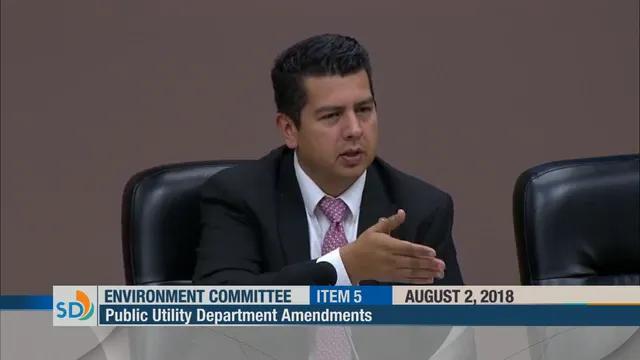
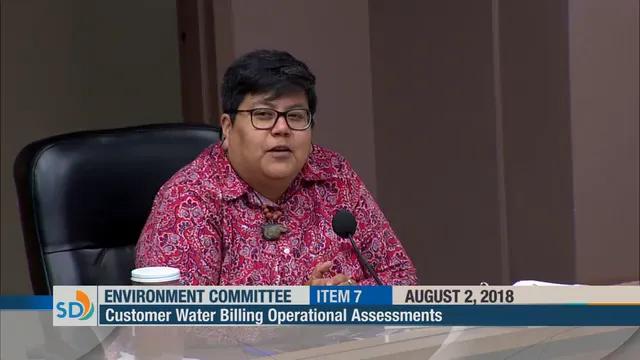
The Environment Committee met on August 2, 2018 with Councilmembers Gomez and Sherman present; Councilmember Kate was absent. The committee approved the previous meeting's minutes by unanimous consent, addressed consent agenda items (pulling three of four for discussion), heard public comment, and received two detailed presentations on water billing operations—a performance audit by the City Auditor and an operational assessment by West Monroe—followed by committee questions and commitments from the new Deputy COO. Consent Calendar - Minutes of July 21, 2018: Approved unanimously. - Consent Agenda: Councilmember Gomez pulled items two, three, and four, leaving only item one on the consent calendar. Item one was moved and passed unanimously. - Items Two and Three: Moved together with a request that staff communicate to the city council once the $200,000 threshold is reached. Motion by Ms. Gomez, second by Mr. Sherman. Passed unanimously. - Item Four: Also moved with the same request (communication at $200,000 threshold). Seconded by Mr. Sherman. Passed unanimously. Public Comments & Testimony - Martha Welch spoke about water billing changes, claiming the city did not inform residents properly. She criticized the lack of smart meter deployment (only 2% smart readers), alleged foot‑dragging by the city, and referenced former official Bill Horn. She urged honesty and transparency. Discussion Items - Item 6 – City Auditor’s Performance Audit of PUD Water Billing Operations: Audrey from the City Auditor’s office presented findings of systemic issues in water billing, including inadequate controls, high error rates, and lack of performance metrics. Ten recommendations were made, all agreed to by the department. - Item 7 – PUD’s Operational Assessment of Customer Water Billing (West Monroe): Johnny Perkins, new Deputy COO for Infrastructure and Public Works, presented the operational assessment. He acknowledged past failures, committed to implementing all recommendations (80% by end of 2019, 100% by mid‑2020), and emphasized cultural change, accountability, and transparency. Specific discussion topics included the “band” for flagged meter readings, smart meter deployment (targeted for 2020), and whether the previous statement calling the problem “isolated and limited in scope” was accurate. Councilmember Gomez questioned the isolated‑incident claim, citing complaints from across the city. Mr. Perkins stated that such a statement was unacceptable and had been addressed. Key Outcomes - Consent Items: All four consent items (initially five, but three were pulled for separate votes) were approved unanimously with the additional communication requirement at $200,000. - Audit Recommendations: Both the City Auditor’s and West Monroe’s recommendations were accepted. The department committed to full implementation within the stated timelines. - Commitment to Transparency: Mr. Perkins assured the committee that future communications would be accurate, timely, and transparent, and that a culture of accountability would be established in the Public Utilities Department. - Next Steps: The committee noted that the matter would proceed to the full City Council for further action. A short recess was taken before the final agenda item (Item 5 – proposal from Councilmember Kate), which was not discussed due to time.
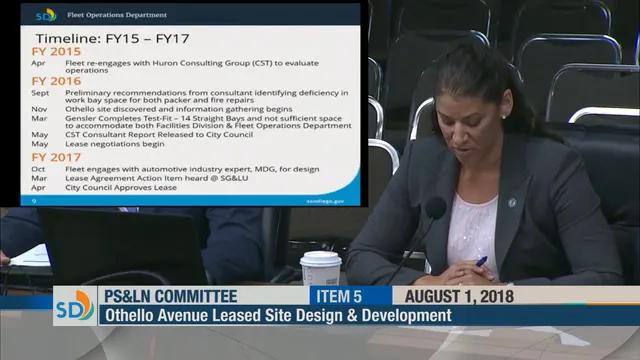
The Public Safety and Livable Neighborhoods Committee met on August 1, 2018, with Vice Chair Bree presiding in place of Chair Kate (on paternity leave). A quorum was present including Councilmembers Zaf and Gomez. The meeting covered a consent agenda, a neighborhood watch sign purchase program, an update on marijuana delivery enforcement, and a status update on a fire apparatus repair facility. Consent Calendar - The record of action items for July 18, 2018, was adopted by unanimous consent. - The consent agenda included a joint use park at Harriet Tubman Charter School. Public comment (Martha Welch) expressed concerns about the city not sharing costs with the school. Councilmember Gomez noted the city is providing funding and that the community has been working on this project for decades. The consent agenda was approved unanimously. Public Comments & Testimony Non-Agenda Public Comment: - Kathleen Lippitt expressed opposition to the city's permitting of 40 marijuana production facilities (MPFs) without distinctly identifying commercial operations, and criticized code enforcement. She warned of potential harm to youth from tainted products and high THC. - Kelly McCormick, representing herself and referencing the League of Cities, opposed proposed state rule changes that would limit local regulation of marijuana delivery businesses, reduce city review time for licenses to 10 days, and allow edibles with up to 500 mg THC. She urged the committee to join the League of Cities in objecting. - Martha Welch raised concerns about fire department privatization, police station closures, and 911 response times, alleging the county does not share funds and that dispatcher issues exist. Public Comment on Item 4 (Marijuana Delivery Enforcement): - Mara Felsen criticized former Police Chief Zimmerman for presenting falsified statistics about cannabis outlet crime and called for sensible regulation rather than unlimited enforcement. - Ben Martin, a medical cannabis user, described his choice of cannabis over pharmaceuticals for arthritis and urged licensing of delivery services. - Seth Zibman, a medical cannabis user for anxiety, requested safe access via delivery and an end to the supply chain bottleneck. - Amy Penzinski, a multiple sclerosis patient, described cannabis as life-changing and requested delivery service licensing. - Sam Humeed, president of San Diego Cannabis Delivery Alliance, noted that $400 million in cannabis products were incinerated due to lack of licensed outlets, and urged the committee to begin licensing independent delivery services. - Tiffany Wade, a patient and proprietor, stated that fewer than 20 permitted dispensaries serve 1.2 million people, creating a bottleneck. - Terry Best, chapter chair of Americans for Safe Access, referenced the false data scandal and read a letter from retired Lieutenant Diane Goldstein calling the deceptive conduct untenable. - Kathleen Lippitt (second appearance) warned against unproven therapies, comparing cannabis to thalidomide and laetrile. - Kelly McCormick (second appearance) thanked the police department for enforcement and argued that the cannabis industry operates like big tobacco. - Elizabeth Mack, founder of Holistic Caring, a nurse, described using cannabis to reduce opioid use and urged licensing for delivery services to support her clients. - Phil Rath (extended time), executive director of the United Medical Marijuana Coalition, commended the police for closing 11 delivery services but noted an estimated 100 still operate, and urged the city to dedicate tax revenue from legal cannabis to enforcement. Discussion Items Item 3: Neighborhood Watch Sign Purchase Program Acting Captain Kevin Mayer presented a proposal to formalize a process for purchasing neighborhood watch signs using Councilmember CPPS funds, donations, or grants. Signs cost approximately $40 each. The program would be administered by SDPD community relations officers. Councilmembers Zaf and Gomez expressed support, noting the importance of neighborhood watch and the need for easier sign acquisition. Councilmember Zaf asked about installation costs and partnerships (e.g., Urban Corps). Deputy City Attorney Paige Fulkman clarified that a resolution would take effect within 10 days of the mayor's signature. The committee voted unanimously to forward the item to full council. Item 4: Marijuana Delivery Enforcement Update (Information Only) Lieutenant Matt Novak reported that since August 2017, SDPD has closed 11 illegal delivery services, made arrests, and seized large amounts of product and cash. The investigation is more time-consuming than storefront enforcement. Assistant City Attorney John Hemling and Chief Deputy City Attorney Mark Skiels praised the police department's work as a model for other agencies. Councilmember Gomez asked about the estimated number of illegal services (approximately 100) and whether more resources would help. Lieutenant Novak said the current dedicated team is effective, and a domino effect may occur as enforcement continues. Public comment was divided, with some supporting enforcement and others criticizing the police department's past false data and calling for licensing of delivery services. No action was taken. Item 5: Othello Avenue Leased Site for Fire Apparatus Repair (Information Only) Fleet Operations Director Alia Accore presented a status update on the design and development of a leased site at Othello Avenue for repair of San Diego Fire-Rescue apparatus. The Miramar facility currently shares space with refuse packer repair, leading to congestion (e.g., pushing vehicles, working outside). The Othello site will improve bay-to-technician ratios and centralize fire apparatus repair. Initial cost estimates ranged from $6.5 million (14 bays) to $17 million (27 bays), but a final design by Messias and Conwell using angled bays (57 feet long, 19 feet wide) achieved 24 bays for $6.3 million. The lease has a 10-year term with two five-year options, and total operating expenses over 10 years are $10.5 million. The city may finance the improvements or reimburse the lessor. Funds will not be needed until fiscal year 2020. Councilmember Gomez expressed frustration that the IBA flagged the cost issue rather than staff, and stressed the need for better communication. The presentation was well-received, and no action was required. Key Outcomes - Consent Agenda: Approved unanimously, including the Harriet Tubman Charter School joint use park. - Neighborhood Watch Sign Purchase Program: Approved unanimously (motion by Councilmember Zaf, second by Councilmember Gomez) to forward to full council as a resolution. - Marijuana Delivery Enforcement: Information only; no action taken. Committee received the update and public testimony. - Othello Avenue Fire Apparatus Repair Site: Information only; no action taken. Staff will continue design refinement and financing discussions with the lessor, with a potential return to council for action in 60–90 days.
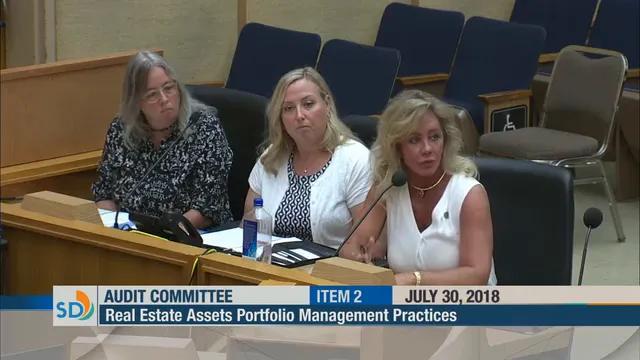
The San Diego City Council Audit Committee met on Monday, July 30, 2018, at 8:00 AM, chaired by Councilmember Zapf, with members Scott Sherman, Thomas Hebrink, Ricardo Valdivia, and Alan Spencer present. The committee reviewed two performance audits: one on the Public Utilities Department's (PUD) water billing operations and another on the Real Estate Assets Department's (READ) portfolio management. City Auditor Eduardo Luna and staff presented both reports, and management responded. The committee accepted both reports and forwarded them to the City Council with additional recommendations from members. Public Comments & Testimony - No public comments were made. Discussion Item 1: Performance Audit of Public Utilities Department Water Billing Operations City Auditor Eduardo Luna, along with Shine Pickney and Stephen Gomez, presented findings from an audit triggered by customer complaints about rising water bills despite conservation efforts. The audit analyzed 1.3 million single-family residential meter readings and bills from calendar year 2017. Key findings included: - Higher water bills resulted from multiple factors: an extended billing cycle (late 2017), scheduled rate increases (effective July 1, 2018), warmer weather, unidentified leaks, and human error in meter reading. A specific meter reader generated over 300 corrections in December 2017. - PUD performed 57,000 quality reviews (4.4% of readings) and adjusted 21,000 reads (1.7% of the population). Of those, 18,728 were corrected before billing; 2,750 were corrected after billing. The median error among re-billed customers was 31 HCF, more than doubling the average bill from $141 to $408. - Human error was the primary contributor: 10 meter readers accounted for 71% of the 2,750 post-billing corrections. Estimated readings and lack of performance metrics worsened the problem. Meter readers did not enter trouble codes for at least 80% of skipped reads due to conflicting management instructions. - PUD did not communicate the billing cycle extension or rate increases to customers in advance, exacerbating discontent. During December 2017–February 2018, abandoned call rates were 15%, 21%, and 23%. - AMI (smart) meters comprised only 2% of flagged readings, and corrective actions were taken before billing—though known issues with three specific models were identified. PUD management, represented by new Deputy Chief Operating Officer Johnnie Perkins, acknowledged the problems and committed to implementing all 10 audit recommendations. Perkins stated: "If there is an issue, we are going to own it. If there's a question, we're gonna answer it. And if there's a problem, we are going to solve it." He outlined plans for new training, route audits, enhanced internal controls, and improved customer communication. Committee members asked detailed questions about error rates, trouble codes, performance metrics, and the role of smart meters. Councilmember Sherman noted meter readers are overworked (some walk 17-mile routes) and urged better support. Councilmember Hebrink questioned whether the audit clears smart meters; staff clarified that the single-family sample had few AMI meters, and a broader audit is ongoing. Councilmember Valdivia focused on retraining and accountability for supervisors. Councilmember Spitzer inquired about the dispute resolution process; PUD reported 1,096 escalated cases with all but 13 resolved. The committee commended the thoroughness of the audit. Discussion Item 2: Performance Audit of Real Estate Assets Department Portfolio Management Assistant City Auditor Kyle Elser, Kevin Christensen, and Greg Cleary presented findings from an audit of READ's property classification and portfolio management practices. The audit followed up on issues raised by a 2007 Grubb & Ellis consultant report. Key findings included: - READ's current-use classifications do not always match actual property status. A statistical sample of 126 properties over a quarter-acre (from Parks & Recreation) found that 20 parcels (16%) had classifications inconsistent with current use. For example, Pacific Breezes Community Park was classified as a park but was actually undeveloped vacant land. - A similar sample of 111 PUD properties over a quarter-acre found 29 (25%) mismatches between READ's data and PUD records. READ lacks formal internal controls requiring departments to notify READ when property use changes. - There is no standardized procedure for land-managing departments to periodically review their property inventory. Without such guidance, properties with higher potential may remain underutilized. - READ does not present its annual Portfolio Management Plan (PMP) to the City Council at a public hearing. Instead, it distributes the plan via email and posts it on its website. This contradicts Council Policy 710, which states READ "shall prepare and present" the PMP to the council. READ management argued the policy language is ambiguous and that council members have not requested a presentation. READ Director Sibel Thompson acknowledged the issues and committed to implementing the four audit recommendations by the end of the fiscal year. She noted the department has come a long way since 2005, when the city did not know what it owned. Committee members raised concerns about accountability and data accuracy. Councilmember Hebrink questioned whether the PMP process could serve as an annual review mechanism. Councilmember Sherman offered a motion with additional recommendations: (1) READ provide updated current uses by the next PMP; (2) publish a separate report alongside the next PMP listing all undeveloped city properties with designated and current uses; (3) include a standardized form for categorization; and (4) bring documentation for implementation of recommendations to the Smart Growth and Land Use Committee before sign-off by the Auditor's Office. Councilmember Valdivia asked about potential impacts of misclassifications on grant funding; READ staff were not certain but acknowledged it could be a risk. Councilmember Spitzer questioned the sampling methodology used in the audit (statistical vs. judgmental). Staff clarified they used a statistical sample of properties over a quarter-acre, but did not project results to the entire population. Key Outcomes - Motion on Water Billing Audit: Councilmember Sherman moved to accept the performance audit report and forward it to the City Council. The motion passed unanimously. - Motion on Real Estate Assets Audit: Councilmember Sherman moved to accept the report and forward it to the City Council, with four additional recommendations (outlined above). Councilmember Hebrink seconded. The motion passed unanimously. - Next Steps: PUD will report monthly on implementation progress. READ will work with land-managing departments to improve classification and present updated current uses by the next PMP. The next Audit Committee meeting is scheduled for September 12, 2018.
The Economic Development and Intergovernmental Relations Committee met on July 27, 2018, to consider a proposed veterans business preference program, receive annual updates from the Port of San Diego, the San Diego Military Advisory Council, and the San Diego County Regional Airport Authority, and hear public comments. Chair Chris Ward presided, joined by Vice Chair Mark Kersey and Councilmembers Bree and Alvarez. Staff from the City Attorney's Office, Office of the IBA, and Mayor's Office were also present. Consent Calendar - The committee approved the minutes and record of actions from the June 28, 2018 meeting by unanimous consent. Public Comments & Testimony - Martha Welch spoke during non-agenda public comment, expressing concerns about county-city relations, deaths in county jail, and alleged harassment by Bill Horn. She later commented on the Port of San Diego update, opposing the removal of Anthony's restaurant and expressing concerns about the Seaport Village redevelopment, alleging improper influence and threats. Discussion Items Item 1: Veterans Recognition and Preference Program - Bob Moltz presented a proposal to provide free business licenses and contracting preferences for veteran-owned businesses, citing California Business and Professions Code 16001.7 and estimating a $55 billion federal spend in San Diego due to veterans. - Deputy City Attorney Paige Fultman clarified that the proposal could be implemented through a municipal code amendment without a ballot measure, but policy decisions remain, such as eligibility (all veterans vs. disabled veterans) and whether preferences apply to public works and goods/services contracts. - Vice Chair Kersey moved to direct appropriate city staff, including the City Attorney, Treasurer, and Purchasing & Contracting, to draft an ordinance based on the language provided, covering all veteran-owned businesses and applying to all city contracts. Councilmember Bree seconded the motion, and it passed unanimously. - Discussion noted that veterans would still need to obtain a business tax certificate but would be exempt from the local fee, and that the $4 state fee might still apply. Item 2: Port of San Diego Annual Update - Port Commissioners Rafael Castellanos, Michael Zuquet, and Marshall Merrifield provided an update on major projects, including the convention center expansion, Portside Pier restaurants, a new San Diego Symphony venue, Central Embarcadero redevelopment, hotel developments, and environmental initiatives. - Key figures included: $14 million for Portside Pier restaurants (expected $24 million in sales), $45 million for the symphony venue (10,000 seats, privately financed), a $1.5 billion Central Embarcadero project, a $138 million Intercontinental Hotel (400 rooms), a $9.6 million boat ramp renovation, $137,000 for a seaweed aquaculture pilot, and a 400% projected increase in cargo capacity at the 10th Avenue Marine Terminal with reduced emissions. - The port signed a first-of-its-kind sea level rise cooperation agreement with the U.S. Navy on the West Coast. - Committee members discussed public access, Harbor Drive congestion, homeless outreach, dockless vehicles, and the Portside Pier public access. The port noted expanded homeless outreach with the Alpha Project (now five to seven days a week) and ongoing collaboration with the city. Item 3: SDMAC Military Economic Impact Study - Randy Bogle, Executive Director of the San Diego Military Advisory Council (SDMAC), presented the upcoming 10th economic impact study, set to roll out November 8, 2018. - Key statistics: $50.1 billion gross regional product, approximately 140,000 military personnel, one in five jobs in the region tied to the military, $25 billion in direct spending, 59 ships, and over 75% of military families living on the local economy. - The study added the Coast Guard and VA for the first time. - Committee members discussed military housing challenges, traffic around bases, and a proposal to eliminate state income tax on military retiree pay. No formal action was taken. Item 4: San Diego County Regional Airport Authority Annual Update - Airport Authority Chairwoman Bowling presented the Airport Development Plan, including Terminal 1 replacement, a new taxiway, and an airport entry road. The plan includes $212 million in ground transportation improvements, with $166 million for the three-lane airport entry road. - The airport's economic impact grew to $12 billion annually, supporting 117,000 jobs, with over 20 million passengers per year. - The new international arrivals facility was completed on time and under budget in 14 months. - Sustainability efforts include 80% renewable electricity, a LEED Platinum terminal, and a 100% clean-fuel bus/shuttle fleet. - Discussions covered Harbor Drive congestion, the Harbor Drive Mobility Committee, AB 311 (the Harbor Drive-related legislation), possible transit connections, and a recent report on Wi-Fi security at airports. No formal action was taken. Key Outcomes - Approved the June 28, 2018 meeting minutes unanimously. - Unanimously approved a motion directing staff to draft a municipal code amendment for veterans business license exemptions and contracting preferences, based on the presented language, covering all veteran-owned businesses and applying to all city contracts. Staff will return via the Budget Committee. - Received and discussed the Port of San Diego, SDMAC, and Airport Authority annual reports as information items; no votes taken on these items. - The next committee meeting is scheduled for September 27, 2018 at 2 p.m.
The Smart Growth and Land Use Committee, chaired by Councilmember Gomez, met on July 26, 2018, to discuss several agenda items including a lease for the Chicano Park Museum and Cultural Center, an amendment to the SDSU stadium use agreement, a police department property lease, and informational presentations on the SANDAG regional plan and the city's housing inventory. The meeting included public comments on marijuana facilities, vacation rentals, and other topics. Votes were taken on consent items and discussion items. Consent Calendar - Unanimously approved records of action from June 27, 2018. - Items 1 and 3 on the consent agenda were approved unanimously. - Item 2 (Neil Good Day Center lease agreement) was pulled for discussion and later approved with a request for additional information on HUD expenditures and 24/7 operations feasibility. Public Comments & Testimony - Martha Welsh criticized the city's housing policies and marijuana regulation, stating the county mismanaged HUD funds and that Prop 64 has negative effects. - Barbara Gordon expressed concern that marijuana production facilities ended up predominantly in Mira Mesa, Sorrento Valley, and Otay Mesa, and noted issues with smell, safety, and unpermitted operations. - Kathleen Lippett argued that marijuana facilities should require CEQA review, not exemption, and that the process denies public input. - Jack Shu (Cleveland National Forest Foundation) urged the city to seek an extension for the public review period of the airport authority's EIR, which he said was rejected locally and regionally. - Kelly McCormick reported difficulties appealing CEQA determinations due to high costs and short windows, and code enforcement failures regarding marijuana businesses. - Catherine Rhodes addressed the HUD OIG audit debt repayment, asserting that accrued interest could add $135 million to community development funds, and noted money was hoarded for five years. - JD Stoll, a vacation rental business owner in a commercial zone, pleaded for reconsideration of short-term rental regulations, noting his investments were in areas zoned for visitor accommodations. - Several speakers supported the Chicano Park Museum and Cultural Center lease, including Lucas Cruz (field rep for Assemblywoman Lorena Gonzalez Fletcher), Manuel Galabis, Maria Gaede (retired principal), and Isabel Sanchez (Chicano Park Steering Committee), emphasizing cultural preservation and community benefit. - On the SDSU stadium item, speakers included Catherine Rhodes who questioned differing budget numbers, Mary Kuran (Campanile Foundation) highlighted SDSU's economic impact, Patty Roscoe spoke in support, and others like Julian Haddad (Taxpayers Association) argued for waiting until after the November ballot to protect taxpayer interests. Multiple SDSU representatives including Tom McCarron, JD Wicker, Jeff Horton, and alumni spoke in favor of the lease extension. Opponents like Jessica Pierre, Will Griffith, David Norris, and Hector Trujillo argued against subsidizing SDSU football at a loss to the city. - During the SANDAG regional plan discussion, Maya Rosos (Circulate San Diego) called for fiscally constrained transit-advancing scenarios, Sophie Wolfram (Climate Action Campaign) emphasized VMT reduction and consistency with the city's Climate Action Plan, and others including Ravi Gopinathan, Lucas Curlan, Jennifer Hunt, Maria Cortez, Jack Shu, Randy Van Vleck, Anna Reynoso, and Lydia Van Ot (IBEW 569) urged no freeway widening, more transit and affordable housing near transit, and stronger climate goals. Discussion Items - Committee Comments – Accessory Dwelling Unit (ADU) Ordinance: Councilmember Alvarez raised a technical issue in the code that requires property owners in multi-family zones to build additional regular units before allowing a companion unit (granny flat), which is cost-prohibitive. He requested a code change to allow companion units without building other units first. Councilmember Sherman agreed and noted other fine-tuning needs. - Item 4: Chicano Park Museum and Cultural Center Lease: Staff presented a new 20-year nonprofit lease for a city-owned property at 1960 National Avenue. The lease includes annual administrative rent of $3,597.50 (subject to CPI), with the city possibly funding key building systems. The committee heard strong community support. Councilmember Alvarez moved to approve staff recommendations, including a waiver of strict compliance with Council Policy 700-12. Councilmember Sherman seconded, noting the waiver was reasonable for a community-centered project. The motion passed unanimously. - Item 5: SDSU Stadium Lease Amendment: Staff from Real Estate Assets presented a first amendment to extend SDSU's use and occupancy agreement for SDCCU Stadium for two years (2019-2020). The new terms include a flat annual rent of $1.1 million plus city retention of all parking and concessions revenue (estimated at $700,000), netting the city about $1.7 million more per year than the current agreement. However, the IBA reported that continuing stadium operations would result in net annual losses of approximately $5.5 million, even with the increased revenue. Councilmembers discussed the operating deficit, revenue from other events, and the possibility of better terms. Councilmember Sherman moved to send the item to full council without a recommendation, directing staff to conduct further negotiations and provide more detailed cost and revenue data. The motion included a second by Councilmember Alvarez and passed. - Item 6: Police Department Property Lease: Staff proposed a 10.5-year lease for 22,428 square feet at 3354 Ruffin Road South to house the Special Events and Property Room units. The lease rates ($1.30/sq ft base + $0.23 operating) are below market average. Councilmember Alvarez asked about due diligence, ADA compliance, and potential additional costs. Staff confirmed the improvements are at landlord cost and that space allocations comply with regulations. The item was moved to full council with a recommendation (motion by Sherman, second by Alvarez), with Councilmember Alvarez reserving further questions for council. - Informational Item: SANDAG 2019-2050 Regional Plan: SANDAG staff presented an overview of the plan, including a regional growth forecast of 700,000 more people, 360,000 jobs, and 452,000 housing units by 2050. Emphasis was placed on VMT reduction, greenhouse gas targets, and scenarios for transportation networks incorporating new technologies. Public comment criticized freeway widening and called for transit and climate action alignment. Councilmember Gomez requested that SANDAG work with city staff to develop scenarios that help the city meet its Climate Action Plan. SANDAG agreed to return for further committee discussion. - Informational Item: Housing Inventory Annual Report: Planning staff presented the first comprehensive housing report, showing a median home price of $605,000, low vacancy rates, and about 38% of RENA goals met (33,000 of 80,000 units). Councilmembers noted data limitations (e.g., affordable units counted only if covenanted) and requested more detailed reporting by community, incorporation of housing goals, and measurement of past initiative effectiveness. The report will be presented to full council on July 31. Key Outcomes - Approved consent calendar records and items 1 and 3. - Approved Item 2 (Neil Good Day Center) with a request for information on HUD expenditures and 24/7 operations analysis. - Unanimously approved the Chicano Park Museum and Cultural Center 20-year lease (Item 4). - Forwarded the SDSU stadium lease amendment (Item 5) to full council without a recommendation, with directions for further negotiations and a detailed financial analysis. The city attorney clarified the motion was to recommend rejection of the staff recommendation and return for further negotiations. - Forwarded the police property lease (Item 6) to full council with a recommendation for approval. - Noted informational items; SANDAG will coordinate with city staff on climate action scenarios; the housing report will be discussed at the July 31 council meeting with additional data requested.
The Budget and Government Efficiency Committee met on July 25, 2018, with Chair Bree presiding and Council Members Ward and Kate present (a quorum). The committee approved the record of actions from June 20, 2018, and proceeded through seven agenda items, including policy revisions, contract amendments, bond issuances, IT procurement, application expansion, budgetary principles, and a border wall contractor disclosure approach. All items were forwarded to City Council, with one item passing on a 3-1 vote. Public Comments & Testimony - Martha Welch criticized the city’s use of a private company (Metro Far) for non-city services, alleged waste on repeated projects (e.g., pure water), and stated that audits show some departments are behind. She urged the committee to look into these issues. - Orville Gwyn highlighted costs associated with the homeless population (cleanup, police, EMS) and advocated for a solution that does not involve sending people by plane to visit relatives. He did not provide a specific proposal. - Benjamin Prado (American Friends Service Committee) urged the committee to pursue disclosure of companies involved in border wall construction, arguing that transparency is important and that building walls has not stopped migration. He supported the recommended approach. Discussion Items - Item 1: Revisions to City Council Policies – Department of Finance Merge – Matt Vespie (Assistant Director, Department of Finance) presented changes to replace references to Financial Management and Office of the City Comptroller with the Department of Finance, following the FY19 budget merger. The IBA had no comments. No public speakers. The committee approved and forwarded to council. - Item 2: Amendment to Genuine Parts Company (NAPA) Contract – Allie O'Corey (Fleet Operations Director) requested removal of the annual $12 million not-to-exceed limit while retaining the $60 million five-year cap. Discussion centered on justification for higher spending due to increased parts inventory, fleet growth, and steel/aluminum tariffs. Vice Chair Ward proposed an annual cap of $15.5 million with an information item if exceeded, but the motion was not seconded. Ultimately, Councilmember Kate moved the staff recommendation (no annual cap), seconded by Councilmember Gomez, and passed unanimously. - Item 3: Water Revenue Bonds to Refund Commercial Paper – Lakshmi Komi (Debt Management Director) presented a plan to issue long-term bonds to refund up to $250 million in commercial paper, citing rising interest rates and $12 million in savings in FY18. Councilmember Kate requested a project list before the September council consideration. The committee approved forwarding to council. - Item 4: Third Amendment to HP Computer Equipment Contract – Sean Kilpak and others from IT presented a request to increase the not-to-exceed amount by $5.5 million (from $5.1M to $10.6M) to cover computer replacements through March 2020. The IBA provided a history, noting the committee had previously requested a roadmap. Discussion included clarification on the $200,000 unused balance. The committee approved and forwarded to council. - Item 5: Get It Done Expansion – Deloitte Contract – Alex Hempton (Performance and Analytics) outlined application support and maintenance for the expanded Get It Done system, including new service requests and online payments. Committee members raised concerns about workload impacts, translation into Spanish, and better status updates (e.g., after photos). Vice Chair Ward moved staff recommendation; seconded by Councilmember Kate. Approved. - Item 6: Statement of Budgetary Principles FY19 – Chris Olson (IBA) presented the proposed statement, which closely mirrors FY18 with minor date changes. Councilmember Gomez requested it be brought earlier in the budget process moving forward. Motion by Gomez, second by Ward, passed unanimously. - Item 7: Contractor Disclosure for Border Wall Involvement – Chris Olson presented a report reviewing actions by six other cities (e.g., Los Angeles, Oakland) and recommending development of an ordinance and disclosure forms. Public speaker Benjamin Prado supported disclosure. Committee debate included legal caveats from Deputy City Attorney Paige Folkman and concerns from Councilmember Kate about setting a precedent for shaming employers. Councilmember Gomez moved to develop an ordinance and disclosure forms; seconded by Vice Chair Ward. The motion passed 3-1 (Councilmember Kate opposed). Key Outcomes - Consent Calendar: No items. - Votes: - Item 1: Unanimous approval. - Item 2: Unanimous approval (moved by Councilmember Kate, second by Gomez). - Item 3: Unanimous approval (moved by Kate, second by Ward). - Item 4: Unanimous approval (moved by Gomez, second by Ward). - Item 5: Unanimous approval (moved by Ward, second by Kate). - Item 6: Unanimous approval (moved by Gomez, second by Ward). - Item 7: Approved 3-1 (Gomez motion, Ward second; Kate opposed). - Next Steps: All items forwarded to the full City Council. The committee will reconvene on September 20, 2018, at 2 p.m. For Item 7, staff will work with the City Attorney, IBA, Mayor’s office, and relevant departments to draft a proposed ordinance and disclosure forms.
This document summarizes the available record for the San Diego city meeting held on July 23, 2018. No agenda or minutes were provided; the raw transcript consists of a public service announcement regarding traffic safety and the city's Vision Zero goal. Key Point - The announcement opened with the phrase "Seven lives," setting a somber tone. It stated the goal to eliminate all traffic fatalities and severe injuries in San Diego by 2025. - It emphasized that distractions can be deadly, particularly for cyclists. - Practical safety tips were shared: go with the flow, obey traffic signs and laws, be visible and predictable, and always wear a helmet. No formal discussion, public comments, or votes were recorded in the available transcript.