Browse by city
Date range
Search help

Search titles, summaries, topics and stored transcripts together. Keywords may match separately; put the whole query in double quotes for a phrase. Matching follows word analysis, so punctuation is not exact. Both dates are included. Documents are not searched.

SHOWING 931–940 ENTRIES
931
APR 19, 2018 · SAN DIEGO, CALIFORNIA · ENVIRONMENT COMMITTEE
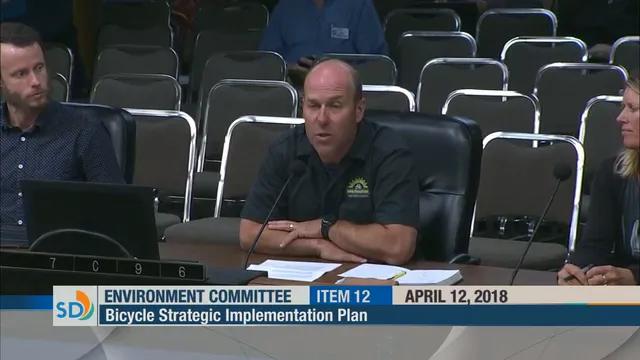
San Diego Environment Committee Meeting – April 19, 2018

Note: The transcript opens with the Chair stating the meeting date as April 12, 2018. However, the provided meeting date is April 19, 2018. This summary uses the supplied date, but the discrepancy is noted. The Environment Committee of the San Diego City Council convened at 1:15 PM on April 19, 2018, under the chairmanship of Councilmember David Alvarez. Councilmembers Kate, Gomez, and Sherman were present. The meeting covered a range of environmental, infrastructure, and energy issues, including a ballot measure on electric utility franchise reform, a truck route ordinance for Barrio Logan, a bicycle plan, and utility oversight reports. Consent Calendar - Items 1–7: Approved unanimously without discussion. These routinely included action records from the March 8, 2018 meeting and other non-controversial items. Public Comments & Testimony - Martha Welch (non‑agenda): Expressed opposition to a waiver for the Point Loma wastewater treatment plant from environmental review, citing concerns about sewage discharge, inadequate staffing, and the long‑standing waiver. She urged the committee to address the issue. - Item 9 – Ballot measure on electric utility franchise: - Claudia Valenzuela (SDG&E): Opposed the ballot proposal, arguing that franchise agreements should only cover right‑of‑way access and not broader climate or energy goals. She noted SDG&E already delivers 43% renewable energy and is willing to negotiate a franchise renewal. - John Stump (resident, former Sierra Club chair): Supported the proposal, stating that San Diego businesses (e.g., hospitality) pay 33% more for electricity than competitors and that the franchise should include local hiring and climate targets. - Sebastian Saria (Climate Action Campaign): Supported the proposal, criticizing SDG&E for high rates and lack of a credible 100% clean energy plan; urged restoring local control. - Sonia Robinson (Romero Institute, Community Choice Alliance): Supported, calling for 100% renewable energy by 2035 and lower rates through a community choice program. - James Ferguson (San Diego 350): Supported, arguing that the city has legal authority to set franchise terms and that modern franchise agreements should be short (≤10 years), require transparency, and allow the city to generate power if needed. - Jay Powell (Sustainable Energy Advisory Board member): Supported, highlighting the opportunity to include undergrounding and distributed energy provisions in the franchise. - Item 11 – Barrio Logan truck route: - Rafael Castellanos (Port of San Diego Chairman): Supported a designated truck route, citing port expansion and the need to be a good neighbor; requested an exception for high‑and‑wide loads that cannot clear the 32nd Street overpass. - Philomena Marino (Barrio Logan resident and planning group candidate): Supported, describing heavy truck traffic on Boston Avenue, a recent fatality, and health impacts; urged an enforceable ordinance. - John Stump: Supported, but asked that the ordinance also address lead pollution from small airports (Montgomery Field). - Item 12 – Bicycle Strategic Implementation Plan: - Eric Tilkmeyer (City Heights CDC): Supported, noting unsafe corridors (University, El Cajon) and the need for measurable milestones. - Item 13 – IROC report: No public speakers. Discussion Items - Item 8 – Fourth Amendment to AMI (Advanced Metering Infrastructure) Agreement with Itron: Leanne Jones Santos presented the amendment to extend the contract one year (through June 30, 2019) at a cost of $1,227,303.52, maintaining service for the 11,000 existing AMI meters. A citywide rollout is pending an audit. The committee approved the amendment unanimously, with a request for a closed‑session discussion on the 70/30 water‑sewer fund split. - Item 9 – Ballot Measure on Public Electric Utility Franchise (Referred from Rules Committee): Bill Powers presented a proposal to include in the next franchise agreement with SDG&E requirements for 100% clean energy by 2035, 50% local generation, city rights to generate power, transparent contracting, and a 10‑year term. If the utility refuses, the city would form a municipal utility. Powers cited high rates, opaque contracting, and the city’s leverage as the largest customer. After public testimony and committee discussion, the committee decided not to advance the proposal but asked city staff and the City Attorney to prepare an analysis for the Rules Committee’s June meeting. No vote was taken on the substance; the item will return to Rules. - Item 11 – Barrio Logan Clean Air and Safe Streets Ordinance (Truck Route): Jerry Rivero and Joy Williams of the Environmental Health Coalition presented research showing that residents of Barrio Logan face among the highest diesel particulate exposure in California, leading to asthma ER visits and safety hazards. They proposed a designated truck route redirecting trucks away from Boston Avenue (a residential zone) to Harbor Drive and 32nd Street. The Port of San Diego and community groups support the route, with a narrow exception for high‑and‑wide loads. The committee unanimously approved a motion directing the Transportation & Stormwater Department, in coordination with EHC and other departments, to draft an ordinance (or amendments) creating a truck route and return to committee. The motion also called for collaboration with police for enforcement. - Item 12 – Bicycle Strategic Implementation Plan (BSIP): Andy Henshaw, Nicole Burgess, and Josh Clark of the Bicycle Advisory Board presented the BSIP, a roadmap to achieve a 6% bike mode share in Transit Priority Areas by 2020 (current: 2%). The plan includes prioritizing Vision Zero corridors, funding a downtown cycle‑track network, expanding bike‑share, installing counters, and conducting safety education. They noted the city is already implementing about 90% of the recommendations. The committee voted to send the plan to city staff for analysis and to return with a report in June; the BAC will meet with staff in May to discuss concerns. - Item 13 – Independent Rate Oversight Committee (IROC) FY2017 Annual Report and FY2019 Work Plan: Chairman Gordon Hess presented IROC’s recommendations: update Pure Water project costs and rate impacts, give quarterly Pure Water reports to IROC, involve IROC in the alternative water rate structure study, continue condition assessments, enhance public understanding, and monitor rate drivers. He noted two vacancies on IROC. The committee received the report without action, as it was informational. Key Outcomes - Item 8: Approved the Fourth Amendment to the AMI agreement (contract extension and $1.23 million increase) unanimously. - Item 9: No action taken; referred back to Rules Committee with a request for a staff/City Attorney analysis of the ballot proposal to be completed in time for the June Rules Committee meeting. - Item 11: Unanimously approved a motion directing the Transportation & Stormwater Department to develop a truck route ordinance for Barrio Logan, with a draft to return to the Environment Committee. - Item 12: Unanimously approved a motion to have city staff review the Bicycle Strategic Implementation Plan and report back to the Environment Committee in June; the Bicycle Advisory Board will confer with staff in May. - Item 13: No action required; the report and work plan were received and filed. The meeting adjourned at approximately 3:15 PM. The next Environment Committee meeting is scheduled for June 21, 2018.
ENERGY AND UTILITIES 18% · WATER AND WASTEWATER MANAGEMENT 16% · PUBLIC SAFETY 10% · TRANSPORTATION SAFETY 10%
932
APR 19, 2018 · SAN DIEGO, CALIFORNIA · LAND USE & HOUSING COMMITTEE
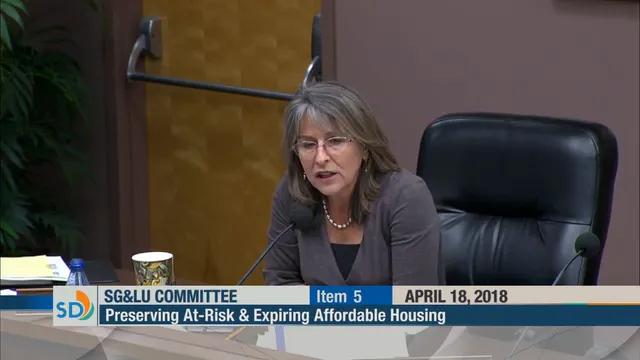
Smart Growth and Land Use Committee Meeting on Affordable Housing and Preservation - April 19, 2018

The Smart Growth and Land Use Committee, chaired by Councilmember Georgette Gomez, met on April 19, 2018, at 9:15 AM. Committee members Sherman and Saff were present, along with Leslie Fitzgerald from the City Attorney's Office. The meeting covered consent calendar approvals, non-agenda public comment, and four discussion items: a general plan amendment for wildfire safety, the Fiscal Year 2019 Affordable Housing Fund annual plan, strategies for preserving at-risk affordable housing, and strategies for preventing displacement. Extensive public testimony was heard on rent control, tenant protections, and housing supply. Consent Calendar - The minutes from March 21, 2018, were approved unanimously without discussion. Public Comments & Testimony - Catherine Rhodes (Point Loma) criticized the successor agency process, arguing the city is not maximizing funds for the poor and is allowing money to revert to the general fund at 17.5 cents on the dollar. - Robert Valera (small rental property owner) opposed rent control, stating that rising costs (water up 40% in five years, construction maintenance up) make rent control counterproductive and harmful to supply. - Martha Welsh claimed high fees prevent building, and noted downtown buildings are not full despite construction. - Christian Davis (Pinnacle Property Management) said a study showing high rents was taken out of context; he cited 4.5% rent growth but sharp increases in operating costs (payroll up 50% by 2020, utilities up 41% from 2016-2020), arguing rent control would exacerbate problems. - Rafael Bautista (San Diego Tenants United) submitted 11,000 signatures for rent control, calling for a 2% cap and just-cause eviction protections. He argued that rent control works in other cities and is needed because the housing shortage will last decades. - Alan Pentico (San Diego County Apartment Association, in Sherman's district) opposed rent control, stating it has failed in Los Angeles, San Francisco, and Santa Monica, leading to highest rents and displacement of low-income tenants. - Jim Barnavo (City Heights) requested that Item 2 (lease extension) be continued for planning group input. - Multiple speakers (Tasha Williamson, Andrea Rogers, Diane Rogers, and others) shared personal stories of displacement, Section 8 voucher difficulties, and called for stronger tenant protections and anti-discrimination ordinances. - Rick Bates (Unite Here Local 30) and Abu Dombia highlighted challenges faced by voucher holders with stagnant subsidies and rising rents. - Molly Kirkland (San Diego County Apartment Association) opposed expanding just-cause eviction and Section 8 anti-discrimination, suggesting instead a hardship fund and landlord incentives for Section 8 participation. - Carolina Martinez (Environmental Health Coalition) urged the city to advance anti-displacement policies despite industry lobbying. - Terry Moore and others noted that all sides agree on the need for more housing supply. Discussion Items - Item 3: General Plan Amendment – Public Facility Services & Safety Element (SB 1241 Compliance) - Staff (Melissa Garcia, Brian Schoenfish) presented the amendment to address wildfire risk per state law. The State Board of Forestry approved without changes; Planning Commission recommended approval unanimously. - Public comment: Catherine Rhodes wanted seismic hazard (fault creep) included, citing inconsistent maps. - Committee comment: Councilmember Sherman supported; Councilmember Saff asked about urban canyon fire risks; Fire Marshal Doug Perry confirmed the wildland-urban interface is covered. - Motion by Sherman, seconded by Saff; passed unanimously. - Item 4: FY 2019 Affordable Housing Fund Annual Plan - Staff (Tina Kessler, Jasmine Collart) outlined $62 million in anticipated funds, including $51.3M fund balance ($12.5M committed). Funds allocated to rental housing production, landlord engagement, rapid rehousing, transitional housing, prevention/diversion, home ownership, capacity building, and legal support. Expected outcomes: 762 rental housing units, 10 home buyers, 416 transitional housing beds, 180 rapid rehousing households, 850 landlord engagement households, 200 diverted households. - Public comment: Catherine Rhodes criticized the Housing Commission for hoarding money (only $4M spent of $64M available in FY17). - Committee questions: Councilmember Saff inquired about prevention/diversion program (719 families stabilized since July 2017, $2,600 average cost per household). Councilmember Gomez asked about preservation funding; staff indicated willingness to explore. - Motion by Sherman, seconded by Saff; passed unanimously. - Item 5: Strategies for Preserving At-Risk and Expiring Affordable Housing - Presentations by Stephen Russell (San Diego Housing Federation) and Coffee Reed (LISC). Key points: 142,000-unit shortfall for low-income households; 1,200 affordable units lost between 2000-2017; 2,300 units at high risk of conversion in next five years. Best practices include designating a preservation coordinator, expanding technical assistance, increasing funding for preservation, and adopting risk assessment methodology. - Public comment: Many speakers (Johanna Hester, Satomi Ziegler, Ramla Sahid, others) urged the city to act on PQ Village-type losses and support preservation. Building Industry Association (Matthew Adams) argued for increasing supply rather than treating symptoms. - Committee comments: Sherman emphasized reducing government regulation to encourage supply; Saff noted the need to preserve housing at all levels and consider incentive-based programs. Gomez stated intent to work on relocation assistance tied to expiring covenants. - Item 6: Strategies for Preventing Displacement - Presentation by committee consultant Karina Johnson. Defined displacement, outlined impacts (homelessness, school disruption, out-migration), and listed policy tools: just-cause eviction, relocation assistance, Section 8 anti-discrimination, and tenant right to counsel. Johnson recommended revising the tenant right-to-know ordinance to cover Section 8 tenants, creating a relocation assistance program, and enacting a source-of-income anti-discrimination ordinance. - Public comment: Extensive testimony both for and against. Supporters (Build Better San Diego coalition) argued these measures prevent homelessness and stabilize communities. Opponents (landlords, apartment association) claimed they burden property owners and don't address supply. Several mom-and-pop landlords shared personal financial struggles. - Committee comments: Sherman cautioned against over-regulation and emphasized property rights and supply; Saff said she prefers focusing on building more housing rather than new government mandates but acknowledged need to balance rights. Gomez announced she will work with the City Attorney to revise the tenant right-to-know ordinance and create a relocation assistance ordinance, and will collaborate to improve Section 8 processes. Key Outcomes - Item 3 (General Plan Amendment): Approved unanimously and forwarded to City Council. - Item 4 (Affordable Housing Fund Plan): Approved unanimously and forwarded to City Council (scheduled for June 11, 2018). - Item 5 (Preservation Strategies): Informational; committee directed staff to bring back proposed action items in May. Gomez committed to developing relocation assistance requirements for expiring covenants. - Item 6 (Displacement Prevention): Informational; Gomez directed staff to prepare draft ordinances on tenant right-to-know expansion (including Section 8), relocation assistance, and Section 8 anti-discrimination for future discussion. Committee will continue the discussion on May 21, 2018. - Next meeting scheduled for Monday, May 21, 2018, at 9:00 AM.

AFFORDABLE HOUSING 38% · HOUSING 24% · EVICTION PREVENTION 13% · PUBLIC COMMENT 7%
933
APR 13, 2018 · SAN DIEGO, CALIFORNIA · RULES COMMITTEE
San Diego Rules Committee Meeting on Housing Bond, School Elections, and Term Limits - April 13, 2018

The San Diego City Council Rules Committee met on April 13, 2018, to discuss several ballot measure proposals and receive an update from the San Diego Unified School District. The primary agenda items included a proposed housing bond by the San Diego Housing Federation, a charter amendment to clarify term limits for council members, and an informational update regarding school board elections. The committee heard extensive public testimony in support of the housing bond and re-docketed the item for May 16, 2018. The term limits clarification proposal was referred to the city attorney for drafting. The school district update was received as informational only. Public Comments & Testimony - Housing Bond Proposal (San Diego Housing Federation): Multiple speakers expressed strong support, including Matthew Jumper (President of SD Housing Federation), Stephen Russell, Michael McConnell, Omar Passins (candidate for County Board of Supervisors, shared personal connection to public housing), Christopher Tabor (Solari Enterprises), Jackie O (Community Housing Works), Elisa Flores, Jenna Savoski, and David Allen (Trestle Development). Speakers emphasized the need for local funding to compete for state resources and address the affordable housing crisis. Council Member Ward also commented, acknowledging the need but cautioning that the bond would involve a property assessment and urged public outreach. - School District Update (San Diego Unified School Board Elections): Public testimony included Sally Smith and Daniel Simovski, both advocating for term limits and district area elections for school board members. They expressed concerns about the school elections committee process, alleging it was being used to introduce unrelated issues and that the committee did not represent the public. Discussion Items - Housing Bond Proposal: The committee discussed re-docketing the proposal to May 16, 2018, to allow for further staff analysis and public input. Council Member Ward highlighted the need for a two-thirds voter approval and the importance of community education. - School District Update: Dr. Sharon Whitehurst Payne, Vice President of the San Diego Unified School Board, presented an update on the committee's progress in response to a grand jury report. She outlined listening sessions and a parent survey, with a goal to bring a recommendation to the city council by early June. The committee took no action, as this was an informational item. - Term Limits Clarification (Item 1A): Council Member Ward and Pro Tem Bree proposed a charter amendment to clarify that council members may serve no more than two consecutive four-year terms, addressing ambiguity in the current charter. The committee voted to refer the proposal to the city attorney for drafting. - Women Occupy San Diego Proposal (Item 1B): The item was introduced but not discussed in detail due to the truncated transcript; no action was taken. Key Outcomes - The housing bond proposal was re-docketed for a future rules committee meeting on May 16, 2018. - The term limits clarification proposal was referred to the city attorney's office to prepare draft language for further discussion. - The school district update was received as information; no vote was required. - All votes on the term limits motion were unanimous (no opposed).

POLICE OVERSIGHT 26% · AFFORDABLE HOUSING 19% · SCHOOLS AND EDUCATION 10% · CAMPAIGN FINANCE 10%
934
APR 11, 2018 · SAN DIEGO, CALIFORNIA · AUDIT COMMITTEE
San Diego Audit Committee Meeting - April 11, 2018

The Audit Committee met on April 11, 2018, with all members present (Councilmember Scott Sherman, Thomas Hebrink, Alan Spencer, and Ricardo Valdivia), along with city auditor Eduardo Luna, deputy city attorney Priscilla Dugard, interim city comptroller Scott Clark, and others. The committee reviewed audit recommendation follow-ups, designated a member for the upcoming audit services RFP, and discussed a performance audit of the Business and Industry Incentives (BII) program, leading to a motion to recommend suspension of the program. Consent Calendar - Approval of minutes from the February meeting by unanimous consent. - Item 6 (annual report on internal financial control) was continued to the next meeting due to docketing issues. Public Comments & Testimony - Martha Welch expressed frustration that the committee does not conduct financial audits, stating: "The people want to know what you're doing with money. You're supposed to audit these things, financial, not performance." She urged the committee to conduct both financial and performance audits. The Chair noted that many financial audits and reports are conducted, and perhaps she missed those meetings. Discussion Items - Audit Recommendation Follow-Up Report (as of December 31, 2017): Presented by Danielle Knight. As of Dec 31, 2017, there were 160 open recommendations across 46 audit reports. Since the last reporting period (June 30, 2017), 45 new recommendations were added, and 42 were implemented or no longer applicable, leaving 118 carrying forward. The committee reviewed departmental statuses: - Public Utilities Department: One recommendation on valve maintenance was deemed not applicable because a risk-based approach was found not cost-effective. Tom Howard (Deputy Director) explained the linear maintenance approach is more efficient. The committee voted to drop this recommendation. - Chief Operating Officer: Recommendations on pedestrian safety and Vision Zero task force. The task force had not met in nearly a year. Lee Friedman (Office of the Mayor) noted a new position to oversee Vision Zero and a planned meeting in May 2018, but lacked specific target dates for implementation. - Code Enforcement (Development Services): Improvements from the Acela system implementation; most recommendations are expected to be completed shortly. - Communications Department: Brown Act training video pending feedback; time tracking for enterprise fund departments nearly complete. - Development Services: Multiple audits from 2012-2016 reliant on Acela system rollout. Phased implementation ongoing; target completion by 2020. - Economic Development: Two audits (community parking districts and business improvement districts) on track for June 2018. - Environmental Services: Recommendations on waste hauling system; consultant study delayed; expected to go to committee in May. - IBA and Library: Recommendations on equity of resources and matching funds; library reported progress on a new policy and staffing model. - Fleet Services: Inventory management recommendation still open; working on handheld devices for efficiency; target end of fiscal year. - Office of Homeland Security: Recommendations to update municipal code and administrative regulation; on track for May 2018. - Office of the Comptroller: Fraud hotline investigation on IT contract; risk-based sample approach being implemented. - Office of the Mayor: Advisory board audit; on track with reallocation of resources. - Parks and Recreation: Fraud hotline on permit calculations; training completed; more complex automation recommendation may require extension. - Public Works: Citywide contract oversight; implementing virtual project manager software; target December 2018. - Purchasing and Contracting: Multiple audits from 2014-2016; long implementation timeline up to 2022 due to Acela contract module rollout. Committee agreed to hold a more detailed discussion on this topic at a future meeting. - Real Estate Assets: Policy on rent subsidies on track for June 2018. - San Diego Police Department: Pedestrian safety enforcement recommendations; captain reported 10% increase in details and education efforts. - Transportation/Stormwater: Reward program for graffiti reporting (Sprand Payne) nearing implementation; undergrounding program on track. - Designation of Audit Committee Member for RFP: Kyle Elser presented a timeline to secure an audit firm for FY19-23. The committee needed to designate one member to work with staff on the RFP development. After discussion, a coin flip selected Thomas Hebrink to serve; motion passed unanimously. - Performance Audit of Economic Development's Business and Industry Incentives Program: Andy Hannau and Kevin Christensen presented findings revealing significant deficiencies: no tracking system, inadequate documentation, lack of internal controls, and outdated council policy (last updated 2001). Examples included a Vons in Mission Hills receiving incentives without clear justification. The department director, Eric Caldwell, acknowledged the policy needs updating and noted that 80% of staff time is on customer service, not financial incentives. The committee expressed strong concerns about potential abuse and lack of accountability. - City Auditor's Annual Activities Report: Eduardo Luna reported that in 2017, the office issued 16 performance audits, 7 hotline investigation reports, 102 recommendations with 100% agreement, and received an award for the street audit. Updates on ongoing audits were provided. Key Outcomes - Motion to drop one recommendation (Public Utilities valve maintenance) as not applicable and to accept the recommendation follow-up report. Approved unanimously. - Motion to designate Thomas Hebrink as the audit committee member to participate in the RFP for audit services. Approved unanimously. - Motion to accept the BII audit report and forward it to the city council with a recommendation that the mayor temporarily suspend the Business and Industry Incentives program until all recommendations are implemented. Approved unanimously. - The committee agreed to schedule a separate, more detailed discussion on Purchasing and Contracting audit recommendations in a future meeting. - The committee expressed appreciation for the city auditor's office work and noted the importance of follow-up procedures.

AUDIT FOLLOW-UP 42% · ECONOMIC DEVELOPMENT 10% · PROCUREMENT 9% · DEVELOPMENT SERVICES 5%
935
APR 11, 2018 · SAN DIEGO, CALIFORNIA · RULES COMMITTEE
San Diego Rules Committee Meeting on April 11, 2018: Bond Measure, School Board Elections, Term Limits, Police Oversight, and Campaign Law Amendments

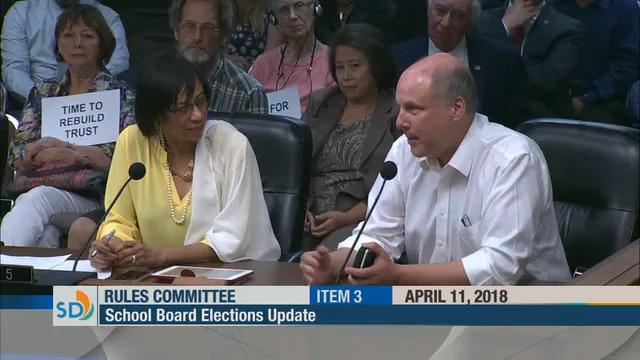
The Rules Committee of the San Diego City Council met on April 11, 2018, at 9:15 AM to discuss several agenda items, including a proposed homelessness and affordable housing bond measure, an update on the San Diego Unified School District's response to a grand jury report, two ballot measure proposals (term limits for council members and an independent police oversight commission), and amendments to campaign advertising disclosure laws. The meeting featured extensive public testimony, committee deliberations, and unanimous votes on two items. Public Comments & Testimony - Housing Bond Measure (Item 1A): Over 30 speakers addressed the committee, overwhelmingly expressing support for the proposed bond measure to fund affordable housing and homelessness solutions. Key speakers included: - Matthew Jumper (President, San Diego Housing Federation) thanked the committee for placing the measure on the agenda and highlighted the severe housing crisis. - Stephen Rust expressed disappointment that the draft ordinance was withdrawn but appreciated the opportunity for public discussion in May. - Michael McConnell criticized the lack of urgency, citing polling that only 4% of residents trust the city council. - Multiple speakers from housing organizations (e.g., Wakeland Housing, National Community Renaissance, Bridge Housing, Affirmed Housing, Trestle Development) stressed the need for local matching funds to leverage state and federal resources. - Community members shared personal stories of housing insecurity, including a mother who commutes from Tijuana, a senior advocate, and a foster care alumnus. - One speaker, Daniel Simovsky, expressed support for the bond but opposed any increase in property taxes, warning it could violate Proposition 13. - School Board Elections (Item 3): Two speakers, Sally Smith and Daniel Simovsky, advocated for term limits and district-only elections for the San Diego Unified School Board, citing the grand jury report. A third speaker, Brett Kozlovka, argued that the issue should be on the November 2018 ballot and criticized the school board's committee for adding extraneous questions. Discussion Items 1. San Diego Unified School District Update on Grand Jury Report - Dr. Sharon Whitehurst-Payne (Vice President, SDUSD School Board) and Andrew Sharp (Chief Public Information Officer) provided an update on the district's committee examining school board elections. The committee has scheduled five town hall meetings across the district (starting April 11 at Mira Mesa High School, ending April 28 at Lincoln High School) to gather public input on potential changes to election processes, including term limits, district-only elections, and other governance questions. - Committee members Councilmember Kate and Councilmember Bry expressed mixed views: Kate questioned the process and the poll's limited scope, while Bry emphasized the need for more information before action. No vote was taken; it was an informational item. 2. Ballot Measure Proposal: Term Limits for Council Members (Subitem A) - Councilmember Ward and Council President Pro Tem Bry proposed a charter amendment to clarify that no council member may serve more than two consecutive four-year terms, addressing ambiguity caused by redistricting. The motion passed unanimously, referring the proposal to the city attorney to draft ballot language for a future rules committee meeting. 3. Ballot Measure Proposal: Independent Commission on Police Practices (Subitem B) - Women Occupy San Diego, represented by Katie Ottery and Andrea St. Julian (Vice President, Earl B. Gilliam Bar Association), presented a proposal to replace the current Community Review Board (CRB) with an independent commission with investigatory powers, independent legal counsel, and the ability to hire expert investigators. They emphasized community distrust of the current CRB, noting that the county's CLERB (investigatory model) has existed since 1990. - Public testimony included: - Tasha Williamson described a negative experience with SDPD and expressed frustration with the complaint process. - Reverend Jared Moton (National Action Network) supported the measure, citing distrust in the black and brown communities. - Tara Gentry (CRB outreach chair) opposed the measure, arguing the current board is effective and an independent commission would be costly. - Doug Case (CRB Chair) supported two components: independent counsel and independent investigations for officer-involved shootings and in-custody deaths. - Committee members expressed a desire to hear from Police Chief David Nisleit and the Police Officers Association (POA) before deciding. The item was continued to a future rules committee meeting (likely June) to allow for those discussions. 4. Campaign Law Amendments (Item 2) - Stacy Fulhorst (Executive Director, Ethics Commission) presented proposed updates to advertising disclosure rules to align with state law changes. Key changes: (1) incorporate state law by reference, (2) require city candidates to continue using paid-for disclosures (with slightly smaller font), (3) replace the current top-two major donor disclosure on ads with a website-based list of donors who contribute $10,000 or more, updated via email to the Ethics Commission. The committee unanimously approved the item and referred it to the full city council. Key Outcomes - Term Limits Charter Amendment: Unanimous vote (5-0) to refer the proposal to the city attorney for draft ballot language, to be discussed at a future rules committee meeting. - Police Oversight Commission: Continued to a future meeting (likely June) to allow input from the Police Chief and POA. No vote on the substance. - Campaign Law Amendments: Unanimous vote (5-0) to approve the proposed ordinance and forward it to the full city council for adoption. - Housing Bond Measure: The item was placed on the May 16, 2018 rules committee agenda for further discussion. No vote was taken at this meeting. - School Board Elections: Informational only; no action taken. The district's committee will conclude its town halls by end of May and report back.

POLICE OVERSIGHT 28% · AFFORDABLE HOUSING 17% · ELECTION PROCEDURES 11% · CAMPAIGN FINANCE 11%
936
MAR 22, 2018 · SAN DIEGO, CALIFORNIA · ECONOMIC DEVELOPMENT & INTERGOVERNMENTAL RELATIONS COMMITTEE
March 22, 2018 Economic Development and Intergovernmental Relations Committee Meeting

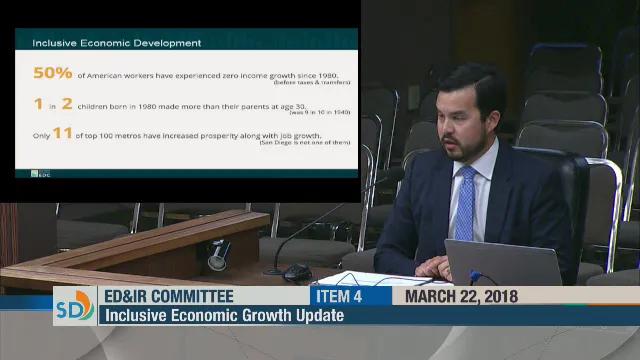
The Economic Development and Intergovernmental Relations Committee met on March 22, 2018, with Vice Chair Kersey and Councilmember Bree present, Councilmember Alvarez absent. The committee approved the February 22, 2018 minutes, received updates on business improvement district budgets, state legislation, economic development activities, and inclusive growth initiatives. No votes were taken on informational items; only the BID budget item was forwarded to full City Council. Consent Calendar - The committee records of action from February 22, 2018 were approved by unanimous consent. Public Comments & Testimony - Tanya Maxwell from Concordia University spoke during non-agenda public comment, sharing scholarship resources for professional development opportunities for educators and health professionals in San Diego County. - Several business association leaders registered support for the BID budgets: Denny Knox (Ocean Beach Main Street Association), Sheila Fortune (La Jolla Village Merchants), Susan McNeil Schreyer (Mission Hills BID), Enrique Gondarillo (City Heights Business Association), Sonny Lee (Old Town Chamber of Commerce), representatives from East Village Association, and Michael Trimble (Gaslamp Quarters Association). Discussion Items - Item 1: Fiscal Year 2019 Business Improvement District (BID) Budgets – Economic Development Department staff presented the annual appropriations process for 17 BIDs managed by nonprofit associations. Key highlights: Starting in FY2019, BID managers must provide annual metrics to evaluate performance, developed collaboratively with city staff. A typo in La Jolla’s report showing 1,772 job losses was corrected to a net loss of 39 jobs (from 5,979 to 5,940). Councilmember Bree noted a discrepancy in North Park BID’s reported $20,000 assessment revenue, which staff explained as a reporting anomaly (actual organizational budget closer to $500,000-$600,000). The item was moved and seconded for full City Council consideration. - Item 2: 2018 State Legislative Update – Patrick Buteller (Mayor’s Office) and Moira Topp (state lobbyist) presented. Key bills: AB 3171 (Ting) seeks $1.5 billion for homelessness; AB 2372 (Gloria) incentivizes affordable housing with floor area ratio; SB 635 (Weso) supports Promise Zone; SB 827/828 (Wiener) address housing density near transit; SB 930 (Hertzberg) allows cannabis banking. The state budget proposes $135 billion in general fund expenditures with $13.5 billion for the Rainy Day Fund. The presentation also covered SB1 transportation funding ($25 million allocated to San Diego), water storage infrastructure (potential $220 million for Pure Water), and renewable energy. Committee members discussed EIFDs, redevelopment (AB 3037), cannabis tax rates, and stormwater funding. This was an informational item; no motion needed. - Item 3: FY2017 Annual Report of Economic Development Department – Director Eric Caldwell presented, highlighting: 2,920 business interactions, 156 community events, 267,000 lives touched through community development, 22,000 clean tech jobs since 2010, and a $30,000 grant to San Diego Venture Group that helped 36 startups secure $100 million in venture capital. The department won awards for Liberty Station redevelopment and climate action planning. Caldwell emphasized improving customer service (e.g., Open Counter platform) and a shift toward inclusive economic growth. Informational only. - Item 4 & 5: Inclusive Economic Growth – Matthew Sanford (San Diego Regional EDC) and Eric Caldwell presented on the Brookings Institution learning lab. Key data: 70% of new jobs are low-wage; 1 in 3 San Diegans are Hispanic, 85% without bachelor’s degrees; 40% of individuals in San Diego (over 500,000) do not earn enough to meet basic needs. The EDC is forming advisory groups on minority achievement, small business support, and affordability. Dr. Peter Brunell (Center on Policy Initiatives) added: 50.5% of city income goes to top 20% of households; bottom 20% earn less than 4%. He advocated for local hire provisions, living wage enforcement in financial assistance agreements, and improved job quality in service sectors. Discussion included the need for transit connectivity (trolley to UTC by 2021) and aligning incentives with inclusive growth. Caldwell stated plans to revise the city’s incentive policy (Council Policy 900-12) by June 2018. Key Outcomes - BID Budget Approval: The committee voted unanimously to forward the FY2019 BID budget appropriation package to the full City Council for two separate hearings (first on April 17, 2018, to set public hearing date). - State Legislative Priorities: The committee received the update; no formal action taken. - Economic Development Report: Informational; Caldwell noted ongoing work on inclusive growth and incentive reform. - Inclusive Growth Presentations: Informational; no votes. The committee expressed interest in further discussions on living wage, local hiring, and transit-oriented development. - Next Meeting: April 26, 2018 at 2:00 PM.

ECONOMIC DEVELOPMENT 45% · WORKFORCE DEVELOPMENT 9% · BUSINESS IMPROVEMENT DISTRICTS 7% · STATE AFFAIRS 7%
937
MAR 21, 2018 · SAN DIEGO, CALIFORNIA · PUBLIC SAFETY & LIVABLE NEIGHBORHOODS COMMITTEE
Public Safety and Livable Neighborhoods Committee Meeting - March 21, 2018

The Public Safety and Livable Neighborhoods Committee, chaired by Councilmember Kate, met on March 21, 2018, to discuss a range of public safety and community development issues. The agenda included non-agenda public comments, a consultant services agreement for fire department studies, cybersecurity presentations, a report on the fire dispatch center, HUD entitlement program allocations for FY19, and an informational presentation on the City of San Diego Parks Master Plan. The committee took action on the consultant agreement and the HUD allocations, both of which passed unanimously. Public Comments & Testimony - Non-Agenda Speakers (3 speakers, 2 minutes each): - Martha Welch expressed frustration with police response times, questioned the use of housing funds, and alleged city dishonesty regarding police and fire resources. - Joy Sanyata (District 3) honored Assistant Chief Paul Connolly of the San Diego Police Department for his work with the homeless and thanked the police department. - Kelly McCormick raised concerns about marijuana manufacturing businesses in Mira Mesa, citing issues with smell, unpermitted construction, health risks from pesticides, and energy use. She noted that 93% of pot from LA/Orange County dispensaries was contaminated with illegal pesticide levels. - Barbara Gordon echoed concerns about marijuana businesses operating without proper licenses, the smell, and the need for code enforcement resources. - Kathleen Lippett mentioned concerns from the Mira Mesa Planning Group, including a chemist's warning about extraction processes and safety risks. - Scott Shipman (new president of the San Diego Cannabis Delivery Alliance) advocated for regulation of cannabis delivery services to serve medical marijuana patients who cannot access dispensaries, and asked for a future agenda item on delivery. - HUD Entitlement Program Allocations (FY19) – Public Comments: Over 20 speakers representing various nonprofit organizations (e.g., City Heights CDC, Episcopal Community Services, Ronald McDonald House, Habitat for Humanity, Meals on Wheels, Second Chance, Kitchens for Good, Center for Community Solutions, Family Health Centers, Ocean Discovery Institute, St. Paul's Senior Services, Interfaith Shelter Network, Casa Familiar, Urban Corps, Chicano Federation, International Rescue Committee, UPAC, Jewish Family Service, Al-Masara Family Clinic) spoke in support of the funding recommendations, emphasizing the importance of CDBG funds for homeless services, workforce development, senior services, and community revitalization. Discussion Items - Item 1 – Consultant Services Agreement with CityGate Associates: Fire Chief Brian Fennessey and Assistant Chief Kevin Astor presented a request for an as-needed consultant services agreement with CityGate Associates for up to $850,000 over five years to support fire department operations, including EMS ambulance deployment, emergency command and data center review, and other studies. The committee approved the motion unanimously. - Items 3 & 4 – Cybersecurity Presentations (Joint): The committee heard from city staff (Darren Bennett, CISO; Harrison Pierce, Office of Homeland Security) and external experts (Jesse Geit, San Diego Regional EDC; Rear Admiral Ken Slott, Cyber Center of Excellence; Dylan Boyer, Deloitte). Key points: - The city averages about one cyber attack per second, but successful intrusions are rare due to best practices. - The city is working on a regional cyber incident response guide and has initiatives like the CISO Roundtable and Cyber Center of Excellence. - San Diego has 104 core cybersecurity firms employing 4,230 people, with a total economic impact of $2.37 billion. - 75% of cybersecurity graduates leave the region due to lack of awareness of local opportunities; efforts are underway to improve internships and apprenticeships. - Critical infrastructure (grid, water) remains at risk; tabletop exercises are planned. - Discussion included questions about talent retention, coordination across city departments, and the role of cyber insurance. - No action taken; informational only. - Item 5 – CityGate Report on Emergency Command and Data Center (ECDC): Assistant Chief Kevin Astor and Stu Gary presented findings on the fire dispatch center, which handles over 200,000 calls annually. The current facility (built in 1990) is constrained, lacks space, and cannot be expanded. Recommendations include a new facility, potentially co-located with the county and CAL FIRE, with a joint planning study beginning next month. Staffing has improved (47 of 51 positions filled), and call handling performance is near best practices. No action taken; informational. - Item 6 – City of San Diego Parks Master Plan: Robin Schifflet and AECOM consultants presented a three-year planning effort to update the parks master plan (last done in the 1940s). The plan will address park deficits, redefine park equivalencies, improve equity, and identify funding sources. Public outreach includes surveys, regional workshops, and online engagement. The contract for the plan is $1.4 million. Discussion touched on park definitions, impact fees, and incorporating canyons and joint-use facilities. No action taken; informational. Key Outcomes - Action Item 1 – Consultant Services Agreement: Approved unanimously (voice vote) to authorize a five-year, $850,000 contract with CityGate Associates for fire department studies. - Action Item 2 – HUD Entitlement Program Allocations for FY19: Approved unanimously (voice vote) to recommend City Council approval of actions 1-21 and forward items 1-23, including $48.7 million in CDBG funds, $981,000 in ESG funds, and other allocations. The motion passed with a recommendation to council. - Informational Items: Cybersecurity (3&4), ECDC report (5), and Parks Master Plan (6) were presented for committee awareness; no votes taken. - Next Meeting: April 25, 2018.

CYBERSECURITY 24% · HOMELESSNESS 11% · EMERGENCY MANAGEMENT 11% · PUBLIC SAFETY 10%
938
MAR 21, 2018 · SAN DIEGO, CALIFORNIA · LAND USE & HOUSING COMMITTEE
Smart Growth and Land Use Committee Meeting – March 21, 2018

The Smart Growth and Land Use Committee met on March 21, 2018, to consider a consent calendar, a discussion item on street dedication, and an informational presentation from the San Diego Housing Commission on rental assistance programs. Committee members Sherman and Gomez were present; Councilmember Alvarez was absent. The committee also heard extensive public testimony on rent control, marijuana regulation, and housing vouchers. Consent Calendar - The committee approved the minutes from February 21, 2018, by unanimous consent. - The consent agenda was approved unanimously, with no items pulled. Public Comments & Testimony - Rent Control: Gregory Morales, Catherine Mendoca (San Diego Tenants United), Rafael Bautista, and Sandra Galindo urged the committee to adopt an emergency rent control ordinance, citing rising rents, displacement, and homelessness. Mendoca requested an actionable item on the next agenda. Several speakers noted that over 50% of San Diegans cannot afford rent on a single paycheck. - Marijuana Regulation: Scott Shipman (San Diego Agents for Safe Neighborhoods) alleged that some marijuana businesses are lying about state permits, that only one conditional use permit is required for manufacturing and distribution (while state law requires separate permits), and that a court injunction against operator Willie Sin has not been enforced. Kelly McCormick and Kathleen Lippett described Mira Mesa being overrun by marijuana businesses, with concerns about smell, contamination, environmental impacts, and diversion to the black market. They cited a study showing 93% of dispensary products contaminated with illegal pesticides. - Vacation Rentals: JD Stahl, a vacation rental owner, argued that the city’s proposed regulations ignore zoning disparities. He suggested a seven‑night minimum in residential zones, a three‑night minimum citywide, and restrictions on apartment‑complex units. He noted that 5–6 00 whole‑house rentals in downtown San Diego exist, but only 30–40 are likely legal under HOA rules. - Housing Commission / Section 8: Martha Walsh criticized the San Diego Housing Commission for poor communication, lack of unit‑type data, and alleged mismanagement. Mariana Bustamante (Bill Better San Diego Coalition) urged the city to adopt a source of income discrimination ordinance, to fully implement HUD’s small area fair market rents (SAFMR), and to hold a public forum. Brian Peace argued that the Housing Commission’s “Choice Communities” initiative is a facade and that SAFMR would raise voucher values, not lower them. Parisa E. Jadie Maxudi, a poverty attorney, detailed five inaccuracies in the Housing Commission’s presentation, emphasized that SAFMR is a desegregation rule, and noted that the Housing Commission’s “Choice Communities” program can require tenants to pay 50% of income toward rent, which is above the federal standard of 30–40%. Discussion Items - Dedication of Street Right‑of‑Way for a Portion of Nobel Drive: Brenda Chilvers (Supervising Property Agent) presented a cleanup action to dedicate a previously undeveloped portion of Nobel Drive as a public right‑of‑way. The road was built in the early 2000s but never dedicated. The dedication is needed to complete design for future Fire Station 50. No public comments were offered. The committee adopted the resolution unanimously. - San Diego Housing Commission Rental Assistance Programs (Informational): Jeff Davis, Executive Vice President and Chief of Staff, along with Asuzana Valadelid and Suket Dial, presented the Housing Commission’s Moving to Work (MTW) initiatives. They highlighted the “Choice Communities” initiative (three payment tiers based on zip code groups) and the “Path to Success” initiative (modified rent calculations for workable families, proposed minimum rent increases tied to minimum wage). They noted that the Housing Commission is one of 39 MTW agencies nationwide and that 74% of families would see no change in rent under the proposed Path to Success modifications. The presentation also addressed the status of HUD’s small area fair market rents rule, which the Housing Commission opted not to implement, citing fiscal uncertainty and the availability of a more conservative approach. Committee members asked about the use of 2016 payment standards, potential for reevaluation, landlord recruitment lessons from the “Housing for Heroes” program, and data tracking. Key Outcomes - The committee unanimously adopted the resolution to dedicate the street right‑of‑way for a portion of Nobel Drive. - The informational presentation from the San Diego Housing Commission was received; no formal action was taken. - Committee Chair Gomez noted that the April 18, 2018 meeting will include a workshop on anti‑displacement and affordable housing preservation. - The committee did not take action on the requests for an emergency rent control ordinance, but public comments were entered into the record. - The Housing Commission’s “Path to Success” proposal will be heard by the full City Council in April 2018. - The Housing Commission committed to sharing data on voucher retention, lease‑up success rates, and other metrics with committee members.

AFFORDABLE HOUSING 53% · PUBLIC ENGAGEMENT 13% · RENT CONTROL 9% · CANNABIS REGULATION 9%
939
MAR 16, 2018 · SAN DIEGO, CALIFORNIA · ACTIVE TRANSPORTATION & INFRASTRUCTURE COMMITTEE
Infrastructure Committee Meeting - March 16, 2018

The Infrastructure Committee of the San Diego City Council met on March 16, 2018, to discuss non-agenda public comments, approve a consent agenda, and consider two items: a proposed amendment to streamline minor public works contracting and an update on the IAM San Diego infrastructure asset management system. The meeting was chaired by Councilmember Kirsey, with Councilmembers Alvarez and Zeff present, and Councilmember Ward absent. Consent Calendar - Two items on the consent agenda were approved unanimously by a 3-0 vote. Public Comments & Testimony - Kathleen Higgins (Government and Labor Representative for MEA) expressed alarm over recruitment and retention of city engineers, citing that senior civil engineers are paid 40.9% below market average and rank 24th out of 24 comparable agencies. She warned that the city is losing talent to the county and private sector, which could delay capital improvement projects and increase reliance on expensive consultants. She noted that the current ratio of in-house to consultant work is about 50/50, whereas 70/30 is preferable. - Martha Welch spoke about poor road conditions in the city, particularly on Broadway, Turquoise Street, and other areas, and criticized the lack of in-house workers to make repairs. Discussion Items - Item 3: Report from Public Works on Changes to Municode Section 22 (Minor Public Works Projects) – Director James Nagelvert and Deputy Director Al Shaney presented a proposal to streamline minor public works contracts under $250,000 by allowing the use of price quotes from certified emerging and small local business enterprises (SLBE/ELB) instead of the full competitive bidding process required for larger projects. The change is intended to reduce the four-month timeline for such repairs. Councilmember Zeff expressed strong support, and Councilmember Alvarez asked about the number of quotes required (three for $100,000–$250,000, five for $100,000–$250,000) and requested data on current SLBE awardees. The committee unanimously approved the staff recommendation (3-0). - Item 4: Informational Update on IAM San Diego (Infrastructure Asset Management System) – Program Manager Aaron Noel and Project Manager Anne Bowie presented an update on the citywide asset management system, which replaces 28 outdated systems with a single integrated platform. They highlighted key features: automated work management, mobile map-based capabilities, asset management planning, and analytics. The system went live with Release 1 in December 2017 (170 users in IT Wireless and Public Works Facilities) and Release 2 on March 12, 2018 (1,600 users in Public Utilities, Transportation, and Stormwater). Release 3 is scheduled for April 16, 2018, adding asset management planning for 50 users. Phase 2 will roll out to six additional departments (IT Operations, Fire, Library, Police, Environmental Services, and Parks & Rec) between 2019 and 2023. A demonstration showed how work requests (e.g., a streetlight out) can be initiated on a GIS map, grouped into work orders, and dispatched efficiently. Public commenter Renee Smith raised concerns about the timeline for Parks & Rec, noting that facility condition assessments (FCAs) would be outdated by 2023. The committee accepted the information. Key Outcomes - Approved the amendment to Municode section 22 for minor public works contracts (motion by Councilmember Zeff, seconded by Councilmember Alvarez; vote 3-0). - Received the IAM San Diego update and demonstration; staff will continue to provide updates as the rollout progresses. - The next Infrastructure Committee meeting is scheduled for April 25, 2018.

INFRASTRUCTURE MANAGEMENT 58% · PUBLIC WORKS 18% · PROCEDURAL 9% · PUBLIC ENGAGEMENT 6%
940
MAR 14, 2018 · SAN DIEGO, CALIFORNIA · BUDGET & GOVERNMENT EFFICIENCY COMMITTEE
San Diego Budget and Government Efficiency Committee Meeting – March 14, 2018

The Budget and Government Efficiency Committee met on March 14, 2018, to discuss several key items including the Convention Center marketing contract, grants approval process, commercial paper programs, a community workforce development proposal, and the IT strategic plan. The meeting lasted approximately three hours, with public testimony and committee debate on multiple issues. Consent Calendar - The committee record of actions from the February 1, 2018 meeting was approved by unanimous consent. Public Comments & Testimony - Victoria Hoffman (retired traffic engineer, animal shelter volunteer, member of San Diego Rescue Coalition) spoke during non-agenda public comment. She urged the city to include language in the pending contract with the San Diego Humane Society requiring the Humane Society to contact local rescues for all animals at risk of euthanasia, similar to the County Department of Animal Services. She noted that the Humane Society had not made such a promise, and that hundreds of animals deemed unhealthy or untreatable are euthanized each year. Discussion Items Item 1 – Convention Center Tourism Authority Sales and Marketing Contract - Gil Cabrera (Chair, San Diego Convention Center Board) and Rip Ripeau (CEO, Convention Center) presented the proposed contract with the San Diego Tourism Authority for marketing services. The previous contract expired June 30, 2017, and the new agreement includes a one-time $40,000 payment to cover a funding gap, a minimum escalator clause, and enhanced termination provisions. The contract allows the Tourism Authority to discount room rental rates up to 15% to attract events. The scope of work will be approved annually, including room night goals and revenue targets. The committee moved the item forward to City Council. Item 3 – Municipal Code Amendment for Grants Approval Process - Natasha Kalera (Executive Director, Corporate Partnerships) and Sarah Brennan (Program Manager) proposed streamlining the grants approval process, allowing the mayor to approve grants up to $5 million. During the previous two fiscal years, 66 of 69 grants were under $5 million. The IBA recommended lowering the threshold to $1 million, noting that would still allow the mayor to approve 90% of grants. Councilmember Gomez moved to adopt the $1 million threshold, with a second from Councilmember Kate. The motion passed 3-1. Item 5 – General Fund Commercial Paper Notes Program - Lakshmi Comey (Debt Management Director) and Kevin Werner (Debt Coordinator) presented a proposal to authorize up to $80.5 million in commercial paper notes to fund general fund capital projects. The program would provide short-term financing (90-150 days) with projected interest costs of $500,000 in FY2019 and $1.2 million in FY2020. The IBA expressed concern about predetermining project allocations (proposed: $48 million streets, $18 million storm drains, $9 million facilities, $5 million unallocated) without committee discussion. Staff clarified that the allocations are not final and will be discussed at the April 25 infrastructure committee. Councilmember Gomez moved to forward the program without specific allocations, seconded by Councilmember Kate. The motion passed unanimously. Item 4 – SANDAG Transnet Commercial Paper Program for West Mission Bay Drive Bridge - Ben Baraglia (Transportation and Stormwater) presented a memorandum of agreement to participate in SANDAG’s commercial paper program, borrowing up to $40 million on an as-needed basis to bridge cash flow gaps during construction of the West Mission Bay Drive Bridge. The project is fully funded through federal grants and local matching funds. The committee approved the item unanimously. Item 6 – Community Workforce Development Program (Higher SD) - Councilmember Gomez and staff presented a three-part proposal: local hire requirements, skilled and trained workforce mandates (aligning with state law), and expansion of prevailing wage to affordable housing and economic incentive projects. The goal is to combat income inequality and create middle-class jobs. Public testimony was divided: opposing speakers (Shandon Harbour, ABC; Sean Karafin, Chamber; Matthew Adams, BIA; Brad Barnum, AGC) raised concerns about cost increases, constitutionality of local hire, and disproportionate impact on affordable housing. Supporting speakers (Dr. Boxamusa, Tom Lemon, Dr. Peter Brownell, Rodney Fowler, Carol Kim) argued that the program would train local workers, reduce poverty, and improve project quality. Councilmember Gomez moved to request legal analysis from the City Attorney, an IBA report on operational/fiscal impacts, and to docket a future actionable item. The motion passed 3-1, with Councilmember Kate opposed. Item 7 – IT Strategic Plan FY19-20 - Jonathan Banke (CIO) presented the Department of Information Technology’s strategic plan, covering modernization, cloud services, public safety radio expansion, and security. The city has a lean IT budget compared to national averages but has received awards for digital services. Key performance indicators include 99.999% availability for public safety radios. The item was received as information. Item 8 – 2018 Committee Priorities and Work Plan - Chair Bree presented a draft work plan based on common themes from committee members: vacancy review, IT contract oversight, budget outreach, grant performance, corporate partnerships, cannabis tax revenue, performance measures, and San Diego Works program. Vice Chair Ward suggested adding a review of the mid-year ordinance, earned sick leave/minimum wage compliance, and possible exploration of a municipal bank. The work plan was accepted. Key Outcomes - Item 1 – Approved for forwarding to City Council. - Item 3 – Approved with amendment to reduce the threshold from $5 million to $1 million (3-1 vote). - Item 5 – Approved to forward the commercial paper program authorization to City Council without specific project allocations (unanimous). - Item 4 – Approved to enter into MOA with SANDAG for West Mission Bay Drive Bridge CP program (unanimous). - Item 6 – Approved to request legal analysis, IBA report, and docket future action (3-1 vote). - Item 7 – Received as information. - Item 8 – Committee priorities and work plan accepted with potential additions.

WORKFORCE DEVELOPMENT 19% · CONVENTION CENTER 13% · PUBLIC COMMENT 12% · TECHNOLOGY AND INNOVATION 12%
OPENPUBLICA · PUBLIC MEETING INDEXUPDATED DAILY · openpublica.com