Browse by city
Date range
Search help

Search titles, summaries, topics and stored transcripts together. Keywords may match separately; put the whole query in double quotes for a phrase. Matching follows word analysis, so punctuation is not exact. Both dates are included. Documents are not searched.

SHOWING 31–40 ENTRIES
31
SEP 16, 2026 · WASHINGTON, DISTRICT OF COLUMBIA · COUNCIL OF THE DISTRICT OF COLUMBIA
Transportation Committee Unanimously Approves Eric’s ID Amendment Act on September 16, 2026

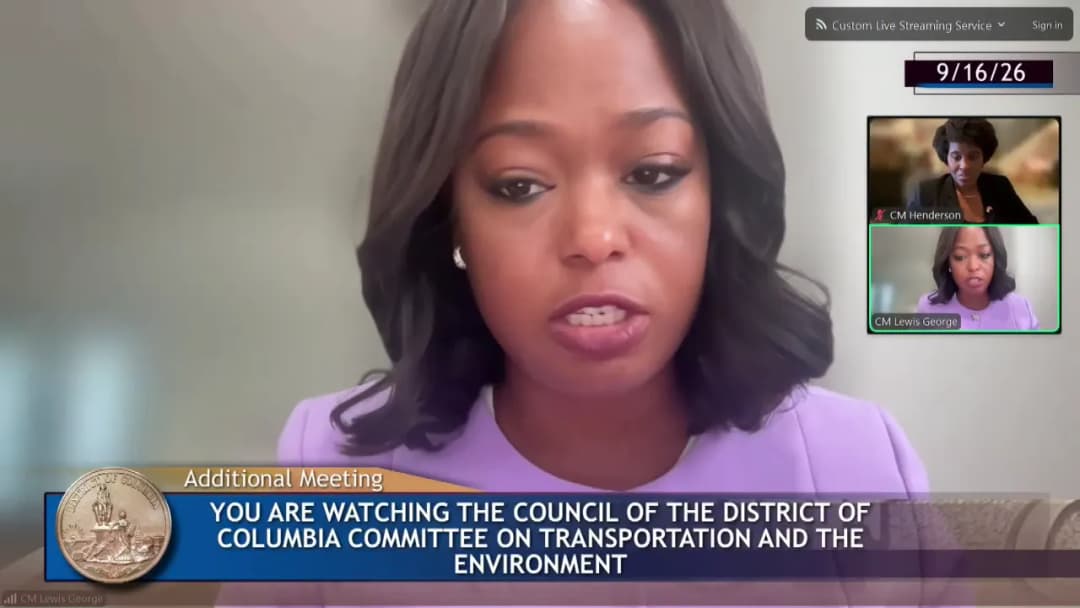
The Committee on Transportation and Environment, chaired by Councilmember Charles Allen, met on September 16, 2026, to consider and vote on Bill 26-619, the Eric's ID Amendment Act of 2026. The bill allows District residents to voluntarily indicate a non-apparent disability on their driver's license or identification card using a butterfly symbol, and requires training for Metropolitan Police Department officers on interacting with individuals with non-apparent disabilities. The committee voted unanimously to advance the bill to the full Council. Discussion Items - Chairman Allen provided an overview of the bill, noting that approximately 11.5% of district residents (roughly 77,200 people) have a disability, many of which are non-apparent. The bill is voluntary, does not create a registry, does not require medical documentation, and does not impose additional fees. The butterfly symbol will be printed on the front of the credential, with corresponding text on the back. The Department of Motor Vehicles (DMV) will implement the program, and the Office of Disability Rights (ODR) will review the training content for MPD officers. The bill diverges from the introduced version by assigning implementation to DMV instead of DDOT, using the term "indicator" instead of "marker" for consistency with DMV terminology, and explicitly requiring MPD training with ODR review. - Councilmember Parker expressed strong support, noting that Maryland’s similar law has seen 30,000 residents opt for the butterfly symbol in its first year. He asked about extending the marker to DC-issued student IDs; Chairman Allen clarified that student IDs fall under the education committee’s jurisdiction, not the transportation committee. Parker also inquired about the change from "marker" to "indicator" and the clause allowing future additional indicators via rulemaking. Chairman Allen explained that the change was for consistency and that the rulemaking provision allows for future additions without new legislation. - Councilmember Lewis George thanked the committee and described the bill’s potential national impact. She asked about the fiscal impact statement, which shows no additional cost. Chairman Allen confirmed that DMV will absorb the nominal costs of adding the symbol and will implement the program by January 1, 2027. - Councilmember Henderson stated she was supportive and glad to see the bill moving forward. Key Outcomes - Vote: The committee voted unanimously (all ayes) to approve the committee report and committee print for Bill 26-619, with leave for staff to make technical, editorial, and conforming changes. - Next Meeting: The committee’s next scheduled meeting is Thursday, September 24, 2026, to hold a public hearing on Bill 26-90 (Neighborhood Management Authority Act) and Bill 26-424 (Porch Fest Permitting Amendment Act). - Implementation: The DMV expects to implement the butterfly symbol by January 1, 2027, as mentioned during the discussion on fiscal impact. The meeting was adjourned at 2:50 PM. Note: A prior public hearing on Bill 26-619 was held in July 2026, where witnesses shared personal experiences. The bill is named after Eric Carpenter Grantham, who was present at the meeting with his mother, Linda Carpenter Grantham.

DISABILITY RIGHTS 82% · PROCEDURAL 18%
32
SEP 16, 2026 · WASHINGTON, DISTRICT OF COLUMBIA · COUNCIL OF THE DISTRICT OF COLUMBIA
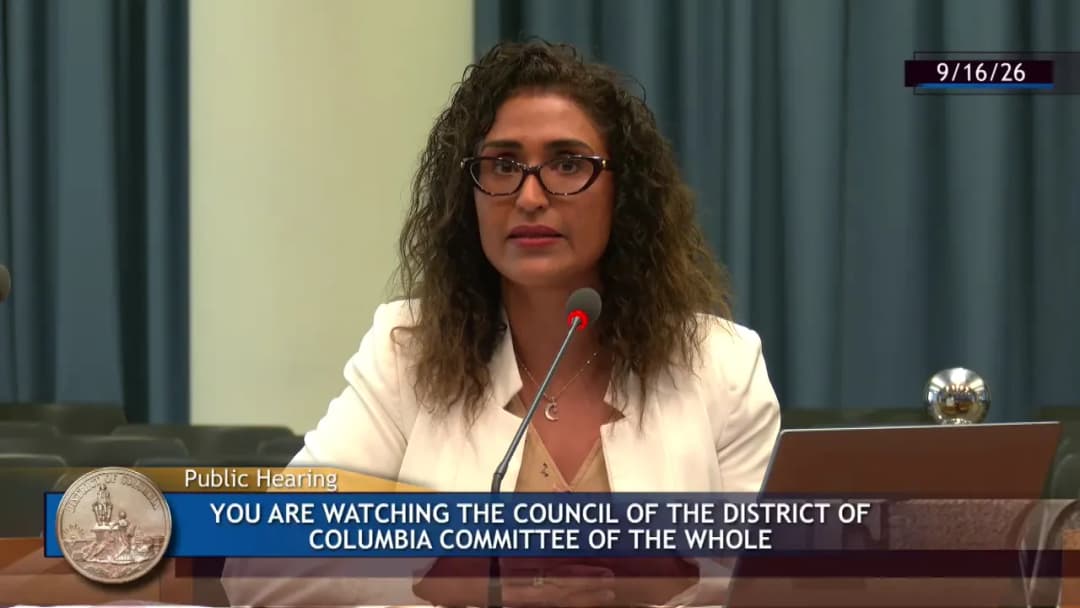
Committee of the Whole Hearing on Society for Science Tax Exemption and Combined Reporting Bill - September 16, 2026

Chair Phil Mendelson presided over a public hearing on two bills: Bill 26-94, the Society for Science Real Property Tax Exemption Amendment Act of 2025, and Bill 26-708, the Combined Reporting Amendment Act of 2026. The hearing began at 2:19 PM in Room 412 of the John A. Wilson Building. Seven witnesses testified on the first bill and six on the second, followed by government testimony. The record will remain open until 5:00 PM on September 30, 2026. Society for Science Real Property Tax Exemption (Bill 26-94) Public Testimony: - Maya Ajmera (President and CEO, Society for Science) testified in support. She described the organization's 104-year history and its new 96,000-square-foot headquarters at 1776 Massachusetts Avenue NW, acquired in 2024. The building is envisioned as a community asset including a STEM research hub (partnering with Kid Museum), a 300-seat convening center, and a multimedia newsroom. She stated a goal of serving 25,000 DC students and educators annually and noted that 95% of elementary school students served reported joy in STEM. She argued that the tax exemption would allow more resources for programming rather than property taxes. - Tara Walker (DC science educator) testified in support, sharing personal experiences with Society programs and emphasizing the need for sustained STEM opportunities for underserved students. - Eric Brooks (Ward 6 resident, alumnus of the Science Talent Search) testified in support, describing his transformative week as a finalist in 2010 and how the experience shaped his career. - Michelle Hackman (Ward 1 resident, alumnus) testified in support, highlighting the importance of public access to science and the Society's role in connecting students to research. Discussion: Chair Mendelson noted that the CFO's tax abatement financial analysis (TAFA) concluded the exemption was unnecessary, assuming immediate rental income from three floors and citing healthy unrestricted reserves. Ajmera countered that rental projections were unrealistic given current market conditions, that multi-year grants are booked as immediate revenue but paid out over time, and that the $20 million reserve is for emergencies only. She committed to providing supplemental financial details. The chair asked for clarification on the properties covered: the bill originally included three parcels (1719 N St, 1723 N St, 808 8th St) but only the N Street properties have been sold; the Society now owns only 1776 Massachusetts Avenue, and the exemption is sought for that property, though the bill text does not reflect it. Combined Reporting Amendment Act (Bill 26-708) Public Testimony: - Robert Branham (DC Federation of Civic Associations) testified in support, arguing that the Finnegan method would fairly allocate tax burden from multi-state corporations. - Alan Pasetsky (Global Business Alliance) testified with concerns. He supported the transition to Finnegan but opposed two provisions in Section 5 of the bill (based on the MTC model) that go beyond apportionment: (1) changing "effectively connected income" to "U.S. source income" for foreign entities, and (2) removing treaty-protected income exemption for the 20% intangible income test. He argued these would lead to double taxation, override federal treaties, and make DC an outlier, urging the council to revert to existing DC language. - Patricia Stamper (DC resident, educator, entrepreneur) testified in support, but asked for transparency: how much revenue would be gained, which corporations are affected, how enforcement works, and how success will be measured. - Kelsey Johnson (Global Business Alliance – VP of State Affairs) testified in support of the Finnegan change. - Michael Masarov (former CBPP tax analyst) testified in support, stating Finnegan is the correct method and that the MTC model is well-considered. He argued the two provisions do not create double taxation and are needed to prevent profit shifting. - Professor Shensky (tax law expert) testified in support of retaining the MTC provisions as sound base-broadening measures. Government Testimony: Aisha Hashmi (Corporate Tax Counsel, Office of the Chief Financial Officer) explained the existing Joyce method and the transition to Finnegan enacted in 2024. She stated that Bill 26-708 is necessary to implement the transition with conforming and technical amendments. She recommended delaying the applicability date to tax years beginning after December 31, 2026, because there is insufficient time to implement for 2026. She defended the two disputed provisions as deliberate and consistent with practices in New York, New Jersey, and California, noting that federal tax treaties do not automatically bind state income tax systems. Discussion: Chair Mendelson explored the two challenged provisions. Pasetsky identified them as Section 4 and Section 5 language that removes treaty protection and expands the base beyond effectively connected income. Hashmi argued these provisions broaden the tax base and are not inadvertent. Masarov and Shensky supported the provisions as tools to prevent income shifting, while Pasetsky countered that DC already has robust add-back and anti-abuse rules. The chair noted the need for additional analysis and requested supplemental submissions from all parties. Key Outcomes - The record will close on Wednesday, September 30, 2026, at 5:00 PM. All parties may submit supplemental testimony. - Society for Science to provide detailed financial responses to the TAFA analysis. - For Bill 26-708, the OCFO will provide a fiscal impact assessment of delaying applicability to 2027. Chair Mendelson indicated a possible mark-up in October and final action by December. - Chair encouraged stakeholders to submit written arguments on the two disputed provisions to inform potential amendments.

TAX POLICY 52% · BUDGET 23% · PUBLIC EDUCATION 14% · PUBLIC ENGAGEMENT 5%
33
JUL 17, 2026 · WASHINGTON, DISTRICT OF COLUMBIA · COUNCIL OF THE DISTRICT OF COLUMBIA
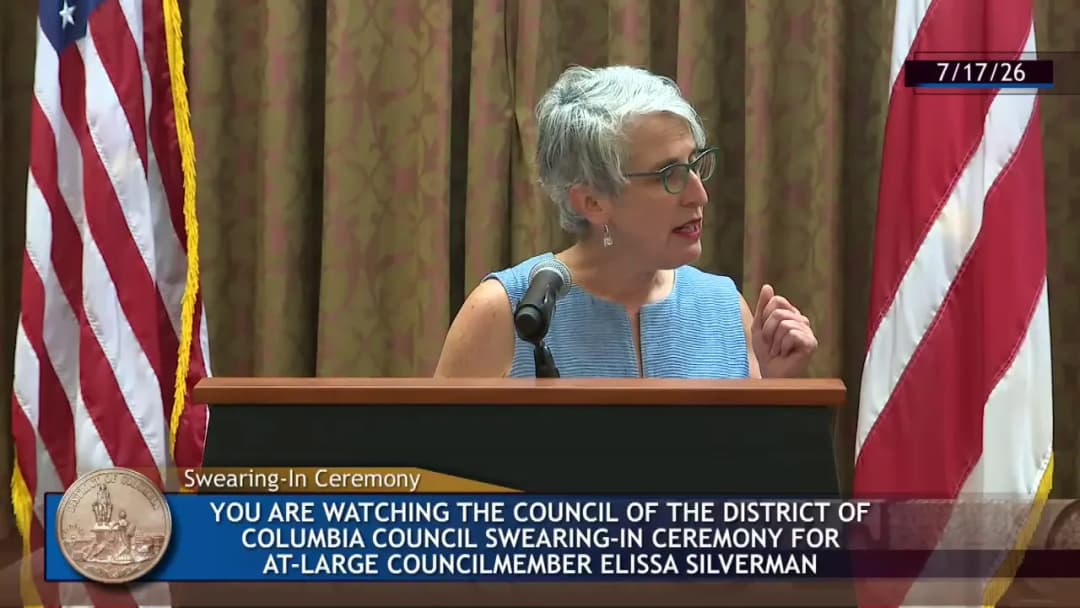
Alyssa Silverman Sworn In as DC Councilmember - July 17, 2026

On July 17, 2026, the Council of the District of Columbia held a special swearing-in ceremony for Alyssa Silverman, who won the June 16th election. Chairman Phil Mendelson presided and noted that the ceremony took place immediately after the Board of Elections formally certified the results. The meeting included the administration of the oath of office and remarks by the new councilmember. Key Outcomes - Alyssa Silverman was sworn in as a member of the Council of the District of Columbia, repeating the oath of office administered by Chairman Mendelson. - Councilmembers Matt Freuman, Anita Bonds, Trayon White, and Mundell Felder were present in support. - In her remarks, Silverman expressed gratitude to supporters and highlighted her commitment to defending DC home rule, helping Washingtonians affected by economic hardship (e.g., a former USAID employee struggling with unemployment), and partnering with education and economic development leaders east of the Anacostia River. She quoted the late Mayor Marion Barry: "If you can look up, you can get up."

PROCEDURAL 35% · ECONOMIC DEVELOPMENT 22% · COMMUNITY ENGAGEMENT 20% · PUBLIC HEALTH 13%
34
JUL 14, 2026 · WASHINGTON, DISTRICT OF COLUMBIA · COUNCIL OF THE DISTRICT OF COLUMBIA
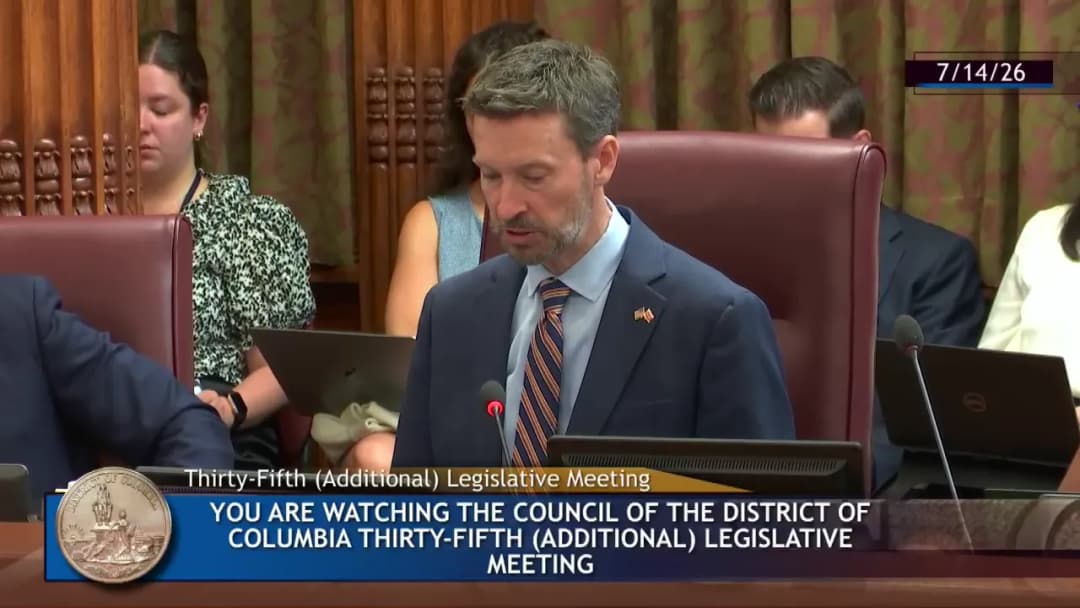
35th Legislative Meeting of DC Council (Period 26) - July 14, 2026

The Council of the District of Columbia held its 35th legislative meeting of Council Period 26 on Tuesday, July 14, 2026, at 2:40 PM in room 500 of the John A. Wilson Building. Chair Phil Mendelssohn presided. The meeting included a consent calendar, several non-consent items, emergency and temporary legislation, and farewell remarks for Councilmember Donnie Crawford, who was leaving after filling a vacancy. Consent Calendar - The consent agenda was approved unanimously after adjustments: Bill 26-436 (fair initiatives) was removed; PR 26-741 (UDC Board of Trustees confirmation) and PR 26-736 (Hill East Phase 2 term sheet) were moved to non-consent. - All other consent items were adopted without debate. Discussion Items - PR 26-741 – UDC Board of Trustees Confirmation: Councilmember Parker voted no, stating he believes district residents should be appointed to district boards but acknowledged Mr. Battle was qualified. The resolution passed 12–1 (only Parker opposed). - PR 26-736 – Hill East Phase 2 Disposition Term Sheet Amendment: Councilmember Freeman moved the item over. Allen questioned the construction start date (target 2028, completion 2030), the $5 million liability plus $30 million for streets, and the lack of a firm start date. Freeman noted the agreement has a term but no specific deadline. On park maintenance, the developer pledged $325,000 per year but not in escrow. Allen expressed concern about using $35 million in capital funds elsewhere. Freeman argued the city has borne similar costs in other projects. The resolution passed with Mendelson voting no, and Allen and Robert White recorded as present. - Bill 26-224 – Restricting Egregious Scalping Against Live Entertainment (RESALE Act) – Final Reading: [ Amendment 1 (Pinto): Struck provision allowing the mayor to regulate primary market ticket fees. Pinto argued fees are part of the business model and the bill should focus on secondary market gouging. Parker opposed, saying it would leave Live Nation/Ticketmaster unchecked. The amendment passed with Parker and possibly others voting no (recorded as no by two members). Amendment 2 (Allen, Henderson, Nadeau): Clarified that a ban on surveillance pricing does not apply to discounts based on publicly available criteria (e.g., military, seniors). Adopted unanimously. Final Passage: Allen highlighted the bill as the strongest consumer protection in the country, including a 10% price cap, ban on speculative sales, registration for high-volume scalpers, and all-in pricing. The bill passed unanimously. ] - PR 26-784 – Recess Rules Resolution: Adopted unanimously. Extends grant modification authority for UDC, adjusts racial equity impact assessment rules, and permits up to three roundtables on elections/campaign finance. - Bill 26-711 – Entertainment Establishment Employee Safety Temporary: Final reading. Passed with one no vote (name not given in transcript). - Emergency and Temporary Bills (block): Multiple emergency declarations and underlying bills were passed, all with at least 12 votes. Notable discussions: Real Property Tax Sale Delay (PR 26-780): Withdrawn by Mendelson because the fiscal impact statement showed insufficient funds. Net Zero Continuity (PR 26-783 & Bill 26-767): Councilmember Lewis George explained the need to align expiring temporary legislation. Trayon White asked if it affected Congress Heights and Douglas Recreation Center pools; Lewis George clarified the legislation exempts indoor pools but the executive chose not to include a pool at Congress Heights. An amendment (LC 1) was adopted unanimously. Schedule of Fines (PR 26-775 & Bill 26-747): Allen moved emergency approval for DDOT rulemaking to adjust speeding thresholds to comply with a court ruling. Passed with Mendelson and Trayon White voting no. SNAP Data Sharing (PR 26-777): Freeman noted the bill allows DHS to share data to automatically exempt residents from work requirements, preventing loss of benefits. Passed unanimously. - Temporary Bills (block): Nine temporary bills were moved in block and passed unanimously (including for-hire vehicles, medical cannabis, Berry Farm, covenanted roads, special education, pre-arrest diversion, SNAP data sharing, and language access). Note: The schedule of fines temporary was not included. Key Outcomes - Consent Agenda: Approved unanimously. - PR 26-741 (UDC Board): Passed 12–1 (Parker no). - PR 26-736 (Hill East): Passed with Mendelson no, Allen and R. White present. - Bill 26-224 (RESALE Act): Pinto amendment passed with two no votes; Allen amendment and final passage unanimous. - Emergency declarations: Most passed unanimously; schedule of fines passed 11–2 (Mendelson and Trayon White no). - Real property tax sale emergency: Withdrawn. - Temporary bills block: Approved unanimously. - Next legislative meeting: Scheduled for September 22, 2026. - Farewell to Councilmember Donnie Crawford: Multiple councilmembers praised her service, integrity, and impact during her brief tenure. Crawford expressed gratitude and noted this was her favorite job. The meeting adjourned at 3:59 PM.

PROCEDURAL 43% · PERSONNEL MATTERS 23% · ENVIRONMENTAL PROTECTION 10% · CANNABIS REGULATION 5%
35
JUL 14, 2026 · WASHINGTON, DISTRICT OF COLUMBIA · COUNCIL OF THE DISTRICT OF COLUMBIA
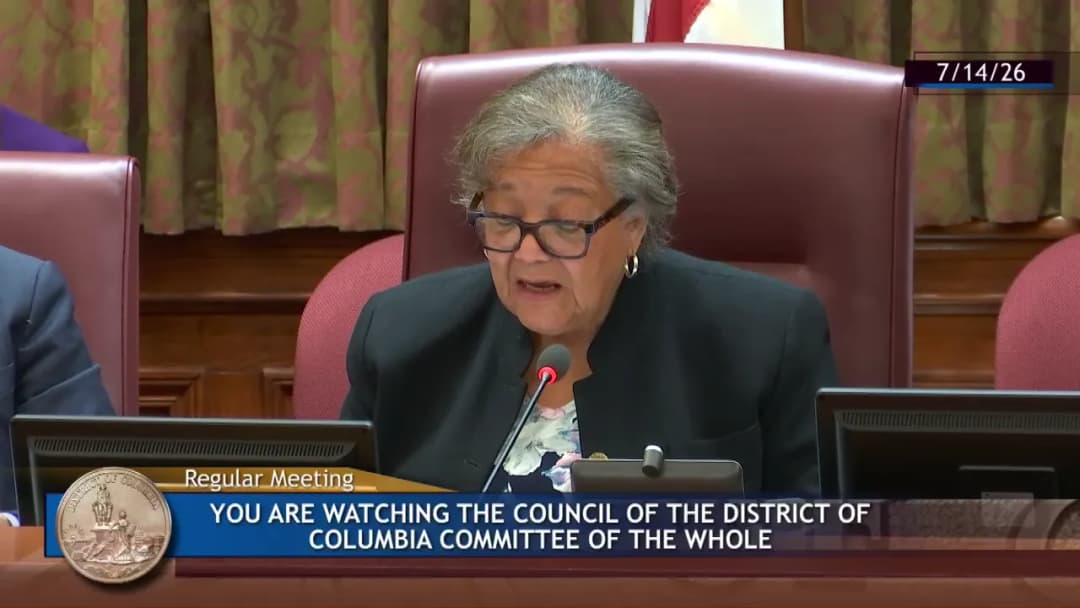
Regular Meeting of the Committee of the Whole – July 14, 2026

The Committee of the Whole, chaired by Chairman Phil Mendelssohn, held a regular meeting on July 14, 2026, from 12:10 PM to approximately 2:13 PM in Room 500 of the Council Chambers. The meeting covered multiple revenue bond approvals, mayoral confirmations, and legislation from various committees, with most items placed on the consent agenda for the subsequent legislative meeting. Notable discussion occurred around the Hill East Phase 2 term sheet amendment and the Fair Initiatives and Transparency to Every Resident Amendment Act. Consent Calendar - PR 26-675 (Provident Group Bison Properties – Howard University student housing, $575 million) – Approved unanimously. - PR 26-676 (St. Patrick's Episcopal Day School, $35.5 million) – Approved unanimously. - PR 26-677 (PRG Wonder Plaza – Howard University redevelopment, $375 million) – Approved unanimously. - PR 26-678 (Harmony DC Public Charter School, $17 million) – Approved unanimously. - PR 26-744 (Robin Wells to Board of Zoning Adjustment) – Approved unanimously. - PR 26-746 (Demetrius Butler to Commission on Arts and Humanities) – Approved unanimously. - PR 26-747 (Anna K. Smith to Public Charter School Board) – Approved unanimously. - Bill 26-181 (Short-Term Disability Insurance Benefit Protection Clarification) – Approved unanimously. - PR 26-642/643/644/645/695 (Five Police Complaints Board nominations: Glenn Marcus, Andrea Headley, Bobby Strang, Edward Sanders, Peter Durkin) – Approved unanimously. - Bill 26-4-7 (Funeral Services Modernization) – Approved unanimously. - Bill 26-427 (Cybersecurity and Accountability Act) – Approved unanimously. - Bill 26-444 (Food Policy Council Procurement Amendment) – Approved unanimously. - Bill 26-547 (Posthumous Care Modernization – authorizing alkaline hydrolysis) – Approved unanimously. - Bill 26-244 (Micromobility Fire Safety Standards) – Approved unanimously. - Bill 26-245 (Personal Delivery Device Weight Limit – raising limit to 275 lbs) – Approved unanimously. - Bill 26-548 (Washington Commanders Motor Vehicle Identification Tags) – Approved unanimously. - Bill 26-554 (Commercial Drivers License Amendment) – Approved unanimously. - PR 26-692 (Gregory McCarthy to Board of Elections) – Approved unanimously. - PR 26-745 (Michael Wakefield to Board of Elections) – Approved unanimously. - PR 26-705 (Lafayette Barnes to Office of Employee Appeals) – Approved unanimously. - PR 26-737 (Lee Clark to Public Employee Relations Board) – Approved unanimously. Public Comments & Testimony - No public comments or testimony were received in opposition to any of the measures considered. Discussion Items - PR 26-? (Mark Battle to UDC Board of Trustees): Councilmember Parker opposed the nomination based on a long-held position against non-residents serving on district boards, stating he would vote no despite respecting Mr. Battle's qualifications. The print and report were approved 12-1 and placed on the non-consent agenda. - PR 26-736 (Hill East Phase 2 Bundle 2 Disposition Term Sheet Amendment): Councilmember Fruman presented amendments shifting responsibility for a public park ($5.2 million) and streets ($30 million) to the District, and extending construction timelines from 30 to 32 months. Councilmembers Robert White, Allen, and Bonds expressed concerns about the $35 million subsidy increase, but the resolution was placed on the non-consent agenda for the additional legislative meeting. - Bill 26-436 (Fair Initiatives and Transparency to Every Resident Amendment Act): Councilmember Bonds outlined provisions including a single-subject rule for initiatives, fiscal impact summaries on petitions, clearer font requirements, and circulator disclosures. Chairman Mendelssohn offered an amendment on the single-subject definition, which was accepted without objection. After discussion about timing and substance, the bill was placed on the non-consent agenda for the September 22, 2026 legislative meeting rather than the current meeting. Key Outcomes - All consent calendar items were approved unanimously and will be placed on the consent agenda for the additional legislative meeting. - The Mark Battle confirmation (UDC) passed with one dissenting vote (12-1) and was placed on the non-consent agenda. - The Hill East Phase 2 term sheet amendment was placed on the non-consent agenda; approximately $35 million in additional District obligations were noted. - The FAIR Initiatives bill was advanced with the Chairman's single-subject amendment and postponed to the September 22nd legislative meeting for first reading. - The meeting adjourned at 2:13 PM, with the additional legislative meeting to follow immediately.

PROCEDURAL 45% · ECONOMIC DEVELOPMENT 22% · PUBLIC SAFETY 6% · TECHNOLOGY AND INNOVATION 5%
36
JUL 13, 2026 · WASHINGTON, DISTRICT OF COLUMBIA · COUNCIL OF THE DISTRICT OF COLUMBIA
Public Hearing on St. Elizabeth's East Campus Redevelopment Bills - July 13, 2026

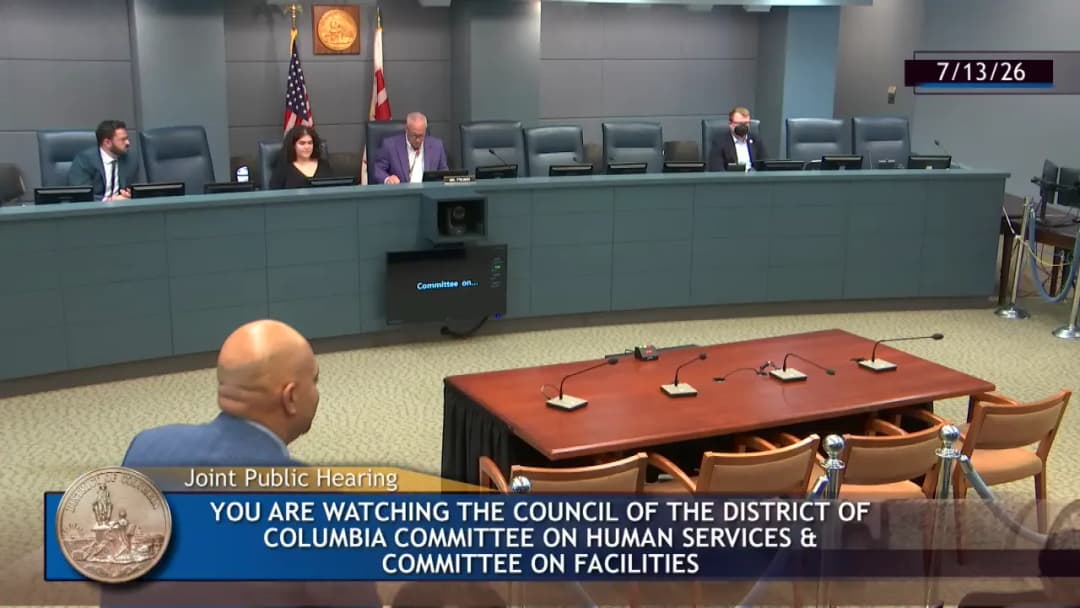
On Monday, July 13, 2026, the Committee on Human Services (chaired by Councilmember Matt Freuman, Ward 3) and the Committee on Facilities (chaired by Councilmember Janice Lewis George, Ward 4) co-held a public hearing in Room 412 of the John A. Wilson Building and via Zoom. The hearing addressed four bills related to the redevelopment of the St. Elizabeth's East Campus in Congress Heights: B26-121 (extension of disposition authority for Parcel 13), B26-466 (term sheet amendment for Parcel 13), B26-425 (surplus declaration and disposition for Parcels 7, 8, and 9), and B26-530 (surplus declaration and disposition for Parcel 6). The campus is a 183-acre National Historic Landmark. The bills aim to advance mixed-use development including hundreds of new housing units, retail, and community spaces. No votes were taken; the hearing was for testimony and discussion. Public Comments & Testimony - Letitia Short: Testified but no specific position recorded; she was on the first panel. - Monica Ray (President, Congress Heights Partnership; founding chair, Soul of the City BID; Congress Heights resident): Expressed strongest support for all three development proposals. Highlighted that the three development teams are all minority-led, representing intentional equitable development. Described Parcel 6 as a model for community-centered development with affordable housing, homeownership, retail, green space, and unanimous ANC support. Emphasized that the process itself creates opportunities for local businesses and residents. - Marcus Cornegan (Executive Director, Prosperity Alliance; owner of Holiday Liquors, a black-owned liquor store): Expressed strong support, noting that only 4 of 212 liquor stores in DC are black-owned. Called the St. Elizabeth's equity initiative historic and urged continued investment in minority developers and affordable housing. Stated that inclusive economic development is smart policy. - Elias Abubager (Resident and business owner of Bunatol Cafe, located on parcel 15): Expressed strong support, citing that his cafe only exists because of earlier campus development. Emphasized that equitable development creates jobs and opportunities. Urged the District to approve the teams and maintain momentum. - Bo Menkiti (Representing St. Elizabeth Legacy Partners, SELP): Testified in strong support of Parcels 7, 8, and 9. Described a 100% affordable rental building (200 units) and 30 for-sale workforce townhomes, along with 43,000 square feet of community-serving retail, preservation of historic buildings, and commitments to hiring Ward 8 residents. Said the plan reflects four pillars: accessible housing, jobs, vibrant gateway, and historic preservation. - Charles Battle (Development Director, Banneker Communities, representing Parcel 6 Community Partners): Testified in strong support of Parcel 6. Outlined 507 rental apartments (all affordable to households at 30–100% AMI), 8 live-work townhomes, 17,000 square feet of retail, and a public plaza. Noted that the development team is 100% CBE/DBE equity-owned, with 35% of contract dollars committed to DC/Ward 8 businesses. Emphasized that the proposal came from community engagement and earned unanimous ANC support. - Buea Bintim (Founder/CEO, Dumas Collective, for Dante's Partners): Testified in support of Parcel 13. Explained that his firm is taking over from Neighborhood Development Company (NDC). Proposed two buildings: 90 senior units (50% AMI) and 151 family units (mix of 30%, 50%, 60% AMI), totaling 241 units (down from original 421). Noted physical constraints (DC Water easement, WAMATA infrastructure) drove the reduction. Requested support for the term sheet amendments. Government Witness - Latrina Owens (Director of Real Estate, Office of the Deputy Mayor for Planning and Economic Development): Testified in support of all four bills. Provided background on Parcel 13: original developer NDC ceased operations due to financial headwinds; Dante's Partners was approved as successor. Attribute the unit reduction to site constraints (utility easement, WAMATA HVAC system). For Parcels 7, 8, and 9: two bidders; the selected team includes 200 rental units and 30 townhomes (updated from earlier plans due to Department of Behavioral Health no longer needing an office). For Parcel 6: two bidders; selected team includes 507 apartments and 8 townhomes. Stated that the campus is a national model for public land redevelopment, creating housing and economic opportunity. Estimated combined temporary construction jobs at 5,000 and permanent jobs at 500. Said infrastructure work is slated for completion in 2027. Defended community engagement practices. Noted that all projects are CBE-led. Discussion Items - Unit Count & Affordability Discrepancies: Councilmember Freuman questioned why Parcels 7/8/9 showed different unit numbers in various documents (160 rental + 18 townhomes vs. 200 rental + 30 townhomes vs. 277 rental). Mr. Menkiti clarified that the original plan included a Department of Behavioral Health office; with that removed, the team increased housing to 200 rentals and 30 townhomes. Councilmember Freuman also pressed for details on affordability mixes, unit sizes, and bedroom dimensions for both Parcel 6 and Parcels 7/8/9. Developers provided breakdowns: for Parcel 6, at least 30% of units at 50% AMI or less; for Parcels 7/8/9, 100% affordable rental (average below 60% AMI) and workforce townhomes up to 120% AMI. - Parcel 13 Reductions: Councilmember Freuman expressed concern about the drop from 421 to 241 housing units and the reduction of retail from 21,000 to 5,000 square feet. Mr. Bintim and Ms. Owens explained that physical constraints on the site—a DC Water easement and WAMATA infrastructure—made the original 421-unit building infeasible. The new plan splits into two buildings (senior and family). The retail reduction was partly due to market caution and site design. Councilmember Freuman acknowledged the physical constraints. - Construction Timelines: Councilmember Freuman asked developers about target dates. For Parcel 6: construction start in Fiscal Year 2028 (calendar year 2027/2028), 24-month build per building. For Parcels 7/8/9: phased, first phase start in FY28, 24-month construction, parcel 7 start around 2030. For Parcel 13: 24–36 months to start, hoping for 2028. Ms. Owens confirmed these timelines are consistent. - Job Commitments & CBE: Councilmember Freuman asked about accountability for Ward 8 hiring. Mr. Menkiti described working with local training centers and requiring subcontractors to hire at least one local person. Mr. Battle noted a 35% contract dollar commitment to DC/Ward 8 businesses and first-source hiring. Ms. Owens emphasized that CBE-led teams naturally hire locally and cited past success on the campus. - Market Conditions & Feasibility: Councilmember Freuman expressed concern about current market challenges (high vacancy, tough financing). Mr. Menkiti acknowledged difficulty but noted that 100% affordable housing, townhomes, and historic tax credits (if a state credit existed) could work. He said the rental market is not financeable, but the project relies on HPTF and 4% credits. Mr. Battle said demand is strong based on community response and pre-RFP market studies. Both expressed cautious optimism. - Environmental & Infrastructure: Councilmember Freuman asked about stormwater management for Parcel 6 (near the ravine) and whether road infrastructure is adequate. Mr. Battle said they will follow district guidelines and that soil reports show no contamination. Ms. Owens confirmed that campus infrastructure for these parcels is already delivered and that stage 2 infrastructure will be completed by 2027. - RISE Center: Mr. Menkiti clarified that the current RISE Center (on Parcel 7) will relocate to Parcel 8 as part of the restoration of historic buildings, not simply be moved. - Parcel 6 Affordability Compliance: Councilmember Freuman noted that the disposition analysis stated the project might not meet DC Code 10-801 affordability requirements. Mr. Battle insisted it does meet them. Ms. Owens said she would check but believes it complies. - Parcel 13 Term Sheet Extensions: Councilmember Freuman asked about the 180-day extension for completion after construction start. Ms. Owens cited complexities from historic preservation review, Fine Arts Commission requirements, and site conditions (ravine, WAMATA underground). Councilmember Freuman accepted that these are physical reasons. Key Outcomes - No votes or decisions were taken during the hearing; it was a public hearing to gather testimony. - Written testimony can be submitted until Monday, July 27, 2026, via the Council's electronic hearing management system. - The committees will consider the testimony before deciding whether to advance the bills to the full Council in the fall legislative session. - The meeting was adjourned at 3:30 PM.

AFFORDABLE HOUSING 42% · ECONOMIC DEVELOPMENT 37% · HISTORIC PRESERVATION 5% · HOUSING 5%
37
JUL 13, 2026 · WASHINGTON, DISTRICT OF COLUMBIA · COUNCIL OF THE DISTRICT OF COLUMBIA
Pre-Legislative Briefing on July 13, 2026: Final Reading on Resale Act and Initiative Process Reform

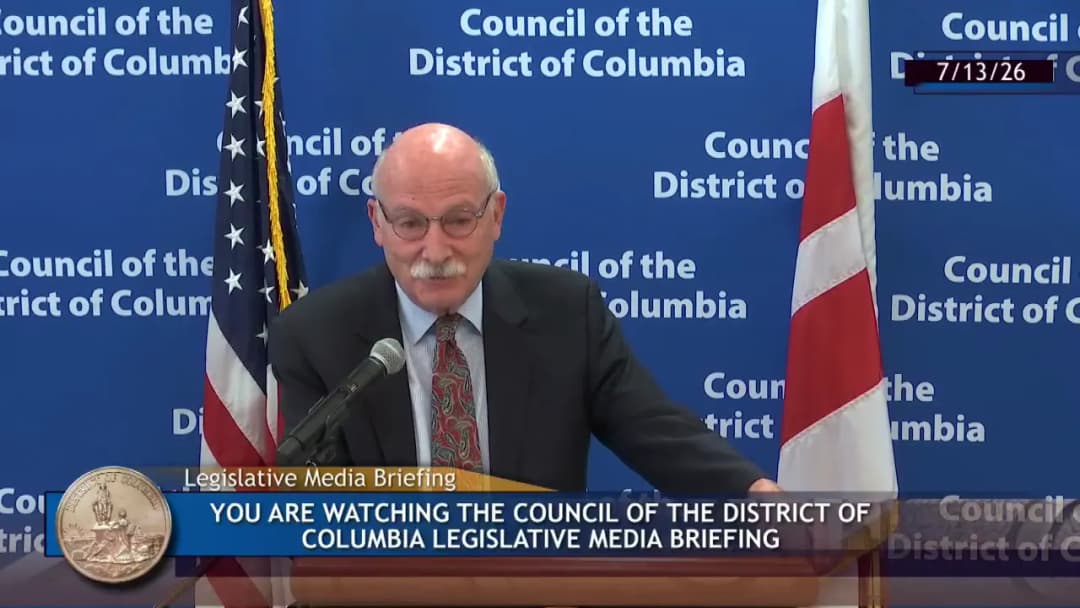
Council Chairman Phil Mendelson held a pre-legislative briefing on July 13, 2026, at approximately 4:00 PM to outline the agenda for the upcoming legislative meeting on July 14, the last meeting before summer recess. The briefing covered key legislation, committee markups, confirmations, and emergency measures, followed by questions from reporters on a range of topics including autonomous vehicles, the ballot initiative process, the National Guard presence, and juvenile violence. Public Comments & Testimony - Tax Sale Delay: A reporter asked about the emergency bill to delay the real property tax sale. Chairman Mendelson explained the delay is needed due to recent Supreme Court decisions regarding excess profits from tax sales. He noted the property owner may still be entitled to some equity above owed taxes, and the bill pushes the sale to after September 22, 2026, with the CFO indicating an actual later date. - Autonomous Vehicle Bill: In response to a question about the autonomous vehicle bill, the Chairman stated he has no firm view but believes technology progress is inevitable and regulation is appropriate. He cited concerns over liability, safety, and consumer protection but would not take a position until the transportation committee revises the bill. He noted Waymo has invested millions but that it is too soon to predict council support. - Ballot Initiative Reform (First Reading): A reporter asked about concerns timing and implications of the initiative process bill. The Chairman expressed support for reform, criticizing out-of-state influence, single-subject ambiguity, and lack of deliberation in the initiative process. He called the process “fraught” and overdue for reform, noting the bill has already passed committee. - Letter to Michigan and Virgin Islands Governors: A reporter asked about a letter signed by the Chairman and 12 colleagues regarding National Guard presence in D.C. The Chairman confirmed the letter was sent, has not yet received a response, and stated the District “deeply resents” the National Guard’s presence on city streets, calling it a bad image for a safe city. - Juvenile Violence: A reporter referenced a recent homicide of a 13-year-old. The Chairman advocated for focused deterrence strategies and criticized lack of planning in juvenile justice and housing programs, noting that DYRS often lacks treatment plans before a juvenile is committed. - St. Elizabeth's Redevelopment: A reporter asked about legislation on parcels at St. Elizabeth's. The Chairman hoped the bills would be taken up early in fall, urging the council to move quickly to avoid becoming a delay in economic development. - President's Arch and Height Act: A reporter asked about the administration’s argument that federal buildings should not be subject to the Height Act. The Chairman strongly disagreed, citing legislative history and calling the Department of Interior General Counsel’s opinion “weak.” He said the 1910 Act explicitly repealed the 1899 exemption for federal buildings. - Chevron Decision: A council member asked about the Supreme Court’s Chevron decision and the council’s response. The Chairman explained the council adopted legislation to preserve deference to agency expertise in local law, arguing the Chevron ruling is flawed because it shifts decision-making to unelected judges without expertise. - Homeland Security Commission Dissolution: A reporter asked about a provision destroying records and imposing a gag order. The Chairman admitted he was unaware of the specific FOIA and records retention issues and had not seen a letter from the open government coalition. He stated he could not comment without familiarity. Discussion Items - Chairman Mendelson outlined the legislative agenda for July 14: final reading on the resale act (secondary ticket market), first reading on the initiative process reform bill, committee of the whole markup of eight resolutions, four revenue bond projects, and confirmations including Robin Wells to the Board of Zoning Adjustment (which had lacked a quorum). - Emergency measures include a delay of the real property tax sale (to address Supreme Court rulings on excess proceeds) and restoration of Covenant Roads (clarifying city responsibility for unowned alleys, specifically one off Morris Road in Ward 8). - The council goes on recess from July 15, which is described as a working period for staff to prepare legislation for a heavy fall agenda. Key Outcomes - No votes were taken during the briefing; it was informational only. - The Chairman stated he will introduce a bill to amend the tax sale process in response to Supreme Court decisions. - The Council will hold a committee of the whole and a legislative meeting on July 14, 2026. - The Chairman expressed intention to continue developing relationships with Congress and coordinating council efforts to push back on federal interference.

PUBLIC ENGAGEMENT 15% · PROCEDURAL 13% · PENDING LITIGATION 13% · PUBLIC SAFETY 12%
38
JUL 13, 2026 · WASHINGTON, DISTRICT OF COLUMBIA · COUNCIL OF THE DISTRICT OF COLUMBIA
Public Roundtable on Bill 26-684: Autonomous Vehicle Deployment Authorization Amendment Act of 2026 - July 13, 2026

The Committee on Transportation and the Environment, chaired by Councilmember Charles Allen, held a public roundtable on July 13, 2026, from 9:44 AM to 8:09 PM to discuss Bill 26-684, the Autonomous Vehicle Deployment Authorization Amendment Act of 2026. The bill establishes a framework for commercial autonomous vehicle (AV) deployment in the District of Columbia, including permitting, safety requirements, a vehicle miles traveled (VMT) tax, and workforce transition provisions. Over 80 witnesses testified across multiple panels, representing industry, disability advocates, labor unions, business groups, legal experts, and government agencies. Key issues included safety, equity, accessibility, workforce impacts, data transparency, and the appropriate regulatory structure. Public Comments & Testimony - Panel 1 (Industry): Waymo, Lyft, Tesla, and Uber testified. Waymo reported 300,000 miles of testing in DC with 25 vehicles and a 94% reduction in serious injury crashes across 220 million miles. Lyft and Uber advocated for hybrid network models allowing human drivers and AVs to operate on the same platform. Tesla raised concerns about the 180-day testing requirement, high permit fees ($1 million non-refundable application fee, $5 million operational permit fee), and the proposed 15-cent-per-mile VMT tax. Uber emphasized the need for service across all eight wards and accessibility requirements. - Panel 2 (Business & Community): Chamber of Progress, Restaurant Association of Metropolitan Washington, Greater Washington Board of Trade, Monumental Sports & Entertainment, and DC Chamber of Commerce supported the bill with amendments to raise the 200-vehicle fleet cap, reduce the VMT tax, and remove the 2028 paid-ride moratorium. - Panel 3 (Legal Experts): Professor Will Hubbard (University of Baltimore) supported the bill's definition of 'driver' for liability purposes. The Trial Lawyers Association (Drew LaFramboise, Christopher Nace) urged stronger enforcement mechanisms, including tiered penalties for traffic violations and mandatory data sharing for crash victims. - Panel 4 (Disability Advocates): Kelly Mack, Heidi Case, CT Tyson, and others stressed that AV companies must provide wheelchair-accessible vehicles (WAVs) directly, not rely on existing inadequate taxi fleets. They called for mandated accessibility standards, reporting on wait times, and zero-tolerance anti-discrimination policies. - Panel 5 (Blind & Low Vision): Claire Stanley (American Council of the Blind) and others highlighted the potential for AVs to eliminate discrimination by drivers against guide dogs. They urged the council to require accessible interfaces and external alerts for pedestrians. - Panel 6 (Labor Unions): ATU Local 689, SEIU 32BJ, and Teamsters Local 639 expressed strong opposition to the bill without stronger worker protections. They cited potential job losses for 35,000+ rideshare drivers and called for a workforce impact study before deployment, labor peace agreements, and a transition fund with concrete benefits. - Panel 7 (Transit & Urbanists): WAMATA, WABA, Federal City Council, and others emphasized data sharing, curbside management, and ensuring AVs do not obstruct bus lanes or bike lanes. WABA endorsed Families for Safe Streets' call for AVs to be at least 10 times safer than human drivers. - Panel 8 (Additional Public Witnesses): Numerous residents shared personal stories of traffic violence and expressed cautious optimism about AVs, but urged strict safety rules, especially regarding speed limits and blocking bike lanes. - Panel 9 (Government): DDOT, DFHV, and ODR testified. DDOT recommended a phased, gated approach to deployment, stronger data collection, and that personally owned AVs not be allowed at this stage. DFHV advocated for a unified regulatory framework for all for-hire vehicles, with AVs under DFHV's jurisdiction. ODR stressed that accessibility must be built into the permit process from the start, with enforceable requirements for wheelchair-accessible vehicles and multimodal alerts. Discussion Items - Safety Standards: Chair Allen pressed witnesses on whether AVs should be programmed to exceed speed limits or block bike lanes. Waymo stated its vehicles are programmed to obey speed limits except in emergency evasive maneuvers; Tesla indicated its vehicles may exceed the speed limit to match traffic flow, which drew concern. - Fleet Caps and Equity: The 200-vehicle initial cap was debated. Several witnesses argued it would prevent equitable service across all eight wards, while others supported a phased rollout to manage risks. - VMT Tax and Fees: The 15-cent-per-mile VMT tax and high permit fees were criticized by industry as out of step with other states. Chair Allen defended the tax as a tool to discourage deadheading and congestion and to replace gas tax revenue from electric fleets. - Workforce Transition: Labor unions and some witnesses called for a pre-deployment impact study and dedicated funding for displaced workers. The bill currently assigns 50% of AV revenue to a workforce development fund, but details are vague. - Accessibility: Multiple disability advocates argued that AV companies must provide wheelchair-accessible vehicles themselves, not outsource a referral. The council discussed requiring a percentage of accessible vehicles similar to the taxi fleet mandate. - Data Transparency: Witnesses emphasized the need for granular trip-level data to monitor equity, congestion, and safety. WAMATA requested data-sharing agreements similar to those with TNCs. Key Outcomes - No votes were taken; the hearing was for public testimony and discussion. - The record will remain open until July 27, 2026, for written testimony. - Chair Allen stated the committee will work with stakeholders over the summer to refine the bill, including provisions on fleet caps, accessibility, workforce protections, and data reporting. - DDOT committed to delivering its AV deployment report by the end of August 2026, which will inform the committee's next steps. - The committee will consider a phased approach that includes testing, driverless testing with passengers, and gradual commercial deployment based on demonstrated safety and equity metrics.

TECHNOLOGY AND INNOVATION 51% · TRANSPORTATION SAFETY 23% · DISABILITY RIGHTS 12% · WORKFORCE DEVELOPMENT 6%
39
JUL 10, 2026 · WASHINGTON, DISTRICT OF COLUMBIA · COUNCIL OF THE DISTRICT OF COLUMBIA
Committee of the Whole Hearing on Real Property Taxation Bills – July 10, 2026

The Committee of the Whole, chaired by Council Chairman Phil Mendelson, held a public hearing on Friday, July 10, 2026, at 10:22 AM in Room 412 of the John A. Wilson Building. The hearing considered ten bills related to real property taxation, covering exemptions for seniors, disabled veterans, non-profit organizations, and religious institutions, as well as reforms to the property tax assessment and appeals process. Witnesses included representatives from non-profits, veterans, senior advocacy groups, real estate industry, the Archdiocese of Washington, developers, and government officials from the Office of the Chief Financial Officer (OCFO) and the Real Property Tax Appeals Commission (RIPTAC). The record will remain open until 5:00 PM on Friday, July 24, 2026. Public Comments & Testimony - Food and Friends (B26-564): CEO Carrie Stoltzfoos testified in support of a permanent 100% property tax exemption for the organization's property at 219 Riggs Road NE. She explained that a former billboard lease had led to 3% of the property being taxable; the billboard was removed in 2023. The current temporary exemption (97%) expires September 25, 2026. The 2026 annual tax of $247,511.94 would fund approximately 27,810 meals. She requested the permanent bill also be enacted on emergency and temporary basis to ensure continuity. - Archdiocese of Washington Parishes (B26-641): Mary Rhodes (Senior Counsel), Jeff Gelman (attorney), and two pastors testified in support. They argued that parishes are the true beneficial owners of properties purchased with parishioner funds and held in the archbishop's name due to historical legal restrictions. They requested the ability to record supplemental confirmatory deeds to retitle properties to parish corporations without recordation or transfer taxes. They stated OTR rejected recording despite emergency/temporary legislation, causing administrative burdens and tax bills. Gelman distinguished the Columbia Realty case as inapplicable. - Reservoir District (B26-700): Emily Alexander and Ruth Hong (Jair Lynch Real Estate Partners) testified in support, urging passage as written to align rent assumptions with HUD multifamily tax subsidy project income limits rather than inclusionary zoning rates. They said a $14–$126 per unit rent gap would make the project economically infeasible. They opposed adding affordability covenant requirements, stating the tax abatement is already codified. Robert Vinson Branham (DC Federation of Civic Associations) supported the bill. - Senior Tax Aggregation (B26-360): Deborah Cuevas Hill (Legal Counsel for the Elderly) and Nikitia Burko (Legal Aid DC) testified in support. Hill provided the example of the Johnson family, where two senior sisters inherited 25% each and faced $15,000 in taxes and foreclosure; aggregation of their interests would allow the senior tax deduction. Burko also supported the disabled veterans exemption and requested removing the 50% ownership threshold entirely. - Disabled Veterans (B26-476): Gary Kelts (100% disabled veteran) and Benjamin Fallon (permanent and total disabled veteran) testified in support. Kelts said he lived in Maryland due to lack of exemption in DC. Fallon purchased a home in DC and asked the District to honor veterans. Robert Vinson Branham recommended extending the exemption to all service-connected disabled veterans regardless of disability percentage. The Greater Capital Area Association of Realtors (Tony Mancuso) supported. - Assessment/Appeals Bills (B26-252 and B26-484): Multiple witnesses opposed B26-252, including Scott Kreider (Wilkes Artis), Tanya Castro (Castro Haas), Joe Riley (property manager), Grant Steinhauser (Ryan LLC), Eric Jones (AOBA), and Rassan Bernard (WC Smith). They argued the bill compresses timelines, does not address root problems (inaccurate valuations, overreliance on CAMA, lack of transparency), and would overwhelm RIPTAC. They recommended reforms such as access to worksheets, use of independent appraisals, and consolidation of multi-year appeals. Support was mixed for B26-484; many favored its provisions (multi-year LOAs, electronic delivery, elimination of 5% rule) but RIPTAC and OCFO raised concerns about increased caseload and code citation errors. Discussion Items - B26-360 – Senior Tax Aggregation: OCFO (Basil Fashina) testified that as drafted, the bill could allow a senior with a tiny ownership share to qualify, and suggested language to require aggregate ownership of seniors to be at least 50%. Chair Mendelson noted the intent is to allow aggregation to meet the 50% requirement. - B26-476 – Disabled Veterans: OCFO (Robert McKeon) provided suggested language to clarify the exemption for surviving spouses. No policy objection. - B26-564 – Food and Friends: OCFO noted the property does not qualify for administrative exemption because less than half of clients are DC residents, but the bill is acceptable as a policy matter. - B26-641 – Archdiocese: OCFO (Basil Fashina) stated that transfers from the archbishop corporation sole to parish corporations are not supplemental deeds under tax law, citing a recent Court of Appeals decision. He offered suggested language to deem the deeds as supplemental for tax exemption purposes, but cautioned against using tax concepts for non-tax purposes. Chair Mendelson acknowledged the parishes' desire for recognition of unchanged ownership and noted the OCFO's alternative language. - B26-686 – Alpha Omega: OCFO noted property already denied exemption by OTR and Superior Court; the bill would provide a specific exemption and retroactive tax forgiveness (including before foundation ownership). OCFO did not object to form but flagged the retroactive provision. - B26-700 – Reservoir District: OCFO (Basil Fashina) testified the bill amends affordable housing requirements for the existing tax abatement, specifying use of HUD multifamily tax subsidy project income limits. - B26-252 – Assessment Schedule Revision: OCFO supported, stating it would allow OTR to use the most recent income/expense data. Industry witnesses countered that the bill does not fix systemic assessment errors and would compress already strained timelines. RIPTAC Vice Chair Robert Cooper noted that compressing timelines without more resources would worsen delays; only 59% of decisions were issued by February 1 deadline. - B26-484 – Fairness and Accuracy: OCFO raised concerns about the code citation for LOAs (should amend Title 47, not Uniform Power of Attorney Act) and the elimination of the 5% rule, which RIPTAC said could increase frivolous appeals. RIPTAC also worried about changing the decision deadline to March 1 and electronic submission strain. Many private witnesses supported the bill's provisions, with the suggestion to limit 5% rule elimination to commercial properties. Key Outcomes - No votes were taken; this was a public hearing to receive testimony. - Record open until July 24, 2026 at 5:00 PM for additional written comments. - Chair Mendelson expressed interest in working with the Archdiocese on supplemental deed language and with OCFO on clarifying senior aggregation, disabled veterans, and other bills. - Councilmember Bonds raised issues about senior property tax burdens, the need for meaningful assessment reforms, and requested further discussions with RIPTAC and OCFO. - RIPTAC Vice Chair Cooper highlighted that 93% of appeals are sustained, but the commission is understaffed (6 full-time commissioners, 2 administrative staff) and needs additional resources to meet deadlines. - OCFO offered suggested amendments for B26-360, B26-476, B26-641, and B26-484 to address drafting concerns. - Next steps: The Committee will review testimony and proposed amendments before marking up the bills for consideration by the full Council.

FISCAL SUSTAINABILITY 41% · PROCEDURAL 17% · HOUSING 13% · AFFORDABLE HOUSING 8%
40
JUL 9, 2026 · WASHINGTON, DISTRICT OF COLUMBIA · COUNCIL OF THE DISTRICT OF COLUMBIA
Public Round Table on PR26-746: Demetrius Butler Confirmation to Commission on the Arts and Humanities - July 9, 2026

Council Chairman Phil Mendelson convened a public round table of the Committee as a Whole on July 9, 2026, at 12:41 PM in Room 412 of the John A. Wilson Building. The hearing considered PR26-746, the resolution to confirm Mayor Muriel Bowser's reappointment of Demetrius Butler to the Commission on the Arts and Humanities for a term ending June 30, 2029. The record will close at 5 PM on Monday, July 13, 2026, with council consideration scheduled for July 14, 2026. Nominee Testimony - Demetrius Butler, a lifelong Ward 8 resident and graduate of Eastern High School, testified in support of his reappointment. He described his background as a curator, consultant, and founder of the now-closed Flea Market Gallery (a cultural hub that hosted over 100 events before closing during COVID-19). He currently works with League OTO, a collective that incubates emerging visual artists. He highlighted recent projects including a major exhibition with Shy Glizzy and Shayla Mitchell, and the creation of Art on the Rise, a boutique fair for local artists. He expressed a vision for Washington, D.C. as a world-renowned arts destination with go-go music recognized and protected, and downtown filled with murals and creative spaces. Discussion Items - Chairman Mendelson expressed frustration with the Commission on the Arts and Humanities, noting that many arts organizations receive less in grants each year, which undermines stability. He advocated for strategies where larger organizations (e.g., Arena Stage) help smaller ones (e.g., Step Africa) through facility sharing and capacity building, rather than simply diluting grants. He also suggested using grant conditions to promote diversity and capacity building. - Nominee Butler agreed on the need for collaboration and noted that the commission had restored a grant (FASP fellowship) to its original level after feedback. He described his role as a liaison to the go-go community, reporting that the number of grants to that community increased from 13 to approximately 24-25 in the past year, and that he has held several round tables with the community. - Chairman Mendelson asked three standard questions: whether Butler has sufficient time to serve (yes), whether he is current on district and federal obligations (yes), and whether he has or foresees any conflicts of interest (no; he would recuse himself if one arose). - Butler stated he measures his success by building bridges between the community and the Commission, and leaving the Commission in a better place than he found it. Key Outcomes - No vote was taken; this was a public round table to gather testimony and allow the nominee to respond to questions. - The record will close at 5 PM on Monday, July 13, 2026. - Chairman Mendelson indicated he expects to present the confirmation resolution to the full council for consideration at its July 14, 2026 meeting, barring unforeseen issues.

ARTS AND CULTURE 100%
OPENPUBLICA · PUBLIC MEETING INDEXUPDATED DAILY · openpublica.com