Browse by city
Date range
Search help

Search titles, summaries, topics and stored transcripts together. Keywords may match separately; put the whole query in double quotes for a phrase. Matching follows word analysis, so punctuation is not exact. Both dates are included. Documents are not searched.

SHOWING 61–70 ENTRIES
61
JUN 23, 2026 · ALAMEDA COUNTY, CALIFORNIA · BOARD OF SUPERVISORS
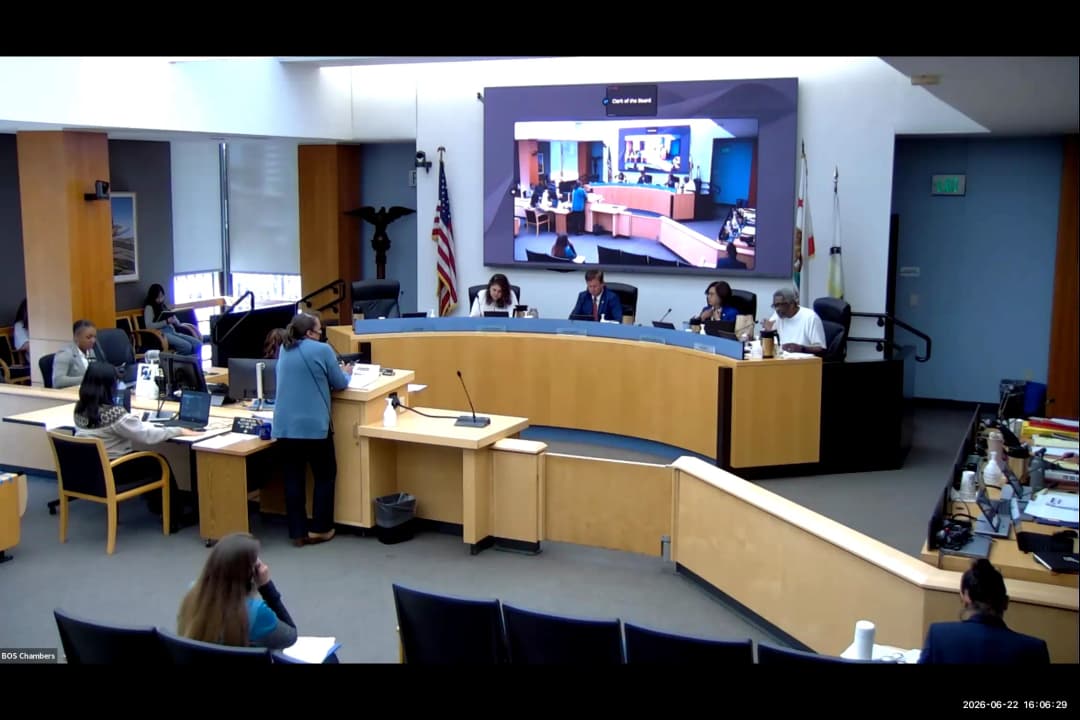
Alameda County Board of Supervisors Special Budget Hearing - June 23, 2026

The Board of Supervisors held a special meeting on June 23, 2026 (note: the raw transcript indicates the meeting occurred on Thursday, June 18, 2026, but the provided date is used per instructions) to open public hearings on the proposed fiscal year 2026-2027 budget. County Administrator Susan Murnichi presented a $6.7 billion balanced budget that closes a $185 million funding gap through pension savings and reductions, with a remaining $91.4 million gap closed via expense reductions and revenue adjustments. The presentation covered economic outlook, state and federal budget impacts, a five-year forecast, and fiscal/policy pressures. Board members commented, and public testimony was heard. The hearing was recessed to continue on Monday, June 22, 2026 (per transcript) for detailed department presentations and further deliberation. Public Comments & Testimony - 19 in-person and 3 online speakers addressed the board. Key themes included: - UELP Prevention Funding: Multiple speakers from Maru, Siri, and the Prevention Matters Collaborative urged restoration of UELP prevention funding, noting that 10 organizations face termination on June 30, 2026. Speakers emphasized that prevention serves undocumented, uninsured, and pre-crisis populations and cannot be replaced by early intervention. Personal stories highlighted the role of culturally specific programs in supporting refugee and immigrant elders and families. - Care First, Jails Last: Speakers from Parent Voices Oakland, Restore Oakland, and Families Advocating for the Seriously Mentally Ill called for shifting funds from the Sheriff's Office (noting a jail population below 1,200 and a per-inmate cost of $362,000/year) to mental health housing and diversion. Specific demands included: $2 million/year for boarding care homes (Supportive Housing Community Land Alliance), $5 million/year for the Public Defender mental health diversion court, and $125 million/year in deep rental subsidies for justice-involved individuals with behavioral health needs. - Child Care and Family Support: Speakers asked for inclusion of child care priorities in the budget, funding for food access in early childhood education settings, and restoration of a children's services budget. They also urged that the updated Home Together plan prioritize families with young children. - Budget Process: Some speakers requested that the county democratize the budgeting process and ensure that community mandates (e.g., Measure C) are fully funded. Discussion Items - Budget Presentation: Staff presented the $6.7 billion proposed budget, with 9.3% increase over prior year and 10,500 FTEs. The economic outlook noted a 4.1% unemployment rate in Alameda County, a median home price of $1.4 million, and low inventory. State budget highlights included $900 million for homelessness (Prop 47/round 7), delays in Medi-Cal cuts, and rejection of IHSS cost shift. Federal risks included HR1 impacts and focus on immigration enforcement. - Board Member Comments: - Supervisor Marquez requested adding SB 1193 to fiscal pressures, calling it a "direct attack" on the county's ability to serve low-income residents. - Supervisor Tam asked for detailed analysis of state budget relief on Alameda Health System and noted uncertainty until governor signs budget. - Supervisor Fortunato Bass emphasized protecting safety net services, highlighted the Essential County Services Fund, and noted an ad hoc committee with Alameda Health System. She requested written responses to budget questions. - Supervisor Miley suggested adding a fourth wheel for external pressures (e.g., ballot measures, labor expectations, city pressures). He asked departments to provide examples of cost savings and efficiencies with dollar amounts by adoption. - President Halbert requested departments highlight efficiency initiatives. Key Outcomes - The board opened the public hearing and received testimony. - No votes or decisions were taken; the meeting was recessed to continue on Monday, June 22, 2026 (per transcript) at 1:45 p.m. for detailed department presentations. Adoption is scheduled for June 25, 2026 (per transcript). - Staff committed to providing responses to board questions and efficiency examples before budget adoption.

BUDGET PROCESS 54% · BEHAVIORAL HEALTH 15% · MENTAL HEALTH AWARENESS 9% · PUBLIC COMMENT 4%
62
JUN 23, 2026 · ALAMEDA COUNTY, CALIFORNIA · BOARD OF SUPERVISORS
Alameda County Board of Supervisors Budget Hearing – June 23, 2026

Note: The transcript indicates the meeting was called to order on Monday, June 22, but the provided meeting date is June 23, 2026. This summary uses the provided date and treats the proceedings as part of the June 23 session, which was a continuation of the prior day's budget hearings. This special meeting was a continuation of the County's fiscal year 2026-27 budget hearings. The Board heard overviews of the proposed $6.7 billion all‑funds budget ($4.3 billion general fund), reviewed program area presentations, received extensive public testimony, and discussed final budget adjustments and a board letter to address Alameda Health System's fiscal challenges. The meeting concluded with a motion to close hearings and recess to Tuesday, June 23 at 1:30 p.m. for deliberations, with final adoption scheduled for Thursday, June 25. Consent Calendar - No consent calendar items were presented at this hearing. Public Comments & Testimony On the Introductory Remarks & Overview: - Jean Moses and John Lindsay Poland expressed difficulty reading late‑distributed handouts and requested more time for public review. They questioned the $182 million allocated to Santa Rita Jail capital projects, noting a lack of detail compared to other urgent needs. - Kari Maki (Restore Oakland) argued that the county’s fiscal prudence should be re‑evaluated given widespread resident struggles and called for redirection of funds to direct services. - Shirley G (Vietnamese American Community Center) requested support for the Senior Services Coalition’s funding requests, noting increased demand for food security and mental health services among seniors. - Alison Monroe (Families Advocating for the Seriously Mentally Ill) urged a “care first, jails last” approach, opposing large jail capital expenditures. - Mina Kuchi echoed concerns about the jail capital spending and asked for online posting of budget documents. On Public Assistance Budget: - Wendy Peterson (Senior Services Coalition) stated that the proposed budget does not include the requested $2.2 million to backfill cuts to Area Agency on Aging contracts and $1.7 million for senior meals; she urged the Board to include these in Measure W Essential Services Fund allocations. - Kim Olson (SOS Meals on Wheels) described the impact of Measure W funding, providing over 500,000 meals to home‑bound seniors, and asked for continued support. - Sherry Novick advocated for licensed board‑and‑care facilities and a land‑trust model to preserve affordable housing for adults with disabilities. - Cassie Bartholomew (Stop Waste), Linda Liu (TCV Food Bank), Maria Alderete (Community Kitchens), and others from the Food Sovereignty Roundtable requested $17 million for food security, especially to address HR1 impacts, and asked for increased funding for food recovery distribution. - Kendall Johnson (Feed Black Futures) and Alma Zebeko (African Resource Center) highlighted food access gaps for Black and immigrant communities and supported the $20 million Essential Services Fund allocation. - Aliah Phelps (Parent Voices Oakland) requested reinstatement of the Children’s Budget document and urged prioritization of families and children in Measure C pediatric fund spending. - LaShar Tokyo and Benika Coleman raised concerns about family child‑care providers bearing food costs and the need for Measure C pediatric funds to be expended. - Madeline Stacy urged that funds be directed to homeless and housing services per the Home Together plan. On Health Care Services Budget: - Tony Panetta (Alameda Health Consortium) thanked staff for the budget work and highlighted ongoing Medicaid enrollment losses (3,000 patients in June), urging support for Health Pac contracts and Measure W funds. - Drew Scott and Craig Metz (Fairmont IOP/PHP therapists) opposed planned closures of the intensive outpatient program, citing an 83% reduction in psychiatric hospitalizations. They asked for six months of additional funding to demonstrate financial viability. - Parisa Farohi, Chelsea DeMarty, Alicia Caldwell, and Dr. Freed (AHS behavioral health staff) described the unique services for chronically mentally ill patients and argued that alternative programs cannot meet their needs. They requested the Board to preserve the program. - Debbie Padilla and Derek Vay (SEIU 1021) asked the Board to support the ad‑hoc committee’s work and provide funds to reduce layoffs at Alameda Health System. - Mina Kuchi and Laura Cox (RN) amplified calls to redirect funding from the sheriff and jail budgets to health services. - Jean Moses (Interfaith Coalition) supported the Shikla (Supportive Housing Community Land Alliance) project and urged starting care 90 days pre‑release from Santa Rita Jail. On Public Protection Budget: - Richard Spiegelman (Interfaith Coalition for Justice in Our Jails) urged funding for mental health diversion and the public defender’s office to reduce jail population. - Mina Kuchi asked for transparency on sheriff’s technology contracts (Peregrine, Flock) and supported Restore Oakland’s request to cut jail funding in favor of the public defender. On General Government and Capital Projects: - John Lindsay Poland questioned the $181 million jail capital appropriation, noting that last year’s $235 million had minimal public detail, and requested clarity before approval. On Final Budget Adjustments: - Janice Roberts (Mercy Brownbag) asked the Board to include the Senior Services Coalition’s $2.2 million backfill and $3.8 million capacity funding in the Measure W Essential Services plan. - Wendy Peterson reiterated the urgency of confirming that senior services funding is in the $20 million excess Measure W receipts adjustment, as contracts expire June 30. - Casey Bartholomew (Stop Waste) supported increasing food recovery grants from $500,000 in the expenditure plan. Discussion Items Budget Overview & Economic Outlook (Melanie Atendido, Amy Schrego, Rasley Tadeo) - The county administrator presented the $6.7 billion proposed budget, closing a $185 million maintenance‑of‑effort gap with $93.4 million in one‑time retirement savings. Only 25% of balancing strategies are ongoing. - The five‑year forecast projects growing structural deficits due to rising labor, health care, and IHSS costs, and economic uncertainty. - Measure W allocations: 80% to Home Together Fund ($136 million/year), 20% to Essential County Services ($34 million/year). A $170 million prudent reserve was established. - The auditor controller (Melissa Wilk) presented the FY2024‑25 annual comprehensive financial report, noting a $2.4 billion general fund balance but only $213 million in contingency reserves (5% of budget), far below the GFOA best practice of 16% (two months of operating expenditures). - Supervisor Marquez, Miley, and Fortunato Bass questioned the reserve level, audit ratings, risk management costs, and the vacancy/overlap between funded and unfilled positions. - Public commenters raised concerns about late document availability, large jail capital spending, and the need for senior and food program funding. Public Assistance Program (Mark Lipkin) - Proposed budget: $1.1 billion appropriations (down $20.7 million), net county cost $76.4 million, 2,379 FTEs. Includes $5.8 million in Measure W funds for immigration contracts, workfare slots, food bank, and aging services temporary staffing. - Supervisor Miley and Fortunato Bass asked about vacancy rates (18% in Social Services), retention strategies, and the status of the Children’s Budget document. Director Andrea Ford noted 425 vacant FTEs, mostly eligibility workers; a recruitment class of 46 is graduating in August. - Discussion on the timeline and community engagement for the redesigned Children’s Budget. Health Care Services (Ambi Bohan, Director Anika Chowdry) - Proposed budget: $1.3 billion appropriations (up $21 million), including $769 million in CBO contracts. Measure W adds $308 million ($289 million Home Together, $19.2 million Essential County Services). Behavioral health is the largest sub‑program. - Supervisor Miley questioned the board‑and‑care bed shortage and the status of pre‑release care from Santa Rita Jail (CalAIM start July 1). Director Chowdry said discussions are ongoing on the Shikla project but noted it requires 10‑15 year operational subsidies. - Supervisor Fortunato Bass asked about the transition from prevention to early intervention under the Behavioral Health Services Act, affecting 12 underserved ethnic/language providers; 10 of 12 opted into early intervention with technical assistance. - Public testimony from AHS staff and SEIU pressed for preserving the IOP/PHP program and reducing layoffs. Public Protection (Adam Segg) - Proposed budget: $1.2 billion appropriations, net county cost $578 million (up 5%). Sheriff’s office largest ($647 million). Budget balancing included $29.3 million in savings through vacant position eliminations and increased revenue. - Supervisor Marquez noted the $5 million increase to the public defender’s office and ongoing work on Care First Jails Last and reimagined adult justice; an update is set for July 23. - Supervisor Miley asked for historical overtime and vacancy data at Santa Rita Jail; under‑sheriff April Lucky reported 24% vacancy (703 sworn positions, 500 filled) and $54 million overtime in FY2526 as of May. General Government & Capital Projects (Nicole DeLuca, Amy Vien) - General fund appropriations: $343 million (up $25 million), net county cost $149 million. Capital budget: $795 million, an increase of $210 million from prior year, including $223 million for jail projects (facility condition and health services) and $246 million for solar/energy savings. - Supervisor Miley and Fortunato Bass sought clarification that the $181 million jail capital for FY2627 is a re‑authorization of previously approved projects, not new spending. The five‑year capital improvement plan will be presented later. - Supervisor Miley pressed on the $35 million Camp Sweeney grant (state funds for juvenile justice) that remains unspent since 2011. Probation Chief Brian Ford and GSA Director Kimberly Gassaway said conversations continue on appropriate uses. - Supervisor Fortunato Bass highlighted the need to update property tax assessment appeal fees; staff will prioritize it for the master fee schedule. - Supervisor Marquez noted the special election for Congressional District 14 is costing $12 million ($6 million each for primary and general), not reimbursed by the state. Final Budget Adjustments and Board Letter - County administrator entered final budget adjustments: $14 million in general fund and Measure A funds, and $29.8 million in other funds (including $20 million unallocated Measure W excess receipts) with no net county cost increase. - Supervisors Miley and Fortunato Bass introduced a letter proposing an allocation of up to $19.3 million to Alameda Health System to: (A) eliminate the remaining 92 FTEs from the reduction in force for FY26‑27, (B) direct AC Health to convene a planning group to assess the PHP/IOP program, (C) extend the ad‑hoc committee, (D) explore county employment for affected IOP staff, and (E) direct the CAO and auditor to identify funding sources for the one‑time allocation. - Public commenters urged the Board to confirm senior services funding within the $20 million Measure W excess allocation and to increase food recovery grants. Key Outcomes - Motion to close public hearings and recess to Tuesday, June 23, 2026 at 1:30 p.m. for budget deliberations, made by Supervisor Miley, seconded by Supervisor Fortunato Bass, and approved unanimously (Supervisor Tam excused). Final budget adoption set for Thursday, June 25 at 4:00 p.m. - The board letter for AHS funding will be considered during deliberations. - Unresolved items: Specific allocations for senior services (backfill and meals) and food security grants within the $20 million Measure W excess receipts will be addressed after the auditor confirms actual year‑end revenues. CBOs whose contracts expire June 30 will receive a list from Social Services before the next meeting. - The five‑year capital improvement plan will be brought to a future work session, likely before the August recess. - Staff will work on updating the children’s budget, master fee schedule (including assessment appeal fees), and a detailed report on Measure W essential county services allocations.

FISCAL SUSTAINABILITY 25% · HEALTHCARE SERVICES 12% · FOOD SECURITY 10% · MISCELLANEOUS 8%
63
JUN 22, 2026 · ALAMEDA COUNTY, CALIFORNIA · BOARD OF SUPERVISORS
Alameda County Reparations Commission Meeting - June 22, 2026

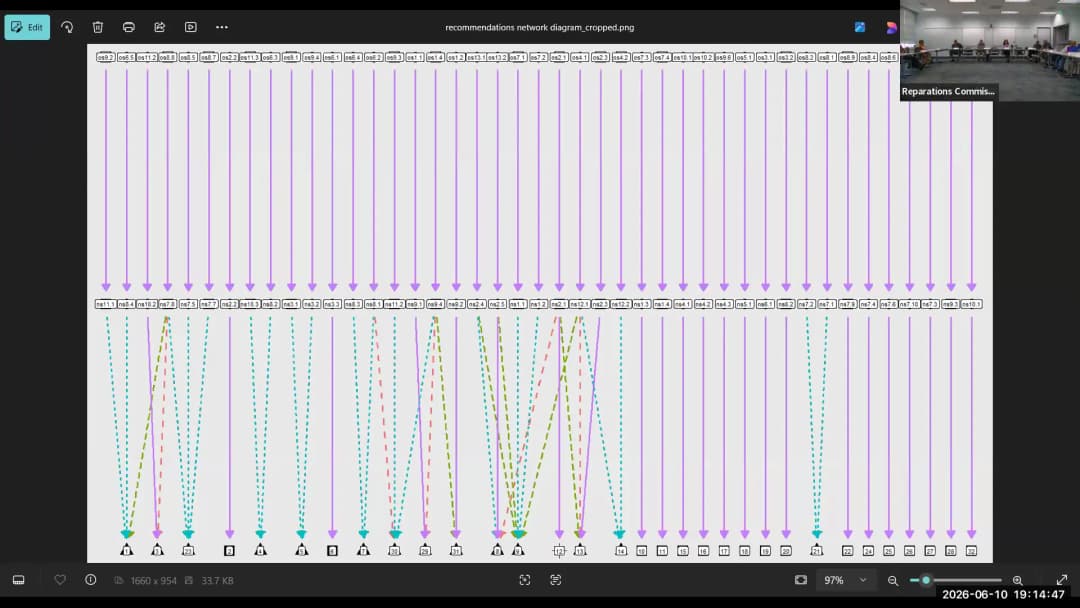
The Alameda County Reparations Commission held its final regular meeting on June 22, 2026, primarily to finalize logistics for their presentation to the Board of Supervisors on June 30, 2026, discuss the budget, review the final report, and address concerns about redundancies in the recommendations. Consent Calendar - Approval of May 13, 2026 Minutes: The minutes were approved with a minor amendment (correcting a name spelling). Motion passed unanimously with a roll call vote. Discussion Items - June 30th Board Meeting Logistics: The chair reported that materials were submitted on June 3, 2026. The set matter time is unknown (agenda released 72 hours prior). Commissioners discussed speaking slots, with a suggestion to have one commissioner per district during the presentation and others during public comment. The presentation is limited to 20 minutes. A budget update showed a projected unallocated balance of $2,225.54 after final expenses (e.g., videographer, poster boards, design report). No new funding ask was made; future phases will need to request funding. Food was canceled to avoid overspending. - Final Report Design and Approval Process: The draft report content has been submitted to the board, but the commission still needs to formally approve the final version. Commissioners debated whether to approve the content-only version or wait for the designed version. It was decided that each subcommittee will review the report (available on SharePoint) and report back to the DAR committee by June 17, 2026, to determine if a special meeting is needed for approval. - Alternate Framing of Recommendations by Commissioner Small: Commissioner Small presented a text analysis showing that certain recommendations (e.g., 7.1 and 7.2 are 87% similar; 7.7 and 7.8 are 88% similar) are redundant and could harm credibility. He proposed a streamlined version. The chair noted that the report includes a preamble explaining that repetitions reflect community voice, and that the report is a living document. A brief exchange ensued about past process disagreements, with Commissioner Small expressing frustration over survey design and subcommittee engagement. The chair acknowledged the work and suggested the next phase can refine the recommendations. - Post-June 30th Gathering: Commissioners discussed organizing a social event after the June 30th board meeting. Suggestions included a venue with food and drink. Subcommittees will gather recommendations and report back. Key Outcomes - May 13 Minutes Approved (unanimous). - Budget: No new funding request; the project will end with approximately $2,225.54 unallocated. - Report Approval: Subcommittees to review final draft by June 17, 2026, and report to DAR committee; a special meeting may be called if needed. - Alternate Framing Document: Commissioner Small's analysis will be included as a historical record for future phases. - June 30th Mobilization: Commissioners urged to invite community members; a community engagement push announced. - Post-June 30th Gathering: Subcommittees to suggest venues; optional social event planned.

PROCEDURAL 45% · RACIAL EQUITY 26% · COMMUNITY ENGAGEMENT 16% · BUDGET EQUITY ANALYSIS 8%
64
JUN 18, 2026 · ALAMEDA COUNTY, CALIFORNIA · BOARD OF SUPERVISORS
Sunol Community Council Meeting - June 18, 2026: Law Enforcement, SFPUC Pipeline, Wayfinding Signs, and Elections

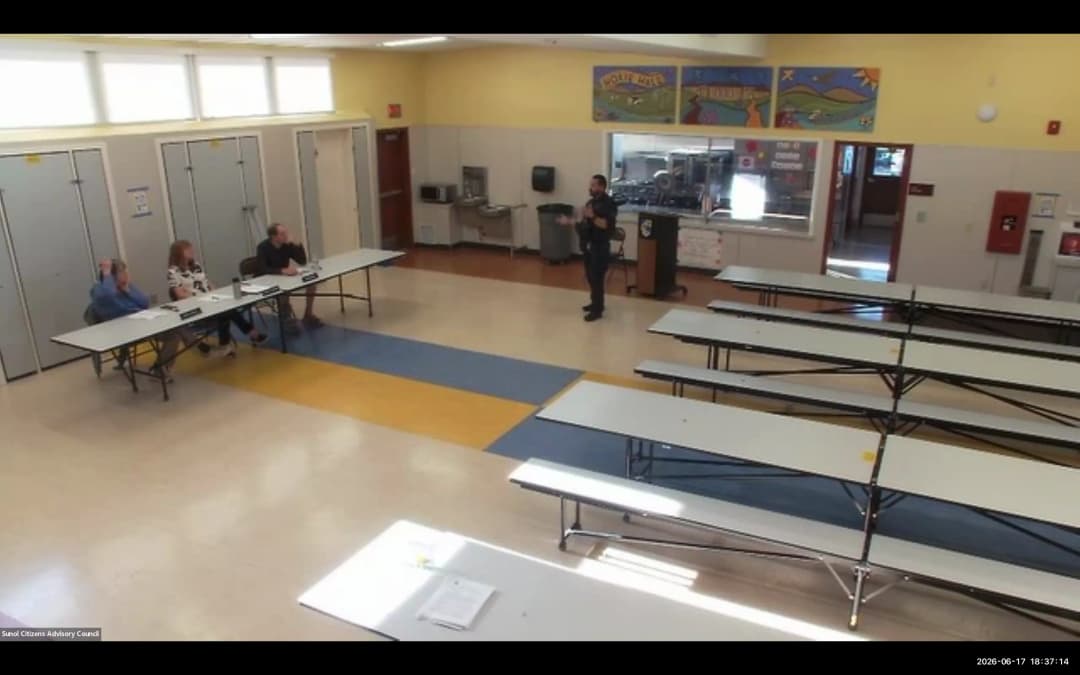
The Sunol Community Council held its regular meeting on June 18, 2026, at 2:30 PM. The meeting included a law enforcement report, an update on the SFPUC pipeline replacement project, a proposal for permanent wayfinding signs, and the election of chair and vice chair. The council also addressed concerns about flock license plate readers and future agenda items. Consent Calendar - The minutes from the May meeting were approved as modified, with the addition of an attachment from Rosemary on Firewise communities. The motion passed unanimously. Public Comments & Testimony - No members of the public were present to provide comments. Discussion Items - Law Enforcement Report (Sergeant Franco): Sergeant Franco reported a good month with low crime. A total of 147 citations were issued in the Tri-Valley area, 20 of which were in Sunol. Citations were primarily for traffic violations (stop signs, speed, crossing double yellow lines). He addressed concerns about gravel trucks speeding through the bridge on Main Street and promised to have motor units monitor the area. He also discussed the flock license plate reader system, noting that it only flags vehicles wanted for serious crimes (violent crimes, burglaries, etc.). Sergeant Franco offered to schedule Sergeant Culley, who oversees the flock system, to present at a future meeting to address community concerns about privacy and potential ICE access. The council agreed to aim for a September meeting for this presentation. - Council Staff Comments: Council members expressed concern about fire department response time on Kilkare Road. They also noted that Caltrans had cut down a protected oak tree near Four Corners, contradicting the EIR, and efforts are underway to get Caltrans to respond. A PGE flyer was distributed. The council discussed upcoming meetings and the need for Caltrans and PGE to present on their projects. - SFPUC Pipeline Update (Item 4A): Alicia Reinhardt, project manager for the San Francisco Public Utilities Commission, reported on the Sunol pipeline replacement project crossing Oro de la Laguna Creek. The goal is to secure drinking water and firefighting supply. Cultural discoveries were encountered during excavation, and coordination with tribal partners (Muwekma Ohlone, Confederated Villages of the Lisjan Nation, and Northern Valley Yokuts) is ongoing. A temporary pipeline and coffer dam will be installed to divert the creek with minimal aquatic impact. The first scheduled tie-in is planned for the night of June 23, 2026, which may cause temporary water pressure decreases but no full shut-offs. The project is expected to be completed by the end of August 2026, in coordination with the Caltrans bridge project. Questions were raised about the nature of the cultural discoveries (artifacts or remains) and potential rerouting of the pipeline. - Wayfinding Signs (Item 4B): The council discussed a request for $29,382.51 to fabricate and install three permanent wayfinding signs in downtown Sunol. A prototype sign was previously installed and received positive feedback. Concerns were raised about the two-year price increase, maintenance (especially lettering and vandalism), and finalizing sign locations and content. The item will be brought back next month with a revised funding request form and additional details from Benjamin (the project sponsor). - Election of Chair and Vice Chair (Item 4C): Chair DeGrange was nominated and re-elected as chair unanimously. Benjamin was nominated and elected as vice chair (with his prior consent) unanimously. Key Outcomes - Votes: The May minutes were approved as modified (unanimous). Chair DeGrange and Vice Chair Benjamin were elected unanimously. - Directives: Sergeant Franco will arrange for Sergeant Culley to present on flock license plate readers at a future meeting (likely September). The wayfinding sign proposal will be revised and brought back in July. The council will continue efforts to engage Caltrans and PGE for presentations. - Future Agenda: The July meeting is expected to include a new business (underwater nuclear batteries from Northstar), updates from Caltrans and PGE, and a presentation on waste collection services by Andy Schneider. The flock license plate reader discussion may also be added.

PUBLIC SAFETY 25% · ENGINEERING AND INFRASTRUCTURE 19% · COMMUNITY ENGAGEMENT 16% · PROCEDURAL 15%
65
JUN 17, 2026 · ALAMEDA COUNTY, CALIFORNIA · BOARD OF SUPERVISORS
Alameda County Board of Supervisors Meeting - June 17, 2026

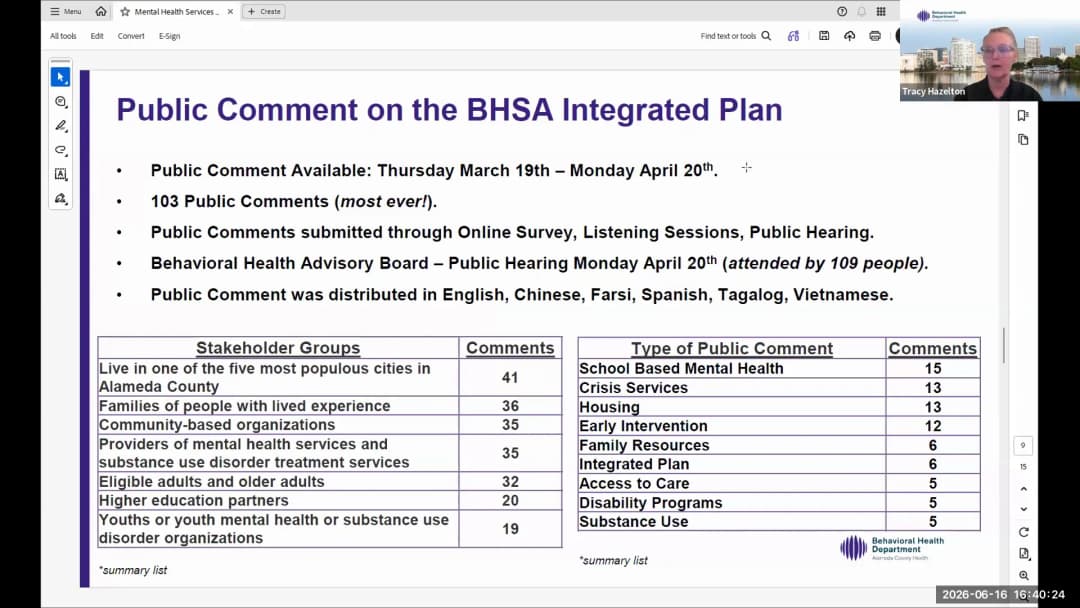
On June 17, 2026, the Alameda County Board of Supervisors convened for a regularly scheduled meeting. The meeting included recognitions for Juneteenth, presentations on staffing vacancies under Assembly Bill 2561 from Human Resource Services and the Fire Department, approval of budget adjustments for Measure C pediatric funds, adoption of the Behavioral Health Services Act three-year integrated plan, and several routine consent items. The board also recessed into closed session twice, with no reportable actions. Consent Calendar - Items 69–78 were approved unanimously with a correction to Item 71: the contract amount adjusted to $178,800. - The minutes from June 2 and June 4, 2026, were adopted with an amendment to note Supervisor Miley’s request to adjourn the June 4 meeting in memory of Pat Gagoskos. Public Comments & Testimony - No public comments were made on closed session items, agenda items, or items not on the agenda. One individual who appeared for Item 2 left before speaking. Discussion Items - Juneteenth Proclamation and Commendations: The board honored Phil Long (owner of Longevity Wines), Marlo Spooner (advocate for making Juneteenth a paid holiday), and the Berkeley Juneteenth Festival. Supervisors Marquez, Miley, and Fortunato Bas spoke about the significance of Juneteenth and upcoming events, including the Reparations Commission report on June 30. - CASA Day Proclamation: Supervisor Miley proclaimed May 19, 2026, as Alameda County CASA Day. Jenny Ring, Executive Director of CASA, accepted the proclamation and noted the organization’s upcoming 40th anniversary in 2027. - Item 67 - AB 2561 Vacancy Report (Human Resource Services): Director Margarita Zamora presented workforce demographics, vacancy data (19% overall, down from 20% the prior year), and recruitment improvements. Discussion centered on setting vacancy rate targets, employee morale, remote work, child care benefits, and the need for metrics. Peter Serrano, president of the Deputy Sheriffs’ Association, spoke about mandatory overtime and suggested tuition reimbursement and medical trust options. The board requested monthly vacancy data for the Sheriff and Probation departments. - Item 68 - AB 2561 Vacancy Report (Alameda County Fire Department): Chief Willie McDonald reported a 13% vacancy rate (down from 17% last fiscal year), noting that many vacancies are unfunded. He highlighted recruitment efforts, partnerships with community colleges, and the use of relief personnel. The board praised the reduction in vacancies. - Item 12 - Measure C Pediatric Care Safety Net Funds: The board approved a budget adjustment to roll over $11,522,500 in unspent pediatric funds from FY 2025-26 to FY 2026-27. Director Anika Chowder explained the delay was due to pending RFPs and hiring. Supervisors requested a work session in the fall to review how children’s hospital funds are being spent. - Item 16 - Behavioral Health Services Act Three-Year Integrated Plan: Vanessa Baker and Tracy Hazleton presented the new BHSA plan, which covers $164.47 million for FY 2026-27. The plan reflects a shift from the Mental Health Services Act, includes a housing component (30% of funds), and a focus on early intervention. Public comments highlighted priorities such as school-based mental health and crisis services. The board discussed the prohibition on prevention funding and the need for district-level housing data. The plan was approved. - Ordinances: The board waived the full reading and adopted second readings of salary ordinance amendments (Items 31 and 32) and introduced a first reading for a legal assistant/attorney assistant classification amendment (Item 33). All passed unanimously. Key Outcomes - Approved consent calendar with correction to Item 71. - Approved mass motion on Items 2–64, with Items 12 and 16 pulled for separate discussion and then approved. - Approved Items 12 and 16 as discussed. - Adopted ordinances (Items 31, 32, 33). - Directed HRS to provide monthly vacancy data for the Sheriff and Probation departments. - Scheduled a fall work session to review Measure C pediatric fund usage by children’s hospital. - Adjourned the meeting in memory of Darlene Smith, a former General Services Agency director.

PERSONNEL MATTERS 26% · HEALTHCARE SERVICES 15% · WORKFORCE DEVELOPMENT 12% · PROCEDURAL 10%
66
JUN 15, 2026 · ALAMEDA COUNTY, CALIFORNIA · BOARD OF SUPERVISORS
Alameda County PAL Committee Meeting - June 15, 2026

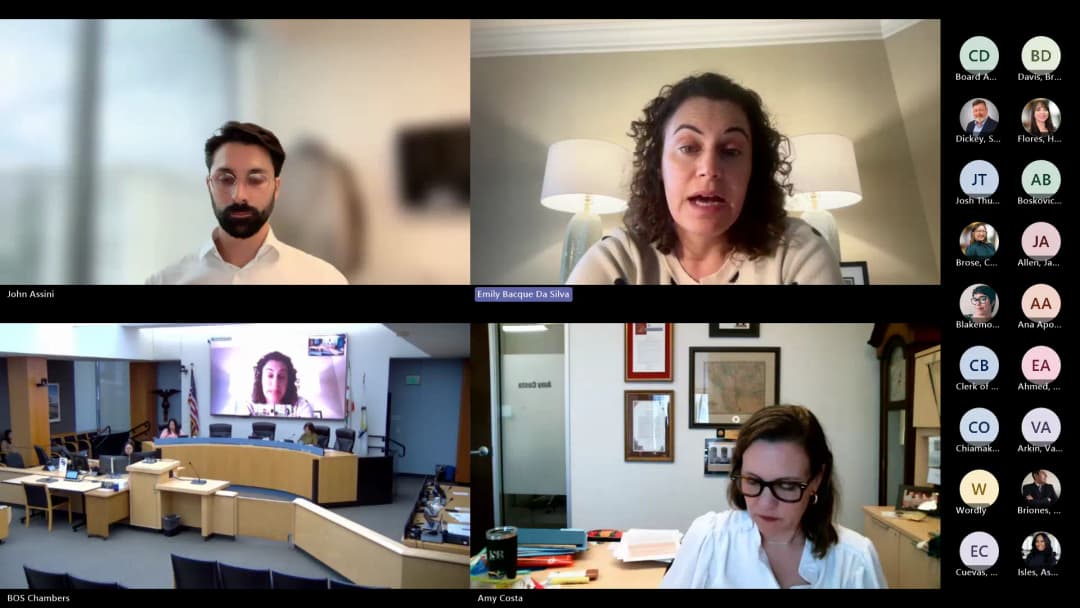
The committee received updates on federal and state legislation, reviewed language access services, and heard public comments. No votes were taken; the meeting served as an informational session and discussion forum. Federal Legislative Update - Emily Baket de Silva and John Assini (CJ Lake) reported on the passage of a $70 billion reconciliation package for ICE and CBP, signed into law on June 10, 2026, on a party-line House vote of 214-212 (one seat vacant). The FISA Section 702 extension failed, with uncertainty over future intelligence collection. A framework agreement between the U.S. and Iran was announced, described as a "table of contents" rather than a formal MOU, with a 60-day ceasefire and future negotiations; congressional review may be required. The administration has not yet requested supplemental defense funding for replenishing expended munitions. - Supervisor TAM asked clarifying questions about the vote margin and potential future war funding. Staff responded that no formal funding request has been transmitted, and replenishment may occur through normal FY27 appropriations. State Legislative Update - Amy Costa (Fullman Strategies) reported that June 15, 2026, is the constitutional deadline for the legislature to pass a budget bill (AB 109) for FY26-27. The legislative budget plan assumes $15 billion higher revenues than the May revise, delays many health and human services cuts until 2027, and includes three revenue sources (cap on net operating losses, MCO tax extension, sales tax on digital software). A structural deficit of $9.7 billion remains projected for FY29-30. SB 1400 (county-sponsored) will be heard in Assembly Local Government on June 17. The budget package includes $250 million for public hospitals, $100 million for emergency food banks, $185 million above the governor’s proposal for CalFresh administration, and $16.5 million for diaper banks. The legislature delayed until 2027 cuts to Medi-Cal for undocumented immigrants and maintained full-scope coverage for asylum seekers. - Supervisor TAM asked about a proposed constitutional amendment to increase the rainy day fund, allocation of hospital funding, and food bank funding. Supervisor Fortunato Bass inquired about Medi-Cal coverage for qualified non-citizens and the timeline for final budget negotiations (expected by end of June). Language Access Presentation - Anisa Basoko Villarrial (Assistant Deputy County Administrator) presented on Alameda County’s language access services: a contract with Global Language Solutions (through 2028), over 1,000 bilingual certified employees (top languages: Spanish, Cantonese, Vietnamese), and 175,477 calls totaling 2,360,725 minutes from June 2025 to May 2026. The county must comply with SB 707 by July 1, 2026, including designated interpretation areas, automatic captioning, and facilitating personal device use. Next steps include training employees, creating translated PSAs, and sharing information with non-traditional media. - Supervisor TAM noted that 47% of county residents speak a language other than English at home (19.66% Asian languages, 16.54% Spanish). She questioned whether all department websites offer translation (e.g., Public Works) and requested consistency. Supervisor Fortunato Bass clarified metadata interpretation (connect times seconds vs. call length minutes). - Public comments: Julia Dell (community member) supported the presentation, questioned Google Translate accuracy, and urged benchmarking for language equity. Kelly Abreu highlighted a San Francisco Chronicle article on discretionary spending and criticized website fragmentation across departments. Key Outcomes - No formal votes were taken. - The board directed staff to explore consistent translation features across all department websites and to post the language access dashboard on the CAO website and AC Speaks. - The committee received the language access report and will continue monitoring implementation of SB 707 and related improvements. - The federal and state legislative updates were received as information; no further action was requested.

GOVERNMENT REPRESENTATION 49% · LANGUAGE ACCESS 25% · COMMUNITY ENGAGEMENT 18% · HEALTHCARE SERVICES 4%
67
JUN 10, 2026 · ALAMEDA COUNTY, CALIFORNIA · BOARD OF SUPERVISORS
Eden Area MAC Meeting - June 10, 2026: New Chair, Vet Clinic, Urban Forest Plan

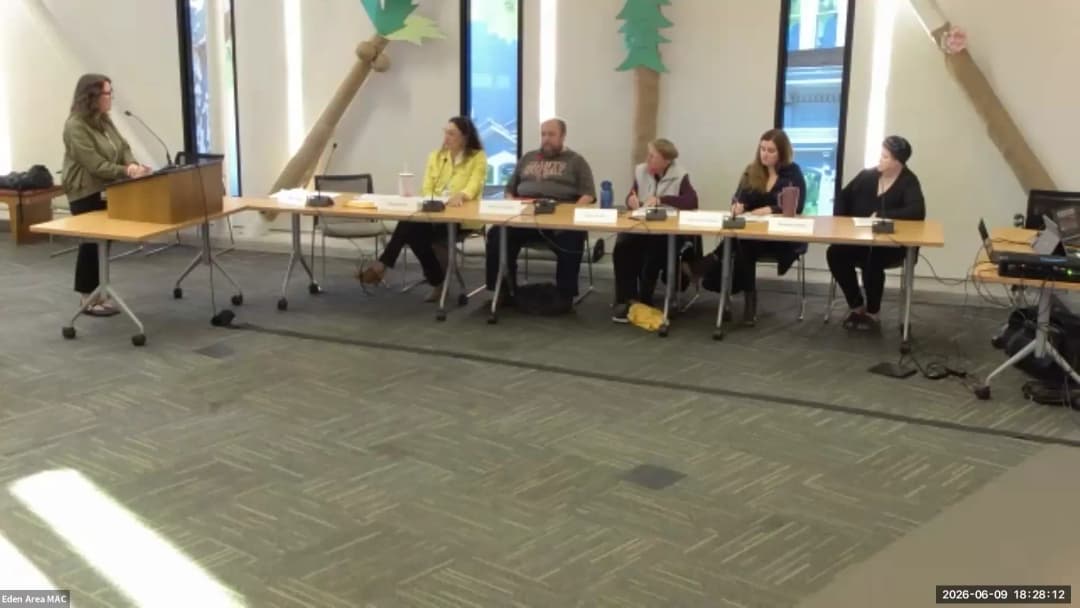
The Eden Area Municipal Advisory Council (MAC) met on June 10, 2026, at 2:00 PM. Among other actions, the council dissolved an economic development subcommittee and formed a new one for the strategic plan, approved a conditional use permit for a limited-service veterinary clinic, received updates on the Bay Fair Community-Based Transportation Plan and the Unincorporated Urban Forest Plan, and elected a new Chair and Vice Chair. Public Comments & Testimony - Kristen Hackett (Eden Renters United): Reported that after speaking with 80 residents across five buildings in Ashland and Castro Valley, 84% are paying additional monthly fees for garbage, water, and sewer—fees often separated from rent since the Tenant Protection Act of 2019. Fees range from $85 to $700 per month, are unregulated, and nonpayment can lead to eviction. Asked the MAC to support a ban on such “junk fees.” - Lindsey Wright (Mobile Homeowners Unite): Provided an update on the change in use ordinance (formerly the mobile home closure and conversion overlay). Expressed concern about a protracted process, a potential conflict of interest by the planning commission chair, and delays that have moved the expected passage from spring 2025 to an uncertain date. Asked for help from elected officials. - Martha Yolanda (translated statement): A resident of Shamore Place (80-unit building in Ashland) said she is a retired senior with a disability now paying $200/month for garbage and water on top of rent. She stated she and her husband struggle to afford rent, groceries, and gas, and that neighbors are being pushed out because of these fees. Asked the Board of Supervisors to pass a ban on junk fees. - Sergeant Fenton Cully (Eden Township substation): Announced a contract for 18 months of law enforcement technology services will be presented at the Unincorporated Services Committee meeting on June 24 at the library, with a vote at the Board of Supervisors meeting on June 30. Invited community attendance. - Dr. Pavni Mavi (veterinarian, San Lorenzo): Opposed the conditional use permit for the new veterinary clinic, questioning public need given two nearby clinics, parking adequacy (26 spaces, two ADA, with five staff and client parking), and safety concerns regarding disposal of pet waste near a restaurant. - Carlin Jones (hospital administrator): Supported Dr. Mavi’s concerns, citing lack of public need, limited parking, and incompatibility with the strip mall (restaurant neighbor). Noted their clinic is rebranding to offer low-cost services. - Brandy Waggy: Spoke in favor of the veterinary clinic, expressing support for new businesses in San Lorenzo and noting the current vacancy. - Lindsay Wright (second comment): Expressed support for the veterinary clinic, stating there is high demand and that indoor pet relief areas can be managed. Consent Calendar - Approval of Minutes (May 12, 2026): Motion by Megan, seconded, carried unanimously (all ayes). Discussion Items Items 1 & 2: Dissolution of Economic & Civic Development MAC Subcommittee and Formation of Economic Development Strategic Plan Ad Hoc Subcommittee - Staff Presentation (Eileen Dalton, Director of Economic and Civic Development): Explained that the existing subcommittee, formed in November/December 2023, had a broad scope not time‑limited. To ensure transparency and compliance with new rules, it needed to be dissolved and replaced with a subcommittee specifically for the Economic Development Strategic Plan (EDSP). The new subcommittee would have three members and last until the plan is adopted by the Board of Supervisors (expected mid-2026). The draft plan is ready for review and will be presented to the full MAC on September 8. - Council Discussion: Warren confirmed he would not serve on the new subcommittee. Megan expressed interest and was added. The new subcommittee membership became Elizabeth, Taylor, and Megan. Staff clarified the time commitment (one to two meetings, about 1.5 hours each, between now and September). - Public Comment: None. - Votes: The motion to dissolve the old subcommittee passed unanimously (all ayes). The motion to form the new EDSP Ad Hoc Subcommittee with members Elizabeth, Taylor, and Megan passed unanimously (all ayes). Item 3: Conditional Use Permit (PLN 2026-00057) – Veterinary Clinic at 1884 Hesperian Blvd, Suite 18894 - Staff Presentation (Aubrey Rose, Planning Department): The permit would allow a small animal limited‑service veterinary clinic (no surgeries, hospitalization, or boarding) in a former bar space. General plan: commercial and medium‑density residential; zoning: C‑1. Exempt from CEQA (Section 15301, existing facility). Staff recommended approval. - Public Comment: Dr. Pavni Mavi and Carlin Jones raised concerns about public need, parking (26 spaces, two ADA), and incompatibility with adjacent restaurant. Brandy Waggy and Lindsay Wright supported the clinic, citing community need. - Council Discussion: Megan noted difficulty getting appointments at existing clinics and saw a need. Warren and Taylor supported economic development. Elizabeth asked applicant about medications on site (none controlled) and about the scope of services (wellness, minor ailments, referrals). The applicant, Jasmine Barrcioni, stated she is a veterinarian with 20 years of local experience, will offer lower‑cost care, and has an emergency clinic opening June 22 for referrals. - Vote: Motion to approve by Elizabeth, seconded, passed unanimously (all ayes). Item 4: Bayfair Community‑Based Transportation Plan (CBTP) – Informational Update - Staff Presentation (Angelica Gonzalez and Dominic Lucchese, Planning Department): The CBTP is a joint Alameda County–San Leandro effort funded by ACTC to improve walking, biking, and transit access to Bayfair BART and local destinations. Engagement in 2025‑2026 included over 150 survey responses, pop‑ups, and an open house (50 attendees). Six themes emerged: barriers to BART access, auto‑dominated landscape, disconnected bike network, safety concerns, structural inequity, and lack of amenities (lighting, shade, seating). Top priorities from voting: street lighting, benches/shade at bus stops, safer crosswalks, street trees. Next steps: second open house and survey this summer, final draft plan in fall. - Council Discussion: Elizabeth asked about outreach methods (staff described flyering, email, pop‑ups, door‑to‑door). Taylor asked about integrating phase‑two feedback and mapping. Warren praised the April open house and offered to serve on the steering committee. Megan asked about AC Transit involvement (representative on steering committee) and about ridership patterns (not yet analyzed). Chair Weitler suggested more frequent pop‑ups. Staff noted public works is on the project team. - No vote required (informational). Item 5: Unincorporated Urban Forest Plan – Informational Update - Staff Presentation (Ali Abers, Planning Department): The plan is a CalFire‑grant‑funded effort to create a comprehensive urban forest management strategy for urban unincorporated areas (Castro Valley, Fairview, Ashland, Cherryland, Hayward Acres, San Lorenzo). Key components: street tree inventory (underway in San Lorenzo/Ashland), community tree advisory group (stipended, applications extended to June 15), analysis of canopy, heat, fire risk, and development of canopy goals. A pilot workforce program (Growing Futures) with HARD and Merritt College will train 5‑8 students. Timeline: tree inventory and canopy report due October 2026; draft plan July 2027; final plan October 2027; native tree planting winter 2027‑28. - Council Discussion: Megan praised bilingual materials and equity focus. Elizabeth wanted specific canopy targets later. Warren noted accessibility for people with disabilities. Taylor asked about tree species and recommendations for future planting. Chair Weitler emphasized education on tree value and proper maintenance. - No vote required (informational). Item 6: Election of Chair and Vice Chair - Procedure: Chair Diane stated her two‑year term ended, calling for nominations. - Chair: Megan nominated Warren; Elizabeth seconded. No other nominations. Public comment: none. Vote: Warren elected Chair unanimously (all ayes). - Vice Chair: Warren nominated Taylor; Megan seconded. Taylor accepted. Public comment: none. Vote: Taylor elected Vice Chair unanimously (all ayes). Key Outcomes - Votes: All action items (approval of minutes, dissolution of old economic subcommittee, formation of new ad hoc subcommittee, approval of veterinary clinic CUP, election of Chair and Vice Chair) passed unanimously. - New Officers: Warren became Chair, Taylor became Vice Chair. - Directives: Staff will bring the draft Economic Development Strategic Plan to the full MAC on September 8, 2026. The Bayfair CBTP will hold another round of public engagement this summer. The Urban Forest Plan will continue with tree inventory and advisory group recruitment. - Next Meetings: Unincorporated Services Committee (June 24), Board of Supervisors (June 30), Eden Area senior town hall (July 10), Healthy Living Festival (September 24).

PROCEDURAL 20% · PARKS AND RECREATION 17% · ECONOMIC DEVELOPMENT 16% · COMMUNITY ENGAGEMENT 12%
68
JUN 9, 2026 · ALAMEDA COUNTY, CALIFORNIA · BOARD OF SUPERVISORS
Fairview MAC Meeting – June 9, 2026: T-Mobile CUP Renewal Approved, Fireworks Ordinance Update

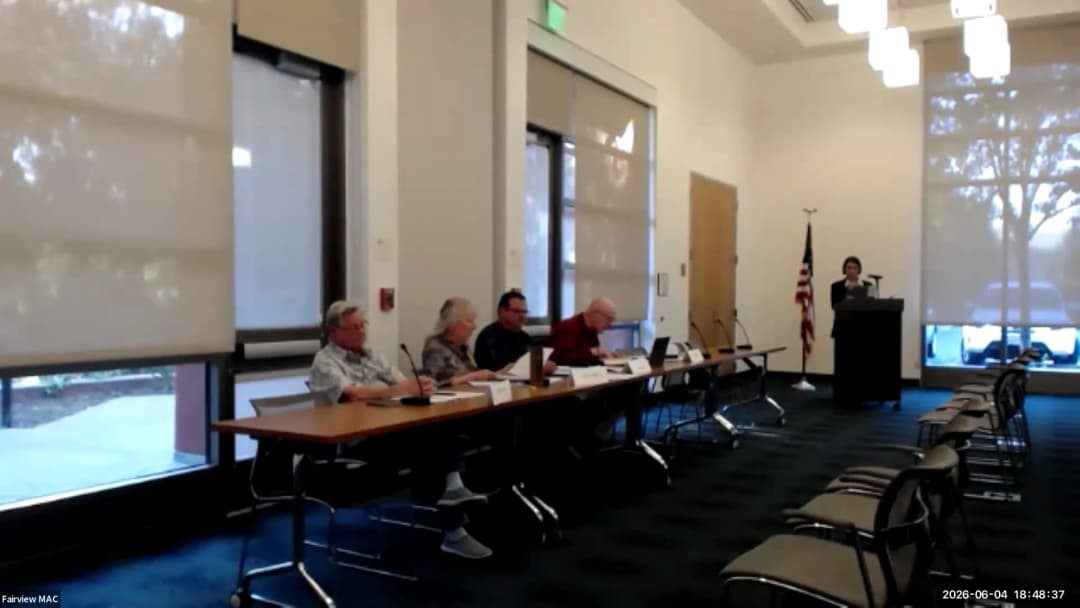
The Fairview Municipal Advisory Council (MAC) met on June 9, 2026 (the transcript cites June 4, 2026—a discrepancy noted) to discuss routine business, public comments, and a conditional use permit renewal for a T-Mobile telecommunications facility. The meeting was called to order at approximately 2:00 p.m. with a quorum present (Councilmember Farmer and Vice Chair Rhodes excused). Key actions included approval of the T-Mobile CUP with additional reporting conditions and continuation of two items to the July 7th meeting. Consent Calendar - Approval of the May 5, 2026 minutes: Motion failed (1 abstention, 2 ayes, 1 absent) because a quorum was not achieved for minutes approval. The item was rolled to the July 7, 2026 meeting. Public Comments & Testimony - Sergeant Fenton Cully (Alameda County Sheriff’s Office): Announced a presentation on automated license plate readers, drone first responder program, and pan-tilt-zoom cameras at the Unincorporated Services Committee meeting on June 24, 2026, and a Board of Supervisors vote on June 30, 2026. Requested community input. - Kelly (public comment): Expressed support for maintaining in‑person meetings while allowing hybrid options, noting lessons from pandemic remote learning. Opposed moving to fully remote meetings. - Carl Moose: Asked about paperwork for insurance claims regarding tree‑well trips and complaints for bicycle‑pedestrian collisions on sidewalks; requested staff follow‑up. - Fran Krug: Reported that the Board of Supervisors unanimously passed a fireworks ordinance on June 2, 2026 (actual date: June 8, 2026?), and thanked Sheriff’s office for development. Announced a major public awareness campaign including a postcard mailing to all unincorporated area residents. - Kathy Langley (on Item 1): Opposed the housing element, calling it “state‑mandated eminent domain” and urged local control and ballot measure. Referenced a wetlands area and coyote pups on site. - Chuck Meadows (on Item 2): Expressed no objection to the T‑Mobile application but raised concerns about the failure to track CUP renewals and the federal “shot clock” process. Suggested creating bargaining chips (e.g., undergrounding requirements) to retain local control. - Carl Moose (on Item 2): Criticized the planning presentation as insufficient, requesting explanation of power, watts, magnetic flux, etc. - Ashley (caller): Requested information on how to obtain details about the July 7th meeting for the D Street project; staff clarified that courtesy notices are mailed to neighbors within 500 feet and agendas are posted online. Discussion Items - Item 1 – D Street Historical Site Development Review: Continued to the July 7, 2026 meeting. Public comment was taken; Kelly and Kathy Langley offered remarks opposing the housing element and environmental impacts. - Item 2 – PLN 2026-00012 T‑Mobile Conditional Use Permit Renewal: Planner Maral Esmaili presented the request to allow continued operation of an existing T‑Mobile facility co‑located on a 153‑foot‑10‑inch PGE utility tower at approximately 2718 East Avenue (no address on cover sheet). The original CUP (C‑8558) expired in 2017, but T‑Mobile continued operating via building permits and equipment upgrades. Staff recommended approval, finding consistency with Alameda County telecommunication standards. Council members questioned: - Generator use (backup only, per applicant Joshua Hernandez and Rodrigo from Planning). - The 300‑foot setback standard vs. 45‑foot distance to nearest residence; Rodrigo explained it is a guideline for visual and noise impacts, not a safety requirement, and FCC rules prohibit denial based on RF health concerns. - Aesthetics: possibility of artwork on cabinets, improved screening. - Typos in conditions (page 6, page 9). - Co‑location obligation (Condition 14): first carrier cannot monopolize the site. - Request for periodic status reports to the MAC. - Concern about RF/EMI testing at the nearby residence. - Item 3 – (Continued): Continued to July 7, 2026 to allow Vice Chair Rhodes to participate. No public comments. - Chair’s Report: Chair Anglin highlighted the passage of the fireworks ordinance and the upcoming PR rollout. (Fran Krug had already elaborated.) - Council Announcements: Councilmember Philbin reminded of the annual Veteran Celebration on November 8, 2026 at 1:00 p.m. at Lone Tree Cemetery. Key Outcomes - T‑Mobile CUP Renewal (Item 2): Approved 4‑0 (Farmer, Higgins, Philbin, Anglin) with amendments: - Permit status reports to be submitted to the Fairview MAC every year for the first year and every five years thereafter. - Applicant to explore aesthetic improvements, including artwork on cabinets. - Applicant to conduct RF/EMI and audio surveys at the nearest residence and provide results to the MAC. - Minutes Approval: Failed; continued to July 7. - Items 1 and 3: Continued to July 7, 2026 meeting. - Staff Direction: County staff to correct typos in the T‑Mobile conditions of approval. Subcommittee updates to be provided to the Chair in advance for proper agenda inclusion.

ENGINEERING AND INFRASTRUCTURE 44% · PROCEDURAL 16% · LAND USE PLANNING 16% · TECHNOLOGY AND INNOVATION 13%
69
JUN 9, 2026 · ALAMEDA COUNTY, CALIFORNIA · BOARD OF SUPERVISORS
Fairview Municipal Advisory Council Meeting – June 9, 2026

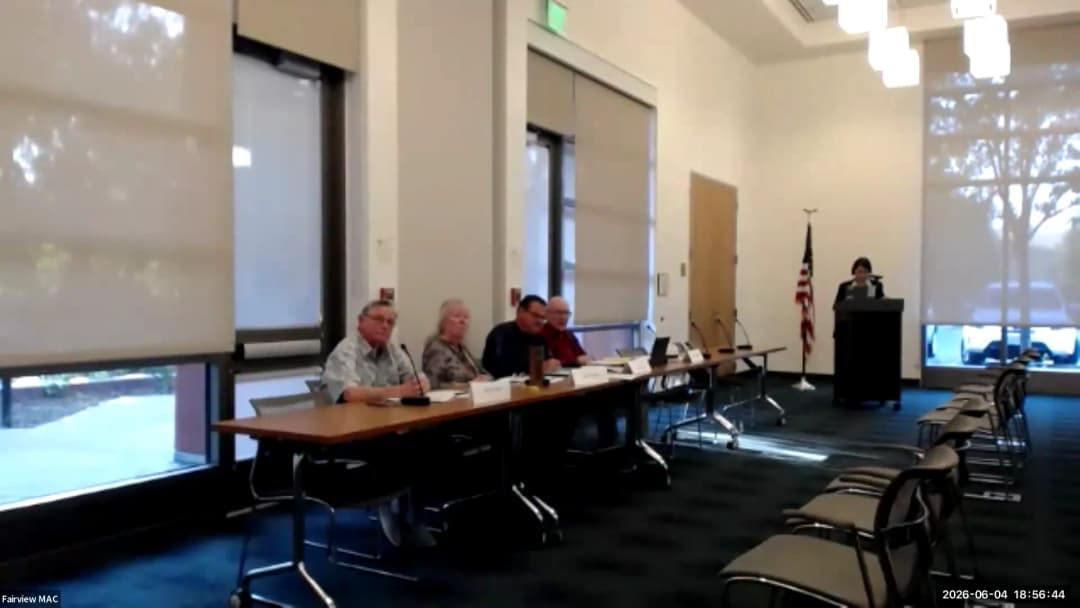
The Fairview Municipal Advisory Council (MAC) met on June 9, 2026, to address routine approvals, a continued-use permit for a T-Mobile telecommunications facility, and public comments on various issues. The meeting included a presentation on upcoming public safety technology votes, discussion of fireworks ordinance implementation, and debate on remote meeting policies. The council approved the T-Mobile conditional use permit with amendments and deferred approval of the May 5, 2026 minutes due to a lack of quorum. Consent Calendar - Approval of the May 5, 2026 meeting minutes was moved and seconded. Voting resulted in one abstention (Councilmember Philbin) and two ayes (Higgins, Anglin). Chair Anglin declared the minutes not approved because a quorum was not present for the vote. The item was continued to the July 7, 2026 meeting. Public Comments & Testimony - Sergeant Fenton Cully (Alameda County Sheriff’s Office) announced that the Unincorporated Services Committee would meet on June 24, 2026, to present automated license plate readers, a drone first responder program, and pan-tilt-zoom cameras. A Board of Supervisors vote is scheduled for June 30, 2026. He requested community input. - Kelly (caller) urged the council to consider hybrid meetings rather than moving fully to remote format. He argued that in-person meetings have value, citing negative outcomes from remote learning during the pandemic. - Carl Moose asked about paperwork for insurance claims related to county tree-well incidents and the proper procedure for reporting bicycle-pedestrian collisions on sidewalks. - Fran Krug reported that the Board of Supervisors unanimously passed a fireworks ordinance on June 8, 2026. She thanked the Sheriff’s Office and noted that a major public relations rollout is planned, including a postcard mailing to all unincorporated area residents. - Kathy Langley (on item 1, continued) criticized the housing element as “state-mandated eminent domain” and urged local control. She referenced a Google Maps label “Coyote Pups” near the D Street site and described the area as wetlands. She advocated overturning the housing element via ballot initiative through the group “Our Neighborhood Voices.” - Chuck Meadows (on item 2) did not object to the T-Mobile permit but raised process concerns: the county’s failure to track conditional use permit renewals (9‑year lapse) and the need for a separate track for federally mandated shot clocks. He suggested the MAC use aesthetic requirements as bargaining chips and criticized “astroturfing” by carrier supporters. - Carl Moose (on item 2) criticized the planning staff presentation for lacking technical details (power, flux density) and called for a better explanation. Discussion Items - Item 1 (Continued) – D Street Historical Site Development Review – This item was continued from the agenda to the July 7, 2026 Fairview MAC meeting. Public comment was taken; speakers described the site as wetlands and expressed concern about housing element development. Staff clarified that courtesy notices would be mailed to neighbors before the July 7 hearing. - Item 2 – PLN 2026-00012: T-Mobile Conditional Use Permit Renewal – Planner Maral Esmaili presented the application for continued operation of an existing T-Mobile facility co-located on a 153‑foot‑10‑inch PGE utility tower at 2718 East Avenue. The original permit (C-8558) expired in 2017; the facility continued operating under subsequent building permits. The project is categorically exempt from CEQA (Section 15301). Staff recommended approval, finding the facility consistent with county telecommunication standards. Council members raised questions about: - Address inconsistency on cover page. - Distance to nearest residence (45 feet vs. 300‑foot standard for facade mounts). Rodrigo Duenas (Planning) explained the 300‑foot guideline addresses visual and noise impacts, not health risks; RF emissions are regulated by the FCC. - Generator use – confirmed as backup only. - Aesthetic improvements – possibility of mural or artwork on equipment cabinets was discussed. - Frequency of equipment testing and periodic compliance reporting. - Condition for co-location (Condition 14) and whether AT&T had been properly accommodated. - Typographical errors in staff report (page 6, page 9, page 11). - Request for status reports to be provided to the MAC. Public comment echoed concerns about process and gave suggestions for strengthening the council’s negotiating position. - Item 3 (Continued) – Continued to July 7, 2026 meeting; no public comment was offered. - Chair’s Report and Council Announcements – Chair Anglin gave a brief report. Councilmember Philbin reminded of the annual veteran celebration on November 8, 2026 at 1:00 PM at Lone Tree Cemetery. Discussion included a request for more signage about the new fireworks ordinance. Key Outcomes - Item 2 – T-Mobile CUP Approval: The council voted 4‑0 (Farmer, Higgins, Philbin, Anglin) to recommend approval of the conditional use permit (PLN 2026-00012) with amendments: - Include artwork or murals on equipment cabinets. - Provide status reports (compliance, maintenance, FCC license verification) to both the Board of Zoning and the Fairview MAC at the 1‑year and 5‑year intervals (and every 5 years thereafter). - The county will add a condition requiring the latest RF test results before permit issuance. - Minutes Not Approved: The May 5, 2026 minutes were not approved because the vote lacked a quorum (2 ayes, 1 abstention, 2 excused). The item was rolled to the July 7, 2026 meeting. - Staff Announcement: Subcommittee updates must be submitted to the chair in advance for proper agenda inclusion. - Meeting Adjourned at approximately [not specified].

ENGINEERING AND INFRASTRUCTURE 56% · PROCEDURAL 19% · TECHNOLOGY AND INNOVATION 9% · PUBLIC SAFETY 5%
70
JUN 8, 2026 · ALAMEDA COUNTY, CALIFORNIA · BOARD OF SUPERVISORS
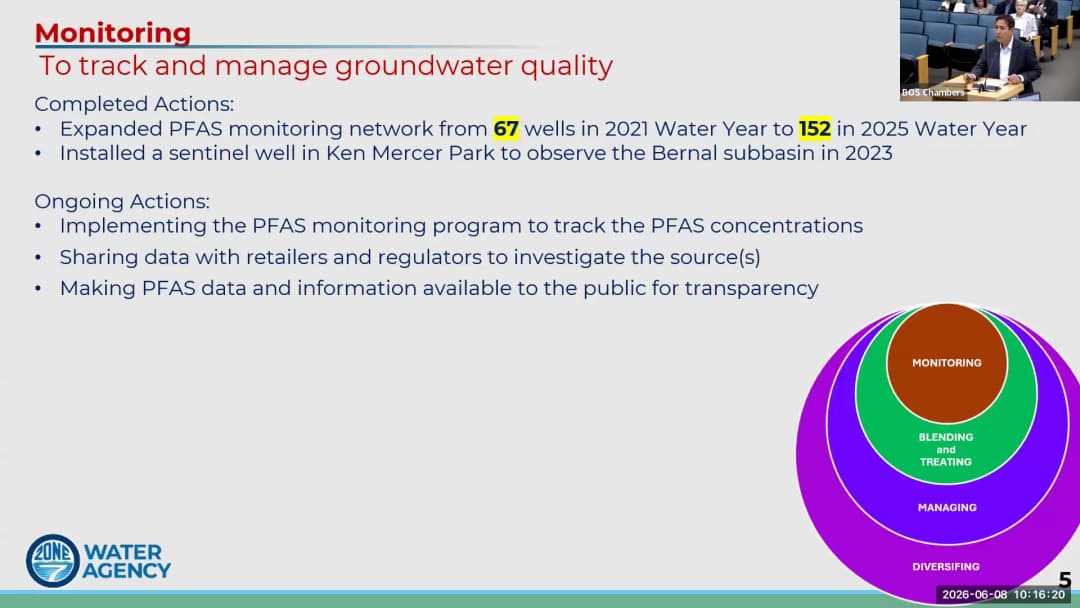
Alameda County Health Committee Meeting - June 8, 2026: PFAS Update and AHS Budget

The Health Committee convened on June 8, 2026, to receive an update on PFAS (per- and polyfluoroalkyl substances) contamination in drinking water and to review the Alameda Health System (AHS) preliminary budget for fiscal year 2026-27. Presentations covered health effects, regulatory actions, water district responses, and community concerns. The AHS budget showed a $42.8 million net loss, driven by $66.5 million in labor CPI costs and $17.8 million in HR1 state impacts. Public comment focused on the proposed closure of the Fairmont Intensive Outpatient Program (IOP) and alleged inaccuracies in AHS budget figures. Public Comments & Testimony - Fairmont IOP clinicians and manager (Drew Scott, Craig Metz, Chelsea DeMardi, Parisa Farrohe, Dr. Peter Freed, Sandra Marshall, Michael McAdoo) opposed the closure of the IOP, arguing that AHS budget numbers are inaccurate, that a 4.5 million overhead was added without basis, and that the program is nearly budget neutral. They stated that the program serves severely chronically mentally ill patients who cannot be transitioned to outpatient care and that closure would lead to increased hospitalizations. They urged the committee to require an independent audit and to fund the program for another year. Discussion Items 1. PFAS Update - Dr. Nicholas Moss (County Health Officer) opened the session, noting the purpose was to provide additional information on PFAS impacts and response, following a June 2025 presentation. - Dr. Chris Banks (OEHHA) presented health effects: PFOA and PFOS are associated with kidney cancer and other toxicities; public health goals are set at very low parts-per-trillion levels. He confirmed PFAS is a definitive health concern. - Stefan Kehina (State Water Board) and Kimberly West (Regional Water Board) described state rulemaking: federal MCLs for PFOA and PFOS at 4 ppt; California will pursue broader rulemaking, including a mass-based approach. They noted over 40% of California water sources have PFAS detections, with hot spots in Pleasanton/Livermore and Fremont. - Ken Min (Zone 7 Water Agency) reported that Zone 7 has invested over $50 million in ion exchange treatment facilities, providing PFAS-free water since 2023. They monitor 260+ wells and use blending and treatment to meet MCLs. Sources of contamination include Livermore Airport and a fire training center. - Michelle Walden (Alameda County Water District) described proactive voluntary sampling since 2020, with low-level detections; a $26 million treatment facility (6 MGD, expandable to 15 MGD) using ion exchange has been in operation since 2024. Ratepayers fund treatment. - Jill Buck (Go Green Initiative) provided a community perspective, highlighting that while water is now treated, residents still have PFAS in their bodies. She asked the county to make testing accessible, monitor health of exposed communities, and educate clinicians per National Academies of Science 2022 recommendations. She noted that two state bills supporting PFAS mitigation were not enacted. - Dr. Moss summarized that the county is drafting a comment letter opposing EPA’s proposed rescission of PFAS regulations, is developing a webpage for residents and providers, and is evaluating wastewater monitoring for PFAS. 2. Alameda Health System (AHS) Preliminary Budget FY 2026-27 - Mark Fratsky (COO) and Kim Fratsky (Budget Director) presented the draft budget showing a $42.8 million net loss and negative EBITDA of $8.9 million. The deficit is driven by $66.5 million in labor CPI, $17.8 million in state impacts (HR1, AP-MAP drop, Managed Care Organization tax, EAPC cap, 1115 waiver expiration), and $3.4 million in insurance/legal costs. Performance improvement initiatives of $28.4 million (revenue and expense) are included, with a remaining gap of $72 million (excluding the deferred RIF of 187 FTEs estimated at $35.3 million). Long-term projections show increasing deficits without action. - Discussion focused on the Fairmont IOP program, budgeted to close. Supervisors Miley and Tam expressed commitment to keeping IOP open while a study determines its future. The ad hoc committee has directed AHS and labor to negotiate a plan to reduce the $72 million gap, with options including a freeze on cost-of-living adjustments, increased medical premium contributions, furloughs, and partial layoffs. The county has not committed additional funds pending consensus. Supervisor Miley noted the county’s Measure A reserve and potential use of Measure W funds, but emphasized that all parties must demonstrate maximum effort before seeking new revenue. - Supervisor Miley reported that the ad hoc committee will meet again on June 17, 2026, to review progress. AHS will seek legal counsel regarding the RIF notices. Key Outcomes - PFAS: The committee directed staff to return with a menu of best practices for PFAS testing, community health monitoring, and clinician education, using the National Academies guidelines. Staff will draft and submit comment letters to the EPA and state water board supporting strong PFAS regulation. The next PFAS update is expected in 6–12 months. - AHS Budget: The ad hoc committee will meet June 17 to receive updates from labor negotiations. The IOP program will remain open while a study is conducted. No additional county funding was committed; the county will consider options after consensus on the budget gap is reached. - The committee adjourned to its next scheduled meeting on June 22, 2026 (budget session) or July 13, 2026.

ENVIRONMENTAL PROTECTION 27% · FISCAL SUSTAINABILITY 24% · WATER AND WASTEWATER MANAGEMENT 20% · PUBLIC HEALTH SERVICES 12%
OPENPUBLICA · PUBLIC MEETING INDEXUPDATED DAILY · openpublica.com