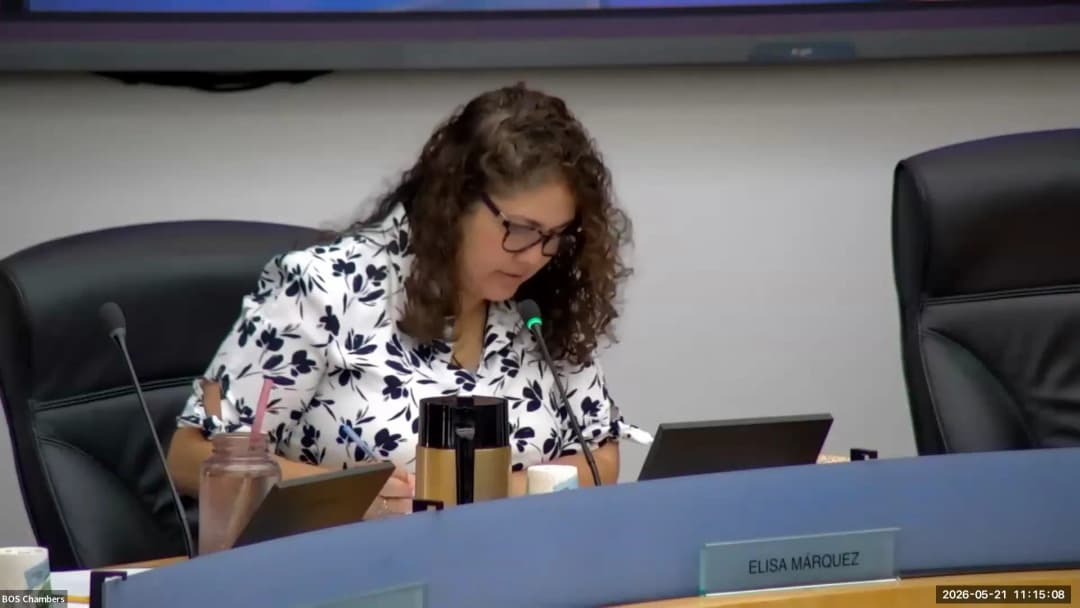
This informational meeting covered two major reports: the National Public Defense Workload Study and AB 625 California Public Defense Workloads and Staffing Report, and the Alameda County Juvenile Justice Landscape Analysis and JJCPA 2020-2026 Plan. Presentations highlighted severe staffing shortages in the Public Defender's office and identified service gaps and geographic inequities in youth services, with no formal votes taken. Public Comments & Testimony - Six members of the public spoke during general public comment (Item 4) urging the committee to agendize and cancel the Flock Safety contract renewal before the June 30th expiration and 30-day notice deadline. Speakers cited concerns about data sharing with ICE and DEA, civil liberties violations, lack of transparency in the Sheriff's presentations, and potential legal liabilities for the county. They requested the item be placed on a Board of Supervisors meeting before the end of May. Discussion Items - Public Defense Workloads and Staffing (Items 1): Public Defender Brendan Woods and Malia Brink (Policy Director, Deason Criminal Justice Reform Center) presented the National Public Defense Workload Study and the AB 625 report. Brink noted that 82% of chief public defenders statewide said they lack sufficient trial attorneys, with 71.4% strongly disagreeing that current numbers suffice. The attorney ratio of public defenders to district attorneys is 73% statewide. In Alameda County, applying the workload study indicates a need for 104 additional attorneys (costing $39.5 million), or 75 after adjusting for probation violations. Support staffing gaps include 45 investigators, 21 social workers, 32 paralegals, and one administrative staff to meet recommended ratios. Woods shared that his office had six attorneys resign in April and May due to crushing caseloads, and that he personally carries a homicide case with 145 body-worn camera videos from one agency alone. - Juvenile Justice Landscape Analysis and JJCPA Plan (Items 2-3): Chief Probation Officer Brian Ford introduced presentations by Carol Burton (JUL Consulting) and Asst. Chief Dante Sarcone. Burton's firm surveyed 112 organizations, identifying 937 distinct youth services across the county, with highest concentrations in North County (Oakland). Key service gaps reported by providers and community stakeholders include housing/homeless services, mental health support, and navigation barriers. Recommendations include strengthening geographic equity, improving access and coordination, expanding housing and behavioral health supports, and enhancing data collection. Sarcone presented the JJCPA 2020-2026 Plan, which identified two priorities: continuity of care and CBO sustainability, with five recommendations focusing on high-demand services (especially in Oakland and Hayward), trauma-informed care, and better referrals. The plan aligns with the landscape analysis and will guide future contracts and RFPs. Sarcone noted a new Youth Violence Reduction Coordination initiative in Oakland serving 22 high-need youth, with plans to expand to Hayward. Key Outcomes - No formal actions or votes were taken on the informational items. - Supervisor Marquez expressed strong support for increasing Public Defender funding and noted alignment with the Care First, Jails Last initiative, which will be the subject of a joint committee meeting on July 23, 2026. - The Juvenile Justice Coordinating Council will continue to meet monthly to oversee implementation of JJCPA plan recommendations, with adjustments to contracts and data collection expected in the next RFP cycle. - Public comments urging cancellation of the Flock Safety contract were acknowledged but not discussed due to the item not being on the agenda. The next Public Protection Committee meeting is scheduled for July 23, 2026 (no June meeting).
Public Meetings - Alameda County, California
Public Meetings - Alameda County, CaliforniaThe Sunol Community Council met on May 21, 2026, at 2:30 PM. The meeting included a law enforcement report from the sheriff's office, a detailed presentation on defensible space inspections and the Firewise community program by Cal Fire, and a discussion on proposed restroom and parking improvements downtown. The council approved the minutes from the previous meeting and outlined next steps for the restroom project. Law Enforcement Report - Deputy Sergeant Edwards reported 112 calls for service in the Samoa area, with 20 sites inspected in Sunol. He discussed an arson arrest on Killcare Road where a suspect blocked the road with rocks and set a campfire; the suspect later assaulted deputies at the jail. Sergeant Edwards emphasized calling 911 for emergencies and reported ongoing efforts to increase presence during school drop-off and pick-up hours. Fire Safety and Defensible Space Inspections - Chief Jeff Nichols of Cal Fire Santa Clara Unit Alameda County stated the unit is at peak staffing with 16 engines, two dozers (third coming online June 8), and four hand crews. The LE 100 annual defensible space inspections will restart in a few weeks for homes in the State Responsibility Area (SRA). Defensible space inspector Brandon Doe explained the inspection form (LE 100) in detail, including requirements for vegetation clearance (zone 1 and 2), wood piles, propane tanks, address numbers, and chimney screens. He clarified that decorative plants like lavender need only pruning of dead material, and that pastures beyond 30 feet from the house must have grass no taller than 4 inches. - Council member Rosemary discussed the Firewise Community program administered by NFPA and Cal Fire. The process requires at least eight contiguous homes to organize, develop a wildfire plan, conduct annual assessments, and report to the Firewise portal. She noted that Irene Martin is organizing a group on Killcare Road. There was discussion about insurance discounts (typically 3-4%) and the availability of speakers from Diablo Fire Safe Council. The council encouraged residents to participate. Downtown Restroom and Leach Field Improvements - The council discussed the proposed restroom and upgraded leach field in the downtown park area. Chair DeGrange reported on a site walk with stakeholders, identifying a location near the vegetable garden. The project includes a public restroom, upgrading the leach field to allow parking (approximately 30 spaces), and connecting Niles Canyon Railway to the sewer system. Cost estimates from the April meeting (Alternative 3 and 4) were reviewed: $669,000 for both restrooms and leach field; the railway would fund their own restroom. Funding sources include one-time Mission Valley Rock funds ($600,000) and annual Oliver DeSilva contributions ($50,000). The council discussed insurance, maintenance costs (estimated $40,000/year), and governance. Consensus was to proceed: contact county real estate, finish the feasibility study, and negotiate contributions from the railway and other users. Approval of Minutes - The council voted to approve the minutes from the April 15, 2026 meeting. The motion was seconded and passed with Councilmember McLean, Councilmember Start, and Chair DeGrange voting in favor; Vice Chair Harrison was excused; Benjamin was absent. Key Outcomes - The sheriff's report was received and noted. - Information on the Firewise program and defensible space inspections was provided; residents were encouraged to organize and contact Cal Fire for inspections. - The council agreed to move forward with the downtown restroom and leach field project, with next steps: initiate discussions with Alameda County Real Estate (Mike Tadesi), complete the technical study, and seek financial contributions from Niles Canyon Railway and other stakeholders. - The April 15, 2026 minutes were unanimously approved.
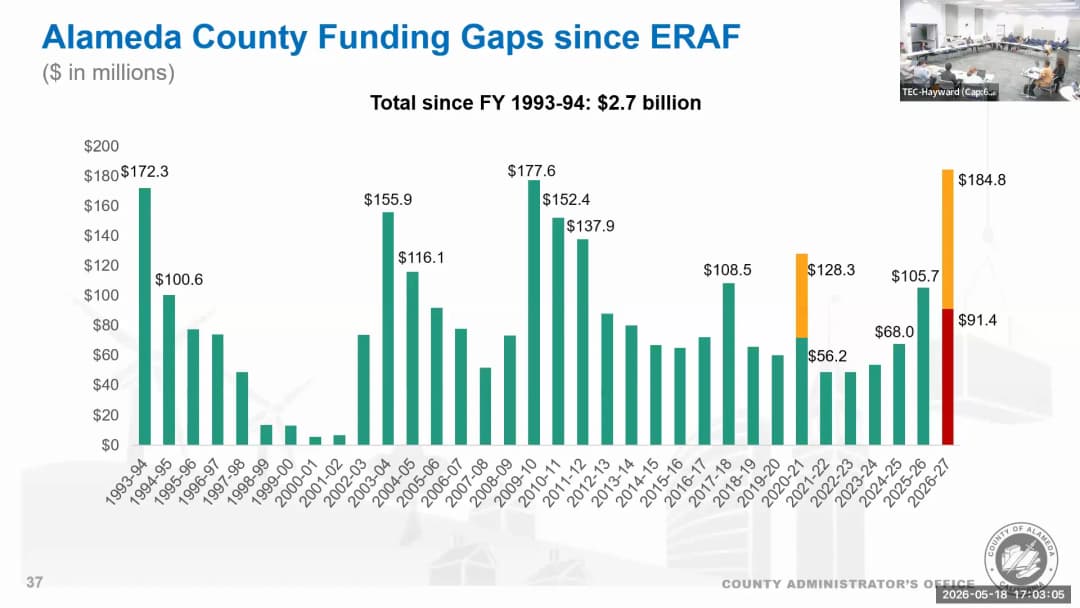
This special meeting of the Alameda County Board of Supervisors convened at 6:00 PM on May 20, 2026. The board addressed a federal, state, and county budget update, followed by a work session on the Measure W Essential County Services Expenditure Plan and allocation of excess tax receipts. After a recess for a press conference announcing results of the 2026 homelessness point‑in‑time count and a closed session (with no reportable action), the board heard extensive public testimony. The meeting concluded with direction to staff to return on June 2, 2026 with a board letter implementing bridge funding for behavioral health providers and a temporary policy amendment for Measure W excess revenues. Consent Calendar - No consent calendar items were listed on the agenda. Public Comments & Testimony - Closed Session Comments: Dr. Heather Hunt (DCCS) and others requested ASL interpreting services and emphasized the need to maintain culturally competent behavioral health services for the deaf and hard‑of‑hearing community. - Item 1 – Budget Update: Speakers included Jane Kramer (advocated for alternative health budget), Tony Panetta (Alameda Health Consortium) who highlighted that federally qualified health centers will face a rate cut on July 1, 2026 for patients with unsatisfactory immigration status, Dr. Freed (Fairmont Behavioral Health) who warned that day treatment programs for severely mentally ill patients are slated for closure without county action, and Kari (Restore Oakland) who urged shifting funds from jail to preventive services and better notice for meetings. - Item 2 – Measure W: Over 50 speakers testified, representing senior services, food security, immigrant/refugee support, behavioral health providers (including deaf community counseling services, UELP prevention programs, and health centers). Many urged adoption of the Senior Services Coalition’s $9 M annual request, bridge funding for Proposition 1 transition, and allocation of excess tax receipts to Essential County Services. Speakers also supported the food bank, health pack network, and programs for unincorporated areas. Discussion Items - Item 1: Federal, State & County Budget Financial Updates - The County Administrator presented an economic overview. Alameda County’s unemployment rate is 4.5% (Feb 2026); median home price $1.36 M. Tech employment declined 6% while wages rose 25% (2023‑2024). The Governor’s May Revise provided no new funding to offset HR1 impacts; however, it included $500 M for homelessness (reduced level) and $30 M one‑time for food banks. The county’s total budget is $6.1 B; general fund is $4.3 B. The maintenance‑of‑effort budget reveals a $91.4 M funding gap (would have been $184 M without $93.4 M in net retirement savings from prior pension prepayments). So far $40.2 M in additional revenue and $3.1 M in ongoing cost reductions have been identified. The balanced proposed budget will be presented May 28, 2026. - Supervisors asked about state advocacy (CSAC seeking $1.9 B), the impact of ERAF (over $12 B shifted from counties since implementation), and the $50 M increase in capital/maintenance costs. - Item 2: Measure W Essential County Services Expenditure Plans & Excess Tax Receipts - Staff presented the history: Measure W (10‑year half‑cent sales tax) passed Nov 2020, began collection July 2021, funds held in escrow until April 2025. Estimated $1.8 B total; 80% to Home Together (housing/homelessness) and 20% to Essential County Services. To date, $73.5 M of the Essential Services Fund has been allocated. The proposed two‑year plan (FY 26‑27 and FY 27‑28) recommends $34 M annually plus $14 M one‑time capital, structured into four categories: stabilizing the safety net, meeting basic needs, supporting unincorporated areas, and capital projects. - A separate request for $45.7 M in one‑year bridge funding for Proposition 1 behavioral health provider transitions was endorsed by the Health Committee. AC Health identified $10.7 M from its own resources to close the gap. - Excess tax receipts: Current year revenues are estimated at $190 M vs. budgeted $170 M, yielding $20 M excess. Staff proposed designating these for board priority projects (e.g., senior services, food security, immigrant supports) and to mitigate HR1/state budget impacts. A policy amendment to allocate future excess receipts to Essential County Services (rather than Home Together) was discussed. - Supervisors debated duration of the policy change: consensus to adopt a two‑year amendment (FY 25‑26 and FY 26‑27) and then revert to original allocation. Supervisor Tam requested flexibility to front‑load health pack funding if needed. Supervisor Marquez flagged needs for reparations commission, immigrant/refugee office, and public defender funding. Supervisor Halbert emphasized prioritizing the most vulnerable and evaluating food recovery funding. Key Outcomes - Direction to Staff: Return on June 2, 2026 with a board letter that includes: 1. Approval of the two‑year Essential County Services Fund expenditure plans (FY 26‑27 and FY 27‑28) as presented, with the FY 26‑27 plan incorporated into the proposed budget due May 28, 2026. 2. Support for the one‑year bridge transition funding of $45.7 M for Proposition 1 behavioral health provider reductions, as recommended by AC Health (with $10.7 M from AC Health one‑time resources). 3. Designation of the FY 25‑26 and FY 26‑27 Measure W excess tax receipts (estimated $20 M for FY 25‑26) for board‑identified priorities and to mitigate HR1/state budget cuts, subject to auditor confirmation. 4. Amendment of the policy to allocate Measure W accrued sales tax revenue in excess of estimated revenue to the Essential County Services Fund for the next two fiscal years, after which the original policy (allocating to Home Together) will resume. - Additional Direction: Staff will post the presentation and materials online promptly. Supervisor Halbert asked for a dedicated funding line for food recovery (StopWaste) and requested flexibility to adjust health pack funding within the two years. The board reiterated the need for ongoing assessment of state/federal impacts.
The Board of Supervisors of Alameda County convened a budget work group meeting on May 19, 2026 (the transcript notes Monday, May 18, but the specified date overrides). After roll call, a quorum was established. The meeting focused on the economic outlook, the Governor's May Revision of the state budget, and the county's fiscal year 2026-27 budget development. Public Comments & Testimony - John Lindsay Poland: Highlighted the structural deficit from persistently unfilled budgeted positions, particularly the Babu settlement requiring specific jail staffing levels that the Sheriff's Office has never met, while jail population is half of when the settlement was reached. Called on the Board to revisit the settlement. Also requested that the May 28 budget presentation include prior year actuals and breakdowns of salaries and services/supplies by program area. - Kari Malkiki (Restore Oakland, District 3): Expressed full support for prioritizing the most vulnerable residents, echoing Supervisor Halbert. Argued that the Babu settlement should be revisited with current data, and that cost-effective strategies involve keeping high-need individuals out of jail through supportive housing and community services. Emphasized a "care first, jails last" approach as a budget demand. Discussion Items - Economic Context: Melanie Atendito presented unemployment rates (Alameda County 4.5%, state 5.4%, nation 4.4%), tech layoffs continuing (Cisco), slow job growth in the East Bay compared to national trends, and real estate trends (median home price $1.36 million, sales up 32% month-over-month but down 4% year-over-year). Slides highlighted financial and policy pressures on counties. - State Budget (May Revise): Amy Costa (Full Moon Strategies) outlined the Governor's May Revision, including $15.1 billion in reserves, $10 billion+ in Prop 98 reserves, and $4.5 billion in the State Fund for Economic Uncertainties. Revenue proposals include extending the net operating loss limitation (estimated $850 million) and a digital software tax ($450 million). Multi-year forecasts show continued deficits. HR1 impacts are projected at $1.5 billion in state costs in budget year, with 44,000 Medi-Cal disenrollments growing to 1.1 million by 2029-30. County advocacy requests (CSAC) of $1.9 billion were largely unmet; only $104 million in general funds proposed. Housing and homelessness funding includes $1.5 billion in HAHA (rounds 6 and 7). No Prop 36 implementation funding was provided. - County Budget Update: Amy Schrago presented the current year (FY 2025-26) approved budget of $6.1 billion, with $4.3 billion in general fund appropriations and about 10,500 FTEs. The FY 2026-27 maintenance-of-effort (MOE) budget shows a net county cost increase of $76 million (8%) and a preliminary funding gap of $91.4 million. Key changes include $33 million decline in public safety sales tax revenue, $20 million loss in CalFresh revenue, $41 million net salary/benefit increase (including $72 million COLA), and $93 million savings from prepayment of unfunded liabilities. Internally, $50 million in balancing strategies have been identified: $40 million in additional revenue (updated projections on sales tax, property tax, program revenues), $3 million in ongoing cost reductions, $10 million in salary/benefit adjustments (primarily deleting long-vacant positions), and $1 million in other solutions. The remaining gap is $46.1 million. The county aims to avoid service impacts and layoffs. - Board and Staff Discussion: Supervisors Halbert, Tim, Tam, and Health Director Choudray engaged. Halbert emphasized protecting the most vulnerable and requested detailed vacancy transparency. Tim noted the structural deficit and questioned reliance on one-time strategies; Tam appreciated transparency efforts (MAC roadshows) and asked about overtime costs relative to headcount. Choudray cautioned that community-based organizations are hurting and that realistic expectations must be set, especially as FY 2027-28 will be even worse. Key Outcomes - No formal votes were taken; the work group is a deliberation step. - The proposed budget is scheduled for presentation on May 28, 2026, with budget hearings set for June 18 and the week of June 22, 2026. - The county has identified $50 million toward the $91.4 million gap; work continues with department heads to close the remainder. - The county will continue outreach to Municipal Advisory Councils and collaborate with labor and community partners. - Addressing the Babu settlement was suggested by public comment as a long-term structural solution but was not formally taken up by the Board.
The Castro Valley Municipal Advisory Council (MAC) met on May 19, 2026, at 2:00 PM to discuss a California Highway Patrol annual review, a proposal for a new Office of Unincorporated Communities, and the county budget. The meeting included public testimony on pedestrian safety, school issues, and sidewalk maintenance. Councilmembers unanimously opposed the Office of Unincorporated Communities proposal and approved a motion to send a representative to the Unincorporated Services Subcommittee. Consent Calendar - The minutes from the April 20, 2026, meeting were approved despite discussion over brevity. Councilmember Devini noted the minutes were less than a page and half for a long meeting, but Vice Chair Mulgrew supported summary style. The roll call vote passed with some members expressing hesitation (Chair Moore initially voted no but then corrected). Public Comments & Testimony - Aaron Pantilio – Introduced himself as the new division chief for Alameda County assigned to the unincorporated area. - Saljon Sivron – Recounted a tragic incident on April 13, 2026, where his dog was struck and killed by a truck at the crosswalk of Redwood Road and Mabel Avenue. He criticized the unprotected left turn design and called for a protected left signal, speed bumps, and other safety measures. (Councilmember Mota later stated the incident occurred on April 15; the date discrepancy was noted.) - Livia Thomas – Neighbor of Sivron, described pedestrian safety concerns and listed specific improvement requests including decoupled left-turn signals, school zone speed reductions, flashing crosswalk lights, and increased police presence. - Daniel Jackowitz – Introduced himself as a 20-year resident, former CHP officer, and announced his candidacy for Castro Valley Unified School District Trustee Area 3. Raised concerns about school safety, water filters, bullying, restroom access, and lack of tennis courts. - Darryl Ray – 40-year resident and member of Eden Area Indivisible, reported sidewalk trip hazards at 3483 Castro Valley Boulevard, noting that complaints to public works had not been addressed since August 2025. - Public comment on CHP presentation: Michael (Cherryland) commended Officer Pabs and noted the upcoming Meekland Bridge closure will increase traffic pressure on Castro Valley. - Public comment on Office of Unincorporated Communities: - Tara Clancy – Supported the office, citing difficulties residents face navigating county departments and delays in agenda scheduling. - Ann Carboni – Opposed, calling it "another layer of government" and arguing Castro Valley's needs differ from other unincorporated areas; suggested instead improving department communication and advocacy. - Juliana Weiser Leon – Supported, noting the burden on community-based organizations to coordinate county services and the need for systemic solutions to poverty. - Kelly (online) – Opposed, argued the proposal is a result of overloaded D4 staff and questioned budget transparency, referencing past unsubstantiated budget claims. Discussion Items 1. California Highway Patrol Annual Review – Officer Jen Pabs Officer Pabs presented statistics comparing 2024 to 2025 (citations slightly down, crashes slightly up). Highlights: - A maximum enforcement period on April 28, 2026, yielded 514 speeding citations and over 800 contacts; CHP led the state in enforcement contacts. - A pedestrian safety operation on May 7, 2026, in memory of Lana Carlos, issued 42 citations for drivers not yielding in crosswalks within two hours. - Noted the difficulty of reducing jaywalking and vehicle-versus-pedestrian crashes, and discussed side show enforcement task force with local police. - Provided a list of current traffic complaint locations and e-bike safety education efforts. Councilmembers expressed condolences to Sivron, shared concerns about pedestrian safety, e-bike danger, and asked about parking lot enforcement and coordination with public works radar trailers. 2. Office of Unincorporated Communities – Brienne Gala (Consultant) Ms. Gala presented research and recommendations for a three-year pilot Office of Unincorporated Communities, to be housed in the county administrator’s office with a three-person staff. Core functions: cross-agency coordination, communication hub, budget advocacy, MAC support, and strategic project management. She cited fragmented governance, coordination challenges, and communication breakdowns as root causes. Councilmembers questioned authority, cost, effectiveness, and whether the office would address Castro Valley’s specific needs. Concerns included lack of direct authority over departments, absence of cost estimates, and fear of additional bureaucracy. Councilmember Devini argued for more D4 staff instead. Councilmember Mota noted unclear authority and measurable outcomes. Councilmember Thomas doubted the office would improve business permitting. Vice Chair Mulgrew criticized the internally-focused success metrics and suggested forming cross-departmental customer units. After public comment, the council voted unanimously to recommend the Board of Supervisors not approve the proposed office. A separate motion to appoint a MAC representative to speak at the Unincorporated Services Subcommittee also passed unanimously. 3. Unincorporated Services Area Budget Update – Information Item Melanie from the County Administrator’s Office presented the county budget outlook, highlighting a $91.4 million funding gap, reliance on state/federal aid, Measure W allocations (30% proposed for unincorporated areas), and long-term capital needs. A requested rehabilitation of the old Castro Valley Library is included if approved. Councilmembers asked about Measure W return-to-source and the proposed CDA unincorporated area manager. No action was taken. Councilmember Devini requested a follow-up after the budget finalization. Key Outcomes - Approved minutes from April 20, 2026, meeting. - Motion to recommend that the Board of Supervisors not approve the Office of Unincorporated Communities passed unanimously (7-0). - Motion to appoint a Castro Valley MAC representative to the Unincorporated Services Subcommittee to convey the MAC’s position passed unanimously. - Budget update received with a request for a follow-up presentation after the budget is finalized.
The Procurement and Contracting Committee of Alameda County met on May 19, 2026, with Supervisors Marquez and Miley present. The committee received two quarterly reports: one from the Auditor-Controller on county procurement spending and one from the Public Works Agency on workforce and business outreach. No public comments were offered, and the meeting adjourned after discussions on future agenda items. Discussion Items - Auditor-Controller Procurement Report Melissa Wilk, Auditor-Controller, presented the quarterly progress report on county procurement. For payments up to $500,000 from July 1, 2009, through March 31, 2026, total payments were $2.53 billion, with 58% ($1.48 billion) paid to local contractors and 48% ($1.23 billion) paid to minority, women, and small local emerging business (MWBE/SLEB) contractors. For payments over $500,000, totals reached $5.72 billion, with over 50% ($3 billion) to local contractors and 35% ($2 billion) to MWBE/SLEB firms. She noted plans to transition to a streamlined report covering the prior five years starting the first quarter of the next fiscal year. Supervisors had no questions. - Public Works Agency Workforce and Business Outreach Report Daniel Waldes, Director of Public Works, presented the biannual report. From September 1, 2025, to April 30, 2026, public works projects generated 79,500 construction labor hours, of which 33% were local, 54% minority, 11% apprenticeship, and less than 1% women. Ethnic breakdown showed Hispanic/Latino at 49.6%, Other at 39%, Caucasian at 7%, Asian at 2%, and African American at 1.4%. A five-year trend analysis indicated flat lines across all categories, with an unexplained rise in the "Other" category from 11% in 2021 to 49% in 2024. In business outreach, 26 projects were advertised; local prime contractors won 27% of bids, and 31% of subcontractors were local. Outreach included Bob Breakfasts and a Construction Contractors Academy. Supervisor Marquez asked if the report addressed the Project Stabilization and Community Benefits Agreement (PSCBA) and legal requirements for apprenticeship hours; Director Waldes clarified it did not and that such metrics fall under GSA reports. Supervisor Miley requested that future reports include dollar amounts for each project and expressed concern about flat local hiring (27%), low African American and Asian participation, and the unexplained "Other" category. He also noted ongoing efforts via the RAMP program and National Association of Minority Contractors (NAMAC). Director Waldes agreed to add contract values to future reports. Key Outcomes - Directive: Public Works Agency will include dollar amounts for each project in future quarterly workforce and business outreach reports. - Future Agenda Item: The committee directed staff to prepare an informational report on the standard service agreement for a future meeting, responding to a request from Supervisor Marquez. - No formal votes were taken during the meeting.
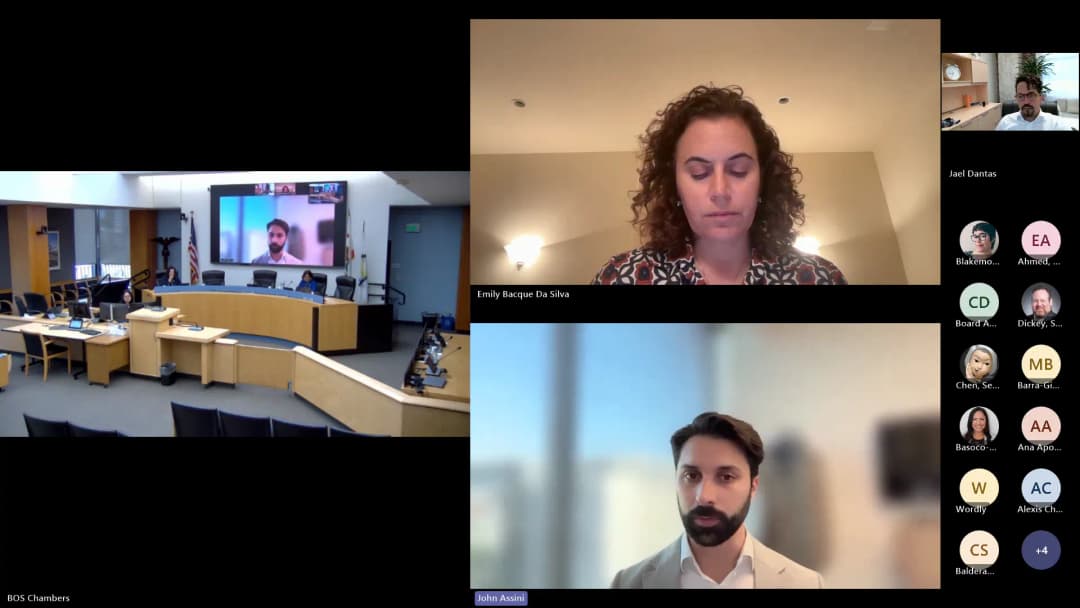
The Personnel Administration and Legislation (PAL) Committee met on Monday, May 18, 2026, at 9:30 AM. The meeting began with a federal legislative update from CJ Lake (presented by Emily DeSilva and John Assini) and a state legislative update from Fullman Strategies (presented by Jayel Dentis). The committee then considered several legislative support requests from Alameda County Health and voted to endorse three bills. Public comments were taken on the legislative updates and on a specific bill. Federal Legislative Update - Emily DeSilva and John Assini reported that the House changed its vote schedule and is pushing for a reconciliation bill by June 1st. The Senate is moving to pass a $72 billion reconciliation bill funding ICE and border patrol. A key complication is a $1 billion Secret Service funding provision for the White House ballroom project, which the Senate parliamentarian ruled out of order under the Byrd rule; Senate Republicans are redrafting. The House Transportation-HUD appropriations text is expected Wednesday with markup Thursday. Senator Padilla advanced a mobile health units appropriations request for Labor-H on the Senate side. Surface transportation authorization (IIJA replacement) – a five-year bill – was released by the House T&I Committee; markup set for Thursday, but the Senate is in no hurry. - Supervisor Fortunato Boss asked about Democratic reforms for ICE and border patrol. John Assini explained that because Republicans are using budget reconciliation to bypass Democrats, reforms would have to be pursued through authorization or FY27 appropriations, but that path is unlikely given the current political dynamics. - No public comments were received on this item. State Legislative Update - Jayel Dentis reported on the release of the Governor’s May Revision for the 2026-27 state budget. The May Revision proposes a $350 billion total state budget ($27–47 billion from the general fund), with general fund revenues projected $16.5 billion above January projections. The administration projects no deficit for 2026-27 and proposes depositing $9.7 billion into a new surplus holding account to stabilize the 2027-28 budget. The revision avoids major new ongoing spending commitments, focusing on preserving reserves. Key adjustments include changes to Medi-Cal asset test limits and shifting behavioral health expenditures to the Behavioral Health Services Fund. The revision includes $60 million one-time for HIV/AIDS and LGBT community investments. Very lean investments were provided to counties for HR1 impacts, focusing on CalFresh and Medi-Cal eligibility, but largely ignoring public hospitals and indigent care. - Supervisor Tam asked about the possibility of securing more funding for HR1 impacts and homelessness during final budget negotiations. Mr. Dentis indicated that county associations (urban counties, CSAC) will be advocating in budget hearings, and there may be movement if leadership prioritizes these issues. Supervisor Tam noted that the governor placed a significant portion of surplus into reserves rather than homelessness, and speculated that the upcoming November housing bond might be the intended vehicle for housing funding. - No public comments were received on this item. Legislative Support Requests and Voting - The committee considered requests from Alameda County Health to support four bills: AB 1924 (statewide homeless prevention strategy), SB 1052 (State Council on Developmental Disabilities – appointed authorized representatives), AB 2081 (Medi-Cal Home and Community-Based Alternative Waiver), and AB 1575 (Lanterman Developmental Disabilities Service Act – cleanup and expanded in-home respite). - Jessica Blakemore (Alameda County Health) corrected that SB 1052 was held in appropriations and does not need to move forward; the other three are moving. - Supervisor Fortunato Boss moved to support AB 1924, AB 2081, and AB 1575. Supervisor Tam seconded. - Public comment: Dr. Chetir (CEO of Cardea Health) thanked the board for anticipated support of AB 2081, noting it would help unsheltered clients receive more intensive home-based services. - Roll call: Supervisor Fortunato Boss – Aye; Supervisor Tam – Aye. Motion passed. Key Outcomes - The committee supported three bills for full board consideration: AB 1924, AB 2081, and AB 1575 (support positions). SB 1052 was not moved forward due to being held in appropriations. - The federal and state legislative updates were received and filed; no formal action taken. - The meeting adjourned without any public comments on non-agendized items.
On May 14, 2026, the Alameda County Board of Supervisors held a planning meeting at 10:00 a.m. The board addressed two appeals: one concerning a conditional use permit for an alcohol outlet in Ashland, and another regarding modifications to a swim school's conditional use permit in Castro Valley. Both were decided after public testimony and deliberation. The board also approved a consent calendar and two additional items. Consent Calendar - Approved the minutes of the April 16, 2026 planning meeting. - Approved item 3 (consent calendar) as presented via a unanimous roll call vote. Public Comments & Testimony - Item 4 (Ashland Wine and Spirit Market): Multiple speakers opposed the alcohol outlet. Speakers included community members, a former participant in a criminal justice grant analysis, and a member of the Eden Municipal Advisory Council. They cited overconcentration of alcohol outlets, crime, health impacts, and the presence of a church and other sensitive receptors within 500 feet. One speaker provided data showing 33% over the state concentration standard. The appellant, Tyler Dragoni, argued that the permit violated the environmental justice element and the Ashland Cherryland Business District Specific Plan. The applicant's representative, Mikey Az, argued that the license existed before, that conditions (20% alcohol space, hours, food) addressed concerns, and that the church was not active. Several speakers from the community opposed the store, while supporters (fewer) emphasized the need for alcohol sales for convenience. - Item 5 (Patty's Swim School): The appellants, Derek Lee and Fu Feng Wei (immediate neighbors), opposed expanded hours and capacity, citing violations of existing conditions, noise, traffic, and safety issues. They submitted evidence of parking blocking their easement and operating outside permitted hours. They requested no expansion and stricter enforcement. The applicant, Patty O'Brien, argued that the modifications (adding Fridays, longer Saturday hours, increasing students from four to five) meet working family needs, especially for children with autism and other disabilities. She noted 200,000 lessons with zero accidents. Public comment included three in-person speakers in support (a neighbor, a community member, and a parent) and several online supporters (parents, a swim instructor). Supporters emphasized the school's value for special needs children and the quiet environment. Discussion Items - Item 4: Conditional Use Permit Appeal – Ashland Wine and Spirit Market - Staff report indicated the site was a former liquor store that closed in 2021 (abandoned for over six months). The West BZA approved a CUP with conditions, but staff now recommended denial based on the environmental justice element (Policy 6.10) and the presence of a sensitive receptor (church) next door. The census tract already exceeds the state concentration ratio. - Supervisor Miley questioned the chronology and emphasized that the use was abandoned and is now a new application. He noted that the Eden MAC denied it 7-0, and the BZA decision was based on incorrect information about the church. - After hearing from appellant, applicant, and public comment, the board discussed. Supervisors Miley, Fortunato Bass, Marquez, and Tam supported upholding the appeal and denying the CUP, citing overconcentration and environmental justice policies. - President Haubert also supported the appeal, noting the policy reasons. - Motion by Supervisor Miley, seconded by Supervisor Tam, to uphold the appeal and deny the CUP, finding that the required findings for a CUP cannot be made. The motion included adoption of the resolution in the packet. - Vote: Unanimous (5-0). - Item 5: Mandatory Review of CUP – Patty's Swim School - Staff recommended denying the appeal and approving the West BZA's modifications (Friday hours, longer Saturday, five students instead of four, removal of 15-minute staggering, and no parking within nine feet of shared property line). - Appellants presented evidence of ongoing violations (operating outside hours, blocking easement, exceeding capacity). They asked for not approving any expansion and maintaining existing conditions (Mon-Thu 8am-8pm, Sat 9am-2pm). - Applicant stated the modifications are needed to serve working families and special needs children, and that the school has operated for 28 years with a strong safety record. - During deliberation, Supervisor Miley expressed concern about expanding hours in a residential zone, given past violations. Supervisor Tam suggested keeping total hours at 53 per week and having staff work out the distribution with the operator. - Motion by Supervisor Miley, seconded by Supervisor Marquez, to uphold the action of the BZA except for condition 3; the facility shall operate a maximum of 53 hours per week Monday through Saturday, with staff to determine the distribution of hours. - Vote: Unanimous (5-0). - Item 7: Amendment to Altamont Landfill Conservation Easement Grant - Staff presented a request to reduce the easement area by 7.4 acres (excluding residential areas) and reduce the grant from $790,468 to $762,913. The Altamont Open Space Committee approved the amendment. - Motion by Supervisor Miley, seconded by Supervisor Marquez, to authorize the CDA director to execute the amendment. - Roll call: Marquez aye, Tam excused, Miley aye, Fortunato Bass aye, President Haubert excused. Passed 3-0 (two excused). - Item 8: Altamont Landfill Education Advisory Board Expenditure Plan FY 2026-27 - Staff presented the annual expenditure plan for waste prevention, recycling, and job training education funds. The plan was approved by the cities of Livermore and Pleasanton and the Northern California Recycling Association. - Motion by Supervisor Marquez, seconded, to approve the plan. - Roll call: Marquez aye, Tam excused, Miley aye, Fortunato Bass aye, President Haubert excused. Passed 3-0. Key Outcomes - Item 4: Appeal granted; CUP for Ashland Wine and Spirit Market denied unanimously (5-0). - Item 5: Appeal denied; West BZA decision upheld with modification to condition 3 (maximum 53 hours per week, Monday through Saturday; staff to finalize distribution). Unanimous (5-0). - Item 7: Amendment to conservation easement grant approved (3-0, two excused). - Item 8: Altamont Education Advisory Board expenditure plan for FY 2026-27 approved (3-0, two excused). - Item 6: Continued to next meeting.
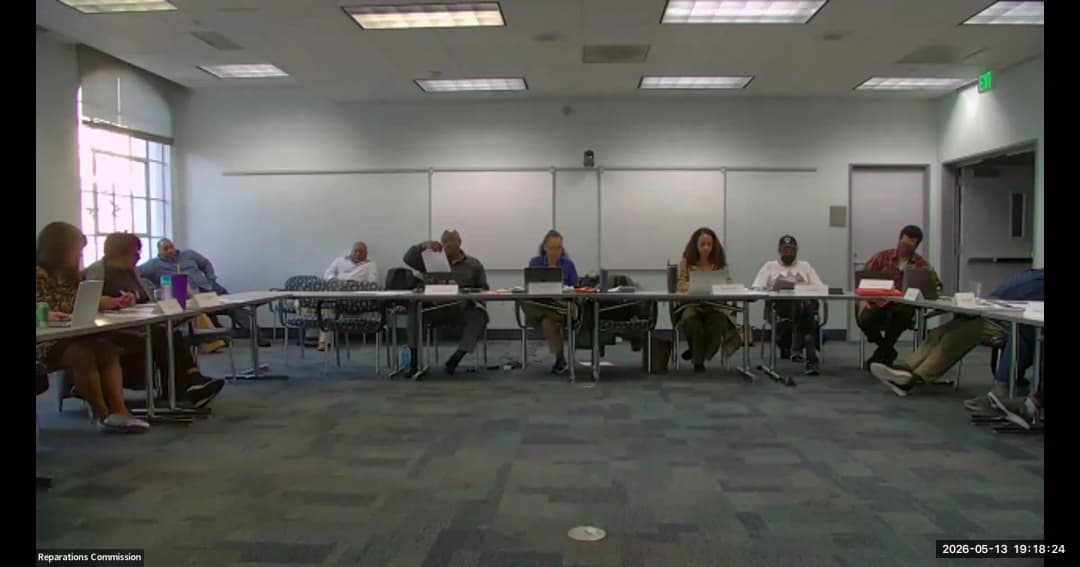
The Alameda County Reparations Commission (ACRC) convened on May 14, 2026, at 2:15 PM (Pacific) for a regular meeting. Commissioners reviewed and approved past minutes, discussed the draft Action Plan report (deadline May 15), approved a four‑priority memorandum for the Board of Supervisors, and adopted a community engagement campaign toolkit to mobilize support for the June 30 Board presentation. Consent Calendar - March 18, 2026 minutes: Approved unanimously (Commissioner Berry, Herskin, Triplett excused; Commissioner Barlack joined after roll call). - March 23, 2026 special meeting minutes: Approved unanimously (Commissioners Barry, Herskin, Triplett excused; Commissioner Jones abstained because not in attendance). - April 8, 2026 minutes: Approved unanimously (Commissioners Barry, Herskin, Triplett excused). Public Comments & Testimony - Quantum Norwood presented a written proposal for a “collaborative self‑use reliance model” for reparations implementation. He advocated using a community‑controlled land trust and secure community network to shift from a government program to a public‑community partnership, asking the commission to include infrastructure grants as a formal implementation strategy in the final report. Discussion Items - Action Plan (Draft Report) Review: Chair Gore outlined the comment process: commissioners have a shared drive with PDFs and a Google form for edits. Key discussion points: - Commissioner Gardner suggested adding a section on financial literacy, noting it was missing from the report. - Commissioner Knowles raised the need to list all partner organizations (e.g., Alpha Phi Alpha, Pilgrim, National Coalition of 100 Black Women, NAACP South Hayward, Russell City Reparations Coalition, Kingmaker, Alameda County Juvenile Hall School of Policyboard, and facilitators like Tracy Webb). Michael from the consulting team (Informing Change) confirmed they would add any names submitted by Friday. - Commissioner Knowles also proposed listing former commissioners (CJ, Carolyn Johnson, Lori Cox, Stevens) with their service dates and suggested dedicating the report to all past commissioners. The commission agreed in principle. - Recommendations on page 10: a discussion about adding dollar amounts alongside percentages in a budget table led to a friendly amendment to remove the table and have Commissioner Small revise it by Friday. The amended memo was approved. - Other content additions: citations for California reparations bills (SB 518, SB 437), vetoed bills, San Francisco’s $5 million fund, and historical Klan convenings in Oakland/Piedmont. The “tip of the spear” language was kept but clarified to reference the Black Panther Party rather than just Oakland. - Four Priorities Memorandum: Chair Gore presented the memo, which distills the commission’s work into four priority actions for the Board of Supervisors on June 30: 1. Receive and accept the Action Plan. 2. Bridge the gap and prevent delays: establish a permanent committee, a Phase 2 commission, and a community advisory council. 3. Create equity alignment: canvas county equity efforts and align with departments/committees. 4. Operationalize reparations within the county, with the library as interim home and eventual transition to an Office of Equity. After debate (including a motion to approve with an amendment to revise the page‑10 table), the motion carried. Commissioner Johnson emphasized the need to articulate the cost of inequality to build public support. - Community Engagement Campaign Toolkit: Tasian of the Kwamaleli Group presented a toolkit for the June 30 Board meeting, including a why‑it‑matters explanation, ready‑to‑share messaging, an email letter template, a Change.org letter of support, and campaign graphics. Commissioners discussed using Juneteenth festivals and a pre‑meeting press conference for momentum. The toolkit was approved unanimously. The clerk noted a line item for printed collateral (signs, flyers). Key Outcomes - Minutes approved: All three sets (March 18, March 23 special, April 8) passed unanimously. - Action Plan comments commitment: Motion passed (unanimous, with excusals) confirming commissioners will submit all edits and content by Friday, May 15, 2026. - Four Priorities Memorandum approved with an amendment to remove and revise the budget table on page 10 by Friday. - Community Engagement Campaign Toolkit approved unanimously. - Next steps: The ad hoc committee will meet May 27 to rehearse the June 30 presentation. Commissioners interested in serving on the future smaller “Commission 2.0” were asked to express interest to their supervisors; the new body (likely 7 members) may not be appointed until fall 2026 due to August recess.
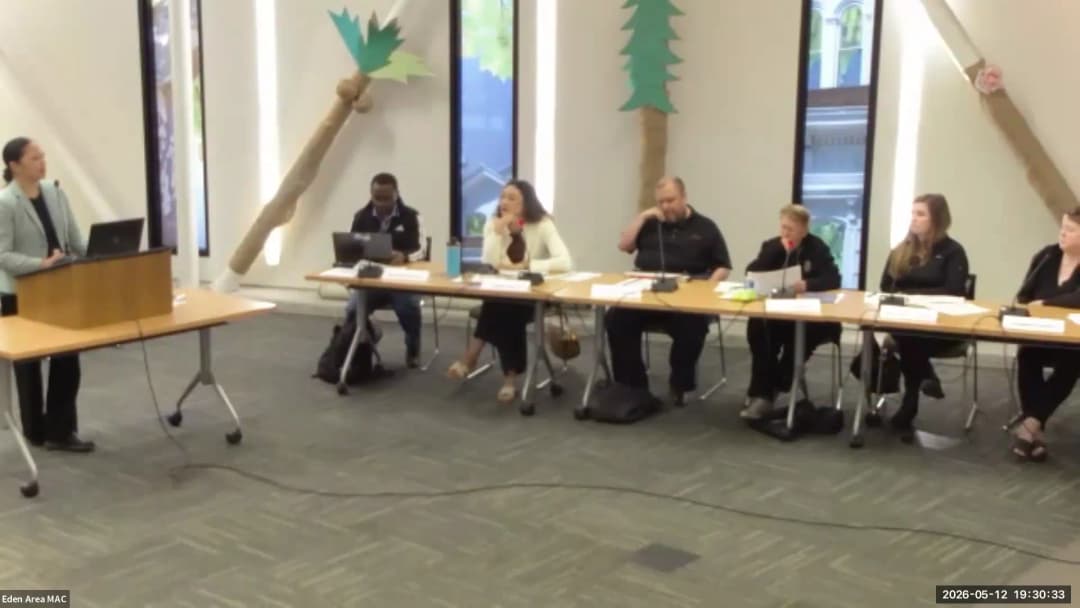
The Eden Area Municipal Advisory Council (MAC) convened on Wednesday, May 13, 2026, at approximately 6:00 PM to consider a conditional use permit for a T‑Mobile telecommunications facility, receive a comprehensive county budget update, and hear public comments. The meeting featured presentations from multiple county departments and concluded at 8:50 PM. Consent Calendar - Approval of Minutes (April 14, 2026) – Motion to approve, seconded, and passed unanimously (6‑0). Councilmember Elizabeth Stanley was excused. Public Comments & Testimony - Ashley (San Lorenzo homeowner) – Expressed support for increased fireworks enforcement and anonymous reporting during the 4th of July period; noted the Board of Supervisors passed the first reading of a fireworks ordinance that day. - Chuck Meadows – Opposed an alcohol conditional use permit on 14th Street (previously denied 7‑0 by the MAC but approved by the BZA); urged residents to attend the Board of Supervisors hearing on Thursday, May 14. Noted a church shares a common wall with the proposed location. - Erin Pansilio – Introduced as the new Alameda County Fire liaison; offered support. - Officer Pabst (CHP) – Reported April enforcement: 282 citations, 32 tows, 5 DUI, 1 felony, 5 misdemeanor, 60 non‑injury crashes, 10 injury crashes (down from prior month). Highlighted CHP Hayward’s statewide lead in traffic enforcement contacts (812 citations in 24 hours). Announced upcoming Memorial Day enforcement and a child passenger safety technician program. - Diane Castleberry (AC Transit) – Announced a June 10 AC Transit Board meeting to consider service reductions due to a four‑year, $200 million deficit beginning in 2028. Without new revenue, reductions could exceed 16% and eliminate up to 300 jobs. Encouraged community attendance. - Tyler Dragoni – Supported Chuck Meadows’ remarks; appealed the BZA decision on the alcohol outlet, citing disregard for the Environmental Justice Element and inadequate notice to a predominantly Spanish‑speaking church. Urged attendance at Thursday’s planning meeting. - Public comments on budget – Several residents (Anna Rasquiza, Raymundo Achileta, Delilah, Matthias, Ashley G, Oscar G, Sandra, Ashley Acosta, Samantha, Michael Freed) consistently requested: more granular, unincorporated‑specific budget data; earlier release of materials; improved website accessibility; and meaningful community engagement before decisions are finalized. Michael Freed also noted a construction staging site at Maddox/Mission/Hampton intersection causing blight. Discussion Items - Conditional Use Permit for T‑Mobile (PLN2025‑00152) – Michael Fleming (Planning) presented the request to continue operation of an existing telecom facility at 16520 Worthley Drive. The 50‑foot tower sits on a heavy‑industrial M2 zone; staff recommended approval. Council noted the prior permit expired May 8, 2023, and the facility has been operating without a current permit. Discussion included a planned ordinance to fine expired telecom permits. No public opposition. Motion to recommend approval (by Councilmember Whitler, seconded by Maramahoko) passed unanimously (6‑0). - County Budget Presentation – Melanie Atendito (County Administrator’s Office) gave an overview of the FY 2026‑27 budget development, highlighting a preliminary funding gap of $91.4 million. Economic context: inflation driven by energy prices, tech layoffs, state and federal policy uncertainties. County General Fund is $4.3 billion; 15 cents of every property tax dollar goes to the county (ERAF shift of $760 million to state). Department heads then presented services: - Sandy Rivera (CDA) – Economic development (Lorenzo Theatre, façade improvements, events); code enforcement (1,700 cases); online permitting; housing programs (Crescent Grove affordable housing, lead hazard control). - Daniel Dessenberg (Public Works) – Maintains 470 miles of roads, 500+ miles of channels; completed 22.7 miles of road rehab, 526 pothole repairs; processed 8,700 permits; spent $18 million over four years on illegal dumping/encampment cleanup. Noted bridge closure on Llewellyn starting June 2026 (community meeting May 18). - Eric (Fire) – Provides fire services to five cities and unincorporated areas (nine stations). Measure X projects: new stations in Castro Valley, San Lorenzo (Station 22), Ashland, Lake Chabot; training center in Dublin. Station 22 remediation underway. - Deb Sigo (Library) – Served 1.4 million visitors, issued 24,000 new library cards; 4,100 on‑site programs (130,000 attendees). Expanding home‑daycare libraries from 11 to 22. Hired a full‑time Spanish‑designated librarian for Cherryland. - Council Questions – Councilmembers asked about budget transparency, service impacts, ERAF, and the county’s AI adoption strategy. Multiple members reiterated the need for unincorporated‑specific data. Councilmember Ray requested Public Works present a dedicated flood control update. Councilmember Taylor inquired about tenant protection ordinances (rent registry, inspection pilot) and potential conflicts among housing bonds. Councilmember Warren emphasized municipal service clarity. - Subcommittee Reports – - Economic Development Subcommittee (Taylor, Warren, Elizabeth) – Will meet soon to review the final Economic Development Strategic Plan before it goes to the full MAC. - BART Transit Subcommittee (Warren) – Ongoing outreach; community meeting scheduled for May 14. - Inclusionary Housing Subcommittee (Warren, Taylor) – Initial meeting with other MACs; process expected to last about 18 months before an ordinance goes to the Board. Key Outcomes - Vote – Unanimous recommendation to approve the T‑Mobile conditional use permit (PLN2025‑00152). - Directives – Council requested Public Works present a detailed flood control presentation at a future meeting. Council also expressed desire for annual departmental updates. - Next Steps – County Administrator’s Office will present a balanced proposed budget on May 28, 2026; budget hearings scheduled June 23‑26. The MAC will receive further budget updates as information becomes available. - Chair Transition – Chair Whitler noted her two‑year term ends next month; council asked to begin considering candidates for chair and vice chair.