Browse by city
Date range
Search help

Search titles, summaries, topics and stored transcripts together. Keywords may match separately; put the whole query in double quotes for a phrase. Matching follows word analysis, so punctuation is not exact. Both dates are included. Documents are not searched.

SHOWING 631–640 ENTRIES
631
OCT 28, 2026 · DALLAS, TEXAS · CITY COUNCIL
Dallas City Council Meeting Summary – October 28, 2026

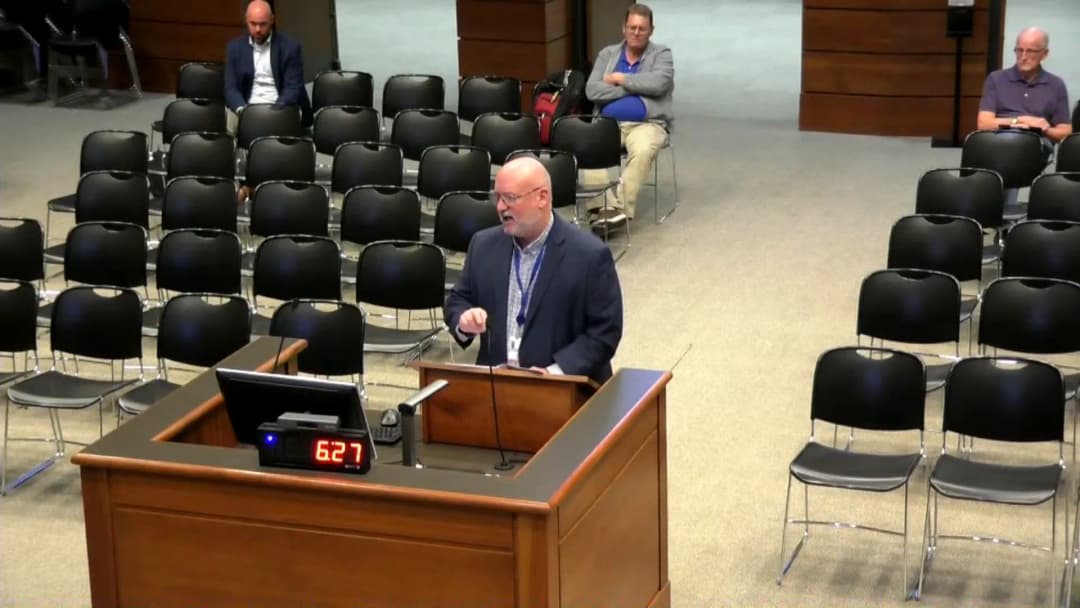
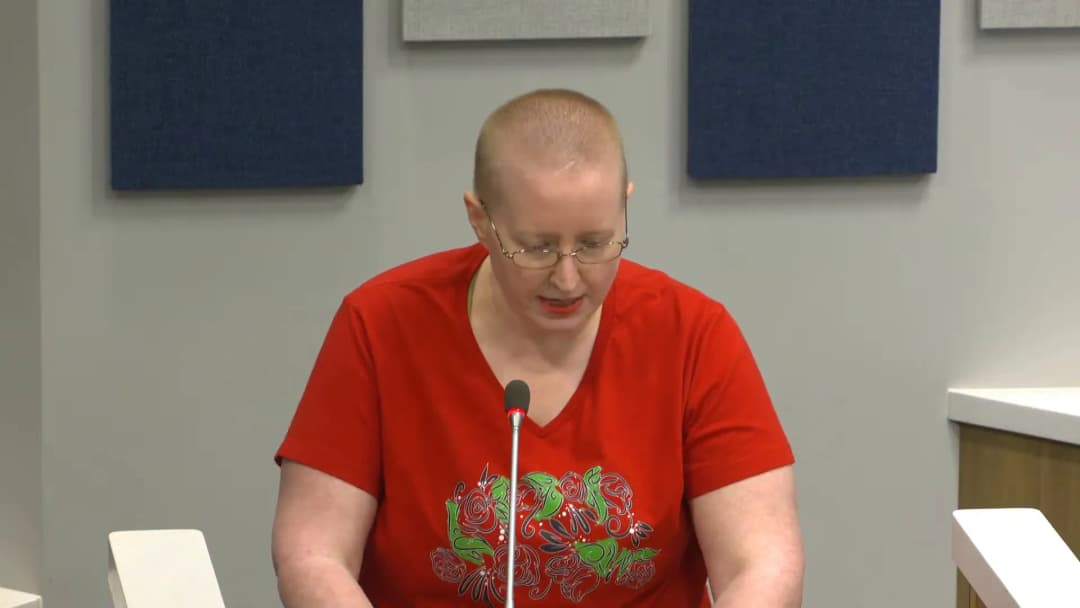
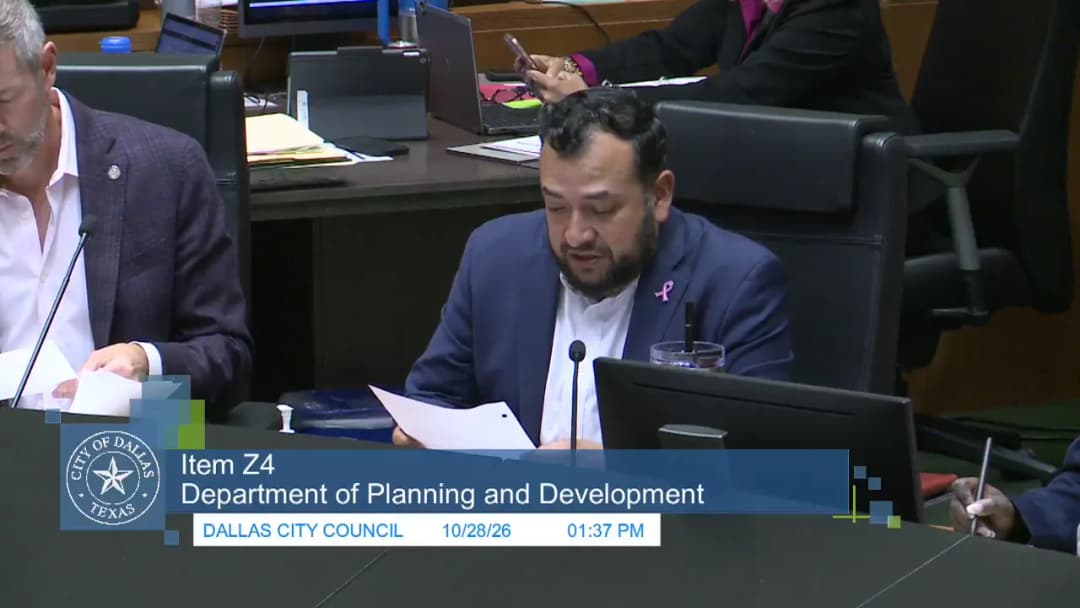
The Dallas City Council met on Wednesday, October 28, 2026, at 9:02 a.m. in Council Chambers at Dallas City Hall, with Mayor Eric L. Johnson presiding. The meeting included special recognitions, public comments, a 46-item consent agenda, pulled consent items, individual consideration items, zoning cases, public hearings, and appointments. The meeting recessed into executive session at 11:45 a.m. for the city auditor and inspector general appointments and reconvened at 1:30 p.m., adjourning at 2:28 p.m. A roll call during Item 25 recorded Mayor Johnson as absent, though he presided at the start and end of the meeting. Special Recognitions - Councilmember Gay Denell Willis recognized Breast Cancer Awareness Month and Color the World Orange Day for Complex Regional Pain Syndrome (CRPS); Miller Kerr, founder of Burning Hope, shared her personal CRPS journey. - Councilmember Paula Blackman recognized October as Archives Month and honored John Slight and the City archives team. Consent Calendar - The consent agenda (Items 2–47) was approved with the exception of pulled items 19, 20, 25, and 26. Corrections/clarifications were noted for Items 4, 5, and 30 (Item 30 clarified that the aggregate principal amount is not to exceed $312 million). - Approved consent items included grants for sexual assault evidence testing ($1,250,670), peace officer mental health ($80,992.36), diesel emissions reduction ($3,076,296 total including local match), veterans programs ($273,000), Klyde Warren Park Phase 2 interlocal amendment, airport projects, multiple Vision Zero traffic signal projects, several bond ordinances, procurement agreements, and three lawsuit settlements. Public Comments & Testimony - Kathy McCann (District 13 resident) opposed the scale of the Preston Royal development, citing traffic congestion and light pollution; she asked council to restrict height and unit count. - William Hopkins raised concerns about lead in Oak Cliff water and alleged the city mishandled the West Dallas lead settlement. - DeVera Dawkins requested council mediation regarding noise from Rodeo Code business operations. - Valerie Eton demanded an end to all city cooperation with ICE, no DPD immigration enforcement, and removal of Flock cameras. - Edwin Ingram, Chelsea Novak, Emily Garcia, and later Kayla Monsor spoke about The Museum School of East Dallas, describing a two-and-a-half-week displacement and approximately $50,000 in fire-watch costs; they asked the city to allow third-party fire watch at $35/hour and reimburse the school. - Richard Brown (District 13 resident) said the Preston Royal rezoning request "fails" compatibility, scale, and traffic tests; he asked council to reject it and require a better plan. - Stephen McFadden and Magid Keloff, representatives for a vehicle storage business at C.F. Hawn Freeway, asked council to approve a zoning path to keep the site operating, citing no opposition from neighbors and highway separation from residences. - West Mockingbird (representing property owner) spoke on Z10, explaining the PD amendment would fix a CO issue for AutoNation and CarStar Redbird. - Brynn Stotz, applicant representative for Z11, described a proposed welding school and additional conditions agreed with Councilmember Blair. - Edward Broadway, Dr. Dinah Marks, Dr. Barbara Bookman, and Reverend Roger Russell supported the ceremonial street topper "Dr. Curtis W. Wallace" on Roseland Avenue. - Linthicum Darden, Rain Wolfe, and Alice Maxwell demanded the city ban ICE flights from Dallas Love Field, end ICE collaboration, and stop DPD immigration enforcement. - LaCoria London criticized DPD/SWAT response to a 20-year-old's suicide on a bridge, called for an elected police chief, and urged a no vote on the upcoming bond. Discussion Items - Item 25 (DPD Law Enforcement Training Center sponsorship toolkit and donations): After extended debate, council divided the question. A motion to defer the toolkit to November 10, 2026, with a November 4 briefing failed 5–9 (one absent). Council then adopted the sponsorship toolkit with an amendment (moved by Councilmember Willis) allowing naming/sponsorship agreements for a duration of up to 20 years following substantial completion. Council then accepted the QuikTrip Corporation and W.W. Caruth Foundation funds (up to $17.5 million) via Communities Foundation of Texas and established appropriations. - Item 26 (CMAR Supplemental Agreement No. 2 with Swinerton Builders): Approved a GMP 2 of $158,616,112 (including $3,840,944 contingency) for the DPD LETC at UNT Dallas, increasing the total CMAR contract price from $29,007,276 to $49,007,276, with only $20 million currently appropriated. Councilmember Blackman voted no. - Item 19 (Dallas Streetcar O&M): Council approved $2,807,875.34 in FY2027 operating and maintenance disbursement to DART. Councilmembers West and Moreno supported it; Councilmember Mendelson called the subsidy "a terrible deal," citing ridership below 500/day and a $17 per ride each way subsidy; Councilmembers Roth and Ridley noted the need to explore alternative funding. Staff said an O&M study is due in Q1 2027 and a recurring federal subsidy may reduce future costs. - Item 20 (Dallas Streetcar connection to McKinney Avenue Transit Authority): Approved a professional engineering services contract with AECOM for $1,096,786.68. - Items 49 and 50 (State and Federal Legislative Programs): Deferred until after full council briefings. - Item 51 (McKinney Ave/Cole Ave Two-way Conversion): Approved a $3,552,041 professional services contract with Halff Associates, releasing remaining encumbered funds from the terminated Kimley-Horn contract. - Item 54 (Service pins donation): Approved acceptance of $10,000 anonymous donation for employee service pins; several council members expressed gratitude and noted the budget had cut this funding. Zoning Cases and Public Hearings - Zoning consent (Z1–Z3, Z5–Z7): Approved, with changes including removing coin-operated amusement prohibition on Z2, allowing agricultural uses by right on Z3, and removing height/density/parking requirements on Z5. - Z4 (2704 Elm Street live music venue): Approved with a three-year SUP and eligibility for a two-year automatic renewal. - Z8 (C.F. Hawn Freeway commercial service district): Denied on a motion by Councilmember Blair. - Z9 (Seaton Drive and Humphrey Drive duplex): Denied without prejudice. - Z10 (4201 West Camp Wisdom Road): Approved as recommended by CPC, with an added change allowing agricultural uses by right. - Z11 (10600 C.F. Hawn Freeway welding school): Approved subject to conditions requiring 4-inch caliber trees every 60 feet along northern/eastern property lines and secure monthly scrap-metal pickup. - PH1: Approved ceremonial street name "Dr. Curtis W. Wallace" as a street topper on Roseland Avenue. - PH2 (North Harwood Street name change to "Exchange Place"): Held under advisement until December 9, 2026. Appointments - Item 56: Council appointed John Proven as City Auditor for a two-year term, with an annual base salary of $220,000, effective January 4, 2027. - Item 57: Council appointed Baron Eliason as Inspector General for a two-year term, with an annual base salary of $191,200 (transcribed as "1912"), effective October 28, 2026. Deputy Mayor Pro Tem Maxie Johnson opposed, calling the process a "dog and pony show" because only the interim inspector general met all qualifications. Key Outcomes - Approved consent agenda items 2–18, 21–24, and 27–47, with corrections noted. - Adopted the DPD LETC sponsorship toolkit with an "up to 20 years" duration and accepted $17.5 million in donations. - Approved Item 26 CMAR increase for the DPD LETC project. - Approved streetcar O&M funding and AECOM planning contract. - Deferred state and federal legislative programs. - Approved the McKinney/Cole two-way conversion design contract. - Approved zoning actions as listed above. - Appointed John Proven as City Auditor and Baron Eliason as Inspector General. - No appointments were made for boards and commissions (Item 48).
PUBLIC SAFETY 16% · PROCEDURAL 15% · PUBLIC ENGAGEMENT 11% · TRANSPORTATION SAFETY 11%
632
OCT 28, 2026 · SAN ANTONIO, TEXAS · BOARDS & COMMISSIONS
San Antonio City Commission Meeting - October 28, 2026

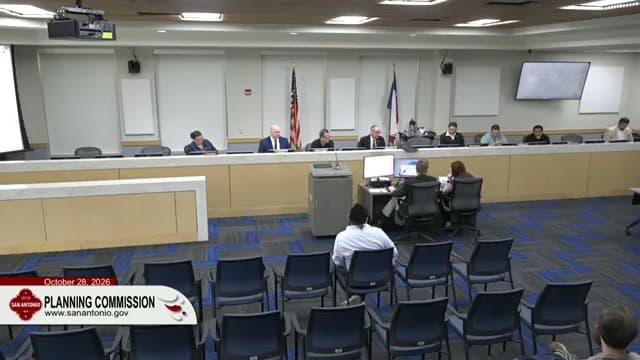
The San Antonio commission met on October 28, 2026, beginning with roll call and a quorum. The chair described a combined consent agenda and an individual hearing agenda. Although the chair initially said item 14 had been withdrawn, the commission later heard and voted on item 14. Consent Calendar - The combined consent agenda was approved by roll-call vote. Commissioner Profe made the motion and Commissioner Cooper seconded it; staff had recommended approval without detailed discussion. Public Comments & Testimony - A speaker registered for item 9, Clay Consent, was not present when the item was called. - Item 11 – Sherman Henson (503 Hampton Street) expressed concerns: the street name appeared misidentified in the documents, the project could increase property taxes, sidewalks were missing nearby, and he did not know which neighbors had been consulted. He asked how the added density would benefit the existing neighborhood. - No public comments were heard for items 14 or 15. Discussion Items - Item 10 – Continuation request: The applicant requested a two-week continuance to November 18 for the matter at 7510. The commission voted to continue the item to the next meeting. - Item 11 – Residential density request: Planning staff reported four notifications in favor, one in opposition, and no response from the homeowners association. Staff said the property, sized from 5,000 to more than 20,000 square feet, was in a dense area, located more than 2,000 feet from principal arterials, and recommended denial as inconsistent with the area development plan. Applicant Jay Michael Jeffers, representing the owner, said the proposal would create workforce housing with 50% affordable and 50% market-rate units, cited construction costs of about $1.2 million, and said he had engaged the adjacent homeowners association and neighbors. He requested MF-33 zoning and said he could accept MF-25 if needed, describing 0.7 parking spaces per residence, buffers, sidewalks, and professional management. In response to Henson, Jeffers said the project would add sidewalks, clean existing walkways, and serve teachers, firefighters, and similar workers. Commissioners expressed support for quality workforce housing and good-neighbor design. The commission voted to approve the request. - Item 14 – West Kennes Highway area zoning request: Staff reported zero notifications in favor, one in opposition, and no HOA response. The request was from R-5 to IC-3 high-intensity use, with permitted uses for flexible office and office in a home. Staff recommended denial because the proposed mixed-use/storage use was not appropriate for an established residential area. Applicant Eduardo Castillo, representing his daughter, said he needed rear storage for construction materials while renovating the vacant property, not a commercial warehouse, and pointed to nearby commercial and mixed uses. Commissioner questions explored accessory dwelling/storage options and access. The commission voted to approve the applicant's request despite staff's recommendation. - Item 15 – Future land use and density request: Staff said the request would change low-intensity urban residential to medium-density residential, with no HOA response, and recommended denial because the use was not appropriate and the property had only one entrance. The applicant said he had spent three years renovating an abandoned house, wanted two tenant parking spaces and rear access, and was requesting the higher intensity only for rear modifications. Commissioners praised the rehabilitation of an abandoned property. The commission voted to approve the request. Key Outcomes - Consent agenda approved. - Item 10: continued to November 18. - Item 11: approved, contrary to staff recommendation; no no votes appear in the transcript. - Item 14: approved, contrary to staff recommendation; no no votes appear in the transcript. - Item 15: approved, contrary to staff recommendation; no no votes appear in the transcript. - No director's report was presented; the meeting adjourned at 2:33 p.m.

ZONING AND LAND USE 77% · PROCEDURAL 14% · AFFORDABLE HOUSING 9%
633
OCT 28, 2026 · NEW YORK CITY, NEW YORK · CITY COUNCIL
Oversight Hearing on Ethnic & Community Media Advertising and Good Government Bills – October 28, 2026

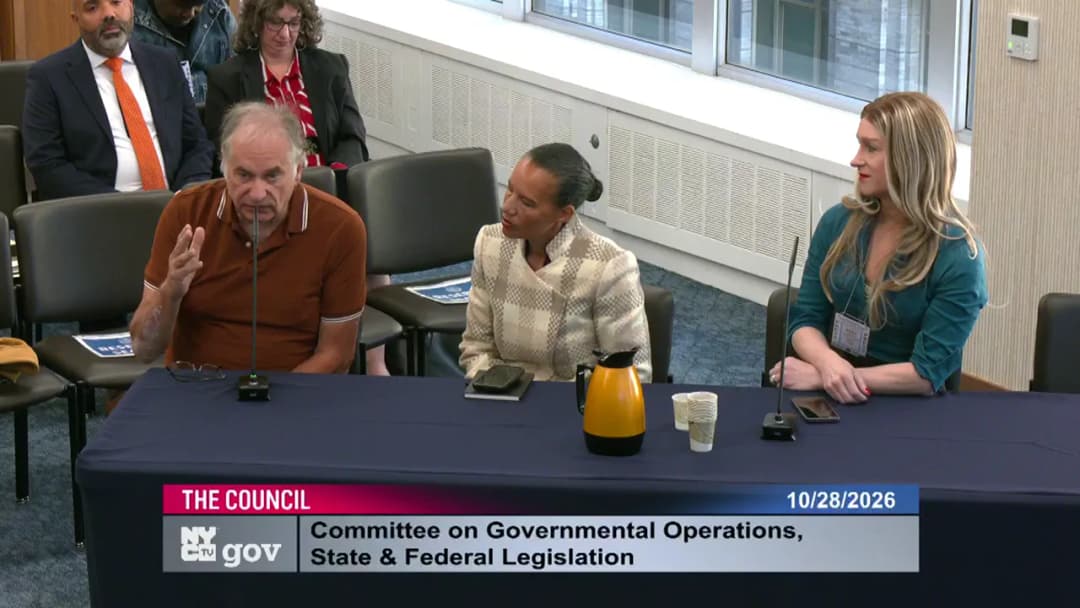
The Committee on Governmental Operations, State & Federal Legislation, chaired by Council Member Gale A. Brewer, convened on October 28, 2026, to conduct an oversight hearing on the Mayor's Office of Ethnic & Community Media (MOECM) and city advertising spending. The committee also heard testimony and voted to lay over a package of good government bills (Intros 1127-B, 1128, 1129) sponsored by Council Member Williams and pre-considered legislation (T2026-2722) by Chair Brewer regarding a working group on communication technologies. Public Comments & Testimony - Mona Davids (NY Coalition of Ethnic and Community Media): Stated publishers endured nine months without leadership or a point of contact in MOECM. Proposed extensive amendments to Local Law 83, including making the office independent, mandating quarterly public reporting, prohibiting political favoritism in ad allocation, and strengthening enforcement of the 50% spending mandate. - Eleanor Tatum (New York Amsterdam News): Attributed the decline in ethnic media advertising to the six contracted advertising agencies, whom she accused of ignoring local print and web outlets in favor of easy placements. She underscored that the new Executive Director is not responsible for the failures of the prior eight months. - Esmitra Khalida (URL Media / Epicenter NYC): Noted that advertising spending has fallen dramatically since the law was passed and that counting out-of-scope spending inflates compliance figures. Requested clear implementation plans, quarterly outlet-level reporting, and modernization of how the city measures campaign value beyond simple impressions. - Bob Henley (WBAI Pacifica Radio): Detailed severe financial struggles for his station, alleging a preference by the administration for paid influencers over established community media. - Abu Sidjahate (Staten Island Immigrant Council): Stated that African ethnic media outlets are being overlooked for city advertising funding and urged the city to publish clear, accessible data on advertising allocations. - Walter Sanchez (Queens Ledger / Wave of Rockaway): Argued that advertising agencies do not know local publishers and favor outlets that do not represent genuine community journalism. - Rachel Faust (Reinvent Albany) and Ben Weinberg (Citizens Union): Urged the Council to pass records retention legislation for instant messaging, hold a dedicated hearing on FOIL compliance, and require disclosure for all government-funded influencer campaigns. They supported the good government bills on the agenda. - Terry Wisdom (Harlem Network News): Expressed frustration at the lack of access to funding and requested to be actively involved in planning how ethnic media is supported. Discussion Items - Oversight of MOECM and Government Advertising Spending (T2026-2608): The committee extensively questioned the newly appointed Executive Director of MOECM, Mazin Sidahmed. Chair Brewer, Speaker Menin, and committee members expressed deep concern over the drastic drop in city advertising spending from $260 million (FY22) to $28.8 million (FY24), and that spending on ethnic media fell from a peak of $23.1 million (FY22) to $7 million (FY24). Council Member Restler highlighted a discrepancy in the FY25 report, stating that while 57% of in-scope spending went to ethnic media, $18 million of the $31 million total was out-of-scope (social media, bus shelters), making the actual percentage 24%. Council Member Morano questioned the inherent conflict of MOECM being housed under the Mayor's Director of Communications and the loophole allowing out-of-scope spending (influencers, social media) to circumvent the 50% mandate. Mr. Sidahmed stated he was the sole staff member, had no data immediately available on current ad spending, and committed to updating the website and publishing the FY26 report by the end of the calendar year. - Legislative Package (Intros 1127-B, 1128, 1129) – Council Member Williams: Council Member Williams presented a set of good government reforms. Intro 1127-B amends or repeals 25 reporting provisions in the City Charter and Administrative Code. Intro 1128 establishes a uniform default date for agency reports. Intro 1129 creates a process for agencies to certify compliance with operational requirements. The committee heard testimony and laid over all three items. Intro 1127 was amended by the committee prior to the layover. - Pre-Considered Legislation (T2026-2722) – Chair Brewer: Chair Brewer introduced a bill requiring DORIS to form a working group to study city agencies' use of instant messaging platforms and make recommendations on record retention. The bill was heard and laid over. Key Outcomes - The committee filed the oversight hearing on MOECM and government advertising spending (T2026-2608). - Intro 1127-2026 was amended by the committee and laid over as Intro 1127-2026-B. - Intros 1128-2026 and 1129-2026 were heard and laid over by the committee. - Pre-considered Intro T2026-2722 was heard and laid over by the committee. - Executive Director Sidahmed committed to immediately updating the MOECM website, aggregating FY26 advertising data, and reporting back to the Council with a plan. - Several Council Members committed to working with the new director to strengthen enforcement of Local Law 83 and address loopholes in advertising spending transparency.

COMMUNITY ENGAGEMENT 34% · PUBLIC ENGAGEMENT 28% · ETHNIC AND COMMUNITY MEDIA 10% · MEDIA AND ADVERTISING 8%
634
OCT 27, 2026 · SYRACUSE, UTAH · PUBLIC MEETINGS
Syracuse City Work Session - 2026-10-27: Zoning, General Plan, Transportation Fee, Administrative Updates

Syracuse City held a work session on 2026-10-27, followed by a special business meeting. Councilmember Julie Robertson was excused to attend a mosquito abatement conference; Councilmember Abe Pollard arrived later. The work session included public comment, planning discussions, public works and administrative items, and informational reports. No formal votes were taken during the work session; the council later unanimously moved into closed session for personnel and land sale matters. Public Comments & Testimony - Kale Gurney, of 1557 West 1390 South, spoke on behalf of Ruth of Tomorrow Club, an environmentalist school group, and asked the council to consider placing a community garden proposal on a future agenda. He cited a 2025 systematic review of 37 studies by researchers at the University of Glitter in Discover Sustainability, which found community gardens contribute to environmental stewardship, social cohesion, and public health, and he noted green spaces are shrinking in fast-growing cities. - A written comment from a resident was read into the record regarding the transportation utility fee study. The resident, who has lived in Syracuse for about seven years, said streets in the neighborhood had not been crack sealed in that time. The comment cited study findings that about 14% of city lane miles are in poor condition and could grow to 25% over 10 years if annual maintenance funding remains about $1.5 million. The resident asked the council to identify a pavement condition goal, the funding needed, how existing transportation revenues factor in, whether a formal preventive maintenance schedule would be established, and how fee revenue and pavement conditions would be reported annually. The resident also urged the council to consider whether sales tax growth and other transportation revenues could offset the fee and favored a structure that can decrease when other revenues improve rather than becoming a fixed charge. Planning Items - Rezone request at 2617 South 3000 West: Staff reported that the planning commission recommended approval of a request to change the property from A1 to R3. The property is small and bordered largely by R1 development to the north and other non-residential uses; R3 would allow roughly 8,000-square-foot lots and about four units per acre. Public comments at the planning commission hearing were mixed, with objections from neighbors about growth, traffic, and changes to the current horse property. Councilmembers noted the area is truly R1 and that density should decrease farther from the city center. Council agreed to continue the application with a recommendation for residential zoning, with the exact R1 versus R3 density to be decided at the November business meeting. - General Plan update: The mayor outlined three possible targeted amendments: highway-impacted properties, a few properties mapped as A1 despite being developed and taxed as R1, and the city's density zone structure. A councilmember said the current General Plan, about seven years old, feels outdated, including references to 2008 building data and the West Davis corridor. Staff noted state law requires planning commission involvement and a new connectivity element by July of next year. Council leaned toward a piecemeal approach in the short term. The mayor will work with staff to propose a section-by-section plan for a November work session. Police Department - Crossing guard program update: Police Chief Alex Davis presented an annual review process for crossing guard staffing. The program previously added four positions, and the city wants to align staffing with current student use, school routes, traffic volume, and conditions, especially as school boundaries change. A scoring matrix will guide staffing decisions and identify roadway deficiencies. The update was informational and required no vote. Public Works Items - Irrigation water code amendment: The council discussed amending Municipal Code Section 10.8.10.90 to allow a 100% fee-in-lieu for water shares only when a city-owned property is being transferred for development. The state constitution prohibits cities from selling water shares to private developers, and the city has already absorbed water shares on properties such as the Elmatador property and the hot triangle. The amendment is intended to avoid holding up development because water shares are effectively unavailable. The item was placed on a future consent agenda. - Drinking water source protection plan: Staff reviewed a renewal required every six years; the current plan expires this year. The renewal updates the inventory of businesses near city wells and continues notification and contamination-prevention measures. It will go to a business meeting for resolution. - Water conservation plan: Staff reviewed a five-year renewal required by state law and needed for grant funding. It covers city and resident indoor and outdoor conservation efforts, public outreach, and secondary water metering. It will be placed on the November business meeting agenda for resolution. Transportation Utility Fee Study - Robert and Jeremy Searle of Methods Consulting presented an updated study. State law under Utah Code 10-6-134 requires a fee based on trips generated by land use, a reasonable relationship to service, evidence of inadequate existing funding, and different rates for categories. The city evaluated every property using ITE trip generation. Single-family homes generate about 91,000 trips per day, about 49% of city trips, so they would pay 49% of the needed fee. At an annual funding level of $3 million, the single-family fee would be about $12.18 per month; at $1.5 million, about $6 per month with 25% of roads in poor condition; at $3.5 million, about $14 per month with 10% in poor condition. The consultants recommended about $3 million, keeping roughly 12% of roads in poor condition. - Council asked about commercial versus institutional trip costs, verification of contested trip counts, effects on business recruitment, and fairness of rates. Staff said businesses can challenge their category with data using a variance process, and churches would not be exempt under the new law. A county-approved fifth-quarter transportation sales tax would generate an estimated $271,000 per year, far below the shortfall. - The mayor responded to the public comment by saying the city has a documented rotating crack-sealing schedule and a five-year rolling roads plan. The council took no action and will fold the transportation utility fee discussion into the November budget process. Administrative Items - Phone system replacement: Staff recommended replacing the city phone system because it is at end of life and no longer receives support or patches. The proposed contract award will be presented at the November meeting. - City investment policy: Staff proposed a policy to invest excess funds outside the Utah Public Treasurer's investment pool under the Money Management Act, using laddered conservative investments and an investment advisor. The current state pool earns about 4% interest, and the city currently has about $30 to $40 million not immediately needed. Council discussed risk, oversight, quarterly written reports, and mayor sign-off. Discussion and potential action are scheduled for November. - Personnel policies: Proposed amendments to the personnel policies and procedures manual were reviewed. Most are minor or reflect state law changes, with a few substantive updates such as half-day Fridays and holiday conformity. The amendments will be placed on the next business meeting for a vote. - Significant parcel definition: Staff proposed replacing the existing surplus property definition with a dollar threshold for what counts as a significant parcel of real property under state law. Staff suggested a $100,000 to $200,000 range. Council discussed how the threshold affects whether surplus remnant parcels can be sold directly to neighbors or must go through public process. No number was set; the item will return for action. - Privacy Policy Act compliance: Staff proposed amending Title 2 to designate the Administrative Services Director as chief privacy officer under Utah's Privacy Policy Act. The item was placed on a future consent agenda. Mayor's Informational Report - The mayor reported that the Wasatch Front Regional Council approved 103 station area plans, including 109,600 dwelling units near rail stations. The state's estimated housing shortage had been 90,000 units, later reduced to 30,000. Syracuse has no rail station. - The mayor reported that the city's recycling event was the largest ever held in Utah, recycling 24,281 pounds and beating the previous record by 5,691 pounds. Records included 105 mattresses, 87 tires, 83 bicycles, and 253 cars; 91.7% of participating cars came from Syracuse's two ZIP codes. There were 10 to 15 volunteers and 10 vendors. - The mayor reported third-quarter grant recommendations to the county commission: $46,921,640 was requested and $30,832,000 recommended, with Syracuse recommended to receive $10.5 million for the 2700 South and 3000 West roundabout and roadway improvements. Key Outcomes - The zoning application for 2617 South 3000 West will move forward as a residential zoning recommendation; the council will decide between R1 and R3 at the November business meeting. - The mayor will prepare a General Plan update approach with staff for November discussion. - Irrigation code, privacy officer designation, personnel policy, water source protection, conservation plan, phone system award, investment policy, and surplus property threshold items were scheduled for future consent or business meeting action. - The council unanimously voted to enter closed session for personnel and land sale matters.

TRANSPORTATION SAFETY 27% · ZONING REGULATION 17% · PROCEDURAL 9% · WATER AND WASTEWATER MANAGEMENT 8%
635
OCT 27, 2026 · LAS CRUCES, NEW MEXICO · PLANNING & ZONING
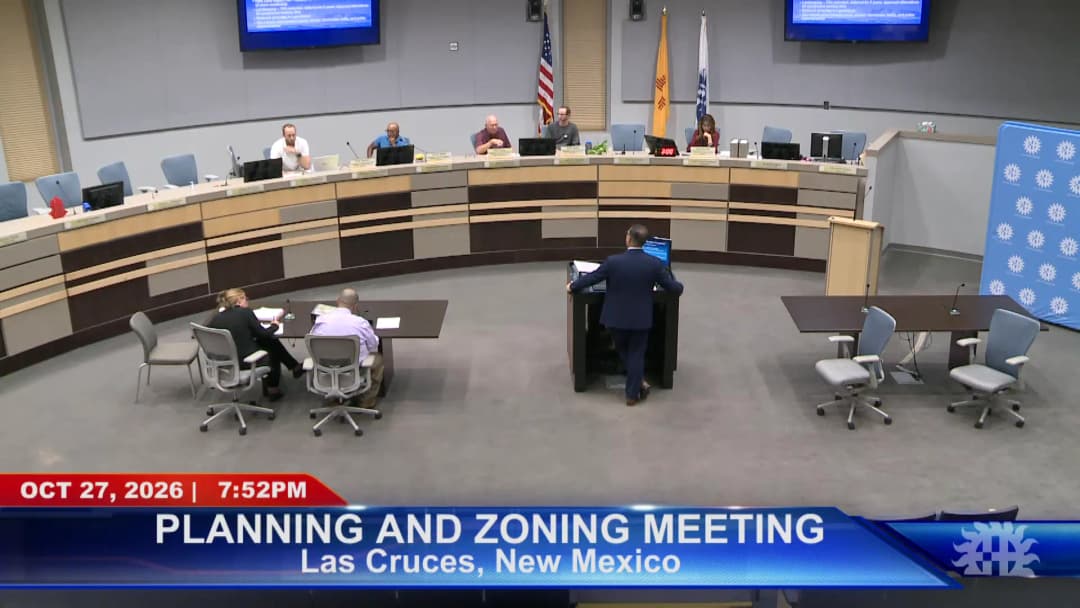
Las Cruces Planning & Zoning Commission Meeting - October 27, 2026

The Planning and Zoning Commission met at 6:00 PM on October 27, 2026, chaired by Vice Chair Janet Acosta. The commission unanimously recommended approval of the Arroyos at Settlers Pass Phases 3-5 zoning request and approved the related master development plan and preliminary plat. It then voted to split the second annual land use code update, recommending chapters 34-36 (excluding a proposed 20-to-28-foot lot-width change) and tabling chapters 37-38 to December 15, 2026. Opening - No conflicts of interest were declared by commissioners or staff. - No public comments were offered during the initial public participation period. - No consent calendar item was pulled for separate discussion. Item 7.1: Arroyos at Settlers Pass Phases 3, 4, and 5 - Staff planner Adam Otro presented three related requests: a zoning map amendment from OS2S/NH1S to NH2S on about 5.15 acres; a master development plan for the 55.08-acre Arroyos at Settlers Pass phases 3-5; and a preliminary plat for the 17.058-acre phase 3. - The master plan would allow a range of 165 to 551 single-family lots across three phases. Martin Piller, applicant representative, said the proposed phase counts were 72, 80, and 82 lots for phases 3, 4, and 5. - The phase 3 preliminary plat showed 72 residential lots, with lot sizes stated as 0.0112 acres to 0.175 acres, plus tracts for electrical utilities, drainage, and mailbox clusters. - The Development Review Committee recommended approval of the master plan and approval with conditions of the preliminary plat. Staff recommended approval, subject to completion of the pending traffic impact analysis and coordination with Public Works on drainage tracts meeting regional benefit requirements. - Public comment: Edward Martinez of ZA Engineering, representing adjacent property owner Alternate Logistics, asked the commission to require the proposed road/utility connection to be moved slightly north. He said the adjacent 15-acre tract slopes north and needs a gravity sewer connection; the proposed location could force a lift station that would burden both the adjacent developer and the city. - Commissioner discussion covered the floodplain history of a former drainage parcel, the pond's performance in recent storms, future traffic connectivity, and density. Public Works Director David Sidio said the city has about $4 million in funding for a phased buildout of Engler from Del Rey toward Rinconada/Metro Verde, with the first phase estimated near $10 million and possible roundabouts; the project timeline depends on additional funding. - Commissioner Kaiser referenced a 4.2 dwelling-units-per-acre figure; staff clarified the overall density for the entire master plan area was 4.1 dwelling units per acre. The NH2S zone allows up to 24 units per acre. - Outcomes: The commission voted 5-0 to recommend approval of the zoning map amendment, 5-0 to approve the master development plan, and 5-0 to approve the preliminary plat. Item 7.2: Second Annual Land Use Code Update - Chris Favor, Community Development Director, presented proposed revisions to chapters 34-38. Highlights included new infill/tier-three flex incentives in the urban core: five-year waivers of public safety impact fees for infill projects, park impact fees capped at $500 per unit for five years, 75% landscaping reductions with two-year deferrals, reduced multifamily amenity requirements, and site-infrastructure flexibility. Other changes covered historic preservation terminology, zoning and land-use table updates, subdivision procedures, retaining-wall timing, traffic impact analysis scoping, removal of substantial completion, street-sign and lighting updates, and parks-related trail and park dedication changes. - Public comment: - Stephen Green, representing home builders and MAC/government affairs, asked the commission to table the update. He said the 900-page document had not received enough review and that removing substantial completion would raise subdivision costs and hurt the housing market. - John Moscato said the Realize Las Cruces process had balanced public and private needs, and the proposed changes destroyed that balance. He opposed removal of substantial completion, street-light cost sharing, and the minimum townhouse lot-width increase from 20 to 28 feet, saying development and home-buying would become less affordable. - Marcy Dickerson, a developer, said the city's lighting specifications and substantial-completion change add costs passed to home builders and buyers. She cited a project delayed about nine months waiting for El Paso Electric equipment and asked the commission not to decide that night. - Roxanne Livingston, executive director of the New Mexico Construction Alliance, requested more time for members to understand and discuss the proposal. - Zachary Libbin expressed general support for Realize Las Cruces but said development costs are becoming outrageous and more community input was needed. - Jeremy McVay echoed those concerns and requested more discussion; the chair said yielding unused time to another speaker was not permitted. - Commission discussion: Chair Acosta initially proposed postponing indefinitely, but staff explained that could be treated as a 'no' recommendation to City Council. Commissioners debated whether to amend, table, or split the package. Commissioner Kaiser criticized the two-page staff report for a 900-page code, and Commissioner Thurston said he feared the commission's recommendations would be ignored by City Council. Staff proposed advancing less-contested chapters while continuing work on subdivision and development-standard chapters. - Substantial completion was the most debated item. Public Works Director David Sidio explained that existing code sections conflict and that removing substantial completion would clarify when the city accepts responsibility for completed public improvements. Commissioner Thurston and public speakers argued the change would place financing and scheduling risk on developers and delay lot sales. - Outcomes: Commissioner Kaiser moved to recommend approval of chapters 34, 35, and 36, excluding the proposed minimum townhouse lot-width increase from 20 to 28 feet. The motion passed 3-2, with Commissioners Thurston and Turpin voting no. The commission then voted unanimously to table chapters 37 and 38 to the December 15, 2026, meeting. Closing and Next Meeting - Staff reminded commissioners that the November and December meetings are moved to the third Tuesday: November 17 and December 15, 2026. - The commission adjourned after a motion and a unanimous voice vote.

ENGINEERING AND INFRASTRUCTURE 18% · PARKS AND RECREATION 11% · LAND USE 10% · CODE REVIEW 10%
636
OCT 27, 2026 · NORMAN, OKLAHOMA · PUBLIC MEETINGS & LIVE-STREAMS
Norman City Council Meeting: Proclamations, Groundwater Facility Plat, City Auditor Contract, Park Ordinance – October 27, 2026

The Norman City Council, Norman Utilities Authority, Norman Municipal Authority, Norman Tax Increment Finance Authority, and Norman Parking and Transit Authority met jointly on October 27, 2026. The council adopted three proclamations, heard ward and mayoral announcements, approved the consent docket, and acted on five non-consent items: two Ward 5 final plats, the city auditor compensation ordinance, the city auditor employment contract, and a public parks ordinance amendment. Most votes were unanimous; the two final plats passed 8–1 and the auditor contract passed 8–1. Proclamations - Oklahoma Mobility Week (November 1–7, 2026) was proclaimed. A representative of ODOT and the mobility management program thanked Norman for its partnership and invited residents to walk, bike, and use public transit. - World Kindness Day (November 13, 2026) was proclaimed. Angela Jimenez Calhoun, founder and CEO of the Beacon Project, accepted and said the Norman nonprofit serves approximately 500 Norman public school teens each year through food boxes, a teen cafe, and essential items. She thanked the Human Rights Commission for bringing the recognition forward. - Native American Indigenous Peoples Heritage Month (November 2026) was proclaimed. An Absentee Shawnee tribal member and commander of the Absentee Shawnee Veterans Association accepted, and Lucianne Harjo, coordinator of Indian Education for Norman Public Schools, said the program serves about 2,600 students from 75 tribal nations in a district of roughly 17,000 students, about 17–18 percent of the student population. Council Announcements - Ward 1 encouraged a kindness challenge on Friday, November 13; noted a local restaurant's Dr Pepper promotion; mentioned Transition House's search for an executive director; and sought applicants for economic development advisory board positions. - Ward 2 urged safety during Halloween and OU homecoming weekend and reminded residents to vote in the November 3 election, with early voting starting October 28. - Ward 3 thanked First Christian Church for a $250 donation for document recovery, announced a $700,000 first responders addiction recovery grant to the city, and reported calls about camping, transit/light rail, and ADA concerns. - Ward 4 congratulated Thunderbird Clubhouse on receiving $126,000 in solar infrastructure, stated the project generates 65 kilowatt hours and offsets 65 percent of the clubhouse's usage, and highlighted the Norman Solar Initiative's 45 completed projects with over 880 kilowatts of solar capacity and over 200 kilowatts of storage. - Ward 5 announced town halls at the Norman Public Library on November 7 from 4–5 p.m. and November 21 from 9–10:30 a.m., and said residents have called about Turnpike Authority partial property takes, water protection, and data centers. - Ward 7 also encouraged early voting and Election Day participation. - The mayor thanked Fall Fest organizers; noted the ribbon cutting for the new airport air traffic control tower; announced the Reese Park kids space groundbreaking and a spring community build; reminded residents that city-sponsored trick-or-treating is not mandated and suggested Friday and Saturday, noting there will not be another Saturday Halloween until 2037; and celebrated the Oklahoma Supreme Court's affirmation allowing the voter-approved shelter project to move forward. Consent Calendar - Items 4 through 25, with the exception of Items 13 and 14, were placed on the consent docket and approved unanimously. - Item 5, Hospital Authority Board appointments, was included. Councilmember Kirby noted the board currently has six west-side members, three east-side members, and two core-area members, and voiced concerns about medical access and fire response times while supporting the appointments. - Item 24, a resolution to make the temporary shelter compliant with the State Fire Marshal's recommendations and repair HVAC damage from the July 4 storms, was approved. Councilmember Grant said it would make the shelter safe and habitable until a permanent shelter is built. - Item 6, a camping-on-public-property ordinance, was not acted on; the mayor clarified that action had been postponed to November 24, 2026. Public Comments & Testimony - No members of the public spoke during the meeting. Registered speakers for non-consent items, including Stephen Ellis, Floyd Carroll, and Cynthia Rogers, were not present, and no one spoke during the final miscellaneous comments period. Discussion Items Item 13 – Norman Groundwater Facility Final Plat - Staff member Nathan Maddenwald presented the final plat for the Norman groundwater facility at 4020 East Tecumseh Road, about one-half mile east of 36th Avenue Northeast in Ward 5. He said it implements a preliminary plat approved by council in March 2025. - The facility will centralize chlorination for the city's 43 groundwater wells, which currently send untreated groundwater directly into the potable distribution system. The state Department of Environmental Quality requires chlorination; the facility will add chlorine and ammonia to form chloramines. - Staff said the project does not include drilling new wells or increasing pumping, though the site is sized to handle additional wells if the city later chooses to drill them under the AIM water plan. Councilmember Bruce noted the project was tied to the voter-approved utility rate increase of June 13, 2023. - Councilmember Kirby raised concerns about aquifer depletion, the Garber-Wellington aquifer, and impacts on Ward 5 residents and farmers. She moved to postpone the item to December 8 for hydrology studies, but the motion failed for lack of a second. She also referenced long-range water plans increasing from 4 billion to 8 billion gallons and questioned future water supply choices. - The final plat was approved 8–1, with Councilmember Kirby voting against. Item 14 – Summit Valley Edition Section Four Final Plat - The final plat is located one-half mile north of State Highway 9 and 300 feet west of 36th Avenue Southeast in Ward 5. - Councilmember Kirby asked that it be considered separately from the consent docket because of concerns about recharge-plate coverage and the city's 10-acre rule. No other discussion or public comment was offered. - The plat was approved 8–1, with Councilmember Kirby voting against. Item 26 – City Auditor Compensation Ordinance - The ordinance fixes the city auditor's compensation consistent with the city manager's compensation under Article 18, Section 1 of the Norman Charter and includes an emergency clause. - City Attorney Rick Knighton said the ordinance gives council authority to enter into the auditor contract but does not itself guarantee employment. Councilmember Steele asked whether it was consistent with the voter-approved charter change; Knighton confirmed the requirements would be in the ordinance. - Councilmember Bruce noted the city has more than 1,000 employees, a budget over $300 million, annual grants of $40–70 million, and 13 departments, calling the auditor role a tough job. - The ordinance passed second reading and final reading unanimously. The emergency clause was moved and seconded; Councilmember Bruce questioned whether it was a true emergency, while Councilmember Steele supported using it to hire an auditor promptly. Item 27 – City Auditor Employment Agreement - Council considered an employment agreement between the city and its related authorities and Deborah Rohrbaugh, setting terms for her service as city auditor. - Councilmember Bruce questioned a provision providing 12 months of salary plus insurance and benefits for certain terminations, saying it appeared higher than other municipalities. Knighton responded that the contract was consistent with the prior auditor's contract, that the city manager, city attorney, and city auditor are at-will employees of the council, and that severance provisions help attract qualified applicants given political risk and annual council turnover. He also reviewed the prior auditor's departure and the job announcement error that had led to a severance payment. - The contract was approved 8–1, with Councilmember Bruce voting against. Item 28 – Public Parks Ordinance Amendment - The ordinance amends sections 2-316 and 24-50 of the Norman code to provide oversight, prohibit certain activities in public parks, establish exceptions and enforcement, and include an emergency clause. It passed first reading by title only unanimously. - On second reading, Councilmember Steele moved to adopt the revised ordinance in the agenda packet and then moved to amend it to keep camping prohibited in Sutton Urban Wilderness. He explained that without the amendment, adopting the revised ordinance would remove the current camping prohibition at Sutton while the broader camping-on-public-property ordinance is still pending. - City Attorney Knighton said Sutton Urban Wilderness is owned by the state and leased to the city, and the lease requires certain ordinance provisions. Councilmember Kirby asked whether a similar special clause was needed for Cates Park; Knighton said that lease does not contain the same camping-specific provision. - The amendment passed unanimously, and the revised ordinance as amended passed second and final readings unanimously. The emergency clause was moved; no separate vote tally is recorded in the transcript. Key Outcomes - Consent docket (Items 4–25 except 13 and 14) approved unanimously. - Item 13 final plat approved 8–1 (Kirby dissenting); motion to postpone to December 8 failed for lack of a second. - Item 14 final plat approved 8–1 (Kirby dissenting). - Item 26 auditor compensation ordinance adopted on second and final readings unanimously; emergency clause moved and seconded. - Item 27 employment agreement with Deborah Rohrbaugh approved 8–1 (Bruce dissenting). - Item 28 parks ordinance amended to retain the Sutton Urban Wilderness camping prohibition; adopted on second and final readings unanimously; emergency clause moved. - Next steps: a postponed camping-on-public-property ordinance is scheduled for November 24; Ward 5 town halls are set for November 7 and November 21; and a community build for the new Reese Park kids space is planned for spring 2027.

PROCEDURAL 32% · WATER AND WASTEWATER MANAGEMENT 12% · PERSONNEL MATTERS 11% · PUBLIC ENGAGEMENT 9%
637
OCT 27, 2026 · LAS VEGAS, NEVADA · PUBLIC MEETINGS
Las Vegas Redevelopment Agency Meeting - October 27, 2026

The Redevelopment Agency committee met with a quorum, chaired by Chair Doherty. Members present included Cherry, Schlottman, Neldberg, Riley, Ortiz Thompson, and Edmund Drew; Member Johnson was excused. Staff reports covered opportunity zone nominations, redevelopment incentive program outcomes, and project updates. No agenda or minutes were available; this summary is based solely on the meeting transcript. Consent Calendar - Approved the final minutes by reference of the regular meeting of July 28, 2026, on a unanimous voice vote (all in favor, none opposed). Discussion Items - Opportunity Zones 2.0 status: Tracy Reich, redevelopment manager, reported that nominations are in a "back and forth" with the state, with a final list expected in about a month. In response to a question, she said a census-tract issue on the historic West Side was addressed so the tract covers the whole historic West Side. She clarified the city made nominations to the state, not a federal agency. - Incentive program history: Ms. Reich reported 31 security grants, 14 visual improvement program grants, 1 electrical utility improvement program grant, 3 multifamily renovation projects, and 7 owner participation agreements. The new tenant improvement program grew out of four owner participation agreements used for tenant improvements. She stated that no application has ever been rejected once it reached the board; applications drop out mainly when work is already complete, when approval timing conflicts with developer schedules, or when applicants choose not to proceed. Incomplete information and the three-bid requirement are the leading causes of delays; a complete application typically takes 45 to 60 days. She estimated total incentive disbursements for FY 2025-26 were "a little over a million" dollars. - Electrical utility improvement program: Ms. Reich described it as assisting very large projects that must underground or relocate utilities, with NV Energy-approved plans required. A member encouraged outreach to landlords and asked for a pitch on why undergrounding improves property value; Ms. Reich said "let's work on that." - Redevelopment area updates: Ms. Reich said the downtown assemblage RFP is active and closes December 16, covering 11 acres; a media push runs through mid-November. Work is beginning on Redevelopment Area 3, with incentives possible in the next couple of months. A developers round table is planned for November, and ULI placemaking grant awards are scheduled for November 10. - Concerns about downtown assemblage: Several members stressed that the downtown site should be held for a significant project rather than settled for an under-scaled development. Ms. Reich said she has declined proposals for single-family homes and tiny homes; minimum heights of five stories, or three in some areas, apply. - "Art project" status: Ms. Reich said negotiations with the selected developer are ongoing; a contractor's bid using an unrecognized prevailing-wage category increased pricing 45%, and the project has gone back out to rebid. - Future agenda topics: Members proposed future agenda items on security (citing 31 security grants, four shootings in two months, and increased lease breaks), additional incentive program ideas, revisiting topics previously discussed, and sanitation service in high-traffic areas. No action was taken on these proposals. Key Outcomes - Approved the July 28, 2026 minutes (unanimous). - Received staff reports on opportunity zones, incentives, and redevelopment projects. - Staff agreed to bring updates on the downtown assemblage/RFP and the art project to a future agenda. - No formal action was taken on future agenda topic requests beyond the directive to consider scheduling them.

ECONOMIC DEVELOPMENT 69% · PROCEDURAL 13% · AFFORDABLE HOUSING 6% · PUBLIC SAFETY 5%
638
OCT 27, 2026 · MANHATTAN, KANSAS · CITY COMMISSION
Manhattan City Commission Work Session: Floodplain, Stormwater, Habitat Housing (October 27, 2026)

The Manhattan City Commission met in a work session on October 27, 2026, with Mayor Adam Jack and Commissioners McCullough, Fox, Morrison, and Von Leno present; the clerk confirmed a quorum. No agenda or minutes were provided with the source transcript. Staff presented an annual floodplain management plan review, a stormwater program update, and a workforce housing sales tax request from Habitat for Humanity for housing at 3115 Dickens Avenue. Public Comments & Testimony - On the Habitat for Humanity item, Gary Mott of 1526 West Wind Drive, an adjacent property owner, said he was not necessarily against the project but was concerned about stormwater runoff and gravel from the former daycare site washing onto his property, possible construction disruption to his yard, and whether smaller homes in the neighborhood could affect neighboring property values. He also noted an existing diversion terrace and easements. - Donna Shank Hamlin of 1922 Leavenworth Street spoke in support of a community land trust, describing it as one of three recommendations from the 2018-2019 Community Solutions to Affordable Housing study funded by the Kansas Health Foundation. She said the CLT was the working group that moved forward and that shared equity tools let people build modest wealth instead of remaining trapped in rentals. She offered to provide the study report to the Commission. - Gary Oles of 3308 Frontier Circle cautioned the Commission about the tax-exempt status of land trusts, noting that Prairie Glenn and Prairie Glen East have not paid property taxes since the late 1960s and that services for tax-exempt properties are subsidized by other taxpayers. He said he was unsure how the county appraiser would treat land owned by a nonprofit and improvements owned by an individual. - No public comment was offered on the floodplain or stormwater presentations. Floodplain Management Plan Annual Review - Bill Heatherman, Principal Stormwater Engineer, presented the 2026 annual floodplain management plan review, a CRS requirement. Manhattan participates in the National Flood Insurance Program and the Community Rating System at Class 6. He described the program as a partnership among local, state, and federal governments and said the city has adopted higher regulatory standards, public education, enforcement, planning, and mitigation activities. He noted nearly 35% of the city’s floodplain is in open space. - The regional multi-hazard mitigation plan is updated every five years; the Commission concurred with the current plan by resolution in April. Floodplain maps show floodway, flood fringe, future-conditions floodplain, 500-year floodplain, and levee-protected areas; the future-conditions floodplain is a higher city standard tied to Wildcat Creek modeling. - 2026 highlights included the Sunflower Flats project progressing so Garden Groves residents can relocate before floodplain buyouts close; a FEMA extension for that timeline; completion of levee phase one in 2024; ongoing phase two railroad stop-log gap negotiations; permitting moved into the Opal system; and 12 property buyouts completed since 2016, with the most recent single-family home buyout in 2024. - In discussion, staff said the Wildcat Creek floodplain management plan update presented at a joint city-county meeting in March 2021 did not result in a final report and is not currently planned to be restarted. Commissioner Fox raised debris and fallen trees in Little Kitten Creek and other channels; staff said city policy does not remove large trees or debris from natural stream channels because of liability, cost, and private ownership, but staff offered to visit the sites. Public Works staff said most stream channels are on private property and no Kansas city performs that private maintenance. - On Fort Riley, staff said a previous proposal for large reservoirs on the fort was rejected by the Pentagon about five or six years ago. A later study found about 18 smaller upstream detention areas could provide similar benefits, but implementation stalled on cost, authority, and cooperation. Public Works staff said they recently reconnected with new Fort Riley leadership and discussed a possible larger MOU covering maintenance, traffic signals, and line painting. - Asked about program cost, Public Works staff said the stormwater fund’s personnel budget is in the range of $800,000 to $1 million out of roughly $4 million in revenue, and more than 90% of stormwater fund dollars go to projects. Stormwater Program Update - Bill Heatherman gave a broader stormwater program update. Maintenance crews perform inlet repairs, box culvert rebuilds, ditch cleanouts, and levee mowing, with staffing shortages noted. The Corps of Engineers annual levee site visit occurred the same day. - Water quality work is governed by the MS4/NPDES permit through KDHE; the current five-year permit is in year two. Activities include public education, trash and recycling events such as a Halloween-themed event with KACEE, facility audits under the Good Housekeeping program, outfall inspections, follow-up on pollution reports, construction erosion control, and inspections of private stormwater treatment facilities. Staff said they inspect about 20% of facilities per year, above the 10% minimum. - The city has more than 140 detention basins, mostly privately maintained. The city updated detention design methodology in 2023 and adopted a fee-in-lieu of detention program; six developments have paid into it. Staff said a city-driven inspection of basins found the median condition adequate. The fee was set at $1,155, rounded up from a calculation developed with Kansas State University, to fund downtown east and west drainage projects. - Special projects include the Campus Creek study with Kansas State University and the Kearney Street Storm Collector study, both with consultant Benish under contracts approved at recent Commission meetings. CIP2, the culvert under the levee, is complete; CIP3 is about 90% complete and is scheduled to finish this fall and winter. CIP4, a large culvert under the state highway, is the hub for projects 8, 9, and 10 and will be designed to about 15% before being handed to KDOT for a partnership delivery. - Staff described an alternative off-site stormwater treatment compliance program, one of the first three in Kansas, under which developer fees are used to pay farmers for cover crops through K-State K-Care. The first round of farmer contracts is being finalized. Workforce Housing Sales Tax Request — Habitat for Humanity at 3115 Dickens Avenue - Stephanie Peterson, Director of Planning and Development, said Habitat originally requested $50,000 in workforce housing sales tax for two units, but the request increased to $150,000 after the need for a sanitary sewer connection was identified. The existing home at 3115 Dickens is not connected to public sewer. - Public Works staff member Randy described the proposed sewer line. The public sewer currently terminates at a manhole south of 1521 Wreath Avenue. Habitat plans to use an existing 16-foot public utility easement on the west side of the property and establish an additional easement through the replat. The neighboring property owner is not opposed; temporary easements could be available if needed. A previous shared lateral was cut off when the neighbor’s lateral was rehabilitated with an in-situ liner. - Josh Brewer, Executive Director of Habitat for Humanity of Northern Flint Hills, presented the proposal. Habitat is using a community land trust model, described as the first shared-equity CLT construction in Manhattan in about 30 years. Under the CLT, the homeowner owns the home and leases the land under a 99-year ground lease; the land trust owns the land and preserves affordability. The resale formula currently gives the homeowner 25% of market appreciation and preserves 75% for the next buyer. - For the first home, the target first sale price is $299,000 against an appraised market value of $360,000, a $61,000 discount. Under the formula, after five years the resale price would be about $307,557, and the homeowner could leave with up to $49,833 in earned equity from mortgage payments plus about $8,000 in appreciation. For the second home, the target price is $225,000 against a $325,000 market value, a $100,000 discount, with a formula resale price of about $231,000 after appreciation. - Habitat requested $100,000 to reimburse property acquisition and $50,000 for sewer construction. Total development cost before developer fee is $931,860. The city share would be 16%, or about $75,000 per home. The property was purchased from Oak Grove School and was formerly tax-exempt; Habitat estimates the project would return about $524,000 to the tax rolls and produce annual property tax revenue of more than $9,200. - In Commission discussion, some commissioners questioned whether the 25% homeowner appreciation share is fair, especially for long-term owners who may need to invest in repairs; Mr. Brewer said the initial below-market purchase price is the offsetting benefit and that the 25/75 split matches current Kansas CLT practice, though it could be revisited. The mayor noted no workforce housing funds had been expended this year and the money was set aside for this purpose. A commissioner expressed reluctance about using public funds for the sewer infrastructure and asked about alternative approaches; staff said sewer special assessments were possible but could make the homes less affordable. A commissioner asked to see the ground lease and equity-lending documents before approval. Mr. Brewer said the lease is based on the national Grounded Solutions Network model, is acceptable to Fannie Mae, Freddie Mac, HUD, and USDA, and includes a $25 monthly CLT administration fee and $25 monthly shared maintenance fund. Key Outcomes - The Commission gave consensus direction for staff to work with Habitat for Humanity to prepare an agreement for the $150,000 workforce housing sales tax request, including both the $100,000 acquisition reimbursement and the $50,000 sewer component. - Commissioner direction included reviewing a prototype of the ground lease and equity/funding agreement before final approval, and clarifying how realtor fees would be handled on CLT resales. - A commissioner requested a copy of the Community Solutions to Affordable Housing study for review. - The meeting was a work session; no formal substantive vote was taken. The Commission adjourned by unanimous voice vote on a motion.

WATER AND WASTEWATER MANAGEMENT 42% · AFFORDABLE HOUSING 35% · ENGINEERING AND INFRASTRUCTURE 7% · PROCEDURAL 6%
639
OCT 27, 2026 · FAIRMONT, WEST VIRGINIA · CITY COUNCIL MEETINGS
Fairmont City Council Regular Meeting on 2026-10-27 22:55:14+00:00

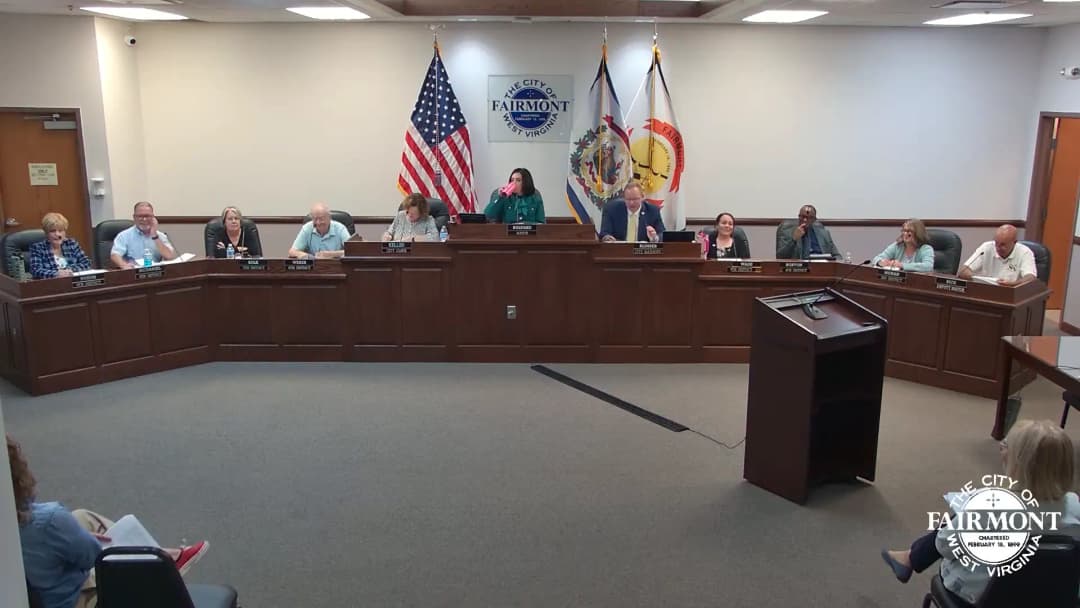
The Fairmont City Council held its regular meeting on 2026-10-27 22:55:14+00:00. Mayor Bollyard called the meeting to order at 7:00 PM following a prayer by Dr. Mark Staples and the Pledge of Allegiance led by Councilmember Moran. The meeting included two public hearings, a citizen petition alleging police misconduct, and the unanimous approval of several legislative items. Consent Calendar - Minutes Approval: Minutes from the prior regular meeting were approved unanimously by voice vote. Public Hearings - Bridge Temporary Construction Easement (Memorial Bridge): A public hearing was held regarding an ordinance granting a temporary construction easement for the repair of the Colonel George S. Bankey Roberts, USAF Memorial Bridge. No public testimony was offered. The ordinance was adopted unanimously. - Big John Salvage Superfund Site Acquisition: A public hearing was conducted for an ordinance authorizing property acquisition to facilitate the cleanup of the Big John Salvage site. An EPA representative expressed strong support, noting the urgency of the council's approval for the project schedule. Councilmember Newsom questioned the EPA on contamination verification, groundwater containment, and taxpayer costs. The EPA clarified the total cost is approximately $60 million, sourced from the dedicated Superfund tax and bankruptcy recoveries, not city tax dollars. The ordinance was adopted unanimously. Public Comments & Testimony - Citizen Petition (Benny Kyle): Mr. Kyle addressed the council as a follow-up to a complaint made at a prior meeting. He alleged the Fairmont Police Department failed to investigate a $3,000 robbery of his elderly family members for over three months. He explicitly accused the department of racial bias, asserting that a white victim would have received police protection. Mr. Kyle declared he had put the city on notice of a pending lawsuit and had provided copies to the council, media, NAACP, and ACLU. Discussion Items - Certificate of Appreciation: Marcella Yarmachuk presented a certificate of appreciation to Deputy Mayor Rice, City Manager Blosser, and Mayor Bolyard for their role in the restoration of Maple Grove Cemetery and the Wreath Across America program. - Councilmember Announcements: - Councilmember Moran reported on the Homelessness Task Force. Key statistics included the Union Mission turning people away for the first time in four years, the Fairmont Marion Housing Authority losing 12 families to attrition due to affordability, and over 40 individuals being housed since early August. A call for community donations (coats, socks, volunteer time) was made. - Councilmember Wade highlighted Halloween tours of the historic jail. - Councilmember Weber thanked staff for the Morgantown Avenue sewer project. - Councilmember Newsom congratulated Donna on her promotion to Chief of First Responders. - City Manager's Report (Travis Blosser): - Proposals are being solicited for bond anticipation notes for the sewage system design. - Federal advocacy efforts include a $10 million congressionally directed spending request for wastewater treatment plant upgrades. - Membrane replacements have been delivered to the water treatment plant. - Comprehensive Plan Update: Matt Pizzatella (Civil & Environmental Consultants) presented an update. A public workshop was announced that will use interactive maps and surveys to gather community input on planning priorities. New Business - Budget Revision (2026-2027 General Fund): The City Manager detailed the second revision for the fiscal year. The revision includes marketing expenses for the Key Bar America ribbon cutting, significant updates to pension contributions (documenting approximately $384,000 in savings compared to the previous funding methodology), and adjustments to the Health Benefit Trust. The resolution was adopted unanimously. - Human Rights Commission Reappointment: James Spatifor was reappointed to the Fairmont Human Rights Commission for a three-year term. The appointment was approved unanimously. Key Outcomes - Unanimous Legislation: The council voted unanimously (9-0) on all legislative items before it, including the minutes, two ordinances, the budget revision, and the commission reappointment. - Pension Savings Confirmed: The city manager formally documented that the switch to the optional two funded plan resulted in a projected $384,000 savings in the required police and fire pension contributions for the current fiscal year. - Lawsuit Notice Filed: The City of Fairmont was formally notified of a pending lawsuit by a citizen alleging racial discrimination and police negligence. - Comprehensive Plan Workshop: A public workshop for the comprehensive plan was announced to be held at Fairmont State University.

PROCEDURAL 28% · ENVIRONMENTAL PROTECTION 25% · BUDGET EQUITY ANALYSIS 10% · COMMUNITY ENGAGEMENT 8%
640
OCT 27, 2026 · COBB COUNTY, GEORGIA · BOARD OF COMMISSIONERS
Cobb County Board of Commissioners Meeting – October 27, 2026

The Cobb County Board of Commissioners met on the evening of October 27, 2026, for a lengthy meeting that included three proclamations, the second and final public hearing on the 2026 code amendments, extensive public testimony, section-by-section votes on the zoning and development code, and approval of routine contracts and appointments. Chairwoman Cupid presided. The meeting stretched past midnight. Proclamations and Presentations - The Board proclaimed November as Native American Heritage Month, honoring the Yamasee/Guale Nation of Georgia and its cultural preservation work. Megan Dickon and Joseph Jordan accepted on behalf of the nation. - The Board recognized Special Needs Cobb for 70 years of service. The organization was founded in 1956 and currently owns and maintains 23 group homes in Cobb County. - The Board proclaimed November as National Family Literacy Month, with the Fielding Lewis Chapter of the Daughters of the American Revolution recognized for promoting literacy. Public Comments & Testimony - Richard Grome, East Cobb Civic Association, opposed several amendments, especially stormwater enforcement, accessory dwelling units (ADUs), higher unrelated-adult occupancy, and expanded driveway parking, asking the Board to pause or reject them. - Virginia Chote of Indian Hills Civic Association and several other residents opposed ADUs, citing property value losses, water and sewer capacity, parking overflow, covenant enforcement, and neighborhood character concerns. Don Barth said he supported the ADU concept but did not think Cobb County was ready, and Christine Rosman also opposed the ADU proposal. - Housing advocates, students, and residents including Nikki Thomas, Peyton Mathies, Carson Farmer, Melissa East, Sam Foster, and John Morgan supported ADUs and shared-housing reforms as tools for affordability and family caregiving. Several urged the Board to go further on affordable housing. - Melanie Kagan, Center for Family Resources CEO and lead agency for the Cobb Homeless Alliance, supported more housing options but questioned whether the proposed housing incentive program would be strong enough; she asked for measurable outcomes and incentives for smaller developments. - Haley Bauer of Clipper Petroleum, Dan Brown and Park Sough of Racetrack, and Matt Yarbrough and Carson Brown of the Council for Quality Growth opposed or asked the Board to hold the proposed fuel-station distance restrictions. Yarbrough cited an ARC estimate that Cobb needs about 37,000 new housing units by 2035. Racetrack said it has about 850 headquarters employees and 600 team members at 24 Cobb stores. - Many speakers opposed data centers or asked for much stricter rules, including Joelan Smith, Joel Becker, Jesse Derivera, Michael Dreyer, Christopher Wong, Gretolyn Donato, and Comrade Cam of the Black Panther Party Georgia chapter. Concerns included water use, emissions, noise, agriculture impacts, surveillance, tax incentives, and AI risks. Some urged a ban or moratorium; others asked for a citizens' oversight committee. - One resident urged approval of Chapter 83, saying two years of living next to a nuisance property had shown code enforcement needs stronger tools. - Jeff Daniel, who said he works in power generation and data centers, encouraged flexible data-center standards and mentioned geothermal cooling. - In later public comment periods, JT Jackson promoted the Stuff-a-Bus holiday toy drive, and Craig Harfoot criticized the size of the code package and raised concerns about data centers and student debt. Discussion Items - Community Development Director Jessica Gwynn presented the second and final public hearing on the 2026 code amendments. She noted the draft had been through a September 22 work session, an October 6 Planning Commission hearing, and an October 13 first public hearing. She highlighted changes between draft one and draft two, including removal of the Chapter 83 nuisance-in-rem article, removal of Chapter 86 non-discrimination and homelessness provisions, revisions to Chapter 54 fire code sections, clarifications to Chapter 83 junk-vehicle/outdoor-storage rules, and Planning Commission recommendations on Chapter 134. - The Board discussed Chapter 2 incentives at length. It voted to keep the existing 125% county-average-wage criterion and positive-fiscal-impact criterion, but amended the housing incentive program by removing the $10 million investment and 50-unit eligibility thresholds. - Chapters 66, 106, and 118 were each approved 5-0 without changes. Chapter 10 and Chapter 50 were approved 5-0; Chapter 50's stormwater enforcement was clarified to apply to detention and retention systems rather than routine homeowner pipe failures. Chapter 54 was approved 5-0. Chapter 6 was approved 5-0 with clarification of package-store distance measurement. Chapter 78 was approved 5-0 after adding an annual measurement standard for the 75% vapor-product sales threshold. Chapter 83 was approved 5-0, and the Board agreed to study utility-easement weed-maintenance responsibility for a future code cycle. - On Chapter 134-1 definitions, the Board approved a family definition that strikes the fourth-degree limitation, and set single-family occupancy at two unrelated adults or four or fewer unrelated adults, while keeping the five-vehicle driveway parking allowance. The vote was 3-2. - Purpose-built student housing density was approved at 50 units per acre, down from the proposed 60, after debate about prior approvals and bed-count calculations. The vote was 3-2. - The ADU provisions in Section 134-37(35) were approved as drafted, 3-2, including requirements that the property remain owner-occupied, that ADUs and primary structures cannot be short-term rentals, and that occupancy and parking limits apply across the lot. - The data-center provisions in Section 134-37(36) were approved 3-2. The Board then voted 5-0 to restrict data centers to heavy industrial (HI) zoning in the use chart and 5-0 to add language to Chapter 2 stating data centers are not eligible for the county's economic development incentives. - The gas-station distance amendment in Section 134-266 was tabled. Staff warned that if it is not acted on within the statutory 60-day advertising window, it would need to be readvertised. Sections 134-193 through 134-199 were approved 4-1. - Chapter 86, which had included non-discrimination and homelessness-related provisions, was formally pulled at the sponsors' direction and received no vote. Consent Calendar - The Board approved the revised consent agenda by a 5-0 vote, authorizing the chairwoman to execute the necessary documents. Other Agenda Items and Contracts - The Board approved seven Department of Transportation items, all 5-0: two drainage-design task orders totaling $970,000; two drainage-repair contracts totaling $245,367.10; a $444,551 task order for Barrett Parkway traffic-signal improvements; a $1,068,453 LMIG intergovernmental agreement with Mableton; and a $9,039,903.58 countywide resurfacing contract with C.W. Matthews. - The Board approved, 5-0, the purchase of approximately 1.52 acres at 45 Concord Road for $360,000 plus $20,000 in due diligence, adjacent to the Silver Comet Trail. - The Board approved, 5-0, a $2,964,758 supplemental agreement with Hogan Construction Group for the Highland Rivers Behavioral Health Crisis Center renovation and buildout at 1758 County Services Parkway, and a separate $833,274 contract with Striker Construction for shell-space buildout at 3830 South Cobb Drive. - The Board announced appointments to the Cobb Workforce Development Board: Alicia Hargret, Marshall Redman, Taylor Von Pelt, Kevin Smith, and Sabrina Wright, with terms expiring June 30, 2029. Key Outcomes - The 2026 code amendments were approved with several modifications, except for Chapter 86, which was pulled, and Section 134-266, which was tabled. - Notable votes: definitions and ADU provisions approved 3-2; purpose-built student housing and data-center sections approved 3-2; data-center HI restriction and incentive exclusion approved 5-0; most other code chapters approved 5-0; Sections 134-193 through 134-199 approved 4-1. - The Board agreed to study utility-easement weed-maintenance responsibility for a future code cycle rather than change it that night. - The Board reminded residents that early voting ended Friday, October 30, with Election Day on Tuesday, November 3; Chairwoman Cupid reported advanced voting was up about 25% from the prior year.

ZONING REGULATIONS 20% · CODE AMENDMENTS 16% · AFFORDABLE HOUSING 12% · DATA CENTER REGULATION 11%
OPENPUBLICA · PUBLIC MEETING INDEXUPDATED DAILY · openpublica.com