Browse by city
Date range
Search help

Search titles, summaries, topics and stored transcripts together. Keywords may match separately; put the whole query in double quotes for a phrase. Matching follows word analysis, so punctuation is not exact. Both dates are included. Documents are not searched.

SHOWING 21–30 ENTRIES
21
SEP 15, 2026 · BOZEMAN, MONTANA · CITY COMMISSION
Bozeman City Commission Regular Meeting - September 15, 2026

The Bozeman City Commission met on Tuesday, September 15, 2026, at 6:00 PM in the Commission Room at City Hall. The meeting covered a special presentation on housing affordability civic dialogue, action items including a water adequacy ordinance and the Cattail Creek Corridor and Anchor Route Park Master Plan, and a pulled consent item regarding the Olympic Torch Relay. All votes were 5-0. Public comments addressed concerns about the Cattail Creek plan, the torch relay costs, and general safety. Consent Calendar - F.1–F.16 (except F.3): Approved unanimously (5-0). This included accounts payable, various professional services agreements, a resolution correcting resolution numbers, and final adoption of a text amendment to wetland and watercourse regulations. Item F.3 (Torch Relay Agreement) was pulled from consent and considered later as an action item. Public Comments & Testimony - Cindy Miller (Harvest Creek resident): Expressed concerns about the Cattail Creek Corridor plan, including removal of natural grasses, fire hazards, noxious weeds, and lack of HOA engagement. She requested that the Harvest Creek HOA board be involved in future planning. - Heather Higgs (Harvest Creek HOA): Representing 525 homeowners, she listed concerns about the boundary between irrigated lawn and native grasses, weed management, fire risk, and impacts on adjacent properties. She requested collaboration with the city on these issues. - Suki Nakamura (Bozeman resident, EV Board member): Speaking on the Torch Relay agreement, she questioned fiscal implications, noting the contract prohibits charging fees and the city has stated it cannot fully fund police and fire. She asked what Bozeman residents gain from the event. - Terry Lundsden (Bozeman resident, Urban Parks and Forestry Board chair): Expressed support for adopting the Cattail Creek Master Plan. - Ryan William Wilson (Harvest Creek resident): Supported the Cattail Creek plan, citing its similarity to the Gallagator Trail and the need for safe biking/walking routes. He also noted dangerous traffic conditions on Oak Street. Discussion Items - Special Presentation – Housing Affordability Civic Dialogue: Russia Chavez Perdinas (Civic Dialogues, powered by Change.org) presented results. The open phase received 193 ideas from 500+ residents. A lottery-selected panel of 100 residents, demographically representative of Bozeman, deliberated on housing policy options. Top priorities included reforming HOA covenants to allow ADUs (88% support), pre-approved pattern book for home plans (79%), fast-track permitting (72%), and a tourist/resort tax (71%). A workplan prioritized actions: immediate (pattern book, fast-track, HOA reform), near-term (MSU student housing partnership, low-interest loans, ADU incentives), and medium-term (tourist tax, down payment assistance). The city may request no-cost research support from Civic Dialogues. - Action Item I.1 – Water Adequacy Ordinance (Provisional Adoption): Director Sean Coates presented the ordinance to move water adequacy requirements from Chapter 38 (UDC) to Chapter 40 (Utilities Code) for housekeeping. No substantive code changes. Duplicate language will remain until a spring cleanup. Public comment was silent. Motion to provisionally adopt carried 5-0. - Action Item F.3 – Olympic Torch Relay Agreement (Pulled from Consent): Assistant City Manager Henderson noted the early stage of planning, with off-ramps, and that MSU may be a partner. Fiscally, typical city services (police, street closures) are absorbed in operations. Commissioner Sweeney raised concerns about staff burden and costs. Public comment raised concerns about waived fees and city trade-offs. Motion to authorize the city manager to sign the agreement approved 5-0. - Action Item I.2 – Cattail Creek Corridor and Anchor Route Park Master Plan: Parks staff (Mitch Overton, Addie Jaden) presented the plan, a 3.25-mile corridor from Davis Pond to Bozeman Ponds, serving 12,000 people within a quarter mile. Key features: unified trail, wayfinding, native vegetation, limited turf conversion, and phased implementation. Public comments raised concerns about HOA engagement, grass management, and weed/fire hazards. Commissioners discussed pickleball prohibition in the corridor, future engagement for site-specific design, and herbicide policies. Motion to adopt the resolution carried 5-0. - Appointments – Library Board of Trustees: Mayor Morrison disclosed a past professional relationship and campaign donation from applicant Amara Reese Hansel. Motion to appoint Amara Reese Hansel (short term ending June 30, 2027) and Emmy Chuck (full term ending June 30, 2031) approved 5-0. Key Outcomes - Consent Calendar: Items F.1 through F.16 (except F.3) approved 5-0. - Water Adequacy Ordinance: Provisionally adopted 5-0; will be duplicated in code until spring cleanup. - Torch Relay Agreement: Authorized City Manager to sign with LA28, 5-0. - Cattail Creek Master Plan: Resolution adopted 5-0; future site-specific engagement with neighborhoods planned. - Library Board: Appointments made 5-0. - Commission FYI: Only one board vacancy remains (Sustainability Board). Commissioner Sweeney requested a work session on the neighborhoods program and noted park distribution disparities in older urban areas.
PARKS AND RECREATION 28% · COMMUNITY ENGAGEMENT 16% · PUBLIC ENGAGEMENT 14% · PARKS AND RECREATION 11%
22
SEP 10, 2026 · BOZEMAN, MONTANA · CITY COMMISSION
Inter-Neighborhood Council Meeting - September 10, 2026: Robert's Rules Training and Updates

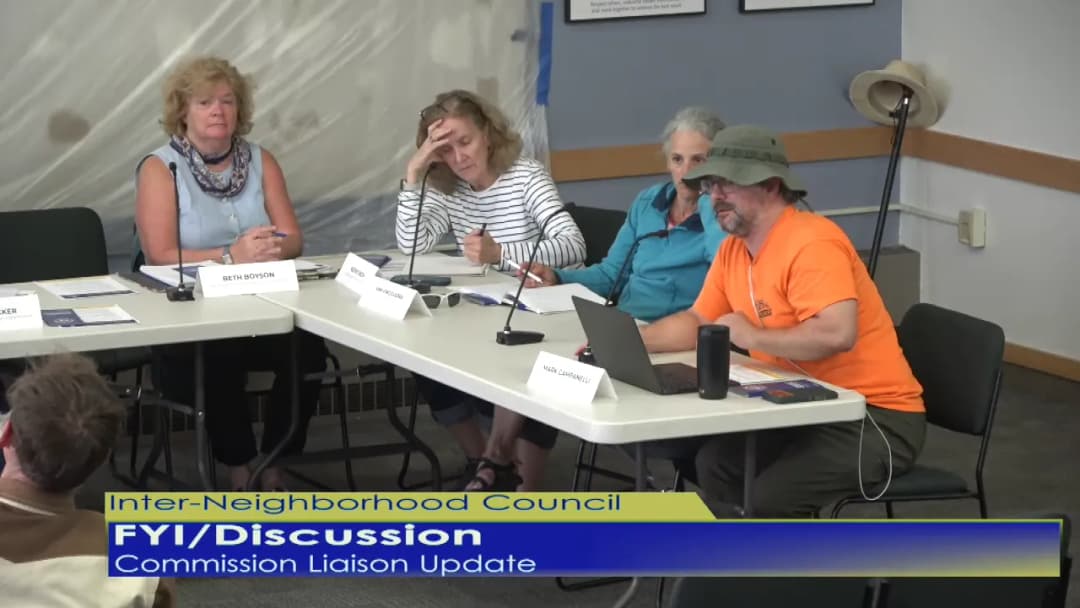
The Inter-Neighborhood Council (INC) of Bozeman, Montana met on Thursday, September 10, 2026, at 4:30 p.m. The meeting included a special training on Robert's Rules of Order, public comments on the urban forest management plan and a city charter amendment, and updates from the commission and city liaisons. Consent Calendar - Approval of Minutes (August 13, 2026): The minutes were approved unanimously with no discussion. Public Comments & Testimony - Marsha Caveney (BCAN/Bozeman Tree Coalition): Spoke in support of the urban forest management plan update, emphasizing that it is only updated every 10 years. She urged stronger tree protection ordinances, earlier involvement of the city forester in development, and hiring an urban ecologist. She noted that public comments are due by September 17, 2026, and directed attendees to comment via email or engage.bozeman.com. - Carson Taylor (Chair, City Study Commission): Announced completion of the city charter amendment work, which includes a new Article 8 on public engagement. He requested INC members help disseminate flyers about the ballot issue (ballots mailed October 12, 2026) and asked to be placed on the October meeting agenda. - Becky Franks (City Study Commission member): Provided additional details on the charter amendment, noting three sub-options that would only take effect if the amended charter passes. She encouraged INC members to invite presentations to neighborhood associations before ballots go out. Discussion Items - Robert's Rules Training (Dan Clark, Director, MSU Local Government Center): Conducted an interactive 20-minute session on parliamentary procedure. Topics included: use of points of order, calling the question (requires a two-thirds vote), the purpose of a second (to indicate at least one other person wants to discuss), motions in the affirmative, handling amendments (including amendments to amendments), and abstentions (only appropriate for legal conflicts of interest). He emphasized that parliamentary procedure is a tool to facilitate orderly meetings and that the chair may allow discussion before a motion to build consensus. He also noted the six criteria for a legal meeting under Montana law (quorum, notice, agenda, public comment, minutes, and proper authority). Handouts on meeting scripts and motion types were provided. - Commission Liaison Update (Deputy Mayor Douglas Fischer): Highlighted upcoming city commission items: - October 6, 2026: Work session on potential ballot issues for November 2027 (e.g., fourth fire station, affordable housing levy, second library, EMS, mental health response). - September 22, 2026: Joint meeting with Belgrade. - October 27, 2026: Revisions to advisory boards (transportation, community development, historic preservation, economic vitality). - November 10, 2026: Fowler community housing work session. - December 1, 2026: South Bozeman TIF bond decision. - Bozeman Creek Vision Plan final adoption (end of year). - Responded to questions about the UDC cleanup (technical, not rezoning neighborhoods), wetlands code changes (alignment with Army Corps process, no impact on in-field development), and requested ethics training for INC (commission agreed to arrange). - City Liaison Update (Emily Kiely, Community Engagement Coordinator): Reported on the annual INC indoor reports (submitted; data given to commission). Key takeaways: desire for dedicated FTE for neighborhoods, better use of technology for communication, appreciation for coffee walks with commissioners, need for commission liaison to advocate more for INC, challenges in recruiting diverse members, and request for increased city financial support. Also announced the launch of the Civic Academy (seven sessions, Wednesdays 1-4 p.m., Oct 14 – Dec 9, 2026; applications due Sept 30, 2026, limited to 30 participants). - Neighborhood Updates and Chair Selection: With the chair (Emily Mason) and vice chair (Jim Webster) unavailable for the October meeting, Beth Boyson was nominated and unanimously approved to chair the October 2026 meeting. Key Outcomes - Minutes of August 13, 2026 approved unanimously. - Beth Boyson approved as acting chair for the October 2026 meeting. - The city commission will arrange ethics training for INC members. - INC representatives will distribute flyers and invite city study commission speakers to neighborhood meetings regarding the charter amendment. - The meeting adjourned at approximately 5:50 p.m., followed by an informal discussion with Mayor Joey Morrison and Deputy Mayor Douglas Fisher.

BOARD OPERATIONS 37% · PROCEDURAL 22% · PUBLIC ENGAGEMENT 13% · URBAN FOREST MANAGEMENT 7%
23
SEP 9, 2026 · BOZEMAN, MONTANA · CITY COMMISSION
Bozeman Sustainability Advisory Board Meeting - September 9, 2026

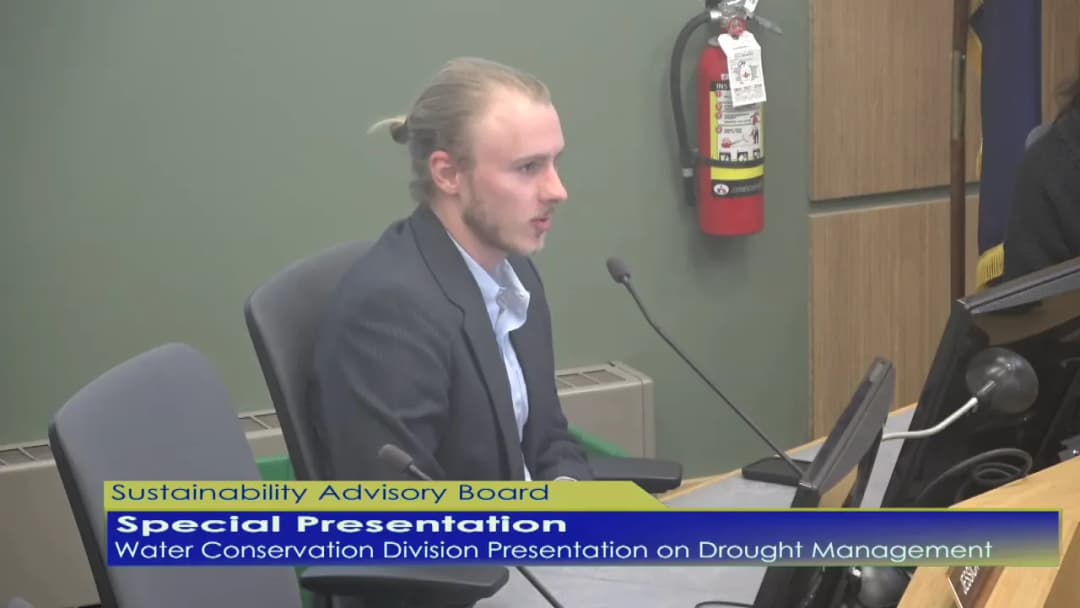
The Bozeman Sustainability Advisory Board met Wednesday, September 9, 2026, at 6:00 PM in the Commission Room and via video conference. The board approved its July 8, 2026 meeting minutes, received a special presentation on drought management from Water Conservation Program Manager Jessica Alstrom, and heard Sustainability Division updates from Natalie Meyer. No public comments were made in person or online. Approval of Minutes - The board unanimously approved the July 8, 2026 meeting minutes. No changes to the agenda and no disclosures were made. Board FYIs - A board member reported that the City Commission unanimously approved wetland code cleanup updates recommended by staff, an item the Sustainability Board had previously weighed in on. The Commission also directed the city manager to have staff examine moving the required timeline for wetland delineation earlier in the development process after comments from the Gallatin Watershed Council. - Another board member noted that MSU is hosting author Auden Schendler on September 22 as part of its sustainability summit, where he will discuss his book Terrible Beauty. Special Presentation: Drought Management - Jessica Alstrom presented on the city's 2022 Drought Management Plan, drought monitoring approach, the 2021 drought experience, 2025-2026 conditions, and the Integrated Water Resources Plan update. - The drought plan includes five main sections: vulnerability assessment, drought monitoring framework, drought communication campaign, drought response measures tied to four stages, and drought response enforcement. - The drought reserve fee is 13 cents per hundred cubic feet applied to every water bill for every customer. Drought surcharges vary by customer class and stage: Stage 1 surcharges are 0-25% with a 10% citywide reduction goal; Stage 2, 10-41% with a 20% goal; Stage 3, 20-100% with a 30% goal; and Stage 4, 25-200% with a 40% goal. Stages 1 and 2 are designed to be revenue-neutral and roughly bill-neutral if customers meet the reduction goals. - In June 2021, Gallatin County precipitation was 5-25% of normal and temperatures were about 6-8 degrees warmer than normal. The city saw 13 million gallons per day in June, compared with a typical August peak of 12 million gallons per day. The city declared a Stage 2 drought in mid-July 2021, and demand dropped by 28% when comparing mid-June through mid-July demands with the typical peak. Permanent three-day-per-week watering restrictions were adopted in 2022. - The 2025-2026 Gallatin snowpack reached an all-time low in April based on the 30-year record, but Hyalite Reservoir filled, and summer water demands remained normal, so no drought declaration was made in 2026. - The Integrated Water Resources Plan update is analyzing water supply alternatives and conservation measures. Staff plan to meet with the Water Advisory Committee in November, return in December or January for a draft recommendation, conduct public engagement including a statistically valid survey and open houses in February and March, and take a final plan to the City Commission around July. - Board members asked about resident and renter communication, commercial irrigation contractors, exempt wells, drought forecasting, wildfire effects on Hyalite Reservoir, and water rate tiers. One board member shared concerns about a commercial irrigation contractor setting a sprinkler system to water 20 minutes every morning and evening. Another asked about renters' access to programs such as the garden party. Alstrom noted free sprinkler assessments, the Drop Counter water-use portal, and that renters can show proof of address to participate in the garden party. - Alstrom explained that commercial surcharges are set based on cost of service and outdoor-use reduction opportunity, and that many commercial properties use exempt private irrigation wells that the city utility cannot regulate. FYI/Discussion: Sustainability Division Updates - Natalie Meyer reported on city sustainability projects and upcoming events. - Bozeman Public Library: the original 16 kW solar array is nearly 20 years old; a new 37 kWdc rooftop addition is now in place and is expected to offset about 10% of the library's electricity use. LED upgrades and efficiency commissioning cut energy use by 30%, and new inverter monitoring will be available to the public. - Water Reclamation Facility: the city's largest solar installation will be a 608 kW behind-the-meter array, fully self-consumed on site. The facility accounts for 36% of total city facility electricity use. Construction is expected to begin next spring. - A 120 kW DC fast charger at the shops complex is now operating and supporting the city's EV fleet. Meyer noted that Northwestern Energy's demand charge of $1,440 per kW is expensive and said a time-of-use rate would help. - The City Commission adopted the lead community agreement on July 21; Missoula adopted its agreement the following week. The city is on track to file with the Public Service Commission next week and will hold a public information session with Citizens' Climate Lobby on September 24. - Bear-resistant compost totes are available at no extra charge. Meyer said the city is exploring ways to address bear conflicts, including possible regulation across garbage providers, and would welcome Sustainability Board input. A board member suggested the Gallatin Solid Waste conference on October 7-8 as a possible venue for discussion. - Other upcoming events included a September 16 living-with-wildlife event at the Museum of the Rockies, the MSU Sustainability Summit on September 22, a Cold Climate Conference October 12-14 supporting local high school construction academies, and Northwest Bozeman Area Plan work sessions next month. Key Outcomes - The board unanimously approved the July 8, 2026 meeting minutes. - No other formal votes or action items were taken during the meeting. - Next steps identified: Public Service Commission filing next week, LEAD public information session September 24, Water Advisory Committee meetings in November and December/January, public engagement in February and March, Integrated Water Resources Plan adoption targeted around July, and Water Reclamation Facility solar construction next spring.

WATER AND WASTEWATER MANAGEMENT 45% · RENEWABLE ENERGY 14% · PUBLIC ENGAGEMENT 10% · ENVIRONMENTAL PROTECTION 6%
24
SEP 2, 2026 · BOZEMAN, MONTANA · CITY COMMISSION
Economic Vitality Board Meeting - September 2, 2026: Belonging in Bozeman Decision-Making Tool Work Session

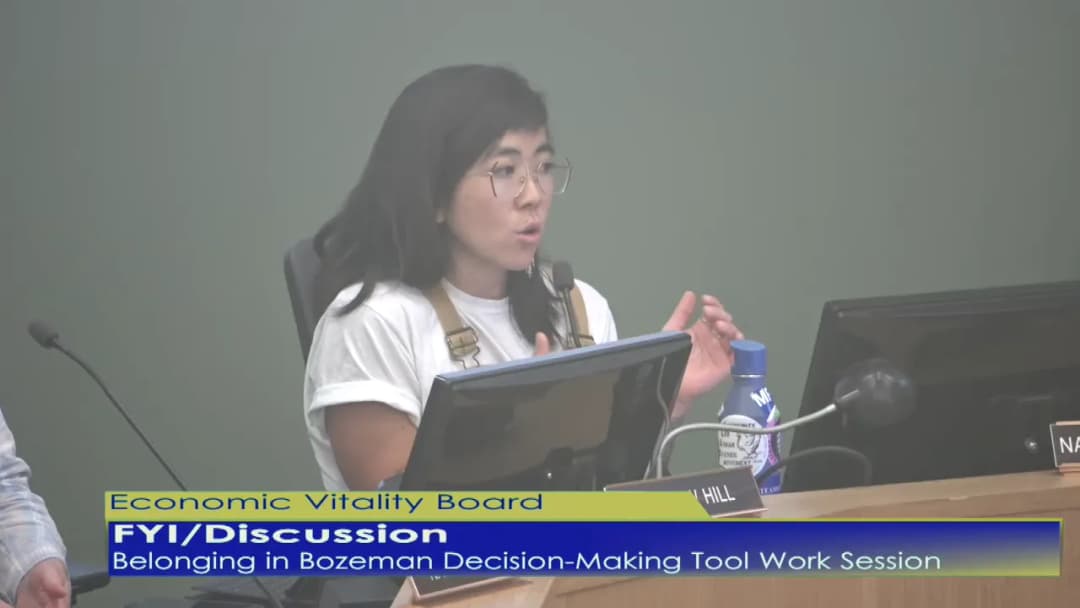
The Economic Vitality Board (EVB) of Bozeman, Montana, met on Wednesday, September 2, 2026, from 6:00 PM to 6:59 PM. The primary agenda item was a work session on the "Belonging in Bozeman Decision-Making Tool," presented by Courtney Smith. The meeting included no public comments and no other agenda items. The board discussed the tool's structure, data requirements, and potential implementation across city operations. Discussion Items - Belonging in Bozeman Decision-Making Tool Work Session (Smith): Courtney Smith presented a proposed decision-making tool designed to guide city policies, practices, and decisions toward equitable access goals. The tool consists of a series of structured questions: defining the proposal and desired outcomes, examining data (disaggregated by race, ethnicity, income, gender, language, geography, disability, etc.), engaging stakeholders, analyzing benefits and burdens, implementing with inclusive timelines and communications, and establishing accountability and evaluation checkpoints. To illustrate the tool, Smith used the example of the MSU ex-officio board member position, adopted by the Bozeman City Commission on March 3, 2026. The policy aims to include MSU student voices in city boards (Community Development, Economic Vitality, Sustainability, Transportation, Urban Parks, and Forestry) as non-voting members. The board provided extensive feedback on the tool: - Order and Structure: Several members suggested reordering the questions. Recommendations included starting with the broad desired outcome (the "why") before the proposal, placing data analysis before community engagement to identify stakeholders, and separating the goal from the proposal. Some found the tool complex and recommended a simpler flow or a matrix/table format. - Data Concerns: Members emphasized the need for robust, disaggregated data. Statistics cited: Bozeman's population is approximately 50,000–60,000; MSU enrollment is about 17,000 (34% of Bozeman); 15% of enrolled MSU students identify as an underrepresented race or ethnicity; young people aged 20–29 make up 32% of Bozeman's population and are underrepresented in community surveys and public comments. Data privacy for small populations in Bozeman was highlighted, with assurances that the city's dashboards suppress small counts to protect anonymity. - When to Use the Tool: Members debated at which stage the tool should be applied—initial idea development, before public engagement, or as a final checklist. The consensus leaned toward using it at key decision points rather than every step to avoid it becoming a "check-the-box" exercise. - Specificity and Guidance: The board requested clearer "should" criteria for each question (e.g., how much data is enough, which stakeholders must be engaged). Some suggested that a lack of data should not halt the process but should be noted as a gap to address in the engagement or accountability steps. - Stakeholder Categories: Members recommended adding geographic neighborhoods (e.g., Southwest, Northwest Bozeman) and groups like renters/owners, youth, families, and the elderly to the starting considerations. Smith acknowledged the feedback and noted that the tool is intended to be used at multiple stages, including by the city commission and staff when crafting policies or engagement plans. Key Outcomes - The board reviewed the Belonging in Bozeman Decision-Making Tool and provided constructive feedback on its structure, data needs, and application timing. - No formal votes were taken; the item was a work session to gather input. - The next EVB meeting is scheduled for October 2026, with the topic expected to be the C. Bozeman Creek Plan. - Deputy Mayor expressed appreciation for staff work on the Model and Mentor Initiative with a visiting Ukrainian delegation (eight delegates for nine days in September 2026). - Board members were reminded of term expiration dates and reappointment processes, with details to be emailed by staff.

PUBLIC ENGAGEMENT 27% · COMMUNITY ENGAGEMENT 23% · RACIAL EQUITY 15% · PROCEDURAL 14%
25
SEP 1, 2026 · BOZEMAN, MONTANA · CITY COMMISSION
Bozeman City Commission Regular Meeting - September 1, 2026

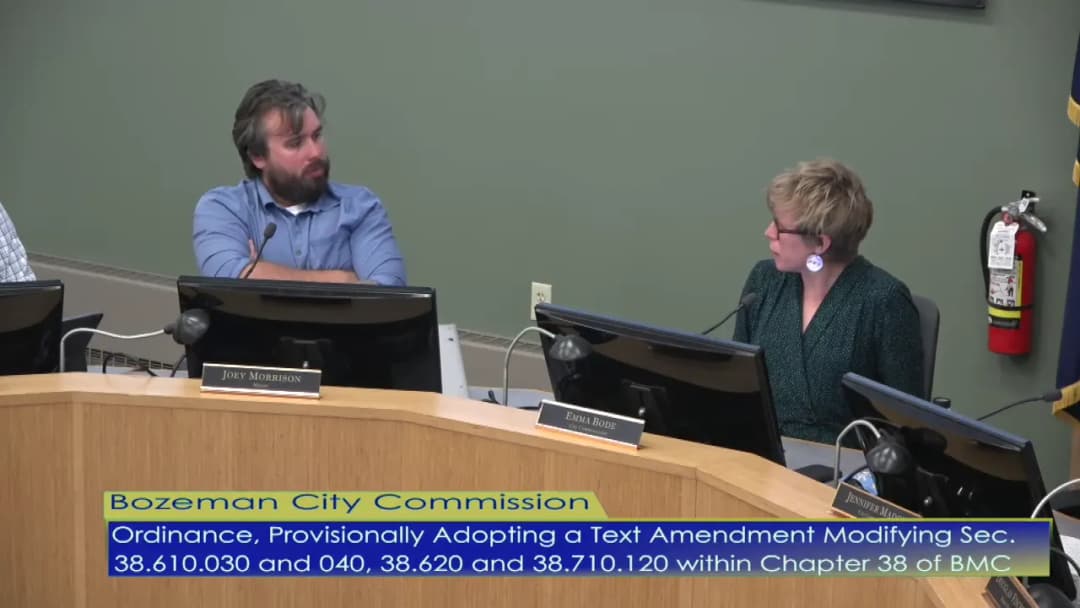
The Bozeman City Commission held a regular meeting on September 1, 2026, at 6:00 PM. The meeting covered consent agenda approvals, public comments on non-agenda items, and a single action item: a text amendment to the Unified Development Code regarding wetland and watercourse regulations. The commission also received FYI updates from members and staff. Consent Calendar - Approved consent items F.1 through F.10 (accounts payable, construction contracts, memoranda of understanding, professional services agreements, and task orders) unanimously (5-0). Items included agreements with Haven MT and Family Promise of Gallatin Valley for emergency shelter, a joint funding agreement with the U.S. Geological Survey, and various infrastructure and safety projects. Public Comments & Testimony - Jim Webster (Bozeman resident, Vice Chair of INC and member of HPAB, speaking for himself) expressed concern about a possible push to upzone parts of the BonTon neighborhood for zone edge transition, noting that this could undermine trust built during the 2025 downzoning process. He asked the commission to clarify their values regarding historic preservation and neighborhood culture. - Cynthia Smith (former HRDC employee) raised ongoing concerns about taxpayer money provided to HRDC, stating that her repeated requests for records and accountability have been met with delay and silence. She urged the commission to treat this as an accountability issue involving public funds. - Catherine Berry (Gallatin Watershed Council) spoke in support of the proposed text amendment but recommended moving the wetland delineation report requirement to the earliest phase of development application (pre-app or concept plan review) to improve coordination and impact avoidance. Discussion Items - Ordinance H.1 – Text Amendment to Wetland/Watercourse Regulations (Application 26217): - Staff (Tom Rogers, Community Development; Nick Ross, Transportation and Engineering) presented a narrow amendment to remove two submittal requirements from the code: an approved jurisdictional determination (AJD) from the U.S. Army Corps of Engineers and a determination of watercourse status from the Gallatin Conservation District. Justification included that all wetlands in city limits are now protected by local code, the AJD process takes 12–18 months and delays development, and the Conservation District no longer provides the separate determination before a full 310 permit application. The amendment also cleans up related language. - The Sustainability Board and Community Development Board recommended approval. One public comment from Gallatin Watershed Council supported the amendment but urged moving the delineation report earlier in the review process. - Commission discussion focused on the narrow scope, the complexity of wetland regulation, and potential future work sessions on replacement ratios and timing of delineation reports. Commissioners expressed pride in Bozeman’s post-Sackett wetland code and noted that the amendment streamlines review without reducing regulatory quality. Key Outcomes - Vote on Ordinance H.1: Approved 5-0 (Commissioners Magic, Fisher, Sweeney, Bodie, Mayor Morrison all aye). The ordinance provisionally adopts the text amendment modifying Sections 38.610.030/040, 38.620, and 38.710.120 of the Bozeman Municipal Code. - Commission indicated interest in future work sessions to discuss: (1) moving the wetland delineation report earlier in the development review process, (2) setting local replacement ratios for wetland mitigation, and (3) developing a joint permit with the Army Corps. - The City Manager noted that staff has responded to Cynthia Smith’s public records requests, including providing cost estimates and narrowing the scope, and that two new professional services agreements with nonprofit partners include more formal and specific scopes to increase transparency. - FYI updates included: swearing in of four new police officers, availability of free sprinkler system assessments, and a reminder that bear-resistant containers are available from the city (anecdotal success story shared).

ENVIRONMENTAL PROTECTION 50% · PUBLIC ENGAGEMENT 9% · WATER AND WASTEWATER MANAGEMENT 8% · SUSTAINABILITY PLANNING 8%
26
AUG 27, 2026 · BOZEMAN, MONTANA · CITY COMMISSION
Urban Parks and Forestry Board Meeting - August 27, 2026

The Bozeman Urban Parks and Forestry Board met on August 27, 2026, at 6:00 PM. The board considered a resolution recommending adoption of the Cattail Creek Corridor and Anchor Route Park Master Plan and approved a modification to the Park Land Trust 2025 Community Grant Program. Public testimony highlighted concerns about outreach and specific park features such as pickleball courts. The board also received a director's update on staffing, facility projects, and upcoming public meetings. Public Comments & Testimony - Heather Higgs (representing Harvest Creek Owners Association, 525 homeowners) requested a delay in the recommendation to the City Commission, arguing that Harvest Creek was not effectively included in the planning process. She raised concerns about conversion of mowed lawn to native grasses, potential weed encroachment into adjacent properties, tick-related health risks, and the need for a buffer zone. She requested the board involve the HOA in future decisions. - Peter Norreen (Cattail Creek resident) asked the board to postpone the recommendation to allow more public awareness. He opposed proposed pickleball courts near his home and preferred maintaining the existing park as is. - Darren Stro Snyder (Cattail Creek resident) said he supports the corridor concept but strongly opposed a pickleball court within 50 feet of his home, citing expected noise, traffic, and loss of flexible grassy space. He also noted a perceived decline in park maintenance since city takeover. - Jamie Neesmith (manager, Cattail Creek Community Owners Association) requested that the board and homeowners be involved in future changes to the neighborhood. Discussion Items F.1 - Resolution Recommending Adoption of the Cattail Creek Corridor and Anchor Route Park Master Plan Staff presented a plan developed over two years for a 3.5-mile corridor connecting Davis Pond to Bozeman Pond Park. The plan emphasizes active transportation, water conservation, and neighborhood-level recreational amenities such as playgrounds, gardens, and placemaking features. Staff clarified that the plan is a conceptual guide; detailed design and additional public engagement will occur before construction. Public comment focused on opposition to pickleball courts; staff confirmed that no pickleball courts are included in the final document. The board discussed the importance of neighborhood engagement, especially for renters and groups not reached by HOA channels. A motion to adopt the resolution with an added directive for "alternative and additional communication to neighborhood organizations" passed unanimously. F.2 - Approve Park Land Trust 2025 Community Grant Program Funding Recommendation The item modified the grant for Bridgeski Foundation to allow $10,000 for trail preparation work done during the previous winter despite lack of snow for Nordic grooming. Staff specified the funding would support trail work on public land within the city, not for capital equipment. The board approved the modification and authorized the Parks and Recreation Director to initiate grant agreements. Key Outcomes - F.1: The board unanimously (5-0) adopted the resolution recommending the Cattail Creek Corridor and Anchor Route Park Master Plan, with an added requirement for enhanced communication to neighborhood organizations during future engagement. - F.2: The board unanimously (5-0) approved the amended Park Land Trust 2025 Community Grant Program funding recommendation for Bridgeski Foundation, authorizing the Director to proceed with grant agreements. - Director's Update: The board noted the selection of Doug Isonman as Parks and Cemetery Superintendent; the seasonal closure of Bogert Pool for major renovations (shelves, plaster, gutters, deck, restrooms, pump house); and upcoming projects including a ribbon cutting for Westlake BMX Park and an Urban Forest Management Plan public meeting on August 31. Commissioner Alison reported that the City Commission recommended requiring landscaping and trees in all zone edge transitions during downtown height discussions.

PARKS AND RECREATION 47% · COMMUNITY ENGAGEMENT 18% · PROCEDURAL 15% · PUBLIC ENGAGEMENT 11%
27
AUG 26, 2026 · BOZEMAN, MONTANA · CITY COMMISSION
Bozeman Transportation Board Work Sessions on Valet Parking and Capital Improvement Plan – August 26, 2026

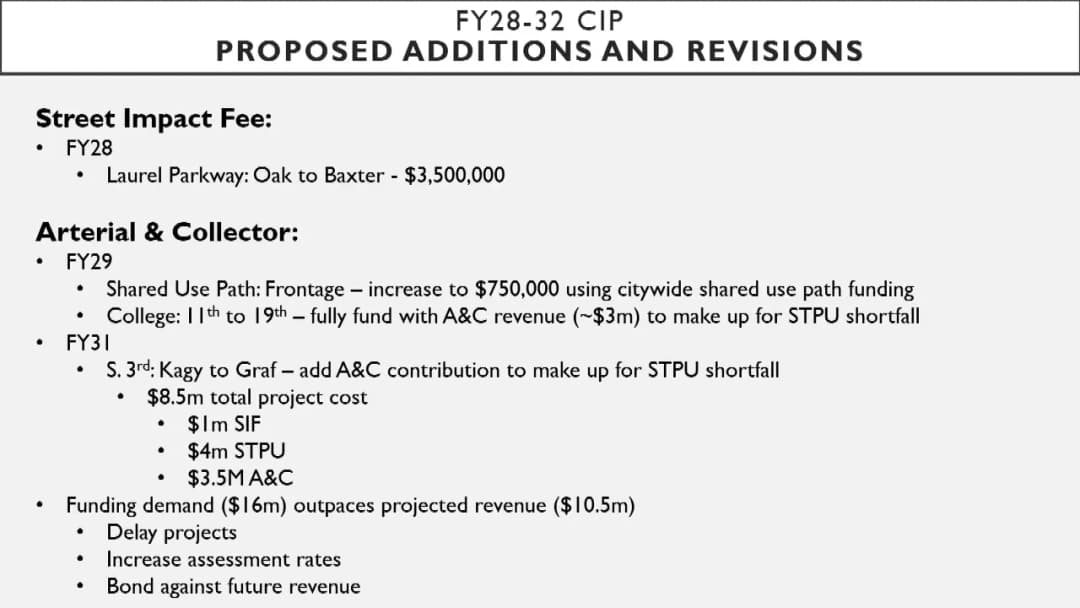
The Bozeman Transportation Board met on August 26, 2026, at 6:00 PM for two work sessions: one on proposed valet parking regulations and another on the Fiscal Year 2028–2032 Capital Improvement Plan (CIP). The meeting began with disclosures, public service announcements, and approval of the July 22, 2026, minutes. Staff reported that a City Commission resolution had formally added transportation safety to the city strategic plan. Public Service Announcements - Director Nick Ross highlighted the start of construction on the MacWat Road bike/pedestrian project and the award of a construction contract for infill shared-use path sections on Flanders Mill Road, North 19th Avenue, and Valley Center, which came in well under budget. Approval of Minutes - The board unanimously approved the minutes from the July 22, 2026, meeting. Discussion Items: Valet Parking Work Session - Staff presented a proposal to amend Bozeman Municipal Code to authorize private valet parking services using dedicated curb space in the public right-of-way. Currently, the code lacks such authorization, and two existing valet operations were approved under a previous code that is no longer in effect. Three new valet requests are pending. - The proposed approach involves three steps: (1) a code amendment to authorize valet permits, (2) a City Commission resolution to establish fees, and (3) administrative creation of a permit program. - Four policy questions were posed for board feedback: - Authorizing Language: Add a new subsection to Chapter 36.04080 for “Exclusive use of on-street parking within public right-of-way by a private entity for valet service through issuance of a permit.” - Fee Methodology: Five options were presented: (1) operational cost, (2) replacement cost of parking (estimated $10,000 per surface space, $50,000 per structured space), (3) market value of parking (no strong comparables in Bozeman), (4) past precedent (e.g., $1,027.75 annual permit per stall at the Bridger Parking Garage), and (5) opportunity cost (public benefit vs. loss). Staff noted that cities with paid on-street parking commonly assess fees based on lost parking revenue. - Permit Conditions: Staff proposed requiring: location, number of on-street spaces used, time/duration of use, location of off-site vehicle storage (with a private agreement), and annual renewal. Permits would expire with the permit holder and would need reissuance upon business transfer. - Treatment of Existing Valet Services: Whether to manage all valet services under the same future code. - Board members provided extensive feedback: - Several members favored an annual fee structure rather than a one-time sale of parking rights, citing Chicago’s experience selling parking rights and later losing control. - There was support for a combination fee: operational cost plus a market-based component (e.g., $1.00–$1.50 per hour based on proposed metered parking rates). Members noted that $1.00/hour for a 24/7 spot equals $8,760/year, close to the $10,000 replacement cost for a surface space, but overnight parking restrictions might reduce the effective hours. - Board members emphasized that on-street parking is more valuable than garage parking, so the fee should reflect a premium. - Some members suggested incentives for partial-day or seasonal use, but others cautioned against overly complicated signs and regulations. - Regarding existing valet operations, most board members recommended bringing them under the new fee structure rather than grandfathering them, noting they currently pay nothing. However, legal and fairness concerns were raised about existing agreements. - No public comments were received during the valet work session. Discussion Items: Capital Improvement Plan Work Session (FY28–32) - Director Ross presented the draft CIP, covering fiscal years 2028–2032. The city is required to maintain a five-year plan. Revenue sources include street impact fees, arterial and collector (A&C) district funds, federal STPU (urban route) funds, and street maintenance funds, totaling roughly $10 million annually. - Key challenges: - Funding Gap: The A&C district faces a projected shortfall of about $5.5 million over the five years (estimated $16 million in demand vs. $10.5 million in revenue). Options include project delays, increasing the A&C assessment rate (currently $60/year per household), or issuing revenue bonds. - Cost Increases: The Kagy Boulevard project (from S. 3rd to Graf) saw significant cost escalation due to retaining walls, tunnels, utilities, and landscaping, requiring more STPU funds than anticipated. This domino effect reduces STPU availability for the College Street (11th to 19th) project and the S. 3rd (Kagy to Graf) reconstruction. - Proposed additions and revisions: - New Impact Fee Project: Laurel Parkway extension (Oak to Baxter) in FY28 as an impact fee contribution to a private development that will build a school district baseball park. The road would be built by the developer with city impact fee reimbursement; if the private project does not proceed, the project will be removed from the CIP. - Frontage Road Shared-Use Path: FY29 funding increased to $750,000 by combining a $500,000 annual A&C allocation with a previously approved $200,000. - College Street (11th to 19th): Reconstruction to city standards with multimodal improvements, now primarily funded by A&C revenue instead of STPU. - S. 3rd (Kagy to Graf): $8.5 million project scheduled for FY31, with $4 million from STPU, $1 million eligible for impact fees, leaving a $3.5 million gap. - Board members expressed support for the proposed projects and urged against delays, especially for College Street, Frontage Path, and S. 3rd. They favored a combination of phased assessment rate increases and revenue bonding to close the funding gap, noting that modest increases would have minimal household impact. A board member questioned landscaping and irrigation costs; staff explained that current climate requires initial irrigation for tree establishment, but landscapes are designed for long-term water efficiency. - No public comments were received during the CIP work session. Key Outcomes - Valet Parking: The board provided clear guidance to staff to proceed with developing a valet parking ordinance that includes an annual fee combining operational cost and a market-based rate (e.g., $1.00–$1.50 per hour equivalent) and to apply the new fee structure to existing valet services. Staff will return with a formal proposal later in 2026. - Capital Improvement Plan: The board endorsed the draft CIP projects and recommended using a mix of incremental A&C assessment rate increases and revenue bonds to address the funding gap. Staff will continue refining the plan and return for a public draft in December 2026. - No formal votes were taken on either topic, as these were work sessions.

PARKING 45% · TRANSPORTATION SAFETY 15% · ENGINEERING AND INFRASTRUCTURE 10% · CAPITAL IMPROVEMENT PLANNING 7%
28
AUG 25, 2026 · BOZEMAN, MONTANA · CITY COMMISSION
Bozeman City Commission Regular Meeting - August 25, 2026

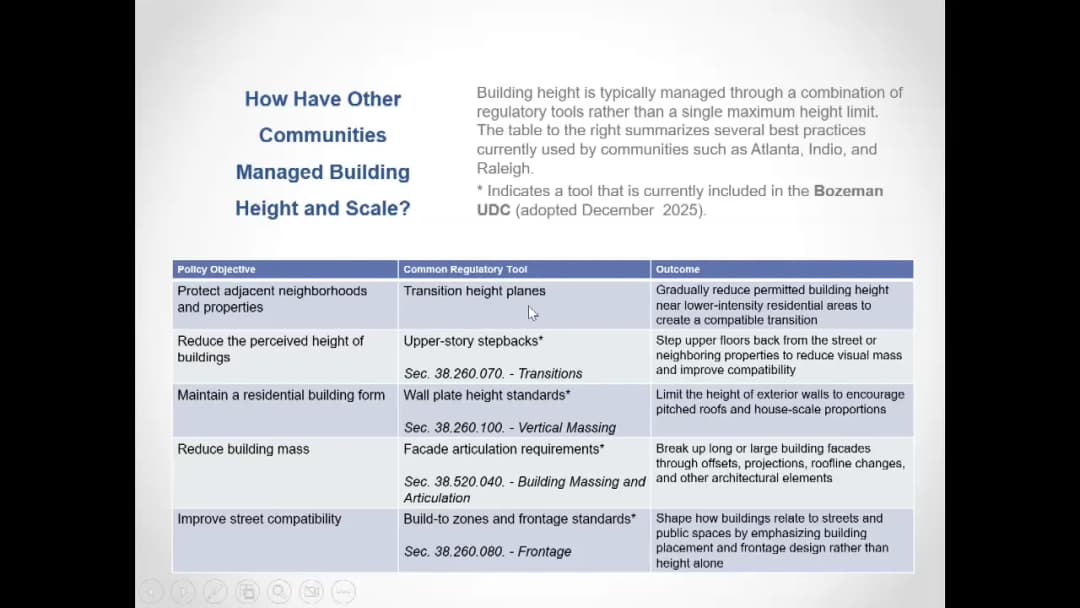
The Bozeman City Commission met on Tuesday, August 25, 2026, at 6:00 PM in the Commission Room at City Hall. The meeting included approval of minutes, consent agenda items, a mayoral proclamation, and a lengthy work session on potential text amendments to the Unified Development Code (UDC) regarding maximum building height in the B-3 zoning district and zone edge transitions. The commission discussed board recommendations, heard extensive public comment, and provided direction for further staff work. Consent Calendar - Approved the regular meeting minutes from April 21, 2026, unanimously (5-0). - Approved Consent Items G1 through G8 (Accounts Payable, Economic Development Services contract, YTI entitlements release, North Broadway engineering services, snow plowing services, Valley Center Lift Station contract, and two annexation zoning ordinances) unanimously (5-0). - Approved Consent Item H1 (Annexation of 163.9 acres at 5211 Baxter Lane with zoning designations R-5 and R-3) by a vote of 3-2 (Commissioners Magic, Sweeney, and Bodie voted no). Public Comments & Testimony - Non-Agenda Items: Jerry Pape (15 N 25th Ave) urged the commission to support Opportunity Zone 2.0, citing over $500 million in potential losses and thousands of bedrooms at risk if the existing zone is not retained. Mark Campanelli (Bogart Park resident) raised concerns about bears in alleys and warned about federal debt and inflation affecting the city. A downtown business owner spoke in favor of retaining the 90-foot height limit, referencing decades of downtown planning. - B3 Height Discussion: Multiple residents spoke. Daniel Cardi (Northside resident) requested reducing the by-right height in B3 to 60 feet, arguing it does not align with the city's strategic plan. Nathan Stein (Headwaters Community Housing Trust) urged leaving the UDC as adopted, noting that new housing at higher price points reduces competition and helps affordability chains. Marley McKenna (DURD board member) supported maintaining 90 feet, noting Bozeman would be the most conservative major city in Montana. Others expressed concerns about building scale, pedestrian experience, and the need for better design standards. - Zone Edge Transitions: Public comment included support for the Historic Preservation Advisory Board (HPAB) recommendations, concerns about the 60-foot right-of-way loophole, and calls for requiring transitions on all streets and alleys regardless of width. Jim Webster (Bozeman resident) emphasized the need for design quality over just height restrictions. Discussion Items - Work Session on B3 Height: Staff presented history, shadow analysis, and comparisons to other Montana cities (Billings, Missoula, Great Falls, Helena, Kalispell). Five advisory boards provided input: Community Development Board recommended maintaining 90 feet; Downtown Urban Renewal District supported 90 feet; Uptown Bozeman Improvement District did not make a formal motion but noted concerns; Inner Neighborhood Council did not formally vote; Historic Preservation Advisory Board recommended 70 feet. Commission discussion included a 3-2 split to maintain the 90-foot maximum height in B3 (Commissioners Sweeney and Magic opposed). Commissioner Sweeney advocated for 60 feet; Commissioner Magic expressed ambivalence about 90 feet in all areas. The commission also agreed to explore additional minimum standards for buildings over 60 feet within B3 (such as stepbacks or setbacks) and to allow a higher-zoned lot to develop to the same intensity as an adjacent lower-zoned lot (Community Development Board recommendation). - Work Session on Zone Edge Transitions: Staff reviewed the current four transition types and board recommendations. HPAB recommended collapsing transitions 1A and 2A into 1B and 2B, and requiring landscaping in alleyways adjacent to RA or RB. Community Development Board proposed an exemption for lots matching adjacent lower-intensity development. The commission did not reach consensus on adding a transition between RA and RC, nor on requiring landscaping for all transitions (both received 3-2 opposition). A proposal to expand transition applicability by increasing the right-of-way width threshold from 60 feet to 70 feet also failed. The commission tabled any zoning map changes around B3 due to staff workload. Key Outcomes - Approved Minutes: April 21, 2026 meeting minutes approved 5-0. - Consent Items: G1-G8 approved 5-0; H1 approved 3-2. - Mayoral Proclamation: August 2026 proclaimed as Streamline Bus Appreciation Month. - B3 Height Direction: By a 3-2 vote, the commission directed staff to retain the 90-foot maximum height in the B-3 district. Staff was also directed to prepare a menu of options for additional minimum standards (e.g., stepbacks, setbacks) for buildings over 60 feet in B3, and to draft an amendment allowing a higher-zoned lot to develop to the same intensity as an adjacent lower-zoned lot without triggering transition requirements. - Zone Edge Transitions Direction: No consensus was reached on other changes. The commission did not direct staff to modify the transition tables or right-of-way widths at this time. Staff will continue to evaluate the topic but with lower priority due to other projects (NCOD design guidelines, development review analysis, historic preservation).

LAND USE PLANNING 33% · ZONING CODE 33% · COMMUNITY ENGAGEMENT 7% · PROCEDURAL 6%
29
AUG 20, 2026 · BOZEMAN, MONTANA · CITY COMMISSION
Bozeman Tax Increment Finance Board Meeting Summary – August 20, 2026

The Tax Increment Finance Advisory Board of Bozeman, Montana met on Thursday, August 20, 2026, at 12:00 p.m. The meeting was held in-person and via video conference. Chair Natalie Van Dusen presided, and six board members were present. The board unanimously approved previous minutes and a grant authorization, received construction updates, and discussed proposed changes to the Northeast Urban Renewal District TIF Assistance Program application. Consent Calendar - Approve June 18, 2026, meeting minutes: Motion by Susan L. Fraser, seconded by Nolan Campbell. Carried 6-0. - Authorize staff to negotiate a grant agreement with the Northeast Neighborhood Association (NENA) for boulevard beautification projects: Motion by Mike Waterman, seconded by Julien Morice. Carried 6-0. The grant will fund landscaping at three corners of Cottonwood and Wallace, with design, plants, and labor donated by the community. Installation is planned for late September/early October 2026. Public Comments & Testimony - No public comments during the initial public comment period. - Amy Hoitsma (written comment read by Commissioner Sweeney): Hoitsma,unable to attend, suggested increasing the weight of the “unique character and vitality” criterion in the TIF application scoring table (currently a minimum of 4 out of 42 points). She emphasized that two large future developments (Bronken’s/Cloverleaf and Car Stage properties) will heavily influence neighborhood character. She encouraged stronger scoring to preserve the district’s intimate, inviting feel. - Jason Delmue (NENA resident, spoken public comment): Delmue supported Hoitsma’s suggestions and proposed adding early public/neighborhood engagement as a scoring criterion. He noted that discretionary TIF can address subjective qualities not easily codified. Discussion Items - G.1 Midtown Urban Renewal District Construction Projects Update (David Fine): Fine reported that the Whittier School parking lot landscaping is complete; streetlight poles are delayed until October due to Canadian manufacturer backlogs. The BMX park has new seeding and trees, and the crosswalk at 7th and Aspen now has poles. A speed study with MDT aims to move the 25 mph sign west of Tamarack. Downtown collaboration includes new lights on North Fifth and Main Street, and design for the opposite side of Main Street is under consideration. No action taken. - G.2 Northeast Urban Renewal District TIF Assistance Program Application Update (David Fine): Fine presented the draft application, recommending an update to the “community housing” section to reflect the adopted Affordable Housing Ordinance (AHO). He noted that the AHO currently only applies to rentals; for-sale housing regulations are pending. Discussion focused on the affordable housing scoring category (6 points). Board member Morice expressed concern that requiring AHO compliance through TIF scores could penalize smaller projects. Fine clarified that scores are not pass/fail but signals of project alignment with urban renewal goals. The board debated whether to increase points for community character (public comment input) and whether to include early engagement. Fine also mentioned that a competitive RFP for economic development term contracts resulted in two teams (Economic & Planning Systems with Bridge; Crescendo with Cascadia Partners), who will be asked to propose a Midtown action plan. No action taken. Key Outcomes - Unanimous votes (6-0) on consent calendar items. - No formal decisions on the TIF application changes; staff will refine the scoring criteria based on board feedback and bring revised language to a future meeting. - Next steps: Staff will explore collaboration with planning to better define the unique character of the Northeast district, potentially using existing documents (RUDAT report, Vision Northeast). The board will continue discussions on balancing affordable housing, commercial vitality, and community character.

URBAN REDEVELOPMENT 25% · AFFORDABLE HOUSING 22% · TAX INCREMENT FINANCING 19% · TRANSPORTATION SAFETY 10%
30
AUG 19, 2026 · BOZEMAN, MONTANA · CITY COMMISSION
Bozeman Downtown Business Improvement District Board Work Session on Building Height and Transitions – August 19, 2026

The Bozeman Downtown Business Improvement District (BID) Board held a work session on possible recommendations regarding maximum building height in the B-3 zoning district (currently 90 feet) and zone edge transitions. The board heard a technical presentation from city staff, received public comment from one resident, and debated whether to forward a formal recommendation to the City Commission. Ultimately, the board chose not to vote, citing a bare quorum, but individual members’ comments will be conveyed to the Commission at its meeting on August 25, 2026. Public Comments & Testimony - Daniel Cardi, Bozeman resident and property owner at 21213 North Third (Midtown) since 1998, urged the board to recommend reducing the maximum allowable building height in B-3 from 90 feet to 60 feet (the same as the B-3C district on Main Street) and to require zone edge transitions across all streets and alleys regardless of width. He argued that 90 feet by right does not comply with the city’s strategic plan or community plan, which emphasize quality of life, sense of place, and balance between new and existing development. He also asked the board to consider code changes to improve the human-scale experience on sidewalks and mitigate noise, light pollution, and construction impacts on residential neighbors. Discussion Items - Work Session on Maximum Building Height (B-3 District) and Zone Edge Transitions – Chris Saunders (city staff) presented a detailed overview of the regulatory tools, including the Unified Development Code (UDC) updates adopted in winter 2025–2026, shadow analysis comparing 90-foot and 70-foot buildings, and the existing transition requirements. The presentation covered four transition types, setbacks, landscaping, and street width buffers. Saunders noted that all new buildings must meet additional massing and articulation standards regardless of transitions. Board members asked clarifying questions about the Freestone Building on West Main and the ability to build up to the property line. - Board Discussion – Members expressed reluctance to take a formal stance with only four of seven members present (a bare quorum). Individual opinions included: - Concerns that 90-foot buildings can negatively impact adjacent residential properties if transitions are not thoughtfully applied. - Emphasis on the pedestrian-level street experience (setbacks, articulation, architecture) as more important than height itself. - A desire not to reopen the UDC so soon after its lengthy adoption process, valuing code stability. - Support for further study of transition zones rather than immediate code changes. - One member (Mark) noted that height is often a proxy for other design concerns and that the commission should focus on sidewalk-level design. - Another member (Elena) suggested allowing the code to play out and making adjustments based on actual building outcomes. - FYI/Discussion: Economic Development Director’s Report & Finance Report – Emily Cope provided updates on downtown partnership operations: two open job positions (weekend maintenance, operations manager); new holiday garland and bows received; flower baskets performing better due to increased fertilizer; graffiti removal continues; assessment collection will move from city to county on a monthly basis starting fiscal year 2028 (approximately $30,000 uncollected in the last fiscal year); upcoming community events (Catwalk, Music on Main series, final Art Walk in September). The parking vision plan and Bozeman Creek project are ongoing with drafts expected this fall. Key Outcomes - No formal motion or vote was taken on building height or transition recommendations due to the absence of a full quorum and board members’ preference for individual input. - The board’s discussion and public comments will be relayed to the City Commission by Commissioner Magic at the August 25, 2026 meeting. - Board members were encouraged to submit additional public comment as individual citizens. - The next regular BID Board meeting will occur in September 2026.

ZONING CODE 56% · LAND USE PLANNING 18% · PROCEDURAL 15% · DOWNTOWN DEVELOPMENT 7%
OPENPUBLICA · PUBLIC MEETING INDEXUPDATED DAILY · openpublica.com