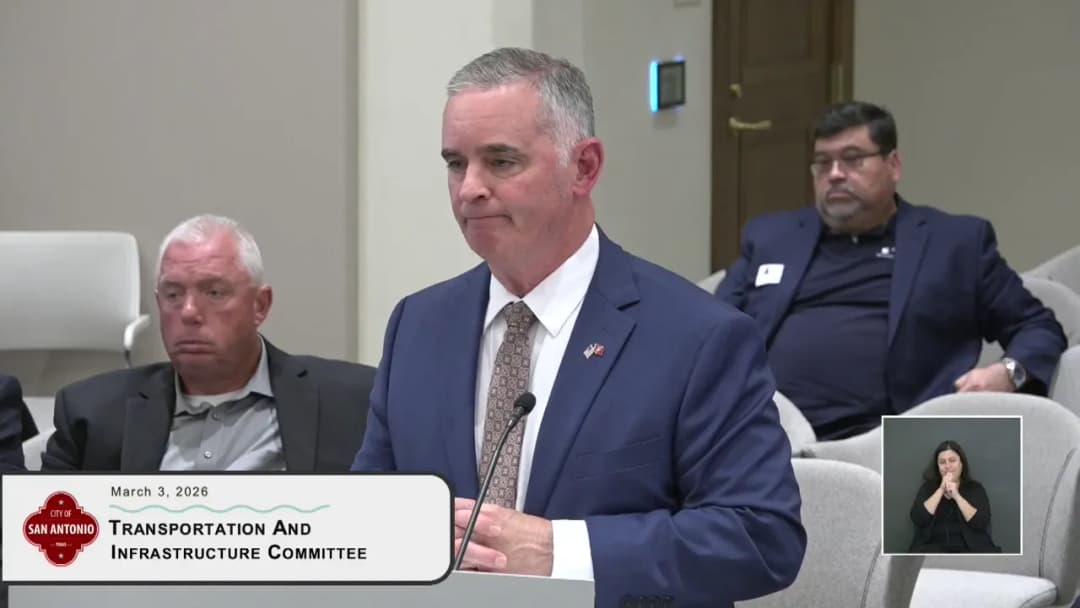
On Tuesday, March 3, 2026, at 2:03 PM, the Infrastructure Transportation Committee convened to discuss the rental vehicle industry, including limousine services, horse-drawn carriages, and electric vehicles. The meeting included public testimony, a staff presentation, and committee deliberation. The meeting adjourned at 3:15 PM. Consent Calendar - The minutes from February 3, 2026, were approved by unanimous voice vote. Public Comments & Testimony - George García (Transportation Advisory Board member) opposed any changes to current limousine requirements, stating the industry "is not broken" and that existing rules work. He noted his wife owns a limousine company (Creso) and followed all Chapter 33 rules. He urged the committee to maintain the status quo. - A subsequent speaker (likely another operator, possibly George Mary) opposed changes, arguing that altering rules for new entrants would undermine those who invested under current rules. He highlighted his 30-year anniversary in the business and warned against repeating Houston's loss of control over the industry. - Oscar Biggs (30-year industry veteran) questioned the need for changes, stating that the industry consistently provides reliable service for events and festivals without complaints. - Michael Rojas asked the committee to eliminate the limousine requirement (Chapter 33) because it creates a barrier for small operators, and supported more competition. - A representative of Yellow Bonnet (horse-drawn carriage company) expressed dissatisfaction with the transition process, stating that promises of free operation were not kept. They lost income during the holiday season due to restrictions and urged the city to allow electric carriages as substitutes, noting that operating a horse carriage costs about $75 per trip while electric vehicles would cost less. The representative also noted that the city's regulation prevents them from replacing retired horses. Discussion Items - Staff Presentation: Rick Wiley (Assistant Director, Police Department) provided a briefing on Chapter 33 of the City Code, which has governed rental vehicle operations since 1992. The presentation covered: - Limousines: 12 companies, 17 vehicles, 165 permitted drivers. Current requirements include owning at least two stretch limousines (or one stretch plus two luxury vehicles), vehicle age limited to 7 years, and liability insurance of $1 million. City staff have received feedback from 5 of 12 limousine owners recommending no changes. The Transportation Advisory Board voted unanimously in August 2025 against changing requirements. Options presented to the committee include: (1) require two stretch limousines or one stretch plus two luxury vehicles; (2) increase insurance to $1 million; (3) rename the industry as "luxury vehicle service" under a new section (33A); (4) make no changes; (5) explore other options. - Horse-drawn Carriages: In December 2024, the City Council voted to phase out horse-drawn carriages by January 1, 2033. Currently 25 permits exist across 5 companies (3 owners). Operating hours are being reduced by 20% in phases. The transition to electric carriages was discussed; electric carriages cost approx. $20,000 to purchase vs. $15,000/year to operate a horse carriage. Electric carriages would be governed under Chapter 33's electric vehicle section. Three options for transitioning permits were presented: (1) one-for-one exchange (25 new EV permits); (2) one-for-one exchange but level out permits so each owner gets 10 (30 new EV permits); (3) reduce to 7 permits per owner after exchange (21 new EV permits). In all cases, once a horse carriage permit is exchanged, it cannot be reversed. - Pedicabs and Electric Vehicles: The city currently has 15 pedicab permits (max 15) divided among three companies. A citizen wanted a single permit but all were already issued. Concerns were raised that companies are buying permits and not using them. Insurance for pedicabs is the same as for stretch limousines. - Committee Deliberation: - Councilmember Munquía (Chair) noted his inclination to maintain a standard for limousines but not eliminate them. He supported changing the designation to "luxury vehicle" and opposed lowering existing standards for new entrants. He also recognized the difficulty horse carriage operators faced during the holiday season and urged a review. - Councilmember Gavito supported Option 2 for horse-drawn carriages (leveling permits to 10 each). She agreed with renaming the limousine industry to "luxury vehicle service" and suggested exploring a list of approved luxury vehicles (like Houston). - Councilmember Rodríguez expressed concern that the transition is not on track, noting that the city's commitment to phase out horse carriages should be honored. He deferred on specific options until more information is available. - Councilmember Core advocated for a comprehensive review of all Chapter 33 provisions, including pedicabs and electric vehicles. He highlighted that current rules require owning two pedicabs for a permit, which may restrict small operators. He also questioned the market for individual luxury vehicle operators who do not need a permit. He supported a pilot program to test electric carriages. - Councilmember Spears initially leaned toward making no changes to limousine requirements, but later worried that increasing insurance to $1 million would be a barrier. She requested cost data for electric carriages and asked how the city would measure success. She also expressed sadness about phasing out horse-drawn carriages. - Councilmember Cole supported maintaining $500,000 insurance rather than increasing to $1 million. He also favored redefining the industry as luxury vehicle service with a list of approved vehicles. For carriages, he suggested opening up EV permits to the general community, not just existing operators. - The Chair summarized that the goal is to launch a pilot program for electric carriages starting in fall 2026 and ending in spring 2027 (six months, covering holidays). This would provide metrics before the 2030 deadline. He noted that some operators may need assistance acquiring electric carriages. Key Outcomes - No formal votes were taken; the committee provided direction for staff. - For limousines: The committee generally favored updating the licensing requirements to a "luxury vehicle" industry category with a moderate minimum standard (e.g., two luxury vehicles or one stretch limousine and one luxury vehicle, with $500,000–$1 million insurance). A list of approved luxury vehicles (similar to Houston) will be explored. The committee did not support eliminating the current requirements entirely. - For horse-drawn carriages: The committee supported developing a pilot program for electric carriages to begin in fall 2026 (six months). Staff will draft an ordinance to authorize temporary permits. The committee expressed preference for giving existing horse carriage operators priority for early EV permits, while also considering broader public access. Options for permit exchanges (1-for-1, leveling, or reduction) will be further refined. The committee also requested a review of the current implementation of the carriage phase-out, including the impact of recent construction on operations. - A comprehensive review of all Chapter 33 provisions (including pedicabs, electric vehicles, and horse-drawn carriages) was suggested for a future meeting. - Staff will prepare a follow-up report with cost data, a proposed pilot program timeline, and metrics for success.
Public Meetings - San Antonio, Texas
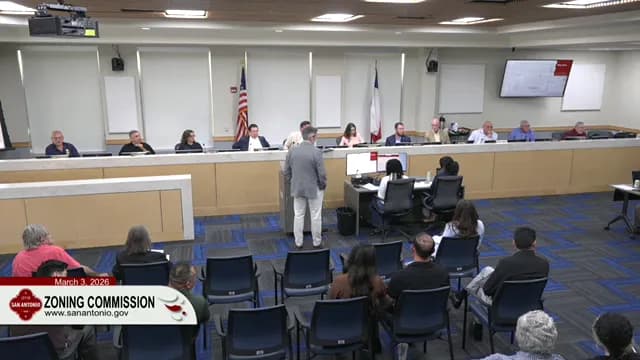
Public Meetings - San Antonio, TexasThe San Antonio Zoning Commission met on March 3, 2026, at 1:00 PM, chaired by Commissioner John Bustamante. The meeting covered a consent calendar of routine items, several individual zoning cases, and public comments. Key decisions included approval of multiple rezoning requests, denial of a duplex proposal, and continuances for two items. Consent Calendar - Approved items 4 (as amended to C1), 6, 8, 12, 13, 15, 16, 18, and 21 on a combined hearing. The motion carried unanimously. - Item 14 was pulled for individual consideration. Public Comments & Testimony - Item 6 (4131 Kuleba Road): No speakers present. - Item 14 (700 block East Myrtle Street): Jim Pletz, representing Sojo Crossing HOA, opposed the project due to traffic congestion, lack of on-site parking, and proximity to residential units. He cited a weekend photo showing heavy parking congestion. - Item 19 (continuance hearing): Multiple voicemails were played from residents of Chateau Dijon opposing the proposed four-story, 50-unit condominium at Broadway and Nottingham. Concerns included traffic, loss of privacy, construction noise, safety for elderly residents, and reduced natural light. Speakers included Elaine Dagend, Gary Rain, Gloria Coughlin, Jeff McKittrick, Ken Such, Leslie Gotrow, Linda Cornwell, Maria Teresa Francisca Martinez de Murgia, Marie Dalstrom, Norma Neckerboker, Sarah Benavides Trotman, Tina Turnipseat, Olenka Vale, Ann Schneider, Chris Leek, and Delores Mollish. - Item 3 (21607 Rowan Bluff): Multiple neighbors spoke in opposition, citing HOA bylaws, traffic safety, and concerns about setting a precedent for duplexes. Speakers included Antonio Domit, Jamie Holder, Nicholas Brown, Vicky Mangal, and Navin Mangal. The applicant, Philip Latka, defended the project as a family care arrangement for aging parents. - Item 9 (519 B Street): Marlene Hawkins from Government Hill Community Association opposed the four-unit duplex, citing inconsistency with the East Side Community Plan's low-density designation and character of the neighborhood. Discussion Items - Item 2 (2031 Hevener Road): Request to change from C2 to C2S for a laundry and dry cleaning self-service use. Staff and SAWS recommended approval. Commissioner Duval questioned the need for individual review versus combined calendar. Motion to approve carried. - Item 3 (21607 Rowan Bluff): Request for conditional use for three dwelling units (duplex) on a 2.27-acre lot. Staff recommended approval, but after extensive public opposition and HOA concerns, Commissioner Duval moved to deny. The motion carried 8-3, with Commissioners Losef, Pana, and Chair Bustamante dissenting. The recommendation for denial will go to City Council. - Item 5 (305 Heartline): Request amended from C2CD to NC (neighborhood commercial) for a small office. Staff originally recommended denial for record service, but supported the amended request. Motion to approve as amended carried. - Item 7 (731 Probant Street & 134 King Rogers Street): Applicant amended to remove the King Rogers parcel, seeking IDZ2 and IDZ1 for an existing building. Staff recommended approval for the Probant Street property and denial for the parking lot. Commissioner Bustamante moved to approve as amended; motion carried. - Item 9 (519 B Street): Request for conditional use for four dwelling units. Commissioner Losef moved for a two-week continuance to allow applicant to meet with all neighborhood associations. Motion carried unanimously. - Item 10 (7439 West Military Drive): Request for conditional use for manufactured home oversized vehicle sales and storage. Staff recommended denial, but applicant had neighborhood and HOA support. Commissioner Huey moved to approve; motion carried. - Item 14 (700 block East Myrtle Street): Request to rezone from I1 to IDZ1 with NC uses. Staff recommended approval; Tobin Hill Community Association supported. Commissioner Kellum moved to approve; motion carried. - Item 17 (601 Pruitt Avenue): Request for wireless communication system with reduced setback. Previously heard, new site plan preserved existing residence. Staff recommended approval. Motion carried. - Item 20 (3000 block City Base Landing): Request for auto paint and body repair with outside storage screened. Staff recommended denial per Brooks Area plan, but applicant noted Brooks was engaged. Commissioner Hinojosa moved to approve; motion carried. Key Outcomes - Consent Calendar: Items 4 (as amended), 6, 8, 12, 13, 15, 16, 18, 21 approved for recommendation to City Council. - Item 2: Approved (C2S for laundry/dry cleaning). - Item 3: Denied (recommendation to City Council). - Item 5: Approved as amended (to NC). - Item 7: Approved as amended (removing 134 King Rogers). - Item 9: Continued to March 17, 2026. - Item 10: Approved (conditional use for oversized vehicle sales/storage). - Item 14: Approved (IDZ1 with NC uses). - Item 17: Approved (wireless communication system). - Item 20: Approved (auto paint/body repair). - Item 19: Continued to March 17, 2026. - Item 11: Continued to April 7, 2026. - Minutes: Approved with one abstention. - Director's Report: Announced that as of April 1, 2026, voicemails will no longer be accepted for public comment. Meeting adjourned at 4:15 PM.
On February 27, 2026, the San Antonio City Council met to consider a censure resolution against Mayor Gina Ortiz Jones following an independent investigation into a verbal exchange with Councilwoman Sue Corr that occurred on February 5, 2026. The investigation found that Mayor Jones violated the city's code of conduct, equal employment opportunity/anti-harassment policy, and workplace violence directive. After public testimony and council debate, the council voted to approve the censure resolution. Mayor Jones recused herself from the meeting after making a brief opening statement. Public Comments & Testimony - Lauren Levy Hughes: Opposed censure, stating she supported Mayor Jones and urged council to focus on urgent issues like ICE detention centers. - Antonio Diaz: Opposed censure, calling it "ridiculous" and a distraction from federal-level threats; argued the incident should have been handled privately. - Diana Flores Uriegas: Expressed opposition to censure through song lyrics. - Mario Bravo (former councilmember): Criticized the investigative process, citing his own censure experience; called the process broken and lacking due process, but did not weigh in on Mayor Jones' specific actions. - Michelle Losalice (Bexar County Democratic Party Chair): Strongly opposed censure, urging council to focus on pressing issues like ICE detention centers, data centers, and federal cuts. - Jacqueline Alderete Tacarante: Opposed censure, arguing public safety regulations should not be flexible and that the council should focus on collaboration. - Molly: Opposed censure, criticizing the council for pursuing censure over public safety concerns with the Bonham Exchange. - Leticia Vela: No specific position recorded; spoke briefly. - Christian Carranza: Supported Mayor Jones, describing her as principled and courageous; urged council to move forward. Discussion Items - Presentation by City Attorney Andy Segovia: Provided a timeline: the incident occurred on February 5, 2026; Councilwoman Corr filed a formal complaint on February 9, 2026; an independent investigation was conducted by attorney Natalie C. Rugi, and the council was briefed on February 23, 2026. The investigation found Mayor Jones was "verbally abusive" and violated the code of conduct, administrative directive 4.67 (equal employment opportunity/anti-harassment), and administrative directive 4.80 (violence in the workplace). - Councilmember Comments: - Councilmember Castillo: Supported censure, citing a pattern of unprofessional behavior and retaliation; stated she would not have endorsed Mayor Jones if she had known. - Councilmember Galvan: Supported censure, emphasizing the need for respect and accountability. - Councilmember White: Supported censure, calling for a reset and collaboration; listed five priority issues: public safety, infrastructure, affordability, economic opportunity, and utility rates. - Councilmember Spears: Opposed censure, stating the conduct was inappropriate but did not rise to the level of censure or workplace violence; raised concerns about due process and transparency in the investigation. - Councilmember Alderete Gavito: Supported censure, emphasizing that respect is not optional and that the culture tolerated is the culture created. - Councilmember Mesa Gonzalez: Supported censure, noting accountability creates space for growth and reconciliation. - Councilmember Mungia: Supported censure, calling it a workplace issue that must be addressed; expressed optimism for the future. - Councilmember Via Gran: Supported censure, emphasizing the council-manager form of government and the need for collaboration and professionalism. - Mayor Pro Tem (presiding): Supported censure, stating that both extraordinary leadership and crossing a line can be true; emphasized accountability over intention. Key Outcomes - The council voted to approve the censure resolution (vote tally not specified in transcript, but multiple councilmembers stated support; Councilmember Spears voted no). - The resolution censures Mayor Jones and includes steps for remediation, which Councilmember Castillo described as necessary to prevent further misconduct. - Mayor Jones was recused from the remainder of the meeting. The council then adjourned after the vote. - No other agenda items were discussed.
In a special meeting on February 27, 2026, the San Antonio City Council voted to censure Mayor Gina Ortiz Jones for violating the city’s code of conduct and anti-harassment policies during a heated exchange with Councilmember Courtney Core on February 5, 2026. The meeting included public testimony, council members’ comments, and a formal vote. Mayor Jones apologized, voluntarily recused herself for the rest of the meeting, and agreed to step aside for three months and undergo additional leadership training. Consent Calendar - None recorded. Public Comments & Testimony - Lauren Hughes – Expressed support for Mayor Jones but called for censure, urged council to learn from the incident, and highlighted critical issues including ICE detention centers in the community. - Antonio Díaz – Opposed censure, calling it "ridiculous" and argued that the incident was a private matter that should have been resolved with a conversation over coffee. He said the council should not be spending time on this with so many difficult federal actions affecting the community. - Diana Flores Uriegas – Sang a religious song and urged council to learn from mistakes, stating that everyone makes errors. - Mario Bravo – The only person previously censured by this council; criticized the process as broken, lacking fairness, and argued that the investigation did not allow for due process or defense witnesses. He stated the current system protects neither the accuser nor the accused. - Michelle Solis (President of Democratic Party of the County) – Opposed censure, emphasizing pressing city issues such as the new detention center, federal workforce cuts, and rising utility rates. - Jacqueline Aldrete Tacarante – Supported censure, arguing that leadership requires accountability and that ignoring violations of safety regulations sets a dangerous precedent for all businesses. - Molly (speaker) – Opposed censure, accusing specific council members of political retaliation and urging them to focus on constituent protection. - Leticia Vela – No position stated in transcript, but speaker noted that they followed. - Christian Carranza – Former staffer for Mayor Jones; expressed strong support, describing the mayor as principled, disciplined, and focused on helping people. He said the mayor takes responsibility and teaches others to learn from mistakes. Discussion Items - Investigation Findings and Censure Resolution – Interim Mayor Andy Segovia presented the timeline and process: On February 5, 2026, Councilmember Core filed a formal complaint against Mayor Jones for verbal abuse during a public safety discussion. An independent investigation by Natalie Ruggie (former councilmember and labor law expert) found that Mayor Jones had used abusive language, screamed, and pointed a finger at Councilmember Core, violating the city’s code of conduct and administrative directives 4.67 (equal opportunity/anti-harassment) and 4.8 (workplace violence prevention). The council received the confidential report on February 23, 2026, and in executive session discussed next steps. - Councilmember Comments – Most councilmembers (Castillo, Galván, White, Alderete Gavito, Mesa González, Munguía, Villagrán, and Acting Mayor Segovia) supported censure, citing the need for accountability, professionalism, and a safe workplace. Several noted that Mayor Jones had shown a pattern of disrespectful behavior and that the findings were clear. Councilmember Spears voted no, expressing concerns about due process and stating that a public apology and intent to improve were sufficient. She said she could not vote for censure because the process did not allow for public transparency and she wanted to extend grace. Key Outcomes - Censure Vote Passed – The council voted to adopt the censure resolution. The exact tally was not read aloud, but the motion passed (majority in favor; Councilmember Spears stated she voted no). - Mayor Jones’s Actions – She apologized for raising her voice and using inappropriate language, agreed to voluntarily step aside as presiding officer for three months starting February 27, 2026, and stated she would participate in additional leadership training the following week. She excused herself from the remainder of the meeting. - Next Steps – The council will move forward under the interim mayor, with the expectation that the censure will allow the body to refocus on policy issues such as public safety, infrastructure, economic opportunities, and utility rates.
The Community Health Committee convened on February 26, 2026, at 10:01 a.m. with a quorum present. The agenda included approval of minutes, public comments, an update on opioid settlement funds from Metro Health, and joint presentations from the San Antonio Public Library, Parks and Recreation, and the Department of Human Services on community access and programming. Consent Calendar - Minutes Approval: The minutes from the previous meeting were approved unanimously by voice vote. Public Comments & Testimony - Forest Maine (Meals on Wheels San Antonio): Expressed gratitude for the City’s partnership with senior centers and DHS. Mentioned ongoing feedback from seniors on menu changes and new opportunities. - Carol Zernil (Wellmade Charitable Foundation): Thanked the City for its investment in older adult services, noting that 30% of older adults receive their primary meal of the day at City-provided sites. Encouraged continued support and highlighted the need for creative collaboration amid changing federal and post-COVID landscapes. Discussion Items Opioid Settlement Funds Update (Metro Health) - Presenter: Jesse Higgins, Chief Mental Health Officer. - Data: National fatal overdose numbers decreased from 2023 through 2025. Locally, Bear County’s stimulant overdose death rate exceeds both state and national levels; opioid death rate in Bear County is slightly higher than Texas overall. Polysubstance use is common. - Funding: Texas secured $1.6 billion in opioid settlements; City of San Antonio anticipates $6.1 million, with $2.9 million received to date. Remaining balance paid through 2021. - Framework and Commitments: Prevention, harm reduction, treatment, and recovery. A November 2024 City Council resolution declared overdoses a public health crisis. Commitments include expanding naloxone access, provider education on stigma and pregnant people, a multi-year plan for settlement funds, and a public education campaign. - Current Projects: Systems change for substance use outreach; contracts for outreach and Narcan kits (to be considered by Council on March 5); substance use counseling at SAM Ministry Low Barrier Shelter; MAT for homeless individuals identified by street outreach; and the SACRED.org substance use resource portal (in testing). - Council Discussion: - Councilmember Davito asked when 2025 data would be available (expected later in spring). - Councilmember Castillo highlighted a health panel where Narcan kits were all distributed; stressed need for multiple hubs across the city rather than one central location due to transportation barriers. - Chair Galvan requested a heat map of substance use resource locations; staff noted the SACRED portal will allow zip-code searches. - Councilmember White asked about avoiding duplication with county and state; Jesse Higgins confirmed monthly meetings with Bexar County and ongoing attention to state efforts. - Discussion on the sobering center at 601 North Frio and its co-location with CHCS detox. - Councilmember Mesa Gonzalez questioned the value of a broad public education campaign; Jesse clarified the current focus on training medical providers to better serve pregnant women using substances, addressing the increase in congenital syphilis. - Councilmember Davito connected this work to the diversion center discussed the previous week, noting overlapping partners. Libraries, Parks & Recreation, and Senior Centers (Items 2, 3, 4 Combined) - San Antonio Public Library (Director Sukhrid Goswami): - 30 locations across all council districts. Programs include Holocaust Learn & Remember (500+ attendees), Hispanic Heritage Month (600 attendees), Juneteenth (700+ attendees), and large events like PokéFest and Pop Madness. Partnerships with Metro Health for health programs. 19 locations host early voting. - Councilmember White asked about “library of things” programs (lending tools, cookware, etc.); Assistant Director Dale McNeil confirmed the library is aware and has considered it, citing a small fishing equipment lending program at Central Library. - Councilmember Mesa Gonzalez requested a future meeting focused on literacy programs, noting 25% adult illiteracy in San Antonio. She also noted Cody Library serves 90 children after school as an informal after-care space. - Parks and Recreation (Assistant Director Nikki Ramos): - Department operates 271 parks, 30 community centers, over 30 pools and splash pads, 18 dog parks, etc. Community center programming organized into hubs: Discovery Lab (STEM), Studio (arts), Fit Zone (fitness), Sports Club, and Teen Clubs. - Summer Youth Program serves 4,000+ children with sliding-scale fees ($260 full; $25 reduced for qualifying families). Partnerships with San Antonio Food Bank provide free meals/snacks. - Fitness in the Park offers 6,500 free classes annually serving 73,000 participants. Aquatic facilities saw 265,000 visits last year. Hiring 300 lifeguards at $18/hour. - Councilmember White praised the budget review that found 32% of classes had no participants, saving $624,000. Nikki Ramos stated that the department now continuously monitors participation and adjusts offerings. - Councilmember Castillo highlighted the San Fernando Boxing Gym producing Golden Glove athletes and advocated for a similar gym in south District 5. - Chair Galvan asked about facility life cycles; Parks Director Homer Garcia said they are collaborating with the capital delivery department on a facility inventory that will include life-cycle data. - Department of Human Services – Senior Centers (Deputy Director Jessica Devolina): - 44 comprehensive senior centers and part-time nutrition sites. City operates 12 comprehensive centers, 11 nationally accredited. Serves 22,103 active participants annually; 88% attend DHS-operated centers. Daily meal service averages 1,700-2,300 participants (500,000 meals/year from Meals on Wheels). - Challenges: 14.6% of older adults live below poverty; 24.2% are cost-burdened; 44% live alone; 48.3% speak a language other than English. - Fiscal Year 2026 work plan includes enhancing membership engagement, expanding financial counseling, implementing evidence-based health/nutrition programs, and increasing social connectedness via technology. - Capital projects: West End Senior Center expansion (construction starts June 2026, completion November 2027); Kenwood Senior Center replacement (construction starts August 2026, completion February 2028). - Councilmember White asked about a five-year vision; Jessica cited an abuse prevention study due September 2026 that will inform future priorities. - Councilmember Marial Dabito advocated for expanding senior center transportation beyond the current 5-mile radius, noting his CCR was blocked but DHS is already using recommendations (e.g., VIA and Ride Connect partnerships). - Chair Galvan requested data on average transportation trip times (1.5-2 hours) and a cost-benefit analysis of expanding transportation versus building new centers. Greatest need identified in upper northwest and far south areas. - Councilmember Mesa Gonzalez noted the Bob Ross Senior Center in District 8 was the city’s first senior center and remains highly active. Key Outcomes - Opioid Settlement Funds: Update received. Seven contracts for outreach and Narcan kits will go to City Council on March 5 for approval. Staff to provide updated data when 2025 CDC numbers become available. - Libraries, Parks, Senior Centers: Presentations received. No formal votes taken. - Councilmember White suggested exploring a “library of things” pilot; library staff will consider. - Councilmember Mesa Gonzalez requested a dedicated committee meeting on literacy programs. - Councilmember Marial Dabito’s CCR on senior transportation is stalled but DHS is implementing some recommendations. - Chair Galvan requested that departments share facility life-cycle data and a cost-benefit analysis of transportation versus new construction for senior centers. - Next Steps: Staff will continue to coordinate across departments and with external partners to maximize use of public spaces and avoid duplication of services.
The Community Health Committee of the San Antonio City Council convened on Thursday, February 26, 2026, from 9:01 AM to 11:48 AM. The meeting included approval of prior minutes, public testimony, an update on opioid settlement funds, and joint presentations from the San Antonio Public Library, Parks and Recreation, and the Department of Human Services on community programs and senior services. Consent Calendar - Approval of the minutes from the previous meeting: Motion carried unanimously; one abstention recorded. Public Comments & Testimony - A speaker representing Mills on Wheels of San Antonio thanked the city for its ongoing investment in senior meal delivery services and highlighted the importance of supporting older adults, noting that 30% of seniors receive meals. - Carol Daniels from the Women's Foundation praised the city’s commitment to seniors and the collaboration between public and private sectors, particularly at centers like Alicia Treviño Senior Center. She emphasized the need for creative solutions to support the aging baby boomer population. Discussion Items Opioid Settlement Fund Update - Jesse Hegens, Opioid Settlement Fund Officer, presented data showing a national decline in overdose deaths in 2023, but noted that in Bexar County, stimulant (methamphetamine) overdoses remain higher than state and national averages. Polysubstance use was identified as a growing threat. - The City of San Antonio anticipates receiving $6.1 million from opioid settlements; to date, $2.9 million has been received, with remaining payments scheduled through 2020 (per source). Funds are allocated to recovery, treatment, harm reduction, and a public education campaign. - Councilmembers discussed the need for 2025 overdose data (expected by late spring), the importance of expanding Narcan distribution, and addressing transportation barriers for residents accessing services such as SAM Ministries and Corazón. - Coordination with Bexar County and the State of Texas was highlighted to avoid duplication of services. Library, Parks & Recreation, and Senior Centers Update - San Antonio Public Library (SAPL): Director Sucre Grosowney and staff presented the library’s role as a community catalyst. SAPL operates 30 branches citywide. Notable programs include a Holocaust memorial series (500+ attendees across 6 locations) and 28 Hispanic heritage programs (700+ participants in 2025). Libraries serve as polling places (19 locations) and partner with Metro Health for health programs. - Parks and Recreation: Director Nicky Ramos reported that the department manages 271 parks, nearly 300 miles of trails, and 30 community centers. In FY2025, over 140,000 people participated in programs. The department saved $624,000 by canceling under-enrolled classes. Summer camps serve 4,000 children at low cost ($3/day or $25/season for reduced-fee families). Programs include robotics, kayaking, sports leagues, and senior fitness. Partnerships with Spurs, San Antonio Food Bank, and other agencies were noted. - Department of Human Services – Senior Centers: Jessica De Bolino reported that 42 integrated senior centers serve 22,103 participants. Key statistics: 44% of seniors live alone, 42% have a disability, 34.3% speak a language other than English at home. Mills on Wheels delivers 2,300 hot meals daily. Capital projects include expansion of West Senior Center (construction starts June 2026, completion November 2027) and rebuilding of Kingwood Senior Center (construction began in 2024 per source, completion February 2028). Transportation within a 5-mile radius was flagged as a critical barrier. - Councilmembers raised concerns about low literacy rates (25% of adults functionally illiterate), the need for expanded senior transportation, and the importance of cross-departmental collaboration to maximize facility use and avoid duplication. Key Outcomes - The meeting minutes were approved. - Presentations were received as informational; no formal votes were taken on the updates. - Councilmembers requested that 2025 opioid overdose data be shared with the committee when available. - The committee expressed support for expanding senior transportation services beyond the current 5-mile radius and for further exploring literacy programs in libraries. - Multiple councilmembers emphasized the value of ongoing collaboration among SAPL, Parks and Recreation, and DHS to optimize public spaces and services.
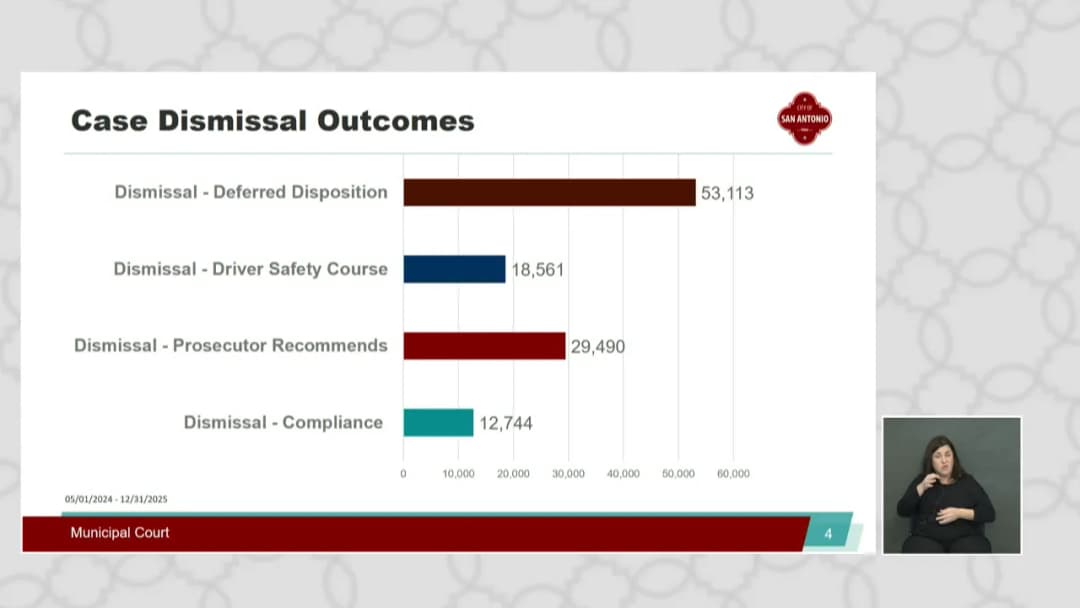
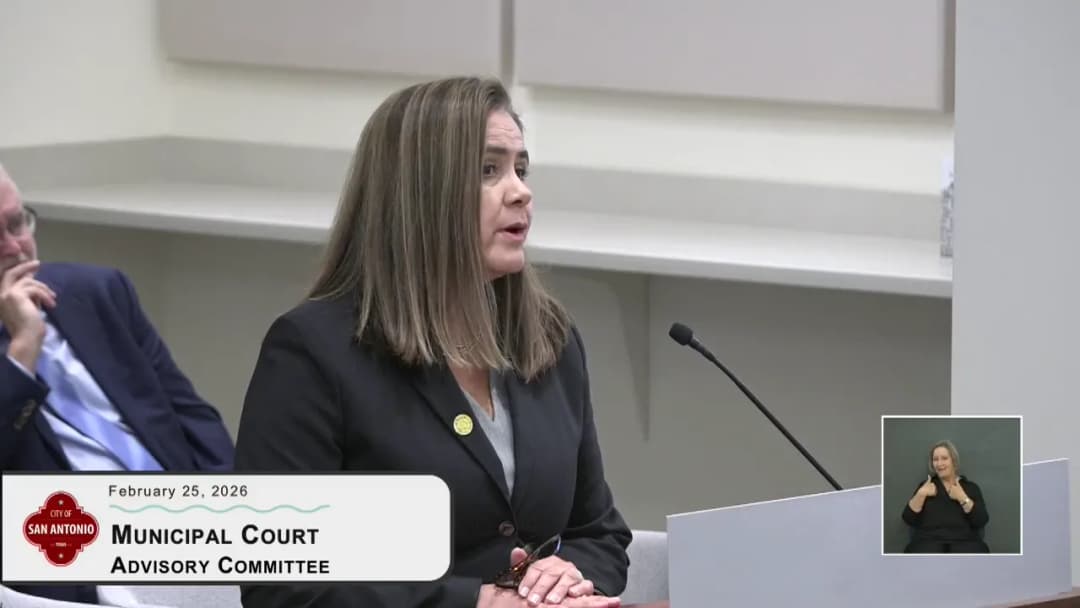
On Wednesday, February 25, 2026, the San Antonio Municipal Court Advisory Committee met to review municipal court performance data and discuss the judge appointment process. The meeting included a presentation on case activity, dismissals, and community engagement, followed by a briefing on the application process for 10 full-time and 12 part-time judicial positions. The committee extended the application window by two weeks and held an executive session with no formal action taken. Consent Calendar - Minutes Approval: The committee unanimously approved the minutes from the December 1, 2025 municipal court meeting. Discussion Items - Municipal Court Performance Briefing: Fred Garcia of the Municipal Court presented data for May 1, 2024 through December 31, 2025. Key statistics included: - Total case volume: 369,694 cases, with 199,249 traffic violations, 14,397 civil code violations, and 11,503 civil parking violations. - Criminal case outcomes: 91,979 convictions with payment, 52,654 convictions non-cash (including time served, community service, or hardship waivers), and dismissal categories: 53,000 deferred disposition dismissals, 29,000 prosecutor-recommended dismissals, and compliance dismissals. - Animal docket: Top violations were free restraint, failure to vaccinate, and nuisance/bite cases. The court handled 123 hearings, with one hearing lasting from 1 p.m. to 7 p.m. the previous day. - Civil violations: 8,442 cases found liable, with $627,000 collected; 3,571 default parking cases open. - Magistrations: 39,315 county-only intakes, 23,000 combined new arrests and warrants, 3,412 blood draw warrants, 14,170 mental health orders. - Online payments: 71% of transactions (173,828) were online, up from 35% pre-COVID. - Judge Obleto reported the court received the Texas Municipal Traffic Safety Initiatives Award for the seventh time since 2019, and highlighted community outreach efforts including warrant resolution campaigns, safe driving programs, and partnerships with schools. - Judicial Appointment Process Overview: Joe Nico from the City Attorney’s Office outlined the process. The application period closed February 15, 2026, with 25 applicants (14 for full-time, 11 for part-time positions). Minimum qualifications include Texas residency, U.S. citizenship, licensed attorney with two years of practice, and three years of San Antonio residency. The committee will vet applicants, conduct interviews in executive session, and recommend candidates to City Council. Key Outcomes - Vote: The committee unanimously approved the December 2025 minutes. - Directive: The committee voted to extend the judicial application window by two weeks to increase the candidate pool. The exact extension end date is to be determined by the City Attorney’s Office. - No Action: The committee reconvened after executive session with no formal action taken. - Next Steps: The City Attorney’s Office will prepare binders for committee review, and interviews will be scheduled in one or two sessions. Public Comments & Testimony - No public comments were made during the meeting.
This committee meeting, chaired by Councilmember Viagran, focused on two main items: a detailed presentation on the San Antonio Municipal Court's workload, outcomes, and community engagement from May 1, 2024 to December 30, 2025, and a review of the process for appointing new municipal court judges. The committee discussed case statistics, enforcement challenges, and the need to expand the applicant pool for judicial vacancies. Discussion Items Municipal Court Operations and Community Outreach Presentation - Fred Garcia from the Municipal Court presented a high-level overview of court activity for the 2024–2025 judicial term. The court handled a total of 369,604 cases, including traffic violations, non-traffic criminal cases, and civil infractions (e.g., animal code violations, family violence). - Key statistics: 91,979 sentences with payment, 52,654 sentences without cash option (e.g., community service, deferred adjudication), and 29,490 dismissals. The court collected approximately $24 million online and $10 million in person, with 71% of payments now made online compared to 35% in 2019. - Animal-related cases were notably high due to increased enforcement by Animal Care Services. The court emphasized that many dismissals or deferred dispositions aim to change behavior (e.g., requiring vaccinations, spay/neuter) rather than solely issuing fines. - Councilmember de Gabito raised concerns about accountability for animal violations, noting that residents want perpetrators held responsible. The discussion included the use of video evidence: a video alone may not be sufficient if the owner cannot be identified; investigation by Animal Care Services or code enforcement is needed. - Councilmember de Gabito also asked about the collection of fines. The court acknowledged challenges with civil infractions where arrest warrants cannot be issued, and noted a new third-party vendor effort to contact individuals who have not appeared in court in the last six months. - Councilmember Viagran requested data on cases involving women, girls, and young drivers, and asked for the court's community outreach reports to be shared with neighborhood associations. - The court highlighted its community outreach programs: traffic safety campaigns (e.g., electronic signs on highways), Saturday court sessions, partnerships with schools for driver education, and a youth program (Safe City) that simulates distracted driving consequences. The court also participates in the Mayor's Commission on the Status of Women. - Councilmember White asked about the biggest operational challenge. The court cited getting people to appear in court; despite tools like arrest warrants, enforcement is difficult. The court is working to reduce fear through online services and kiosks, and is collaborating with non-profits for community service alternatives. - Councilmember White also asked about the total cost of administering the municipal court, estimated at $16–17 million annually. Review of Process for Appointing New Municipal Court Judges - The Office of the City Attorney presented the process for appointing new judges. There are 10 full-time and 12 part-time positions. The application window closed on February 15, 2026, with 25 applicants (14 full-time, 11 part-time). - Requirements include: Texas resident, U.S. citizen, licensed attorney with at least two years of experience, living in San Antonio for the past three years. - The committee discussed the application process and the need to widen the applicant pool. Councilmember White supported extending the application window by two weeks to allow more candidates, and the committee agreed to extend the deadline by two weeks. - The committee then entered executive session (closed to the public) at 3:07 PM to discuss the appointment process. Upon returning at 3:19 PM, the chair stated no action was needed regarding the executive session, and the meeting was adjourned at 3:20 PM. Key Outcomes - The committee received and discussed the municipal court operations report. - The committee agreed to extend the application window for new municipal court judges by two weeks to increase the applicant pool. - No formal votes were taken; the committee adjourned without further action. - The committee will continue to review judge candidates and conduct interviews in a future meeting.
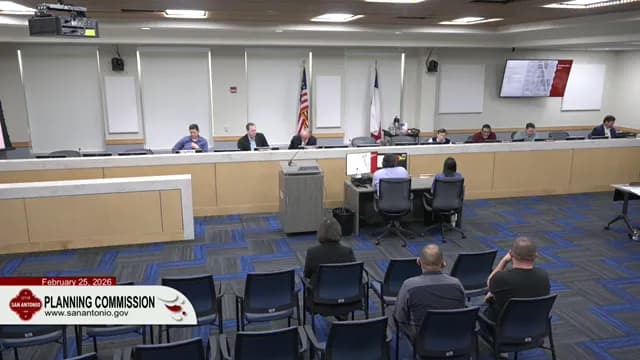
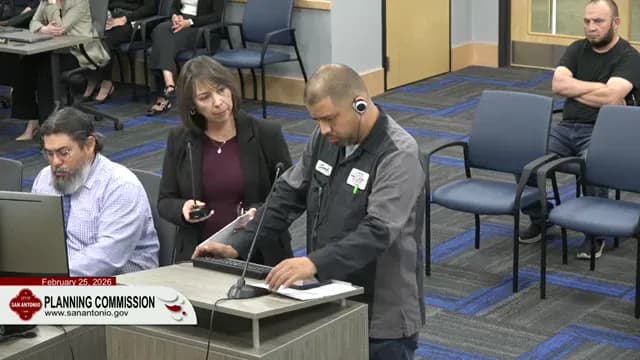
The San Antonio Planning Commission met on February 25, 2026, to consider two plan amendment requests: one for a commercial parking lot on Stonewall Avenue (denied) and one for a retail strip center on Gilbo Road (approved). The meeting also included approval of a consent calendar of routine items. There were no public speakers signed up, but voicemails were received for the consent calendar and the Gilbo Road case. Consent Calendar - The commission approved the consent calendar (including items 3, 11, 12, 13 from which Commissioner Bustamante recused himself) by a unanimous roll call vote (8-0). The consent calendar included case number 428 (a plat), for which a voicemail was later played expressing opposition due to unanswered questions. Staff confirmed the plat met code requirements, and the commission declined to reconsider. Public Comments & Testimony - Item 16 (Stonewall Avenue): No signed-up speakers. No voicemails played. - Item 17 (Gilbo Road): Two voicemails were played in opposition: - Daniel Keith (8403 Crooked Pass Street) opposed the rezoning, stating that neighbors had already voted against a satellite in the area and are against a shopping center due to traffic concerns. - Luis Sapia (7766 Crooked Road Street) opposed turning the residential lot into commercial, citing existing accidents near the adjacent daycare, unprotected left turns, high traffic volume, speeding, and potential pollution. He also noted uncertainty about the full development plan. Discussion Items - Item 16: Plan Amendment at 125 Stonewall Avenue (South Central Community Perimeter Plan) - Staff recommended denial. The applicant, Samuel Aguilera Vega, requested a change from low-density residential to community commercial to use the property for parking for an adjacent business and light work. Staff argued the change would create an incompatible land use pattern with nearby single-family residences and that Stonewall Avenue is not a commercial corridor. The applicant stated the land would be used only for parking to reduce street parking and improve sight lines on Flores Street. - Commissioners questioned whether parking was already allowed on the street, whether parking enforcement could address current issues, and whether a less intense use might be possible. Commissioner Siegel expressed concern about the impact on the adjacent single-family home and noted that existing fence permits had an outstanding inspection. She stated she would not support the amendment. - Item 17: Plan Amendment at 8000 Block of Gilbo Road (Northwest Community Perimeter Plan) - The applicant, represented by Mia Marie Pugh of Brown and McDonald Law Firm, requested a change from low-density residential to community commercial (to be zoned C2) for a retail strip center (e.g., bookstore, bakery, professional offices). Staff recommended approval, citing consistency with surrounding commercial uses and potential to serve the neighborhood. Braun West Community Improvement Association submitted non-opposition. - Commissioners asked about permitted uses (medium intensity commercial, no big-box or bars without further zoning change), whether neighbors to the south had been contacted (only the HOA was contacted), and traffic concerns. Commissioner Garcia noted the property's shape and location made it unsuitable for residential use. Commissioner Prophet commented that buffering and traffic impact analysis would be handled during plating. Key Outcomes - Item 16 (Stonewall Avenue): Motion to deny the plan amendment (moved by Commissioner Siegel, seconded by Commissioner Bustamante). Unanimous roll call vote to deny (8-0). - Item 17 (Gilbo Road): Motion to approve the plan amendment (moved by Commissioner Profit, seconded by Commissioner Orion). Unanimous roll call vote to approve (8-0). The item is next scheduled to go before the Zoning Commission. - The meeting was adjourned at 2:27 PM.
The Planning Commission met on February 25, 2026, at 2:00 PM. The meeting included approval of a consent calendar and public hearings on two plan amendment cases. Public comments were received via voicemail. Consent Calendar - The consent agenda was approved unanimously (motion by Commissioner Profit, second by Commissioner García). All commissioners voted in favor, with Commissioner Bustamante absent at the time. - A voicemail regarding a subdivision plat on the consent calendar (case 428) expressed opposition, but the commission did not reconsider the item, stating that approval is required by state code if the plat meets requirements. Public Comments & Testimony - Case 16 (125 Stonewall Avenue): Staff reported 30 notifications sent, with 1 written support and 2 written oppositions. The neighborhood association did not respond. - Case 17 (Gilbo and Tassel Roads): Staff reported 53 notifications sent, with 1 written support and 1 written opposition. Additionally, two voicemail messages were played during the meeting: one from Daniel Tid opposing the rezoning (citing traffic concerns and a prior vote against) and one from Luis Tapia opposing (concerned about traffic and lack of a full development plan). Discussion Items - Case 16 – 125 Stonewall Avenue (South Central Community Plan Amendment): Staff presented a request to change the land use designation from low-density residential to commercial to allow vehicle repair and storage. Staff recommended denial, arguing the proposed use is incompatible with the residential neighborhood and would undermine the integrity of the area. The applicant, Samuel Aguilera Vega, explained that he needs the rezoning to create off-street parking for vehicles currently parked on the street, to improve safety. He stated the lot would be used exclusively for parking, with no repair work or noise. Commission questions revealed that long-term vehicle storage is not permitted under the requested zoning and would require light industrial designation. Commissioner Sigal noted a fence on the property had a permit but no final inspection, and referenced complaints from neighbors about ongoing vehicle storage and repair. She moved to deny the request; Commissioner Bustamante seconded. The motion passed unanimously. - Case 17 – Gilbo and Tassel Roads (Northeast Community Plan Amendment): Staff presented a request to change the land use designation from residential to community commercial on a vacant lot. Staff supported the change, noting its location on a major arterial and compatibility as a buffer. The applicant’s representative, Niapio, stated they intend to proceed with a zoning change from R6 to C2 for small-scale commercial uses such as a bakery or jewelry store. They had met with the Brown Station West neighborhood association, which did not oppose. Commissioners discussed permissible uses and traffic impact. Commissioner Profit expressed support, noting the lot’s shape and location make it suitable for commercial use. The motion to approve was made by Commissioner Profit, seconded by Commissioner Oren, and passed unanimously. Key Outcomes - Consent Calendar: Approved unanimously. - Case 16: Denied unanimously. Staff directed to communicate the denial. - Case 17: Approved unanimously. The plan amendment is authorized; the applicant will proceed to the Zoning Commission for rezoning. The meeting adjourned at 2:27 PM.