Browse by city
Date range
Search help

Search titles, summaries, topics and stored transcripts together. Keywords may match separately; put the whole query in double quotes for a phrase. Matching follows word analysis, so punctuation is not exact. Both dates are included. Documents are not searched.

SHOWING 131–140 ENTRIES
131
MAY 12, 2026 · COOK COUNTY, ILLINOIS · BOARD OF COMMISSIONERS
Legislation and Intergovernment Relations Committee Meeting - May 12, 2026

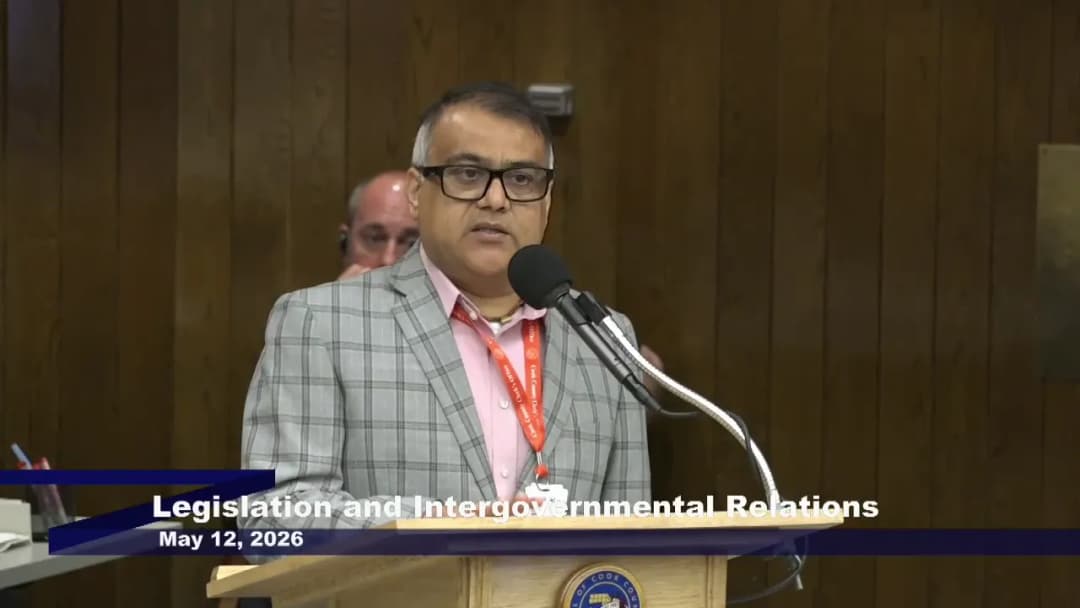
The Legislation and Intergovernment Relations Committee of the Cook County Board of Commissioners met on May 12, 2026, at 9:30 AM. A quorum was established with 14 commissioners present and three excused absences (McCasco, Moore, Stamps). The committee approved remote participation, adopted previous meeting minutes, appointed a Housing Authority commissioner, passed a resolution on youth engagement, and received a presentation on election technology innovations. Consent Calendar - Approval of Minutes (Item 261434): The minutes from the April 15, 2026 meeting were approved unanimously. - Appointment of Olive Brown (Item 261188): Olive Brown was appointed as Resident Commissioner of the Housing Authority of Cook County. In her testimony, she highlighted her long-standing community ties and experience with HACC tenants. The appointment passed unanimously (14 ayes). Public Comments & Testimony - Celia Peterson (founder/CEO, Hugo Chow Non-For-Profit) spoke in support of the Youth Advisory Council, emphasizing that youth voices should be included in policy decisions. - Unnamed speaker (affiliated with Chicago Flips Red) criticized Commissioner Tara Stamps and the county for property tax sales, citing a federal judge's ruling that the property tax sales were unconstitutional. The speaker accused the county of stealing property and warned of further financial liability. - Mo Stamps (Director of Transitional Housing, Ignite) urged the board to prioritize youth engagement, noting that Ignite serves homeless youth and that youth input is central to their services. - D'Angelo Stahlmeyer (Ignite program participant) shared his personal story, stating that Ignite gave him a second chance and helped him transition from internship to full-time employment. Discussion Items - Resolution Recognizing the Importance of Engaged Youth (Item 261017): Commissioner Lowry introduced a resolution to establish a Youth Council to engage young people aged 14–21 across Cook County. The council will convene in summer 2027, include 20 youth from diverse backgrounds, and address priorities such as public safety, economic development, and health. Commissioners discussed the inclusion of technology topics, ensuring representation from each district, and coordination with existing intern programs (e.g., MICFA, CETA). The resolution was approved with 14 ayes and three excused absences. - Election Technology Update (Item 261147): Deputy Clerk Ed Michalowski and IT partners presented the new "Election Lens" platform, a real-time analytics tool for voter turnout, mail ballot tracking, and polling place readiness. They also highlighted smart ballot drop boxes, GPS tracking, AI in call centers, and a high school voting pilot program. Commissioners asked about public access, cybersecurity, mail ballot return rates (approximately 53% returned from 117,000 sent), and coordination with the Chicago Board of Elections. The item was approved with 12 ayes and 5 absent (Commissioners Naya, Gaynor, McCaskill, Moore, Stamps). Key Outcomes - Remote Participation Motion: Approved 14-0 (3 excused). - Minutes Approval: Approved unanimously. - Appointment of Olive Brown: Approved 14-0. - Youth Day Resolution: Approved 14-0; multiple commissioners added as co-sponsors. - Election Technology Update: Approved 12-5 (5 absent). - The meeting adjourned with no further business.

TECHNOLOGY AND INNOVATION 51% · YOUTH PROGRAMS 24% · PROCEDURAL 14% · HOUSING 4%
132
MAY 12, 2026 · COOK COUNTY, ILLINOIS · BOARD OF COMMISSIONERS
Business and Economic Development Committee Meeting – May 12, 2026

The Business and Economic Development Committee met on May 12, 2026, at 9:00 AM (recessed briefly due to quorum concerns). After resolving a remote participation issue, a quorum was established with Commissioners Britton, Laurie, Miller, Marita, Kevin Morrison, Sean Morrison, and the Chair present. The meeting approved minutes and three bundled tax incentive requests. Consent Calendar - Approval of Minutes (Item 26-144): The committee meeting minutes from April 14, 2026, were approved by voice vote without objection. Discussion Items - Remote Roll Call Motion: The committee voted 6 ayes (Commissioners Britton, Laurie, Marita, Kevin Morrison, Sean Morrison, Chair), 1 present (Commissioner Miller), and 2 absent (Commissioners Naya, Moore) to authorize remote roll call for Commissioner Marita and later include Commissioner Laurie. - Tax Incentive Requests (Bundled): The committee considered and approved three six-b property tax incentive requests: - Item 26-1086: 1300 NN Branch LLC, City of Chicago - Item 26-1088: Clear Height Acquisitions, Village of Broadview - Item 26-1089: Common Market Philadelphia, Village of Bedford Park The motion was made by Commissioner Sean Morrison and seconded by Commissioner Lowry. Roll call vote: 7 ayes (Commissioners Britton, Laurie, Miller, Marita, Kevin Morrison, Sean Morrison on items 26-1086 and 26-1089, Chair), 1 present (Commissioner Sean Morrison on item 26-1088), 2 absent (Commissioners Naya, Moore). Items approved. Key Outcomes - Approved committee meeting minutes of April 14, 2026 (Item 26-144). - Approved three six-b property tax incentive requests (Items 26-1086, 26-1088, 26-1089). - The meeting adjourned by motion of Commissioner Sean Morrison, seconded by Commissioner Lowry, with all in favor.

PROCEDURAL 68% · ECONOMIC DEVELOPMENT 32%
133
MAY 11, 2026 · COOK COUNTY, ILLINOIS · BOARD OF COMMISSIONERS
Cook County Board of Ethics Meeting - May 11, 2026

The Cook County Board of Ethics resumed open session at 11:28 a.m. on May 11, 2026, following executive session. The board discussed upcoming work on Section 2-256 A of the ethics code regarding elections and then voted unanimously on four items, including approval of closed session minutes and three motions to open investigations. Discussion Items - Ethics Code Revision: The board discussed Section 2-256 A, Subarticle A, concerning election procedures. Chair noted that this is the beginning of a process to clarify rules for elected officials, candidates, and citizens. Further discussion and potential changes will occur in future meetings. Key Outcomes - Approval of Closed Session Minutes: Motion to approve minutes from the regular closed meeting on December 6 (year not specified) passed unanimously by voice vote. - Investigation 26 I001 (or "26"): Motion to open an investigation passed unanimously (4-0) on a roll call vote. [Note: The transcribed item is "26" but likely refers to a specific investigation number; exact designation unclear.] - Investigation 26 I003: Motion to open an investigation passed unanimously on a roll call vote. - Investigation 26 I004: Motion to open an investigation passed unanimously on a roll call vote. - Adjournment: Motion to adjourn passed unanimously at 11:31 a.m. Note: The exact nature of the investigations and the year of the December 6 minutes were not specified in the transcript.

PROCEDURAL 100%
134
MAY 6, 2026 · COOK COUNTY, ILLINOIS · BOARD OF COMMISSIONERS
Cook County Violence Against Women Task Force Working Group Meeting - May 6, 2026

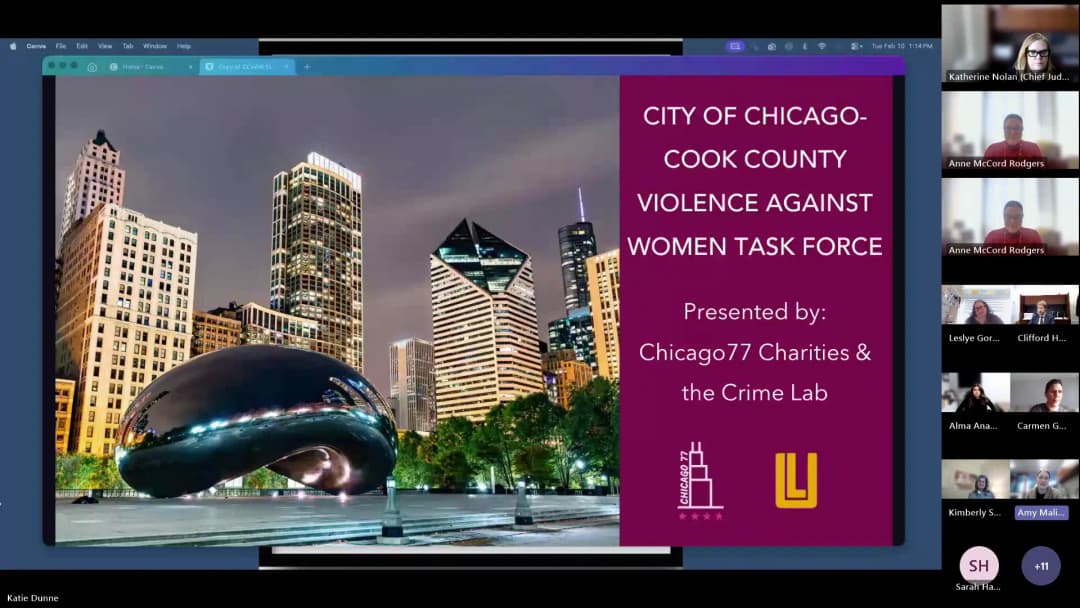
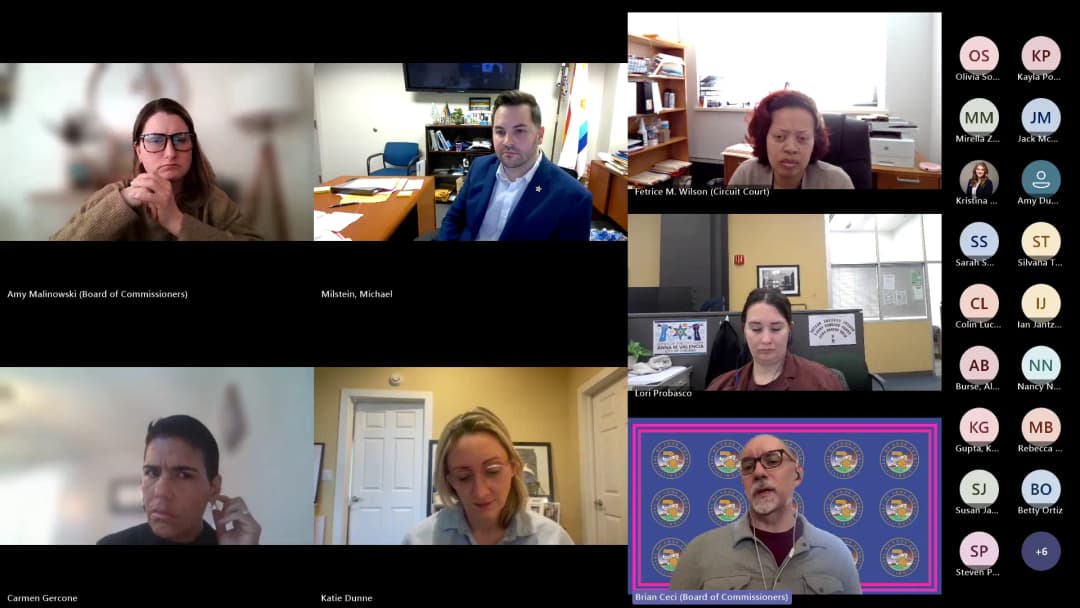
The Cook County Violence Against Women Task Force Court Systems and Programs Working Group convened on May 6, 2026, at 10:00 AM. The meeting was called to order by Commissioner Naya and was publicly noticed under the Open Meetings Act. No public comments were submitted. The group reviewed task force priorities, discussed gaps in the court system, and outlined next steps. Public Comments & Testimony - No public comments were submitted in advance or offered at the meeting. Discussion Items - Task Force Overview: Katie Dunn presented an overview of the task force, noting that fatal domestic-related shootings in Chicago increased 50% in 2025 despite an overall 33% decline in fatal shootings. She highlighted that Cook County has a higher per capita rate of intimate partner homicide than New York and California combined. The task force aims to create a unified, victim-centered system across civil and criminal courts, data sharing, and legislative reforms. - Court System Priorities: The working group’s initial priorities include examining court responses to violence against women, increasing services for victims in domestic relations cases, and improving suburban courthouse coordination. Tools such as risk assessments, instructional guides, and fee elimination are under consideration. - Data Dashboard Overview: Existing data sources include the Chicago Violence Reduction Dashboard, the Cook County Justice Dashboard (Loyola), the Civic Committee Data Hub, and the Chief Judge’s weekly dashboard under the Pretrial Fairness Act. - Gaps for Survivors Without Children: Chela Garcia, head organizer of Little Village Community Council, noted severe difficulty in finding housing and transitional living for women leaving domestic violence shelters who do not have children. Katie Dunn acknowledged that federal housing grants are being cut and that this issue should be part of local funding prioritization. - Court Navigators: Commissioner Naya emphasized the need for court navigators to provide wraparound support, especially given federal funding cuts, and cited a recent amendment co-sponsored to support partnerships with nonprofit organizations in courthouses. - Data Committee Representation: Kate Nolan raised that the Clerk of the Circuit Court’s office was not represented on the data and research working group. Janet Hunter (Associate Clerk) confirmed she would share information with her office. Key Outcomes - The working group will meet approximately six more times before a final report in June 2026. Public hearings are scheduled for July 2026. - A survey will be distributed to working group members to collect additional input. - The next executive committee meeting will be held in person on May 7, 2026, at 10:00 AM in the Cook County Board Room (floor 5). - Meeting participants were encouraged to submit additional materials to Amy Melanasky for compilation. - The meeting was adjourned by a motion from Carmen Navarro Dracone, seconded by Katie Dunn, with all in favor.

DOMESTIC VIOLENCE 52% · PROCEDURAL 39% · DATA SHARING 3% · CRIMINAL JUSTICE 3%
135
MAY 6, 2026 · COOK COUNTY, ILLINOIS · BOARD OF COMMISSIONERS
Cook County Domestic Violence Task Force Meeting - May 6, 2026

The Cook County Domestic Violence Task Force met on May 6, 2026, at 9:45 AM. The meeting featured presentations on the role of guardians ad litem (GALs), child representatives, and attorneys for children in domestic relations cases, as well as an update from the Governor State University Legal Clinic. Public testimony highlighted ongoing challenges in the Southland region, including access to justice, financial burdens, and systemic coordination failures. Public Comments & Testimony - Calumet City representative: Thanked the task force for legislation addressing domestic violence, noting that the Southland is "hardest hit" and often overlooked. Mentioned that funding and access at the Marshall Courthouse are insufficient to support domestic violence victims. - Sarah Brown (Southland resident): Expressed concerns about the domestic relations court system, stating her case has been pending for over nine and a half years. She noted that the case was moved from Bridgeview, requiring over an hour of travel, and urged prioritization of accessibility and humane processes. - Diane Brown (mother/grandmother): Called for accountability for GALs, data production, evaluations, and judicial training and oversight. Stated that the system is "broken" and that her grandson is traumatized. - Joseph Jones (retired sheriff's superintendent): Disputed the presentation's claim that body attachments for non-payment of GAL fees are rare, stating that in his 30 years of service, both men and women have been held in custody on such orders. He raised concerns about fairness, unclear court orders, and lack of coordination among departments, noting that "the system is broken, and everybody in this room owns a piece of that." - Brittany Riley (Southland resident): Described victim needs including housing, financial assistance, counseling, medical support, transportation, and supervised visitation. She noted that the crisis center for South Suburbs has limited capacity, creating barriers for children and families. - Cassandra Taylor Bridges: Shared experiences from volunteering at a domestic violence shelter and emphasized that men also experience abuse. She criticized the public administrator for removing a case from court, which she said allowed violence to go unprosecuted. - George Blake Moore: Commented on racial assimilation, stating that domestic violence is now occurring in the Black community in ways it did not historically, and urged attention to this trend. Discussion Items 1. Presentation on Guardians ad Litem, Child Representatives, and Attorneys for Children Presenter: Hannah Cholinski, Senior Domestic Division Attorney, Office of the Chief Judge. - Overview: The domestic relations division operates under the Illinois Marriage and Dissolution of Marriage Act (IMDMA). GALs, child representatives, and attorneys for children are appointed to assist the court in determining the best interest of children, particularly in high-conflict cases. Only 5% of eligible cases (3,484 out of 62,224 filed from 2023 to 2025) have such appointments. - Roles: GALs are the court's own witnesses, investigate, and make recommendations; child representatives advocate for a position after investigation and have a confidential relationship with the child; attorneys for children provide full legal counsel steered by the child (rarely used). - Training and Qualifications: Attorneys must have at least five years of family law experience, complete a two-day training (including DV training), and attend ongoing CLEs. The mentorship program pairs new attorneys with experienced practitioners. - Fees: GAL fees are classified as child support under statute and cannot be discharged in bankruptcy. Pro bono appointments are required annually for court-approved attorneys. Fee waivers are available for litigants who qualify under the federal poverty level (e.g., $33,000 for a family of four). - Grievances: Litigants can file a motion to discharge the appointed attorney, appeal to the appellate court, or file a complaint with the Attorney Registration and Disciplinary Committee (ARDC) for attorneys or the Judicial Inquiry Board (JIB) for judges. - Body Attachments: Cholinski stated that body attachments for non-payment are extremely rare, with only four judges reporting one instance each. She described a typical timeline where a purge order is set and continued for months before any attachment is issued. Commissioner Questions and Discussion: - Commissioner Bridget Degnan questioned the financial burden on families, noting that a family of four earning just over $33,000 is ineligible for fee waivers but may face GAL costs of $7,500–$20,000. She urged the task force to engage state legislators to address this. - Commissioner Miller asked about the grievance process, clarifying that ARDC handles attorney misconduct and JIB handles judicial misconduct, and that complaints are confidential unless they lead to public discipline. - Commissioner Miller also asked about the process for waiving a written GAL report; litigants can jointly request a waiver, which the judge must confirm on the record. 2. Presentation from Governor State University Legal Clinic Presenter: Dr. Phyllis West, Founding Director. - Clinic Overview: The clinic opened in June 2023, providing pro bono legal services in family law, housing, immigration, and expungement. It serves hundreds of community members, primarily from Cook County, with two part-time attorneys and three pro bono attorneys. Social work interns and faculty provide support, addressing mental health and psychosocial barriers. - Observed Gaps in Southland: Dr. West identified a lack of "radical hospitality" at the Markham Courthouse, where people feel unsafe and intimidated. She noted a shortage of court advocates and visitation centers (only one in the area). She emphasized the need for a public health lens, prioritizing suburbs, and establishing an alliance for coordinated services. - Recommendations: Use a public health lens to address root causes; fund education on healthy relationships; increase access to child visitation service centers; and create a Southland alliance to avoid service duplication and ensure warm handoffs. Commissioner Questions: - Commissioner Miller asked about the biggest gap at the Markham Courthouse; Dr. West cited rude treatment and lack of safety, as well as insufficient court advocates. - Commissioner Miller inquired about visitation centers; Dr. West confirmed only one exists and that police stations are not appropriate for child exchanges. Key Outcomes - No formal votes or directives were taken. The task force received the presentations and public testimony for consideration. - Commissioner Degnan suggested that the discussion on GAL fee structures and waivers should involve state legislative representatives to explore statutory changes. - The task force acknowledged the need for continued collaboration to address gaps in the Southland, including improving courthouse hospitality, expanding pro bono services, and increasing coordination among agencies. - The meeting was adjourned at approximately 11:30 AM.

LEGAL ACCESS 36% · DOMESTIC VIOLENCE 35% · PROCEDURAL 16% · VICTIM SERVICES 4%
136
MAY 5, 2026 · COOK COUNTY, ILLINOIS · BOARD OF COMMISSIONERS
Cook County IRFC Reviews Revenue Drivers and Health Fund Forecasts (May 5, 2026)

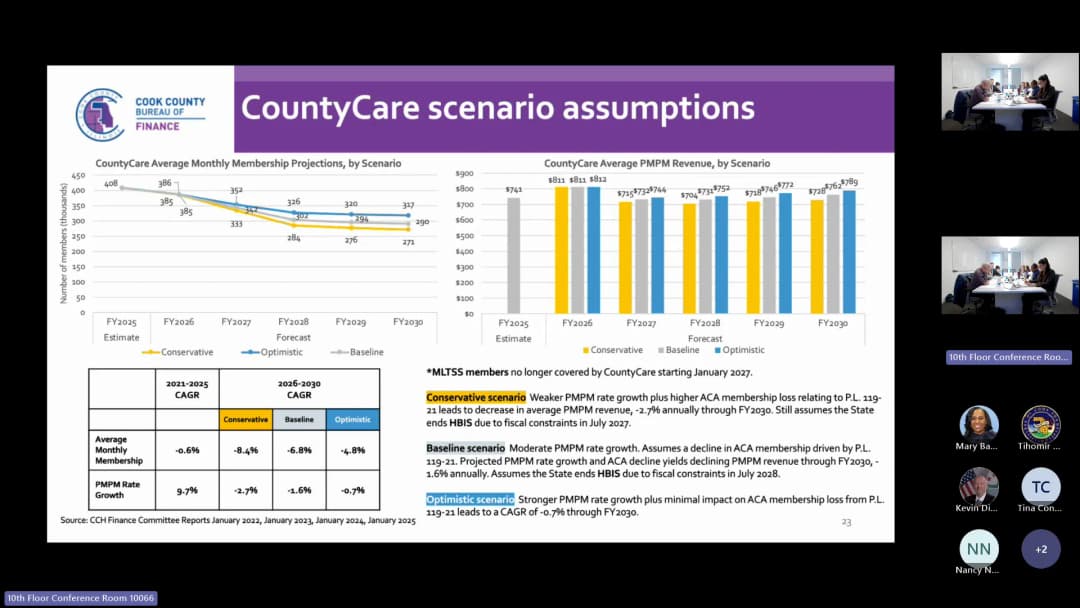
The Cook County Independent Revenue Forecasting Commission (IRFC) met on May 5, 2026, for a regular meeting which served as the final meeting chaired by outgoing Chief Financial Officer Tanya Anthony. The Commission received detailed presentations on the structural factors driving low revenue growth, a revised General Fund long-term forecast, and an updated Health Fund forecast, highlighting significant deficits beginning in Fiscal Year 2027. Consent Calendar - Approval of Minutes: The minutes from the January 28, 2026, meeting were approved unanimously on a motion from Commissioner Merriman, seconded by Commissioner Dabolo. Public Comments & Testimony - No members of the public registered to speak, either in person or via the virtual chat. Discussion Items 1. Staff Presentation on Quarterly Updates and the Long-Term Forecast The presentation covered three main areas: an assessment of low revenue growth drivers, the General Fund forecast, and the Health Fund forecast. Revenue Growth Drivers & Quarterly Updates: - Staff reviewed three deliverables from the August Recommendations Report: strategies to mitigate low revenue growth, the impact of OBA provisions on the health enterprise fund, and a sustainability analysis for ARPA-funded programs. - A key finding was that the County's reliance on volume-based taxes (e.g., gas, alcohol, cigarettes) and a base property tax levy that has not increased in roughly 30 years has led to flat or declining revenue from these sources. - State-level policy changes, such as the reallocation of Personal Property Replacement Tax (PPRT) revenue and changes to cannabis tax and sheriff fees, have also negatively impacted revenue. - The ARPA sustainability plan involves allocating a $158 million reserve over four years. - Discussion: Commissioners inquired about the historical distribution of these tax revenues and the legal feasibility of shifting from volume-based to price-based taxes. Staff explained that state statute mandates volume-based taxation for items like cigarettes, with the policy intent including discouraging consumption. General Fund Forecast: - Sales Tax: Year-to-date sales tax revenues were 7.7% ($44.9 million) above budget for the first five months of FY26. - FY26 Revenue Revision: The FY26 revenue forecast was increased by a net of $222.3 million, bringing the total forecast to $2.9 billion. The largest drivers were a $115 million cigarette tax settlement and a combined $86.9 million increase in sales tax projections. - Out-Year Projections: For FY27 through FY30, revenues were increased by a total of $455 million. - Deficit Projections (“Alligator Chart”): The forecast shows favorable results for FY26 but projects significant and growing deficits beginning in FY27. Staff attributed this shift primarily to a January court ruling preventing General Fund revenues from being allocated to cover Transportation Fund expenditures, alongside structural imbalances where expenses are projected to grow faster than revenue. - Fund Balance: The unassigned ending fund balance is projected to decline significantly in the out-years as a result of the deficits. - Revenue Scenarios: Forecasts using optimistic, baseline, and conservative scenarios from Moody’s Analytics (March report) were presented. - Discussion: Chair Anthony and Commissioner Merriman emphasized that the projected deficits must be addressed through policy actions—either raising revenues or cutting expenses—to pass a balanced budget. The Commission discussed the high level of economic uncertainty impacting the forecast due to current federal policies. Health Fund Forecast: - FY25 Surplus: The health fund is projected to end FY25 with a surplus of approximately $165 million. - FY26 Deficit: The FY26 deficit is now estimated at $41-42 million, a significant improvement from the $100 million deficit projected in January, driven by updates on County Care. - New Policies: Staff outlined two new policies from the FY26 budget resolution. First, a working cash balance for Health Plan Services (HPS) was established, set at roughly 1.5 months of expenses ($393 million). Second, a cash reserve for managed care claims was created. Staff also detailed a newly established adjusted fund balance for Cook County Health (CCH), which allows the health system to transparently reflect its available cash resources separate from non-operating expenses paid by the County. - County Care Membership: Projections show significant membership declines starting in January 2027, driven by OBA provisions (including more frequent redeterminations and work requirements) and the removal of the dual-eligible MLTSS population. Health Benefits for Immigrant Seniors are assumed to end in July 2028. - CCH Patient Revenue & Collection Rates: The forecast assumes shifts from Medicaid to self-pay/uncompensated care. The baseline collection rate (yield) for net patient service revenue is projected to decline from roughly 24% in FY26 to 20.6% in FY30. - DSH Funding: Disproportionate Share Hospital (DSH) cuts have been delayed. The baseline and optimistic scenarios assume no cuts, while the conservative scenario assumes cuts beginning in FY27. - Discussion: Commissioners requested more detailed projections for CCH payer mix and explored the potential for converting self-pay patients into Medicaid/Medicare coverage to improve collection rates. The challenges of OBA implementation, lagging reimbursement, and the impact of recent federal policy were discussed. Key Outcomes - The Commission formally approved the minutes from its January 28, 2026, meeting. - Staff presented revised General Fund revenue projections of $2.9 billion for FY26 and highlighted the emergence of structural deficits in FY27, driven by the Transportation Fund court ruling and expenditure growth exceeding revenue. The Commission stressed that this requires immediate policy attention from County leadership. - The Commission reviewed updated Health Fund projections, noting an improved FY26 deficit outlook but continued long-term pressure from OBA implementation and shifts in patient payer mix toward uncompensated care. - The meeting was adjourned. The next regular meeting is scheduled for Thursday, June 25, 2026, at 5:30 PM.

FISCAL SUSTAINABILITY 66% · PUBLIC HEALTH 30% · HEALTH EQUITY 2% · MEDICAID/INSURANCE 1%
137
APR 29, 2026 · COOK COUNTY, ILLINOIS · BOARD OF COMMISSIONERS
Cook County Domestic Violence Task Force Meeting – April 29, 2026

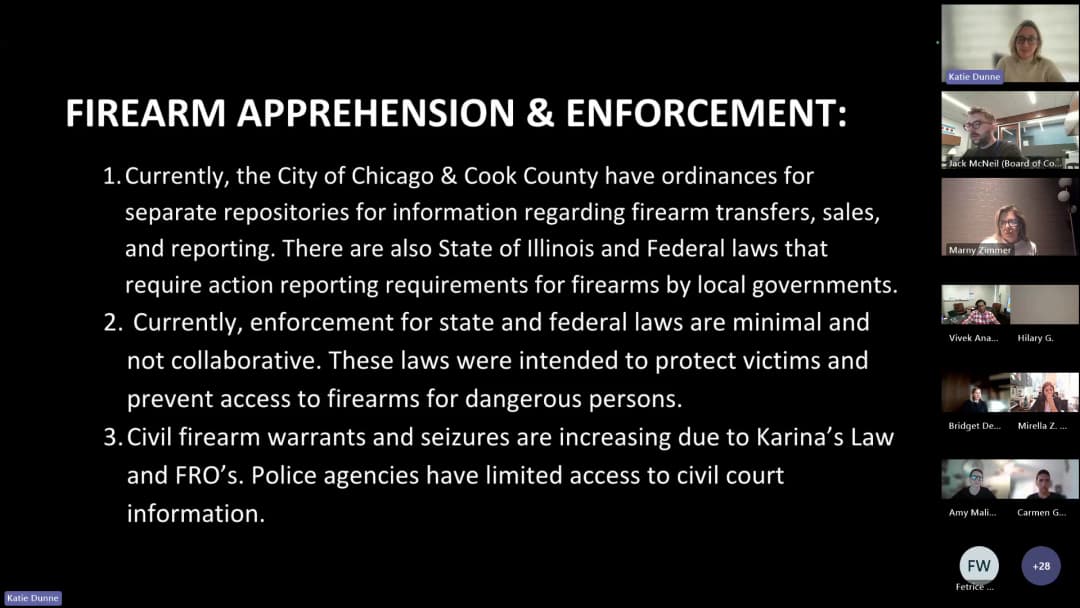
The Cook County Domestic Violence Task Force met on April 29, 2026, from approximately 10:00 AM to 11:00 AM, chaired by Commissioner Degman. The primary agenda item was a presentation by Katie Dunn on a proposed high-priority order data center, intended to improve coordination among agencies handling protective orders, warrants, and firearm enforcement. Discussions focused on data sharing, legislative barriers, and victim safety. The group will present recommendations to the Cook County Board and City Council in July 2026. Discussion Items - Presentation on High‑Priority Order Data Center: Katie Dunn presented a concept for a public‑private interagency data center modeled after the HIDA co‑location model. The center would focus on protective orders, warrants, and firearm enforcement, aiming to improve coordination among Cook County courts, the City of Chicago, Cook County 911, Illinois State Police, Secretary of State, Cook County Clerk, and the Attorney General’s office. Preliminary 2024 data showed 23,500 emergency domestic violence orders of protection, 6,200 stalking no contact orders, 300 civil no contact orders, 18 firearm restraining orders, and 154 workplace protection orders. The presentation also noted 72,274 active warrants in Cook County, of which roughly 7,500 were for domestic battery and violations of orders of protection. The proposal includes goals to increase the number of protective orders filed, improve service rates, expedite timelines, and enhance data collection and training. - Discussion on Protective Orders: Vivek Ananda from the Clerk of the Circuit Court raised questions about data sources and the statutory process for sharing orders before they are served. Renata and others noted that current law already allows law enforcement access to civil records, but operational barriers remain, such as lack of access to the Odyssey system and training gaps. The group discussed the need for legislative changes to allow law enforcement to view orders of protection before service, and to improve the use of technology (e.g., Zoom service) and court reminders. Carmen and Renata emphasized the importance of victim education, including the 30‑day window to reinstate dismissed cases. - Discussion on Criminal Warrants: The task force reviewed the high number of active warrants and the dangers they pose to officers and communities. Speakers noted that many warrants are for domestic‑related offenses and that the current system limits diversion and crisis intervention. The group supported creating an expedited service track for domestic‑related warrants, similar to an existing GPS program, and improving training and data sharing for law enforcement. - Discussion on Firearm Apprehension: The presentation covered inconsistencies in reporting between city and county ordinances for firearm transfers and lost firearms. Vivek pointed out that law enforcement often fails to return paperwork to the courts after firearm recovery, leading to incomplete records. The group discussed the need for accountability and better coordination, including leveraging Karina’s Law and firearm restraining orders. Madeline Barron (Network Advocating Against Domestic Violence) noted that Karina’s Law requires search warrant returns and surrender orders to be filed with the court, which is essential for victim safety planning. - Data Dashboard and Next Steps: Katie Dunn mentioned that the task force is also developing a public data dashboard to provide aggregate statistics on protective orders and other high‑priority orders. The interagency data center would focus on case‑level information rather than individual searchable data. The next executive meeting is scheduled for May 6, 2026, to finalize the recommendations. Key Outcomes - The task force will include the high‑priority order data center concept as one of its formal recommendations to the Cook County Board and City Council in July 2026. - The group will follow up on data sharing requests (e.g., the full warrant list requested by the OCJ and CPD) and continue discussions on legislative changes to improve law enforcement access to civil court records. - Cynthia (CPD) offered to coordinate with the courts to improve return of paperwork from law enforcement after firearm recoveries. - The task force will hold a separate executive meeting on May 6, 2026, to further refine the proposal and review the data dashboard progress.

DOMESTIC VIOLENCE 55% · CRIMINAL JUSTICE 18% · DATA SHARING 13% · PUBLIC SAFETY 9%
138
APR 29, 2026 · COOK COUNTY, ILLINOIS · BOARD OF COMMISSIONERS
Chicago Cook County Violence Against Women Task Force Working Group Meeting - April 29, 2026

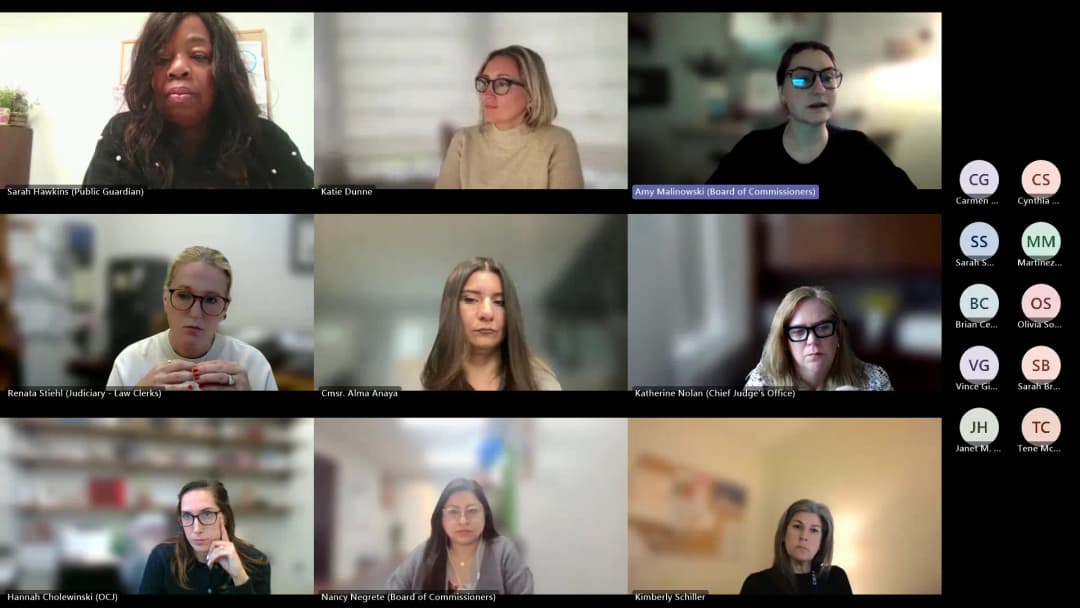
The Chicago Cook County Violence Against Women Task Force court systems and programs working group met on April 29, 2026, via video conference. The meeting featured a presentation by Sarah Hawkins, Director of the Domestic Relations Division of the Cook County Office of the Public Guardian (OPG), followed by discussion and Q&A. No public comments were submitted. Discussion Items - Presentation by Sarah Hawkins (OPG Domestic Relations Division): Hawkins provided an overview of the division, which has been operating since 1988. The division provides legal representation for children in parentage, divorce, relocation, orders of protection, visitation, and third-party visitation (including grandparent and sibling visitation) cases. OPG serves as a child representative, not a guardian ad litem (GAL), meaning they maintain attorney-client confidentiality and do not make recommendations to the court. Appointment criteria include: all parties must reside in Cook County, at least one party must be represented by counsel, and mediation must be attempted first. The minimum retainer is $1,000 at a billing rate of $110 per hour, though payment plans are common. Hawkins noted that private child reps and GALs typically charge $350–$400 per hour with retainers of $5,000. The division has six attorneys, receives 10 to 15 new appointments per week, and represents 800 to 950 children. Judges appoint OPG via a bench card; OPG does not accept direct referrals from litigants or advocates. The division is working on expanding to accept GAL appointments in domestic relations, which will require additional training. Hawkins highlighted the division's expertise in abuse/neglect, high-conflict cases, and connecting families with low-cost or sliding-scale services (e.g., supervised visitation, reunification therapy, mental health services). - Q&A and Discussion: - Sarah Z. (advocate) asked whether services are available at suburban courthouses. Hawkins confirmed OPG has expanded to Markham, Bridgeview, Rolling Meadows, and Skokie via Zoom, and attorneys travel as needed for in-person hearings. - Judge training on OPG services occurs at least annually, and judges are reminded monthly during division meetings. - Commissioner Naya asked about capacity: when overloaded, Hawkins requests additional time from the court (e.g., 60–70 days instead of 30) rather than denying services. - Hannah Tolinskey (senior division attorney, Domestic Relations) clarified that the discussion about body attachment warrants for non-payment of fees is more relevant to private GALs and should be tabled to the next executive meeting on May 6, as it is not directly handled by OPG. - Carmen highlighted that the task force's interest in GALs stemmed from a hearing where victims of domestic violence with children in domestic relations cases had GALs assigned, and those cases later involved domestic violence issues. Key Outcomes - The next executive meeting was scheduled for May 6, 2026, at 10:00 a.m., in person at the Cook County Boardroom. - The discussion on body attachment warrants for unpaid fees was deferred to that meeting. - The meeting was adjourned.

LEGAL ACCESS 72% · DOMESTIC VIOLENCE 10% · PROCEDURAL 7% · PERSONNEL MATTERS 5%
139
APR 29, 2026 · COOK COUNTY, ILLINOIS · BOARD OF COMMISSIONERS
Violence Against Women Task Force Meeting - April 29, 2026

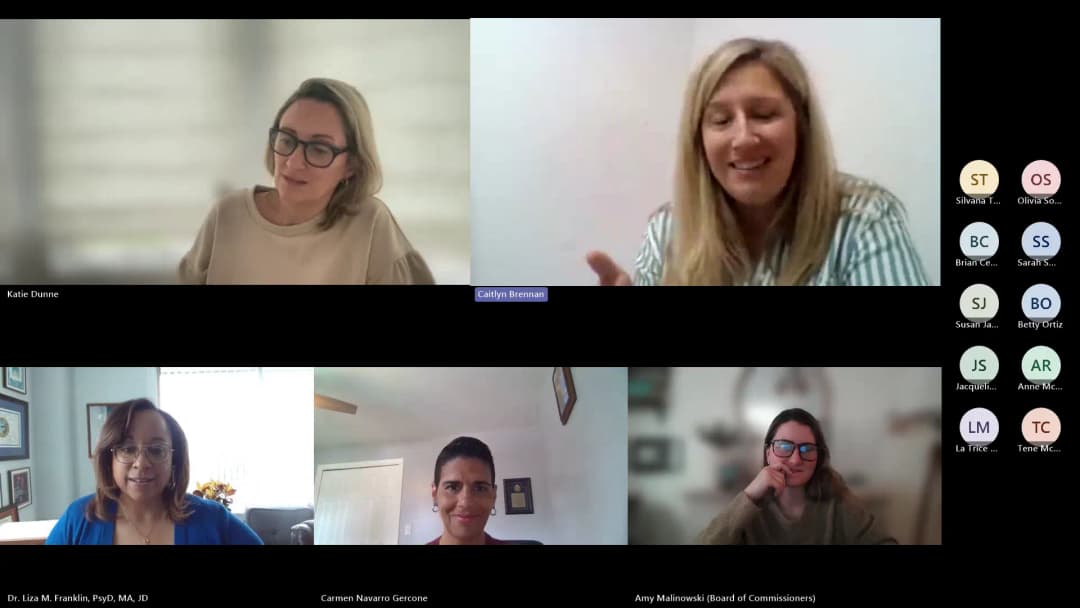
The Violence Against Women Task Force, convened by Alderman Tabaras (23rd Ward) and Commissioner Donna Miller, held a virtual meeting on April 29, 2026, at 20:30 UTC. The meeting focused on the mental health and wellness of first responders, particularly as it relates to domestic violence calls. Dr. Lisa Franklin, a licensed clinical psychologist and former deputy corporation counsel for the City of Chicago, delivered a presentation on the psychological toll on officers and the need for systemic wellness interventions. Attendees included representatives from the Cook County Sheriff's Office, Cook County State's Attorney's Office, the Office of Emergency Management and Communications, the 100 Club of Illinois, and other stakeholders. No public speakers were present. Presentation by Dr. Lisa Franklin - Dr. Franklin highlighted the high number of domestic violence calls in Chicago (approximately 350 per day according to Chicago police data) and the emotional dysregulation that officers experience. She shared an anecdote of an officer who, due to being already dysregulated, escalated a domestic call, illustrating that officers are not taught to de-escalate themselves. - She noted that between January and November 2024, 80 Chicago police officers had their police powers stripped, with 20% of those for domestic violence arrests. She argued this indicates multiple prior incidents given the difficulty of arresting an officer for domestic violence. - Dr. Franklin stressed the concept of moral injury (seeing or doing something that violates one's morals) and how it differs from PTSD. She cited a 2024 American Lawyer survey showing 68% of lawyers meet criteria for generalized anxiety disorder. - She proposed that wellness must be integrated into every aspect of police work, not treated as a separate class. She recommended short, frequent psychoeducation sessions (e.g., five-minute videos at roll call) and mandatory annual mental health check-ins, funded through department budgets or grants. - Caitlin Brennan (CEO, 100 Club of Illinois) added that annual mental health check-ins are the number one request from first responders in Illinois, based on their statewide survey data. She noted that the 100 Club provides grant funding for such check-ins. Discussion on Legislative and Insurance Barriers - Dr. Franklin clarified that insurance typically requires a diagnosis for a wellness visit to be covered, which creates a barrier because officers fear losing their Firearm Owner's Identification (FOID) card or being seen as unfit for duty. - Katie Don (working with the violence against women task force) asked about legislative options to mandate insurance coverage for wellness visits without a diagnosis. Caitlin Brennan explained that a recent Illinois law (sponsored by State Rep Mary Gill) intended to require insurance coverage for first responder couple therapy, but the Illinois Department of Insurance stated it has no enforcement authority over that law. The law only applies to self-insured plans offered by counties and municipalities, not to fully insured plans from issuers like Blue Cross Blue Shield. - Brennan suggested that the most effective approach may be to use risk management and liability arguments to persuade agencies to fund wellness visits directly, rather than relying on insurance mandates. - Dr. Franklin recommended that agencies use the power of the purse and grants to fund check-ins, noting that a quarter of a million dollars (the cost of one armored vehicle) could fund 1,000 wellness visits and associated research. Key Outcomes - Dr. Franklin's recommendations will be considered for inclusion in the task force's ongoing work. The meeting was recorded and will be shared via Legistar for follow-up. - Attendees agreed to continue conversations and explore ways to implement mental health check-ins, potentially through policy changes, supervisor training, and peer support programs. - No formal votes were taken. The meeting was adjourned by Alderman Tabaras.

MENTAL HEALTH AWARENESS 62% · DOMESTIC VIOLENCE 17% · PUBLIC SAFETY 11% · INSURANCE/MEDICAID 3%
140
APR 22, 2026 · COOK COUNTY, ILLINOIS · BOARD OF COMMISSIONERS
High Priority and Data Research Working Group Meeting – April 22, 2026

The High Priority and Data Research Working Group of the City and Cook County Task Force Against Violence Against Women met on April 22, 2026 at 10:02 a.m. The meeting focused on updates regarding data collection, a presentation from the Chicago Police Department (CPD) on gender-based violence policies and the implementation of Karina’s Law firearm seizure warrants, and coordination among agencies. No public testimony was offered. Public Comments & Testimony - No public testimony was given. Discussion Items - Updates on Data and Next Steps – Katie Dunn and Amy (facilitators) outlined that the Circuit Court Clerk is finalizing a first-of-its-kind data analysis on high priority orders (orders of protection, warrants, firearm retrieval orders) expected by the next meeting. A public dashboard is a key goal. The working group will compile data and make recommendations by its June deadline. - Sheriff’s Office Response to Past Question – Sarah (Sheriff’s Office) addressed a prior question about the short-form notification form, stating the current system is fixed but the Sheriff’s Office is developing ways to make it faster and more effective in the future. - Presentation by CPD – Mike Milstein (CPD) presented a condensed version of a prior executive meeting presentation on CPD’s gender-based violence policies, victim services, and Karina’s Law warrant process. He noted CPD has a policy on gender-based violence, provides training, and operates a Domestic Violence Program with 16 civilian victim specialists (aiming for 30–35). CPD partners with community-based organizations through a multidisciplinary team. For Karina’s Law, CPD receives warrants from the court and assigns them to its Firearm Investigation Team (FIT). Since May 2025, CPD received 60 Karina’s Law search warrants: 41 were requested extended, only 2 were actually executed (the rest were negated because respondents voluntarily surrendered firearms), and 30 firearms were recovered overall. CPD’s search warrant process is constrained by the federal consent decree, making policy changes slow (up to a year or more). - Clarifications on Warrant Process – Discussion highlighted that CPD only receives the warrant packet, not access to the civil court system. Colin (Sheriff’s Office) explained that the Sheriff’s Office sends a courtesy copy with background information and coordinates with local agencies. The Sheriff’s Office generally waits to serve the order of protection until after the warrant is executed to preserve the element of surprise. Informal communication (phone calls, emails) is used to notify when a warrant is executed or negated, though the Clerk’s Office is working on a formal notification system. - Future Presentations – Christina (JAC) agreed to present data on grantee metrics at the April meeting. The Sheriff’s Office will consider a similar presentation on their side of the process. Key Outcomes - Data Analysis from Clerk’s Office – The Circuit Court Clerk’s data analysis is expected by end of the week (after April 22) and will be presented at a future working group or executive meeting. - Next Meeting – Scheduled for late April 2026, to allow time for data preparation. - CPD Presentation – Noted for the record; further discussion on Karina’s Law challenges and potential collaboration will continue. - Meeting Adjourned – The meeting was adjourned shortly after 11:00 a.m. via motion by Alderman Tabaras and seconded by Katie Dunn.

CRIMINAL JUSTICE 36% · PUBLIC SAFETY 27% · PROCEDURAL 24% · DOMESTIC VIOLENCE 7%
OPENPUBLICA · PUBLIC MEETING INDEXUPDATED DAILY · openpublica.com