Browse by city
Date range
Search help

Search titles, summaries, topics and stored transcripts together. Keywords may match separately; put the whole query in double quotes for a phrase. Matching follows word analysis, so punctuation is not exact. Both dates are included. Documents are not searched.

SHOWING 111–120 ENTRIES
111
MAY 18, 2026 · HOUSTON, TEXAS · COMMITTEES AND COMMISSIONS
City Council FY27 Proposed Budget Presentation and Discussion - May 18, 2026

On May 18, 2026, the City Council held a budget workshop to review the FY27 proposed budget for the City Council office. Vernita Jones, Finance Assistant Director, presented the budget overview, including staff demographics, expenditure comparisons, the Council District Service Fund, and program details. The proposed total budget is $16,965,724, with each council office receiving $666,510. The presentation highlighted a 93% personnel cost ratio and a 70% reduction in paper and printing across council offices. Council members and public speakers engaged in detailed Q&A about fund allocations, carryovers, and transparency. Public Comments & Testimony - Astrid Lang asked about health insurance cost trends and noted she helps proofread notes from council meetings. She received a response that health benefits are pooled across council and projected to increase by about 3%. - Laura Gallier questioned the transparency of district fund expenditures, particularly HPD overtime and flock cameras. She also asked how residents can apply for project funding. Council members Huffman and Martinez explained that funds are constituent-driven and require department sponsorship. Laura also asked about the $400,000 golf course project in District I; Councilmember Martinez explained it addresses safety issues on Wayside near Gus Wortham Golf Course. Laura confirmed that at-large members do not have district or metro funds. - Rain Eatman inquired about translation services allocation (budget of $438,000 for Office of New Americans), the possibility of council members using multi-service centers for satellite offices without using district funds, and whether HOT team expenses could be shifted back to HPW/Solid Waste to free up district funds. Council members noted that satellite offices require lease costs and that shifting HOT team expenses would require conversation with solid waste. Discussion Items - Budget Presentation (Vernita Jones): Provided detailed breakdown of FY26 adopted ($19,246,137), current ($22,566,698), and proposed FY27 ($16,965,724) budgets. Key components: each council office $666,510; Council District Service Fund $5.5 million (projects up to $300,000 each); metro funds $500,000 per district (mobility-related). SWAT (stormwater action team) funding of $279,000 per office in FY26 was a one-time budget amendment. Carryover from FY26 was $3,323,451; FY27 carryover amount is unknown until end of fiscal year. Personnel is 93% of council budget. - Councilmember Ramirez asked about the organizational chart showing 6.8 FTEs for his office, noting he only has 3 full-time and 1 part-time. Jones explained the average is calculated for budget allocation. He also asked about elected official pay increase of $148,560 (divided by 16 council members, tied to Harris County judges' salary). - Councilmember Martinez responded to Laura's question about the golf course project, stating it was a priority due to increased golf rounds and safety concerns on Wayside, with partnership from the Houston Golf Association. - Councilmember Huffman and Carter added that district funds address specific local issues like illegal dumping or homelessness, and at-large members can contribute excess funds to district projects. - Vice Chair Castillo and others expressed appreciation for the council staff team. Key Outcomes - No formal votes were taken. The budget presentation provided clarity on fund allocations, carryover procedures, and the distinction between district service funds and metro funds. - It was noted that paper and printing costs across council have decreased by 70% (from $107,000 to $31,000) and citywide by 23%. - Councilmembers confirmed that residents can request projects by contacting their district council office; all projects require city department sponsorship and legal review. - The council will continue budget workshops, including a solid waste budget hearing later that day. - Further information on translation services usage and multi-service center office space will be provided to Rain Eatman.
FISCAL SUSTAINABILITY 65% · COMMUNITY ENGAGEMENT 11% · PUBLIC ENGAGEMENT 11% · PARKS AND RECREATION 8%
112
MAY 18, 2026 · HOUSTON, TEXAS · COMMITTEES AND COMMISSIONS
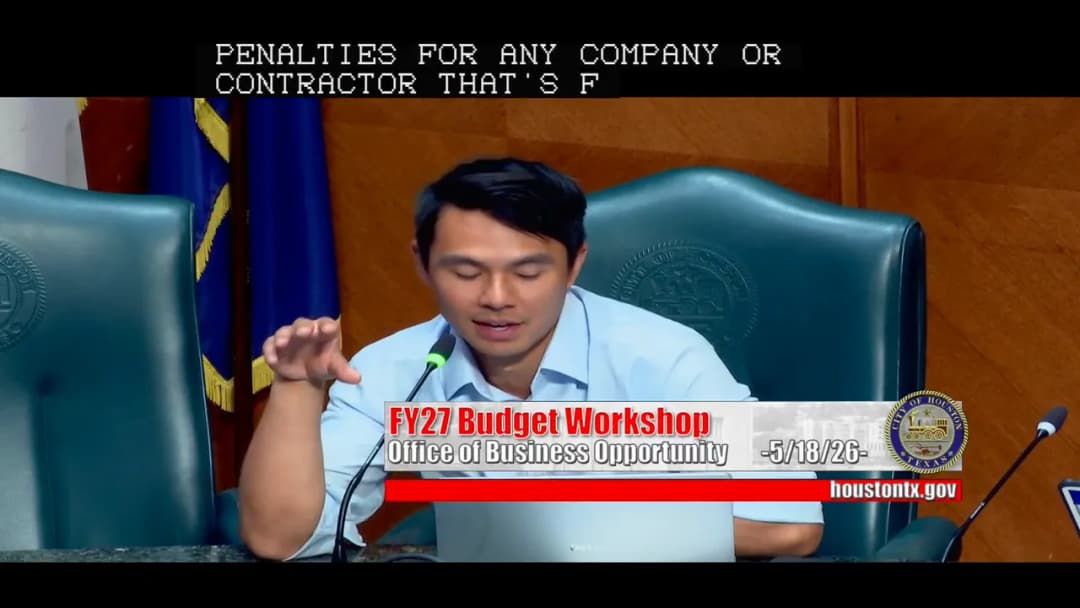
Economic Development Committee OBO FY2027 Budget Hearing – May 18, 2026

The Economic Development Committee convened on May 18, 2026, to review the proposed Fiscal Year 2027 budget for the Office of Business Opportunity (OBO). Presenters included Director Celynthia Hoard and Patsy Jackson. The proposed total budget is $6.2 million, reflecting a new mission focused on equal representation and advocacy for small businesses. Discussions covered budget reductions, program consolidation, new key performance indicators (KPIs), fee studies, and the pending federal judicial ruling affecting certification programs. Public Comments & Testimony - Astrid Lang: Expressed general support for OBO's work, particularly regarding the federal challenge, but noted difficulty viewing data on slides. No specific questions. - Laura Gallier: Raised concern about the absence of a KPI for the Hire Houston First program. Noted that city checkbook data showed Houston Public Works hiring consultants from Canada and Pennsylvania. Asked about rules for hiring non-local firms. Director clarified Hire Houston First is being tracked under overall new certifications, but agreed to add the measure back. Discussion Items - Budget Overview: Director Hoard presented the FY27 budget, noting a reduction of two vacant positions (saving $171,000) and over $300,000 in non-personnel cuts, totaling a gap reduction of over $201,000. Total proposed budget is $6.2 million (combined General Fund 1000 and Special Revenue Fund 2424). - Strategic Alignment: 90% of OBO's work aligns with the mayor's priority "Government that Works" (certification, contract compliance, administrative services); 10% aligns with "Infrastructure" (external affairs, workforce development). - Program Consolidation: Business support and development and workforce development programs were consolidated into external affairs and contract compliance divisions to eliminate duplication. This resulted in a 100% decrease in those line items and increases in contract compliance (+$633,000) and external affairs (+$522,000) due to filling vacancies. - Certification & Designations: The division has 13.3 FTEs and a $1.4 million budget. Achieved average 14-day processing time (goal ≤30 days). 30% of total contract awards went to certified firms. New certifications: 400 new firms; 200 renewed DBEs/ACDBEs. Lowered certification targets for FY27 due to the ongoing federal pause on certain programs. - Contract Compliance: 17.3 FTEs; $2.0 million budget. New KPIs include average business days to complete closeouts (goal 30 days), percentage of construction contracts receiving satisfactory rating (goal 80%), and percentage of pay-or-play funds collected (goal 90%). Existing measure: 75% of closed construction contracts meeting labor standards (up from previous years). - External Affairs: 4.9 FTEs; $500,000 budget. New KPIs: percentage of businesses engaged that become certified (goal 25%), participants attending workforce events completing on-site interviews (goal 500), percentage of businesses reporting services met needs (95%), and favorable perception of OBO services (95%). - Special Revenue Fund (2424): Zero FTEs; interfund transfers to Houston Police Department (crisis diversion program) and Health Department (client access program). FY27 projections: $400,000 for CAPS, $230,000 for crisis diversion. - Revenue: General fund decrease of 2.37%; special revenue fund increase of 18.13% due to anticipated contracts from HPW, HAS, HCD. Contract compliance revenue up 8%. - Fee Study Update: Director reported that a fee study is complete, but implementation is on hold pending a federal judicial ruling on the MBE program (expected by May but no ruling yet). Fees for directory lookups ($1–$2 per lookup) have been approved for external entities. - Labor Standards Enforcement: New policies allow the city to collect underpayments directly if contractors fail to make employees whole within 30 days. Three unsatisfactory ratings can lead to sanctions (up to five years). Sanctions are rare. - Council Questions: Council Member Martinez praised reduced processing times (14 days from 1,400 backlog) and asked about fee implementation; Director confirmed fees are ready but awaiting ruling. Council Member Ramirez inquired about the judicial ruling's impact, labor standards specifics, and consequences for scope changes after award (joint memos, sanctioning). Council Member Salinas' staff asked about penalties for wage violations; Director explained new collection authority. Key Outcomes - No formal votes were taken. The committee received the OBO FY2027 budget presentation and will consider it for inclusion in the city’s overall budget. - Director agreed to reinstate the Hire Houston First KPI as a separate measure. - The fee implementation timeline remains dependent on the federal court ruling; once clear, Director will present to the Economic Development Committee. - The OBO budget proposal reflects consolidation to reduce duplication, new outcome-based KPIs, and adjustments for the federal pause.

ECONOMIC DEVELOPMENT 77% · PROCUREMENT 21% · WORKFORCE DEVELOPMENT 2%
113
MAY 18, 2026 · HOUSTON, TEXAS · COMMITTEES AND COMMISSIONS
Houston Public Works & Solid Waste Budget Workshop – May 18, 2026

This joint budget workshop for the Houston Public Works (HPW) and Solid Waste Management (SWM) departments, chaired by Vice Chair Mario Castillo, reviewed the proposed FY2027 budget. Key topics included the integration of SWM into HPW, a new $5/month residential solid waste administrative fee, performance metrics, water infrastructure, the Combined Utility System (CUS) fund balance, and illegal dumping. The session featured a presentation by Director Randy Mackay and CFO Samir Salanke, followed by council member questions and public testimony. Public Comments & Testimony - Doug Smith: Questioned the reduction in pay-as-you-go (PAYGO) funding for CUS projects, the allocation of funds for the 1600 Smith building, and the unexplained surplus in DDSRF accounts. Requested clarity on reserve use. - Bill Kelly (Environment Texas): Expressed strong support for the administrative fee, calling it a step toward properly funding SWM. Highlighted the need for investment in recycling education and infrastructure to address the 42% contamination rate and 16% recycling rate. - Jack Belinski: Raised concerns about HPW becoming too large, citing difficulties in getting a Pride-related banner district approved. Also reported receiving a $7,000 credit on his water bill, questioning billing accuracy. - Laura Gallier: Criticized the presentation as vague and lacking accountability on illegal dumping KPIs. Noted a $265,000 payment to "Flock" (surveillance cameras) and asked for clarification on their use. - Rain Eatman: Opposed a flat $5 fee, arguing it is inequitable for low-income residents; suggested a property tax increase instead. Asked for a breakdown of how CUS funds are allocated across services. - Felix Kapoor: Questioned the significant increase in DDSRF debt service payments (from $151M to $227M) and the lack of consideration for worker safety and salaries in the fee structure. Asked about plans to expedite hiring in HPW. - Alice Liu: Raised concerns about the structural imbalance of the CUS budget, noting that $200M from reserves would be drawn down annually, potentially depleting them to $0.5B in five years. Also challenged the claim that ditch reestablishment funding could be cut by $20M without impact, citing field observations of poorly maintained ditches. - Jim Tucker: Advocated for a strategic overhaul of solid waste collection, including pay-as-you-throw, smaller bins, and electrified trucks. Suggested using calcium sources to reduce water main breaks. - Guadalupe Fernandez (Bayou City Waterkeeper): Expressed opposition to diverting CUS reserves for SWM and right-of-way fees, arguing the city still faces a water infrastructure crisis (1,600 annual sewage overflows). Demanded an itemized breakdown of CUS cash balances before the budget vote. - Usman Mahmood: Calculated that if the $5 fee and right-of-way transfers remain flat, the CUS fund balance could hit the 300-day reserve threshold in 3.2 years. Requested a multi-year impact forecast. Discussion Items - SWM Integration & New Administrative Fee: Director Mackay presented plans to move SWM into HPW and fund it via a $5/month residential fee (projected $24–25M in FY27). The fee would be included on water bills. Several council members (Martinez, Thomas) supported the move but stressed the need for operational efficiencies and long-term affordability. - Performance Metrics: Mackay highlighted key KPIs: 3% annual water pipe replacement (currently 0.3%), 1,000 lane miles of road rehabilitation, 500 miles of ditch reestablishment, and new metrics for pavement striping and solid waste. He committed to returning in 60 days with refined, outcome-based KPIs for SWM. - Workforce & Staffing: HPW hired 455 employees in the past year and aims to hire 500 more. Currently 900 vacancies. Director Mackay noted the importance of training and equipment capacity. - CUS Reserves & Right-of-Way Transfer: CFO Samir Salanke explained the $220M negative net operating funds for the CUS, which would be covered by reserves (currently 550 days cash, policy minimum 300 days). A new right-of-way fee of $104M was proposed. Council members (Thomas, Salinas) questioned the sustainability of drawing down reserves. Director Mackay stated the utility is “very comfortable” with the structural changes. - Illegal Dumping: Council members Salinas and Jackson pressed for specific KPIs and dedicated funding. Director Mackay said illegal dumping costs are embedded in operations and that the department would continue to report metrics. He acknowledged a drop in case resolution (from 64% to 42%) and committed to refreshing data. - Water Rates & Commercial Customers: Director Mackay noted that a rate study is underway (by RAFTELIS) to ensure fairness between residential and commercial/industrial customers. He stated the goal is to avoid rate increases for five years. - Water Main Leaks: The backlog dropped from 1,900 active leaks to 100. A study showed 6% of pipes cause 2/3 of leaks. An RFQ for program management to accelerate pipe replacement is expected soon. - Solid Waste Operations: Director Mackay acknowledged severe underfunding (past budget of $100M vs proposed $134M). Plans include fixing AC in trucks, replacing aging fleet, and evaluating routing. Council member Carter asked about FCC accountability; staff said details would be provided. Key Outcomes - No votes were taken; the workshop was informational in preparation for the full council budget vote. - Commitment: HPW will return to the appropriate council committee within 60 days with refined, outcome-based KPIs for Solid Waste Management. - Commitment: HPW will provide a multi-year forecast of CUS fund balance under various scenarios (fee levels, right-of-way transfers) to address concerns about reserve depletion. - Commitment: HPW will provide a breakdown of illegal dumping metrics (cases investigated, resolved, average days to resolve) and continue public reporting. - Directive: Several council members asked for detailed accounting of CUS cash balances and an explanation of the $145M reduction in PAYGO funding (to be replaced with debt). The administration agreed to provide written responses. - Next Steps: The budget workshop continued with the Houston Fire Department after a short break.

SOLID WASTE MANAGEMENT 38% · FISCAL SUSTAINABILITY 20% · WATER AND WASTEWATER MANAGEMENT 19% · ENGINEERING AND INFRASTRUCTURE 14%
114
MAY 18, 2026 · HOUSTON, TEXAS · COMMITTEES AND COMMISSIONS
Houston Fire Department FY27 Budget Workshop – May 18, 2026

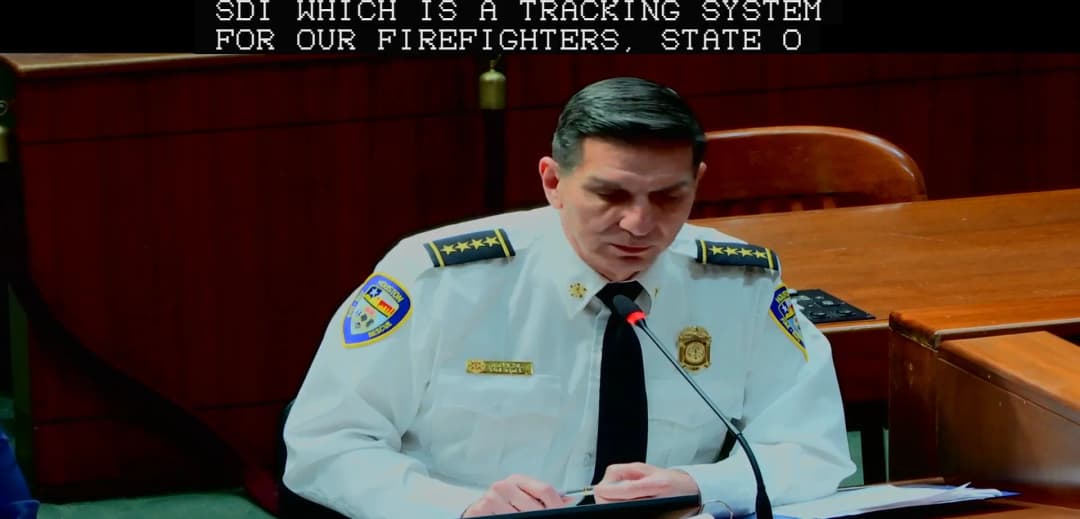
On May 18, 2026, the Houston City Council held a budget workshop to review the Houston Fire Department (HFD) proposed Fiscal Year 2027 budget. Fire Chief Tom Munoz and finance director Marchelle McHenry presented the $718 million budget, a 2% decrease ($13.2 million) from the FY26 adopted budget. The presentation covered expenditures, revenue, performance measures, and strategic initiatives to reduce overtime, recruit and retain firefighters, and improve response times. Councilmembers asked detailed questions about overtime projections, arbitration costs, staffing levels, ambulance fees, and the escalator clause. Public speakers offered suggestions on hydrant testing, timekeeping practices, and ambulance supplies. Consent Calendar - No consent calendar items were presented. Public Comments & Testimony - Doug Smith praised HFD's ISO rating and accreditation, suggesting billboards to inform the public about lower insurance rates. He asked about hydrant testing criteria, manual timekeeping practices (later clarified by Chief Munoz that HFD uses a computer system, not handwritten cards), ambulance fee collection vs. billing, differences between executive and administrative services, peak-time ambulance units (clarified as additional units), and a discrepancy in the budget book between overtime funding and FTE counts. - Laura Gallier noted that the city auditor had mentioned manual time cards for both fire and police (Chief Munoz stated HFD does not use handwritten time cards). She asked about ambulance supplies (learning that HFD supplies them, with NARCAN from the health department's opioid abatement program), whether HFD paramedic trainees are on payroll (yes, during 14-month paramedic school at community college), and questioned the expense of firefighters shopping with a fire truck at HEB, suggesting a more efficient method. Discussion Items - Budget Overview: Chief Munoz presented slides showing 90% of HFD's budget dedicated to public safety, with a $13.2 million decrease from FY26 due to reduced classified overtime offset by increases in base pay and benefits. Key initiatives included recruiting/retaining firefighters, delivering life safety programs, and equipping first responders for mental health situations. - Overtime Reduction: The decrease in overtime (140,000 hours less April-to-April compared to prior year) was attributed to higher morale, more cadet graduates, and policy changes (rank-for-rank overtime). Chief Munoz stated that minimum staffing of 849 per shift is critical for firefighter safety. - Recruitment and Retention: Between 2017-2023, about 900 cadets graduated; under the current administration (FY25-26), 600 graduated, with 340 expected in FY27. Attrition turned from negative to positive (net +250). Units out of service dropped 91% (from 983 to 84). Paramedic staffing increased from 25 to 150. A “fast track” program for certified firefighters saw a 91% graduation rate. - Performance Measures: Slides showed response times (e.g., chest pain calls at 13 min 49 sec), total incidents targeting 320,000 (down from 328,000), and community risk reduction programs like the Consumer Needs Team identifying high-utilization addresses. - Arbitration Settlement: Councilmember Alvarado asked about an additional $10-12 million in back pay from arbitration. Chief Munoz believed it was already included in the budget but offered to provide exact numbers. - Base Pay and Escalator: Three percent base pay increase is per contract. The escalator (additional increase tied to revenue) is still being negotiated; Chief Munoz confirmed it is not yet accounted for in the proposed budget and would be self-funded through added revenue. - Ambulance Fees: Fees increase annually by inflation; HFD's fees are lower than other cities. Revenue projections rely on Digitech billing forecasts, though actual collections have exceeded projections by $21 million. Key Outcomes - No formal votes were taken; the workshop was informational. - Councilmembers submitted written questions and requested follow-up answers on staffing projections, overtime savings, hydrant testing, manual time cards (HFD clarified it uses a computer system), ambulance supplies, and the arbitration back pay amount. - The meeting adjourned with the next day's schedule: controller's trends report, libraries at 10 a.m., and HPD at 11 a.m. - Performance measures and recruitment successes were highlighted as evidence of progress toward reducing overtime and improving service.

PUBLIC SAFETY 57% · FISCAL SUSTAINABILITY 22% · PERSONNEL MATTERS 21%
115
MAY 18, 2026 · HOUSTON, TEXAS · COMMITTEES AND COMMISSIONS
Houston Budget Hearing: Mayor's Office Presentation - May 18, 2026

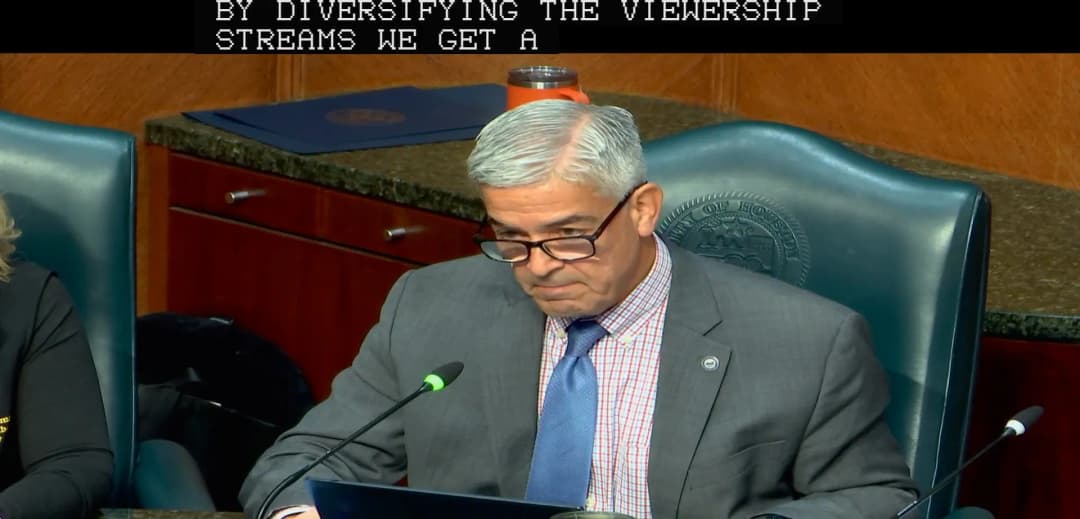
The Budget and Fiscal Affairs Committee held its fifth day of budget hearings on May 18, 2026, beginning with the Mayor's Office budget presentation. Chief Strategy and Operations Officer Stephen David, accompanied by Will Bryant from the Finance Department, presented expenditure reductions and program adjustments. The session included questions from council members and public testimony from three speakers. Presentation Overview Stephen David reported that the Mayor's Office has reduced overall expenditures by 7% compared to the prior year, following a 10% reduction in the first year and a flat year thereafter. Notable changes include a 33% decrease in cable television (HTV) expenditures, aligning them with declining PEG (franchise fee) revenues from traditional cable subscribers. A 5% decrease in tourism promotion spending was also noted. Marginal increases occurred in executive oversight (due to state law HB 2779 and an additional FTE in the Agenda Office) and economic development (attributed to HOPE contractual increases). The tourism promotion budget totals $24.3 million, supporting 25 FTEs, funded by hotel occupancy tax projections. Debt service and interfund transfers largely support special events, with about $300,000 for HTV capital expenditures. Councilmember Questions - Councilmember Julian Ramirez inquired about performance metrics for HTV's set-top box viewership target of 600,000 viewers and the TURS (Tax Increment Reinvestment Zones) board training programs. David explained efforts to diversify viewership streams (e.g., YouTube) and standardize TURS fiscal policies, noting that no TURS policies had been developed in FY26 due to ongoing analysis of Ernst & Young data and auditor discrepancies. - Councilmember Mary Nan Hafman raised concerns about tracking city positions on Texas legislation, emphasizing the need for real-time updates during sessions. - Chair Alcorn noted the intergovernmental relations (IGR) budget of $767,000 and provided information on the IGR website and contact Andy Mate for legislative tracking. Public Comments & Testimony - Rain Eatman (District C) asked whether the Mayor's Economic Oversight Committee still oversees tax abatements and whether the city faces penalties for denying state-recommended abatements. David confirmed the oversight responsibility and stated no tangible penalties exist, but cautioned that Texas Enterprise Zone nomination slots are limited. - Laura Gallier requested details on the IGR budget and better public access to the city's legislative positions. Chair Alcorn and Council Member Hafman acknowledged the concern and committed to improving transparency. - Astrid Lang (District C) questioned how an additional FTE in the Agenda Office would make workload more sustainable, referencing 90-hour workweeks. David explained the goal of using outcome-based budgeting to tie FTEs to measurable workloads, but noted general fund constraints limit hiring. Key Outcomes - No formal votes or decisions were taken during this session. The committee received the Mayor's Office budget presentation and public comments. - The Mayor's Office proposes a 7% expenditure reduction, right-sizing HTV spending to match declining PEG revenues, and adding one FTE in the Agenda Office. - The committee will continue budget hearings with City Council, the Office of Business Opportunity, and afternoon workshops for Houston Public Works/Solid Waste and the Houston Fire Department.

FISCAL SUSTAINABILITY 49% · ECONOMIC DEVELOPMENT 31% · PUBLIC ENGAGEMENT 12% · TECHNOLOGY AND INNOVATION 4%
116
MAY 16, 2026 · HOUSTON, TEXAS · COMMITTEES AND COMMISSIONS
Houston Budget & Fiscal Affairs Committee Town Hall - May 16, 2026

On May 16, 2026, the City of Houston Budget and Fiscal Affairs Committee held its second annual budget town hall at 10 a.m. (with a virtual town hall scheduled for May 20 at 6 p.m.). Chair Sally Alcorn and Vice Chair Mario Castillo led the session. Stephen David, Chief Strategic and Operating Officer for the Mayor's office, presented the FY27 budget outlook and proposed fiscal measures. The town hall included a detailed presentation followed by public questions and comments. Public Comments & Testimony - Russell (former government employee): Asked whether the proposed flat $5 solid waste fee and the right-of-way fee could be scaled by density or usage (e.g., denser neighborhoods paying less). David responded that future rate structures (like pay-as-you-throw) are under consideration but the immediate focus is on a low, flat fee to establish a revenue stream and improve service efficiency. - Bob Fleming (Metropolitan Organization / Coalition of Churches): Summarized his understanding that the right-of-way fee's impact on the Combined Utility System (CUS) would be offset by reducing overfunded reserves (debt service coverage at 215% vs. required 135%; operational reserves at 550 days vs. 300-day policy) and the $5 solid waste fee, with water rate increases as a last resort. David confirmed and added that efficiency gains also help. - Speaker (unidentified): Questioned whether the $200+ million drop in CUS fund balance simply moves the deficit from the general fund to the utility, and whether police costs (adding $100M/year) are being addressed. David acknowledged the temporary subsidy for solid waste and explained that police and fire costs are driven by state law, union contracts, and recruitment challenges; the city is now net positive in officers and firefighters. - Bill (First Ward Civic Club / Environment Texas): Expressed support for a solid waste fee but urged the city to reject chemical recycling (advanced recycling) and the MOU with ExxonMobil and LyondellBasell, citing air quality concerns and fires at facilities. He requested the city not to implement a fee tied to incineration. - Young man (downtown oil & gas worker): Asked about amending or repealing the city's self-imposed property tax revenue cap (Proposition 1/Proposition H) and about commuters not contributing to city taxes. David noted that every mayor has considered reform but backed off, and that suburban tax burdens are actually higher than Houston's. - Karina (Fondren Civic Club): Asked whether landfill space costs are included in the trash fee (David clarified they are not, as third-party operators cover landfill costs). She also requested more transparency on consulting fees in the budget, noting the city's Open Finance portal. She asked about the right-of-way fee comparison: David said Houston's 5% is conservative compared to other cities. - Joe Higgs (Metropolitan Organization): Asked about funding for demolition of dangerous buildings and the ditch reestablishment program. David said $30M was allocated last year for demolition (with $20-25M reverted due to slow process), and $50M is included for local drainage and ditch reestablishment this year. He noted 300 of 2,200 eligible structures are ready for demolition, but only 10 are being demolished currently. Discussion Items - Presentation by Stephen David: Covered the city's three fund buckets (Airport Enterprise Fund $740M, Public Works Enterprise Funds $3.5B, General Fund $3B). Described the property tax revenue caps (state SB2 and local Proposition 1/Proposition H) that restrict revenue growth, causing a structural deficit. Showed a projected general fund deficit of $209M in FY27, growing to $446M by FY30 if no action taken, and a risk of dipping below the required 7.5% fund balance reserve (leading to credit downgrade). - Mayor Whitmire's approach: No property tax increase; no layoffs; no expansion of programs; no reliance on one-time transfers; no deferring infrastructure obligations. Instead, two major proposals: 1. Declare solid waste a municipal utility (removing $117M from general fund) and impose a $5/month administrative fee (cost of service is $25; fee to increase $5 annually starting FY29 until reaching full cost by FY32). The fee funds a revenue bond for new trucks and transfer station repairs. 2. Impose a 5% gross revenue right-of-way rental fee on the city's water and sewer utility ($104M/year), moving money into the general fund. This brings a net $220M improvement, reducing FY27 deficit from $209M to $25M and keeping fund balance above 12%. - Response to public questions: David defended the CUS fee as lawful and supported by operational efficiency gains, overfunded reserves, and new project funding (e.g., Texas Water Development Board loans). He acknowledged the temporary nature of the solid waste subsidy and the need for future council votes on fee increases. He noted that property tax increases would require voter approval due to the local revenue cap, and that the city has limited revenue diversity compared to Dallas, Austin, and San Antonio. Key Outcomes - The budget proposals are still under discussion; budget workshops will continue on May 18 (Solid Waste, Public Works, Fire) and May 19 (Police). A virtual town hall is scheduled for May 20. - Chair Alcorn stated she supports going up to the property tax cap but respects the mayor's stance. She encouraged residents to fill out the budget survey and attend workshops. - No formal votes were taken at the town hall; the committee will continue deliberations before the FY27 budget adoption.

FISCAL SUSTAINABILITY 57% · SOLID WASTE MANAGEMENT 18% · WATER AND WASTEWATER MANAGEMENT 10% · PUBLIC SAFETY 6%
117
MAY 15, 2026 · HOUSTON, TEXAS · COMMITTEES AND COMMISSIONS
Department of Neighborhoods FY2027 Budget Presentation - May 15, 2026

Meeting Overview On May 15, 2026, the Houston City Council received the FY2027 budget presentation from the Department of Neighborhoods (DoN). Director Herbert Sims led the presentation, highlighting the department's partnerships, outreach, and alignment with the mayor's priorities. The proposed budget reflects a 9% increase over the FY26 adopted budget, primarily due to the inclusion of the Office for People with Disabilities and targeted reductions. Council members praised the department's work and engaged in discussion on language access, volunteer programs, and neighborhood initiatives. Two members of the public offered comments. Budget Presentation Overview - Strategic Alignment: Most programs align with the mayor's quality of life priority; human trafficking and gang prevention fall under public safety; administrative services make up 48% of the budget. - Gap Elimination: The department implemented $286,000 in targeted reductions through operational efficiencies, including one vacant position, program expense adjustments, and reductions in community engagement and language access (software costs avoided). The Super Neighborhood Fund was reduced but retains $170,000, sufficient for planned grants and administration. - Proposed Budget: FY27 proposed budget is 9% higher than FY26 adopted, with all funds allocated to the general fund. Personnel expenses account for 79% of the budget, with 12% for services, 8% restricted accounts, and 1% supplies. - Program Expenditures: Major divisions include Community Engagement ($1.365M), Neighborhood Initiatives ($883K), Language Access ($438K), Human Trafficking ($243K), Office for People with Disabilities ($870K), and Office of Education and Youth Engagement ($238K). - Performance Measures: Updated KPIs using the "turn the curve" process include tracking youth participation, volunteer contributions, language access training completion, and ADA outreach. - Revenue: Funding for human trafficking/domestic violence programs comes from a settlement agreement via HPD; office for People with Disabilities expenditures are reimbursed via HPD Fund 2312; admin support revenue from TPIA requests. Council Discussion - Praise & Support: Council members expressed gratitude for the department's work, noting its presence in neighborhoods and responsiveness. Councilmember Romeris highlighted the renewal of the Language Access Coordinator position (Katie Fan) and the grant support from the Houston Endowment, thanking the original council sponsors. - Pilot Program: Councilmember Thomas's office commended the "I Speak" program piloted at apartment inspection ordinance community meetings in District F, a multilingual district, and requested expansion. - Volunteer Program: Director Sims explained the volunteer program coordinated by Roman Aguilar, using the Galaxy database via Volunteer Houston. The City of Houston volunteer page lists opportunities across departments. Councilmembers were encouraged to use the system for recruitment. - Super Neighborhood Revitalization: Mayor Pro Tem's office thanked DoN for revitalizing Central Southwest Super Neighborhood 40 and advocated for dedicated code enforcement officers per district. - General Appreciation: Vice Chair Castillo and others acknowledged the department's support for public safety roundtables, human trafficking efforts, neighborhood forums, and district activities. Public Comments & Testimony - Doug (Super Neighborhood representative): Expressed concern that super neighborhoods receive only $2,000 allocations; requested an additional $2,000 to cover expenses like a new email system. Asked for a breakdown of the 10 staff in the Mayor's Assistance Office. Noted uneven funding between the Office of Veterans Affairs (one staff) and the Office of People with Disabilities (five staff), advocating for more attention to veterans. Questioned the need for two separate departments (Office of Neighborhood Engagement and Mayor's Assistance Office) given similar goals; later noted he had received a written response addressing this. - Laura Gallier: Expressed strong support for the gang prevention/credible messenger program, stating she has observed its positive impact through trainings and graduates. Requested continuation and expansion of the program. Noted she received a response about coordination with the health department and municipal courts. Key Outcomes - No formal votes or decisions were taken during the presentation. The director acknowledged council and public feedback. The proposed budget will move forward for further consideration. Public speakers requested additional funding for super neighborhood alliance and expanded gang prevention programming.

COMMUNITY ENGAGEMENT 85% · PERSONNEL MATTERS 9% · PUBLIC SAFETY 6%
118
MAY 15, 2026 · HOUSTON, TEXAS · COMMITTEES AND COMMISSIONS
Houston Budget and Fiscal Affairs Committee Workshop on Parks Department Budget - May 15, 2026

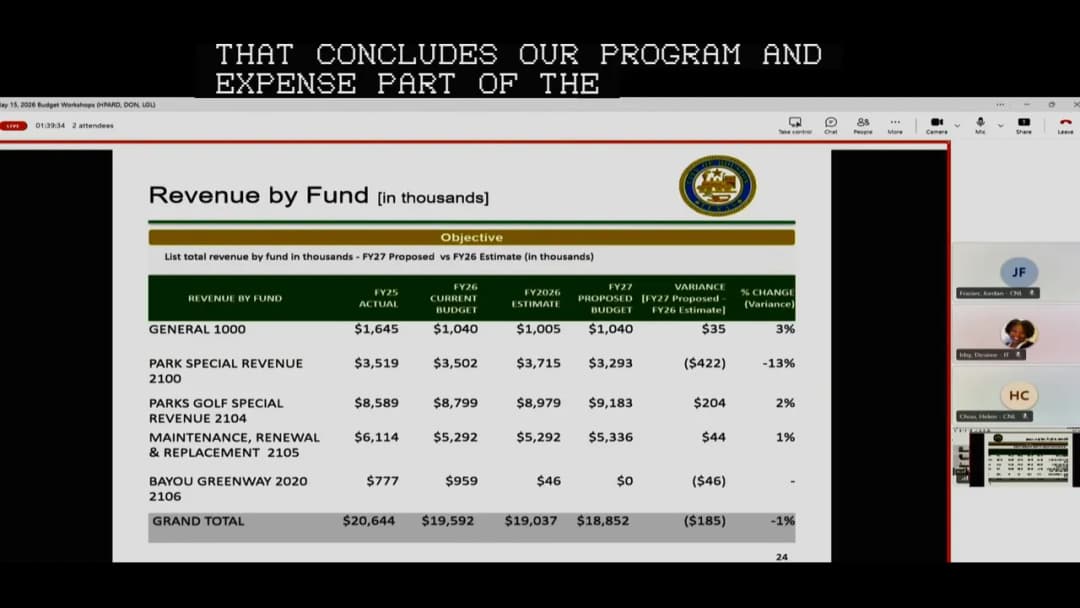
The Budget and Fiscal Affairs Committee, chaired by Councilmember Sally Alcorn, held a workshop on May 15, 2026, to review the proposed FY27 budget for the Houston Parks and Recreation Department (HPARD). Director Kenneth Allen and finance lead Bridget Ikoff presented the budget, which showed a decrease of approximately $300,000 in supplies and services, with total expenditures of $106.4 million across all funds ($88.5 million from the general fund). The department outlined strategic alignment with mayor’s priorities, program spending, revenue projections, and new KPIs. Public speakers advocated for increased maintenance funding, staffing, and equity in park investments. Public Comments & Testimony - Taylor Valley (SEER): Expressed support for the department's work (urban forestry, mowing cycles, grants) but urged more funding for maintenance, especially as the open space ordinance may add land without addressing upkeep. Noted that the open space ordinance fee increases go to capital improvements, not maintenance. - Stefania Tomaskovic (SEER Director): Stated full support for HPARD’s budget and requested expanded funding for maintenance, security, and investment in historically underserved community parks. Emphasized parks as crucial infrastructure for health, wellness, and resilience. - Alison Bell (Executive Director, Heritage Society): Praised HPARD for maintaining Sam Houston Park, requested continued security and funding (kiosk revenue), and noted the park's importance for UNESCO Slave Route Project sites. - Jack Valinski (Metropolitan Multi-service Center): Highlighted the park's daily use by diverse residents, requested Wi-Fi in park buildings, and stressed the need for more building upkeep. - Laura Gallier: Thanked the parks rangers for improving safety at Love Park (unleashed dogs), noted removed playgrounds (Mango Manor Park) not replaced for 10+ years, and observed baseball at Metropolitan Multi-service Center. - Doug Smith: Praised maintenance at A-Leaf Neighborhood Center but flagged dangerous gravel goal areas at soccer fields; asked for targeted watering or grants. Concerned that Soccer for Success program funding shows “not applicable” for FY27 on page 142 of the budget (questioned if program is ending). Also noted zero dollars for park development and renovation in the budget. - Karina Blessed (Fonde Park advocate): Requested more equitable recreation programming (e.g., yoga, Bollywood), additional staffing to keep gates open at Fonde Park’s new parking lot, and better community communication during construction. Discussion Items - Budget Overview: Director Allen presented a $300,000 reduction in supplies and services. Total expenditures: $106.4 million (general fund $88.5 million). Fund 2106 (Bio Greenways) reduced by $1.26 million due to Houston Parks Board taking over White Oak Bayou trail maintenance; no layoffs occurred. Personnel: 51% of general fund expenses; non-personnel: 22%; restricted accounts include annual zoo payment (14%). - Program Highlights: - Aquatics: Goal to open 34 pools (3 down for maintenance), hire 40+ FTEs (5 full-time, 13 part-time, 158 seasonal). Pay increased by $2 per classification; hiring 15-year-olds. Target: 85,000 pool participants. - Community Centers: 59 centers; targeting 130,000 seniors/adults and 75,000 after-school participants. Staffing down 30 FTEs due to retirements, resignations, and realignment (some centers converted to social sites). - Golf Operations: Memorial and Sharpstown courses managed; 350,000 rounds projected, with no cost to taxpayers. Sharpstown needs $10M+ for clubhouse; potential reconfiguration with driving range, restaurant, recreation center. - Urban Forestry: Planted 13,000 trees in FY26; target of 15,000 in FY27. - Park Rangers: 40 rangers but high turnover; pay increase improved hiring but retention remains a challenge. Additional resources needed to cover 386 parks and 640-mile radius. - Grants: Secured $26.9 million in FY26; target of 25 grant applications in FY27. Staff capacity limits grant applications; two more staff needed. - Revenue: Total proposed revenue $18 million, 1% lower than FY26 estimates. Decrease in special revenue fund ($300,000) due to completion of loan repayments; increase in HPAD golf facilities ($204,000) from higher customer participation. Maintenance renewal and replacement fund down $500,000 due to expiration of one-time funding for North Houston highway improvement. - Equity & Investments: Councilmember Ramirez noted that 12 of 20 worst-condition parks are in District D. Director Allen mentioned Let’s Play Houston campaign targeting neighborhood parks, and a push for a park dedication fee increase (last updated 2007). TIRZs have varying participation; TIRZ 8 improved four parks. - Questions from Council: - Vice Chair Castillo asked about park ranger needs (more boots on the ground to address dumping) and urban forestry resources (need for routine tree removal and planting). - Mayor Pro Tem Castex Tatum asked about lifeguard recruitment (HR taking hands-on approach) and retention incentives for rangers (pay increase helped, further increases could help with longevity). - Chair Alcorn inquired about maintenance renewal/replacement fund decrease (one-time funding ended) and user fees (not updated for decades; written questions submitted). - Councilmember Ramirez asked about TIRZ contributions (mixed; need more), golf revenue (Memorial Park driving range over $2 million/year), plans for Sharpstown upgrades (working with TIRZ, council), and Herman Park driving range (more community outreach needed). Noted drainage issues on Harrisburg hike-and-bike trail; staff responsive. - KPIs & EY Study: New KPIs in appendix for FY27, rolled out fully in FY28, to measure service delivery, operational efficiency, and community impact. Key Outcomes - No formal votes were taken; the workshop was for information and public input. - The department will proceed with opening pools on Memorial Day weekend (10 pools initially, reaching 34 by summer). - Chair Alcorn noted the open space ordinance fee increase and equity changes are under discussion; she committed to continued stakeholder dialogue. - The committee acknowledged the need for additional park maintenance funding, more rangers, increased grant staff, and potential user fee updates. - A public budget workshop is scheduled for tomorrow (May 16, 2026) at 10 a.m. at Fondee Recreation Center. - Council will follow up on written questions (e.g., user fee revenue, park development budget line items).

PARKS AND RECREATION 97% · GRANT MANAGEMENT 1% · COMMUNITY ENGAGEMENT 1% · ECONOMIC DEVELOPMENT 1%
119
MAY 15, 2026 · HOUSTON, TEXAS · COMMITTEES AND COMMISSIONS
FY2027 Legal Department Budget Presentation – May 15, 2026

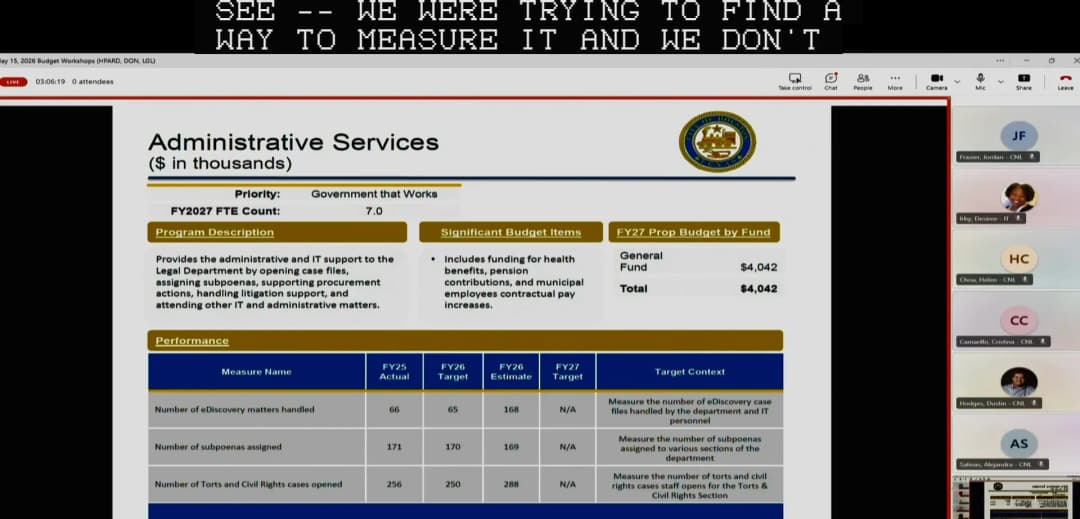
The city council received the FY2027 proposed budget presentation from the legal department, led by City Attorney Arturo Michelle and joined by Mirabel Torres. The presentation covered departmental expenditures, strategic alignment with mayoral priorities, operational challenges (including lawyer retention and pay), and performance metrics across various sections such as torts, contracts, municipal prosecution, and real estate. Councilmembers expressed appreciation for the department's responsiveness and discussed issues of staffing, pay, remote work, and nuisance abatement. Discussion Items - Budget Overview: The legal department’s budget is funded primarily from the general fund, with additional support from property and casualty and workers’ compensation funds. Expenditures remain relatively static, with heavy personnel costs. Increases in contracts and real estate are attributed to more activity and a 3% cost-of-living increase. - Lawyer Retention and Pay: City Attorney Michelle highlighted that lawyers are paid below market, leading to attrition, especially among contract lawyers. The department seeks to recruit new law graduates and leverage scholarship/loan repayment programs (e.g., the Rahat Huke model). Councilmember Alcorn noted that pay and the lack of remote work are key issues causing departures. - Operational Challenges: The department struggles with high volumes of TPIA requests, discovery matters in municipal court (which slow prosecutions), and a sophisticated defense bar. In condemnation cases, the city faces pressure between flood control regulations and increased eminent domain costs, with two cases pending before the Texas Supreme Court. - Performance Metrics: The department is working to better measure efficiency beyond simple caseload counts. Focus areas include resolving claims at lower levels, clearing nuisance cases with HPD’s FAST unit, and increasing training to reduce litigation. - OIG & Housing: The Office of Inspector General’s structure and fairness to employees are under review. Two positions added via a council budget amendment last year—focused on nuisance and human trafficking abatement—are retained in the proposed budget. - Clerkship & Pro Bono: The department offers paid summer clerkships and seeks stronger law school relationships. Outside firms provide pro bono training and assistance, but the program needs expansion. Key Outcomes - No formal votes were taken; the presentation was informational. - Councilmember Ramirez confirmed the two nuisance-focused positions added last year would be retained in the FY2027 budget. - The department will provide follow-up data on hourly pay for law clerks. - Next steps: The budget workshop series continues Monday, May 18, with presentations from the mayor’s office, city council budget, Office of Business Opportunity, public works, solid waste, and fire. A public budget town hall is scheduled for May 16 at 10 a.m. at Fonde Rec Center.

PERSONNEL MATTERS 58% · PENDING LITIGATION 18% · PROCUREMENT 15% · PROCEDURAL 9%
120
MAY 14, 2026 · HOUSTON, TEXAS · COMMITTEES AND COMMISSIONS
HITS Department FY27 Budget Workshop Presentation - May 14, 2026

The Budget and Fiscal Affairs Committee convened on May 14, 2026 at 1:30 PM to receive a budget workshop presentation from the Houston Information Technology Services (HITS) Department. Director Lisa, making her 10th and final budget presentation before retiring on June 19, 2026 after 30 years of city service, presented the FY27 operating budget of $161.3 million. The presentation covered budget gap reductions, consolidations, program details, performance metrics, and revenue generation. Council members in attendance included Julian Ramirez, Mary Nan Huffman, Amy Peck, and staff from several other offices. No votes were taken during the workshop. Public Comments & Testimony - Doug, a public speaker, commented on the HITS budget and raised several questions and observations: - He praised Director Lisa for her service, noting she could have earned more in the private sector. - He questioned the discrepancy between the planned addition of 18 FTEs (14 from Houston Public Library and 4 from Houston Airport Systems) and the estimated increase of 48 FTEs from FY26 to FY27 in the budget document. - He asked for confirmation that all emergency communication systems (including those used by external agencies) operate on the same wavelength/frequency to avoid issues like those during 9/11. - He noted that IT support staff allocated to HPD (five times more than HFD) seemed disproportionate given the department sizes, though acknowledged possible reasons. - He pointed out that the fire department’s use of handwritten time cards remains an unaddressed low-hanging fruit for efficiency. Discussion Items - Budget Presentation Overview: Director Lisa presented the HITS budget, highlighting: - The $161.3 million FY27 operating budget (10.8% higher year-over-year, including new consolidations and contractual increases). - Plans to eliminate a budget gap through telecom savings ($2.3M from cellular contract analysis, legacy line reductions, vendor negotiation improvements, and Next Generation Network migration), Microsoft 365 and electronic signature contract renegotiations ($950,000 combined), and other adjustments. - Consolidation of Houston Airport System Cyber ($811,000) and Houston Public Library IT ($2.1M, 14 FTEs) into HITS, effective July 1, 2026. - HPD consolidation and a $6.8M budget increase for cadet technology (body cameras, phones, software). - Personnel vs. non-personnel split: 14.4% personnel, 85.6% services/supplies; HITS runs lean (24 positions lost through VMRO). - Performance metrics evolution toward "turn the curve" methodology, with a new performance function established. - Major programs: Administrative Services, 311, Community Development, Cybersecurity ($2.8M for security licenses), Data Center Services ($2.3M Azure), End User Compute ($8.1M Microsoft EA), Enterprise Applications (GIS $2.8M, SAP $1.8M), Emergency Communications, HFD IT (right-sizing staff), HPD IT ($5.5M Verizon, $4M Microsoft EA), Municipal Courts (year-to-date $24M revenue collected), Network Services (Next Generation Network project praised as progressive), Parks and Recreation IT, Project Management, Radio Services ($1.8M revenue from external agencies including NASA), and Telecommunications. - Revenue: $1.8M from radio services; Verizon Wireless rebate increased to $4M (up from $1.2M). - Council Q&A: - Chair: Asked about data center expansion plans. Director responded that they plan to expand at the Houston Emergency Center, maintain one leased and one city-owned data center, and continue cloud migration. No further HAS consolidation plans at this time. - Follow-up question on eliminating manual data entry (e.g., timekeeping): Director confirmed ongoing work, including HPD migration to electronic timekeeping and employee scheduling. - Council Member Alcorn: Thanked Director, noted a corrected 311 metric target (25% online submission). - Vice Mayor Pro Tem Peck: Asked about transition of Solid Waste to combined utility system. Director said there is substantial coordination with finance, HR, and HITS, with a phased approach starting by pointing to the new fund in FY27. - Council Member Ramirez: Thanked Director, asked about AI roadmap progress. Director said a new Performance, Innovation, and Architecture (PIA) group has been created to build AI governance, balancing safe deployment with enabling innovation. Key Outcomes - No formal votes were taken, as this was a workshop. - Director Lisa announced her retirement effective June 19, 2026, after 30 years of city service. The date coincides with the 24th anniversary of the council’s vote to create the central IT department. - Council members expressed gratitude for Director Lisa’s service and the work of HITS. - The committee will take a three-minute break before proceeding to the ARA budget workshop. - Questions from Council Member Alcorn and the public speaker (Doug) were noted for follow-up.

TECHNOLOGY AND INNOVATION 82% · PERSONNEL MATTERS 9% · PROCEDURAL 6% · SOLID WASTE MANAGEMENT 3%
OPENPUBLICA · PUBLIC MEETING INDEXUPDATED DAILY · openpublica.com